
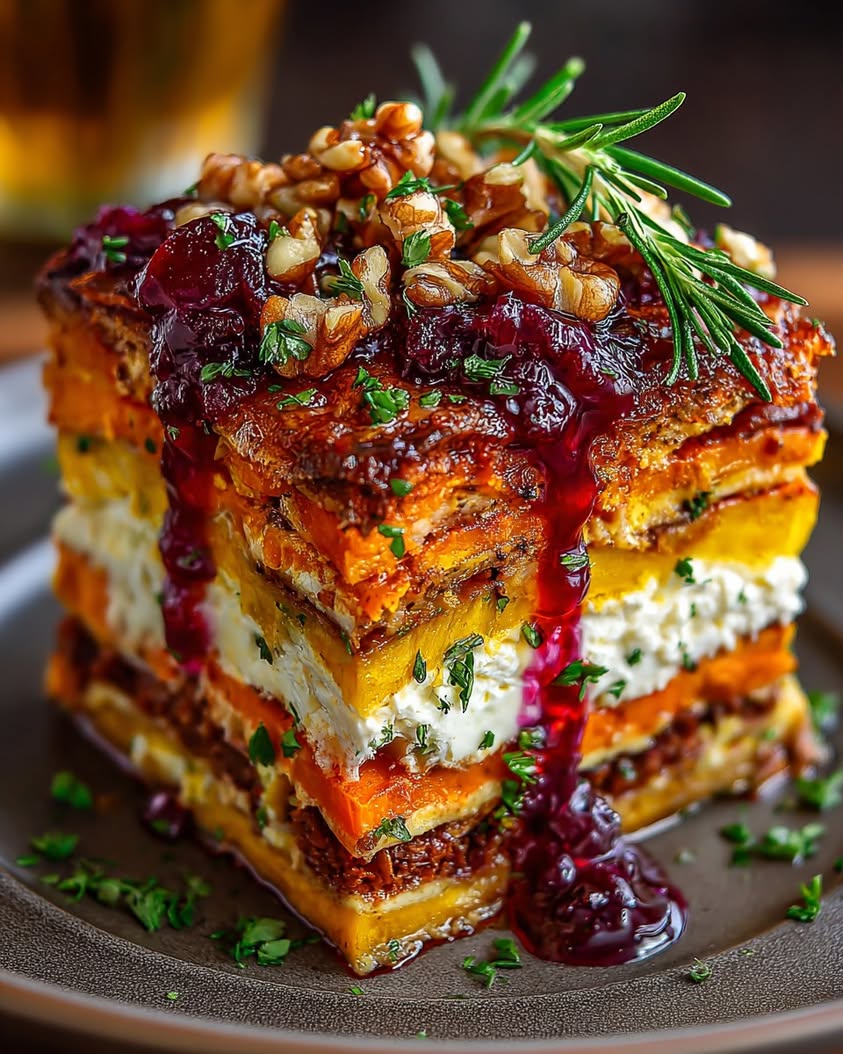
Layered Sweet Potato and Butternut Squash Lasagna with Cranberry Glaze: A Festive Vegetarian Masterpiece
This stunning Layered Sweet Potato and Butternut Squash Lasagna with Cranberry Glaze is a true celebration of autumn flavors and textures. Consequently, it transforms humble root vegetables into an elegant, show-stopping main dish. Imagine thin slices of sweet potato and butternut squash standing in for traditional pasta, creating beautiful, naturally gluten-free layers. Moreover, these layers cradle a savory-sweet filling of caramelized onions, creamy ricotta, and tangy feta. Finally, a vibrant cranberry-honey glaze and crunchy toasted walnuts finish the dish with festive flair.
This recipe is perfect for holiday gatherings, Sunday dinners, or any occasion that calls for a special vegetarian centerpiece. The combination of earthy, sweet, and savory notes creates a complex flavor profile that will impress even the most dedicated meat-eaters. Additionally, the visual appeal is undeniable, with vibrant orange and white layers peeking through a golden-brown top. Ultimately, this dish proves that comfort food can be both nourishing and extraordinarily beautiful.
Quick Recipe Highlights
- Flavor Profile: This dish masterfully balances earthy sweetness from the roasted root vegetables with the salty tang of feta and the rich, savory depth of caramelized onions. The cranberry-honey glaze introduces a bright, tart, and sweet finish that ties all the elements together.
- Texture: You will experience a wonderful contrast between the tender, melt-in-your-mouth layers of roasted sweet potato and squash and the creamy ricotta filling. Meanwhile, the toasted walnuts provide a crucial crunch, and the baked top offers a slightly chewy, caramelized edge.
- Aroma: As it bakes, your kitchen will fill with the warm, comforting scent of roasting squash and sweet potato mingled with aromatic thyme and sage. The final drizzle of the warm cranberry glaze adds a festive, fruity perfume that is simply irresistible.
- Visual Appeal: The cross-section of this lasagna is a work of art, featuring striking stripes of orange and white. The ruby-red glaze and sprinkling of green herbs and toasted nuts create a holiday-worthy palette that is as beautiful on the table as it is on the plate.
- Skill Level Needed: This recipe requires basic knife skills for slicing vegetables and patience for layering. It is an excellent project for a confident home cook looking to expand their vegetarian repertoire. No advanced techniques are required, just attention to detail.
- Special Equipment: A mandoline slicer is highly recommended for achieving uniformly thin vegetable slices, which ensures even cooking. You will also need a good baking dish, a skillet for the onions, and a small saucepan for the glaze.
Recipe Overview
- Difficulty Level: We rate this Layered Sweet Potato and Butternut Squash Lasagna as moderate. The process involves several components—prepping the vegetables, making the filling, caramelizing onions, and preparing the glaze. However, each step is straightforward. The key challenge is achieving even, thin slices of the vegetables for perfect layering.
- Category: This recipe falls squarely into the category of a hearty vegetarian main course. It is substantial enough to be the star of the meal. Furthermore, it can also serve as a spectacular side dish for a larger holiday feast alongside a roast or turkey.
- Cuisine: This dish is a modern, vegetable-forward creation inspired by Italian lasagna traditions but using New World ingredients. It borrows the layered structure from classic pasta bakes while incorporating distinctly autumnal North American flavors like sweet potato, squash, and cranberry.
- Cost: The cost is moderate, as it relies on seasonal produce which is often affordable in the fall. Ingredients like ricotta, feta, and walnuts are pantry staples for many. Overall, it provides a luxurious eating experience without the price tag of prime meat or seafood.
- Season: This is the ultimate fall and winter recipe. Sweet potatoes and butternut squash are at their peak sweetness and flavor during these cooler months. Similarly, cranberries are a classic winter holiday fruit, making this dish perfect for Thanksgiving, Christmas, and cozy Sunday suppers.
- Occasion: This lasagna is ideal for holiday dinners, potlucks, and special family meals. Its impressive presentation makes it worthy of a centerpiece, while its make-ahead potential reduces stress on the day of your event. It is also a fantastic dish for a vegetarian Friendsgiving.
Why You’ll Love This Recipe
First and foremost, the taste and texture of this Layered Sweet Potato and Butternut Squash Lasagna are utterly captivating. Each bite delivers a symphony of sweet, savory, creamy, and crunchy elements. The natural sugars in the vegetables caramelize during baking, intensifying their flavor. Meanwhile, the salty feta and rich ricotta create a lush, creamy contrast. Finally, the tart-sweet cranberry glaze cuts through the richness perfectly. This combination ensures every forkful is interesting and deeply satisfying, far from a monotonous vegetable bake.
From a convenience standpoint, this recipe offers significant preparation benefits. You can slice the vegetables and prepare the cheese mixture a day in advance. Consequently, assembly on the day of serving becomes a quick and simple task. Additionally, the entire lasagna can be assembled, covered, and refrigerated for several hours before baking. This flexibility is a game-changer for entertaining, as it allows you to enjoy your guests rather than being stuck in the kitchen. The baking time is mostly hands-off, giving you time to prepare other dishes or set the table.
Nutritionally, this dish is a powerhouse. Sweet potatoes and butternut squash are loaded with beta-carotene, vitamin C, and fiber. These nutrients support eye health, immunity, and digestion. Walnuts contribute healthy omega-3 fats and protein. Using vegetables as the “pasta” layers also makes this a naturally gluten-free and lower-carb option compared to traditional lasagna. You are serving a meal that is indulgent in flavor but genuinely nourishing for the body, a rare and wonderful combination.
For social gatherings, this vegetarian lasagna has immense value. It is a guaranteed conversation starter due to its beautiful appearance. It caters to diverse dietary needs by being vegetarian and easily adaptable to be gluten-free. It is also a substantial and comforting dish that makes everyone feel well-fed and cared for. Serving a homemade, from-scratch centerpiece like this shows thoughtfulness and effort, elevating any simple meal into a special occasion.
Finally, this recipe is cost-effective and accessible. The main ingredients are humble root vegetables and basic cheeses. Even out of season, sweet potatoes and squash are generally affordable. You can often find bags of fresh cranberries in the freezer section year-round. Therefore, you can create a restaurant-quality, impressive dish without a restaurant-quality price tag. This accessibility means you can enjoy this festive lasagna whenever the craving strikes, not just during the holidays.
Historical Background and Cultural Significance
The origin story of this dish is a beautiful fusion of Old World technique and New World ingredients. Traditional lasagna, of course, hails from Italy, with layered pasta, cheese, and sauce dating back centuries. The concept of layering ingredients to create a cohesive, baked dish is a global one, found in Greek moussaka and Middle Eastern pastitsio. This recipe takes that foundational idea and reimagines it through a modern, vegetable-centric lens. Using thin slices of sweet potato and squash as the structural layers is a relatively recent innovation, born from the gluten-free movement and the desire for healthier, whole-food alternatives to refined pasta.
Culturally, this Layered Sweet Potato and Butternut Squash Lasagna speaks to the contemporary shift towards plant-forward eating. It represents a celebration of seasonal, local produce, a principle deeply rooted in many food traditions but gaining renewed emphasis. The inclusion of cranberries, a native North American fruit, alongside Old World cheeses like ricotta and feta, creates a cultural dialogue on the plate. This dish honors the Italian American tradition of a large, baked pasta centerpiece for family gatherings while simultaneously updating it for today’s culinary values.
The evolution of the recipe follows broader food trends. Initially, vegetable lasagnas often used zucchini or eggplant. However, the sweet, sturdy nature of root vegetables like sweet potato and squash makes them ideal for holding layers without becoming watery. The addition of a fruit-based glaze, like the cranberry-honey reduction, reflects the modern chef’s love for balancing savory dishes with a touch of sweet and acid. This evolution shows how classic comfort food formats are endlessly adaptable, constantly being reinvented with new ingredients and flavors.
Regional variations of this concept are plentiful. In the American South, you might find a similar layered casserole with sweet potatoes and pecans. A Mediterranean version could feature layers of roasted eggplant and zucchini with a mint yogurt sauce. For a Mexican-inspired twist, one could add layers of roasted poblano peppers and use a cotija cheese with a smoky chipotle crema. The basic framework is wonderfully versatile. This particular version, with its festive cranberry glaze, has firmly planted itself as a modern classic for autumn and winter holiday tables across many regions.
Ingredient Deep Dive
Sweet Potato: Cultivated for over 5,000 years in Central and South America, sweet potatoes were a staple for indigenous peoples long before European contact. They are a nutritional superstar, exceptionally high in beta-carotene (which converts to vitamin A), vitamin C, manganese, and fiber. When selecting sweet potatoes, choose firm ones with smooth, unblemished skin. Avoid any with soft spots or signs of sprouting. Store them in a cool, dark, well-ventilated place—not the refrigerator, as cold temperatures can alter their texture and flavor. For a substitution, you could use golden beets or even parsnips, though the flavor and color will change.
Butternut Squash: A type of winter squash native to the Americas, butternut squash has a sweet, nutty flavor that intensifies when roasted. It is rich in vitamins A and C, potassium, and magnesium. Its bright orange flesh indicates a high antioxidant content. Look for squash that feels heavy for its size with a hard, matte rind and a long, solid neck. Store whole squash in a cool, dark place for months. Once cut, wrap tightly and refrigerate for up to five days. Acorn squash or pumpkin can work as substitutes, but butternut’s smooth, seedless neck makes it ideal for even slicing.
Ricotta Cheese: A fresh Italian cheese made from whey, ricotta is known for its mild, slightly sweet flavor and creamy, granular texture. It provides protein and calcium. For the best results in this lasagna, use whole-milk ricotta. Drain it in a fine-mesh strainer for 15-30 minutes to remove excess moisture, ensuring your layers stay distinct and not watery. If you cannot find good ricotta, a well-drained cottage cheese puréed until smooth can be a substitute. For a dairy-free version, blended firm tofu with a touch of lemon juice can mimic the texture.
Fresh Cranberries: These tart, vibrant berries are one of only three fruits native to North America. They are packed with vitamin C and unique proanthocyanidins, which support urinary tract health. Choose berries that are firm, plump, and bright red. Shriveled or brown berries should be avoided. Fresh cranberries freeze beautifully; use them directly from frozen for the glaze. If fresh are unavailable, you can use high-quality cranberry sauce, though you will need to adjust the honey and simmering time. The tartness is essential, so do not substitute with a sweetened juice.
Walnuts: Walnuts are among the oldest tree foods, cultivated since 7000 B.C. They are an excellent source of plant-based omega-3 fatty acids (ALA), which support heart and brain health. They also provide protein and minerals like manganese and copper. Always taste a walnut before using to ensure it is not rancid. Toasting is non-negotiable; it deepens their flavor and improves crunch. Store walnuts in an airtight container in the refrigerator or freezer to prevent their oils from spoiling. Pecans or hazelnuts make fine substitutes if needed.
Common Mistakes to Avoid
- Slicing Vegetables Too Thick: This is the most common error. Thick slices will not become tender and will cause the layers to slide apart. Always aim for 1/8-inch thick slices. A mandoline is your best friend here for consistency and safety with a guard.
- Not Draining the Ricotta: Skipping the draining step introduces excess water into your lasagna. Consequently, you may end up with a soggy, separated mess instead of clean, defined layers. Take the extra few minutes to drain the cheese in a strainer.
- Rushing the Onion Caramelization: Properly caramelized onions take time, at least 20-25 minutes over medium-low heat. If you rush this step over high heat, you will merely brown them, missing the deep, sweet, umami flavor that is crucial to the filling.
- Overloading the Layers: It is tempting to pile on the cheese filling, but restraint is key. Use a moderate, even amount for each layer. Otherwise, the structure can become unstable, and the vegetable layers may not cook through properly.
- Skipping the Vegetable Roasting Step: Some recipes skip pre-roasting the veggie slices. However, a quick roast softens them, releases moisture, and concentrates flavor. This step prevents a watery final dish and ensures tender layers.
- Using Pre-Shredded Cheese: Always crumble feta from a block. Pre-crumbled feta contains anti-caking agents that can make it dry and prevent it from melting nicely into the filling. The flavor of block feta is also superior.
- Neglecting to Toast the Walnuts: Raw walnuts can have a slightly bitter edge and lack crunch. Toasting them in a dry pan for a few minutes unlocks their nutty aroma and gives the lasagna its essential textural contrast.
- Pouring Cold Glaze Over Hot Lasagna: The cranberry-honey glaze should be warm when drizzled. A cold glaze will not flow beautifully and can cool down the slice too quickly. Gently rewarm it if it has thickened while the lasagna baked.
- Cutting Immediately After Baking: Allow the lasagna to rest for at least 15-20 minutes after removing it from the oven. This resting period lets the layers set, ensuring you get clean, beautiful slices that hold their shape on the plate.
- Using a Glass Dish Unprepared: Always grease your baking dish thoroughly. For extra insurance against sticking, you can line the bottom with a sliver of parchment paper. This guarantees easy serving and cleanup.
Essential Techniques
Using a Mandoline Slicer: This technique is vital for achieving the uniform, paper-thin slices needed for even cooking and elegant layers. First, always use the safety guard to protect your fingers. Second, choose a consistent thickness setting, usually 1/8-inch. Third, use a firm, steady motion, letting the tool do the work. The common pitfall is applying uneven pressure, which leads to wedges instead of even slices. Success is visually clear: you should have a stack of identical, translucent slices ready for roasting.
Caramelizing Onions: True caramelization is a slow, chemical process that transforms the onions’ sugars into deep, complex sweetness. Slice your onions evenly. Cook them in oil or butter over medium-low heat, stirring occasionally. Patience is key; rushing with high heat only browns them. The visual cue for success is a uniform, deep golden-brown color and a jam-like consistency. This process can take 25-30 minutes but builds an irreplaceable flavor foundation for the filling.
Making a Fruit Reduction Glaze: A glaze adds shine and concentrated flavor. The technique involves simmering a liquid—here, cranberry juice and honey—until it reduces and thickens enough to coat the back of a spoon. Stir in the whole cranberries at the end so they just pop and soften without turning to mush. The pitfall is boiling too vigorously, which can cause the sugars to burn or the texture to become syrupy instead of glossy. The perfect glaze will be thick, pourable, and intensely flavored.
Layering a Vegetable Lasagna: The goal is to create stable, distinct strata. Start with a thin base layer of your vegetable slices, slightly overlapping. Then, add a modest, even spread of the cheese filling. Repeat, pressing down gently on each layer to eliminate air pockets. The final layer should be neatly arranged vegetable slices. The common mistake is uneven distribution, which leads to structural collapse when serving. A properly layered lasagna will look orderly and hold a clean edge when cut.
Pro Tips for Perfect Layered Sweet Potato and Butternut Squash Lasagna
First, lightly oil and season your vegetable slices before the initial roast. This simple step seasons them throughout and helps them develop a slight edge, preventing them from becoming mushy during the final bake.
Second, mix a beaten egg into your ricotta filling. The egg acts as a binder, helping the cheese layer set firmly and hold the vegetable layers together when sliced.
Third, add a pinch of freshly grated nutmeg to the ricotta mixture. Nutmeg has a magical affinity with both sweet vegetables and creamy cheeses, adding a warm, background note that elevates the entire dish.
Fourth, if your vegetable slices vary in size, use the larger pieces for the bottom and middle layers. Reserve the most uniform, attractive slices for the top layer, as this will be the presentation side.
Fifth, cover the lasagna with foil for the first half of baking. This traps steam and ensures the vegetables become perfectly tender. Then, remove the foil to allow the top to brown and caramelize beautifully.
Sixth, let the baked lasagna rest. This is not a suggestion but a requirement. Resting allows the starches and proteins to set, guaranteeing you can cut and serve picture-perfect portions.
Seventh, warm your serving plates. Placing a hot slice on a cold plate causes it to cool too quickly. Warm plates keep the lasagna at an ideal eating temperature from first bite to last.
Eighth, garnish individually. Instead of garnishing the whole pan, sprinkle fresh herbs and extra walnuts on each plated slice just before serving. This keeps the garnishes fresh and vibrant.
Variations and Adaptations
For regional variations, consider a Southwestern twist by adding layers of roasted corn and black beans to the filling, using pepper jack cheese, and topping with a cilantro-lime crema. A Mediterranean version could incorporate layers of sautéed spinach and use a mixture of feta and kefalograviera cheese, finished with a drizzle of olive oil and oregano.
Seasonal adaptations are easy. In spring, try using thin slices of zucchini, yellow squash, and new potatoes with a lemon-herb ricotta. For summer, layers of roasted eggplant and tomato with a basil pesto swirl would be magnificent. The cranberry glaze is autumnal, but a pomegranate molasses drizzle would work wonderfully in the winter.
Dietary modifications are straightforward. For a vegan version, use a blend of cashew ricotta and crumbled tofu for the cheese layer, and substitute maple syrup for honey in the glaze. To make it nut-free, simply omit the walnuts and use toasted pumpkin seeds (pepitas) for crunch instead.
Flavor variations can personalize the dish. Add cooked Italian sausage or ground lamb to the onion mixture for a meat version. Incorporate roasted garlic or sun-dried tomatoes into the ricotta filling. A sprinkle of smoked paprika or a dash of balsamic vinegar in the glaze can add a different dimension.
Texture modifications can cater to preferences. For a creamier interior, add a layer of béchamel sauce between the vegetable and cheese layers. For more crunch, sprinkle panko breadcrumbs mixed with Parmesan on top for the last 10 minutes of baking.
Presentation alternatives include making individual lasagnas in small baking dishes or mason jars for a personal touch. You could also deconstruct the elements, serving a stack of the roasted vegetable slices with the cheese filling and glaze dolloped artistically around the plate.
Serving and Presentation Guide
Plating this lasagna is part of the enjoyment. Use a sharp, thin-bladed knife dipped in hot water to cut clean squares or rectangles. Wipe the blade between cuts. Carefully lift each portion with a flat spatula, supporting the bottom, and transfer it to the center of a warm plate.
Garnishing is your final artistic touch. Drizzle additional warm cranberry glaze around the plate in an elegant pattern. Place a small cluster of fresh microgreens, parsley, or thyme on top of the slice. Finally, sprinkle the toasted walnuts over and around the lasagna for visual and textural appeal.
Traditional accompaniments keep the meal balanced. A simple, bitter green salad with a bright vinaigrette cuts the richness perfectly. Roasted Brussels sprouts or green beans almondine would complement the autumnal theme. For a heartier meal, serve with a warm, crusty baguette to soak up any delicious remnants.
Modern serving suggestions might include a dollop of garlicky yogurt or labneh on the side. A spoonful of vibrant kale pesto or a scattering of pomegranate arils adds color and freshness. Consider serving it as part of a buffet with other seasonal vegetable dishes.
Temperature is crucial. This dish is best served warm, not piping hot. The resting time brings it to the perfect serving temperature. If it cools too much on the table, a quick 30-second zap in the microwave per slice will revive it without overcooking.
Portion control is easy given its richness. An average serving is about a 3×4 inch rectangle. For a larger holiday feast with many sides, you can cut smaller, 2-inch squares. Remember, this lasagna is very satisfying, so guests often need less than they think.
Wine and Beverage Pairing
Wine pairings should complement the sweet, earthy, and savory notes. An off-dry Riesling or Gewürztraminer is a fantastic choice, as their slight sweetness mirrors the vegetables and their acidity balances the cheese. For red wine lovers, a light-bodied Pinot Noir with its red fruit notes and low tannins won’t overpower the dish. A dry rosé, especially from Provence, offers a versatile middle ground with crispness and berry flavors.
Non-alcoholic alternatives can be just as thoughtful. Sparkling apple cider provides festive bubbles and autumnal flavor. A cranberry and rosemary spritzer (cranberry juice, soda water, and a rosemary sprig) echoes the dish’s ingredients. For a warm option, a ginger-turmeric tea or mulled cider would be wonderfully cozy.
While not a classic coffee dish, a post-meal pairing could work. A medium-roast coffee with notes of nut or brown sugar would be pleasant. For tea, a smoky Lapsang Souchong or a sweet, creamy Rooibos would complement the earthy and sweet elements without clashing.
Temperature considerations are standard: serve white wines and spritzers well-chilled, red wines slightly below room temperature, and warm beverages hot. The lasagna itself should be warm, creating a pleasant contrast with a cool, crisp beverage.
Serving suggestions include offering a choice of both a white and a red wine if you are hosting. For non-alcoholic options, have a sparkling and a still option available. Always ensure water is plentiful on the table to cleanse the palate between bites of this rich, flavorful dish.
Storage and Shelf Life
Storage methods are straightforward for leftovers. Allow the lasagna to cool completely to room temperature, which takes about an hour. Do not leave it out for more than two hours. Then, cover the baking dish tightly with plastic wrap or aluminum foil, or transfer individual portions to airtight containers.
Temperature requirements are key for safety. The stored lasagna must be refrigerated at 40°F or below. You can keep it in the refrigerator for 3 to 4 days. For longer storage, freezing is the best option.
Container recommendations depend on your space. For the whole pan, wrapping it well is fine. For portions, use shallow, airtight containers to promote rapid, even cooling and easy reheating. Glass containers are ideal as they do not absorb odors or stains.
Signs of spoilage include an off or sour smell, visible mold (often fuzzy and green or white), or a slimy texture on the surface. If you see any of these signs, discard the entire portion immediately. Do not taste it.
Reheating instructions are simple. For best results, reheat individual slices in a preheated 350°F oven for 15-20 minutes, covered with foil, until heated through. You can also use the microwave on medium power for 2-3 minutes, but the texture of the top may soften.
Freezing guidelines are effective. Wrap the entire cooled lasagna or individual portions tightly in plastic wrap, then in foil. Label with the date. It will keep for up to 2 months. Thaw overnight in the refrigerator before reheating as directed above.
Make Ahead Strategies
A prep timeline makes entertaining stress-free. You can slice and roast the sweet potato and squash up to two days in advance. Store the cooled slices in an airtight container in the fridge. The caramelized onions and cheese filling can also be made 1-2 days ahead and stored separately in the refrigerator.
Storage between steps is simple. Keep all prepped components chilled until you are ready to assemble. Let the cold ingredients sit at room temperature for about 20 minutes before assembling so the dish goes into the oven at a more even temperature.
The quality impact of make-ahead prep is minimal, and often beneficial. Flavors in the onions and cheese mixture have time to meld. The key is to assemble the lasagna no more than 12 hours before you plan to bake it to prevent the vegetables from releasing too much liquid.
Assembly tips for a make-ahead dish: Build the lasagna in your baking dish as directed. Then, cover it very tightly with plastic wrap, pressing the wrap directly onto the surface to prevent air exposure. You can refrigerate it like this for up to 12 hours.
Reheating guidelines for a fully assembled, chilled dish: Remove the plastic wrap, cover with foil, and bake in a preheated 375°F oven. You will likely need to add 10-15 minutes to the covered baking time since you are starting from a cold state. Then, uncover and finish baking as usual.
Fresh element additions are important. Always prepare the cranberry glaze fresh on the day of serving. Also, toast the walnuts just before serving to ensure maximum crunch. Garnish with fresh herbs right before the dish hits the table.
Scaling Instructions
Halving the recipe is easy for smaller households. Simply divide all ingredient quantities by two. Use an 8×8 inch baking dish. The prep time will be slightly less, but the baking time will be similar, though you should start checking for doneness 10-15 minutes earlier.
Doubling or tripling is perfect for a crowd. Multiply all ingredients accordingly. You will need multiple baking dishes, as increasing the depth in one pan will lead to uneven cooking. The oven space and baking time may need adjustment; rotate dishes halfway through baking for even browning.
Equipment adjustments are necessary when scaling. A larger batch of vegetable slices will require more sheet pans for the initial roasting. Ensure you have a bowl large enough to mix a double batch of the cheese filling. A wider skillet will help with caramelizing a larger quantity of onions.
Timing modifications are minimal for scaling up. The prep time will increase linearly with the quantity. The baking time for multiple standard-sized dishes will be similar to the original recipe. For a single, deeper dish, the baking time will increase; rely on the visual cue of bubbling and a fork-tender top layer.
Storage considerations change with scale. A double batch provides more leftovers, so plan your refrigerator or freezer space accordingly. It is often wise to freeze half of a large batch immediately after baking and cooling for a future easy meal.
Nutritional Deep Dive
The macro breakdown of this lasagna is well-balanced. A serving provides complex carbohydrates from the vegetables for sustained energy. The ricotta and feta offer a good amount of protein and fat, contributing to satiety. The walnuts add healthy fats and a bit more protein. This combination helps prevent blood sugar spikes and keeps you full for hours.
Micronutrient analysis reveals a wealth of vitamins and minerals. Sweet potatoes and squash are exceptionally high in Vitamin A (as beta-carotene), crucial for vision and immune function. They also provide Vitamin C, potassium, and manganese. The dairy contributes calcium and phosphorus for bone health. Walnuts add valuable magnesium and copper.
Health benefits are significant. The high fiber content supports digestive health and promotes a healthy gut microbiome. The antioxidants in the orange vegetables and cranberries combat oxidative stress and inflammation. The healthy fats from the walnuts support heart and brain health.
Dietary considerations are mostly positive. The dish is naturally gluten-free and vegetarian. It can be modified for other needs as described. It is not low-carb, but the carbs are from nutrient-dense whole foods, not refined grains.
Portion analysis shows that a standard serving is satisfying without being overly heavy. The richness comes from nutrient-dense ingredients, not empty calories. Paying attention to portion size, especially with added garnishes, helps manage overall calorie intake while still enjoying a decadent-tasting meal.
Weight management tips include being mindful of the cheese and oil quantities if you are tracking closely. You can slightly reduce the oil used for roasting the vegetables. Using part-skim ricotta is an option, though whole milk provides better flavor and texture. The dish’s high fiber and protein content naturally support feelings of fullness.
Dietary Adaptations
Gluten-free: This recipe is naturally gluten-free as it uses vegetable slices instead of pasta. Simply ensure that all packaged ingredients, like vegetable broth if used, are certified gluten-free. No other modifications are needed.
Dairy-free: Replace the ricotta with a blended cashew ricotta (soaked cashews, lemon juice, nutritional yeast, garlic, water) or a firm tofu ricotta. Substitute the feta with a dairy-free feta alternative made from almonds or tofu, or simply omit it. Use a plant-based butter or oil for caramelizing the onions.
Vegan: Follow the dairy-free adaptations above. Also, replace the honey in the glaze with maple syrup or agave nectar. Ensure the egg binder in the ricotta filling is omitted; a tablespoon of cornstarch or arrowroot powder can help bind a vegan cheese mixture.
Low-carb/Keto: This dish is not suitable for strict keto due to the natural sugars in the root vegetables. For a lower-carb version, reduce the amount of sweet potato and increase the butternut squash slightly, or use a combination of zucchini and yellow squash as the primary layers.
Paleo: Omit all dairy. Use a paleo-friendly “ricotta” made from blended macadamia nuts or a combination of mashed sweet potato and coconut cream. Omit the honey or use raw honey if your paleo protocol allows it. Ensure all other ingredients are whole, unprocessed foods.
Low-FODMAP: This recipe is high in FODMAPs due to the onions, garlic, and butternut squash. For adaptation, use only the green tops of scallions instead of onions, omit garlic entirely, and replace butternut squash with an equal amount of sweet potato (which is low-FODMAP in 1/2 cup servings). Use a lactose-free ricotta.
Nut-free: Simply omit the walnuts. For a crunchy topping, use toasted pumpkin seeds (pepitas) or sunflower seeds. Ensure all other ingredients are processed in a nut-free facility if you have a severe allergy.
Troubleshooting Guide
Issue: Soggy, watery lasagna. This is usually caused by vegetables releasing too much liquid. Solution: Ensure you roast the vegetable slices first to evaporate moisture. Drain your ricotta thoroughly. Let the assembled lasagna rest after baking so the liquids can be reabsorbed. If it’s a chronic issue, sprinkle a thin layer of almond flour or gluten-free breadcrumbs between layers to absorb excess moisture.
Issue: Vegetables are still crunchy after baking. This means your slices were too thick or the baking time was insufficient. Solution: Always use a mandoline for thin, even slices. Ensure the top layer is pierced easily with a fork before removing from the oven. If needed, cover with foil and bake for an additional 10-15 minutes until tender.
Issue: Lasagna falls apart when serving. This indicates insufficient resting time or overloading the layers. Solution: Let the lasagna rest for a full 20 minutes minimum. Use a sharp knife for clean cuts. Ensure your cheese filling has a binder like an egg to help hold things together. Build layers with a moderate hand.
Issue: Top layer is burnt before the inside is cooked. This happens if the dish is uncovered for the entire bake. Solution: Always cover the lasagna with foil for at least the first 30-40 minutes of baking. This steams and tenderizes the vegetables. Remove the foil only for the final 15-20 minutes to brown the top.
Issue: Glaze is too thick or too thin. If too thick, it won’t drizzle; if too thin, it will soak in. Solution: For a too-thick glaze, whisk in a teaspoon of warm water or juice at a time until pourable. For a too-thin glaze, return it to a simmer and reduce it further until it coats the back of a spoon.

I’m Billy, a classically trained culinary school graduate from The Culinary Institute of America with over 12 years in the restaurant industry and over 19 years of cooking experience.