
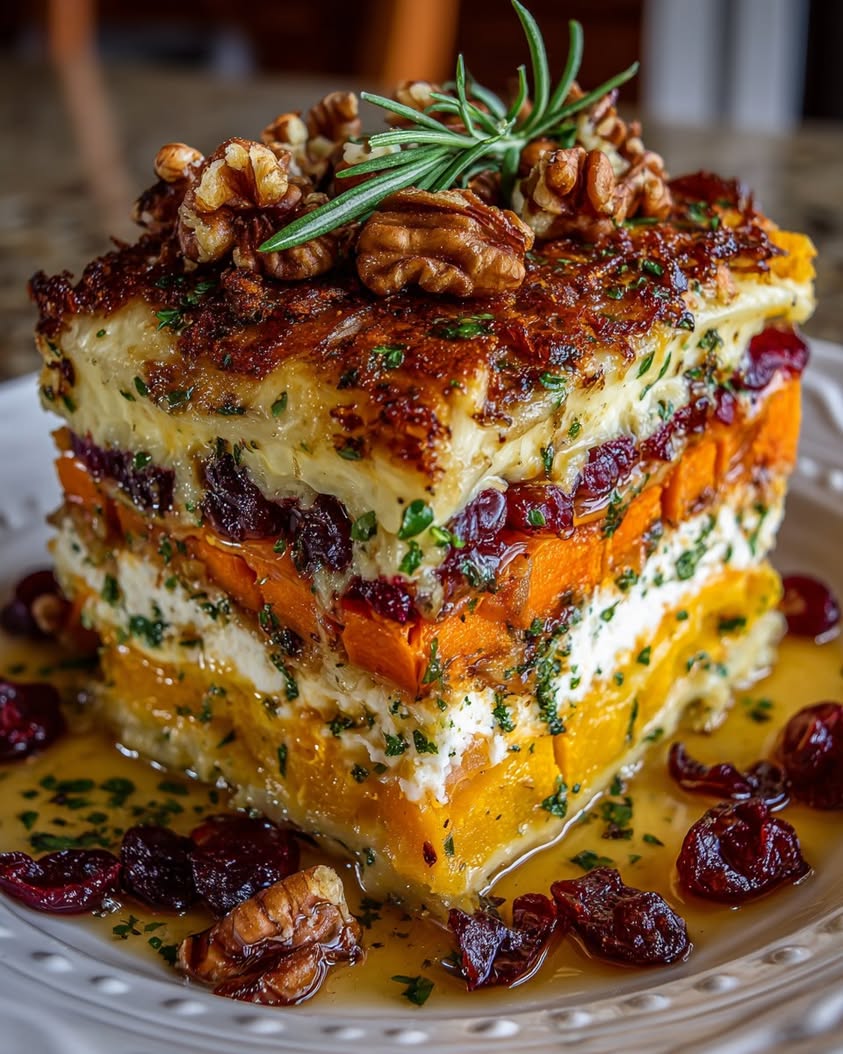
Layered Sweet Potato and Butternut Squash Lasagna with Cranberry Glaze: A Festive Vegetarian Masterpiece
Imagine a dish that captures the very essence of a cozy autumn feast. This layered sweet potato and butternut squash lasagna with cranberry glaze is exactly that. It transforms humble root vegetables into a stunning, multi-layered casserole that will become the star of your holiday table. Furthermore, it delivers a perfect harmony of savory, sweet, and tangy flavors in every single bite.
This recipe builds a beautiful lasagna without traditional pasta sheets. Instead, it uses thin slices of sweet potato, butternut squash, and carrot as the foundational layers. Consequently, you get a naturally gluten-free main dish that is both hearty and nutritious. The creamy ricotta filling, salty feta, and crunchy walnuts create a wonderful textural contrast. Finally, a vibrant cranberry-honey glaze drizzled on top adds a festive finish that is simply irresistible.
Preparing this layered sweet potato and butternut squash lasagna with cranberry glaze is a rewarding culinary project. It fills your kitchen with the most incredible aromas of roasting vegetables and warm herbs. Ultimately, it is a show-stopping vegetarian centerpiece that will impress even the most dedicated meat-eaters at your gathering.
Quick Recipe Highlights
- Flavor Profile: This dish masterfully balances earthy roasted root vegetables with creamy, rich cheeses. The tangy pop of feta and the sweet-tart cranberry-honey glaze create a complex and satisfying taste experience that is neither too heavy nor too sweet.
- Texture: You will enjoy a delightful play of textures, from the tender, melt-in-your-mouth vegetable layers to the creamy ricotta filling. Additionally, the toasted walnuts provide a crucial crunchy element, while the baked cheese topping offers a perfectly golden, slightly crisp finish.
- Aroma: As it bakes, the lasagna releases a warm, comforting fragrance. The scent of roasted sweet potato and squash mingles with aromatic rosemary and thyme, followed by the sweet note of the cranberry glaze reducing on the stove.
- Visual Appeal: This lasagna is a feast for the eyes with its vibrant stripes of orange and yellow from the vegetables. The white ricotta layers, brown toasted walnuts, and deep red cranberry glaze create a stunning, colorful presentation perfect for special occasions.
- Skill Level Needed: This recipe requires basic knife skills for slicing vegetables and simple assembly techniques. While it has multiple components, each step is straightforward, making it accessible for confident beginners ready for a weekend cooking project.
- Special Equipment: A mandoline slicer is highly recommended for achieving uniformly thin vegetable slices, which ensures even cooking. You will also need a standard 9×13 inch baking dish and a good quality baking sheet for toasting the walnuts.
Recipe Overview
- Difficulty Level: We rate this layered sweet potato and butternut squash lasagna as moderate. The challenge lies in the vegetable preparation and careful layering. Slicing the vegetables thinly and evenly is crucial, and managing the separate components requires a bit of organization. However, the cooking techniques themselves are fundamental.
- Category: This recipe fits beautifully into several categories. Primarily, it serves as a spectacular vegetarian main course for holidays and dinner parties. It also works wonderfully as a hearty side dish for a larger potluck or buffet spread.
- Cuisine: This dish is a modern fusion with roots in Mediterranean and American comfort food traditions. It borrows the layered concept from Italian lasagna but uses New World vegetables and a distinctly North American cranberry glaze, creating a contemporary, seasonal masterpiece.
- Cost: The cost is moderately affordable, focusing on fresh produce and staple dairy. Sweet potatoes, squash, and carrots are typically inexpensive, especially in fall. The cheeses and nuts represent the main cost, but the recipe yields a large number of generous servings.
- Season: This lasagna is the ultimate fall and winter recipe. It features peak-season root vegetables and the festive flavors of cranberries and warming herbs. It is ideal for Thanksgiving, Christmas, and any cold-weather gathering where you crave comforting, oven-baked food.
- Occasion: It is perfect for holiday feasts as a vegetarian centerpiece. Furthermore, it is excellent for elegant dinner parties, festive potlucks, or even as a special Sunday family dinner. It is a dish meant for sharing and celebration.
Why You’ll Love This Recipe
First and foremost, the taste and texture of this layered sweet potato and butternut squash lasagna are utterly captivating. Each forkful delivers a symphony of flavors: the natural sweetness of the roasted vegetables, the rich creaminess of the cheese, the savory punch of feta and herbs, and the bright, tangy finish of the glaze. The contrast between the soft vegetables, creamy filling, and crunchy walnuts keeps your palate engaged and delighted from the first bite to the last. It is a deeply satisfying dish that feels indulgent yet is packed with wholesome ingredients.
From a convenience standpoint, this recipe offers significant preparation benefits. You can roast the vegetable slices in advance, and you can also prepare the cheese mixture and glaze ahead of time. Consequently, on the day of serving, assembly becomes a quick and simple process. Additionally, the entire lasagna bakes in one dish, minimizing cleanup. It is also a complete meal in itself, requiring only a simple green salad or some crusty bread on the side, which simplifies your meal planning dramatically.
Nutritionally, this lasagna is a powerhouse. Sweet potatoes and butternut squash are loaded with beta-carotene, vitamin A, and fiber. Carrots add even more vitamins and antioxidants. The ricotta and feta provide a good source of protein and calcium, while the walnuts contribute healthy fats and omega-3s. This combination makes the dish not only delicious but also nourishing and energy-sustaining, a far cry from heavy, pasta-based lasagnas.
For social and entertaining value, this dish is a true winner. It is visually stunning and looks like you spent all day in the kitchen, guaranteeing compliments from your guests. Because it is vegetarian, it easily accommodates diverse dietary preferences at the table. Moreover, it holds well after baking, so you are not stressed about timing; you can enjoy your company while it rests before serving. It is a reliable, crowd-pleasing recipe that will earn a permanent spot in your entertaining repertoire.
Finally, this layered sweet potato and butternut squash lasagna with cranberry glaze is cost-effective and accessible. The main ingredients are pantry and market staples, especially during the autumn months. You can often find sweet potatoes, squash, and carrots in large, economical bags. The recipe is also flexible; for instance, you can substitute pecans for walnuts or use a different soft cheese if needed. This adaptability ensures you can create an impressive meal without breaking the bank, making gourmet, healthy eating achievable for any home cook.
Historical Background and Cultural Significance
The origin story of this dish is a beautiful example of modern culinary fusion. Traditional Italian lasagna, with its layers of pasta, meat sauce, and cheese, dates back centuries. This recipe takes that iconic structural concept and completely reimagines it with New World ingredients. The use of sweet potatoes and squash as the “pasta” layers is a relatively recent innovation, born from the gluten-free movement and the desire for vegetable-forward, healthier comfort food. It represents a creative departure from tradition while honoring the soul-warming essence of a baked, layered casserole.
Culturally, this lasagna taps into two strong threads: the Mediterranean love for layered, cheesy baked dishes and the North American tradition of celebrating harvest vegetables. Dishes like moussaka from Greece and pastitsio from Greece also feature layered vegetables and sauces, showing a regional culinary preference for such structures. In America, sweet potato casseroles and baked squash dishes are holiday staples. This recipe sits at the intersection of these traditions, creating a new, hybrid dish that feels both familiar and excitingly novel.
The evolution of the recipe follows broader food trends. As home cooks and chefs sought to reduce carbohydrate intake and incorporate more vegetables, using thin slices of zucchini, eggplant, and root vegetables as pasta substitutes became popular. The addition of the cranberry glaze is a distinctly American twist, linking the dish directly to Thanksgiving and Christmas traditions where cranberry sauce is a mandatory accompaniment. This evolution shows how recipes are living documents, constantly adapting to ingredient availability, dietary needs, and cultural tastes.
Regional variations of this concept are already emerging. In the South, you might find a version with candied pecans and a bourbon-infused glaze. A coastal California variation could incorporate goat cheese and fresh herbs. Some cooks add a layer of sautéed greens like kale or spinach between the vegetable sheets. Others might use a béchamel sauce instead of the ricotta mixture for a richer, more decadent feel. This adaptability is the mark of a great recipe framework, one that encourages personalization based on local flavors and seasonal produce.
Ingredient Deep Dive
Sweet potatoes are the foundational starch in this layered sweet potato and butternut squash lasagna. Historically, sweet potatoes originated in Central or South America and were a staple food for indigenous peoples long before European contact. They are packed with beta-carotene, which the body converts to vitamin A, crucial for vision and immune health. They also provide a significant amount of vitamin C, fiber, and potassium. When selecting sweet potatoes, look for firm specimens with smooth, unbruised skin. Store them in a cool, dark, well-ventilated place, but not in the refrigerator. For a substitution, you could use regular potatoes, though the flavor and color profile will change noticeably.
Butternut squash brings a velvety, nutty sweetness to the dish. This winter squash is native to the Americas and has been cultivated for thousands of years. It is an excellent source of vitamins A and C, as well as magnesium and potassium. Its bright orange flesh indicates a high antioxidant content. Choose a squash that feels heavy for its size with a firm, matte skin and a long, solid neck. Store whole squash in a cool, dark place for months. Once cut, wrap it tightly and refrigerate. Acorn or delicata squash could work as substitutes, but their different shapes and textures may require adjusted slicing techniques.
The cranberry-honey glaze provides the essential sweet-tart counterpoint. Cranberries are one of North America’s few native fruits, used extensively by Native American tribes for food, dye, and medicine. They are famous for their proanthocyanidins, which help prevent urinary tract infections, and are rich in vitamin C and fiber. For the glaze, use fresh or frozen cranberries, not dried. Honey, a natural sweetener with trace enzymes and antioxidants, balances the cranberries’ sharpness. Maple syrup is a perfect vegan substitute for honey. This glaze can be made ahead and reheated, and it also pairs wonderfully with roasted meats, making it a versatile condiment to have on hand.
Common Mistakes to Avoid
- Slicing Vegetables Too Thick: This is the most common error. Thick slices will not soften properly during baking, resulting in a lasagna with crunchy, undercooked vegetable layers. Always aim for 1/8-inch thick slices, using a mandoline for consistency and safety.
- Not Salting the Vegetable Slices: Skipping the light salting of the sweet potato and squash slices after roasting is a missed opportunity. This step draws out a bit of moisture and seasons the vegetables from within, preventing a bland final product.
- Using Wet Ricotta: If your ricotta is very watery, the filling layer can make the lasagna soggy. Always drain ricotta in a fine-mesh strainer for 15-30 minutes before mixing to ensure a thick, creamy filling that holds its structure.
- Overloading the Layers: It is tempting to pile on the cheese filling, but too much in one layer can overwhelm the delicate vegetables and make the dish overly dense. Use a moderate, even hand when spreading each layer for the best textural balance.
- Skipping the Walnut Toasting: Raw walnuts can have a slightly bitter flavor and soft texture. Toasting them is non-negotiable, as it unlocks their nutty aroma, deepens their flavor, and provides the necessary crunch that contrasts with the soft vegetables and cheese.
- Adding the Glaze Too Early: Pouring the cranberry-honey glaze over the lasagna before baking will cause it to sink in and make the top layer soggy. The glaze should always be added after baking, either drizzled over the whole dish or served on the side.
- Not Letting it Rest: Cutting into the lasagna immediately after pulling it from the oven will cause it to fall apart. Let it rest for at least 15-20 minutes. This allows the layers to set, making for clean, beautiful slices that hold their shape on the plate.
- Using Pre-Shredded Feta: Pre-crumbled feta often contains anti-caking agents that can affect melt and texture. For the best flavor and creamy pockets, always buy a block of feta and crumble it yourself just before using.
Essential Techniques
Mastering the mandoline slicer is crucial for this layered sweet potato and butternut squash lasagna. This tool ensures uniformly thin slices, which is vital for even cooking and a cohesive layered structure. Always use the hand guard to protect your fingers; the blades are extremely sharp. Move the vegetable in a smooth, steady motion against the blade. If you do not have a mandoline, a very sharp chef’s knife and careful, patient slicing can work, but it requires more skill to maintain consistency. The visual cue for success is a pile of translucent, evenly thin slices that are flexible but not torn.
Roasting the vegetable slices correctly is another key technique. The goal is to partially cook them so they become pliable for layering but not so cooked that they turn to mush. Arrange the slices in a single layer on parchment-lined baking sheets. Do not overcrowd, as steaming will make them soggy. Roast just until you can pierce them easily with a fork and they begin to curl slightly at the edges. This pre-cooking step is what allows the final lasagna to bake into a tender, unified dish rather than a pan of raw, crunchy vegetables.
Creating the perfect cheese filling involves proper mixing and seasoning. After draining the ricotta, combine it with the egg, herbs, and seasonings thoroughly. The mixture should be homogenous and spreadable, not stiff or lumpy. Taste it before assembling; it should be well-seasoned on its own to flavor the entire dish. A common pitfall is under-seasoning this layer, as the vegetables themselves are mild. The filling should be savory and herby, providing a flavor anchor between the sweet vegetable layers.
Pro Tips for Perfect Layered Sweet Potato and Butternut Squash Lasagna
For the most flexible vegetable slices, roast them until just tender. Over-roasting will make them too fragile to handle during assembly. Let the sheets cool slightly so they are safe to touch but still warm and pliable when you begin layering.
Season every component individually. Lightly salt the roasted vegetables, season the cheese filling well, and taste your cranberry glaze for balance. This layered seasoning approach ensures every bite is perfectly flavored, not just the top.
Use a high-quality, full-fat ricotta for the best texture and flavor. Lower-fat versions often have more water and less richness, which can lead to a watery filling and a less luxurious mouthfeel in the finished dish.
To prevent a soggy bottom, you can optionally sprinkle a thin layer of breadcrumbs or finely ground walnuts on the bottom of your baking dish before adding the first layer of vegetables. This creates a slight barrier and adds another textural element.
If your vegetable slices are different sizes, use the largest, most uniform pieces for the bottom and top layers for a neat appearance. Smaller or broken pieces can be used in the middle layers where they will be hidden.
For a deeper, more caramelized flavor on top, place the assembled lasagna under the broiler for the last 2-3 minutes of baking. Watch it closely to prevent burning, as this will give you a beautifully bronzed, crispy cheese topping.
Let the baked lasagna rest for a full 20 minutes before slicing. This patience is the secret to getting clean, photogenic portions that hold together on the serving plate instead of collapsing into a pile.
Warm the cranberry-honey glaze slightly before drizzling. A warm glaze will flow more elegantly over the lasagna and will not cool down the hot dish when served.
Variations and Adaptations
For regional variations, consider a Southern twist by adding a layer of sautéed collard greens and using pecans instead of walnuts. A Mediterranean version could incorporate layers of sautéed spinach with pine nuts and use a combination of ricotta and feta with fresh mint and dill. These adaptations show how the basic framework can travel across culinary traditions.
Seasonal adaptations are simple and rewarding. In spring, try using thin slices of zucchini and yellow squash with fresh peas in the cheese mixture. For a summer version, incorporate layers of roasted eggplant and red pepper with basil pesto swirled into the ricotta. This keeps the recipe exciting and relevant all year round.
Dietary modifications are straightforward. For a vegan layered sweet potato and butternut squash lasagna, use a tofu-based ricotta substitute and a vegan feta alternative. The glaze can be made with maple syrup instead of honey. To make it nut-free, simply omit the walnuts or replace them with toasted sunflower or pumpkin seeds for crunch.
Flavor variations can personalize the dish immensely. Add a teaspoon of smoked paprika or cumin to the cheese filling for a warm, smoky note. Incorporate a layer of caramelized onions between the vegetables for added sweetness and depth. A dash of orange zest in the cranberry glaze brightens the entire dish beautifully.
Texture modifications can cater to different preferences. For a creamier interior, add an extra layer of the ricotta mixture. For more defined vegetable layers, make sure each slice is slightly overlapping but not doubled over. If you prefer a more deconstructed approach, you can bake the vegetable slices and filling in a more free-form, gratin-style dish.
Presentation alternatives offer creative freedom. Instead of a large rectangular lasagna, assemble individual portions in small ramekins or cast-iron skillets for a charming, personal touch. You can also layer the ingredients in a round springform pan for a stunning, cake-like presentation that makes a dramatic centerpiece when sliced.
Serving and Presentation Guide
Plating this lasagna beautifully enhances the dining experience. Use a sharp, thin-bladed knife to cut clean portions. A flat, wide spatula helps transfer the slices intact to the plate. For a restaurant-style presentation, place a slice slightly off-center on a warm plate. Then, drizzle a small pool of the extra cranberry-honey glaze around the base of the lasagna, not just on top.
Garnishing adds the final touch of elegance. A few extra crumbles of feta, a sprinkle of fresh chopped parsley or thyme, and a couple of whole toasted walnuts placed artfully on top make the dish look professionally finished. A few fresh cranberries or a twist of orange zest can also tie the plate together visually with the flavors in the glaze.
Traditional accompaniments keep the meal balanced. A simple arugula salad with a lemon vinaigrette cuts through the richness perfectly. Alternatively, some warm, crusty bread or breadsticks are ideal for soaking up any delicious bits left on the plate. These sides complement without competing with the main event.
Modern serving suggestions might include pairing it with a roasted Brussels sprouts salad with pomegranate seeds or a farro pilaf with herbs. For a lighter meal, serve a smaller portion alongside a robust lentil soup. These pairings update the classic holiday plate for contemporary tastes.
Temperature considerations are key. Serve the lasagna hot or very warm from the oven. The cranberry glaze can be at room temperature or slightly warmed. Ensure your serving plates are warm to keep the food at an ideal temperature longer once it leaves the baking dish.
Portion control is easy with this hearty dish. A single slice from a 9×13 pan is a generous main course serving. If serving as a side dish alongside other holiday staples, you can cut smaller squares. Remember, the lasagna is rich and satisfying, so guests may be content with slightly smaller portions than they would take of a lighter pasta dish.
Wine and Beverage Pairing
Choosing the right wine enhances the layered sweet potato and butternut squash lasagna beautifully. A medium-bodied white wine with good acidity, like an Oregon Pinot Gris or a French Viognier, complements the sweet vegetables and creamy cheese without overpowering them. For red wine lovers, a lighter, low-tannin red such as a Pinot Noir or a Grenache works wonderfully. Their fruity notes echo the cranberry glaze and balance the earthy vegetable flavors. Avoid heavily oaked Chardonnays or bold, tannic reds like Cabernet Sauvignon, as they can clash with the dish’s subtle sweetness and richness.
Non-alcoholic alternatives should offer a balance of sweetness and acidity to mirror the wine pairings. A sparkling apple cider provides festive bubbles and autumnal flavor. A tart cherry juice spritzer with a splash of soda water and a rosemary sprig garnish is another excellent choice. For a warmer option, a ginger-turmeric tea with honey can soothe and complement the spices in the dish.
Coffee and tea pairings work well after the meal. A medium-roast coffee with notes of nut and caramel will not compete with the lasagna’s flavors if enjoyed later. For tea, an Earl Grey with its citrusy bergamot notes can be a refreshing finish, or a spiced chai latte echoes the warm spices used in the recipe, providing a cozy conclusion to the feast.
Temperature considerations for beverages are straightforward. Serve white wines and non-alcoholic spritzers well-chilled. Red wines should be served slightly below room temperature, around 60-65°F. Warm teas and coffees should be served hot to provide a comforting contrast to the meal.
Serving suggestions include offering a couple of options to guests. Place a bottle of white and a bottle of red on the table, along with a pitcher of a crafted non-alcoholic spritzer. This allows everyone to choose their preferred pairing and ensures all dietary preferences and tastes are accommodated gracefully.
Storage and Shelf Life
Proper storage methods are essential for maintaining quality. Cool the leftover lasagna completely to room temperature, but do not leave it out for more than two hours. Then, cover the baking dish tightly with plastic wrap or aluminum foil, or transfer individual portions to airtight containers. This prevents the lasagna from absorbing other refrigerator odors and keeps it from drying out.
Temperature requirements are non-negotiable for safety. Always store the lasagna in the refrigerator at 40°F or below. You can keep it refrigerated for up to 4 days. For longer storage, freezing is the best option. Never leave the lasagna at room temperature for extended periods, as the dairy and egg components can spoil quickly.
Container recommendations depend on your space. For the whole pan, covering it tightly in its original dish is fine. For individual servings, stackable glass containers with tight-fitting lids are ideal because they are microwave-safe for reheating and allow you to see the contents. If freezing, use freezer-safe containers or wrap portions tightly in plastic wrap and then foil to prevent freezer burn.
Signs of spoilage are important to recognize. Discard the lasagna if you notice an off or sour smell, significant liquid separation, or any visible mold growth. If the texture becomes excessively mushy or slimy, it is a sign of bacterial growth and the food should not be consumed.
Reheating instructions ensure the best texture. For single servings, reheat in the microwave in 60-second intervals until hot throughout. For larger portions, reheat in a 350°F oven. Place the lasagna in an oven-safe dish, cover with foil to prevent drying, and bake for 20-30 minutes until thoroughly warmed. Adding a tablespoon of water or broth to the dish before reheating can help revive moisture.
Freezing guidelines help preserve the dish for future meals. To freeze, assemble and bake the lasagna as directed. Cool completely, then wrap the entire pan or individual slices tightly in plastic wrap and then in foil. Label with the date. It will keep well for up to 3 months. Thaw overnight in the refrigerator before reheating using the oven method for the best results.
Make Ahead Strategies
A smart prep timeline reduces day-of stress. You can roast all the vegetable slices up to 2 days in advance. Store them layered between parchment paper in an airtight container in the refrigerator. The ricotta filling can also be mixed and refrigerated for 1-2 days. The cranberry-honey glaze can be made up to a week ahead and stored in a jar in the fridge. On the day of serving, simply assemble the cold components and bake; just note you may need to add 5-10 minutes to the baking time if everything starts from cold.
Storage between steps is simple with proper planning. Keep the roasted vegetable slices, cheese mixture, and toasted walnuts in separate, labeled containers. This modular approach lets you tackle the recipe in short bursts of time over a couple of days, making the project feel much more manageable than doing it all at once.
The quality impact of make-ahead steps is minimal if done correctly. Roasted vegetables may soften slightly more upon reheating, but this is desirable in a lasagna. The cheese filling may thicken in the fridge; you can stir in a teaspoon of milk to loosen it if needed before assembling. The cranberry glaze often tastes better after a day, as the flavors have more time to meld.
Assembly tips for a make-ahead lasagna are crucial. You can fully assemble the lasagna (without the final glaze) up to 24 hours before baking. Cover it tightly with plastic wrap and refrigerate. When ready to bake, remove it from the fridge while the oven preheats to take the chill off. You may need to add 10-15 minutes to the covered baking time since it is starting cold.
Reheating guidelines for a fully made and baked lasagna are straightforward. If you have baked the lasagna ahead of time, let it cool, cover, and refrigerate. To reheat, cover with foil and warm in a 325°F oven for 25-35 minutes until hot throughout. This method is gentler and prevents the edges from overcooking.
Fresh element additions are the key to brightening a make-ahead dish. Even if you prepared everything in advance, add a final garnish of freshly chopped herbs and the toasted walnuts just before serving. Reheat the glaze and drizzle it on after the lasagna comes out of the oven for the brightest flavor and most appealing glossy finish.
Scaling Instructions
Halving the recipe is simple for smaller households. Use an 8×8 inch baking dish. Halve all ingredient quantities precisely. The roasting time for the vegetable slices may be slightly less due to smaller batch size on the sheet pans, so watch them closely. The baking time may also be reduced by 5-10 minutes; check for doneness when the top is golden and the center is bubbly.
Doubling or tripling the recipe works well for large gatherings. Double or triple all ingredients. You will need to roast the vegetable slices in multiple batches to avoid overcrowding the pans. Use two 9×13 inch dishes for a double batch. The baking time may increase slightly, but the visual cues for doneness remain the same: a golden-brown top and bubbling edges.
Equipment adjustments are necessary when scaling. For larger batches, ensure you have enough baking sheets to roast all the vegetables efficiently. A large mixing bowl is essential for doubling the cheese filling. If making multiple pans, rotate them in the oven halfway through baking to ensure even cooking and browning.
Timing modifications are minimal but important. Prepping a double batch will not take double the time if you are organized. However, assembly will take longer. Factor in extra time for roasting all the vegetable slices in sequential batches. Start the vegetable roasting first, as that is the most time-consuming component when scaling up.
Storage considerations change with scale. A single large lasagna is harder to store than multiple smaller ones. If making multiple pans for an event, consider baking them one at a time if oven space is limited. You can also freeze one of the assembled, unbaked pans for a future meal, which is a major advantage of scaling up.
Nutritional Deep Dive
The macro breakdown of this lasagna is well-balanced. A serving provides complex carbohydrates from the sweet potatoes and squash for sustained energy. The ricotta and feta offer a good amount of protein to promote satiety and muscle maintenance. The walnuts and cheeses contribute healthy fats, including omega-3s from the walnuts. This combination makes it a fulfilling meal that stabilizes blood sugar levels.
A micronutrient analysis reveals a wealth of vitamins and minerals. The orange vegetables are exceptionally high in Vitamin A (as beta-carotene), crucial for vision and immune function. They also provide significant Vitamin C, potassium, and fiber. The dairy contributes calcium and phosphorus for bone health. Walnuts add magnesium and antioxidants. Together, they create a nutrient-dense dish.
The health benefits are substantial. The high fiber content aids digestion and promotes gut health. The antioxidants in the vegetables, cranberries, and walnuts combat inflammation and oxidative stress. The healthy fats support brain health and hormone production. This lasagna proves that comfort food can also be genuinely good for you.
Dietary considerations are mostly positive. The dish is naturally gluten-free, making it suitable for those with celiac disease or gluten sensitivity. It is vegetarian. For those monitoring sodium, you can reduce the added salt and use a lower-sodium feta. The dish is not low-carb, but the carbs come from high-fiber, nutrient-rich sources.
Portion analysis shows that one serving is quite satisfying due to its fiber, protein, and fat content. This can help with weight management by preventing overeating and snacking later. The dish is calorically substantial, so mindful portioning is key if you are specifically counting calories, but the nutritional quality of those calories is excellent.
Weight management tips include serving a large portion of a leafy green salad before the lasagna to increase volume and fiber intake, which can lead to eating a slightly smaller portion of the richer main dish. You can also use part-skim ricotta to slightly reduce the fat content without sacrificing too much creaminess.
Dietary Adaptations
For a gluten-free version, this layered sweet potato and butternut squash lasagna is already perfect as written. No pasta means no gluten. Simply ensure that any pre-packaged ingredients, like certain brands of ricotta or feta, are certified gluten-free, as cross-contamination can sometimes occur in processing facilities.
A dairy-free adaptation requires substitutions for the ricotta and feta. For the ricotta layer, use a firm tofu ricotta: blend crumbled firm tofu with nutritional yeast, lemon juice, garlic, and salt until it resembles ricotta. For the feta, use a store-bought vegan feta or make a tofu feta by marinating cubed tofu in a brine of lemon juice, vinegar, and salt.
To make this recipe vegan, follow the dairy-free adaptations above and replace the egg in the ricotta mixture with a flax egg (1 tbsp ground flaxseed mixed with 3 tbsp water, let sit 5 mins). Use maple syrup instead of honey in the cranberry glaze. The result is a completely plant-based, stunning centerpiece.
A low-carb or keto adaptation is challenging due to the starchy vegetables. You would need to replace the sweet potato, squash, and carrot layers with very low-carb alternatives like thin slices of zucchini, eggplant, or even cabbage leaves. The cranberry glaze would need to be made with a sugar-free sweetener and significantly fewer cranberries, or replaced with a sugar-free berry compote.
For a Paleo version, omit the dairy and grains. Use the tofu ricotta substitute (though some strict Paleo followers avoid soy) or a cashew-based cream cheese. Omit the feta. Ensure the cranberry glaze uses raw honey. The walnuts are Paleo-friendly. The focus is on whole, unprocessed ingredients.
A Low-FODMAP adaptation requires careful ingredient selection. Use only the green part of scallions instead of garlic. Ensure the butternut squash and sweet potato are within recommended serving sizes (½ cup cooked per meal is typically low FODMAP). Omit the honey in the glaze and use maple syrup instead. Use a lactose-free ricotta or a firm tofu substitute.
Troubleshooting Guide
If your lasagna is watery, the most likely cause is under-roasted vegetables or wet ricotta. Next time, roast the slices until they are fully pliable and have released most of their moisture. Always drain ricotta thoroughly. For salvage, you can carefully pour off any excess liquid from the corner of the baking dish after it rests. Serve with a slotted spoon.
If the flavor is bland, you probably underseasoned the individual components. Remember to season the roasted vegetables lightly, season the cheese filling well, and ensure the cranberry glaze has a good balance of sweet and tart. To fix a baked lasagna, serve it with extra glaze on the side and a generous sprinkle of flaky sea salt and fresh herbs at the table.
If the top is burning before the center is hot, your oven temperature may be too high, or the rack may be too close to the top element. Next time, bake at the recommended temperature and place the rack in the center. If it’s happening now, loosely tent the top with aluminum foil for the remainder of the baking time to protect it while the center cooks through.
If the vegetable layers are still crunchy, the slices were too thick, or they were not roasted enough before assembly. Unfortunately, this is hard to fix after baking. You can return the whole dish to the oven, covered, and bake longer at a lower temperature (325°F) to try and soften them without further browning the top.
If you are out of an ingredient, do not panic. No walnuts? Use toasted pecans or pine nuts. No fresh herbs? Use 1/3 the amount of dried herbs. No ricotta?{“success”:true,”message”:”Recipe created successfully”,”post_id”:7607,”tasty_recipe_id”:7607,”shortcode”:” Print
Layered Sweet Potato, Butternut Squash & Carrot Lasagna with Feta, Walnuts, and Cranberry-Honey Glaze
Description
A vibrant, vegetarian lasagna featuring thinly sliced root vegetables layered with creamy feta, crunchy walnuts, and a sweet-tart cranberry-honey glaze. Baked to perfection, it’s a hearty and festive dish.
Ingredients
For the Crust:
- 2 medium sweet potatoes, peeled and thinly sliced
- 1 small butternut squash, peeled and thinly sliced
- 3 large carrots, peeled and thinly sliced
- 8 oz feta cheese, crumbled
- 1 cup walnuts, roughly chopped
- 1 cup fresh cranberries
- 1/4 cup honey
- 2 tbsp olive oil
- 1 tsp dried thyme
- 1 tsp garlic powder
- Salt and black pepper to taste
- 1 cup vegetable broth
- 12 no-boil lasagna noodles
Instructions
1. Prepare the Crust:
- Preheat oven to 375°F (190°C). In a bowl, toss sweet potato, butternut squash, and carrot slices with olive oil, thyme, garlic powder, salt, and pepper.
- Spread a thin layer of vegetable broth in a 9×13 inch baking dish. Arrange a layer of lasagna noodles, then top with a layer of the vegetable mixture, followed by a sprinkle of feta and walnuts.
- Repeat layers, ending with vegetables on top. Pour remaining vegetable broth over the lasagna. Cover with foil and bake for 25 minutes.
- Meanwhile, in a small saucepan, combine cranberries and honey. Cook over medium heat until cranberries burst and sauce thickens, about 10 minutes. Set aside.
- Remove foil from lasagna, sprinkle with remaining feta and walnuts, and bake uncovered for 10 more minutes until golden. Drizzle with cranberry-honey glaze before serving.
Notes
You can customize the seasonings to taste.

I’m Billy, a classically trained culinary school graduate from The Culinary Institute of America with over 12 years in the restaurant industry and over 19 years of cooking experience.