
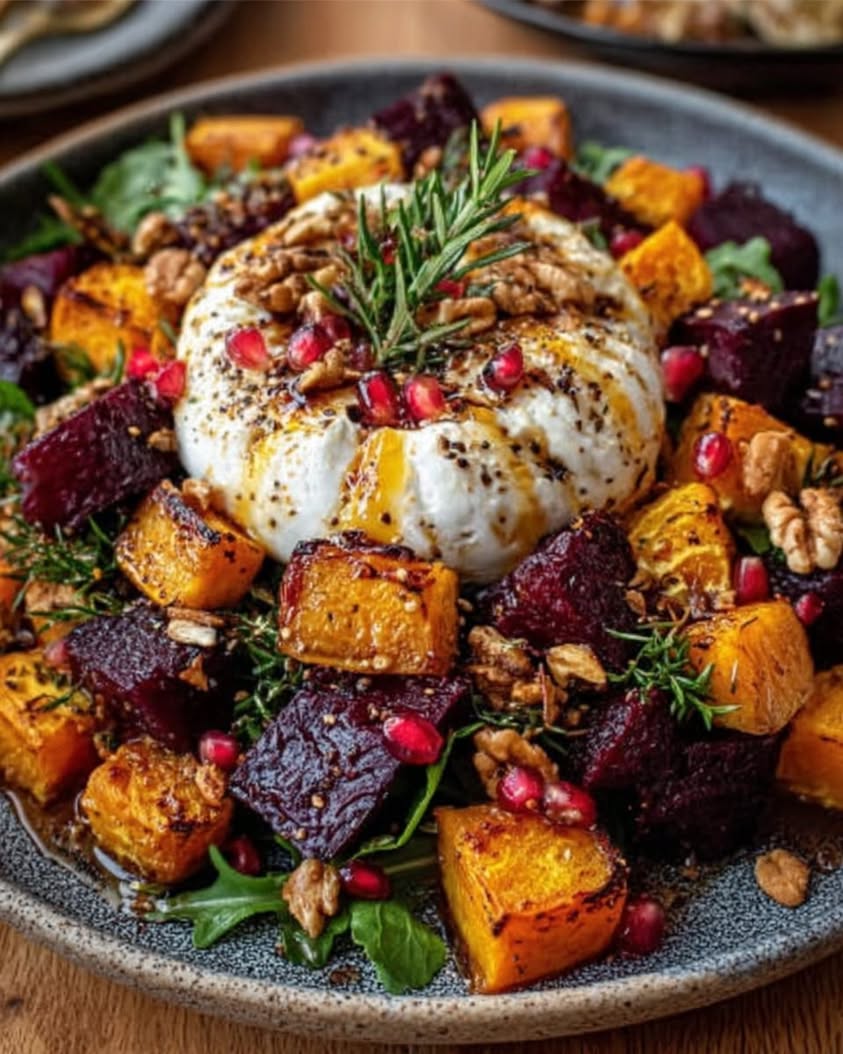
Roasted Beet and Butternut Squash Christmas Nest with Hot Honey: A Festive Holiday Showstopper
Welcome the holiday season with a centerpiece that dazzles the eyes and delights the palate. This Roasted Beet and Butternut Squash Christmas Nest with Hot Honey is not just a salad. It is a vibrant celebration on a plate, designed to become the star of your festive table. Imagine sweet roasted beets and caramelized butternut squash ribbons, artfully arranged into a cozy nest. Then picture creamy burrata cheese nestled in the center, all finished with a spicy-sweet hot honey drizzle. This dish masterfully balances earthy, sweet, creamy, and spicy flavors in every single bite.
Creating this Roasted Beet and Butternut Squash Christmas Nest is surprisingly straightforward. The process transforms humble root vegetables into an elegant masterpiece. Roasting concentrates their natural sugars, resulting in deep, caramelized flavors. Meanwhile, the hot honey adds a modern kick that cuts through the richness of the cheese. This recipe is perfect for holiday entertaining because it can be partially prepared ahead. Ultimately, it delivers a stunning visual impact with minimal last-minute fuss, allowing you to enjoy the party alongside your guests.
Quick Recipe Highlights
- Flavor Profile: This dish offers a beautiful harmony. Earthy roasted beets meet the sweet, nutty caramelization of butternut squash. Consequently, the creamy, mild burrata provides a luxurious contrast. Finally, the spicy-sweet hot honey drizzle ties every element together with a gentle kick.
- Texture: You will experience a wonderful contrast. Tender, juicy roasted vegetables play against the ultra-creamy, soft burrata. Additionally, toasted pepitas or walnuts add a crucial element of crunch. This combination ensures every bite is interesting and satisfying.
- Aroma: As the vegetables roast, your kitchen will fill with sweet, caramelized scents. The hot honey, infused with chili, adds a warm, spicy fragrance. When combined, these aromas create an unmistakably festive and inviting atmosphere.
- Visual Appeal: The presentation is truly stunning. Vibrant red and orange vegetable ribbons form a rustic nest. Then, the snowy white burrata ball sits proudly in the center. A glossy honey drizzle and green herb garnish complete the picture-perfect holiday plate.
- Skill Level Needed: This recipe is accessible to intermediate home cooks. It requires basic knife skills for peeling and slicing vegetables. Additionally, it involves simple roasting techniques and an easy, no-cook sauce. Artistic plating is encouraged but forgiving.
- Special Equipment: A sharp peeler or mandoline is helpful for creating long, thin squash ribbons. Otherwise, you only need standard baking sheets, parchment paper, and a small bowl for mixing the hot honey. No fancy equipment is necessary.
Recipe Overview
- Difficulty Level: We rate this Roasted Beet and Butternut Squash Christmas Nest as medium difficulty. The steps are simple, but the presentation requires a bit of artistic assembly. Peeling and cutting the vegetables uniformly is the most technically demanding part. However, with patience, even a novice can achieve beautiful results.
- Category: This versatile dish fits multiple categories perfectly. It serves as a spectacular vegetarian main course for holiday meals. Alternatively, it makes an impressive side dish or salad alongside roast turkey or ham. Consider it a festive centerpiece for any winter gathering.
- Cuisine: The recipe draws inspiration from modern American and Italian culinary traditions. The use of burrata is a nod to Italian cheesemaking. Meanwhile, the hot honey drizzle is a popular contemporary American condiment. The combination creates a fusion dish that feels both rustic and sophisticated.
- Cost: This is a moderately priced holiday dish. Root vegetables like beets and squash are affordable, especially in season. Burrata cheese is the premium ingredient, but one ball serves four people generously. Overall, you create a luxurious-looking dish without a luxurious price tag.
- Season: This recipe is ideal for fall and winter. Beets and butternut squash are at their peak sweetness during these cooler months. Their warm colors and hearty nature embody the essence of the holiday season. Therefore, it is the perfect dish for Thanksgiving through Christmas.
- Occasion: It is designed for special occasions and entertaining. Serve it at Christmas Eve dinner, Thanksgiving, or a festive winter potluck. The dramatic presentation makes it ideal for any gathering where you want to impress your guests with both flavor and beauty.
Why You’ll Love This Recipe
First and foremost, the taste and texture are absolutely unforgettable. Each component of this Roasted Beet and Butternut Squash Christmas Nest brings something unique. The beets offer an earthy depth, while the squash provides a comforting sweetness. Then, the burrata delivers an incredible creamy contrast that melts in your mouth. Finally, the hot honey adds a spark of excitement that wakes up all the other flavors. This combination is complex yet harmonious, making every forkful a delightful experience.
Next, consider the convenience and preparation benefits. You can roast the vegetables well in advance, which is a huge time-saver during busy holidays. Simply store them in the fridge and bring them to room temperature before assembling. The hot honey takes minutes to whisk together and can be made days ahead. Consequently, when your guests arrive, you only need to arrange the nest and add the cheese. This make-ahead strategy reduces stress and lets you enjoy your own party.
Furthermore, this dish boasts impressive nutritional advantages. Beets are packed with fiber, folate, and immune-boosting vitamins. Butternut squash is rich in Vitamin A, which is essential for eye health. Additionally, the healthy fats from olive oil and the protein from the cheese make this a satisfying, balanced dish. You are serving a colorful plate full of phytonutrients and antioxidants. It is a celebration of food that is as wholesome as it is delicious.
Moreover, the social and entertaining value is through the roof. This Roasted Beet and Butternut Squash Christmas Nest is a guaranteed conversation starter. Its stunning appearance creates a “wow” moment when you bring it to the table. Guests will admire your creativity and be eager to taste it. It shows care and effort, making everyone feel special. Serving such a beautiful dish elevates the entire dining experience and creates lasting memories.
Finally, it is cost-effective and accessible. The main ingredients are humble root vegetables, which are budget-friendly. You can find them at any grocery store, especially in autumn. The burrata is a splurge, but a little goes a long way in terms of impact. Compared to an expensive meat main course, this vegetarian centerpiece is quite economical. You achieve a luxurious, restaurant-quality presentation without the restaurant price tag.
Historical Background and Cultural Significance
The concept of a “nest” in cuisine often symbolizes comfort, home, and nurturing. Throughout culinary history, chefs have used ingredients to create basket or nest shapes for presentation. This Roasted Beet and Butternut Squash Christmas Nest taps into that tradition with a modern, vegetable-forward twist. Using roasted vegetable ribbons is a contemporary technique that highlights natural beauty and texture. The nest shape is particularly fitting for Christmas, echoing imagery of wreaths, garlands, and cozy gatherings.
Burrata cheese has its own rich cultural history from the Puglia region of Italy. Traditionally, it was made from the leftover scraps of mozzarella production. Cheesemakers would create a pouch of fresh mozzarella and fill it with creamy stracciatella and cream. This “buttered” cheese, which is what “burrata” means, was a way to waste nothing. Its luxurious texture was a humble farmer’s secret. Today, it is celebrated worldwide as a premium ingredient, representing the beauty of Italian artisan food craftsmanship.
The use of hot honey is a relatively recent culinary trend that gained popularity in American restaurants. It combines the universal sweetness of honey with the heat of chili peppers. This sweet-heat combination has roots in many global cuisines, from Korean gochujang to Mexican chamoy. In this recipe, it acts as a bridge, connecting the earthy vegetables and rich cheese. It adds a layer of complexity that feels both familiar and excitingly new.
Roasting root vegetables is one of the oldest cooking methods, dating back to cooking over open fires. This technique caramelizes the natural sugars, transforming simple produce into deeply flavorful food. The Christmas connection with beets and squash is natural; these are storage crops available in winter. They represent the harvest and sustenance through the cold months. By combining these ancient ingredients with modern presentation, this recipe honors tradition while feeling fresh and innovative.
Ingredient Deep Dive
Let us start with beets. These vibrant root vegetables have been cultivated since ancient times. Notably, they were initially grown for their leafy greens, not their roots. Beets are nutritional powerhouses, rich in folate, manganese, and dietary fiber. They also contain betalains, pigments with potent antioxidant and anti-inflammatory properties. When selecting beets, choose firm, smooth bulbs with vibrant greens attached if possible. Store them unwashed in the refrigerator crisper drawer. For a substitution, try golden beets for a less earthy flavor or roasted carrots for a different sweetness.
Butternut squash is a winter squash native to the Americas. It became a staple food for many Indigenous cultures long before European colonization. This squash is exceptionally high in Vitamin A, provided as beta-carotene, which is crucial for vision and immune function. A good butternut squash should feel heavy for its size and have a hard, matte skin. Store whole squash in a cool, dark place for months. If you need a substitute, sweet potato or acorn squash ribbons would work beautifully in this Christmas nest.
Burrata cheese is the star of this show. As mentioned, it originates from Puglia, Italy. The outer shell is solid mozzarella, while the inside contains stracciatella and cream, giving it a uniquely soft, almost liquid center. It is a good source of protein and calcium. Always seek out the freshest burrata possible, checking the package date. It is highly perishable, so buy it just before use and keep it refrigerated. If unavailable, fresh mozzarella (mozzarella di bufala is best) or a large scoop of ricotta can be a simpler substitute.
Hot honey is the simple yet transformative finishing touch. Honey itself has been prized by humans for thousands of years. The chili infusion adds capsaicin, which can boost metabolism and release endorphins. To make it, gently warm honey and infuse it with dried chili flakes, allowing the heat to meld without cooking the honey. Use a quality, raw honey for the best flavor. Store homemade hot honey in a sealed jar at room temperature. For a substitute, mix maple syrup with a pinch of cayenne pepper.
Common Mistakes to Avoid
- Overcrowding the Baking Sheet: Do not pile the vegetable ribbons on top of each other. They will steam instead of roast, becoming soggy. Always use two sheets or roast in batches to ensure proper caramelization and texture.
- Underseasoning the Vegetables: Vegetables need ample seasoning before roasting. Do not be shy with salt and pepper. Proper seasoning draws out moisture and enhances the natural flavors during the cooking process.
- Using Cold Burrata: Taking the burrata straight from the fridge results in a firm, cold center. Let it sit at room temperature for 20-30 minutes before serving. This allows the creamy interior to soften properly.
- Slicing Squash Too Thick: If the butternut squash ribbons are too thick, they will not become pliable enough to form the nest. Aim for long, thin strips using a sharp peeler or mandoline for the best results.
- Burning the Hot Honey: Never boil the honey when infusing the chili. Excessive heat destroys its delicate flavors. Gently warm it just enough to combine with the chili flakes, then let it steep off the heat.
- Skipping the Acid: While not in the base recipe, a small splash of good balsamic vinegar or a squeeze of lemon juice over the assembled nest can elevate it. It cuts the richness and brightens all the flavors.
- Assembling Too Early: If you build the nest more than 30 minutes before serving, the vegetables can lose their texture and the burrata may weep. Assemble just before you are ready to present and eat.
- Forgetting to Toast the Nuts: Raw pepitas or walnuts can taste bland. Always take a minute to toast them in a dry pan. This simple step unlocks their nutty flavor and adds essential crunch.
Essential Techniques
Mastering the vegetable ribbon cut is crucial for this Roasted Beet and Butternut Squash Christmas Nest. Use a sharp Y-peeler or a mandoline on a thin setting. First, peel the squash thoroughly. Then, apply steady pressure to create long, continuous strips. For the beets, a mandoline is safer and more effective for uniform slices. This technique maximizes surface area for caramelization. It also creates the flexible “straw” needed to weave the nest. The key is patience and consistent pressure.
Proper roasting is the next non-negotiable technique. Preheat your oven thoroughly for even cooking. Toss the vegetable ribbons in oil, salt, and pepper until each piece is lightly coated. Spread them in a single layer on parchment-lined sheets. Do not stir them too early; let them develop a sear. Roast until the edges are caramelized and the centers are tender. This dry-heat method concentrates flavor and creates a slight chewiness, perfect for nest construction.
Infusing the hot honey requires a gentle touch. Combine honey and chili flakes in a small saucepan. Warm over the lowest heat possible, just until the mixture becomes fluid and the chili aroma blooms. Immediately remove from heat and let it steep. The residual heat will continue to infuse the flavor without burning the sugars. This technique preserves the raw honey’s complexity while marrying it with the chili’s spice. Stir it well before drizzling.
Pro Tips for Perfect Roasted Beet and Butternut Squash Christmas Nest
Wear gloves when handling beets to prevent stained hands. Alternatively, you can use a fork to hold the beet steady while peeling. This simple trick keeps your kitchen and hands clean.
Use a mix of golden and red beets for a stunning multi-colored nest. Just be sure to roast them on separate trays. Otherwise, the red beets will dye everything pink.
Let the roasted vegetables cool slightly before handling. They will be more pliable and easier to shape into the nest without breaking. Warm vegetables are easier to work with than cold ones.
Create the nest directly on your serving platter. Build a circular base layer, then stack and weave the ribbons upward to form the sides. This avoids a messy transfer later.
Gently tear the burrata ball open just before placing it in the center. This allows the creamy interior to spill out beautifully, creating an inviting visual.
Drizzle the hot honey in a zig-zag pattern over the entire nest, not just the cheese. This ensures every bite gets a hint of sweet heat.
Add fresh, delicate herbs like microgreens, dill, or chervil as a final garnish. The green color provides a fresh contrast against the vibrant vegetables and white cheese.
Variations and Adaptations
For regional variations, consider the ingredients around you. In the Mediterranean, add olives and oregano to the roast. A French twist might include herbes de Provence and a drizzle of truffle oil. In the American South, use pecans instead of pepitas and add a touch of smoked paprika to the oil.
Seasonal adaptations are easy. In spring, use roasted asparagus and radishes with fresh peas. For summer, try zucchini ribbons and roasted cherries with goat cheese. The nest concept is versatile, so let the farmer’s market guide you.
Dietary modifications are straightforward. For a vegan version, replace burrata with a cashew-based cheese or a ripe avocado half. Make it gluten-free by ensuring all packaged ingredients, like chili flakes, are certified GF. For a nut-free option, use toasted sunflower seeds instead of pepitas.
Experiment with flavor variations. Add orange zest to the roasting oil for a citrus note. Sprinkle the finished nest with pomegranate arils for festive jewels and a tart pop. Infuse the honey with rosemary or thyme instead of chili for an herbal profile.
Serving and Presentation Guide
Plating is everything for this dish. Choose a large, flat platter or a beautiful wooden board. Build the nest slightly off-center for a more dynamic look. Let some vegetable ribbons cascade over the edge for a rustic, abundant feel. Place the burrata in the center, then use the back of a spoon to gently press and open it.
Garnishing adds the final touch. Beyond herbs, consider edible flowers in winter, like pansies. A light dusting of flaky sea salt over the burrata highlights its creaminess. Add texture with the toasted nuts or seeds, scattering them both inside the nest and around the plate.
For accompaniments, crusty bread is a must for scooping up the creamy cheese and vegetables. Serve it as a main with a simple arugula salad dressed in lemon. As a side, it pairs wonderfully with roast chicken, pork tenderloin, or baked ham.
Wine and Beverage Pairing
Wine pairings should complement the earthy sweetness and creamy cheese. A dry Riesling or Grüner Veltliner works beautifully, as their acidity cuts through the richness. A light-bodied Pinot Noir with earthy notes can mirror the beets. For a festive sparkler, a dry Prosecco or Crémant cleanses the palate between bites.
Non-alcoholic alternatives can be just as thoughtful. A sparkling apple cider echoes the autumnal flavors. A ginger beer provides a spicy kick that plays well with the hot honey. For a warm option, a thyme-infused tea is surprisingly complementary.
Serve beverages chilled but not ice-cold, as extreme temperatures can numb the palate. Allow red wines to breathe slightly before serving. Present non-alcoholic options in elegant glassware to make them feel special for all guests.
Storage and Shelf Life
Store components separately for best results. Keep roasted vegetables in an airtight container in the refrigerator for up to 4 days. Store burrata in its original liquid in the fridge and consume by the date on the package. Hot honey can be kept at room temperature in a sealed jar for several weeks.
The fully assembled dish does not store well and should be eaten immediately. The vegetables will wilt, and the burrata will continue to release moisture. If you have leftovers, deconstruct them. Store the cheese separately from the vegetables.
Reheating is not recommended for the assembled dish. If you have leftover roasted vegetables, you can enjoy them cold or gently reheat them in a skillet. The burrata is best served fresh and should not be reheated.
Make Ahead Strategies
You can prep this Roasted Beet and Butternut Squash Christmas Nest almost entirely in advance. Roast the vegetable ribbons 1-2 days ahead. Let them cool completely, then store them in a container layered with parchment paper in the fridge. Make the hot honey up to a week in advance.
On the day of serving, take the roasted vegetables out of the fridge about an hour before assembling. This takes the chill off. Remove the burrata from the fridge 30 minutes before serving. Then, simply construct the nest, add the cheese, drizzle, and garnish. This plan makes holiday hosting seamless.
Scaling Instructions
To halve the recipe, use one medium beet and half a small squash. Roast on a single baking sheet. Use a smaller ball of burrata or fresh mozzarella. The assembly technique remains the same, creating a cozy nest for two.
Doubling or tripling for a crowd is easy. Use multiple baking sheets and rotate them in the oven for even cooking. Consider making individual nests on small plates for a plated first course. This presentation is elegant and ensures everyone gets a perfect portion.
When scaling up, your main adjustment is oven space and time. You may need to roast in consecutive batches. Keep the finished batches warm in a low oven if assembling all at once. Prepare a larger quantity of hot honey in a bigger jar.
Nutritional Deep Dive
This dish is a nutrient-dense choice. Beets provide nitrates that may help support blood pressure and athletic performance. Butternut squash is loaded with beta-carotene for eye and skin health. Olive oil contributes heart-healthy monounsaturated fats. Burrata offers protein and calcium, though it is higher in saturated fat, so portion awareness is key.
The macro breakdown will vary, but a serving provides a balance of complex carbohydrates from the vegetables, fats from the oil and cheese, and moderate protein. It is a fiber-rich dish, aiding digestion and promoting satiety. The honey adds simple sugars, but a little goes a long way in terms of flavor.
For weight management, this is a satisfying, vegetable-forward dish. To lighten it slightly, you can reduce the amount of olive oil used for roasting by using a spray. You can also use a smaller portion of burrata or opt for part-skim fresh mozzarella.
Dietary Adaptations
For a gluten-free version, this recipe is naturally compliant. Just double-check that your chili flakes are certified gluten-free, as cross-contamination can sometimes occur in processing facilities.
To make it dairy-free or vegan, omit the burrata. Substitute with a vegan cashew or almond-based “cheese” ball. Alternatively, a large, ripe avocado half pitted and seasoned with salt makes a beautiful, creamy center.
A Paleo adaptation would replace the burrata with a compliant protein like grilled chicken or shrimp placed in the center. Ensure the honey is raw and unprocessed to fit strict Paleo guidelines.
For a lower-carb or Keto approach, reduce the amount of butternut squash and increase the beets slightly, as beets are lower in net carbs. Omit the honey drizzle and replace it with a spicy olive oil infusion.
Troubleshooting Guide
If your vegetables are soggy, they were likely overcrowded on the pan. Next time, use more surface area. For now, you can try crisping them in a hot skillet for a few minutes to evaporate excess moisture before building the nest.
If the nest won’t hold its shape, your vegetable ribbons might be too short or too thick. Use them to create a solid base layer first, then use the longest ribbons to build the walls. You can also use a small, greased ring mold as a guide for the first layer.
If the hot honey is too spicy, gently warm it again and stir in more plain honey to dilute the heat. If it’s not spicy enough, add a pinch of cayenne pepper or more crushed chili flakes and let it steep longer.
If the burrata is too firm and not creamy, it may not be fresh enough. Unfortunately, there is no fix for old burrata. For future reference, always check the date and buy from a reputable source with high turnover. Fresh mozzarella is a more reliable backup.
Recipe Success Stories
Many home cooks have shared their joy in making this centerpiece. One reader used it as her vegetarian Thanksgiving main and received rave reviews from her meat-loving family. She added toasted pecans and said the sweet-hot combination was a revelation.
Another cook made mini versions in small, individual skillets for a Christmas dinner party. She pre-roasted the vegetables and assembled the nests just before guests arrived. This individual presentation was a huge hit and made serving effortless.
A creative parent got their kids involved by having them help weave the vegetable ribbons into the nest shape. The children were more excited to eat their “creation,” proving this dish is a fun way to engage the whole family in cooking.
Frequently Asked Questions
Can I use pre-cooked beets? Yes, you can use vacuum-sealed cooked beets to save time. However, pat them very dry and toss them with oil before a brief roast. This step is crucial to caramelize them and improve their texture for the nest.
What can I use instead of a mandoline? A sharp vegetable peeler is the best alternative. For the beets, a very sharp knife and careful, thin slicing will work. The key is uniformity so everything roasts evenly and becomes pliable.
How do I prevent the beets from staining everything? Roast red beets on a separate tray from the squash and golden beets. You can also toss them in oil separately. Cleaning your cutting board and knife immediately with soap helps prevent stains.
Can I make this nut-free? Absolutely. Simply omit the pepitas or substitute them with toasted sunflower seeds. Ensure all other ingredients are processed in nut-free facilities if you have a severe allergy.
Is burrata served cold or room temperature? Room temperature is ideal. The creamy interior becomes soft and luscious. Take it out of the fridge 20-30 minutes before serving for the best texture and flavor experience.
My squash ribbons broke. What did I do wrong? They may have been sliced too thin or roasted a bit too long. It is okay! Use the broken pieces as the base of the nest and save the longest, most intact ribbons for the visible top layer and sides.
Can I prepare the entire nest a day ahead? We do not recommend it. The vegetables will lose their texture and the burrata will weep. Prep the components ahead, but assemble no more than 30 minutes before serving for peak quality.
What’s the best way to heat the honey? Use the lowest heat setting on your stove. You can also place the honey and chili in a heatproof jar and warm it in a bowl of hot water, stirring until combined. This gentle method prevents burning.
Can I use a different cheese? Yes. Fresh mozzarella (bocconcini or a large ball) is the closest substitute. A log of creamy goat cheese or even a dollop of high-quality ricotta would also be delicious, though the presentation will differ.
How do I store leftovers? Deconstruct them. Store the roasted vegetables and burrata separately in airtight containers in the fridge for 1-2 days. The vegetables are great on salads or in grain bowls the next day.
Additional Resources
If you loved this Roasted Beet and Butternut Squash Christmas Nest, explore other vegetable-centric holiday dishes. A shredded Brussels sprout salad with apples and walnuts offers a similar festive crunch. A roasted carrot and farro salad with feta is another hearty, colorful option. For another showstopper, try a whole roasted cauliflower with a vibrant herb sauce.
To improve your skills, practice basic knife skills for safe, uniform cutting. Learn about the different types of winter squash and their best uses. Understanding how to balance sweet, salty, acidic, and spicy flavors will make you a more confident cook for any recipe.
For equipment, a good quality mandoline (with a safety guard!) is a worthwhile investment for thin, even slices. Half-sheet pans with parchment paper are roasting essentials. A microplane is perfect for zesting citrus over the finished dish for an extra bright note.
{“success”:true,”message”:”Recipe created successfully”,”post_id”:7613,”tasty_recipe_id”:7613,”shortcode”:” Print
Roasted Beet, Butternut & Burrata Christmas Nest with Hot Honey Drizzle
Description
A festive and colorful holiday salad featuring roasted beets and butternut squash arranged in a nest-like presentation, topped with creamy burrata and a spicy-sweet hot honey drizzle.
Ingredients
For the Crust:
- 2 medium beets, peeled and cubed
- 1 small butternut squash, peeled and cubed
- 2 tablespoons olive oil
- 1 teaspoon salt
- 1/2 teaspoon black pepper
- 1 teaspoon dried thyme
- 8 ounces burrata cheese
- 1/4 cup honey
- 1 teaspoon red pepper flakes
- 1 tablespoon apple cider vinegar
- Fresh arugula for serving
- Pomegranate seeds for garnish
- Chopped walnuts for garnish
Instructions
1. Prepare the Crust:
- Preheat oven to 400°F (200°C). Toss cubed beets and butternut squash with olive oil, salt, pepper, and thyme. Spread on a baking sheet and roast for 25-30 minutes until tender and slightly caramelized.
- While vegetables roast, prepare the hot honey drizzle: In a small saucepan, combine honey, red pepper flakes, and apple cider vinegar. Heat over low for 5 minutes, stirring occasionally, until warm and infused. Remove from heat and let cool slightly.
- Arrange a bed of fresh arugula on a serving platter. Once roasted vegetables are done, let cool for 5 minutes, then arrange them in a circular nest shape on top of the arugula.
- Place the burrata in the center of the vegetable nest. Drizzle the hot honey over the burrata and vegetables. Garnish with pomegranate seeds and chopped walnuts. Serve immediately.
Notes
You can customize the seasonings to taste.

I’m Billy, a classically trained culinary school graduate from The Culinary Institute of America with over 12 years in the restaurant industry and over 19 years of cooking experience.