
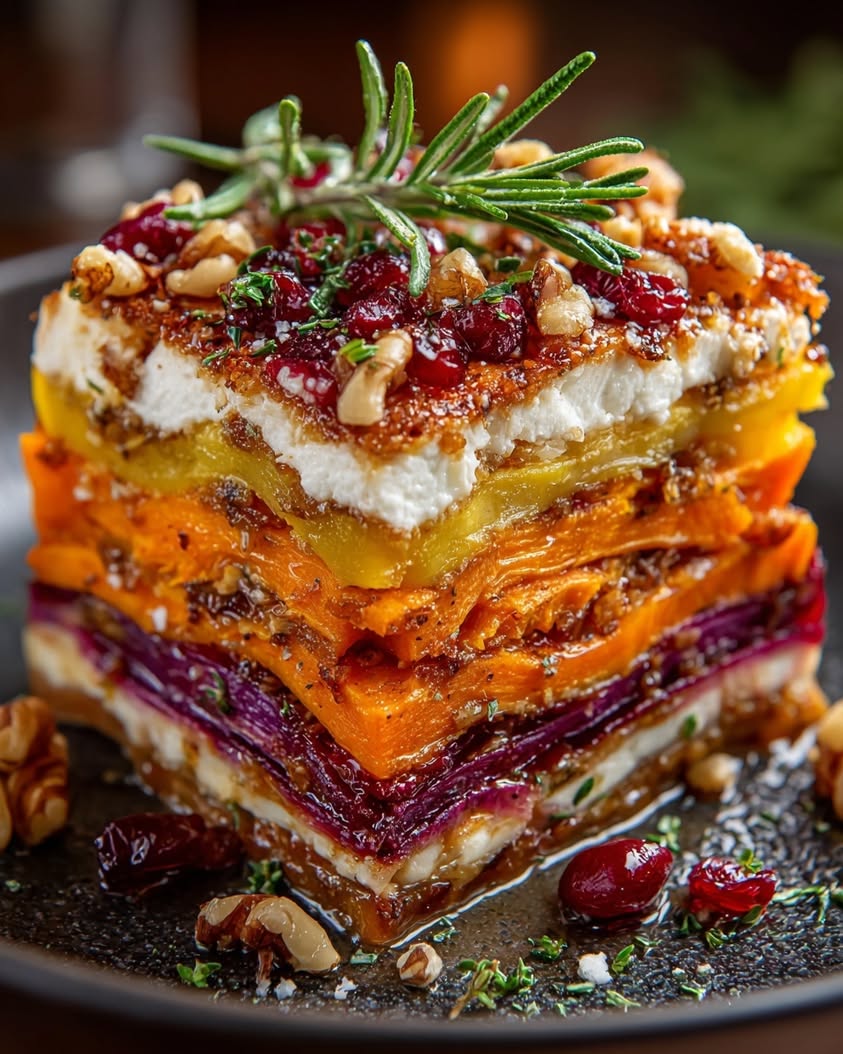
Layered Sweet Potato Pumpkin Lasagna with Feta & Cranberry Glaze: A Festive Vegetarian Masterpiece
Imagine a dish that captures the very essence of a cozy autumn feast, a stunning centerpiece that is as nourishing as it is beautiful. This Layered Sweet Potato Pumpkin Lasagna with Feta & Cranberry Glaze is precisely that. It reimagines the classic Italian pasta bake into a vibrant, vegetable-forward celebration. Moreover, it layers roasted sweet potato and pumpkin with creamy ricotta, savory feta, and toasted walnuts. Finally, a sweet-tart cranberry-honey glaze cascades over the top, creating a symphony of fall flavors in every single bite.
This recipe is perfect for anyone seeking a show-stopping vegetarian main course for the holidays or a special weekend dinner. It skillfully balances sweet and savory notes, while also offering a wonderful contrast of textures. The tender vegetable layers melt in your mouth, the walnuts provide a satisfying crunch, and the salty feta cheese cuts through the natural sweetness. Consequently, each forkful is a complex and delightful experience. This dish proves that comfort food can be both incredibly elegant and packed with wholesome ingredients.
Furthermore, this Layered Sweet Potato Pumpkin Lasagna is a fantastic make-ahead option, allowing you to enjoy the company of your guests rather than being stuck in the kitchen. The flavors actually deepen and meld together beautifully when assembled a day in advance. Whether you are serving a crowd or enjoying flavorful leftovers, this recipe is designed to impress and satisfy. It is a testament to how versatile and exciting vegetable-based cooking can be, especially when you combine classic techniques with seasonal produce.
Quick Recipe Highlights
- Flavor Profile: This dish masterfully combines the earthy sweetness of roasted root vegetables with the tangy saltiness of feta cheese. The cranberry-honey glaze introduces a bright, fruity acidity that ties all the elements together, creating a perfectly balanced and complex taste.
- Texture: Expect a luxurious contrast between the silky, soft layers of sweet potato and pumpkin and the creamy ricotta filling. Toasted walnuts add a crucial crunchy element, while the baked top develops a slightly caramelized, appealing texture.
- Aroma: As it bakes, your kitchen will fill with the warm, comforting scents of roasting pumpkin and sweet potato, mingled with aromatic sage and the nutty fragrance of toasting walnuts. The final drizzle of warm honey and cranberry adds a festive, fruity note.
- Visual Appeal: The cross-section reveals stunning stripes of vibrant orange and white, speckled with green sage and brown walnuts. The deep red cranberry glaze on top makes for a gorgeous, holiday-worthy presentation that is naturally colorful.
- Skill Level Needed: This is an intermediate recipe due to the multiple components requiring preparation. However, the steps are straightforward: roasting vegetables, mixing fillings, and layering. With good organization, even confident beginners can achieve excellent results.
- Special Equipment: A mandoline slicer is highly recommended for achieving uniformly thin vegetable slices, which ensures even cooking. You will also need a good baking dish, parchment paper for easy roasting, and a small saucepan for the glaze.
Recipe Overview
- Difficulty Level: We classify this Layered Sweet Potato Pumpkin Lasagna as intermediate. The process involves coordinating several components—roasting vegetables, preparing two cheese mixtures, toasting nuts, and making a glaze. However, each individual step is simple and the assembly is methodical. With careful reading and mise en place (prepping all ingredients beforehand), the recipe flows smoothly from start to finish.
- Category: This dish sits proudly as a vegetarian main course. It is substantial enough to be the star of any dinner table. Additionally, it can be served as a luxurious side dish alongside a roast for a larger holiday meal. It fits beautifully into the categories of comfort food, holiday cooking, and healthy dinners.
- Cuisine: While inspired by the layered structure of traditional Italian lasagna, this recipe is a modern fusion. It draws on Mediterranean flavors with the feta and olive oil, incorporates classic American Thanksgiving ingredients like sweet potato and cranberry, and uses a French technique for a vegetable terrine. The result is a globally-inspired, contemporary vegetarian dish.
- Cost: The cost is moderate, largely dependent on whether you purchase pre-cut vegetables or whole ones. Sweet potatoes, carrots, and pumpkin are typically affordable, especially in season. Ricotta and feta are mid-range dairy products. Walnuts and fresh cranberries may be the pricier items, but they are used in modest amounts. Overall, it delivers restaurant-quality presentation at a fraction of the price.
- Season: This recipe is quintessential fall and winter cooking. It utilizes the peak harvest produce of sweet potatoes, pumpkins (or squash), and cranberries. The warm, hearty, and slightly sweet nature of the dish is perfect for cooler weather. It brings the colors and flavors of the season directly to your plate.
- Occasion: This lasagna is ideal for holiday gatherings like Thanksgiving, Christmas, or Friendsgiving where a spectacular vegetarian centerpiece is needed. It is also wonderful for a special Sunday family dinner, potlucks where you want to stand out, or any autumn celebration. It is a dish that says “special occasion” without requiring exotic ingredients.
Why You’ll Love This Recipe
First and foremost, the taste and texture appeal of this Layered Sweet Potato Pumpkin Lasagna is extraordinary. Every bite delivers a harmonious blend of sweet, savory, creamy, and crunchy. The natural sugars in the vegetables caramelize slightly during roasting, deepening their flavor. Then, the rich ricotta and sharp feta provide a creamy, tangy counterpoint. Toasted walnuts break up the softness with their satisfying crunch. Finally, the cranberry-honey glaze cuts through the richness with a pop of bright, tart sweetness. This combination ensures your palate never gets bored, making it a truly engaging eating experience.
From a convenience standpoint, this recipe offers significant preparation benefits. While there are multiple components, many can be prepared in advance. You can roast the vegetables and toast the walnuts a day ahead. Similarly, you can mix the cheese fillings and make the glaze beforehand. On the day of serving, assembly is quick and baking is mostly hands-off. This strategic make-ahead approach transforms what seems like a complex dish into a manageable plan for entertaining. You get to present a stunning, hot meal without the last-minute kitchen frenzy.
Nutritionally, this dish is a powerhouse. Sweet potatoes and pumpkin are loaded with beta-carotene, which converts to Vitamin A, essential for vision and immunity. Carrots add more fiber and vitamins. Ricotta provides a good source of protein and calcium. Walnuts contribute healthy omega-3 fats. Using vegetables as the “pasta” layers also increases the vitamin density and reduces refined carbohydrates compared to traditional lasagna. Consequently, you are serving a meal that is as nourishing as it is indulgent, perfect for fueling your body during the colder months.
The social and entertaining value of this Layered Sweet Potato Pumpkin Lasagna cannot be overstated. It is a visually stunning dish that creates an instant “wow” moment when brought to the table. It caters beautifully to vegetarian guests without feeling like an afterthought, and even meat-eaters will be delighted by its heartiness. Serving a beautiful, homemade centerpiece fosters a sense of warmth and celebration. It is a conversation starter and a dish that people will remember and request again.
Finally, this recipe is cost-effective and accessible. The core ingredients are humble root vegetables and common dairy products. You do not need expensive meat or rare spices. A butternut squash can often stand in for pumpkin, and pecans can substitute for walnuts if needed. The recipe is forgiving and adaptable based on what is available or on sale. This accessibility means you can create a luxurious, impressive feast without stretching your grocery budget, making special occasion dining more attainable for everyone.
Historical Background and Cultural Significance
The concept of layering ingredients is ancient and spans many cultures, from Greek pastitsio to Middle Eastern moussaka. However, the direct inspiration for this Layered Sweet Potato Pumpkin Lasagna comes from the Italian classic, lasagna al forno. Traditional lasagna, originating from the Emilia-Romagna region, typically uses pasta sheets, ragù, béchamel, and Parmigiano-Reggiano. This recipe represents a modern, vegetable-centric evolution of that form. It swaps pasta for thinly sliced vegetables, reflecting a contemporary culinary trend towards gluten-free and vegetable-forward interpretations of classic dishes. This innovation speaks to the adaptability of Italian cuisine as it travels and merges with local ingredients worldwide.
Culturally, this dish taps into the deep significance of harvest vegetables in North American and European autumn traditions. Pumpkins and squash are iconic symbols of fall, associated with harvest festivals like Thanksgiving. Sweet potatoes hold a cherished place on Southern American tables and have become a holiday staple. Cranberries, native to North America, have been used by Indigenous peoples for centuries and are synonymous with Thanksgiving sauce. By combining these elements, the recipe creates a cultural fusion that celebrates New World ingredients within an Old World culinary structure. It is a dish that feels both familiar and novel.
The evolution of this specific recipe follows the broader trend of “vegetable lasagnas” that gained popularity with the rise of vegetarianism and low-carb diets in the late 20th and early 21st centuries. Zucchini and eggplant were early stand-ins for pasta. Using sweet potato and pumpkin is a natural progression, leveraging their sturdy texture and sweet flavor. The addition of a fruit-based glaze, like the cranberry-honey here, is a more recent gourmet touch, borrowing from the fine dining practice of using fruit reductions with savory dishes. This evolution shows how home cooking continuously absorbs ideas from restaurant trends and dietary movements.
Regional variations of this concept are endless. In the American South, you might find a version with candied pecans and a bourbon glaze. A Mediterranean variation could incorporate spinach into the ricotta and use a pomegranate molasses drizzle. In a Nordic-inspired take, you might use parsnips and rutabaga with a lingonberry sauce. The basic template—layered roasted vegetables, a creamy binding element, a crunchy nut, and a tart-sweet garnish—is incredibly versatile. This adaptability is a testament to the recipe’s strong foundation; it provides a canvas for expressing regional tastes and seasonal availability, ensuring it can be recreated and personalized across the globe.
Ingredient Deep Dive
Sweet Potatoes: Botanically distinct from yams, sweet potatoes are native to Central and South America and have been cultivated for over 5,000 years. They are a nutritional powerhouse, exceptionally high in beta-carotene (Vitamin A), Vitamin C, manganese, and fiber. Their natural sweetness intensifies when roasted. For this lasagna, select firm, medium-sized sweet potatoes with smooth, unbruised skin. Avoid refrigerating them, as cold temperatures can negatively affect their flavor and texture. Store them in a cool, dark, well-ventilated place. If you cannot find sweet potatoes, garnet yams are a suitable substitute, though slightly sweeter and more moist.
Pumpkin (or Butternut Squash): For this recipe, sugar pumpkin or butternut squash are ideal for their dense, sweet flesh and low moisture content. Pumpkins are one of the oldest domesticated plants, originating in North America over 7,500 years ago. They are rich in beta-carotene, potassium, and antioxidants. Choose a pumpkin that feels heavy for its size with a firm, unblemished rind. Butternut squash, with its easier-to-peel neck, is often a more convenient choice. Store whole squash in a cool, dark place. Once cut, wrap tightly and refrigerate. Acorn or kabocha squash can also work, but may alter the sweetness and texture slightly.
Carrots: Carrots add an extra layer of earthy sweetness and a beautiful color contrast. Originally purple and yellow in Central Asia, the orange carrot we know today was developed in the Netherlands in the 17th century. They are an excellent source of beta-carotene, fiber, Vitamin K1, and potassium. For the best texture and flavor, use fresh, firm carrots without cracks or limp greens. There is no need to peel them if scrubbed well; the skin contains nutrients. Store carrots in the refrigerator in a plastic bag to retain moisture. Parsnips could be used as a slightly more peppery alternative.
Ricotta Cheese: Ricotta, meaning “recooked” in Italian, is a fresh whey cheese with a mild, slightly sweet flavor and a grainy, creamy texture. It acts as the primary binding and creamy element in this lasagna, replacing traditional béchamel. Look for whole-milk ricotta for the richest flavor and texture. For a smoother filling, you can drain excess liquid by letting it sit in a fine-mesh strainer for 30 minutes. Store ricotta in its original container in the coldest part of your refrigerator. For a dairy-free version, well-drained, firm tofu blended with lemon juice and nutritional yeast can mimic the texture.
Feta Cheese: Feta is a brined curd cheese from Greece, traditionally made from sheep’s milk or a sheep-goat blend. Its tangy, salty flavor is crucial for balancing the sweetness of the vegetables. It adds a punch of umami and a crumbly texture. Authentic Greek feta protected by designation of origin (PDO) offers the best flavor. Store feta in its brine in the refrigerator to maintain moisture. If you do not have feta, other crumbly, salty cheeses like goat cheese, queso fresco, or even a sharp aged cheddar (grated) can be used, though the flavor profile will shift.
Common Mistakes to Avoid
- Slicing Vegetables Too Thick: This is the most common error. Thick slices will not soften properly during baking, resulting in a lasagna with crunchy, undercooked vegetable layers. Always aim for 1/8-inch thick slices using a mandoline or a very sharp knife and steady hand.
- Not Roasting the Vegetables First: Skipping the roasting step leads to a watery, soggy lasagna. Roasting drives off excess moisture from the vegetables and concentrates their flavor. It is a non-negotiable step for achieving the right texture and taste.
- Using Wet Ricotta: If your ricotta is very watery, it can make the filling runny. Take a moment to drain it in a sieve or press it gently in a paper towel-lined bowl. This ensures a thick, cohesive cheese layer that holds its structure.
- Overloading the Layers: It is tempting to pile on the ingredients, but overly thick layers prevent even cooking and can cause the structure to collapse. Follow the layering instructions precisely for the best balance and structural integrity.
- Neglecting to Toast the Walnuts: Raw walnuts can have a slightly bitter flavor and lack crunch. Toasting them in a dry pan or the oven for a few minutes unlocks their nutty aroma, improves flavor, and ensures they stay crisp in the final bake.
- Adding the Glaze Too Early: The cranberry-honey glaze should be added after baking, or in the last 10 minutes. If added at the beginning, the sugars can burn, and the vibrant color of the cranberries will fade. Apply it as a finishing touch.
- Not Letting it Rest: Cutting into the lasagna immediately after pulling it from the oven will cause it to fall apart. Let it rest for at least 15-20 minutes. This allows the layers to set, making for clean, beautiful slices.
- Using a Baking Dish That’s Too Small: Cramming all the layers into a small dish leads to overflow and uneven cooking. Use the recommended 9×13 inch dish or similar size to give each component the space it needs.
Essential Techniques
Uniform Vegetable Slicing: Achieving uniformly thin slices is paramount for even cooking and a professional-looking layered structure. A mandoline slicer is the best tool for this job, offering precise, consistent thickness. If using a knife, take your time and use a sharp chef’s knife. The goal is slices about 1/8-inch thick—thin enough to become tender, but thick enough to hold their shape when layered. Consistent thickness ensures that no single layer remains crunchy while others are perfectly soft. Always use the safety guard on a mandoline to protect your fingers.
Roasting for Concentration: Roasting is not just about cooking the vegetables; it is about concentrating their flavor and removing water. Spread the slices in a single layer on parchment-lined baking sheets. Do not overcrowd, as steaming will occur instead of roasting. A light coating of oil, salt, and pepper is sufficient. Roast at a high enough temperature (400°F/200°C) to encourage caramelization on the edges. The visual cues for success are tender slices with slightly browned, curled edges. This step is what transforms watery raw vegetables into flavorful, sturdy “pasta” sheets.
Layering for Structure: Proper layering builds the architectural integrity of the lasagna. Start with a thin base of vegetables to prevent sticking. Then, follow the sequence: vegetables, ricotta mixture, vegetables, feta-walnut mixture. Repeat, ending with a vegetable layer. Press down gently on each layer to eliminate large air pockets and create a compact structure. However, avoid mashing or compressing too hard. Think of it as building a stable, flavorful tower where each layer supports the next. A final drizzle of olive oil on the top vegetable layer promotes beautiful browning.
Creating the Cranberry-Honey Glaze: This glaze is a simple reduction that amplifies flavor. Combine cranberries, honey, and a touch of water or orange juice in a saucepan. As it simmers, the cranberries will pop and release their pectin, while the honey sweetens and thickens the mixture. The key is to cook it just until the cranberries have broken down and the liquid has thickened to a syrupy consistency that will coat the back of a spoon. Over-reducing can make it too thick and jam-like. Let it cool slightly before drizzling; it will thicken further as it cools.
Pro Tips for Perfect Layered Sweet Potato Pumpkin Lasagna
First, use a mandoline slicer for guaranteed uniformity. This small investment pays off in perfectly cooked layers and saves significant time compared to hand-slicing.
Second, roast your vegetable slices on parchment paper. This prevents sticking without excessive oil and makes cleanup an absolute breeze after a multi-step recipe.
Third, season each component individually. Do not just rely on salt in the cheese filling; make sure the roasted vegetables are well-seasoned straight out of the oven for depth of flavor in every layer.
Fourth, let the roasted vegetable sheets cool completely before assembling. Adding hot vegetables to the cheese can cause the ricotta to separate and become greasy.
Fifth, reserve a small handful of the toasted walnuts and feta crumbles for garnishing the top after baking. This adds a fresh textural contrast and visual appeal to the finished dish.
Sixth, if making ahead, assemble the lasagna completely but do not add the glaze. Cover and refrigerate. Add 10-15 minutes to the baking time if going straight from the fridge to the oven.
Seventh, use a sharp, thin-bladed knife to cut the baked lasagna. Dip the knife in hot water and wipe it clean between cuts for the cleanest, most beautiful slices.
Eighth, do not skip the resting period. Allowing the lasagna to set for 15-20 minutes after baking is the secret to servings that hold their shape perfectly on the plate.
Variations and Adaptations
For regional variations, consider a Southern twist by using pecans instead of walnuts and adding a pinch of smoked paprika to the ricotta. A drizzle of maple syrup in the glaze would complement this beautifully. A Mediterranean version could include a layer of sautéed spinach with garlic mixed into the ricotta and a final garnish of fresh pomegranate arils and mint instead of the cranberry glaze.
Seasonal adaptations are straightforward. In winter, use hardy roots like parsnips or celery root in place of some sweet potato. For a spring version, thin slices of zucchini and yellow squash create a lighter dish, paired with a lemon-herb ricotta and a fresh basil oil drizzle. Summer might inspire a version with roasted eggplant and red pepper, using a tomato-based sauce and fresh oregano.
Dietary modifications are easily achieved. For a vegan version, use firm, pressed tofu blended with lemon juice, nutritional yeast, and salt for the “ricotta,” and a vegan feta alternative. The glaze is naturally vegan if you use maple syrup or agave instead of honey. For a nut-free dish, substitute toasted pumpkin seeds (pepitas) or breadcrumbs for the walnuts.
Flavor variations can personalize the dish. Add roasted garlic to the ricotta mixture for a deeper savory note. Incorporate fresh herbs like chopped rosemary or thyme into the vegetable roasting oil. For a hint of warmth, a pinch of nutmeg or cinnamon in the ricotta can enhance the fall flavors without being overpowering.
Texture modifications might include adding a layer of sautéed mushrooms for an extra umami, meaty texture. For more crunch, sprinkle a mixture of panko breadcrumbs and Parmesan over the top layer before the final bake to create a golden, crispy crust.
Presentation alternatives are fun for entertaining. Instead of a large baking dish, assemble individual portions in small ramekins or oven-safe mason jars for a charming, personalized serving. You can also create a “deconstructed” version by arranging the components artfully on a platter for a more modern, casual presentation.
Serving and Presentation Guide
Plating this lasagna is part of the enjoyment. Use a sharp, offset spatula or pie server to lift out clean squares. Wipe the blade between cuts for neat edges. Place each portion slightly off-center on a warm, white or neutral-colored plate to let the vibrant colors shine. Alternatively, for a family-style presentation, bring the entire baking dish to the table and let guests serve themselves, showcasing the beautiful layered cross-section.
Garnishing elevates the visual appeal. Beyond the cranberry glaze, add a final sprinkle of the reserved toasted walnuts and feta crumbles. Fresh herb sprigs like sage, thyme, or parsley add a touch of green. A light dusting of smoked paprika or a tiny drizzle of high-quality extra virgin olive oil around the plate adds a professional finish. For a festive touch, a few whole fresh cranberries or pomegranate seeds make a stunning garnish.
Traditional accompaniments might include a simple, crisp green salad with a tangy vinaigrette to cut through the richness. Roasted Brussels sprouts with balsamic glaze or sautéed garlicky greens like kale or Swiss chard also pair wonderfully. A crusty baguette or warm, soft dinner rolls are perfect for soaking up any delicious remnants on the plate.
Modern serving suggestions could involve pairing it with a grain-based side like farro or quinoa pilaf for a heartier meal. For a lighter approach, serve it alongside a apple-fennel slaw. Consider starting the meal with a creamy butternut squash soup to continue the autumn theme.
Temperature considerations are key. This dish is best served warm, not piping hot. The resting period brings it to the ideal serving temperature. If you need to reheat a slice, do so gently in an oven or toaster oven to preserve texture; the microwave can make it soggy.
Portion control is easy given its richness. An average serving is one square (about 3×3 inches) from a 9×13 dish. It is a satisfying main course. If serving as a side dish alongside other substantial items, you can cut smaller portions. Remember, it is nutrient-dense, so a little goes a long way in terms of satisfaction.
Wine and Beverage Pairing
Wine pairings should complement the dish’s sweet and savory balance. A medium-bodied white wine with good acidity works beautifully. Try an off-dry Riesling or Gewürztraminer; their slight sweetness mirrors the vegetables and stands up to the tangy feta. A rich Chardonnay with notes of apple or pear can also pair well, especially if it has undergone malolactic fermentation for buttery notes. For red wine lovers, opt for a low-tannin, fruity red like a Pinot Noir or a Beaujolais. Their bright red fruit flavors and acidity cut through the creaminess without overpowering the vegetables.
Non-alcoholic alternatives are just as important. A sparkling apple cider provides festive bubbles and apple notes that pair naturally with fall flavors. For a warmer option, a mulled cranberry-apple cider echoes the spices and fruit in the dish. A simple, crisp ginger beer offers a spicy kick that cleanses the palate between bites of the rich lasagna.
Coffee and tea pairings can work for a later meal. A medium-roast coffee with low acidity and notes of caramel or nut would complement the dish’s sweetness and toasted walnuts. For tea, a smoky Lapsang Souchong could be an intriguing contrast, or a spiced chai tea would harmonize with the warm, autumnal spices you might have used in the ricotta.
Temperature considerations for beverages are standard: serve whites and sparkling options chilled, reds slightly below room temperature, and non-alcoholic ciders either chilled or warm, depending on the type. The goal is to have the beverage refresh the palate, so avoid serving anything too warm that would compete with the warmth of the food.
Serving suggestions include offering a choice of both a white and a red wine if you have guests with different preferences. Always provide a non-alcoholic option in an equally attractive carafe or bottle. For a cohesive experience, you can even incorporate a cranberry or orange slice into water glasses as a simple, thematic touch.
Storage and Shelf Life
Storage methods are straightforward for leftovers. Allow the lasagna to cool completely to room temperature, which should take no more than two hours to ensure food safety. Then, cover the baking dish tightly with plastic wrap or aluminum foil, or transfer individual portions to airtight containers. Properly stored, it will last in the refrigerator for 3-4 days. The flavors often improve on the second day as they continue to meld.
Temperature requirements are critical. Never leave the lasagna at room temperature for extended periods. Refrigerate promptly. When reheating, ensure the internal temperature reaches 165°F (74°C) for food safety. The glaze can be stored separately in a small jar in the fridge for up to a week.
Container recommendations include glass or BPA-free plastic containers with tight-fitting lids. If storing the whole dish, the original baking dish covered tightly with foil is acceptable. For best quality and to prevent drying out, press a piece of parchment paper directly onto the surface of the lasagna before sealing with a lid or wrap.
Signs of spoilage include an off or sour smell, visible mold (often starting at the edges), or a slimy texture on the surface. If you see any of these signs, discard the entire dish. The high moisture content of the vegetables and dairy makes it perishable.
Reheating instructions are best done in the oven. Preheat to 350°F (175°C). Place individual portions or the whole dish (covered with foil) in the oven until heated through, about 15-20 minutes for slices. You can also reheat in a toaster oven. The microwave is a last resort as it can make the texture soggy; if using, do so at 50% power in short intervals.
Freezing guidelines are possible but with caveats. The assembled, unbaked lasagna freezes well. Wrap the entire dish tightly in plastic wrap and then foil, and freeze for up to 2 months. Thaw in the refrigerator overnight before baking, adding extra time as needed. Freezing after baking is not recommended, as the vegetable layers can become watery and mushy upon thawing and reheating.
Make Ahead Strategies
A prep timeline makes entertaining stress-free. You can roast all the vegetables and toast the walnuts up to 2 days in advance. Store the cooled vegetables in a covered container in the fridge and the walnuts at room temperature in a sealed bag. The ricotta and feta mixtures can be prepared 1 day ahead and stored separately in the refrigerator. The cranberry glaze can be made up to 3 days ahead and gently reheated before serving.
Storage between steps is simple. Keep components in separate, labeled containers. If the roasted vegetables release a little liquid in the fridge, simply pat them dry with a paper towel before assembling to prevent a soggy lasagna. Let the chilled cheese mixtures sit at room temperature for 15-20 minutes before assembling to make spreading easier.
Quality impact assessment is positive. Making components ahead actually enhances the dish. The roasted vegetables’ flavors deepen, and the cheese mixtures have time for the herbs and seasoning to meld. The key is to assemble the final lasagna no more than 24 hours before baking to maintain the best texture and prevent the vegetables from becoming too soft.
Assembly tips for make-ahead: Layer the cold components directly into your baking dish. Cover the assembled, unbaked lasagna tightly with plastic wrap, pressing it directly onto the surface. Refrigerate. When ready to bake, remove the plastic wrap, cover with foil, and bake straight from the fridge. You will likely need to add 15-25 minutes to the covered baking time.
Reheating guidelines for a fully baked and cooled lasagna are as above. For the best make-ahead result, we recommend assembling ahead and baking fresh. However, you can fully bake, cool, cover, and refrigerate. Reheat covered in a 325°F (160°C) oven until warmed through.
Fresh element additions are important for brightness. Even if you make everything ahead, add the cranberry glaze and any fresh garnishes like extra herbs or reserved walnuts just before serving. This adds a layer of freshness and texture that contrasts beautifully with the deep, melded flavors of the baked dish.
Scaling Instructions
Halving the recipe is simple for smaller households. Use an 8×8 inch baking dish. Precisely halve all ingredient quantities. The roasting time for the vegetables may be slightly less due to smaller batch size, so check for doneness a few minutes early. The baking time for the assembled lasagna may also be reduced by 5-10 minutes. Keep an eye on it, and use a knife to test if the vegetables in the center are tender.
Doubling or tripling the recipe is ideal for large gatherings. Double or triple all ingredients. You will need multiple baking sheets to roast the vegetables in batches, ensuring they are in a single layer. For assembly, use two or three 9×13 inch dishes, or consider using a large, deep hotel pan. Baking time will increase; start checking for doneness at the original time, but it may need an additional 15-30 minutes. The center should be hot and the vegetables tender.
Equipment adjustments are necessary when scaling. For larger batches, a commercial-style mandoline or a food processor with a slicing attachment becomes a huge time-saver. Ensure you have enough oven space and racks to accommodate multiple baking sheets or dishes. You may need to rotate pans halfway through roasting and baking for even cooking.
Timing modifications are mostly about the baking phase. While prep time scales linearly, the baking time does not double when you double the recipe. A doubled recipe in a deeper dish or two dishes will take longer, but not twice as long. The key indicator is always the tenderness of the vegetables in the very center of the dish.
Storage considerations change with scale. A single lasagna can be refrigerated as a whole. If you have multiple dishes, consider freezing one of the unbaked assembled lasagnas for a future meal, as described in the freezing section. This is an efficient way to enjoy your scaling efforts over time.
Nutritional Deep Dive
Macro breakdown of a serving is favorable. It provides a good balance: complex carbohydrates from the vegetables for sustained energy, a moderate amount of protein from the ricotta and feta, and healthy fats from the olive oil, cheese, and walnuts. The dish is relatively high in fiber due to the vegetable skins and flesh, which aids digestion and promotes satiety. While it contains natural sugars from the vegetables and honey, these are unrefined and come packaged with vitamins and fiber.
Micronutrient analysis reveals a wealth of vitamins and minerals. Sweet potatoes and pumpkin are exceptionally high in Vitamin A (as beta-carotene), crucial for eye health and immune function. They also provide Vitamin C, potassium, and manganese. Carrots add more Vitamin A and K1. Ricotta and feta contribute calcium and phosphorus for bone health. Walnuts are a top source of plant-based omega-3 fatty acids (ALA) and contain antioxidants like vitamin E.
Health benefits are significant. The combination of high fiber, antioxidants, and healthy fats supports heart health by helping to manage cholesterol levels. The beta-carotene and Vitamin C are potent antioxidants that combat oxidative stress. The calcium supports bone density. Furthermore, the balanced macronutrient profile helps regulate blood sugar levels, preventing the sharp spikes associated with refined carbohydrate-heavy meals.
Dietary considerations are mostly positive. The dish is naturally vegetarian and can be adapted to be gluten-free (ensure no cross-contamination with oats if using). It is not suitable for a strict low-carb or keto diet due to the carbohydrate content of the root vegetables. For those monitoring sodium, you can reduce the salt in the roasting step and use a lower-sodium feta cheese.
Portion analysis shows that one serving is satisfying and nutrient-dense. It is a complete meal that provides vegetables, protein, and fat in one dish. Because it is so filling, it naturally encourages mindful eating and portion control. You are unlikely to overeat because the fiber and protein content promote a strong feeling of fullness.
Weight management tips include being mindful of the cheese portions if you are strictly counting calories. You can use part-skim ricotta and reduce the amount of feta slightly. The dish itself, with its high fiber and water content from vegetables, is very volumous, meaning{“success”:true,”message”:”Recipe created successfully”,”post_id”:7619,”tasty_recipe_id”:7619,”shortcode”:” Print
Layered Sweet Potato, Pumpkin, Carrot Lasagna with Feta, Walnuts & Cranberry-Honey Glaze
Description
A hearty, savory-sweet vegetarian lasagna featuring layers of roasted root vegetables, creamy feta, crunchy walnuts, and a tangy cranberry-honey glaze.
Ingredients
For the Crust:
- 2 large sweet potatoes, thinly sliced
- 1 small sugar pumpkin, peeled and thinly sliced
- 3 large carrots, thinly sliced
- 1 cup crumbled feta cheese
- 1/2 cup chopped walnuts
- 1 cup fresh cranberries
- 1/4 cup honey
- 2 tablespoons olive oil
- 1 teaspoon dried thyme
- 1 teaspoon garlic powder
- Salt and black pepper to taste
- 1/2 cup vegetable broth
- 9 no-boil lasagna noodles
- 1/2 cup grated Parmesan cheese for topping
Instructions
1. Prepare the Crust:
- Preheat oven to 375°F (190°C). Toss sweet potato, pumpkin, and carrot slices with olive oil, thyme, garlic powder, salt, and pepper. Roast on a baking sheet for 20 minutes until tender.
- In a small saucepan, combine cranberries, honey, and vegetable broth. Simmer over medium heat for 10 minutes until cranberries burst and sauce thickens. Set aside.
- In a 9×13 inch baking dish, spread a thin layer of cranberry-honey glaze. Layer 3 lasagna noodles, followed by half the roasted vegetables, half the feta, and half the walnuts. Repeat layers.
- Top with final 3 noodles, remaining glaze, and sprinkle with Parmesan cheese. Cover with foil and bake for 25 minutes, then uncover and bake 10 more minutes until golden.
- Let cool for 10 minutes before slicing. Garnish with extra walnuts and feta if desired.
Notes
You can customize the seasonings to taste.

I’m Billy, a classically trained culinary school graduate from The Culinary Institute of America with over 12 years in the restaurant industry and over 19 years of cooking experience.