
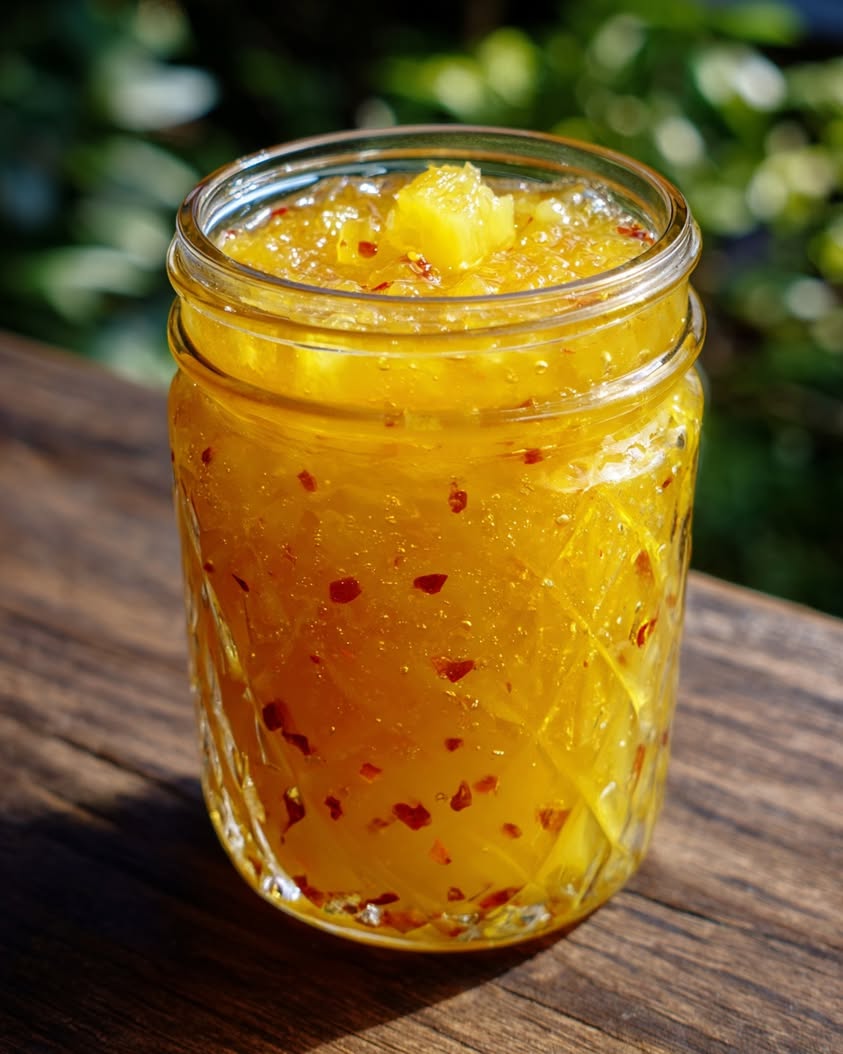
Tropical Pineapple Fire Jelly: A Sweet and Spicy Homemade Treat
Imagine capturing the essence of a tropical vacation in a jar. This vibrant Tropical Pineapple Fire Jelly does exactly that, combining the sunny sweetness of ripe pineapple with a thrilling kick of spicy peppers. Consequently, it transforms your morning toast or cheese board into an unforgettable culinary adventure. Moreover, this homemade jelly recipe is surprisingly simple, making it a perfect project for both novice and experienced canners looking to add a unique preserve to their pantry.
The magic of this recipe lies in its beautiful balance. Initially, you taste the bright, fruity notes of pineapple, followed by a slow-building warmth from the peppers that lingers pleasantly. This sweet and spicy homemade treat is incredibly versatile. For instance, you can glaze meats, elevate a simple sandwich, or pair it with creamy cheeses for a stunning appetizer. Ultimately, creating this jelly fills your kitchen with an incredible tropical aroma, promising a taste of sunshine in every spoonful.
Furthermore, crafting your own jelly allows for complete control over the heat level and sweetness. You can select your favorite peppers, from a mild jalapeño to a fiery habanero, tailoring the “fire” to your personal preference. This process of creating a custom preserve is deeply satisfying. In the end, you will have a shelf-stable, gourmet-quality condiment that makes a fantastic homemade gift. Indeed, anyone who receives a jar of this Tropical Pineapple Fire Jelly will be truly impressed.
Quick Recipe Highlights
- Flavor Profile: This jelly delivers an initial wave of bright, tropical pineapple sweetness that perfectly complements a gradual, warming heat from fresh peppers. The combination creates a complex and addictive flavor that is both refreshing and exciting.
- Texture: Expect a beautifully clear, jewel-toned jelly with a firm yet spreadable consistency. It should hold its shape on a spoon but melt luxuriously on warm toast or over a wheel of baked brie.
- Aroma: As it cooks, your kitchen will fill with the unmistakable, sunny scent of simmering pineapple, underscored by a subtle, earthy pepper fragrance. The finished jar smells like a tropical paradise with a hint of spice.
- Visual Appeal: The jelly sets into a stunning golden-amber color that glows when held to the light. Optional flecks of red pepper add visual interest, making each jar a beautiful addition to your shelf or gift basket.
- Skill Level Needed: This is an accessible recipe for beginners in water bath canning. The steps are straightforward, but attention to detail regarding cooking time and jar sterilization is key for perfect, safe results every time.
- Special Equipment: You will need basic canning tools: a large pot for the water bath, a canning rack or towel, jar lifter, and half-pint canning jars with new lids. A candy thermometer is also highly recommended to ensure the jelly reaches the proper set point.
Recipe Overview
- Difficulty Level: We rate this Tropical Pineapple Fire Jelly recipe as “Easy.” The process involves simple chopping, simmering, and straining. While water bath canning has specific steps to follow for safety, the technique is uncomplicated and well-documented. With careful reading and preparation, even a first-time canner can achieve excellent results and create a delicious sweet and spicy homemade treat.
- Category: This recipe falls squarely into the category of preserves, condiments, and homemade gifts. It is a cooked fruit spread, specifically a jelly, due to its clear consistency achieved by straining the fruit solids. It functions as a versatile pantry staple for breakfast, charcuterie, and cooking.
- Cuisine: This jelly is a fusion creation, drawing inspiration from tropical cuisines that utilize pineapple and the pepper-forward traditions of various global hot sauces and condiments. It represents a modern, homemade approach to flavor pairing rather than a dish from a specific culinary tradition.
- Cost: Making this jelly is very cost-effective. Fresh pineapple and peppers are relatively inexpensive, especially in season. Sugar and pectin are pantry staples. When compared to the price of similar artisan jellies at specialty stores, homemade batches offer significant savings and yield multiple jars for personal use or gifting.
- Season: Late spring through summer is the ideal season for this recipe, corresponding with the peak freshness and best prices for pineapples and many pepper varieties. However, you can make it year-round using quality frozen pineapple and readily available fresh peppers from the grocery store.
- Occasion: This jelly is perfect for holiday gift-giving, summer picnic baskets, or elevating everyday meals. It shines at parties as part of a cheese board, and it makes a thoughtful homemade hostess gift for any occasion where a unique, flavorful present is appreciated.
Why You’ll Love This Recipe
First and foremost, the taste of this Tropical Pineapple Fire Jelly is genuinely unforgettable. The flavor journey begins with the pure, sunny sweetness of pineapple, which then gracefully gives way to a customizable level of spicy warmth. This dynamic combination wakes up your palate and makes even a simple snack feel special. Furthermore, the balance is expertly crafted so neither flavor overpowers the other; instead, they work in perfect harmony. Consequently, you will find yourself reaching for this jar again and again to add a spark of excitement to your meals.
From a practical standpoint, the convenience of this recipe is a major benefit. Once prepared and processed, the jelly is shelf-stable for up to a year, providing a ready-made gourmet condiment at a moment’s notice. The preparation process itself is also quite manageable, often taking less than an hour from start to finish. Moreover, making a batch yields several jars, allowing you to stock your pantry and still have plenty left for generous gifting. This efficiency makes the recipe a rewarding weekend project with long-lasting rewards.
Nutritionally, creating your own jelly allows you to control the ingredients. While it is a sweet preserve, you can appreciate that it contains real fruit and no artificial flavors, colors, or preservatives. Pineapple offers vitamin C and bromelain, an enzyme with noted anti-inflammatory properties. By preparing it yourself, you make a conscious choice towards a more natural pantry. Additionally, you can experiment with lower-sugar pectin if desired, though this may slightly alter the set and preservation quality.
The social and entertaining value of this sweet and spicy homemade treat cannot be overstated. A jar of this vibrant jelly makes a conversation-starting gift that shows care and creativity. When serving guests, it instantly elevates a basic cheese platter into a curated experience. People are always delighted and intrigued by the combination of tropical and spicy notes. Therefore, it becomes more than just food; it becomes a memorable part of your hospitality and a testament to your culinary skills.
Finally, the cost-effectiveness and accessibility solidify this recipe’s appeal. The ingredients are common and affordable, especially when compared to the premium price of boutique jellies. The equipment required is basic, and the process is accessible to cooks of all levels. This democratization of gourmet flavor means anyone can create a stunning, restaurant-quality condiment in their own kitchen. Ultimately, the pride and satisfaction of saying “I made this” are the most delicious rewards of all.
Historical Background and Cultural Significance
The practice of preserving fruit with sugar into jams and jellies has ancient roots, originally developed as a crucial method for saving the harvest and enjoying fruit flavors beyond their season. While the specific combination of pineapple and chili is a modern fusion, both ingredients have rich, individual histories. Pineapple, native to South America, became a global symbol of hospitality and luxury after European exploration. Similarly, chili peppers, also originating in the Americas, spread across the world, fundamentally transforming countless cuisines with their heat and flavor.
In terms of cultural importance, pineapple has long been associated with welcome and friendship in many cultures, often used as a decorative motif. Chili peppers carry cultural weight as symbols of life, heat, and vitality in various traditions. Combining them in a preserve like this Tropical Pineapple Fire Jelly is a contemporary celebration of New World ingredients. It reflects a modern culinary trend that embraces bold, global flavor pairings and the DIY ethos of the homemade food movement, valuing craft and personalization over mass production.
The evolution of this recipe follows the broader trend of “hot and sweet” condiments gaining massive popularity. From pepper jellies of the American South to mango-habanero sauces, the appeal of balancing sugar with spice is universal. This particular jelly recipe represents an evolution towards more complex fruit bases beyond the traditional grape or berry. It caters to a palate that seeks adventure and is indicative of how home canning has shifted from pure necessity to a creative, hobbyist pursuit focused on unique flavors and gourmet results.
Regional variations of pepper jelly are abundant, and this pineapple version is a delicious offshoot. In the Caribbean, you might find similar spicy-sweet fruit preserves using local fruits like mango or papaya. In the Southern United States, classic pepper jelly is often made with bell peppers and poured over cream cheese. This Tropical Pineapple Fire Jelly recipe sits at a flavorful crossroads, inviting cooks to experiment further. For example, one could add ginger, use coconut sugar, or incorporate different chili varieties like smoky chipotle, creating endless personalized riffs on the core concept.
Ingredient Deep Dive
Fresh Pineapple is the star that provides the essential tropical sweetness. Historically a prized and exotic fruit, pineapple is now globally enjoyed. It is rich in vitamin C, manganese, and contains bromelain. For the best jelly, select a pineapple that is fragrant at the stem end and yields slightly to pressure. Store whole pineapples at room temperature for a day or two to ripen, then refrigerate once cut. While fresh is ideal for maximum flavor, unsweetened canned or frozen pineapple chunks can be a suitable, convenient substitute, though you may need to adjust the added sugar slightly.
Granulated Sugar is not just a sweetener; it is a crucial preservative that works with the acid and heat to create a safe, shelf-stable environment. It also interacts with the pectin to form the gel structure. There is no direct substitute for the volume of sugar in traditional jelly making if you want a proper set and preservation. However, you can explore special pectins designed for low-sugar recipes, but follow their specific instructions meticulously. The sugar should be stored in a cool, dry place to prevent clumping.
Apple Cider Vinegar provides the necessary acidity for both flavor balance and safe canning. The acidity ensures a bright taste that cuts through the sweetness and helps the pectin set. It also creates a high-acid environment that prevents the growth of harmful bacteria like botulism during storage. Do not reduce or omit the vinegar. In a pinch, white wine vinegar or lemon juice can be used as a substitute in equal measure. Store vinegar in a cool pantry; it has an almost indefinite shelf life.
Liquid Pectin is the gelling agent that gives the jelly its signature firm, yet spreadable texture. It is derived from fruit and is essential for a reliable set, especially with low-pectin fruits like pineapple. It must be added at a full, rolling boil as directed. Powdered pectin can be used as a substitute, but the addition method differs—it is typically mixed with the sugar before adding to the fruit. Follow the package instructions for the specific type you use. Store unopened pectin in a cool, dry pantry.
Fresh Chili Peppers are the “fire” in this sweet and spicy homemade treat. They contribute capsaicin, which provides the heat, along with their own unique fruity or smoky flavors. Jalapeños offer a moderate, accessible heat, while habaneros bring intense fruity fire. Always wear gloves when handling and seeding hot peppers to avoid skin irritation. For a milder jelly, remove all seeds and membranes. Store fresh peppers in the refrigerator’s crisper drawer. In a pinch, you can use canned jalapeños, but the fresh flavor is superior.
Common Mistakes to Avoid
- Not Wearing Gloves When Handling Peppers: The capsaicin in chili peppers can cause significant burning sensations on your skin and, worse, if you touch your eyes. Always wear disposable gloves when chopping and seeding hot peppers to avoid this painful and dangerous mistake.
- Skimping on the Boil Before Adding Pectin: The fruit mixture must reach a full, rolling boil that cannot be stirred down before you add the liquid pectin. If the mixture is not hot enough, the pectin will not activate properly, resulting in a runny jelly that fails to set.
- Overcooking After Adding Pectin: Conversely, boiling the mixture for too long after adding the pectin can break down the pectin’s gelling power. Follow the recipe’s timing precisely—usually just one minute of vigorous boiling after addition is sufficient for the Tropical Pineapple Fire Jelly to set correctly.
- Using Old or Reused Canning Lids: The sealing compound on new, unused canning lids is essential for creating an airtight, vacuum seal during processing. Reusing old lids or using lids from commercially packaged foods is a major safety risk, as they will likely fail to seal properly.
- Not Adjusting for Altitude: Water boils at a lower temperature at higher altitudes, which can affect processing time. If you live above 1,000 feet, you must increase the water bath processing time according to official canning guidelines to ensure the destruction of any potential bacteria.
- Failing to Measure Precisely: Jelly making is a science. Inaccurate measurements of fruit, sugar, or acid can throw off the delicate balance needed for gelling and safe preservation. Use liquid measuring cups for liquids and dry measuring cups for sugars, leveling them off with a straight edge.
- Skipping the Skimming Step: Foam forms naturally during the boiling process. If you do not skim it off with a spoon before ladling the jelly into jars, it will rise to the top and become trapped in the seal, creating an unsightly layer and potentially interfering with the seal itself.
- Ignoring Headspace Requirements: Leaving the correct 1/4-inch headspace in the jar is critical. Too little space can cause the jelly to bubble out during processing, compromising the seal. Too much space may prevent a strong vacuum from forming, also leading to seal failure.
Essential Techniques
Preparing and Straining the Fruit Pulp is the foundational technique for a clear jelly. You must finely chop the pineapple and peppers to maximize surface area, which helps extract flavor and pectin during the initial simmer. After cooking, straining through a damp jelly bag or multiple layers of cheesecloth without squeezing is crucial. Squeezing will force cloudy pulp particles into your juice, resulting in a murky jelly. Instead, let gravity do the work for several hours or overnight. This patience yields the brilliantly clear, jewel-like quality that defines a perfect Tropical Pineapple Fire Jelly.
Achieving the Full Rolling Boil is non-negotiable for proper gelling. This is not a gentle simmer. A full rolling boil is a vigorous, churning boil that continues unabated even when you stir the pot. This intense heat is necessary to fully dissolve the sugar and, later, to activate the liquid pectin. Before adding pectin, ensure your fruit-sugar mixture reaches this state. After adding the pectin, bring it back to a full rolling boil and start your timer. Mastering this visual cue is the difference between a firm set and a syrupy disappointment.
Testing for the Gel Set provides confidence before you fill your jars. While a candy thermometer reading of 220°F (the gel point) is helpful, the plate test is a reliable classic. Before you start cooking, place a few small plates in the freezer. When you think the jelly is ready, drop a small spoonful onto a chilled plate. Let it sit for a minute, then push the edge with your finger. If it wrinkles, it’s set. If it runs, continue boiling and retest in a few minutes. This technique prevents under- or over-cooking your sweet and spicy homemade treat.
Proper Water Bath Canning Processing ensures safety and shelf stability. This technique involves submerging filled jars in boiling water for a specified time to create a vacuum seal. Key steps include using a rack to keep jars off the direct bottom of the pot, covering jars with at least 1-2 inches of water, and starting the timer only once the water returns to a full boil. After processing, letting the jars cool undisturbed for 12-24 hours allows the seals to form properly. You must then check each seal by pressing the center of the lid; it should not flex up or down.
Pro Tips for Perfect Tropical Pineapple Fire Jelly
For a crystal-clear jelly, resist the urge to squeeze your jelly bag. Let the pulp drip naturally into the bowl below, even if it takes hours. This patience is the secret to professional-looking results.
Use a wide, heavy-bottomed pot for cooking the jelly. The large surface area promotes faster evaporation and reaching the gel point, while the heavy bottom prevents scorching the sugary mixture.
Have all your canning equipment—jars, lids, funnel, ladle, and lifter—set up and ready before you start cooking the jelly. Jelly making moves quickly once it reaches the boil, and you cannot stop to search for tools.
To easily remove foam, lightly coat the bowl of your skimming spoon or ladle with butter or cooking spray. The foam will slide right off, making for quick and clean removal.
Wipe the jar rims with a damp, clean paper towel after filling. Even a tiny speck of jelly or sugar on the rim can prevent the lid from forming an airtight seal during processing.
For consistent heat in every jar, finely mince your peppers and distribute them evenly in the juice before cooking, or consider pureeing a portion of them for a more uniform fiery kick.
Label your jars immediately after they cool with the contents and date. This simple habit keeps your pantry organized and ensures you use your delicious Tropical Pineapple Fire Jelly within its optimal shelf life.
Let the finished jelly sit for a full 24 hours after canning before moving or testing the seals. This allows the gel to fully set and the seals to completely cool and contract, ensuring success.
Variations and Adaptations
For regional variations, consider incorporating local flavors. Add a tablespoon of grated fresh ginger for a Caribbean-inspired zing, or use smoky chipotle peppers in place of fresh jalapeños for a Southwestern twist. You could even replace a half-cup of the pineapple juice with passion fruit juice for an extra layer of tropical complexity, creating a truly unique sweet and spicy homemade treat.
Seasonal adaptations are simple. In the winter, use high-quality frozen pineapple chunks and readily available fresh peppers. During summer, seek out the ripest, most fragrant pineapple at your farmers market and experiment with seasonal pepper varieties like padrón or shishito for a different heat profile. The basic recipe remains wonderfully flexible throughout the year.
For dietary modifications, you can explore low-sugar pectins. Follow the specific instructions on the pectin package for reducing sugar content. Note that the texture and yield may differ, and the preservation safety relies on following the alternative process exactly. Always use bottled lemon juice to ensure consistent acidity when modifying recipes.
Flavor variations are endless. Add a split vanilla bean to the simmering pulp for a subtle, aromatic depth. Stir in a tablespoon of dark rum after removing the jelly from the heat for an adult variation. For an herbal note, include a few sprigs of fresh thyme or rosemary in the jelly bag during straining, removing them before canning.
To modify the texture, for a more rustic, jam-like consistency, you can skip the straining step entirely and simply puree the cooked pineapple and pepper mixture before adding sugar. This creates a spread with more body and visible fruit fibers, though it will not be a clear jelly.
Presentation alternatives include using decorative Weck jars with glass lids for a beautiful gift presentation. You can also layer the jelly in small glasses and seal with wax for a non-canned option that must be refrigerated and consumed quickly. For parties, present the jelly in a hollowed-out small pineapple as a stunning serving bowl.
Serving and Presentation Guide
For elegant plating, present the Tropical Pineapple Fire Jelly in a small, crystal-clear dish alongside a cheese board. Use a beautiful spoon for serving. The golden jelly against a slate or wooden board creates a visually striking contrast that highlights its vibrant color and promises the exciting flavor within.
Garnishing ideas are simple yet effective. When serving over cream cheese or brie, add a final sprinkle of finely chopped fresh cilantro or a twist of lime zest on top to enhance the tropical theme. A single, thin slice of fresh jalapeño placed on the side of the dish elegantly signals the spicy component to your guests.
Traditional accompaniments include a block of cream cheese or a wheel of brie, allowing guests to spread the jelly directly on the cheese with crackers. It also pairs wonderfully with savory biscuits, cornbread, or simple water crackers that don’t compete with its bold flavor.
Modern serving suggestions go far beyond the cheese board. Use it as a glaze for grilled chicken, shrimp, or pork chops during the last few minutes of cooking. Stir a spoonful into a vinaigrette for a sweet-spicy salad dressing, or dollop it on top of a burger with sharp cheddar for a gourmet twist.
Temperature considerations are key. Serve the jelly at room temperature when pairing with cheese or crackers to allow its full aroma and flavor to blossom. If using as a warm glaze, gently heat it in a small saucepan with a splash of water to loosen it before brushing onto your protein.
Portion control tips are helpful for entertaining. For a cheese board, plan for about one to two tablespoons of jelly per person. When gifting, half-pint jars are the perfect size—generous enough to enjoy but not so large that it goes to waste before it can be fully appreciated.
Wine and Beverage Pairing
For wine pairings, the sweet and spicy profile of this jelly calls for wines with good acidity and a touch of sweetness. A slightly off-dry Riesling or Gewürztraminer is a classic and excellent choice, as their fruitiness complements the pineapple and their sweetness tames the heat. Alternatively, a sparkling wine like Prosecco or Cava offers refreshing bubbles that cleanse the palate between bites, making each taste of the jelly feel new and exciting.
Non-alcoholic alternatives should also balance sweetness and spice. A ginger beer or ginger ale provides a spicy kick that mirrors the jelly’s heat. For a more refreshing option, a pineapple or mango sparkling water garnished with a lime wedge works beautifully. Iced hibiscus or passion fruit tea also makes a fantastic pairing, offering tartness that contrasts the jelly’s sweetness.
Coffee and tea pairings can be delightful, especially for a brunch setting. A medium-roast coffee with low acidity won’t clash with the jelly’s vinegar notes. For tea, a tropical fruit infusion or a black tea with citrus notes would complement the flavors. Avoid overly bitter or smoky varieties that might fight with the jelly’s bright profile.
Temperature considerations are straightforward. Serve white wines and sparkling options well-chilled. Non-alcoholic sparkling drinks should also be served cold. Iced teas and coffees are ideal. The contrast between the cool beverage and the room-temperature or slightly warm jelly (if glazing) creates a pleasant sensory experience.
Serving suggestions include offering a selection of pairing options when entertaining. Place a bottle of chilled Riesling next to the cheese board, along with a pitcher of iced ginger tea. This allows guests to choose their preferred accompaniment and enhances the overall tasting experience of your homemade Tropical Pineapple Fire Jelly.
Storage and Shelf Life
For proper storage of unopened, processed jars, keep them in a cool, dark, and dry place like a pantry or cupboard. Avoid areas near heat sources, ovens, or in direct sunlight, as heat and light can degrade color and flavor over time. The ideal temperature range is between 50-70°F. Correctly processed jars of this sweet and spicy homemade treat have a shelf life of up to one year for best quality, though they remain safe beyond that if the seal is intact.
Once a jar is opened, refrigeration is mandatory. Always use a clean spoon to remove jelly to prevent introducing bacteria. An opened jar will maintain its best quality in the refrigerator for up to 3 months. The cold temperature will cause the jelly to firm up significantly, so let it sit at room temperature for 15-20 minutes before serving for ideal spreadability.
Container recommendations are simple: always use proper canning jars for processing and storage. For refrigerated leftovers, you can keep the jelly in its original jar with the lid tightly closed. If you decant it, choose a clean, airtight glass container. Avoid storing in metallic containers, as the acid in the jelly can react with the metal over time.
Recognizing signs of spoilage is a critical safety skill. Before opening, check that the lid is still firmly concave and sealed. Do not consume jelly from a jar with a bulging lid, a broken seal, or one that spurts liquid when opened. Inside, look for any unusual mold growth (discard the entire jar if you see any), off colors, or fermentation bubbles. If the jelly smells alcoholic, yeasty, or otherwise off, err on the side of caution and dispose of it.
Reheating is not typically needed, but if using the jelly as a glaze, gently warm the desired amount in a small saucepan over low heat with a teaspoon of water to loosen it. Do not microwave sealed jars, as pressure can build and cause them to break. Always transfer to a microwave-safe dish if using that method.
Freezing is not recommended for this jelly. The freezing process can break down the pectin network, resulting in a watery, separated texture upon thawing. The water bath canning method provides a superior, shelf-stable preservation that maintains the perfect gel texture of your Tropical Pineapple Fire Jelly.
Make Ahead Strategies
An efficient prep timeline can make jelly day effortless. The day before, wash and sterilize your jars and lids, and prepare your fruit. Chop the pineapple and peppers, then simmer them with water and vinegar. Let this pulp mixture strain through the jelly bag overnight in the refrigerator. This breaks the work into two manageable sessions and ensures you get the maximum clear juice yield with minimal effort on cooking day.
For storage between steps, keep the strained pineapple-pepper juice tightly covered in the refrigerator for up to two days before you proceed with the sugar cooking and canning step. Do not let the prepared fruit pulp sit at room temperature for extended periods. Having the juice ready allows you to complete the final cooking and canning process in under an hour when you are ready.
Assessing the quality impact of make-ahead steps is positive. Straining the juice overnight often yields a clearer jelly than a shorter strain. Chilling the juice does not negatively affect the gelling process. The key is to ensure all equipment is clean and the juice is refrigerated promptly. The final flavor and set of your Tropical Pineapple Fire Jelly will be identical to, if not better than, a same-day process.
Final assembly tips for cooking day are straightforward. Bring your chilled juice to room temperature before adding the sugar to ensure even dissolving. Have your sterilized jars hot and ready in a warm oven (170°F) or in the canning pot’s hot water. This prevents thermal shock that could cause jars to crack when filled with the boiling jelly. Organizing your workspace is the final step to a smooth process.
There are no reheating guidelines for the jelly itself in a make-ahead context, as it is processed in the jars after cooking. However, ensure your canning pot water is at a full boil before you begin ladling the hot jelly into jars. This maintains the necessary temperature chain for safe processing and perfect seals on your sweet and spicy homemade treat.
Scaling Instructions
Halving the recipe is straightforward for a smaller batch. Precisely divide all ingredients in half. Use a smaller pot to maintain the correct depth for a rolling boil. The cooking time may be slightly shorter, so rely on the gel tests (thermometer and plate) rather than the clock. You will yield approximately three half-pint jars. Remember to still sterilize a few extra jars, as yield can vary slightly based on fruit juiciness and evaporation rate.
Doubling or tripling the recipe requires caution. Do not attempt to more than triple a single batch, as it becomes difficult to manage. Use a very large, heavy-bottomed stockpot to prevent boil-overs. The time to reach the gel point will be longer due to the increased volume. Stir more frequently to prevent scorching on the bottom. Most importantly, ensure your water bath canner is large enough to hold all the filled jars with proper water coverage, or plan to process in multiple batches.
Equipment adjustments are necessary when scaling. For larger batches, a wider pot is essential for proper evaporation. A longer-handled ladle and funnel make filling many jars easier and safer. You may also need a second canning pot or to process jars in sequential batches. For smaller batches, a medium saucepan is sufficient. Never try to process more jars than can fit in your canner with at least 1-2 inches of water over the tops.
Timing modifications are guided by the gel tests, not the recipe clock. A larger batch will take longer to come to a boil and reach the gel point. A smaller batch will happen faster. Start testing for the gel set a few minutes before the original recipe’s suggested time when scaling. The visual and temperature cues (220°F) are your most reliable guides for perfect Tropical Pineapple Fire Jelly every time, regardless of batch size.
Storage considerations remain the same per jar. Each successfully processed jar, whether from a large or small batch, has the same shelf life. Label each batch with its date. If giving gifts from a large batch, you ensure consistency across all recipients. Just ensure every jar is processed for the full, correct time based on your altitude to guarantee safety.
Nutritional Deep Dive
A macro breakdown for a typical tablespoon of this jelly shows it is primarily carbohydrates from the fruit and added sugar, with negligible fat and protein. It is an energy-dense condiment meant to be used in moderation to enhance other foods. While not a significant source of macronutrients, it provides a concentrated burst of flavor that can make healthier foods like whole-grain toast or baked chicken more appealing, encouraging better overall eating habits.
The micronutrient analysis reveals contributions from its fruit base. Pineapple provides small amounts of vitamin C, manganese, and copper. The peppers contribute vitamin A (in the form of beta-carotene, especially in red peppers) and vitamin C. While you wouldn’t consume jelly for its vitamin content, it’s a bonus that this sweet and spicy homemade treat contains more than just empty calories, offering some antioxidants from its real fruit and vegetable ingredients.
Health benefits are indirect but meaningful. Using a flavorful, homemade condiment like this can reduce the need for less healthy sauces high in sodium or artificial ingredients. The capsaicin from peppers has been studied for its potential metabolism-boosting and anti-inflammatory properties. Furthermore, the satisfaction of creating your own food fosters a positive relationship with cooking and ingredients, which is a cornerstone of a healthy lifestyle.
Dietary considerations are important. This jelly is naturally gluten-free and dairy-free. However, it is high in sugar, so individuals monitoring blood sugar or carbohydrate intake should be mindful of portion size. It is also vegan. Those with nightshade sensitivities should avoid it due to the peppers. As always, check specific dietary needs against the ingredient list.
Portion analysis is key to enjoyment. A serving size of 1-2 tablespoons is reasonable. This amount provides enough flavor to transform a dish without contributing excessive sugar to your meal. Thinking of it as a flavor accent rather than a main component allows you to enjoy the unique taste of Tropical Pineapple Fire Jelly while maintaining dietary balance.
Weight management tips involve strategic use. Use the jelly as a low-fat flavoring agent. For example, a tablespoon brushed on chicken provides immense flavor compared to a creamy, high-fat sauce. Pair it with high-fiber foods like whole-grain crackers or use it sparingly. Its intense taste means a little goes a long way, helping you control calories while still enjoying a gourmet, satisfying condiment.
Dietary Adaptations
For a gluten-free version, this recipe is already compliant. Simply ensure that all packaged ingredients, like the pectin, are certified gluten-free, as cross-contamination can sometimes occur in processing facilities. This is an easy, safe choice for those with celiac disease or gluten sensitivity.
A dairy-free adaptation is also inherent to the recipe. No dairy products are used in the Tropical Pineapple Fire Jelly itself. It becomes a perfect topping for dairy-free cheese alternatives or grilled meats for those avoiding dairy.
Creating a vegan version requires no changes at all. The standard recipe contains only plant-based ingredients: fruit, sugar, vinegar, peppers, and pectin. It is a completely vegan-friendly sweet and spicy homemade treat.
For a low-carb or keto adaptation, significant reformulation is needed. Traditional jelly relies on sugar for structure and preservation. You would need to use a specialty keto sweetener that measures like sugar and a specific pectin designed for low-sugar recipes. The flavor will differ, and water bath canning safety for such adaptations is not always standard, so refrigeration or freezing would be required.
A paleo adaptation faces similar sugar challenges. Approved paleo sweeteners like honey or maple syrup can be used, but they will alter the flavor profile and may affect the gelling process. Again, safe preservation for shelf-stability becomes complex, so these versions are best made in small batches and stored in the refrigerator for short-term use.
For a low-FODMAP version, the primary concern is the high fructose content in pineapple and the potential for garlic or onion if added. Stick to the basic recipe without additions. Monash University recommends a 1/2 cup serving of pineapple as low-FODMAP, so a very{“success”:true,”message”:”Recipe created successfully”,”post_id”:7628,”tasty_recipe_id”:7628,”shortcode”:” Print
Tropical Pineapple Fire Jelly
Description
A sweet and spicy jelly made with fresh pineapple and a kick of chili, perfect for glazing meats or spreading on toast.
Ingredients
For the Crust:
- 2 cups fresh pineapple, finely chopped
- 1 cup granulated sugar
- 1/2 cup water
- 2 tablespoons lemon juice
- 1–2 fresh red chilies, finely minced (adjust to taste)
- 1 packet (1.75 oz) powdered pectin
Instructions
1. Prepare the Crust:
- In a medium saucepan, combine pineapple, sugar, water, lemon juice, and minced chilies. Bring to a simmer over medium heat, stirring until sugar dissolves.
- Stir in powdered pectin and bring mixture to a full boil. Cook for 10-12 minutes, stirring frequently, until thickened and jelly-like.
- Remove from heat and skim off any foam. Pour hot jelly into sterilized jars, seal tightly, and let cool to room temperature before refrigerating.
Notes
You can customize the seasonings to taste.

I’m Billy, a classically trained culinary school graduate from The Culinary Institute of America with over 12 years in the restaurant industry and over 19 years of cooking experience.