
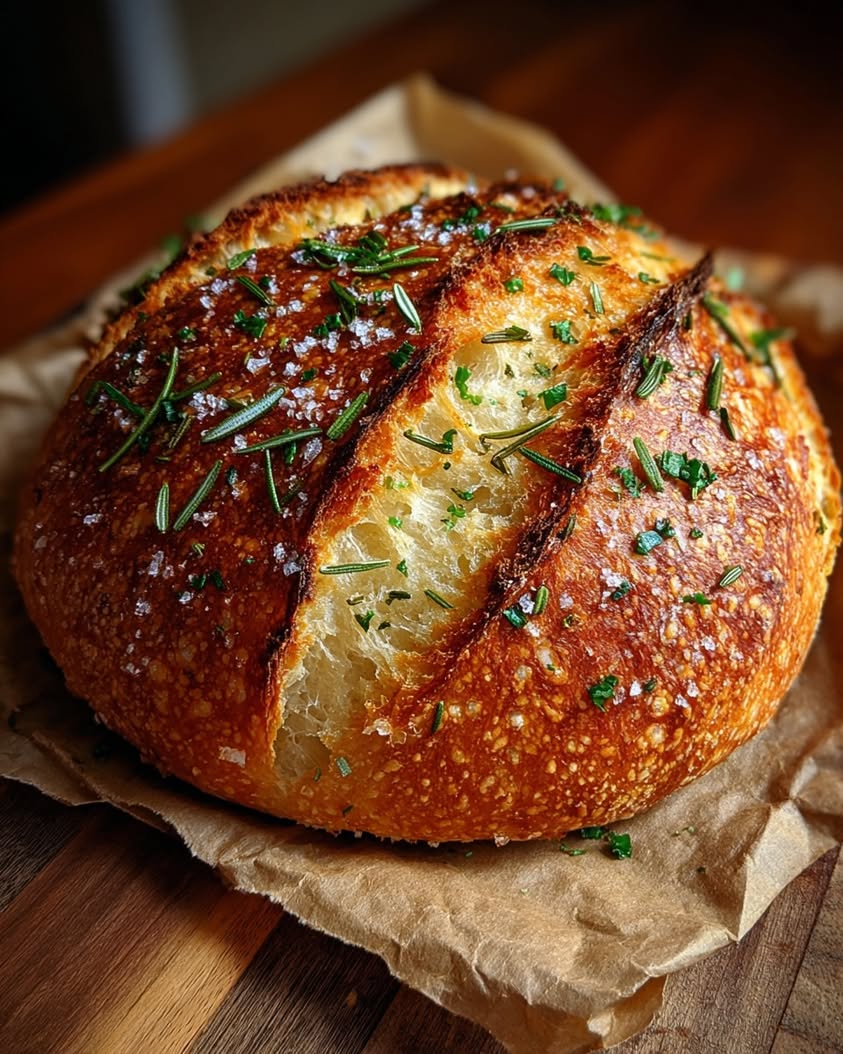
Rustic No Knead Rosemary Garlic Bread: An Easy Artisan Loaf
Imagine pulling a golden, crackling loaf from your oven, its crust shimmering with olive oil and studded with fragrant rosemary. The scent of roasted garlic and fresh herbs fills your kitchen, promising a slice of pure comfort. This rustic no knead rosemary garlic bread delivers that exact experience, transforming simple ingredients into a stunning centerpiece. Moreover, the magic lies in its effortless method; time does all the heavy lifting for you.
Consequently, this recipe is a gateway to artisan baking without the intimidation. You will mix a shaggy dough, let it rest overnight, and bake it in a hot pot. The result is a loaf with an open, airy crumb, a crisp crust, and pockets of savory flavor in every bite. Ultimately, this rustic no knead rosemary garlic bread proves that spectacular homemade bread is within everyone’s reach.
Furthermore, this loaf is incredibly versatile. Serve it warm with a drizzle of good olive oil for dipping, use it to sop up soups and stews, or create unforgettable sandwiches. Its robust flavor stands up to strong cheeses and rich meats. Therefore, whether you are a seasoned baker or a complete novice, this recipe is designed for guaranteed success and immense satisfaction.
Quick Recipe Highlights
- Flavor Profile: This bread boasts a deep, wheaty base beautifully complemented by the piney, aromatic punch of fresh rosemary and the mellow, sweet notes of roasted garlic. A hint of sea salt enhances every flavor, creating a perfectly balanced savory experience.
- Texture: Expect a dramatic contrast between a shatteringly crisp, blistered crust and a soft, tender, and wonderfully holey interior. The long fermentation creates an open crumb structure that is light yet satisfyingly chewy.
- Aroma: As it bakes, the kitchen will fill with the warm, comforting scent of baking bread, underscored by the herbal fragrance of rosemary and the irresistible, nutty aroma of toasted garlic.
- Visual Appeal: The loaf bakes into a beautiful, irregular round with a deeply golden, rustic crust. The rosemary leaves and garlic pieces peek through the surface, creating a homemade, artisanal look that is incredibly inviting.
- Skill Level Needed: This recipe is perfect for beginners. It requires no special kneading skills or equipment beyond a mixing bowl and a Dutch oven. Success hinges on patience and time rather than complex technique.
- Special Equipment: A heavy Dutch oven or cast-iron pot with a lid is essential. It creates the steamy environment needed for that professional-quality oven spring and crackling crust. A digital scale is highly recommended for accuracy.
Recipe Overview
- Difficulty Level: This rustic no knead rosemary garlic bread is rated easy because it eliminates the most technical steps of traditional bread making. There is no kneading, no complicated shaping, and no precise temperature control needed. The hands-on time is under 20 minutes, spread over a day, making it incredibly approachable.
- Category: This loaf falls squarely into the artisan bread category. It is a yeast bread, specifically a slow-fermented, high-hydration dough. It is perfect as a side dish, an appetizer with dips, or as the foundation for sandwiches and toast.
- Cuisine: While inspired by classic European peasant breads and Italian focaccia, this recipe is a modern adaptation of the popular no-knead method. It incorporates Mediterranean flavors like rosemary and garlic, giving it a rustic, countryside feel that transcends a single region.
- Cost: This is an exceptionally cost-effective recipe. The primary ingredients—flour, water, yeast, and salt—are pantry staples. Adding fresh rosemary and a head of garlic adds minimal cost, especially if you grow your own herbs. You can create a stunning loaf for a fraction of the price of a bakery.
- Season: This bread is wonderful year-round. However, it feels particularly cozy in the fall and winter alongside hearty soups. Conversely, it is fantastic in the summer for tearing and sharing at gatherings, paired with fresh tomatoes and olive oil.
- Occasion: It is ideal for casual family dinners, holiday feasts, potlucks, or as a thoughtful homemade gift. Its impressive appearance and incredible flavor make it suitable for everything from a weeknight meal to a special celebration.
Why You’ll Love This Recipe
First and foremost, the taste and texture of this rustic no knead rosemary garlic bread are simply unmatched by store-bought loaves. The slow fermentation develops a complex, slightly tangy flavor that commercial yeast breads lack. Meanwhile, every bite delivers the perfect harmony of chewy crumb, crisp crust, and bursts of savory garlic and rosemary. Consequently, the sensory experience from the first crack of the crust to the last soft bite is deeply rewarding.
Additionally, the convenience factor is a major win. You spend about 15 minutes one evening mixing the dough, then let it work its magic while you sleep or go about your day. The next day, a brief shaping and another short rest are all that stand between you and baking. This hands-off approach fits seamlessly into a busy schedule, making artisan bread baking a realistic hobby rather than a daunting project.
From a nutritional perspective, this homemade loaf allows you to control exactly what goes into your food. You can use unbleached flour, adjust the salt, and ensure there are no preservatives or additives. Furthermore, the long fermentation process can make the bread easier to digest for some people, as it helps to break down gluten and phytic acid. It is a wholesome choice that feels good to eat and share.
Moreover, the social and entertaining value of this bread is immense. There is something profoundly communal about breaking bread, especially a loaf you made yourself. Serving this warm, fragrant bread to guests creates an instant focal point and conversation starter. It demonstrates care and effort, elevating a simple meal into a memorable occasion. Ultimately, it fosters connection and shared enjoyment.
Finally, the cost-effectiveness and accessibility are undeniable. For the price of a basic bakery loaf, you can produce a far superior, custom-flavored artisan bread at home. The ingredients are easy to find, and the method requires no expensive tools. This recipe empowers you to create bakery-quality results in your own kitchen, building confidence and saving money in the long run.
Historical Background and Cultural Significance
The story of no-knead bread is a fascinating modern chapter in baking history. While rustic, slow-fermented breads have existed for millennia, the specific method popularized for home bakers gained widespread attention in the early 2000s. Food writer Mark Bittman published a recipe developed by Jim Lahey of Sullivan Street Bakery, which revolutionized home baking. This technique leveraged time and a wet dough to develop gluten without manual labor, making professional-style crusty bread accessible to everyone.
Culturally, bread holds a sacred place in many societies as a symbol of sustenance, community, and sharing. The act of breaking bread together is a universal gesture of peace and fellowship. This rustic no knead rosemary garlic bread taps into that deep tradition while embracing a modern, simplified technique. It represents a return to thoughtful, slow food in a fast-paced world, allowing home cooks to reconnect with a fundamental culinary craft.
The evolution of this recipe showcases how cooks adapt and personalize foundational techniques. The original no-knead formula was a plain white loaf. However, bakers quickly began experimenting with additions like herbs, cheeses, and whole grains. The inclusion of rosemary and garlic draws directly from Mediterranean culinary traditions, where these flavors are staples. This fusion of a new-world method with old-world flavors creates a bread that feels both innovative and timeless.
Regional variations of herbed bread are endless. In Italy, focaccia is topped with rosemary and sea salt. In France, *pain aux herbes de Provence* incorporates a blend of dried herbs. This recipe borrows from these inspirations but uses the steam-trapping Dutch oven method to achieve a different texture. The result is a unique hybrid—a boule with the crust of a country loaf and the soulful flavor of a herbed flatbread, representing a global conversation in a single loaf.
Ingredient Deep Dive
Bread Flour: Bread flour is the backbone of this rustic no knead rosemary garlic bread due to its higher protein content (12-14%). This protein, primarily glutenin and gliadin, forms a strong, elastic gluten network when hydrated. This network is crucial for trapping the carbon dioxide produced by yeast, giving the bread its lofty rise and open crumb. Historically, bread flour evolved from hard wheat varieties, prized for creating chewy, structured loaves. For best results, use unbleached bread flour and store it in a cool, dry place to maintain its protein strength.
Fresh Rosemary: Rosemary is a woody, perennial herb native to the Mediterranean basin. It has been used for centuries in cooking, medicine, and even symbolism, representing remembrance and fidelity. Its pine-like aroma and slightly bitter, peppery flavor infuse the bread with a distinctive character. Fresh rosemary is essential here; dried rosemary becomes woody and sharp. To select the best, look for vibrant green sprigs that are flexible, not brittle. Strip the leaves from the stem and chop them finely to distribute their flavor evenly throughout the dough.
Fresh Garlic: Garlic has a storied history, cultivated for over 5,000 years and used by ancient civilizations for both culinary and purported medicinal properties. In this bread, it provides a pungent, savory depth that mellows and sweetens during the long bake. Using fresh garlic cloves, minced, ensures its flavor permeates the crumb. For a more subtle, caramelized note, you can roast the garlic first. Choose firm, plump heads with tight, papery skin. Avoid any with green sprouts, as they can impart a harsh flavor.
Instant Yeast: Also known as rapid-rise or bread machine yeast, instant yeast is a modern convenience. It is manufactured to have smaller granules and can be mixed directly into dry ingredients without proofing in water first. It is more resilient and provides a consistent rise. A small amount is used in this long-fermentation recipe because time, not yeast quantity, is the primary leavening agent. Store yeast in an airtight container in the refrigerator or freezer to extend its shelf life significantly.
Sea Salt: Salt does more than just season; it tightens the gluten structure, controls yeast activity for a slower, more flavorful rise, and enhances the perception of other flavors. Fine sea salt dissolves evenly into the dough. Its mineral content can also add subtle complexity compared to iodized table salt. In bread baking, salt is non-negotiable for both taste and texture. Always measure it accurately, as too little can lead to a slack dough and bland flavor, while too much can inhibit the yeast.
Common Mistakes to Avoid
- Using All-Purpose Flour Instead of Bread Flour: All-purpose flour has a lower protein content, which will result in a weaker gluten structure. Consequently, your loaf may spread too much, have a denser crumb, and lack the signature chewy texture. Bread flour is essential for supporting the high hydration and creating those beautiful, irregular holes.
- Not Measuring by Weight: Baking is a science, and flour is notoriously difficult to measure accurately by volume. A digital kitchen scale ensures perfect hydration every time. Too much flour will make a dry, dense dough, while too little will make it unmanageably sticky and flat.
- Skimping on the Fermentation Time: The long, slow rise is what develops the flavor and texture. Do not rush it. If the dough has not doubled and is not covered in bubbles after 12-18 hours, let it go longer. Ambient temperature affects rise time; a cooler kitchen requires more time.
- Using a Pot That Isn’t Oven-Safe: Your Dutch oven or pot must be able to withstand 450°F with its lid on. Avoid pots with plastic handles or knobs that cannot tolerate high heat. The lid is crucial for trapping steam during the first half of baking.
- Not Preheating the Pot: The empty pot must go into the oven as it preheats. This ensures the dough hits a searing hot surface the moment it goes in, kickstarting oven spring and creating a better crust. Placing dough into a cold pot will yield disappointing results.
- Adding Ingredients Too Early: Mix the rosemary and garlic into the dough after the initial autolyse (rest period), not with the dry ingredients. Adding them too early can inhibit gluten development or cause the garlic to ferment unpleasantly during the long rise.
- Overhandling the Dough During Shaping: When you turn the dough out to shape it, be gentle. The goal is to create surface tension by folding it onto itself, not to knead or punch it down. Overworking it at this stage will deflate all the beautiful bubbles created during fermentation.
- Cutting the Bread While It’s Hot: This is perhaps the hardest rule to follow. The bread continues to cook internally as it cools. Slicing it too soon releases steam, making the crumb gummy and dense. You must let it cool completely on a wire rack for at least an hour.
Essential Techniques
Autolyse: This technique involves mixing just the flour and water and letting them rest before adding yeast and salt. This rest period allows the flour to fully hydrate, which encourages gluten development to begin naturally. Consequently, you get a dough that is smoother, more elastic, and requires less handling. For this rustic no knead rosemary garlic bread, a brief 30-minute autolyse makes the shaggy dough easier to mix fully and improves the final crumb structure. The key is to ensure no dry flour pockets remain before the rest.
Long, Cold Fermentation: This is the heart of the recipe. Letting the dough rise slowly at room temperature for 12-18 hours allows wild yeasts and bacteria to work alongside the commercial yeast. This process develops complex acidic flavors, similar to a mild sourdough, and creates the signature open, holey texture. The gluten also continues to strengthen and organize itself. The visual cue for success is a dough that has more than doubled and is covered in a web of small bubbles on the surface.
Dutch Oven Baking: Baking the bread in a preheated, lidded Dutch oven is a game-changer. The pot mimics the steam-injected ovens of professional bakeries. The lid traps the moisture evaporating from the dough, keeping the surface supple so the loaf can achieve maximum oven spring. Then, removing the lid for the final bake allows the crust to dry, harden, and achieve that deep, golden, crackly finish. This technique is non-negotiable for achieving a professional-quality crust at home.
Creating Surface Tension: When shaping the dough, the goal is not to knead but to create a smooth, tight “skin” on the outside. You do this by gently folding the edges of the dough into the center, creating a seam on the bottom. This tension helps the loaf hold its shape during the final proof and the initial oven spring, guiding it to rise upward rather than spread outward into a flat disc. Handle the dough lightly to preserve the air bubbles inside.
Pro Tips for Perfect Rustic No Knead Rosemary Garlic Bread
First, use a digital scale for all your measurements. Volume measurements for flour are notoriously inconsistent, and accuracy is key for the dough’s hydration level. This one tool will dramatically increase your baking consistency.
Second, do not skip the autolyse rest after mixing the flour and water. This short 30-minute pause makes the dough easier to mix completely and significantly improves the texture of your final loaf.
Third, if your kitchen is very cold, let the dough ferment in a slightly warm spot, like an oven with the light on. Conversely, if your kitchen is very warm, the dough may be ready in closer to 10 hours. Learn to read the dough, not just the clock.
Fourth, when adding the rosemary and garlic, ensure they are evenly distributed. Uneven distribution can lead to pockets of intense flavor next to bland sections. A few extra folds during the initial mix will solve this.
Fifth, use parchment paper to lower the dough into the scorching hot Dutch oven. This prevents burns and makes the transfer seamless. It also makes lifting the baked bread out much easier.
Sixth, for an even more blistered, professional-looking crust, mist the top of the dough lightly with water just before putting the lid on. The extra steam enhances crust development.
Seventh, experiment with different fats. Instead of olive oil, try brushing the top with melted butter for richness or avocado oil for a neutral flavor. Each will subtly change the crust’s character.
Eighth, let the bread cool completely on a wire rack. This allows moisture to evaporate and the crumb to set. Cutting it warm may be tempting, but it ruins the texture you worked so hard to create.
Variations and Adaptations
Regional Variations: To give this bread an Italian twist, add a tablespoon of chopped sun-dried tomatoes and a handful of grated Parmesan cheese to the dough. For a French Provençal version, use herbes de Provence alongside or instead of the rosemary. A Spanish-inspired loaf could include smoked paprika and manchego cheese. These additions transform the basic recipe while keeping the effortless method intact.
Seasonal Adaptations: In spring, fold in fresh chopped chives and lemon zest for a brighter flavor. Summer calls for adding finely chopped Kalamata olives and fresh thyme. For a cozy fall loaf, incorporate toasted walnuts and a teaspoon of chopped fresh sage. In winter, a tablespoon of whole grain mustard and some shredded sharp cheddar create a deeply comforting variation.
Dietary Modifications: For a vegan version, ensure your sugar is vegan and simply proceed with the recipe as is—it contains no dairy or eggs. To make it gluten-free, substitute a high-quality 1:1 gluten-free bread flour blend, though the crumb structure will be different and may require a slightly shorter bake time.
Flavor Variations: The base recipe is a perfect canvas. Try adding caramelized onions and Gruyère cheese for a savory treat. For a spicy kick, include a diced jalapeño and some cheddar. A sweeter take could involve omitting the garlic and adding dried cranberries, orange zest, and a touch of honey to the water.
Texture Modifications: For a heartier, whole-grain loaf, substitute up to one-third of the bread flour with whole wheat flour or rye flour. Be aware that these flours absorb more water, so you may need to add an extra tablespoon or two during mixing. The result will be a denser, more nutritious crumb with a nuttier flavor.
Presentation Alternatives: Instead of baking it in a round Dutch oven, you can shape the dough into a longer oval and bake it on a preheated pizza stone with a steam pan underneath. You can also divide the dough to make two smaller loaves or even roll it out to make focaccia-style flatbread in a sheet pan.
Serving and Presentation Guide
Plating Techniques: Present your rustic no knead rosemary garlic bread on a wooden cutting board or a simple slate slab. Place a sharp serrated bread knife beside it, allowing guests to tear or slice their own pieces, which feels communal and inviting. For a more composed look, pre-slice the loaf partway through, fanning the slices slightly.
Garnishing Ideas: Just before serving, drizzle the top of the loaf with a high-quality extra virgin olive oil and sprinkle with flaky sea salt, such as Maldon. You can also place a few fresh rosemary sprigs around the board for decoration. A small bowl of infused olive oil or balsamic glaze for dipping placed nearby completes the picture.
Traditional Accompaniments: This bread is classic with soups, stews, and salads. It is perfect for sopping up the juices from a beef stew or minestrone. Serve it alongside a cheese board with soft cheeses like Brie or hard cheeses like aged Gouda. A simple plate of olive oil mixed with cracked pepper and Parmesan for dipping is always a winner.
Modern Serving Suggestions: Use thick slices for gourmet sandwiches like roast beef with horseradish or turkey with cranberry sauce. Toast slices and top with smashed avocado, a poached egg, and red pepper flakes for an elevated breakfast. Cube stale bread to make the best croutons for Caesar salad or a panzanella.
Temperature Considerations: This bread is best served warm or at room temperature on the day it is baked. If you have leftovers, reheating a whole loaf wrapped in foil in a 350°F oven for 10-15 minutes will revive the crust and warm the interior beautifully.
Portion Control Tips: One standard loaf typically yields about 12 generous slices. When serving as an appetizer or side, plan for 1-2 slices per person. If it is the centerpiece of a meal with dips and cheeses, people may eat more. Remember, it is easier to put out a second loaf than to have too much leftover, though stale bread has many wonderful uses.
Wine and Beverage Pairing
Wine Pairings: The savory, herbal notes of this rustic no knead rosemary garlic bread pair wonderfully with medium-bodied red wines. A Chianti Classico or a Sangiovese with its bright acidity cuts through the richness and complements the rosemary. For white wine lovers, a buttery Chardonnay or a crisp Sauvignon Blanc works well. The wine’s acidity balances the bread’s fat and salt, while its flavors echo the Mediterranean herbs.
Non-Alcoholic Alternatives: Sparkling water with a twist of lemon or lime cleanses the palate between bites. For a more flavorful option, try a chilled rosemary-infused lemonade, which mirrors the bread’s herbal notes. A tart cherry or pomegranate spritzer also provides a nice sweet-and-sour contrast to the savory loaf.
Coffee and Tea Pairings: In the morning, this bread toasted and slathered with butter is fantastic with a strong cup of black coffee. The coffee’s bitterness highlights the bread’s savory depth. For tea, an English Breakfast or an Earl Grey with its citrusy bergamot notes makes a lovely afternoon companion to a slice of bread with jam or honey.
Temperature Considerations: Serve red wines slightly below room temperature (around 60-65°F) and white wines well-chilled. Non-alcoholic sparkling drinks should be ice-cold to provide refreshment. Coffee and tea, of course, should be served hot to contrast with the bread’s temperature if it is at room temp or warm.
Serving Suggestions: When hosting, offer a choice of a red and a white wine, plus a sparkling non-alcoholic option. Place the beverages in easy reach so guests can help themselves. For a casual gathering, a large pitcher of infused water or iced tea alongside the bread board is simple and effective.
Storage and Shelf Life
Storage Methods: Once completely cool, store your rustic no knead rosemary garlic bread in a paper bag at room temperature for up to 2 days. The paper bag allows the crust to remain crisp while the interior stays moist. Avoid plastic bags, as they trap moisture and quickly turn the crust soft and chewy, promoting mold.
Temperature Requirements: Room temperature, in a cool, dry place away from direct sunlight, is ideal for short-term storage. Do not refrigerate bread, as the cold temperature accelerates staling by recrystallizing the starch molecules, making it go hard and dry much faster than at room temperature.
Container Recommendations: A bread box is the traditional and best tool for storage. If you do not have one, a paper bag inside a loosely closed plastic bag can work as a compromise, allowing some moisture exchange. For cut loaves, store them cut-side down on a cutting board to protect the exposed crumb.
Signs of Spoilage: Visible mold, usually blue, green, or white fuzzy spots, means the entire loaf should be discarded. A sour or off smell is another indicator. If the bread just feels very hard and dry, it is stale, not spoiled, and can still be used for croutons, breadcrumbs, or bread pudding.
Reheating Instructions: To revive a whole loaf, wrap it loosely in aluminum foil and warm it in a 350°F oven for 10-15 minutes. For a single slice, toasting is the best method. You can also sprinkle a slice with a few drops of water and microwave it for 10 seconds, though this will soften the crust.
Freezing Guidelines: This bread freezes exceptionally well. Wrap the completely cooled loaf tightly in plastic wrap, then again in aluminum foil or place it in a heavy-duty freezer bag. Freeze for up to 3 months. Thaw at room temperature in its wrapping, then re-crisp in a 350°F oven for 10 minutes.
Make Ahead Strategies
Prep Timeline: The entire recipe is designed as a make-ahead masterpiece. The primary fermentation happens over 12-18 hours, meaning you mix the dough one evening for baking the next afternoon or evening. You can even extend the first rise by placing the bowl in the refrigerator for up to 24 hours for an even more developed flavor, bringing it to room temperature for an hour before shaping.
Storage Between Steps: After the initial mix and long rise, the dough is very forgiving. If your schedule changes, you can gently deflate the dough, cover it, and refrigerate it for a day to slow fermentation almost to a halt. Then, let it come to room temperature and proceed with shaping and the second rise.
Quality Impact Assessment: Making the dough ahead and allowing for a slow, cold fermentation often improves the bread. The flavor becomes more complex, and the texture can be even better. The key is to ensure the dough does not over-ferment and collapse. A dough that has been refrigerated may require a slightly longer second rise at room temperature.
Assembly Tips: All assembly is done just before the final proof. You cannot shape the loaf and then refrigerate it for days; the second rise is relatively short (30-90 minutes) and should happen just before baking for the best oven spring. Plan your baking time around when you want to serve the warm bread.
Reheating Guidelines: Since the bread is best fresh, the make-ahead strategy focuses on the dough, not the baked loaf. However, you can bake the loaf a few hours ahead and reheat it as described above. The texture will still be excellent, though the crust will be at its absolute peak right out of the oven.
Fresh Element Additions: If you are preparing the dough a full day ahead, mix in the rosemary and garlic after the autolyse, as directed. Their flavors will meld and permeate the dough beautifully during the long rest. There is no need to add fresh herbs right before baking.
Scaling Instructions
Halving the Recipe: To make a smaller loaf, simply divide all ingredient quantities in half. Use a smaller (3-4 quart) Dutch oven if you have one. The fermentation times will remain largely the same, though you may notice the dough rises slightly faster. The bake time may be reduced by 5-10 minutes, so start checking for doneness early.
Doubling or Tripling: You can easily double the recipe to make two loaves. Mix the dough in a very large bowl. You can ferment the entire batch together, then divide and shape into two loaves for the second rise. Bake them one at a time in your Dutch oven, or if you have two pots, bake them simultaneously. Ensure your oven has good air circulation if baking two pots at once.
Equipment Adjustments: When scaling, your bowl and pot size are the main considerations. For a double batch, ensure your mixing bowl is large enough to allow the dough to double without overflowing. Each loaf still needs its own appropriately sized Dutch oven for baking. Do not try to bake a double batch of dough in one pot; it will not cook through properly.
Timing Modifications: Fermentation time for a larger batch in one bowl may be slightly longer due to the increased mass of dough. Keep an eye on the visual cues (doubling, bubbles) rather than the clock. Shaping and second rise times will be the same per loaf. Baking times should be consistent per loaf, but always use a thermometer to check for an internal temperature of 200-210°F.
Storage Considerations: If you bake multiple loaves, they will stale at the same rate. Therefore, it is wise to freeze the extra loaves immediately after they have cooled completely. This way, you can enjoy fresh-baked bread on demand by thawing and reheating a loaf as needed.
Nutritional Deep Dive
Macro Breakdown: A typical slice of this rustic no knead rosemary garlic bread provides carbohydrates for energy from the flour, a small amount of protein from the gluten, and minimal fat, primarily from the olive oil used to coat the bowl and finish the bread. It is not a significant source of fat or protein but serves as an excellent complex carbohydrate, especially when made with part whole-grain flour.
Micronutrient Analysis: This bread provides small amounts of iron from enriched bread flour and selenium from the wheat. The rosemary contributes antioxidants like rosmarinic acid, and garlic offers allicin, a compound studied for its potential health benefits. Using sea salt also provides trace minerals not found in heavily processed iodized salt.
Health Benefits: Homemade bread avoids the preservatives and added sugars found in many commercial loaves. The long fermentation process may pre-digest some of the carbohydrates and break down gluten and phytic acid, potentially making it easier to digest and allowing for better mineral absorption. The fiber, especially if using some whole wheat flour, supports digestive health.
Dietary Considerations: This recipe contains gluten and is not suitable for those with celiac disease or gluten intolerance. It is vegan as written. It is low in sugar and can be part of a balanced diet. Those on strict low-carb or keto diets would need to seek an alternative recipe, as bread is inherently carbohydrate-rich.
Portion Analysis: One loaf yields about 12 slices. Practicing portion awareness is easy when you slice the loaf yourself. Pairing a slice or two with a source of protein (like soup, cheese, or eggs) and healthy fats (avocado, olive oil) creates a balanced meal that provides sustained energy.
Weight Management Tips: As a calorie-dense food, bread should be consumed in moderation within a calorie-controlled diet. The advantage of this homemade version is the satisfaction factor; its robust flavor and chewy texture may lead you to feel satisfied with fewer slices compared to processed, soft white bread. Always be mindful of what you pair with it—opt for healthy fats and proteins over excessive butter or sugary spreads.
Dietary Adaptations
Gluten-Free: To make gluten-free rustic no knead rosemary garlic bread, use a high-quality 1:1 gluten-free bread flour blend that contains xanthan gum. The hydration may need adjustment, as GF flours absorb liquid differently. Start with the recipe’s water amount and add more by the tablespoon until a shaggy, wet dough forms. The texture will be more cake-like and less chewy, and it may require a shorter bake time. Let it cool completely before slicing.
Dairy-Free: This recipe is naturally dairy-free as written. The fat used is olive oil, and no milk, butter, or cheese is included in the base recipe. Ensure that any added ingredients or variations (like cheese in a variation) are also dairy-free alternatives if needed.
Vegan: This bread is vegan by default. It contains no animal products—just flour, water, yeast, salt, rosemary, garlic, and olive oil. Always confirm that your sugar is vegan (some refined white sugar uses bone char in processing), though the amount is minimal. It is a perfect vegan staple.
Low-Carb/Keto: Traditional bread cannot be made low-carb with standard ingredients. A keto version would require a complete reformulation using almond flour, coconut flour, psyllium husk, and eggs. This creates a fundamentally different product with a dense, eggy texture. Search for a dedicated “keto artisan bread” recipe that mimics the method but uses alternative ingredients.
Paleo: Similar to keto, a Paleo diet excludes grains. A Paleo version would use nut and seed flours, tapioca starch, and eggs. The result is a grain-free, dense loaf. The flavor of rosemary and garlic would work well in such a recipe, but the technique and outcome would not resemble the original airy, wheat-based bread.
Low-FODMAP: Garlic is high in FODMAPs. To make a low-FODMAP version, replace the fresh garlic with a generous infusion of garlic-infused olive oil (where the garlic solids are strained out). Use only the green tops of chives instead of rosemary if you are sensitive to that herb as well. The flavor will be milder but still delicious.
Troubleshooting Guide
Dense, Gummy Crumb: This is usually caused by under-baking or cutting the bread while it’s hot. Ensure the internal temperature reaches 200-210°F. Also, the dough may have been under-fermented; if it didn’t double and get bubbly, it won’t have the{“success”:true,”message”:”Recipe created successfully”,”post_id”:7667,”tasty_recipe_id”:7667,”shortcode”:” Print
Rustic No Knead Rosemary Garlic Bread
Description
A simple, aromatic bread with a crispy crust and soft interior, infused with fresh rosemary and roasted garlic, requiring no kneading.
Ingredients
For the Crust:
- 3 cups all-purpose flour
- 1 1/2 teaspoons salt
- 1/2 teaspoon active dry yeast
- 1 1/2 cups warm water
- 2 tablespoons fresh rosemary, chopped
- 4 cloves garlic, roasted and minced
- 1 tablespoon olive oil
Instructions
1. Prepare the Crust:
- In a large bowl, mix flour, salt, yeast, rosemary, and garlic.
- Add warm water and olive oil, stirring until a shaggy dough forms. Cover and let rise at room temperature for 12-18 hours.
- Preheat oven to 450°F (230°C) with a Dutch oven inside for 30 minutes. Shape dough into a round on floured surface.
- Carefully transfer dough to preheated Dutch oven, cover, and bake for 30 minutes. Remove lid and bake for 15 more minutes until golden brown.
- Let bread cool on a wire rack for at least 1 hour before slicing.
Notes
You can customize the seasonings to taste.

I’m Billy, a classically trained culinary school graduate from The Culinary Institute of America with over 12 years in the restaurant industry and over 19 years of cooking experience.