
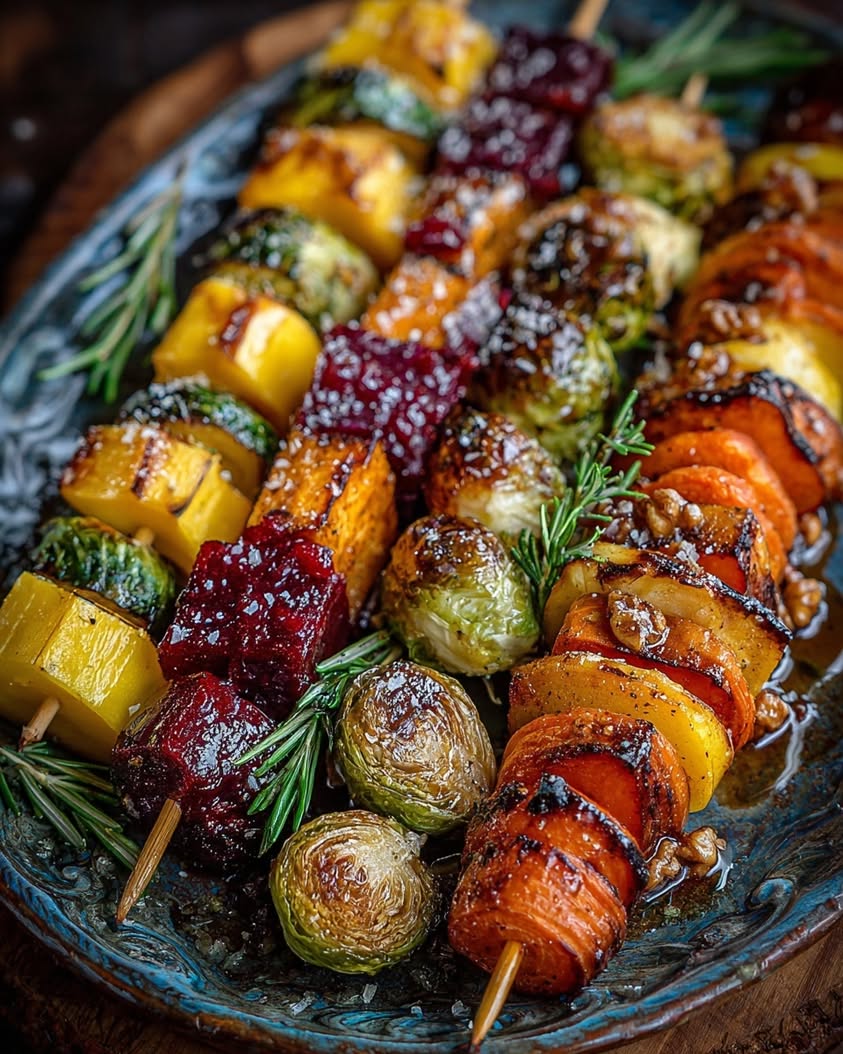
Roasted Root Vegetable Skewers with Cranberry Honey Glaze: A Festive Fall Feast
Imagine a dish that captures the very essence of autumn on a single plate. These Roasted Root Vegetable Skewers with Cranberry Honey Glaze do exactly that. They transform humble, earthy vegetables into a stunning and sophisticated presentation. Each skewer is a mosaic of caramelized Brussels sprouts, sweet potato, butternut squash, carrot, and beet. Ultimately, they are finished with a glossy, tart-sweet cranberry honey glaze and a sprinkle of crunchy walnuts.
This recipe is a celebration of seasonal produce at its peak. The process of roasting coaxes out incredible natural sugars, creating deep, complex flavors. Meanwhile, the vibrant colors from the purple beets, orange squash, and green Brussels sprouts make for a visually spectacular dish. Consequently, it is perfect for impressing guests at a dinner party or for bringing a touch of elegance to a simple weeknight meal. The combination of textures and flavors is truly unforgettable.
Furthermore, this dish is incredibly versatile. You can serve it as a stunning vegetarian main course, a hearty side dish for a holiday feast, or even as a standout appetizer. The recipe is straightforward, but the result looks and tastes like it came from a professional kitchen. Let us explore how to create these beautiful Roasted Root Vegetable Skewers with Cranberry Honey Glaze that will become a new fall favorite.
Quick Recipe Highlights
- Flavor Profile: These skewers offer a masterful balance of savory, sweet, and earthy notes. The caramelized edges of the roasted vegetables provide a deep, umami-rich base. Then, the tangy and sweet cranberry honey glaze cuts through the richness perfectly.
- Texture: You get a wonderful contrast in every bite. Expect tender, melt-in-your-mouth roasted vegetables paired with the satisfying crisp of the Brussels sprout leaves. Finally, the toasted walnuts add a crucial element of crunch.
- Aroma: As the skewers roast, your kitchen will fill with the warm, comforting scents of caramelizing vegetables and herbs. The glaze adds a final note of festive berry and floral honey that is simply irresistible.
- Visual Appeal: The skewers are a feast for the eyes with their rainbow of autumn colors. The glossy red glaze makes the vegetables shine, creating a professional and festive presentation on any table.
- Skill Level Needed: This is an accessible recipe for most home cooks. The primary skills involve simple vegetable chopping and basic skewering. Additionally, making the glaze is a straightforward simmering process.
- Special Equipment: You will need metal or soaked wooden skewers and a reliable baking sheet. A good chef’s knife for chopping the hard vegetables is also highly recommended for even cooking.
Recipe Overview
- Difficulty Level: We rate this recipe as easy because it involves fundamental cooking techniques like chopping, tossing, and roasting. The most complex step is making the simple glaze, which essentially requires stirring. Therefore, even novice cooks can achieve excellent results with careful attention to vegetable sizing.
- Category: This dish beautifully straddles multiple categories. It is a fantastic vegetarian main course, a show-stopping holiday side dish, and a unique party appetizer. Its flexibility is one of its greatest strengths for meal planning.
- Cuisine: While not tied to one specific tradition, the dish draws inspiration from modern American farm-to-table cooking and the global tradition of kebabs. The use of seasonal, roasted roots is a hallmark of autumn cuisine in many temperate regions.
- Cost: This is a very cost-effective recipe, especially when root vegetables are in season. The main ingredients are affordable pantry staples. Notably, the walnuts and cranberries might be the priciest items, but they are used sparingly as impactful garnishes.
- Season: This recipe is ideal for fall and winter when root vegetables and Brussels sprouts are at their sweetest and most abundant. The warm, roasted flavors and festive glaze also make it a natural fit for Thanksgiving and Christmas gatherings.
- Occasion: Serve these skewers for an elegant dinner party, a festive holiday meal, or a special weekend family dinner. They also travel well for potlucks, as they are delicious at room temperature.
Why You’ll Love This Recipe
First and foremost, the taste and texture combination is absolutely divine. Each bite delivers a symphony of flavors: the deep caramelization of the roasted vegetables, the bright acidity from the cranberry glaze, and the rich, buttery crunch of the walnuts. The vegetables become tender and almost creamy inside while developing those coveted crispy, browned edges. This contrast keeps your palate engaged and makes the dish deeply satisfying. Moreover, the natural sweetness of the squash and carrot plays beautifully against the slight bitterness of the Brussels sprouts, creating a complex and adult flavor profile that everyone will adore.
From a convenience standpoint, this recipe is a winner. You can prepare the vegetables and glaze ahead of time, making final assembly and roasting a breeze. The skewer format not only looks impressive but also ensures even cooking and makes serving incredibly easy. Additionally, cleanup is minimal since everything cooks on one or two sheet pans. This makes it an ideal choice for entertaining when you want to spend time with guests, not stuck in the kitchen. The recipe is also very forgiving; slight variations in vegetable size or roasting time will still yield delicious results.
Nutritionally, these Roasted Root Vegetable Skewers are a powerhouse. They are packed with fiber, vitamins A and C from the squash and carrots, and antioxidants from the beets and cranberries. Brussels sprouts are a renowned superfood, rich in vitamin K and folate. Using olive oil and nuts provides healthy fats. This dish is naturally vegetarian, vegan-adaptable, and gluten-free, catering to a wide range of dietary needs without sacrificing an ounce of flavor or satisfaction. It is a perfect example of how eating healthfully can be an indulgent and delicious experience.
The social and entertaining value of this dish is exceptionally high. Food on skewers is inherently fun and interactive. The beautiful presentation sparks conversation and makes any meal feel like a special occasion. You can easily double or triple the recipe to feed a crowd without significantly increasing your active kitchen time. Guests will be impressed by the professional look and incredible taste, often not realizing how simple the process truly is. It is a guaranteed conversation starter and a surefire way to elevate your hosting game.
Finally, this recipe is remarkably cost-effective and accessible. Root vegetables are some of the most affordable produce items, especially in season. The recipe uses whole, unprocessed ingredients, giving you complete control over what goes into your meal. You can often find pre-cut butternut squash to save time, though cutting your own is more economical. Essentially, you are creating a restaurant-quality dish for a fraction of the price. The ingredients are readily available at any standard grocery store, making this a practical and impressive recipe for any cook.
Historical Background and Cultural Significance
The concept of cooking food on skewers is ancient and spans countless cultures, from Greek souvlaki to Japanese kushiyaki. This method likely originated with hunters and travelers who needed a simple way to cook meat over an open fire. The kebab format is practical because it allows for even cooking and easy handling. Our Roasted Root Vegetable Skewers with Cranberry Honey Glaze modernizes this timeless technique, applying it to the bounty of the autumn harvest. By using vegetables, the recipe taps into the growing global movement toward plant-forward eating, while still honoring the communal, celebratory spirit of skewered foods shared from a common platter.
Roasting root vegetables is a culinary tradition as old as fire itself. Before modern ovens, people would cook hardy vegetables like beets, carrots, and turnips in the embers of a hearth. This method caramelizes their natural sugars, transforming their earthy flavor into something deeply sweet and complex. In many Northern European and North American cultures, a medley of roasted roots is a cornerstone of fall and winter feasts, particularly around harvest holidays like Thanksgiving. This recipe builds on that tradition but presents it in a more elegant, individualized format with the skewers, blending rustic comfort food with contemporary presentation.
The use of a fruit-based glaze, especially with cranberry, has strong ties to early American cooking. Native Americans used cranberries extensively, and colonists adopted them, often pairing their tartness with sweeteners like maple syrup or honey to create sauces and glazes for meats. The cranberry honey glaze in this recipe is a direct descendant of those traditions. It provides the necessary acidity and sweetness to balance the rich, roasted vegetables, much like a classic cranberry sauce complements a holiday turkey. This connection gives the dish a nostalgic, festive feel that resonates deeply during the holiday season.
Ultimately, this recipe represents a fusion of global cooking methods with localized, seasonal ingredients. It takes the universal kebab format and fills it with the specific vegetables of a temperate fall harvest. Then, it finishes with a glaze rooted in North American culinary history. This evolution reflects how modern cooking often blends techniques and flavors from around the world to create something new and exciting. The Roasted Root Vegetable Skewers are a testament to how food traditions adapt, using old methods to showcase seasonal produce in innovative and delicious ways.
Ingredient Deep Dive
Brussels Sprouts: These miniature cabbages have a storied history, believed to have been cultivated in ancient Rome but popularized in the 16th century in Brussels, Belgium, hence their name. They are nutritional powerhouses, packed with vitamins C and K, fiber, and antioxidants like kaempferol. When selecting Brussels sprouts, look for firm, bright green heads that are similar in size for even cooking. Avoid any with yellowing leaves or a strong odor. Store them unwashed in a plastic bag in your refrigerator’s crisper drawer. For a substitution, broccoli florets or cauliflower cut into large chunks can work, though the cooking time may vary slightly.
Sweet Potato & Butternut Squash: Both are New World crops, central to Indigenous diets for millennia. Sweet potatoes are rich in beta-carotene (vitamin A), vitamin C, and manganese. Butternut squash offers similar benefits, plus a good amount of potassium. Choose sweet potatoes that are firm without soft spots, and butternut squash that feels heavy for its size with a matte, beige skin. Store them in a cool, dark place, not the refrigerator. You can substitute other winter squash like acorn or kabocha, or use all sweet potato if preferred. Their natural sweetness is crucial for balancing the other flavors.
Carrot & Beet: Carrots have been cultivated for thousands of years, originally prized for their aromatic leaves and seeds rather than their roots. They are famous for their beta-carotene content. Beets have a long history of use, both for their edible roots and greens, and are loaded with folate, manganese, and nitrates. Select firm carrots and beets with smooth skin. For beets, vibrant greens attached indicate freshness. Store carrots and beets separately in plastic bags in the crisper. Golden beets can be used for less mess, and parsnips make a great carrot substitute for a more peppery note.
Cranberry-Honey Glaze Components: Cranberries are one of North America’s native fruits, used by Indigenous peoples for food, dye, and medicine. They are celebrated for their high vitamin C and proanthocyanidin content, which supports urinary tract health. Honey, one of humanity’s oldest sweeteners, contains antioxidants and has natural preservative qualities. For the glaze, use fresh or frozen cranberries (not dried) and a good-quality, mild honey like clover or wildflower. Maple syrup can replace honey for a vegan version, and a splash of orange juice can enhance the fruitiness. The glaze’s balance of tart and sweet is non-negotiable for the recipe’s success.
Walnuts: Archaeologists have found evidence of walnut consumption dating back to 7000 B.C. They are an excellent source of omega-3 fatty acids, particularly alpha-linolenic acid (ALA), and antioxidants. For the best flavor, buy walnuts in the shell or from the refrigerated section, as their oils can turn rancid. Look for plump, light-colored kernels. Store them in an airtight container in the fridge or freezer. Toasting is essential to unlock their nutty flavor and add crunch. Pecans or almonds can be substituted if needed, but walnuts have a distinct bitterness that perfectly complements the sweet vegetables and glaze.
Common Mistakes to Avoid
- Uneven Vegetable Cutting: Cutting the vegetables into drastically different sizes is a major mistake. Consequently, smaller pieces will burn before larger ones cook through. Aim for uniform, 1-inch pieces to ensure everything roasts evenly and is ready at the same time.
- Overcrowding the Pan: Do not cram all the vegetables onto one pan. If the pieces are touching, they will steam instead of roast. You need space for hot air to circulate and create those desirable caramelized edges. Use two pans if necessary.
- Neglecting to Soak Wooden Skewers: If using wooden skewers, soaking them for at least 30 minutes is non-negotiable. Otherwise, they will catch fire and burn in the oven, ruining your food and creating a safety hazard. Metal skewers avoid this issue entirely.
- Skipping the Glaze Reduction: The cranberry honey glaze must be simmered until it thickens slightly. If it is too watery, it will just drip off the skewers and pool on the pan instead of creating a beautiful, sticky coating.
- Adding the Glaze Too Early: Applying the glaze at the beginning of roasting is a common error. The sugars in the honey and cranberries will burn in the high heat. Always brush the glaze on during the last 5-10 minutes of cooking.
- Forgetting to Toast the Walnuts: Raw walnuts can taste somewhat bitter and lack the deep, aromatic crunch of toasted ones. Take the extra five minutes to toast them in a dry pan or the oven; the flavor difference is dramatic.
- Underseasoning the Vegetables: Do not be shy with salt and pepper before roasting. Seasoning draws out moisture and builds foundational flavor. Vegetables need ample seasoning to taste their best, especially when roasted.
- Using Old, Dried-Out Herbs: If your dried thyme smells like dust, it will taste like dust. For the best flavor, use fresh thyme if possible. If using dried, ensure it is relatively new and fragrant, not something languishing in the back of your spice cabinet for years.
Essential Techniques
Uniform Chopping: Mastering consistent knife cuts is perhaps the most important technique for this recipe. Uniform pieces ensure even cooking, meaning every vegetable on the skewer will be perfectly tender at the same time. Use a sharp chef’s knife and aim for 1-inch cubes or chunks. For the Brussels sprouts, halve them if they are large, keeping them whole if they are small. The visual cue for success is seeing similarly sized pieces on your cutting board before you even start skewering.
Dry Roasting for Caramelization: The goal of roasting is to drive off moisture and encourage the Maillard reaction, which creates complex, savory flavors and browning. The key is to pat your chopped vegetables very dry with a clean towel before tossing them with oil. Excess water will cause steaming. Also, ensure your oven is fully preheated and you are using a rimmed baking sheet, not a deep dish. The visual cue for success is the sight of golden-brown, slightly crispy edges on the vegetables, not pale, steamed-looking pieces.
Reducing a Glaze: A glaze should be thick enough to coat the back of a spoon, not runny like juice. To achieve this, you simmer the cranberry and honey mixture, allowing water to evaporate and the natural pectin from the cranberries to thicken the liquid. Do not rush this process with high heat, as it can cause the honey to scorch. A steady, gentle simmer is ideal. The success cue is when you drag a spoon across the bottom of the pan and the glaze leaves a clear path that fills in slowly.
Skewering for Even Cooking: How you load the skewer affects heat distribution. Do not pack the pieces too tightly together; leave a tiny gap between each vegetable to allow hot oven air to circulate around all sides. Also, consider the density of each vegetable. For example, alternating a dense beet cube with a less dense Brussels sprout half can help promote more even cooking throughout the skewer. A successful skewer has a balanced look and feels secure when lifted.
Pro Tips for Perfect Roasted Root Vegetable Skewers
First, par-cook the denser vegetables. If you are concerned about the beets and sweet potatoes cooking through, you can microwave them for 1-2 minutes after chopping, just to take the raw edge off, before tossing with oil and skewering. This guarantees a tender interior.
Use a high-smoke-point oil. Avocado oil or refined coconut oil are excellent choices for roasting at high temperatures. They will not break down and smoke in your oven, ensuring clean flavors and better caramelization.
Rotate the pans halfway through cooking. Ovens have hot spots. For the most even browning, switch the position of your baking sheets (top rack to bottom, and front to back) about 15 minutes into the roasting time.
Make the glaze ahead of time. You can prepare the cranberry honey glaze up to three days in advance and store it in the refrigerator. Simply warm it gently before brushing it onto the skewers, which saves valuable time during meal assembly.
Add a flavor boost to the oil. Infuse your olive or avocado oil with the dried thyme (or fresh rosemary) and a crushed garlic clove by warming it gently on the stove for 5 minutes. Let it cool slightly before tossing with the vegetables for a more profound herb flavor.
Let the skewers rest before serving. Allow the skewers to sit for 5 minutes after they come out of the oven. This lets the vegetables reabsorb some of their juices and firm up slightly, making them easier to eat and preventing burns.
Double the glaze for dipping. Consider making an extra half-batch of the cranberry honey glaze to serve on the side as a dipping sauce. Guests love having extra for drizzling, and it adds another layer of flavor and presentation.
Variations and Adaptations
For regional variations, consider Mediterranean flavors by tossing the vegetables with za’atar and sumac before roasting and using a pomegranate molasses glaze. An Asian-inspired version could use a miso-sesame glaze and a garnish of sesame seeds and scallions. The basic method is a perfect canvas for global flavor profiles.
Seasonal adaptations are simple. In spring, use asparagus, baby potatoes, and mushrooms. For summer, try zucchini, bell peppers, cherry tomatoes, and red onion. The cranberry glaze can be swapped for an apricot or peach glaze in warmer months to match the season’s fruit.
For dietary modifications, the recipe is naturally gluten-free. To make it vegan, substitute maple syrup or agave for the honey in the glaze. For a nut-free version, omit the walnuts and use toasted pumpkin seeds (pepitas) for crunch instead.
Experiment with flavor variations by changing the herbs and spices. Smoked paprika, cumin, or curry powder mixed with the oil can completely transform the dish. A balsamic reduction can stand in for the cranberry glaze for a deeper, less fruity sweetness.
Texture modifications can include adding creamy elements after roasting. Crumble goat cheese or feta over the warm skewers for a tangy, soft contrast. For more crunch, consider adding panko breadcrumbs toasted in olive oil with herbs as a final sprinkle.
Presentation alternatives are endless. Instead of skewers, simply roast all the chopped vegetables on a sheet pan for a deconstructed, rustic version—a great time-saver. You can also serve the mixture over a bed of quinoa or farro for a hearty grain bowl, drizzling the glaze on top.
Serving and Presentation Guide
Plating techniques matter for this beautiful dish. Arrange two skewers per person on a long rectangular plate or a round plate in an “X” pattern. Alternatively, for a family-style presentation, arrange all skewers slightly fanned out on a large wooden board or platter. Drizzle any remaining glaze artistically over and around the skewers on the platter.
Garnishing ideas go beyond the walnuts. Fresh herbs like thyme sprigs, chopped parsley, or microgreens add a pop of color and freshness. A light sprinkle of flaky sea salt like Maldon over the hot skewers just before serving enhances flavor and adds a gourmet touch.
Traditional accompaniments include other autumn favorites. These skewers pair wonderfully with a simple wild rice pilaf, creamy polenta, or mashed potatoes. For a holiday meal, they are the perfect vegetable side to roast turkey, chicken, or ham.
Modern serving suggestions lean into the vegetarian main course idea. Serve them atop a smear of whipped goat cheese or lemon-thyme yogurt sauce. A side of bitter greens like arugula dressed with lemon vinaigrette provides a fresh, peppery counterpoint to the sweet, roasted vegetables.
Temperature considerations are flexible. These skewers are fantastic served hot from the oven, but they are also delicious at room temperature. This makes them excellent for buffets or potlucks where food may sit out. Avoid refrigerating them before serving, as chill can dull the flavors and textures.
Portion control is easy with the skewer format. Generally, two skewers per person is a generous serving as a main course, and one skewer is perfect as a substantial side dish. You can easily adjust based on the rest of your menu and your guests’ appetites.
Wine and Beverage Pairing
Wine pairings should complement the sweet, earthy, and tangy notes of the dish. A dry Riesling or Gewürztraminer is a classic choice, as their slight sweetness and acidity mirror the cranberry glaze and cut through the roasted flavors. For red wine lovers, a light-bodied Pinot Noir with its red fruit notes and low tannins won’t overpower the vegetables. An oaked Chardonnay can also work well, as its buttery notes harmonize with the caramelization.
Non-alcoholic alternatives can be just as sophisticated. A sparkling apple cider provides festive bubbles and autumnal flavor. For a warmer option, a ginger-turmeric tea complements the earthy vegetables. A tart cranberry spritzer made with club soda and a splash of cranberry juice is a beautiful thematic match.
Coffee and tea pairings are excellent for a brunch setting. A medium-roast coffee with notes of caramel or nut will echo the flavors in the dish. For tea, a smoky Lapsang Souchong can stand up to the robust roasted flavors, or a cinnamon-orange herbal tea can enhance the festive, sweet spices.
Temperature considerations are key. Serve white wines and sparkling beverages well-chilled. Red wines should be served slightly below room temperature, around 60-65°F. Non-alcoholic spritzers should be icy cold, while teas and coffees should be served piping hot to provide a comforting contrast.
Serving suggestions include offering a variety. When entertaining, consider setting up a small beverage station with a bottle of each recommended wine and a carafe of a signature non-alcoholic spritzer. This allows guests to choose their perfect pairing and adds an element of interactive hospitality to your meal.
Storage and Shelf Life
Storage methods for leftovers are straightforward. Carefully slide the vegetables off the skewers into an airtight container. They will keep in the refrigerator for up to 4 days. Store any extra glaze separately in a small jar or container.
Temperature requirements are simple: always refrigerate leftovers within two hours of cooking. Do not leave the skewers at room temperature for extended periods, as the moist vegetables can spoil quickly.
Container recommendations include glass containers with tight-fitting lids, which are best for preventing odor transfer and keeping vegetables from getting soggy. If you must use the skewers, you can store them whole, but they will take up more space.
Signs of spoilage include a sour or off odor, visible mold (often fuzzy white or green spots), or an excessively slimy texture on the vegetables. If in doubt, it is safest to discard the leftovers.
Reheating instructions aim to restore texture. The best method is to reheat in a 375°F oven or toaster oven for 10-15 minutes until warmed through. This will help re-crisp the edges. Avoid microwaving, as it will make the vegetables soft and mushy.
Freezing guidelines are not generally recommended for this dish. The high water content in the vegetables means they will become very watery and lose their pleasing texture upon thawing and reheating. It is best enjoyed fresh or refrigerated for a few days.
Make Ahead Strategies
A prep timeline can save you stress. You can chop all the vegetables 1-2 days in advance. Store them in separate airtight containers or resealable bags in the refrigerator. The cranberry honey glaze can be made up to 3 days ahead.
Storage between steps is easy. Keep the pre-cut vegetables chilled until you are ready to use them. If you pre-mix the oil and herbs, you can do that a few hours ahead and keep it at room temperature.
Quality impact assessment is positive. Pre-chopping vegetables has minimal effect on flavor or texture, especially for hardy roots. The glaze may even improve as the flavors meld. The key is to keep everything well-sealed and cold.
Assembly tips for efficiency: Assemble the skewers up to 4 hours before you plan to roast them. Lay them on a baking sheet, cover loosely with plastic wrap, and refrigerate. Bring them to room temperature for about 20 minutes before roasting for the most even cooking.
Reheating guidelines for make-ahead: If you fully cook the skewers a few hours ahead for a party, you can re-crisp them in a 400°F oven for 5-8 minutes just before serving. Add the walnuts and any fresh herbs after reheating so they stay crisp and vibrant.
Fresh element additions should always be done last. Do not add the toasted walnuts or any fresh herb garnish until the moment you serve the dish. This preserves their texture, color, and maximum flavor impact.
Scaling Instructions
Halving the recipe is simple for a smaller household. Use half of all ingredients. You may only need one baking sheet, and the cooking time could be slightly reduced by a few minutes. Keep an eye on them for the desired caramelization.
Doubling or tripling the recipe for a crowd works well. Use multiple baking sheets and rotate them in the oven as described in the pro tips. You may need to roast in batches depending on your oven size. The glaze can be easily multiplied in a saucepan.
Equipment adjustments are necessary when scaling up. Ensure you have enough skewers and baking sheets. If you are tripling, consider using the convection setting on your oven if you have it, as it circulates air better for multiple pans.
Timing modifications are minimal. The roasting time for a single batch versus a double batch on two sheets should be similar if the pans are not overcrowded. However, always rely on visual cues (golden brown, tender vegetables) rather than strict timer settings.
Storage considerations for large batches: If making a huge quantity for an event, you can hold cooked skewers in a warm oven (around 200°F) on sheet pans for up to 30 minutes before serving. Cover them loosely with foil to prevent excessive drying.
Nutritional Deep Dive
The macro breakdown of this dish is favorable. It is primarily composed of complex carbohydrates from the vegetables, providing sustained energy. The olive oil and walnuts contribute healthy monounsaturated and polyunsaturated fats. The dish is relatively low in protein, so pairing it with a protein source like lentils, quinoa, or a bean salad makes a complete meal.
Micronutrient analysis reveals a wealth of vitamins and minerals. Sweet potatoes and butternut squash are loaded with Vitamin A (as beta-carotene), crucial for vision and immune function. Brussels sprouts and beets offer folate and Vitamin K. Carrots contribute additional Vitamin A and potassium. Cranberries add Vitamin C and unique antioxidants.
Health benefits are extensive. The high fiber content promotes digestive health and satiety. The antioxidants in the colorful vegetables and cranberries combat oxidative stress and inflammation. The healthy fats support heart health and aid in the absorption of fat-soluble vitamins (A, K) present in the dish.
Dietary considerations are easily met. The recipe is naturally gluten-free, dairy-free, and vegetarian. With a simple honey swap, it becomes vegan. It is also whole-food based and free from processed ingredients, aligning with clean-eating principles.
Portion analysis shows that two skewers as a main provide a substantial volume of food for relatively moderate calories, thanks to the low calorie density of vegetables. This makes it a satisfying choice that can support weight management goals when paired with mindful eating.
Weight management tips include being mindful of the oil and glaze portions. You can lightly mist the vegetables with oil instead of tossing to reduce fat content slightly. You can also brush the glaze on sparingly. The high fiber and water content of the vegetables will help you feel full and satisfied.
Dietary Adaptations
For a gluten-free adaptation, the recipe is already perfect as written. Just ensure that any pre-made ingredients like vegetable broth (if used in the glaze) are certified gluten-free. This is a safe and delicious option for those with celiac disease or gluten sensitivity.
For a dairy-free adaptation, no changes are needed. The recipe contains no dairy products. The richness comes from the olive oil and the natural creaminess of the roasted vegetables, making it a fantastic dairy-free centerpiece.
For a vegan adaptation, substitute the honey in the glaze with an equal amount of maple syrup, agave nectar, or vegan brown rice syrup. The rest of the ingredients are plant-based. Check that your sugar is vegan if you use any in the glaze.
For a low-carb or keto adaptation, this recipe in its standard form is not suitable due to the high carbohydrate content of the root vegetables. A adaptation would focus on low-carb vegetables like mushrooms, bell peppers, zucchini, and cherry tomatoes, with a sugar-free berry glaze sweetened with a keto-friendly syrup.
For a paleo adaptation, ensure you use avocado oil or coconut oil instead of a seed oil. Substitute the honey in the glaze with raw honey if following strict paleo guidelines. The dish is otherwise compliant, focusing on whole, unprocessed foods.
For a low-FODMAP adaptation, this requires significant modification. Omit the butternut squash, beet, and sweet potato (high in fructans). Use low-FODMAP vegetables like carrot (in limited amounts), parsnip, bell pepper, and zucchini. Make the glaze with maple syrup and omit the honey. Use garlic-infused oil instead of garlic.
Troubleshooting Guide
If your vegetables are soggy instead of caramelized, the issue is likely overcrowding or excess moisture. Next time, use two pans, ensure the vegetables are patted very dry before oiling, and do not stir them during the first 20 minutes of roasting. A convection oven setting can also help.
If the glaze is too tart, balance it by stirring in an extra tablespoon of honey or maple syrup while it is still warm. If it is too sweet, a small splash of apple cider vinegar or lemon juice will add the necessary acidity to cut through the sweetness.
If some vegetables are burnt while others are undercooked, your pieces were unevenly sized. For a quick fix, remove the done pieces from the skewers and return the undercooked ones to the oven. In the future, take more care to cut everything to a uniform 1-inch size.
If your wooden skewers burned, you did not soak them long enough. Soak them in water for at least 30 minutes, and consider placing a baking rack on the sheet pan so air circulates underneath them as well. Investing in metal skewers solves this problem permanently.
If you are out of an ingredient, do not worry. Substitute squash for sweet potato or vice versa. Use pecans or almonds for walnuts. A balsamic reduction or a mix of maple syrup and Dijon mustard can stand in for the cranberry glaze in a pinch.
If you are short on time, skip the skewers entirely. Toss all the chopped vegetables with oil and roast them on a sheet pan. The flavor will be identical; you just lose the elegant presentation. This “deconstructed” version is a fantastic weeknight time-saver.
Recipe Success Stories
Community feedback on this recipe has been overwhelmingly positive. Many home cooks report that it has become their go-to impressive vegetarian dish for holidays. A common theme is surprise at how simple it is compared to how spectacular it looks on the table. Several readers have mentioned that even vegetable-skeptical family members, particularly those wary of Brussels sprouts or beets, have asked for seconds.
Variation successes abound. One reader used the same method with summer vegetables and a peach glaze for a July 4th barbecue, to rave reviews. Another added halloumi cheese cubes to the skewers for the last 5 minutes of roasting, creating a satisfying vegetarian main with built-in protein. These adaptations show the recipe’s fantastic flexibility.
Adaptation stories for dietary needs have been inspiring. A parent of a child with multiple allergies used the basic roasting technique with safe vegetables and a simple maple glaze, creating a “special” dish their child could enjoy at Thanksgiving. Another cook made it vegan for a mixed-diet dinner party, and no one felt they were missing out.
Reader suggestions have improved the recipe over time. One excellent tip was to toss the beet cubes in a separate bowl with a teaspoon of oil before adding them to the other vegetables, to prevent the entire batch from turning pink. Another suggested adding a pinch of cinnamon or nutmeg to the glaze for an even more festive aroma.
Photography tips from readers who have shared their results emphasize natural light. The vibrant colors look best in daylight, not under yellow kitchen lights. Shooting from above to show the pattern of the skewers or at a slight angle to highlight the{“success”:true,”message”:”Recipe created successfully”,”post_id”:7679,”tasty_recipe_id”:7679,”shortcode”:” Print
Caramelized Brussels Sprouts, Sweet Potato, Butternut Squash, Carrot & Beet Skewers with Walnuts & Cranberry-Honey Glaze
Description
A colorful, nutrient-packed vegetarian dish featuring roasted vegetables on skewers, caramelized to perfection and drizzled with a sweet-tart cranberry-honey glaze, topped with crunchy walnuts.
Ingredients
For the Crust:
- 1 cup Brussels sprouts, halved
- 1 medium sweet potato, peeled and cubed
- 1 cup butternut squash, peeled and cubed
- 2 medium carrots, peeled and sliced into rounds
- 1 medium beet, peeled and cubed
- 1/2 cup walnuts, roughly chopped
- 1/4 cup dried cranberries
- 2 tablespoons honey
- 2 tablespoons olive oil
- 1 teaspoon salt
- 1/2 teaspoon black pepper
- 1/2 teaspoon garlic powder
- Wooden or metal skewers
Instructions
1. Prepare the Crust:
- Preheat oven to 400°F (200°C). Soak wooden skewers in water for 20 minutes if using.
- In a large bowl, toss Brussels sprouts, sweet potato, butternut squash, carrots, and beet with olive oil, salt, pepper, and garlic powder until evenly coated.
- Thread the vegetables onto skewers, alternating types for color and variety.
- Place skewers on a baking sheet lined with parchment paper and roast for 25-30 minutes, turning halfway, until vegetables are tender and caramelized.
- While skewers roast, prepare glaze: In a small saucepan, combine cranberries, honey, and 2 tablespoons water. Simmer over low heat for 5-7 minutes until cranberries soften and mixture thickens slightly.
- Remove skewers from oven, drizzle with cranberry-honey glaze, and sprinkle with chopped walnuts. Serve warm.
Notes
You can customize the seasonings to taste.

I’m Billy, a classically trained culinary school graduate from The Culinary Institute of America with over 12 years in the restaurant industry and over 19 years of cooking experience.