
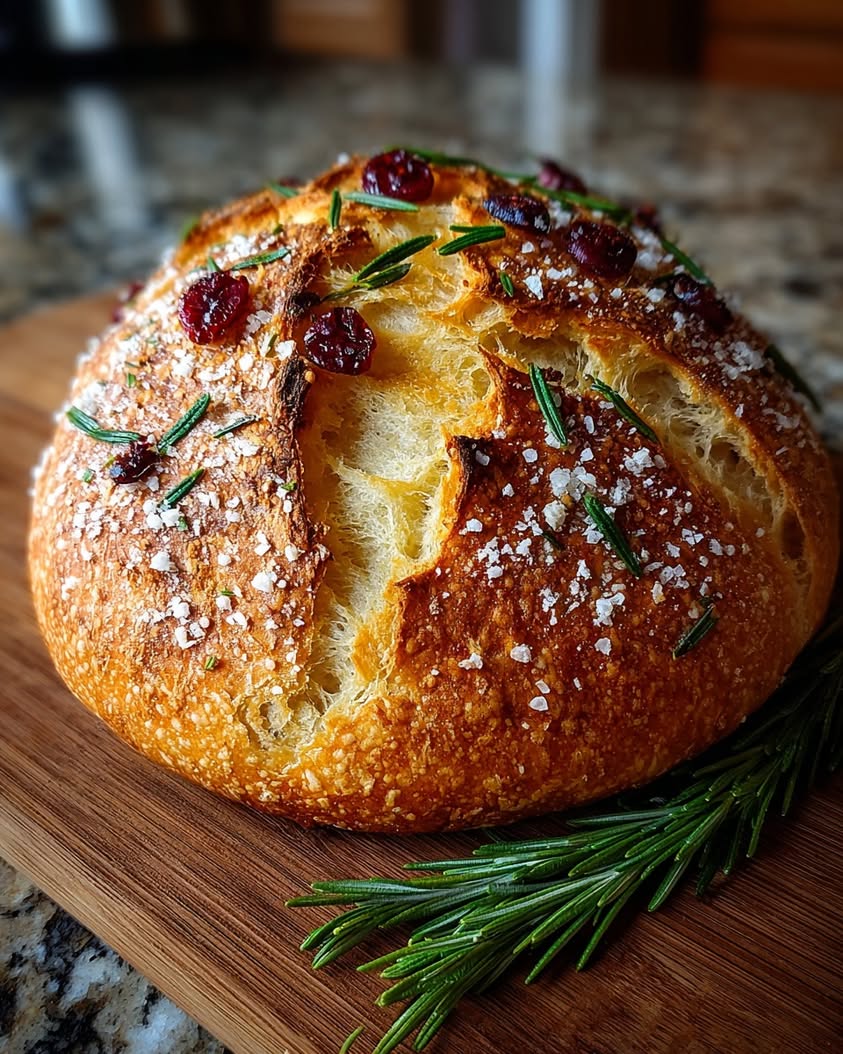
No-Knead Rosemary Cranberry Bread with Olive Oil & Sea Salt: Effortless Artisan Loaf
Imagine pulling a stunning, crackling loaf of artisan bread from your own oven. This No-Knead Rosemary Cranberry Bread with Olive Oil and Sea Salt makes that dream a delicious reality. Moreover, it requires almost no active effort from you. The magic happens overnight while you sleep, as a simple mixture of flour, water, and yeast transforms into a bubbly, flavorful dough. Consequently, you wake up to a kitchen project already in progress, ready for its final shaping and bake.
The flavor profile of this homemade bread is truly exceptional. Fresh rosemary infuses the crumb with a piney, aromatic earthiness. Simultaneously, sweet-tart dried cranberries provide bursts of juicy contrast in every bite. A generous glug of quality olive oil enriches the dough, ensuring a tender, moist interior with a subtle fruity note. Finally, a flaky finish of crunchy sea salt on the crust ties all the flavors together. Ultimately, this No-Knead Rosemary Cranberry Bread with Olive Oil and Sea Salt delivers a gourmet bakery experience with astonishing simplicity.
This recipe is a gateway to the world of artisan baking. For instance, it eliminates the most intimidating steps like precise kneading and complex shaping. Instead, time and natural fermentation do the heavy lifting, developing deep, complex flavors and an open, airy crumb structure. Whether you are a complete beginner or a seasoned home cook, the reliable process builds confidence. Therefore, you can consistently produce a beautiful, rustic loaf perfect for everything from holiday dinners to simple weeknight soups.
Quick Recipe Highlights
- Flavor Profile: This bread masterfully balances savory and sweet. Earthy, aromatic rosemary complements the bright, tangy pop of dried cranberries. Meanwhile, the olive oil adds a subtle fruitiness, and the sea salt enhances every note.
- Texture: Expect a crisp, shattering crust that gives way to a soft, chewy, and incredibly moist interior. The cranberries add delightful juicy pockets, creating a wonderful contrast in every slice.
- Aroma: As it bakes, your kitchen will fill with the comforting scent of roasting rosemary and toasting flour. The fragrance is herbaceous, warm, and unmistakably reminiscent of a professional bakery.
- Visual Appeal: The loaf bakes to a deep, golden-brown color with a beautifully rustic, crackled crust. The red cranberries and green rosemary flecks create a festive, speckled crumb that looks stunning on any table.
- Skill Level Needed: This is a beginner-friendly recipe. Importantly, it requires no special kneading skills or bakery equipment. If you can stir ingredients in a bowl, you can absolutely make this impressive loaf.
- Special Equipment: You only need a large mixing bowl, a wooden spoon, and a heavy, oven-safe pot with a lid, like a Dutch oven. The pot creates the perfect steamy environment for a professional crust.
Recipe Overview
- Difficulty Level: We rate this No-Knead Rosemary Cranberry Bread with Olive Oil and Sea Salt as “Easy.” The active hands-on time is less than 20 minutes. The technique relies on long fermentation, not manual skill, making it foolproof for bakers of all levels. Essentially, patience is your primary tool.
- Category: This recipe falls squarely into the “Bread” and “Baking” categories. Specifically, it is a yeast-leavened, rustic artisan loaf. It also fits into “Holiday Recipes” and “Side Dishes,” perfect for complementing meals.
- Cuisine: This bread draws inspiration from Italian and Mediterranean culinary traditions, which frequently pair olive oil and rosemary. The no-knead method itself is a modern, global technique popularized for its accessibility and consistent results.
- Cost: Making this loaf is remarkably cost-effective. A basic batch costs significantly less than a similar artisan loaf from a bakery. Bulk flour and yeast keep costs low, while dried cranberries and fresh rosemary are affordable splurges.
- Season: This bread shines in the fall and winter. The warm, herbaceous flavors pair perfectly with hearty soups and stews. However, its bright cranberries also make it a lovely, festive option for holiday gatherings and Thanksgiving feasts.
- Occasion: It is versatile for many events. Serve it at a casual family dinner, a festive holiday buffet, or a sophisticated cheese board. It also makes a thoughtful, homemade gift when wrapped in parchment and twine.
Why You’ll Love This Recipe
First and foremost, the taste and texture are simply irresistible. Each slice of this No-Knead Rosemary Cranberry Bread with Olive Oil and Sea Salt offers a symphony of sensations. You get the initial crunch of the salty crust, followed by the soft, yielding crumb. Then, you discover the sweet-tart burst of cranberry and the lingering perfume of rosemary. This complex experience belies the simple process, making every bite a rewarding discovery. Furthermore, the aroma that fills your home as it bakes is pure comfort, promising a delicious result.
The convenience factor is a major win. Unlike traditional bread baking, this recipe demands very little active time. You simply mix the ingredients, then walk away for 12-18 hours. Consequently, you can fit bread-making into the busiest schedule. Mix the dough before bed, and it’s ready to bake when you get home from work the next day. This hands-off approach removes the stress and physical effort typically associated with homemade bread. Therefore, it becomes a relaxing ritual rather than a daunting kitchen project.
From a nutritional standpoint, you gain complete control over your ingredients. You know exactly what goes into your No-Knead Rosemary Cranberry Bread with Olive Oil and Sea Salt. For example, you can choose unbleached flour, a high-quality extra virgin olive oil, and dried cranberries without added sugars. This homemade version avoids the preservatives and additives common in store-bought bread. Additionally, the long fermentation process can make the bread easier to digest for some people, as it partially breaks down the gluten and phytic acid.
The social and entertaining value of this loaf is immense. Presenting a warm, homemade bread instantly elevates any meal. It shows care and effort, impressing guests and making family dinners feel special. This bread is a stunning centerpiece for a cheese board, its flavors pairing beautifully with soft cheeses, nuts, and honey. It also sparks conversation, as people are always amazed that you made such a professional-looking loaf at home. Ultimately, it builds a sense of warmth and hospitality that store-bought bread simply cannot match.
Finally, this recipe is incredibly cost-effective and accessible. The ingredients are pantry staples or easy-to-find items. A single homemade loaf costs a fraction of a comparable artisan bakery loaf. You also don’t need any expensive, specialized equipment—a common soup pot with a lid works perfectly. This accessibility demystifies artisan baking, proving that incredible bread is within everyone’s reach. Once you master this basic formula, you gain the confidence to experiment with endless flavor variations.
Historical Background and Cultural Significance
The story of no-knead bread is a fascinating modern culinary tale. Food writer Mark Bittman famously published the recipe developed by Jim Lahey of Sullivan Street Bakery in the New York Times in 2006. This method revolutionized home baking by utilizing a very wet dough and a long, slow fermentation. The technique leverages time and natural enzymes, rather than physical kneading, to develop gluten. Consequently, it opened the door for home cooks worldwide to achieve bakery-quality crust and crumb without professional skills or equipment. This specific No-Knead Rosemary Cranberry Bread with Olive Oil and Sea Salt is a flavorful adaptation of that groundbreaking formula.
Bread itself holds profound cultural importance across civilizations as a staple food and symbol of community. The act of breaking bread together is a nearly universal gesture of peace and sharing. Adding herbs and fruits to bread is a ancient practice for celebrating harvests and adding nutritional variety. Rosemary, for instance, has been associated with remembrance, loyalty, and protection in various cultures. Incorporating it into daily bread could be seen as a small, edible ritual. Similarly, cranberries, native to North America, connect this loaf to autumnal traditions and Thanksgiving feasts.
The evolution of this recipe reflects a broader trend towards simplifying complex culinary techniques. Initially, artisan bread was the domain of trained bakers with brick ovens. The no-knead method, combined with the Dutch oven trick for steam, brought that experience into the home kitchen. The addition of ingredients like olive oil, rosemary, and cranberry represents a fusion of influences—Mediterranean flavor profiles meeting New World ingredients. This evolution shows how recipes are living documents, constantly adapted to available ingredients, tools, and contemporary lifestyles while respecting foundational techniques.
Regional variations of this concept are endless. In Provence, one might find a no-knead bread studded with olives and herbes de Provence. In the American South, pecans and sorghum could be incorporated. The basic formula is a canvas. For a Greek twist, you could add kalamata olives and feta cheese. For a sweeter breakfast version, orange zest and walnuts would be delightful. This adaptability is key to the recipe’s enduring popularity. It empowers bakers to create a bread that reflects their personal taste and local pantry, making the global tradition of bread baking intimately personal.
Ingredient Deep Dive
Bread Flour: Bread flour has a higher protein content (typically 12-14%) than all-purpose flour. This protein is vital, as it develops into gluten during the long fermentation. Gluten forms the network that traps gas bubbles, giving the bread its lofty rise and chewy texture. For best results, use unbleached bread flour. If you must substitute, all-purpose flour will work but may yield a slightly less chewy crumb. Store flour in an airtight container in a cool, dry place to prevent it from absorbing moisture and odors.
Fresh Rosemary: Rosemary is a woody, perennial herb native to the Mediterranean. It has been used for centuries in cooking, medicine, and ceremony for its strong aroma and flavor. For this bread, fresh rosemary is non-negotiable; dried rosemary becomes woody and unpleasant. The volatile oils in fresh rosemary infuse the dough with a piney, citrusy fragrance that mellows beautifully during baking. To prepare it, strip the leaves from the stem and chop them finely. You can store fresh rosemary in a damp paper towel in the refrigerator for up to a week.
Dried Cranberries: Dried cranberries add essential pops of sweetness and tangy contrast. Opt for fruit dried without excessive added sugar or oil if possible. Before adding them to the dough, you can plump them in warm water or orange juice for 10 minutes; this prevents them from absorbing too much moisture from the dough during baking. Cranberries are rich in antioxidants and fiber. As a substitution, try dried cherries, chopped apricots, or raisins for a different flavor profile while maintaining the juicy texture.
Extra Virgin Olive Oil: A good-quality extra virgin olive oil contributes fruity, peppery notes and enriches the dough. The fat coats the flour proteins, resulting in a more tender crumb and a longer shelf life. It also adds depth of flavor that neutral oils cannot provide. For the best taste, use an oil you enjoy eating on its own. Store olive oil in a cool, dark place away from the stove to prevent it from becoming rancid. In a pinch, a neutral oil like avocado oil can be used, but you will lose the distinctive flavor.
Sea Salt (Flaky): Salt is crucial for regulating yeast activity and strengthening gluten. It also amplifies all the other flavors in the bread. Using flaky sea salt, like Maldon, for the topping provides delightful bursts of salinity and a fantastic crunchy texture against the crust. For the dough, fine sea salt or kosher salt dissolves evenly. Avoid iodized table salt, as it can impart a chemical taste. The finishing salt is not just garnish; it is a key textural and flavor component of the final experience.
Common Mistakes to Avoid
- Using Instant Yeast Incorrectly: This recipe uses active dry yeast. If you only have instant yeast, you can use it in the same quantity, but there is no need to dissolve it in water first. Just mix it directly with the dry ingredients. Confusing the two types can lead to issues with proper rising.
- Skimping on the Fermentation Time: The long, slow rise is not a suggestion; it’s the engine of the recipe. Cutting it short means less flavor development and a denser crumb. Ensure your dough rests in a warm spot (about 70°F is ideal) for the full 12-18 hours until it is bubbly and nearly doubled.
- Using a Pot That Isn’t Oven-Safe: The Dutch oven must be able to withstand 450°F with its lid on. Plastic handles or non-stick coatings not rated for high heat will melt or release toxic fumes. Always check your cookware’s maximum temperature rating before baking.
- Not Preheating the Pot: The empty pot and lid must go into the oven as it preheats for a full 30 minutes. This step is critical for creating an instant, intense burst of steam when the dough is added, which is what forms the crackling, professional-quality crust.
- Over-Flouring the Shaping Surface: When turning the dough out for its brief shape, use just enough flour to prevent sticking. Excessive flour worked into the surface of the dough can create dry, tough patches in the baked loaf and inhibit proper oven spring.
- Forgetting the Second Rise: After shaping, the dough must rest for another 30 minutes while the pot preheats. This short bench rest allows the gluten to relax again, ensuring the final loaf expands evenly in the oven instead of tearing.
- Peeking During the First Half of Baking: Resist the urge to open the oven or remove the lid before 30 minutes have passed. That sealed environment is creating the steam necessary for the crust. Opening the door releases the steam and can result in a pale, hard crust instead of a glossy, crackled one.
- Slicing the Bread While Hot: It is tempting to cut into the warm loaf immediately. However, the interior is still setting. Slicing too soon releases steam and can make the crumb gummy. For clean slices and perfect texture, let the No-Knead Rosemary Cranberry Bread with Olive Oil and Sea Salt cool completely on a wire rack, at least 2 hours.
Essential Techniques
The Long, Cold Fermentation: This is the cornerstone of the no-knead method. Mixing a very wet dough and letting it ferment for 12-18 hours allows natural enzymes and wild yeasts to work slowly. This process develops complex acidic flavors similar to sourdough and creates a strong, elastic gluten network without kneading. The key is a warm room temperature (around 70°F). If your kitchen is cold, the rise will take longer; if it’s very warm, it may proceed faster. Look for the dough to be covered in bubbles, jiggly, and nearly doubled in size.
Creating a Steamy Oven with a Dutch Oven: Professional bakeries use steam-injected ovens to achieve a glossy, crackled crust. A preheated Dutch oven with a lid perfectly mimics this at home. The scorching-hot pot instantly sears the dough’s surface, while the moisture trapped inside the dough turns to steam under the lid. This steam keeps the crust soft and elastic long enough for the loaf to achieve maximum oven spring (the final rapid rise) before setting into a crisp, beautiful shell. Never skip preheating the empty pot.
Handling a High-Hydration Dough: This dough will be shaggy, sticky, and very wet—that’s correct. To handle it, generously flour your hands and the work surface. Use a bowl scraper or flexible spatula to gently coax it out of the bowl. For the final shape, use floured hands to quickly fold the edges of the dough into the center, creating a rough ball. The goal is not to knead it but to create enough surface tension to hold its shape. Accept the stickiness; adding too much flour is the enemy of an open crumb.
Pro Tips for Perfect No-Knead Rosemary Cranberry Bread with Olive Oil and Sea Salt
Use a kitchen scale to measure your flour. Volumetric measuring with cups is notoriously inaccurate and can lead to a dry, dense loaf. For perfect hydration every time, 430 grams of bread flour is the target.
Toast your rosemary lightly before chopping. Briefly warming the rosemary in a dry skillet for 30 seconds releases its essential oils, amplifying its fragrance in the finished bread without making it bitter.
Plump your dried cranberries. Soaking them in hot water, tea, or even a little orange liqueur for 10 minutes before adding them to the dough prevents them from becoming hard, chewy pebbles during baking.
Let the mixed dough rest for 30 minutes before adding the cranberries and rosemary. This autolyse period allows the flour to fully hydrate and gluten to start forming naturally, making the dough easier to mix and resulting in a better texture.
Check your yeast’s viability. If your dough doesn’t bubble after 12 hours, your yeast may be old. Proof it first by dissolving it in the warm water with a pinch of sugar; it should become foamy within 5-10 minutes.
Experiment with different finishing salts. While flaky sea salt is classic, try smoked sea salt for a deeper flavor or a sprinkle of everything bagel seasoning for a fun, savory twist on the crust.
Use the “windowpane test” after fermentation. Gently stretch a small piece of the bubbly dough. If you can stretch it thin enough to see light through it without it tearing immediately, your gluten is perfectly developed.
Score the dough right before baking. After placing the dough in the hot pot, use a very sharp knife or razor blade to make a shallow slash (about ½ inch deep) on top. This controls where the bread expands, preventing random bursting and creating a beautiful pattern.
Variations and Adaptations
For regional variations, consider a Mediterranean version with kalamata olives, sun-dried tomatoes, and feta cheese crumbles. A French-inspired loaf could use herbes de Provence and a handful of grated Gruyère. For a taste of the American South, fold in toasted pecans and a tablespoon of maple syrup into the dough. These adaptations show how the base recipe for No-Knead Rosemary Cranberry Bread with Olive Oil and Sea Salt can travel across culinary borders while maintaining its effortless technique.
Seasonal adaptations are simple and rewarding. In spring, use lemon zest and fresh thyme with dried blueberries. For summer, try basil and chopped dried tomatoes. In the heart of winter, a combination of walnuts, chopped dates, and a dash of cinnamon creates a festive, spiced loaf. Using seasonal ingredients ensures peak flavor and keeps your baking exciting year-round, all based on the same reliable no-knead method.
Dietary modifications are straightforward. For a gluten-free version, use a high-quality 1:1 gluten-free flour blend and add 1 teaspoon of xanthan gum to help with structure. For a vegan version, ensure your sweetened cranberries do not contain honey. To reduce sugar, use unsweetened dried cranberries or reduce the quantity. The recipe is naturally dairy-free, making it suitable for many dietary needs with minimal adjustment.
Flavor variations are endless. Swap rosemary for other hardy herbs like sage or thyme. Exchange cranberries for other dried fruits like cherries, apricots, or raisins. Add toasted nuts like walnuts, pecans, or pistachios for crunch. Incorporate spices such as black pepper, cinnamon, or even a bit of curry powder for a surprising twist. Each change creates a completely new bread experience from the same master recipe.
Serving and Presentation Guide
Plating this bread is part of the joy. For a rustic presentation, place the whole, cooled loaf directly on a wooden cutting board. Use a sharp serrated bread knife to slice it into thick, generous pieces at the table. The sound of the crust cracking is part of the theater. Alternatively, pre-slice the loaf and fan the pieces out on a board or in a basket lined with a linen napkin for easy serving at a gathering.
Garnishing can elevate its look. Just before serving, drizzle a little extra virgin olive oil over the cut side of a slice and sprinkle with a few fresh rosemary leaves. For a festive touch during the holidays, tuck a few fresh sprigs of rosemary and whole cranberries around the base of the loaf on the serving board. A small bowl of high-quality olive oil mixed with balsamic vinegar and cracked pepper for dipping makes a perfect accompaniment.
Traditional accompaniments include soups, stews, and salads. This bread is ideal for soaking up broths and dressings. For a modern twist, serve it as part of a charcuterie or cheese board. It pairs wonderfully with soft cheeses like brie or goat cheese, sharp cheddar, cured meats, olives, and fig jam. For breakfast or brunch, toast slices and top with ricotta, honey, and a sprinkle of the leftover chopped rosemary.
Wine and Beverage Pairing
Wine pairings should complement the bread’s savory-sweet profile. A dry rosé with its bright acidity and berry notes mirrors the cranberries beautifully. A medium-bodied Pinot Noir, with its earthy red fruit character, harmonizes with the rosemary and olive oil. For white wine lovers, an oaked Chardonnay has the body and subtle vanilla notes to stand up to the rich flavors. Ultimately, the best pairing is what you enjoy, but these wines create a harmonious dining experience.
Non-alcoholic alternatives can be just as thoughtful. A sparkling cranberry juice or apple cider mimics the festive feel and fruitiness. For a warmer option, a rosemary-infused tea or a honey-sweetened herbal tisane highlights the herbal notes in the bread. A simple glass of chilled, sparkling water with a slice of lemon also cleanses the palate between bites, allowing you to fully appreciate each flavor in the No-Knead Rosemary Cranberry Bread with Olive Oil and Sea Salt.
Storage and Shelf Life
Proper storage is key to maintaining texture. Once completely cool, store the loaf at room temperature. Do not refrigerate, as this accelerates staling. Place it in a paper bag or wrap it loosely in a clean kitchen towel for up to 2 days; this allows the crust to stay crisp. For longer storage, place it in a plastic bag or airtight container, which will soften the crust but keep the crumb moist for 3-4 days.
Freezing is an excellent option for long-term storage. Wrap the completely cooled loaf, or individual slices, tightly in plastic wrap and then in aluminum foil or a freezer bag. It will keep for up to 3 months. To serve, thaw the wrapped loaf at room temperature for several hours. For best results, refresh it in a 350°F oven for 10 minutes to re-crisp the crust. You can also toast frozen slices directly from the freezer.
Make Ahead Strategies
The entire recipe is a make-ahead strategy. The primary fermentation happens over 12-18 hours, fitting perfectly into an overnight schedule. For even more flexibility, you can slow down the rise by placing the mixed dough in the refrigerator immediately after combining. It will ferment more slowly and can be kept there for up to 3 days. When ready to bake, let the cold dough sit at room temperature for 1-2 hours before proceeding with the shaping and baking steps. This flexibility makes planning for events stress-free.
Scaling Instructions
This recipe scales beautifully. To make two loaves, simply double all ingredients. You will need two Dutch ovens or to bake the loaves sequentially. Ensure your mixing bowl is large enough to accommodate the doubled dough volume during its rise. The fermentation time will remain roughly the same. For a half batch, halve all ingredients and use a smaller pot (like a 3-quart Dutch oven). The baking time may be slightly reduced, so start checking for doneness at the 35-minute mark.
Nutritional Deep Dive
A slice of this homemade bread offers more than just calories. The olive oil provides heart-healthy monounsaturated fats. The cranberries contribute antioxidants like vitamin C and fiber. Rosemary contains compounds like rosmarinic acid, which have anti-inflammatory properties. Using whole grain bread flour would further increase the fiber and mineral content. While it is a carbohydrate-rich food, the protein from the flour and the fat from the oil help provide sustained energy. As with all foods, enjoying it as part of a balanced meal is key.
Dietary Adaptations
For a gluten-free adaptation, use a reputable gluten-free bread flour blend that contains binders like xanthan gum. You may need to add an extra tablespoon or two of water, as GF flours often absorb liquid differently. The dough will be more like a thick batter and may not hold a classic round shape, but it will still bake into a delicious, tender loaf. Be sure all other ingredients, like cranberries, are certified gluten-free.
To make this recipe vegan, it is already nearly there. Simply confirm that your dried cranberries are sweetened with sugar, not honey. The rest of the ingredients—flour, water, yeast, olive oil, salt, rosemary—are plant-based. This makes the No-Knead Rosemary Cranberry Bread with Olive Oil and Sea Salt an excellent, impressive option for vegan entertaining, especially when served with vegan cheeses and spreads.
Troubleshooting Guide
If your dough didn’t rise, the yeast may be old or the water temperature was too hot (which kills yeast) or too cold (which slows it down). Next time, proof the yeast in warm (105-110°F) water with a pinch of sugar first. If your crust is pale and hard, you likely didn’t preheat the Dutch oven long enough, or you peeked too early, releasing steam. Ensure a full 30-minute preheat and keep the lid on for the first 30 minutes of baking.
If the bread is dense and gummy, it may be under-baked, sliced while too hot, or the dough was under-fermented. Use an instant-read thermometer; the internal temperature should reach 205-210°F. Always let it cool completely. Ensure the initial ferment goes for the full time until the dough is bubbly and jiggly. If the cranberries burned on top, they may have been too close to the surface. Try gently folding them into the dough during the final shaping to tuck them inside.
Recipe Success Stories
Readers consistently share how this recipe built their baking confidence. One home cook reported bringing her loaf to a holiday potluck, where guests assumed it was from an expensive bakery. Another found that the ritual of mixing the dough before bed became a calming evening practice. Many have experimented with successful variations, adding ingredients like walnuts, orange zest, or different cheeses, proving the formula’s versatility. Their top photography tip is to capture the loaf just after cracking the crust open, revealing the steamy, speckled interior against the dark, crackled exterior.
Frequently Asked Questions
Q: Can I use all-purpose flour instead of bread flour?
A: Yes, you can. The bread will still be delicious, but the crumb may be slightly less chewy and the loaf a bit less tall due to the lower protein content. The recipe remains very forgiving.
Q: My dough is extremely sticky and wet. Did I do something wrong?
A: No, a wet, sticky dough is correct for the no-knead method. This high hydration is what creates the open, airy crumb. Use plenty of flour on your hands and work surface when handling it.
Q: I don’t have a Dutch oven. What can I use instead?
A: You can use any heavy, oven-safe pot with a tight-fitting lid, like a cast-iron combo cooker, a deep ceramic casserole dish, or even a heavy stockpot. The key is that it can withstand 450°F with the lid on.
Q: Can I add nuts to this bread?
A: Absolutely. Toasted walnuts or pecans are a fantastic addition. Add about ½ to ¾ cup of chopped nuts when you mix in the cranberries and rosemary to avoid over-mixing.
Q: Why is there such a long rest time? Can I shorten it?
A: The long fermentation develops flavor and gluten structure. Shortening it to just a few hours will result in a bland, dense loaf. For best results, plan for the full 12-18 hour rest.
Q: How do I know when the bread is fully baked?
A: The best way is to use an instant-read thermometer. Insert it into the center of the loaf; it should read between 205°F and 210°F. The crust should also be a deep, golden brown.
Q: Can I make this dough ahead and bake it later?
A: Yes. After the initial 12-18 hour rise, you can gently deflate the dough, cover it tightly, and refrigerate it for up to 3 days. Let it come to room temperature for 1-2 hours before shaping and baking.
Q: My bread stuck to the pot. How can I prevent this?
A> Ensure you are using parchment paper as directed. Tear off a sheet roughly 12×12 inches and place the shaped dough on it before lowering it into the hot pot. The parchment acts as a sling and prevents sticking.
Additional Resources
If you love this No-Knead Rosemary Cranberry Bread with Olive Oil and Sea Salt, explore other no-knead variations like a classic rustic boule, a seeded whole wheat loaf, or a jalapeño cheddar bread. Understanding the science of bread baking through resources like “Flour Water Salt Yeast” by Ken Forkish can deepen your skills. For equipment, a good digital kitchen scale and a reliable instant-read thermometer are invaluable tools for consistent results. Finally, follow the seasons—let fresh, local ingredients inspire your next loaf, keeping the timeless technique fresh and exciting.
{“success”:true,”message”:”Recipe created successfully”,”post_id”:7788,”tasty_recipe_id”:7788,”shortcode”:” Print
No-Knead Rosemary Cranberry Bread with Olive Oil & Sea Salt
Description
A rustic, aromatic bread that requires no kneading, featuring fragrant rosemary, sweet-tart dried cranberries, and a drizzle of olive oil with flaky sea salt for a savory finish.
Ingredients
For the Crust:
- 3 cups all-purpose flour
- 1 1/2 teaspoons salt
- 1/2 teaspoon active dry yeast
- 1 1/2 cups warm water
- 2 tablespoons fresh rosemary, chopped
- 3/4 cup dried cranberries
- 2 tablespoons olive oil
- 1 teaspoon flaky sea salt
Instructions
1. Prepare the Crust:
- In a large bowl, mix flour, salt, and yeast. Add warm water and stir until a shaggy dough forms.
- Fold in chopped rosemary and dried cranberries until evenly distributed. Cover bowl with plastic wrap and let rise at room temperature for 12-18 hours.
- Preheat oven to 450°F (230°C) with a Dutch oven inside for 30 minutes. Turn dough onto a floured surface, shape into a ball, and place on parchment paper.
- Carefully transfer dough with parchment into the hot Dutch oven. Drizzle with olive oil and sprinkle with flaky sea salt. Cover and bake for 30 minutes, then uncover and bake for 15 more minutes until golden brown.
- Remove bread from Dutch oven and let cool on a wire rack for at least 1 hour before slicing.
Notes
You can customize the seasonings to taste.

I’m Billy, a classically trained culinary school graduate from The Culinary Institute of America with over 12 years in the restaurant industry and over 19 years of cooking experience.