
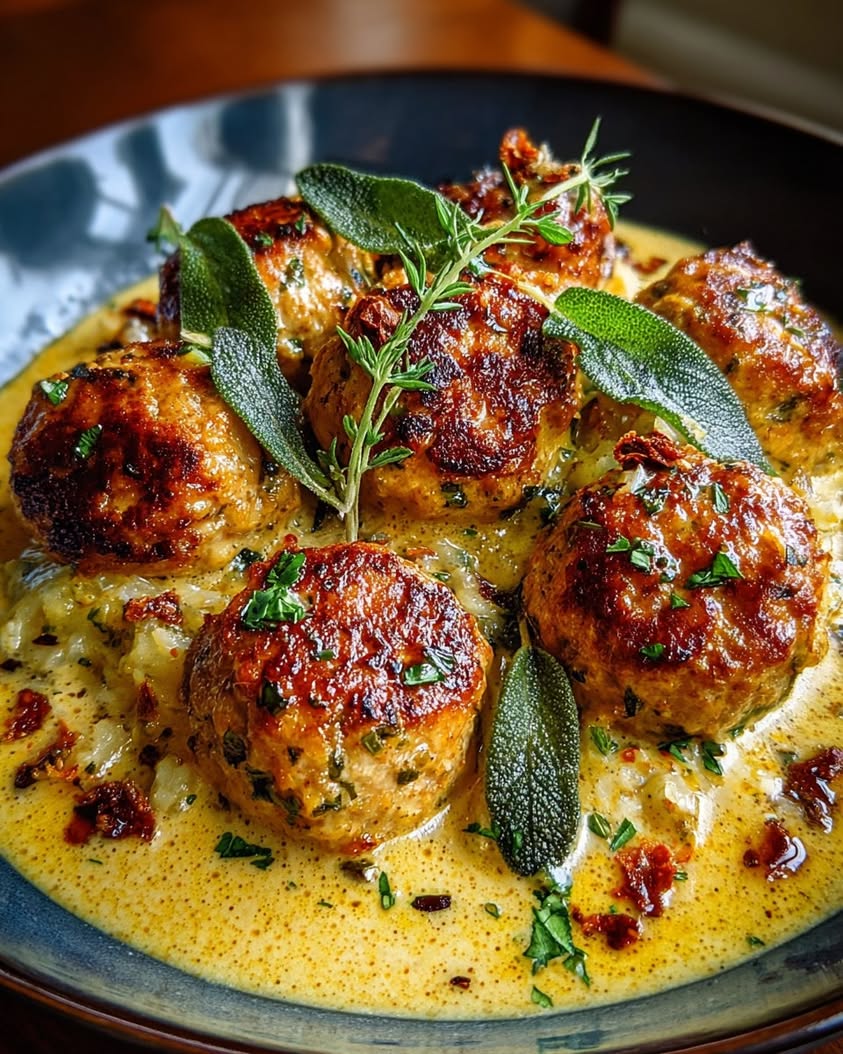
Creamy Sage Pumpkin Chicken Meatballs: A Cozy Fall Dinner
Welcome the crisp autumn air with a plate of pure comfort. These Pumpkin Chicken Meatballs in Sage Cream Sauce combine savory, sweet, and earthy flavors into one unforgettable meal. Imagine tender, juicy chicken meatballs infused with pumpkin puree and warm spices, then simmered in a luxurious, velvety sauce fragrant with fresh sage. This dish transforms simple ingredients into a sophisticated dinner that feels both rustic and elegant. Ultimately, it is the perfect centerpiece for a family supper or a small gathering with friends.
The magic of this recipe lies in its beautiful harmony. The pumpkin adds subtle sweetness and moisture to the lean chicken, while the sage cream sauce provides a rich, aromatic blanket that ties everything together. Each bite delivers a complex flavor profile that is deeply satisfying. Furthermore, the aroma that fills your kitchen as the sauce reduces is nothing short of intoxicating. This meal promises to become a seasonal favorite you will crave year after year.
Creating these Pumpkin Chicken Meatballs in Sage Cream Sauce is surprisingly straightforward. The process is methodical and rewarding, resulting in a dish that looks and tastes like it came from a professional kitchen. Whether you are an experienced cook or a confident beginner, this recipe guides you to success. Let us explore how to make this cozy fall dinner a reality in your own home.
Quick Recipe Highlights
- Flavor Profile: These Pumpkin Chicken Meatballs offer a masterful balance. The savory ground chicken and Parmesan are brightened by warm nutmeg and sage, while the pumpkin adds a gentle, earthy sweetness. The sage cream sauce is rich and herbaceous, creating a luxurious coating.
- Texture: Expect incredibly tender and moist meatballs that hold their shape perfectly. The creamy sauce is velvety and smooth, clinging to each meatball for a cohesive mouthfeel. This contrast between the soft meatball and the silky sauce is delightful.
- Aroma: As the meatballs bake and the sauce simmers, your kitchen will fill with the comforting scent of roasting pumpkin, toasted breadcrumbs, and the unmistakable, piney fragrance of fresh sage. It is the quintessential smell of autumn.
- Visual Appeal: The dish presents beautifully with golden-brown meatballs nestled in a pale cream sauce speckled with green sage. A final garnish of fresh sage leaves or extra Parmesan adds a touch of color and elegance to the plate.
- Skill Level Needed: This recipe is accessible to intermediate home cooks. It involves mixing, forming meatballs, pan-searing, and creating a simple pan sauce. Basic knife skills and comfort with multitasking are beneficial but not required.
- Special Equipment: You will need a large mixing bowl, a baking sheet, and a large oven-safe skillet or braiser. A skillet is essential for developing fond, which forms the flavor base for the incredible sage cream sauce.
Recipe Overview
- Difficulty Level: We rate these Pumpkin Chicken Meatballs as moderately difficult. The process involves several coordinated steps: preparing the meatball mixture, forming uniform balls, achieving a good sear, and building a pan sauce. However, each step is clearly explained. With careful attention to timing and temperature, even a motivated beginner can achieve excellent results.
- Category: This dish is a hearty main course perfect for dinner. It falls squarely into the comfort food category but with a refined twist. Additionally, the meatballs themselves could be served as an appetizer with a dipping sauce, showcasing their versatility.
- Cuisine: The recipe draws inspiration from Italian-American cuisine, evident in the use of Parmesan, breadcrumbs, and the technique of finishing meatballs in sauce. The incorporation of pumpkin and sage, however, gives it a distinctly modern, seasonal American flair, making it a fusion of traditions.
- Cost: This is a reasonably affordable meal to prepare. Ground chicken is typically cost-effective, and pumpkin puree is an inexpensive pantry staple. The primary cost drivers are fresh sage, Parmesan cheese, and heavy cream. Overall, it delivers restaurant-quality taste for a fraction of the price.
- Season: This recipe is ideal for fall and winter. Pumpkin is at its peak, and the warm, hearty nature of the dish is perfect for cooler weather. That said, the comforting flavors are welcome any time you crave a cozy, satisfying meal.
- Occasion: Serve these Pumpkin Chicken Meatballs for a festive weeknight dinner, a casual weekend gathering, or even as part of a holiday spread. It is impressive enough for guests yet simple enough for a regular family meal, making it wonderfully versatile.
Why You’ll Love This Recipe
First and foremost, the taste and texture combination is utterly irresistible. The Pumpkin Chicken Meatballs are exceptionally moist and flavorful, avoiding the common pitfall of dry, bland meatballs. The sage cream sauce is the star, however, transforming the dish into something truly special. Its creamy, herbaceous quality complements the savory meatballs perfectly. Every forkful delivers a harmonious blend of comfort and sophistication that will have everyone asking for seconds.
From a practical standpoint, this recipe offers fantastic convenience. You can prepare the meatball mixture ahead of time, even the day before. Furthermore, the entire dish comes together in one skillet for easier cleanup. While the recipe has multiple steps, they flow logically from one to the next. The active cook time is manageable for a weeknight, and the result is far more impressive than typical quick meals. Ultimately, it proves that extraordinary dinners do not require all day in the kitchen.
Nutritionally, these Pumpkin Chicken Meatballs provide a smart balance. Using lean ground chicken as the base keeps the protein high and the fat content manageable. Pumpkin puree is a fantastic source of vitamin A, fiber, and antioxidants, adding nutritional value to every bite. By making the sauce from scratch, you control the ingredients, avoiding the excessive sodium and preservatives found in many jarred sauces. It is a meal that feels indulgent while still offering wholesome components.
For entertaining, this dish is a true winner. It presents beautifully on a platter or served individually, making it ideal for dinner parties. The aroma alone will impress your guests as they arrive. Because the flavors are universally appealing yet unique, it often becomes the talking point of the meal. You can easily double the recipe to feed a crowd without complicating the process. It is a reliable way to showcase your cooking skills and provide memorable hospitality.
Finally, this recipe is remarkably cost-effective and accessible. The ingredients are easy to find at any standard grocery store, with no obscure or expensive items. Ground chicken is an affordable protein, and canned pumpkin is a pantry staple. By creating a luxurious sage cream sauce at home, you achieve a five-star restaurant quality without the five-star price tag. This accessibility means you can enjoy gourmet-level comfort food whenever the craving strikes.
Historical Background and Cultural Significance
The concept of meatballs spans countless cultures, from Swedish köttbullar to Italian polpette. The Italian-American meatball, often served with pasta and tomato sauce, became a staple in immigrant communities as a hearty, economical way to stretch meat. This recipe for Pumpkin Chicken Meatballs in Sage Cream Sauce represents a modern evolution of that tradition. It moves away from the tomato-based paradigm, instead embracing the flavors of a specific season and incorporating a vegetable puree directly into the meat mixture itself.
Culturally, the use of pumpkin and sage together is deeply rooted in autumnal and harvest celebrations, particularly in North America. Native American tribes utilized pumpkins and squash extensively, and European settlers adopted them into their cooking. Sage, with its robust, earthy flavor, has long been associated with poultry and pork in both European and American cooking. Combining these elements with the Italian meatball technique creates a dish that feels both familiar and novel, bridging culinary traditions.
The evolution of this recipe reflects broader food trends toward seasonal, vegetable-forward cooking. Chefs and home cooks alike now frequently add vegetable purees to ground meat to enhance moisture, flavor, and nutritional content. The sage cream sauce, meanwhile, draws from French technique but uses a distinctly American herb. This fusion approach is characteristic of contemporary cuisine, where boundaries are blurred to create something new and exciting that still resonates with a sense of tradition and place.
Regional variations of this concept are easy to imagine. In the American South, one might find a version with sweet potato and thyme. A Mediterranean twist could incorporate spinach and feta into the meatballs with a lemon-oregano cream sauce. The basic formula—seasoned meatballs enriched with a vegetable puree and served in a complementary sauce—is incredibly adaptable. This particular version, with pumpkin and sage, has cemented its place as a definitive fall recipe in the modern home cook’s repertoire, symbolizing comfort, harvest, and culinary creativity.
Ingredient Deep Dive
Ground Chicken: Opt for ground chicken thigh if possible, as it has more fat and flavor than breast meat, leading to juicier Pumpkin Chicken Meatballs. If using breast, consider adding a tablespoon of olive oil to the mix. Chicken is a lean protein rich in niacin and selenium. For the best texture, handle the meat mixture gently and avoid overmixing, which can make the meatballs tough. Store raw ground chicken in the coldest part of your fridge and use within 1-2 days, or freeze for longer storage.
Pumpkin Puree: Ensure you use 100% pure pumpkin puree, not pumpkin pie filling, which contains sugar and spices. Pumpkin adds moisture, a subtle sweetness, and a beautiful orange hue to the meatballs. It is packed with beta-carotene, fiber, and vitamin A. A high-quality canned puree works perfectly; Libby’s is a reliable brand. Store an opened can in an airtight container in the refrigerator for up to a week. You can substitute with an equal amount of butternut squash puree for a similar effect.
Fresh Sage: This herb is non-negotiable for the authentic flavor of the sage cream sauce. Fresh sage has a potent, piney, and slightly peppery flavor that mellows beautifully when cooked in fat. Look for bright green, firm leaves without dark spots. To store, wrap the stems in a damp paper towel and place in a plastic bag in the refrigerator. In a pinch, you can use 1/3 the amount of dried rubbed sage, but the fresh herb’s aromatic quality is superior for this dish.
Panko Breadcrumbs: Panko, Japanese-style breadcrumbs, are lighter and airier than traditional breadcrumbs, helping to keep the Pumpkin Chicken Meatballs tender without making them dense. They create a delicate internal structure. For a gluten-free version, use certified gluten-free panko or crushed gluten-free crackers. Soaking the panko in milk or cream before adding it to the mix is a classic technique called a panade, which is the ultimate secret to incredibly moist meatballs.
Heavy Cream: This forms the base of the luxurious sauce. The high fat content allows the cream to simmer and reduce without breaking, creating a thick, velvety texture that coats the meatballs. For a lighter version, you could use half-and-half, but the sauce will be thinner and may not reduce as effectively. Do not substitute with milk, as it can curdle when heated. Always add cream off the heat at first, then return to a gentle simmer to prevent separation.
Common Mistakes to Avoid
- Overmixing the Meatball Mixture: Combining the ingredients too vigorously develops the proteins in the chicken, resulting in tough, rubbery Pumpkin Chicken Meatballs. Use a fork or your hands to gently fold everything together until just combined. A few streaks are perfectly fine.
- Using Cold Meat Mixture: Forming meatballs with a cold mixture is difficult and can lead to uneven cooking. Let the mixed ingredients sit at room temperature for 10-15 minutes before shaping. This allows the fats to soften slightly, making shaping easier and promoting even browning.
- Skipping the Sear: Do not be tempted to simply bake the meatballs without searing. The Maillard reaction from searing in the skillet creates a flavorful crust and fond (the browned bits on the pan) that is essential for building the depth of the sage cream sauce.
- Crowding the Skillet: When browning the meatballs, give them plenty of space. Crowding causes them to steam instead of sear, preventing that beautiful golden crust. Cook in batches if necessary, adding a bit more oil for the second batch.
- Adding Cream to a Boiling Pan: After deglazing with broth, always remove the skillet from the heat before stirring in the cold heavy cream. Adding cream directly to a violently hot pan risks it curdling or separating. Gradually temper it by whisking it in off the heat, then return to a gentle simmer.
- Overcooking the Sauce: Once the cream is added, simmer the sauce gently. A rolling boil can cause the fat to separate from the liquid, creating a greasy, broken sauce. A few lazy bubbles is the goal for a smooth, cohesive sage cream sauce.
- Not Tasting for Seasoning: Seasoning is done in layers. Taste the meatball mixture before forming (cook a tiny piece in the microwave). Taste the sauce again after adding the cream and cheese. Finally, taste the finished dish before serving and adjust salt and pepper as needed.
- Using Dried Sage as a Direct Substitute: If you must use dried sage, use only one-third the amount called for fresh, as dried herbs are more concentrated. However, the flavor profile will be different, and you will miss the aromatic freshness that defines this dish.
Essential Techniques
Creating a Panade: A panade is a mixture of breadcrumbs and liquid (often milk) that acts as a binder and moisture-retainer in meatballs. For these Pumpkin Chicken Meatballs, combining the panko with the pumpkin puree and egg achieves a similar effect. This paste distributes throughout the meat, preventing the proteins from tightening too much during cooking and squeezing out moisture. The result is an exceptionally tender and juicy interior. The key is to let this mixture sit for a few minutes so the breadcrumbs can fully absorb the liquid.
Developing Fond: Fond is the French term for the browned bits of food that stick to the bottom of the pan after searing. It is packed with concentrated, caramelized flavor. After searing the meatballs, you will deglaze the pan with chicken broth, using a wooden spoon to scrape up all this fond. This process dissolves those flavorful bits into the liquid, forming the foundational layer of your sage cream sauce. Never waste this flavor gold; it is what transforms a simple sauce into something complex and deeply savory.
Tempering the Cream: Tempering is the process of gradually raising the temperature of a sensitive ingredient (like cream or eggs) to prevent it from curdling or breaking. After deglazing the pan, you remove it from the heat before whisking in the cold heavy cream. This allows the cream to warm up gently in the residual heat. Once incorporated, you return the pan to a low heat to finish simmering. This careful technique ensures your sauce remains velvety smooth and emulsified, not grainy or separated.
Finishing in the Sauce: After browning, the Pumpkin Chicken Meatballs are returned to the skillet to finish cooking directly in the simmering sage cream sauce. This technique, called “braising” or “finishing,” serves two vital purposes. First, it gently cooks the meatballs through without drying them out. Second, and more importantly, it allows the meatballs to absorb some of the sauce’s flavor while also lending their own juices back to the sauce. This symbiotic cooking creates a unified dish where the meat and sauce taste inseparable.
Pro Tips for Perfect Pumpkin Chicken Meatballs
- For uniformly sized meatballs, use a small cookie scoop or a tablespoon measure. This ensures they all cook at the same rate and present neatly on the plate.
- Wet your hands with cold water or a little oil before shaping the meatballs. This prevents the sticky mixture from clinging to your palms, making the process cleaner and faster.
- Do not move the meatballs around in the pan for at least 2-3 minutes after placing them down to sear. This allows a proper crust to form, which will release naturally from the pan when ready.
- Use an instant-read thermometer to check for doneness. The internal temperature of the chicken meatballs should reach 165°F when finished cooking in the sauce.
- If your sauce seems too thin after adding the meatballs, you can remove them temporarily and let the sauce reduce further over medium heat until it coats the back of a spoon.
- For an extra layer of flavor, lightly toast the panko breadcrumbs in a dry skillet before adding them to the meatball mixture. This adds a subtle nuttiness.
- Let the cooked dish rest for 5 minutes off the heat before serving. This allows the sauce to thicken slightly and the flavors to meld even further.
Variations and Adaptations
Regional Variations: For an Italian-inspired twist, add a quarter cup of finely grated Pecorino Romano to the meatball mix and use rosemary instead of sage in the cream sauce. A Swedish-style adaptation could involve swapping the pumpkin for mashed potatoes, using allspice, and serving with lingonberry jam alongside the cream sauce. The basic formula is wonderfully adaptable to different flavor palettes.
Seasonal Adaptations: In spring, substitute the pumpkin puree with cooked, mashed peas or asparagus puree and use fresh tarragon or chives in the cream sauce. For summer, try a zucchini puree with basil and a touch of lemon zest in the meatballs, paired with a lighter sauce made from crème fraîche. This keeps the concept fresh all year round.
Dietary Modifications: For a gluten-free version, use certified gluten-free panko breadcrumbs or almond flour. To make it dairy-free, replace the heavy cream with full-fat canned coconut milk and use a nutritional yeast or vegan Parmesan alternative. The pumpkin helps maintain moisture even without dairy binders.
Flavor Variations: Add a pinch of smoked paprika or cayenne to the meatball mix for a subtle kick. Incorporate cooked, finely chopped mushrooms or spinach for added earthiness and nutrition. A teaspoon of maple syrup in the sauce can enhance the autumnal pumpkin notes beautifully.
Texture Modifications: For a finer texture, pulse the panko in a food processor before using. For more rustic, hearty meatballs, use fresh breadcrumbs torn from a day-old loaf. You can also leave the meatballs slightly larger for a more substantial presentation.
Presentation Alternatives: Serve the Pumpkin Chicken Meatballs and sage cream sauce over creamy polenta, mashed potatoes, or egg noodles instead of pasta. For an elegant appetizer, make mini meatballs, skewer them, and serve with the sauce for dipping. Alternatively, present them in a shallow bowl with crusty bread on the side for soaking up every last drop of sauce.
Serving and Presentation Guide
Plating is key to making this dish shine. For a family-style presentation, transfer the finished Pumpkin Chicken Meatballs and sage cream sauce to a warm, shallow serving bowl or braiser. Nestle them gently so they are partially submerged. Alternatively, plate individually by placing a scoop of your chosen base (like pasta or polenta) in the center of a warm plate, arranging 3-4 meatballs on top, and ladling the sauce over and around them. This controlled approach ensures every plate is picture-perfect.
Garnishing adds the final touch of color and freshness. A few whole fried sage leaves make a stunning, crispy garnish. Simply heat a thin layer of olive oil in a small pan and fry sage leaves for 5-10 seconds until crisp, then drain on paper towels. A light sprinkle of freshly grated Parmesan, a twist of black pepper, or a tiny drizzle of high-quality olive oil also elevates the visual appeal. Avoid over-garnishing; the goal is to enhance, not overwhelm, the dish’s natural beauty.
Traditional accompaniments include wide pasta like pappardelle or fettuccine, which cradle the sauce beautifully. For a lower-carb option, roasted spaghetti squash or zucchini noodles are excellent. Creamy polenta or mashed cauliflower provides a comforting, pillowy base that soaks up the sage cream sauce perfectly. Always consider a textural contrast, such as a simple side salad with a bright vinaigrette to cut through the richness, or some crusty, warm bread for mopping the plate clean.
Wine and Beverage Pairing
The rich, creamy, and savory nature of these Pumpkin Chicken Meatballs calls for wines with good acidity to cut through the fat. A white wine like an oaked Chardonnay from California complements the cream sauce with its buttery notes, while its acidity cleanses the palate. An Italian Pinot Grigio or a French Viognier, with their aromatic profiles, can also stand up to the sage. For red wine lovers, choose a lighter-bodied, low-tannin red like Pinot Noir or a Grenache, which won’t overpower the dish’s delicate pumpkin and herb flavors.
For non-alcoholic alternatives, consider a sparkling apple cider, which echoes the fall theme and provides effervescence. A warm mug of spiced apple tea or a chai latte pairs wonderfully with the autumnal spices. For a refreshing option, a ginger beer or a lemon-ginger kombucha offers a spicy, tangy contrast that balances the dish’s richness beautifully. Ultimately, the goal is to choose a beverage that either complements the creamy sage notes or provides a crisp, cleansing counterpoint.
Storage and Shelf Life
Store leftover Pumpkin Chicken Meatballs and sauce in an airtight container in the refrigerator for up to 3-4 days. The flavors often improve after a day, as they have more time to meld. For best results, store the meatballs submerged in the sauce to prevent them from drying out. Avoid leaving the dish at room temperature for more than two hours to ensure food safety. Always use clean utensils when serving from the storage container to prevent bacterial contamination.
Reheating requires care to maintain the sauce’s emulsion. Gently warm leftovers in a covered skillet over low heat, adding a splash of broth or cream if the sauce has thickened too much. You can also reheat in the microwave using 50% power, stirring at 30-second intervals to ensure even heating. Do not boil vigorously, as this can cause the sauce to separate. The meatballs may release more liquid upon reheating, which will thin the sauce slightly; this is normal.
For freezing, place cooled meatballs and sauce in a single layer on a parchment-lined baking sheet to freeze solid, then transfer to a freezer-safe bag or container. This prevents them from sticking together. They can be frozen for up to 2-3 months. Thaw overnight in the refrigerator before reheating gently on the stovetop. Note that the cream sauce may separate slightly upon thawing and reheating; a vigorous whisk during reheating can often bring it back together.
Make Ahead Strategies
You can prepare the meatball mixture up to 24 hours in advance. Simply mix all ingredients, cover the bowl tightly with plastic wrap, and refrigerate. This resting period actually allows the flavors to develop more deeply. When ready to cook, let the mixture sit at room temperature for 15-20 minutes before shaping and searing. This make-ahead step significantly reduces active prep time on the day you plan to serve the dish.
For a complete do-ahead meal, you can fully cook the Pumpkin Chicken Meatballs in the sage cream sauce, let it cool completely, and refrigerate it for 1-2 days. Reheat gently on the stovetop, adding a little broth or cream to loosen the sauce if needed. The quality holds up remarkably well. For the freshest texture and brightest sage flavor, however, cooking and serving on the same day is ideal. The make-ahead mixture strategy offers the best balance of convenience and quality.
Scaling Instructions
This recipe scales beautifully for a crowd. To double or triple it, use a larger skillet or cook the meatballs in batches, transferring them to a sheet pan after searing. You may need to deglaze the pan with a bit more broth to capture all the fond. When making the sauce, increase the cream and broth proportionally. Be mindful that a larger volume of sauce will take slightly longer to reduce and thicken. Always taste and adjust seasoning at the end, as scaling can dilute flavors.
For halving the recipe, use a medium skillet. The cooking times for searing and simmering will be slightly shorter, so keep a close eye on the sauce as it reduces. The ingredient quantities for a half batch are straightforward. The key with scaling any recipe is to maintain the same techniques—proper searing, deglazing, and gentle simmering—regardless of volume. This ensures the fundamental quality of your Pumpkin Chicken Meatballs in Sage Cream Sauce remains impeccable.
Nutritional Deep Dive
A serving of these Pumpkin Chicken Meatballs provides a balanced mix of macronutrients. The ground chicken offers high-quality, lean protein essential for muscle repair and satiety. The pumpkin puree contributes complex carbohydrates and fiber, which aid digestion and provide sustained energy. The heavy cream and Parmesan cheese add healthy fats necessary for nutrient absorption and creating the sauce’s luxurious texture. This combination makes the dish both satisfying and nutritionally substantive, far beyond empty calories.
Micronutrient-wise, this dish is a powerhouse. Pumpkin is exceptionally rich in Vitamin A (as beta-carotene), crucial for vision and immune function. It also provides Vitamin C and potassium. The sage offers antioxidants and has been traditionally used for its anti-inflammatory properties. Chicken provides B vitamins, particularly B6 and niacin, which support metabolism and neurological health. Together, these ingredients create a meal that supports overall wellness while delivering exceptional comfort and flavor.
Dietary Adaptations
Gluten-Free: Easily adapt this recipe by using certified gluten-free panko breadcrumbs. Ensure your chicken broth is also labeled gluten-free. All other core ingredients—chicken, pumpkin, eggs, cream, cheese—are naturally gluten-free, making this a simple switch with no compromise on texture or flavor.
Dairy-Free: Replace the heavy cream with full-fat canned coconut milk for a rich, slightly tropical twist. Use a dairy-free Parmesan alternative or nutritional yeast for the cheesy flavor. For the panade, use a dairy-free milk like oat or almond milk to moisten the breadcrumbs. The pumpkin will still ensure moist meatballs.
Low-Carb/Keto: Omit the panko breadcrumbs entirely or substitute with 1/4 cup of almond flour or crushed pork rinds. Use a low-carb thickener like xanthan gum (a tiny pinch) if the sauce needs help thickening after the cream is added. Serve over zucchini noodles or mashed cauliflower to keep the meal within keto guidelines.
Troubleshooting Guide
Meatballs are Falling Apart: This usually indicates not enough binder. Next time, ensure you are using the full egg and that your pumpkin puree isn’t overly watery. If using fresh pumpkin, drain it well. Letting the shaped meatballs chill in the fridge for 15 minutes before cooking can also help them firm up and hold their shape better during searing.
Sauce is Too Thin: If your sage cream sauce hasn’t thickened enough, you have a few options. First, let it simmer uncovered for a few more minutes to reduce further. You can also create a quick slurry by mixing a teaspoon of cornstarch with a tablespoon of cold water and whisking it into the simmering sauce. Alternatively, stir in an extra tablespoon of grated Parmesan, which will help thicken it as it melts.
Sauce is Too Thick or Broken: A sauce that has become too thick or has separated (looks greasy and curdled) can often be saved. Remove it from heat and whisk in a splash of warm broth or cream until it becomes smooth again. If it’s simply too thick, thinning it with additional broth is the easiest fix. Gentle heat and constant whisking are your best tools for rescuing a sauce.
Recipe Success Stories
Readers and home cooks consistently report that this recipe becomes an instant fall classic in their homes. Many note that the step of searing the meatballs before finishing them in the sauce was a game-changer, providing a depth of flavor they didn’t expect. Families love that even picky eaters enjoy the subtly sweet pumpkin in the meatballs, often without even realizing it’s there. The dish’s elegance makes it a frequent choice for dinner parties, with hosts praising its reliability and wow factor.
Creative adaptations from the community are inspiring. One cook added a touch of apple cider to the deglazing step for an extra autumnal note. Another successfully made a vegetarian version using a plant-based ground “meat” and vegetable broth. Photographers suggest capturing the dish in a cast iron skillet with a backdrop of fall leaves or a rustic wooden table to highlight its seasonal charm. The shared experiences prove this recipe is not just a set of instructions, but a springboard for personal culinary expression.
Frequently Asked Questions
Can I use ground turkey instead of chicken? Absolutely. Ground turkey, especially a mix of dark and white meat, works perfectly as a substitute for the chicken in these meatballs. The cooking times and techniques remain exactly the same. The flavor will be slightly different but still delicious with the pumpkin and sage.
Can I bake the meatballs instead of pan-searing? You can bake them at 400°F for 15-20 minutes until cooked through. However, you will miss the flavorful fond needed for the sauce. If you bake them, you’ll need to create the sauce separately in a skillet, perhaps browning some extra sage and garlic first to build flavor.
My pumpkin puree is very watery. What should I do? Place the watery puree in a fine-mesh strainer lined with a paper towel and let it drain for 10-15 minutes. This removes excess liquid that could make your meatball mixture too wet and difficult to shape. Using canned puree from a reputable brand usually avoids this issue.
Can I make this sauce without alcohol? The recipe as provided does not call for any alcohol. The sauce is built on chicken broth and cream. If another recipe you’ve seen uses white wine, you can simply omit it and use all broth, or add a teaspoon of white wine vinegar or lemon juice at the end for a touch of acidity.
How can I tell when the meatballs are fully cooked? The safest way is to use an instant-read thermometer. Insert it into the center of the largest meatball; it should read 165°F. If you don’t have a thermometer, cut one meatball in half. The meat should be uniformly white with no pink, and the juices should run clear.
What can I use if I don’t have fresh sage? While fresh is highly recommended, you can use 1/3 the amount of dried rubbed sage. Add it to the pan with the garlic to toast slightly before deglazing. The flavor will be more muted and earthy, lacking the bright, piney top notes of fresh sage.
Is it okay to use milk instead of heavy cream? Not recommended. Milk has a much lower fat content and is prone to curdling when simmered, especially after being added to a hot pan. It will also not thicken into a luxurious sauce. For a lighter option, half-and-half is the minimum fat content you should consider.
Can I prepare and freeze the uncooked meatballs? Yes. Shape the meatballs and place them on a parchment-lined tray. Freeze until solid, then transfer to a freezer bag. Cook directly from frozen, adding a few minutes to the searing and simmering time to ensure they cook through.
Additional Resources
If you loved these Pumpkin Chicken Meatballs, explore other seasonal comfort dishes on the blog. A recipe for Butternut Squash Risotto with Pancetta shares a similar cozy, autumnal vibe. For another skillet meatball adventure, try our Swedish Meatballs with Lingonberry Sauce. To master the pan sauce technique used here, our guide “How to Make a Pan Sauce: 5 Easy Steps” breaks down the science and method for perfect results every time, applicable to countless dishes beyond this one.
For ingredient insights, check out our deep dives on “How to Select and Store Winter Squash” and “Culinary Herbs: A Guide to Growing and Using Sage, Rosemary, and Thyme.” If you’re in need of the perfect skillet, we have a reviewed roundup of the best oven-safe skillets and braisers for seamless stovetop-to-oven cooking. These resources will help you build confidence and expand your culinary repertoire, making every meal a success.
{“success”:true,”message”:”Recipe created successfully”,”post_id”:7797,”tasty_recipe_id”:7797,”shortcode”:” Print
Pumpkin Chicken Meatballs in Sage Cream Sauce
Description
Tender chicken meatballs infused with pumpkin and warm spices, served in a creamy sage sauce for a cozy, autumnal meal.
Ingredients
For the Crust:
- 1 lb ground chicken
- 1/2 cup pumpkin puree
- 1/4 cup breadcrumbs
- 1 egg
- 2 cloves garlic, minced
- 1 tsp ground sage
- 1/2 tsp nutmeg
- Salt and pepper to taste
- 2 tbsp olive oil
- 1 cup heavy cream
- 1/4 cup chicken broth
- Fresh sage leaves for garnish
Instructions
1. Prepare the Crust:
- In a bowl, mix ground chicken, pumpkin puree, breadcrumbs, egg, half the minced garlic, sage, nutmeg, salt, and pepper until combined.
- Form the mixture into 1-inch meatballs. Heat olive oil in a skillet over medium heat and brown meatballs on all sides, about 8-10 minutes. Remove and set aside.
- In the same skillet, add remaining garlic and sauté for 1 minute. Pour in heavy cream and chicken broth, stirring to combine. Simmer for 5 minutes until slightly thickened.
- Return meatballs to the skillet, coating them in the sauce. Cook for another 5-7 minutes until meatballs are cooked through. Garnish with fresh sage leaves before serving.
Notes
You can customize the seasonings to taste.

I’m Billy, a classically trained culinary school graduate from The Culinary Institute of America with over 12 years in the restaurant industry and over 19 years of cooking experience.