
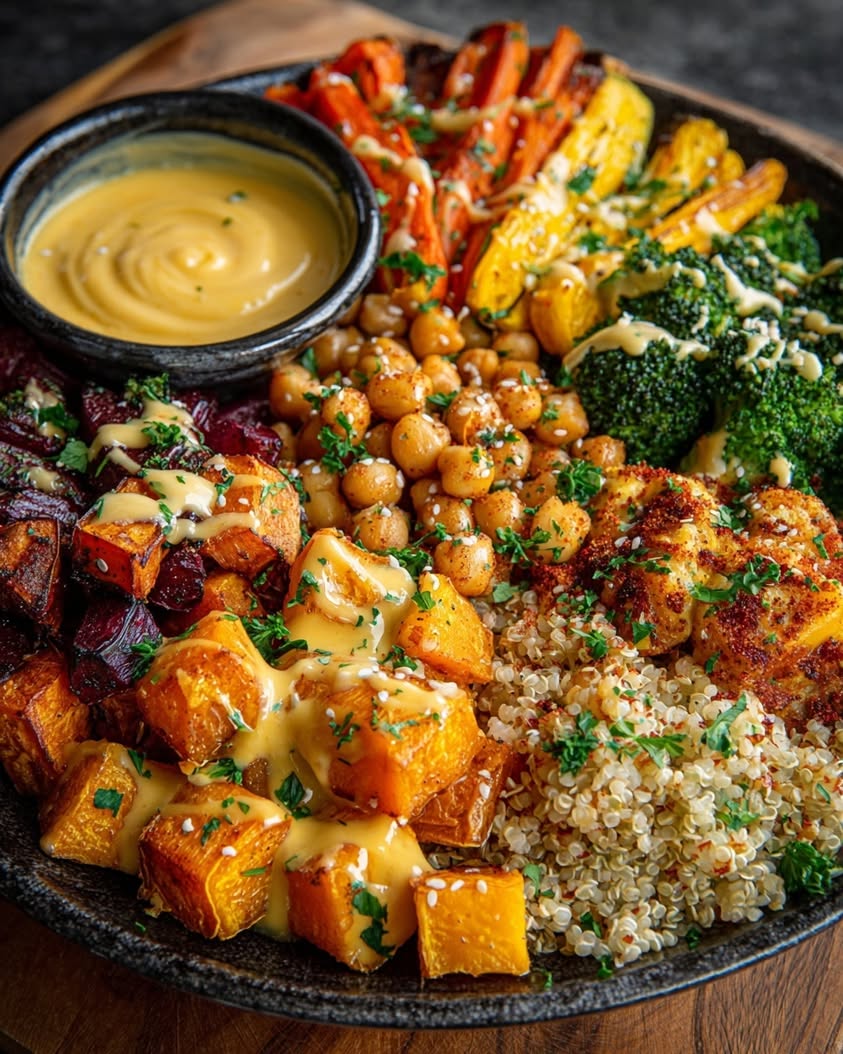
Roasted Veggie & Chickpea Bowls with Maple Tahini Dressing: A Flavor-Packed Plant-Based Feast
Imagine a bowl brimming with vibrant, caramelized vegetables and crispy chickpeas, all drizzled with a creamy, sweet-and-tangy dressing. That is the magic of these Roasted Veggie & Chickpea Bowls with Maple Tahini Dressing. This recipe transforms simple, wholesome ingredients into a meal that is both deeply satisfying and incredibly nutritious. Moreover, it is a perfect example of how plant-based eating can be anything but boring. The combination of textures and flavors creates a dining experience that will have everyone asking for seconds.
This dish is a celebration of seasonal produce and smart pantry staples. For instance, sweet potatoes and broccoli roast to tender perfection, while chickpeas become wonderfully crisp. Meanwhile, the maple tahini dressing ties everything together with its luxurious, savory-sweet profile. Consequently, this meal feels indulgent yet remains packed with fiber, protein, and vitamins. It is the ideal answer for busy weeknights, meal prep, or even a casual dinner with friends. Ultimately, these bowls prove that healthy food can be the most delicious food on your table.
The beauty of these Roasted Veggie & Chickpea Bowls with Maple Tahini Dressing lies in their versatility. You can easily swap vegetables based on what is in your fridge or what is fresh at the market. Additionally, the recipe requires minimal hands-on time, as the oven does most of the work. This makes it a fantastic option for cooks of all skill levels. In the end, you are left with a colorful, restaurant-quality meal that comes together in under an hour. Let us dive into how to create this perfect plant-based bowl.
Quick Recipe Highlights
- Flavor Profile: These bowls offer a masterful balance. You get the natural sweetness from roasted veggies and maple syrup, a tangy punch from Dijon and lemon, and a deep, nutty richness from the tahini. The result is a complex and utterly addictive taste.
- Texture: This dish is a textural dream. Expect creamy sweet potato, tender-crisp broccoli, and most importantly, delightfully crispy roasted chickpeas. The creamy dressing and fluffy quinoa base then bring everything together into a cohesive and satisfying bite.
- Aroma: As the vegetables roast, your kitchen will fill with the warm, comforting scents of caramelizing sweet potato and earthy broccoli. The dressing adds a bright, lemony, and subtly sweet fragrance that makes the meal even more inviting.
- Visual Appeal: The bowl is a feast for the eyes with its rainbow of colors: vibrant orange sweet potatoes, deep green broccoli, golden chickpeas, and fresh green herbs. The creamy beige dressing drizzled over top creates a beautiful, restaurant-worthy presentation.
- Skill Level Needed: This is a beginner-friendly recipe. The techniques involve simple chopping, tossing ingredients on a pan, and whisking a dressing. Therefore, it is perfect for anyone new to cooking or looking for a reliable, no-fuss meal.
- Special Equipment: You only need basic kitchen tools: a good chef’s knife, a couple of baking sheets, and a mixing bowl. A high-speed blender can make the dressing extra smooth, but a bowl and whisk work perfectly well.
Recipe Overview
- Difficulty Level: We rate this recipe as “Easy” because it involves straightforward techniques like chopping and roasting. There is no intricate timing or advanced culinary skills required. The process is largely hands-off once the ingredients are in the oven. Consequently, it is an excellent choice for a stress-free weeknight dinner.
- Category: This dish fits perfectly into several categories. Primarily, it is a hearty and complete plant-based main course. It also works wonderfully as a meal prep lunch or a vibrant side dish for a larger spread. Furthermore, it is a fantastic gluten-free and dairy-free option.
- Cuisine: While not tied to one specific tradition, the recipe draws inspiration from Mediterranean and Middle Eastern flavors, particularly through the use of tahini, chickpeas, and lemon. The concept of a grain bowl, however, is a modern, global approach to healthy eating that celebrates fresh ingredients.
- Cost: This is a very budget-friendly meal. Staples like chickpeas, sweet potatoes, and quinoa are inexpensive, especially when bought in bulk. The tahini and maple syrup are investment items that last for many recipes. Overall, you get a restaurant-quality meal for a fraction of the price.
- Season: This recipe is truly adaptable year-round. In fall and winter, the sweet potatoes and warming spices feel cozy. In spring and summer, you can swap in zucchini, bell peppers, or asparagus for a lighter feel. Therefore, it is a versatile staple for any season.
- Occasion: These bowls are incredibly versatile for any occasion. They are quick enough for a Tuesday family dinner, elegant enough for a casual dinner party, and portable enough for packed lunches or picnics. They are a true all-purpose culinary hero.
Why You’ll Love This Recipe
First and foremost, the taste and texture combination is absolutely irresistible. The roasted vegetables develop a deep, caramelized sweetness that pairs magically with the salty, crispy chickpeas. Then, the maple tahini dressing adds a creamy, tangy, and slightly sweet element that brings every component into harmony. Each forkful offers a delightful contrast between soft, crunchy, and creamy. Ultimately, this bowl satisfies cravings for something hearty, healthy, and bursting with flavor, making it a meal you will want to make on repeat.
From a convenience standpoint, this recipe is a weeknight savior. The preparation is simple, involving mostly chopping and tossing. Once the ingredients are on the sheet pans, the oven does the heavy lifting, freeing you up to make the dressing or simply relax. Additionally, the components store and reheat beautifully, making it a top-tier meal prep candidate. You can easily double the recipe to ensure delicious lunches for days. In short, it delivers maximum flavor with minimal fuss and fantastic leftovers.
Nutritionally, these Roasted Veggie & Chickpea Bowls with Maple Tahini Dressing are a powerhouse. They provide a complete plant-based protein source from the chickpeas and quinoa. The array of vegetables delivers a wide spectrum of vitamins, minerals, and gut-healthy fiber. The healthy fats from the tahini and olive oil help your body absorb all those fat-soluble vitamins. This meal will keep you full and energized for hours without any post-meal slump. It is nourishment that truly tastes as good as it makes you feel.
For entertaining, this dish is a brilliant choice. It is naturally vegan and gluten-free, so it caters to many dietary preferences without feeling like a compromise. The colorful, build-your-own-bowl presentation is always a hit with guests. You can even set up a topping bar with extra herbs, seeds, or avocado to let everyone customize their creation. It is a stress-free way to host that feels special and thoughtful. Your friends will be impressed and likely ask you for the recipe.
Finally, this recipe is incredibly cost-effective. It utilizes affordable pantry staples and transforms them into something extraordinary. A single batch yields four generous servings, making it much cheaper than ordering takeout or dining out. Investing in a jar of tahini opens the door to many other recipes, from dressings to hummus to cookies. This approach to cooking proves that eating well does not have to strain your budget. You get gourmet flavor from simple, accessible ingredients.
Historical Background and Cultural Significance
The concept of combining grains, legumes, and vegetables in a single bowl is ancient, with roots in countless global food traditions. From the rice and lentil bowls of South Asia to the grain and bean dishes of Latin America, this template for a complete, economical meal is universal. Our modern “grain bowl” or “Buddha bowl” trend is a contemporary iteration of this timeless practice. It reflects a growing desire for meals that are balanced, visually appealing, and rooted in whole foods. This recipe, therefore, connects to a deep history of nourishing, one-bowl meals.
Tahini, a key component of the dressing, carries significant cultural weight. Originating in the Middle East, it is a paste made from ground sesame seeds and has been a culinary staple for millennia. It is fundamental to dishes like hummus and baba ganoush. Its inclusion here bridges ancient tradition with modern, health-conscious cooking. Similarly, chickpeas have been cultivated for over 7,000 years in the Mediterranean and Middle East. Using these ingredients honors their history while applying them in a new, accessible format for today’s home cook.
The recipe itself has no single origin story but rather evolves from the modern wellness and plant-based food movement. It represents a shift towards vegetable-centric eating that prioritizes flavor and satisfaction. The technique of roasting vegetables to concentrate their sweetness became widely popular in home kitchens over the last few decades. Combining this with protein-rich chickpeas and a luxurious sauce creates a meal that feels both current and timeless. It is a perfect example of how global pantry staples can be fused into a new, beloved dish.
Regional variations of this concept are endless. In the Mediterranean, you might find a bowl with roasted eggplant, tomatoes, and a yogurt sauce. In Mexico, it could feature roasted corn, black beans, and a cilantro-lime crema. Our version, with its maple and Dijon influences, has a slight North American twist. This adaptability is the recipe’s greatest strength. It provides a foundational formula that invites creativity and personalization based on local ingredients and cultural preferences. It is a template for a global kitchen.
Ingredient Deep Dive
Let us start with chickpeas, also known as garbanzo beans. These legumes are a cornerstone of diets from India to the Middle East. They are packed with plant-based protein, fiber, and essential minerals like iron and folate. For the crispiest result, always drain and rinse canned chickpeas thoroughly, then pat them completely dry with a clean towel. This removes the starchy liquid that can cause steaming. A drizzle of oil and spices before roasting transforms them into a crunchy, savory topping. You can substitute other beans like cannellini, but chickpeas offer the best texture for roasting.
Sweet potatoes are a nutritional superstar native to Central and South America. They are incredibly rich in beta-carotene, which your body converts to vitamin A. Choose firm potatoes with smooth, unblemished skin. Their natural sugars caramelize beautifully in the oven, creating a creamy interior and slightly crisp edges. Store them in a cool, dark, well-ventilated place, but not the refrigerator. As a variation, you can use cubed butternut squash or even carrots. They all bring that desirable sweetness and vibrant color to the bowl.
Broccoli, part of the cruciferous vegetable family, is famous for its potential health benefits and hearty texture. It originated in Italy and has been cultivated for centuries. It provides vitamins C and K, along with sulforaphane, a compound studied for its antioxidant properties. For roasting, cut florets into even sizes to ensure they cook uniformly. Look for bright green, tightly closed florets with firm stalks. You can absolutely swap in cauliflower, Brussels sprouts, or asparagus depending on the season. Roasting mellows its flavor and creates delicious browned tips.
Tahini is the soul of the dressing. This sesame seed paste is a staple in Levantine cuisine. It is a good source of healthy fats, calcium, and copper. When shopping, look for pure sesame tahini without added oils or sugars; the ingredient list should just be sesame seeds. Stir it well before using, as the oil naturally separates. Store it in the refrigerator after opening. If you need a substitute, a thick, unsweetened almond or cashew butter can work in a pinch, though the flavor will be different.
Pure maple syrup is our natural sweetener. It is made by boiling down the sap of maple trees, a process perfected by Indigenous peoples of North America. It contains antioxidants and minerals like manganese and zinc. Always opt for “pure maple syrup” over pancake syrup, which is just corn syrup with flavor. Its complex sweetness balances the tahini’s bitterness and the lemon’s acidity perfectly. For a sugar-free version, you can use a touch of date paste or omit the sweetener and add a grated apple to the roasting pan instead.
Common Mistakes to Avoid
- Not Drying the Chickpeas: This is the number one reason for soggy, not crispy, chickpeas. The residual liquid from the can steams them. Always rinse, drain, and pat them thoroughly dry with a kitchen towel or paper towels before tossing with oil.
- Crowding the Pan: Overloading your baking sheet causes vegetables to steam instead of roast. They will become soft and mushy, not caramelized. Use two pans if necessary to give everything enough space. This ensures proper air circulation and browning.
- Uneven Vegetable Sizes: Chopping your sweet potatoes and broccoli into different sizes means some pieces will burn while others remain undercooked. Aim for uniform, bite-sized pieces so everything finishes roasting at the same time.
- Skipping the Preheating Step: Putting your pan into a cold oven changes the cooking dynamics. Always preheat your oven fully. The instant heat is what helps create that desirable sear and crisp exterior on your veggies and chickpeas.
- Underseasoning the Vegetables: Salt is crucial for drawing out moisture and enhancing natural flavors. Do not be shy with seasoning your veggies and chickpeas before they go in the oven. Taste one after roasting and adjust if needed.
- Whisking a Broken Dressing: If you add the water to the tahini mixture too quickly, it can seize up and look broken or grainy. The key is to start with the tahini, lemon, and maple syrup, whisking until smooth, then slowly drizzle in the water while whisking constantly.
- Using Old Baking Soda: For extra-crispy chickpeas, some recipes add a pinch of baking soda to the water when boiling dried chickpeas. If using this method with canned, ensure your baking soda is fresh. Old baking soda loses its efficacy and will not alter the chickpea’s pH for better crisping.
- Neglecting to Toss Halfway: Roasting is not a set-it-and-forget-it process. For even browning, you must open the oven and give the vegetables and chickpeas a good stir or shake halfway through the cooking time. This prevents burning on one side.
Essential Techniques
The technique of high-heat roasting is fundamental here. Roasting at 425°F (220°C) causes the natural sugars in the vegetables to caramelize, creating deep, complex flavors and appealing browned edges. This dry-heat method also concentrates flavors by evaporating water. The key to mastering it is ensuring your oven is fully preheated and your ingredients are in a single, uncrowded layer. A common pitfall is using a lower temperature, which steams rather than roasts. Look for visible browning and tender pieces that are easily pierced with a fork to know they are done.
Preparing crispy roasted chickpeas is a game-changer. The crucial step is achieving a completely dry surface. After rinsing, spread them on a clean kitchen towel and gently roll them to dry thoroughly. Removing the loose skins is optional but can help them get even crispier. Toss them with just enough oil to coat—too much will make them soggy. Roast them on their own tray, as they may need a different cooking time than the vegetables. They are done when golden brown and crunchy to the bite, not chewy.
Emulsifying the maple tahini dressing ensures a smooth, creamy consistency. Tahini is an unstable emulsion that can easily break. Start by whisking the tahini paste with the acidic lemon juice and maple syrup; this forms a thick paste. Then, add the water very slowly, just a tablespoon at a time, whisking vigorously after each addition. This gradual process allows the water to incorporate properly, creating a stable, pourable sauce. If it does break, whisk in another spoonful of tahini to bring it back together. The visual cue for success is a homogeneous, creamy dressing that coats the back of a spoon.
Pro Tips for Perfect Roasted Veggie & Chickpea Bowls
For the crispiest chickpeas ever, let them air-dry on the towel for 10-15 minutes after patting them dry. This extra step ensures zero surface moisture. Additionally, toss them with a tiny pinch of cornstarch along with the oil and spices; it creates an even crispier exterior.
Cut your sweet potatoes into ½-inch cubes. This size is small enough to cook through and caramelize within the 25-30 minute window, but not so small that they burn. Consistent size is the secret to perfectly cooked veggies.
Use the convection bake setting on your oven if you have it. The fan circulates hot air, promoting faster and more even browning on all sides of the vegetables and chickpeas. Just reduce the temperature by 25°F and keep a close eye on them, as they may cook faster.
Make your dressing ahead of time. Whisk it together and store it in a jar in the fridge for up to 5 days. The flavors meld and improve over time. If it thickens, simply whisk in a teaspoon of warm water to loosen it back up before serving.
Do not discard your broccoli stems! Peel the tough outer layer with a vegetable peeler, then slice the tender inner core into coins or batons. Toss them with the florets; they roast up sweet and delicious, reducing food waste.
Finish your bowls with bright, fresh elements. A sprinkle of chopped parsley, cilantro, or green onions adds color and a burst of freshness. A squeeze of fresh lemon juice just before eating brightens all the flavors beautifully.
For a warm, spiced flavor, add ½ teaspoon each of smoked paprika and cumin to the oil before tossing with the vegetables and chickpeas. These spices toast in the oven, releasing incredible aroma and depth.
If meal prepping, store the dressing separately from the bowls. Pack the roasted components and quinoa together, and keep the dressing in a small container. Add it just before eating to keep everything from getting soggy.
Variations and Adaptations
For regional variations, take inspiration from global cuisines. Create a Mexican bowl by using chili powder on the veggies, black beans instead of chickpeas, and a cilantro-lime crema. For a Mediterranean twist, add roasted red peppers, kalamata olives, and a dollop of tzatziki. An Asian-inspired version could feature sesame oil, soy sauce, edamame, and a ginger-scallion dressing. The basic formula remains, but the flavor profile travels the world.
Seasonal adaptations keep this recipe exciting all year. In spring, use asparagus and fresh peas. Summer calls for zucchini, bell peppers, and cherry tomatoes. Fall is perfect for cubed squash and Brussels sprouts. In winter, stick with hearty roots like sweet potato, carrot, and parsnip. Adjust roasting times slightly based on the vegetable’s water content; denser roots take longer than watery zucchini.
Dietary modifications are straightforward. For a nut-free version, ensure your tahini is processed in a dedicated facility. To make it Whole30 or Paleo, omit the chickpeas and maple syrup, add extra veggies and compliant protein like chicken, and use a date paste for sweetness. For a lower-carb option, replace the quinoa with cauliflower rice or simply increase the volume of non-starchy vegetables like broccoli.
Flavor variations can come from your spice cabinet. Toss veggies with harissa paste for heat, za’atar for an herbal Middle Eastern note, or curry powder for warmth. In the dressing, try substituting the maple syrup with pomegranate molasses for a tart twist, or add a clove of roasted garlic for a savory, mellow depth.
Texture modifications are easy. If you prefer softer chickpeas, skip roasting them and simply warm them with the spices. For extra crunch, add toasted pepitas, sunflower seeds, or slivered almonds on top. If you love creaminess, add slices of avocado or a spoonful of dairy-free yogurt alongside the dressing.
Presentation alternatives can elevate the dish. Instead of mixing everything, arrange the components in neat, colorful sections around the bowl for a deconstructed look. Serve it family-style on a large platter for sharing. For individual appetizer portions, serve the components in small cups or on endive leaves as a healthy starter.
Serving and Presentation Guide
Plating is key for visual appeal. Start with a warm base of fluffy quinoa in the bottom of a wide, shallow bowl. This creates a foundation. Then, artfully arrange the roasted sweet potatoes, broccoli, and chickpeas in separate piles or slightly overlapping sections. This showcases each component’s color and texture. Avoid just dumping everything on top; the intentional arrangement makes the meal feel more special and restaurant-quality.
Garnishing adds the final touch of freshness and flavor. A generous sprinkle of chopped fresh herbs like parsley, cilantro, or dill is essential. For color and a peppery bite, add a handful of microgreens or arugula. A final drizzle of the maple tahini dressing in a zig-zag pattern over the top looks beautiful. You can also add a sprinkle of sesame seeds, red pepper flakes, or a wedge of lemon on the side.
Traditional accompaniments might include warm pita bread or flatbread for scooping. A simple side salad of chopped cucumber, tomato, and red onion with lemon juice complements the bowls perfectly. For a more substantial spread, serve with a small bowl of olives or a side of homemade hummus.
Modern serving suggestions embrace customization. Set up a “bowl bar” where guests can build their own. Provide separate containers of the roasted components, quinoa, dressing, and an array of toppings like avocado, pickled red onions, sauerkraut, and different seeds. This interactive style is fun for gatherings and caters to all preferences.
Temperature considerations are important. Serve the bowls immediately after assembling while the roasted components are still warm and the quinoa is hot. The contrast with the cool, creamy dressing is delightful. If you have prepared components ahead, briefly reheat the veggies and chickpeas in the oven or a skillet to restore their crisp texture before assembling.
Portion control is built-in with this recipe. A standard serving is one-quarter of the total yield. Using a measuring cup for the quinoa base (about ¾ cup cooked per bowl) and dividing the roasted veggies evenly helps ensure consistent portions. The high fiber and protein content naturally promote satiety, helping to prevent overeating.
Wine and Beverage Pairing
Wine pairings should complement the earthy, sweet, and tangy notes of the bowl. A crisp, dry Riesling is a fantastic choice. Its acidity cuts through the richness of the tahini, and its slight stone fruit notes echo the sweetness of the vegetables. Alternatively, a light-bodied Pinot Noir with its red fruit and earthy character can stand up to the roasted flavors without overpowering them. An unoaked Chardonnay also works well, offering a clean, mineral backdrop that lets the food’s flavors shine.
For non-alcoholic alternatives, sparkling water with a twist of lemon or lime is always refreshing. A tart cherry juice or pomegranate juice provides a sweet-tart counterpoint that mirrors the dressing’s profile. For something more substantial, a lightly sweetened hibiscus iced tea (agua de jamaica) offers beautiful color and a tangy flavor that pairs wonderfully with the meal.
Coffee and tea pairings are excellent if serving this for lunch. A medium-roast coffee with low acidity won’t clash with the meal’s flavors. For tea, consider a green tea like sencha, which has vegetal notes that complement the broccoli, or a herbal tea like peppermint for a clean, palate-cleansing finish after the meal.
Temperature is crucial for beverages. White wines and non-alcoholic sparklers should be served well-chilled. Red wines like Pinot Noir are best at a cool cellar temperature, slightly below room temp. Iced teas and juices should be cold but not so icy that they dull your taste buds. The goal is for the drink to refresh, not numb.
Serving suggestions include offering a choice. When hosting, have both a white and a red wine option available, or a sparkling water and a crafted non-alcoholic drink. Always serve water on the table as well. Encourage guests to take a sip of water between bites to cleanse their palate and fully appreciate the layers of flavor in the Roasted Veggie & Chickpea Bowls with Maple Tahini Dressing.
Storage and Shelf Life
Proper storage methods are essential for maintaining quality. Store all components separately in airtight containers in the refrigerator. Keep the cooled quinoa, the roasted vegetable and chickpea mixture, and the dressing in their own containers. This prevents the veggies from getting soggy and allows you to reheat components properly. Assembled bowls will become mushy if stored for more than a few hours, so only combine them right before eating.
Temperature requirements are straightforward: the refrigerator is your friend. All components must be stored at or below 40°F (4°C). Do not leave the dressed or assembled bowls at room temperature for more than two hours, as this can allow bacteria to grow. Always cool the roasted components to room temperature before sealing them in containers and placing them in the fridge to prevent condensation.
Container recommendations include glass meal prep containers with dividers, which are perfect for keeping components separate. Mason jars work well for the dressing. For the dry roasted veggies and chickpeas, a simple airtight plastic or glass container is fine. Avoid using containers that are too large with lots of empty space, as this can lead to faster drying out.
Signs of spoilage to watch for include an off or sour smell, visible mold (especially on the dressing or moist vegetables), or a significant change in texture where the veggies become unpleasantly slimy. The dressing may separate, which is normal, but if it smells fermented, discard it. Chickpeas that have lost their crunch and become unpleasantly chewy or soft are still safe but past their prime quality.
Reheating instructions are key for texture. Reheat the quinoa and roasted veggie/chickpea mix separately in the microwave until just warm, or spread them on a baking sheet and warm in a 350°F oven for 5-10 minutes. The oven method is best for restoring some crispness to the chickpeas. Do not reheat the dressing; serve it cold or at room temperature.
Freezing guidelines are possible but with caveats. The roasted vegetable mix (without chickpeas) can be frozen for up to 3 months, though they will be softer upon thawing. Chickpeas do not freeze well after roasting; they become very mealy. The dressing can separate when frozen and thawed. Quinoa freezes excellently. For best results, freeze components separately and thaw in the refrigerator overnight before reheating and assembling.
Make Ahead Strategies
A smart prep timeline can have this meal ready in minutes on a busy night. Two to three days ahead, cook your quinoa and let it cool before storing it in the fridge. One day ahead, chop all your vegetables and store them in a container or bag in the fridge. You can also whisk the dressing together and store it in a jar. On the day of serving, simply toss the pre-chopped veggies with oil and roast, and quickly reheat the quinoa.
Storage between steps is simple. Keep chopped, uncooked vegetables in a sealed container or resealable bag. They may dry out slightly at the edges, but this can actually promote better browning. Cooked quinoa should be cooled completely before covering and refrigerating to prevent condensation. The dressing can sit in the fridge for up to 5 days, often improving in flavor.
Assessing the quality impact is important. Pre-chopping vegetables has almost no negative impact. Pre-cooked quinoa reheats beautifully. The only component that truly benefits from being made fresh is the roasted vegetables and chickpeas, as they are best served warm with maximum crispness. However, they still taste great reheated, making this a very make-ahead friendly recipe overall.
Assembly tips for make-ahead are crucial. If taking this for lunch, pack the cooled quinoa and roasted mix together in one container. Pack the dressing, nuts/seeds, and fresh herbs (like a lemon wedge) in separate small containers. Assemble the bowl just before eating by dumping the dressing and toppings over the base. This keeps textures intact.
Reheating guidelines for make-ahead components: Reheat the quinoa and veggie mix in the microwave with a damp paper towel over the top to add steam and prevent drying. For a better texture, reheat the veggie/chickpea mix in a dry non-stick skillet over medium heat, stirring often, until warmed through and re-crisped slightly.
Fresh element additions are the final touch. Even if you make everything else ahead, plan to add something fresh upon serving. This could be a quick chop of herbs, a squeeze of lemon juice, a handful of greens, or slices of avocado. This brightens up the pre-made components and makes the meal feel freshly prepared.
Scaling Instructions
Halving the recipe is simple for one or two servings. Simply divide all ingredient quantities by two. Use one standard baking sheet for the reduced volume of veggies and chickpeas. Cooking times may be slightly shorter, so start checking for doneness around the 20-minute mark. The dressing can be halved, but consider making the full batch as it keeps well and is useful on salads and other dishes throughout the week.
Doubling or tripling the recipe is perfect for meal prep or feeding a crowd. Double or triple all ingredients. You will need multiple baking sheets—do not overcrowd them. Rotate the sheets from top to bottom rack halfway through roasting to ensure even cooking. You may need to add a few extra minutes to the roasting time due to the increased volume in the oven. Whisk the dressing in a large bowl or even use a blender for big batches.
Equipment adjustments are necessary when scaling. For large batches, use the convection setting if available to ensure even heat circulation. You may need to roast in consecutive batches if you do not have enough oven space, keeping the first batch warm in a low oven. For the dressing, a large liquid measuring cup with a spout can make mixing and pouring easier than a small bowl.
Timing modifications are minimal but important. When doubling, the prep time (chopping) will increase linearly. The oven time may increase by 5-10 minutes, but rely on visual cues (browning, tenderness) rather than the clock alone. When using multiple racks, the sheets on the bottom may cook faster, so check them first.
Storage considerations change with scale. A double batch will take up more refrigerator space. Ensure you have enough airtight containers. For meal prep, consider dividing the large batch into individual portion containers immediately after the components have cooled. Label them with the date. A triple batch is great for freezing portions of the roasted vegetable mix (without chickpeas) for future quick meals.
Nutritional Deep Dive
The macro breakdown of these bowls is exceptionally balanced. One serving provides complex carbohydrates from the sweet potato and quinoa, plant-based protein primarily from the chickpeas and quinoa, and healthy fats from the tahini and olive oil. This trio of macros works together to provide sustained energy, promote muscle repair, and support hormone health. The high fiber content from all the vegetables and legumes aids digestion and promotes a feeling of fullness that lasts for hours.
A micronutrient analysis reveals a wealth of vitamins and minerals. Sweet potatoes are loaded with vitamin A (as beta-carotene), crucial for vision and immune function. Broccoli provides vitamins C and K, along with folate. Chickpeas contribute iron and magnesium. Tahini is a surprising source of calcium and copper. Together, this meal covers a significant portion of your daily micronutrient needs, supporting everything from bone health to antioxidant defense.
The health benefits are extensive. This is an anti-inflammatory meal thanks to the antioxidants in the colorful vegetables and the healthy fats. The fiber supports gut microbiome diversity and heart health by helping to manage cholesterol levels. The plant-based protein is easier on the kidneys than some animal proteins and is associated with a lower risk of chronic diseases. Regularly eating meals like this can contribute to better weight management, improved energy levels, and overall longevity.
Dietary considerations are largely positive. The recipe is naturally gluten-free, dairy-free, and vegan. It is suitable for vegetarians and vegans. For those on a low-FODMAP diet, modifications would be needed (limit chickpeas, use maple syrup sparingly). It is not inherently low-carb or keto due to the sweet potato and quinoa, but these can be swapped for lower-carb vegetables.
Portion analysis shows that one serving, as outlined, is a complete and satisfying meal. The volume of vegetables provides bulk with relatively low calorie density, meaning you can eat a large, filling portion without overconsuming calories. The protein and fat content further enhance satiety. This makes it an excellent choice for those mindful of their intake but opposed to feeling hungry or deprived.
Weight management tips connected to this recipe include its high satiety factor. Eating a bowl like this can help prevent snacking on less nutritious options later. The balance of macros prevents blood sugar spikes and crashes that can lead to cravings. For those counting macros or calories, you can easily adjust the ratios—add more chickpeas for protein, reduce the quinoa for fewer carbs, or measure the dressing for precise fat intake.
Dietary Adaptations
Gluten-free adaptation is inherent; this recipe contains no gluten-containing ingredients. Simply ensure that any packaged products like vegetable broth (if used for quinoa) or Dijon mustard are certified gluten-free, as some brands may include wheat-based additives. All whole ingredients are naturally gluten-free.
Dairy-free adaptation is also automatic. The recipe uses no dairy products. The creamy element comes entirely from tahini, which is made from sesame seeds. This makes it a fantastic option for those with lactose intolerance or a dairy allergy, without needing any substitutions.
Vegan adaptation requires no changes, as the recipe is already 100% plant-based. It uses maple syrup instead of honey, making it fully vegan-friendly. It is a perfect example of a hearty, protein-rich meal that doesn’t rely on any animal products.

I’m Billy, a classically trained culinary school graduate from The Culinary Institute of America with over 12 years in the restaurant industry and over 19 years of cooking experience.