
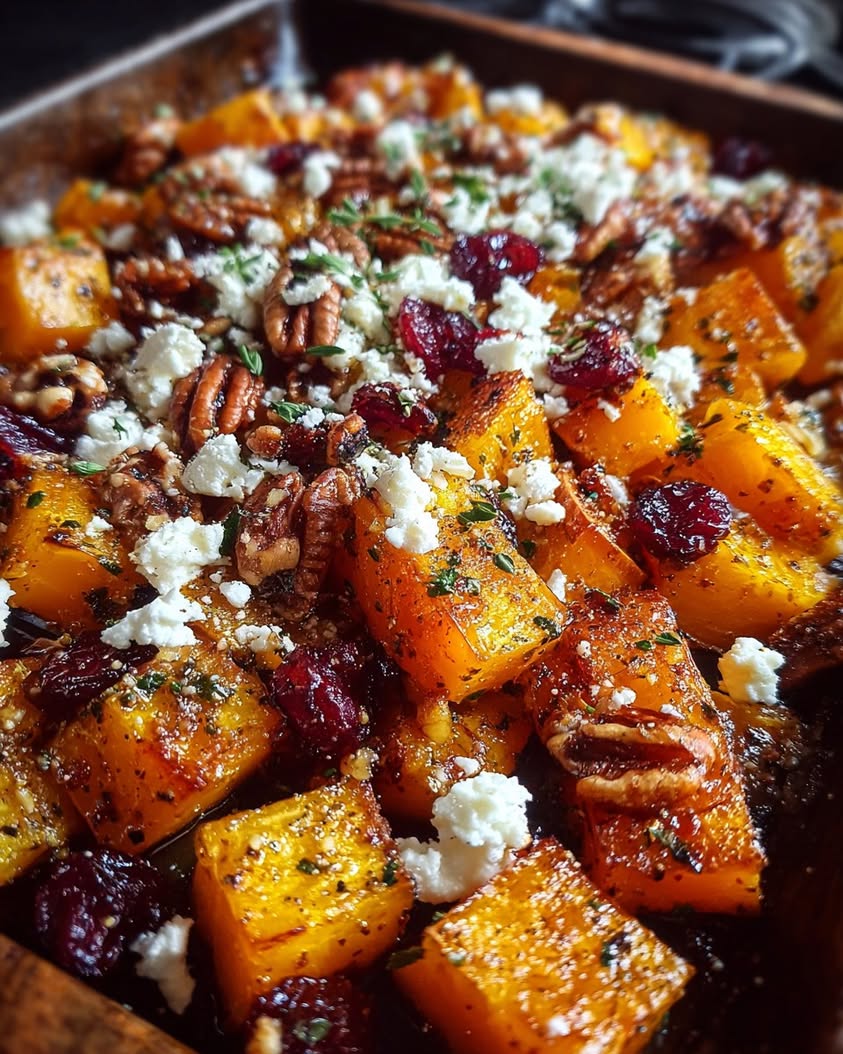
Caramelized Butternut Squash with Tangy Feta and Cranberry Drizzle: A Festive Side Dish
This Caramelized Butternut Squash with Tangy Feta and Cranberry Drizzle recipe is the ultimate celebration of autumn flavors. Moreover, it transforms simple ingredients into a stunning side dish that will steal the show at any holiday table. The process involves roasting butternut squash until its natural sugars caramelize into a sweet, nutty perfection. Consequently, each bite offers a delightful contrast of textures and tastes that will impress your guests.
Imagine tender, golden-brown squash cubes paired with creamy, salty feta cheese. Then, picture a vibrant cranberry drizzle adding a burst of tartness and festive color. This dish is not just food; it’s an experience. Ultimately, it brings warmth and elegance to your meal with minimal effort. This Caramelized Butternut Squash with Feta and Cranberry Drizzle Recipe is your new secret weapon for holiday dinners and cozy weeknights alike.
Quick Recipe Highlights
- Flavor Profile: This dish masterfully balances sweet, savory, and tangy notes. The caramelized squash offers deep sweetness, while the feta provides a salty punch. Finally, the cranberry drizzle cuts through with a bright, tart finish.
- Texture: You get wonderfully tender squash with crispy, caramelized edges. The crumbled feta adds a soft, creamy contrast. Meanwhile, the drizzle introduces a lovely, glossy sauce that clings to every piece.
- Aroma: Your kitchen will fill with the warm, inviting scent of roasting squash and maple syrup. Hints of rosemary and black pepper add an earthy, savory depth that promises a delicious meal.
- Visual Appeal: This dish is a feast for the eyes with its vibrant orange squash, white feta crumbles, and ruby-red cranberry sauce. It creates a beautiful, colorful presentation that looks professional and festive.
- Skill Level Needed: This is an accessible recipe for cooks of all levels. Basically, it requires simple chopping, tossing, and roasting. Therefore, even beginner cooks can achieve fantastic, restaurant-quality results.
- Special Equipment: You only need a good baking sheet, a sharp knife, and a small saucepan. A sturdy vegetable peeler is helpful but not mandatory. No fancy gadgets are required for this straightforward recipe.
Recipe Overview
- Difficulty Level: We rate this recipe as easy because it involves fundamental kitchen skills. The steps are simple: peel, cube, season, and roast. Furthermore, the cranberry sauce comes together quickly on the stovetop with minimal supervision.
- Category: This dish fits perfectly into the side dish category for holiday meals or special dinners. It also works wonderfully as a hearty vegetarian main course when served over a bed of grains like quinoa or farro.
- Cuisine: While not tied to one specific tradition, it draws inspiration from modern American and Mediterranean cuisines. The use of feta cheese nods to Greek flavors, and the maple-roasted squash is a North American autumn classic.
- Cost: This is a cost-effective dish, especially when butternut squash is in season. Feta and cranberries are relatively inexpensive, and the olive oil and spices are pantry staples. Overall, it delivers high-end flavor on a modest budget.
- Season: This recipe is ideal for fall and winter when butternut squash is at its peak sweetness. It also provides a vibrant, colorful option for Thanksgiving and Christmas celebrations. The warm spices complement the cooler weather perfectly.
- Occasion: Serve it for Thanksgiving dinner, Christmas feasts, or a special Sunday family meal. It also makes an impressive potluck contribution because it travels well and tastes great at room temperature.
Why You’ll Love This Caramelized Butternut Squash Recipe
First, the taste and texture appeal is absolutely irresistible. Each forkful delivers a complex symphony of flavors. The natural sweetness of the squash intensifies during roasting, creating deep caramelized notes. Then, the salty, tangy feta cheese provides a perfect counterpoint. Finally, the cranberry drizzle introduces a necessary pop of acidity that ties everything together. The contrast between the tender squash, creamy cheese, and silky sauce is simply divine. Consequently, your palate experiences sweet, salty, tangy, and savory in every single bite.
Next, consider the convenience and preparation benefits. This Caramelized Butternut Squash with Feta and Cranberry Drizzle Recipe uses straightforward techniques. You do not need advanced culinary skills. Basically, you chop, toss, and roast. The hands-on time is minimal, allowing the oven to do most of the work. Meanwhile, you can prepare other parts of your meal. The recipe is also forgiving; a few extra minutes in the oven will only deepen the caramelization. Therefore, it reduces stress during busy holiday cooking.
Furthermore, the nutritional advantages are significant. Butternut squash is a powerhouse of vitamins A and C, crucial for immune health. It is also rich in fiber, which aids digestion and promotes satiety. The olive oil provides heart-healthy monounsaturated fats. Additionally, cranberries are famous for their antioxidant properties and support urinary tract health. Feta cheese offers a boost of calcium and protein. Together, they create a side dish that is as nourishing as it is delicious.
Moreover, the social and entertaining value of this dish is high. It looks incredibly impressive on a buffet or dinner table. The vibrant colors signal a special occasion. Guests will immediately be drawn to its beautiful presentation. It serves as a fantastic conversation starter. You can proudly share that you made the cranberry drizzle from scratch. This dish elevates an ordinary meal into a memorable dining event. It shows care and thoughtfulness in your menu planning.
Finally, the cost-effectiveness and accessibility are major wins. The primary ingredient, butternut squash, is very affordable in autumn. The other components are easy to find in any standard grocery store. You likely have the olive oil, salt, and pepper in your pantry already. Compared to pre-made side dishes or restaurant offerings, this homemade version saves money. It also allows you to control the quality of every ingredient. You can opt for organic squash or high-quality feta without breaking the bank.
Historical Background and Cultural Significance
The story of butternut squash begins in the Americas. Indigenous peoples cultivated various squash varieties for thousands of years. They valued squash as one of the “Three Sisters,” planted alongside corn and beans. This agricultural practice supported sustainable farming. The squash vines provided ground cover to retain moisture and suppress weeds. European colonists later adopted squash into their own cuisine. They appreciated its long storage life through winter. Today, butternut squash remains a staple of autumnal cooking across North America.
Feta cheese carries a deep cultural significance rooted in Greece. In fact, it holds a Protected Designation of Origin status from the European Union. Authentic feta must be made in specific regions of Greece using at least 70% sheep’s milk. Its history dates back to the Byzantine era. The cheese’s briny, tangy flavor profile developed as a preservation method. It became a dietary cornerstone, providing essential fats and protein. When crumbled over warm dishes, it softens slightly, releasing its signature salty punch.
The evolution of this specific recipe reflects modern fusion cooking. Contemporary chefs love combining sweet roasted vegetables with salty cheese. The addition of a fruit-based sauce is a classic technique for cutting richness. The cranberry drizzle, in particular, is a nod to traditional Thanksgiving cranberry sauce. However, it is refined into a smoother, more versatile glaze. This Caramelized Butternut Squash with Feta and Cranberry Drizzle Recipe represents a beautiful marriage of old-world ingredients and new-world creativity.
Regional variations of this concept abound. In the Mediterranean, one might find roasted squash with halloumi and a pomegranate molasses drizzle. In the American South, roasted sweet potatoes with goat cheese and a pecan syrup are popular. The core principle remains: contrast sweet, starchy vegetables with salty cheese and a tart sauce. This universal formula proves endlessly adaptable. It allows cooks to use local, seasonal ingredients while achieving a similar balance of flavors and textures.
Ingredient Deep Dive
Butternut Squash: This winter squash originated in the Americas and is a descendant of gourds cultivated by indigenous peoples. Nutritionally, it is an excellent source of beta-carotene, which the body converts to vitamin A for eye and skin health. It also provides vitamin C, potassium, and fiber. When selecting, choose squash that feels heavy for its size with a firm, matte skin and no soft spots. Store whole squash in a cool, dark place for up to 3 months. For a substitution, sweet potatoes or acorn squash will work beautifully, though cooking times may vary slightly.
Feta Cheese: Traditionally from Greece, feta is a brined curd cheese with a crumbly texture and tangy, salty flavor. It is rich in calcium, phosphorus, and beneficial bacteria due to its fermentation process. Look for feta packed in brine for the best flavor and texture; it should be white and moist. Keep it submerged in its brine in the refrigerator. For a dairy-free version, consider a firm, salty tofu crumble or a vegan feta alternative made from almonds or coconut oil. Goat cheese also makes a lovely, creamy substitute.
Fresh Cranberries: Native to North America, cranberries were used by Native Americans for food, dye, and medicine. They are packed with vitamin C, fiber, and unique antioxidants called proanthocyanidins, known for supporting urinary tract health. Buy berries that are firm, shiny, and deep red in color; avoid any that are soft or brown. Refrigerate them in their original bag and use within a month, or freeze for longer storage. If fresh are unavailable, you can use high-quality cranberry sauce or jam, thinning it with a little orange juice or water to a drizzling consistency.
Maple Syrup: A truly North American ingredient, maple syrup is made by boiling the sap of maple trees. It contains minerals like manganese and zinc and has a lower glycemic index than refined sugar. Always opt for pure maple syrup rather than pancake syrup, which contains artificial flavors and corn syrup. Store it in the refrigerator after opening to prevent mold. For a vegan or sugar-conscious alternative, agave nectar or a date syrup can provide similar sweetness, though the flavor profile will change subtly.
Fresh Rosemary: This aromatic herb has been used since ancient times for culinary and medicinal purposes. It contains compounds like rosmarinic acid, which have anti-inflammatory and antioxidant properties. Choose sprigs with vibrant green, needle-like leaves that are not dry or brittle. Store them wrapped in a damp paper towel in a plastic bag in the refrigerator. If you don’t have fresh rosemary, dried rosemary can be used (use about one-third the amount), or thyme or sage would make excellent herbal substitutes.
Common Mistakes to Avoid
- Uneven Cubes: Cutting the squash into different sizes leads to uneven cooking. Some pieces will burn while others remain undercooked. Always aim for uniform 1-inch cubes for consistent caramelization and texture.
- Crowding the Pan: Placing too many squash cubes on the baking sheet causes them to steam instead of roast. They will become soggy and fail to caramelize properly. Use two pans if necessary to ensure each piece has space.
- Skipping the Oil Toss: Not coating the squash thoroughly in oil and seasonings results in dry, bland spots. Ensure every cube is glistening with oil so the spices adhere and the squash roasts evenly.
- Overcooking the Cranberry Drizzle: Boiling the cranberry mixture for too long makes it overly thick and jam-like. It should be a pourable, glossy sauce. Remove it from the heat when it just starts to thicken.
- Adding Feta Too Early: Sprinkling the feta before serving is crucial. If added before roasting or while the squash is piping hot, it will melt completely and lose its distinct crumbly texture.
- Neglecting to Season in Layers: Seasoning only at the end creates a superficial flavor. Season the squash before roasting and taste the cranberry drizzle, adjusting with salt or a splash of citrus if needed.
- Using a Dull Knife: Butternut squash has tough skin. A dull knife is dangerous and makes the prep work frustrating. Use a sharp chef’s knife and a stable cutting board for safety and ease.
- Forgetting to Preheat the Oven: Putting squash into a cold oven drastically changes the cooking process. A properly preheated oven ensures immediate caramelization and the correct cooking time.
Essential Techniques
How to Peel and Cube Butternut Squash Safely: This technique is vital for efficiency and safety. First, slice off the top and bottom to create stable flat ends. Stand the squash upright on a cut end and use a sharp peeler or knife to remove the skin in downward strokes, following the curve. Then, cut it in half lengthwise and scoop out the seeds with a spoon. Finally, lay each half flat-side down and cut it into planks, then into uniform cubes. The key is a sharp knife and controlled, deliberate motions to prevent slipping.
The Art of Caramelization: Caramelization is the process where natural sugars brown and develop complex flavors. For perfect caramelization, ensure your squash cubes are dry before oiling, as moisture promotes steaming. Use a high enough oven temperature (400°F is ideal) and do not stir too frequently. Let the cubes sit on the hot pan to develop a golden-brown crust. A light coating of oil facilitates heat transfer and browning. The visual cue for success is golden edges and a slightly shrunken, tender interior.
Creating a Balanced Fruit Drizzle: A good drizzle should be tart, sweet, and pourable. The technique involves gently cooking the cranberries just until they pop and release their pectin. Avoid vigorous boiling. The maple syrup adds sweetness, while a pinch of salt balances the flavors. If the sauce becomes too thick, whisk in a teaspoon of warm water at a time. The perfect consistency coats the back of a spoon and leaves a clean line when you run your finger through it.
Pro Tips for Perfect Caramelized Butternut Squash
First, for extra caramelization, arrange the squash cubes in a single layer with a little space between each one. This allows hot air to circulate and creates those desirable crispy edges. Second, add a tablespoon of brown sugar to the oil mixture if you prefer a deeper, more molasses-like sweetness. Third, roast the squash on the middle oven rack to ensure even heat distribution and prevent the bottoms from burning. Fourth, let the roasted squash rest for five minutes after pulling it from the oven; this allows the sugars to set slightly. Fifth, use a microplane to zest a little orange peel into the cranberry drizzle for a bright, aromatic lift. Sixth, warm your serving platter before plating; this keeps the dish at an ideal temperature for longer during your meal.
Variations and Adaptations
For regional variations, try a Middle Eastern twist by using sumac and za’atar on the squash and swapping the feta for labneh. A Spanish version might include smoked paprika and manchego cheese. For seasonal adaptations, in spring, use asparagus and peas with a lemon-herb drizzle. In summer, try zucchini and eggplant with a basil oil. For dietary modifications, a vegan adaptation is simple: use a plant-based feta and maple syrup. For a nuttier flavor, toast pecans or walnuts and sprinkle them on top. For texture modifications, try adding pomegranate arils for a juicy crunch. For presentation alternatives, serve individual portions in small ramekins or on a bed of wild rice for a complete meal.
Serving and Presentation Guide
For plating, use a wide, shallow bowl or a large platter to showcase the colors. Mound the warm squash in the center, creating some height. Drizzle the cranberry sauce in a zigzag pattern over the top, letting some pool around the base. Then, generously crumble the feta cheese over everything. Finally, garnish with a few whole fresh cranberries and a small sprig of rosemary for a fresh, aromatic touch. Traditional accompaniments include roast turkey, baked ham, or a simple green salad. For a modern presentation, serve it in individual cast-iron skillets. Always serve this dish warm, as the heat slightly softens the feta. For portion control, one cup of the squash mixture makes a satisfying side serving.
Wine and Beverage Pairing
The sweet and savory profile of this Caramelized Butternut Squash with Feta and Cranberry Drizzle Recipe pairs wonderfully with wines that have good acidity. A crisp, unoaked Chardonnay or a dry Riesling complements the squash’s sweetness and cuts through the richness of the cheese. For red wine lovers, a light Pinot Noir with its red fruit notes harmonizes with the cranberry. For non-alcoholic alternatives, a sparkling apple cider or a ginger beer provides festive effervescence. A warm cup of spiced chai tea also makes a lovely autumnal pairing. Serve white wines chilled and red wines slightly below room temperature to balance the warm dish.
Storage and Shelf Life
Store leftover components separately for the best quality. Place cooled roasted squash in an airtight container in the refrigerator for up to 4 days. Keep the cranberry drizzle in a separate jar for up to one week. Store feta in its original brine. Signs of spoilage include an off smell, slimy texture on the squash, or mold. To reheat, spread the squash on a baking sheet and warm in a 350°F oven for 10-15 minutes until hot. This method restores some crispness better than microwaving. You can freeze the roasted squash (without cheese or drizzle) for up to 3 months. Thaw overnight in the refrigerator before reheating.
Make Ahead Strategies
You can prep this entire dish a day in advance to streamline holiday cooking. Peel and cube the squash, then store it in a sealed container in the refrigerator. Make the cranberry drizzle completely and let it cool. On the day of serving, simply toss the cold squash with oil and roast. The cranberry drizzle may thicken in the fridge; gently reheat it with a splash of water to restore its drizzling consistency. This timeline has minimal impact on quality; in fact, the flavors of the cranberry sauce often improve overnight. Assemble the dish just before serving by topping the hot squash with cold feta and the warm drizzle.
Scaling Instructions
This recipe scales beautifully for a crowd. To double or triple it, use multiple baking sheets and rotate them in the oven halfway through cooking. Do not overcrowd the pans. For the cranberry drizzle, simply multiply the ingredients in the same proportions. Use a larger saucepan to accommodate the increased volume. Timing remains roughly the same, but check for doneness a few minutes earlier. If halving the recipe, use a smaller baking sheet and a small saucepan. Storage considerations remain the same; scale up the make-ahead steps to save even more time for large gatherings.
Nutritional Deep Dive
This dish is a nutrient-dense choice. A serving provides a significant amount of Vitamin A (from beta-carotene in the squash) and Vitamin C (from both squash and cranberries). The healthy fats from olive oil aid in the absorption of these fat-soluble vitamins. The fiber content promotes digestive health and provides a feeling of fullness. The feta cheese contributes protein and calcium. For those monitoring intake, the natural sugars from the squash and maple syrup are present but balanced by fiber and protein. This makes it a satisfying side that won’t cause a rapid blood sugar spike. It fits well into a balanced diet focused on whole foods.
Dietary Adaptations
For a gluten-free diet, this recipe is naturally perfect, as it contains no gluten-containing ingredients. For dairy-free adaptation, omit the feta or use a high-quality vegan feta alternative. To make it vegan, use the dairy-free cheese swap and ensure your maple syrup is vegan (most are). For a lower-carb or keto version, reduce the amount of squash and maple syrup significantly, focusing on the feta and olive oil components, and use a sugar-free sweetener in the drizzle. For a Paleo adaptation, omit the cheese and ensure all other ingredients are Paleo-compliant. Always check labels on pre-packaged ingredients like cranberries for added sugars if following a strict diet.
Troubleshooting Guide
If your squash is soggy, you likely overcrowded the pan or didn’t use a hot enough oven. Next time, ensure space between cubes and verify your oven temperature with a thermometer. If the cranberry drizzle is too tart, balance it with an extra teaspoon of maple syrup or a pinch of salt. If it’s too sweet, a small splash of lemon juice or apple cider vinegar will add necessary acidity. If the feta melts into a mess, you added it while the squash was too hot. Let the squash cool for 5 minutes before adding the cheese. If you don’t have fresh rosemary, use one-third the amount of dried rosemary, or substitute with thyme or sage.
Recipe Success Stories
Readers have shared wonderful adaptations of this Caramelized Butternut Squash with Feta and Cranberry Drizzle Recipe. One home cook added crispy fried sage leaves for an aromatic crunch. Another served it over a bed of arugula for a hearty salad. A family made it their new Thanksgiving tradition, doubling the recipe to feed twenty guests. Many note that even picky vegetable eaters love the sweet, caramelized flavor. For photography, natural window light works beautifully to highlight the vibrant colors. Shooting from above on a dark wooden board creates a rustic, appealing scene that showcases all the components.
Frequently Asked Questions
Can I use pre-cubed butternut squash from the store? Absolutely. Pre-cubed squash saves time. However, check for uniform size and pat the pieces dry if they seem moist, as they are often treated to prevent browning.
Can I make this recipe with frozen butternut squash? It is possible, but the texture will be softer. Thaw and drain the frozen squash thoroughly to remove excess water, or it will steam instead of caramelize.
What can I use instead of fresh cranberries? You can use frozen cranberries without thawing. Alternatively, use a high-quality whole-berry cranberry sauce, warmed and thinned with a little orange juice.
Is this dish served hot or cold? It is best served warm. The warmth slightly softens the feta and makes the flavors more vibrant. Room temperature is also acceptable for a buffet.
Can I prepare the entire dish ahead of time? You can prep components ahead, but assemble just before serving. Reheat the squash, warm the drizzle, and add cold feta for the best texture contrast.
How do I know when the squash is perfectly caramelized? Look for deep golden-brown edges and the cubes should be fork-tender. The bottoms will have darker, crispy spots where they contacted the hot pan.
My cranberry drizzle is too thick. How can I fix it? Simply whisk in warm water, one teaspoon at a time, until it reaches your desired drizzling consistency. Reheat gently if needed.
Can I use dried rosemary? Yes. Use about 1 teaspoon of dried rosemary instead of a fresh sprig. Crush it between your fingers to release the oils before adding.
What main protein does this pair well with? It pairs excellently with roast chicken, turkey, pork tenderloin, or baked ham. For a vegetarian meal, serve it with lentils or a grain bowl.
How can I make this recipe more savory? Add a teaspoon of smoked paprika or garlic powder to the oil mixture before tossing with the squash. A sprinkle of flaky sea salt at the end also enhances savoriness.
Additional Resources
If you loved this Caramelized Butternut Squash with Feta and Cranberry Drizzle Recipe, explore other seasonal vegetable sides like Roasted Brussels Sprouts with Balsamic Glaze or a Harvest Salad with Apples and Candied Walnuts. To master your knife skills for safe squash prep, look for online tutorials on the “claw grip” cutting technique. For more on selecting and storing winter squash, many agricultural extension websites offer excellent guides. A half-sheet pan is the ideal tool for this recipe, ensuring plenty of space for caramelization. Finally, experiment with this formula using other seasonal produce—the sweet/salty/tart combination is endlessly versatile.
{“success”:true,”message”:”Recipe created successfully”,”post_id”:7818,”tasty_recipe_id”:7818,”shortcode”:” Print
Caramelized Butternut Squash with Tangy Feta and Cranberry Drizzle
Description
A vibrant autumn dish featuring sweet, caramelized butternut squash topped with creamy feta and a tangy cranberry drizzle.
Ingredients
For the Crust:
- 1 medium butternut squash, peeled and cubed
- 2 tablespoons olive oil
- 1 tablespoon maple syrup
- 1 teaspoon smoked paprika
- Salt and black pepper to taste
- 1/2 cup crumbled feta cheese
- 1/4 cup dried cranberries
- 2 tablespoons balsamic vinegar
- 1 tablespoon honey
- Fresh thyme leaves for garnish
Instructions
1. Prepare the Crust:
- Preheat oven to 400°F (200°C). Toss butternut squash cubes with olive oil, maple syrup, smoked paprika, salt, and pepper.
- Spread squash in a single layer on a baking sheet. Roast for 25-30 minutes, flipping halfway, until caramelized and tender.
- While squash roasts, combine dried cranberries, balsamic vinegar, and honey in a small saucepan. Simmer over low heat for 5-7 minutes until cranberries soften and mixture thickens slightly.
- Transfer roasted squash to a serving platter. Sprinkle with crumbled feta cheese.
- Drizzle the warm cranberry mixture over the squash and feta. Garnish with fresh thyme leaves before serving.
Notes
You can customize the seasonings to taste.

I’m Billy, a classically trained culinary school graduate from The Culinary Institute of America with over 12 years in the restaurant industry and over 19 years of cooking experience.