
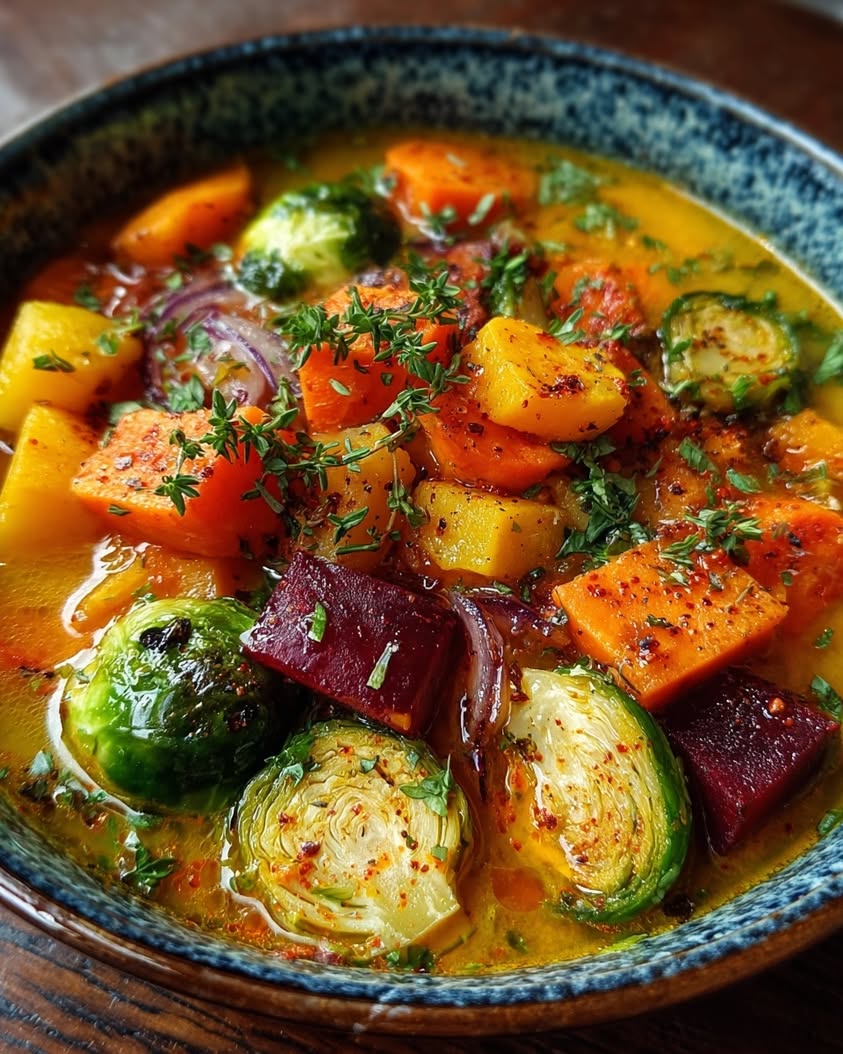
Roasted Root Vegetable Soup with Thyme and Sweet Potato Medley: A Cozy Autumn Bowl
Imagine a bowl that captures the very essence of a crisp fall day. This Roasted Root Vegetable Soup with Thyme and Sweet Potato Medley is exactly that. It is a deeply comforting and nourishing blend of earthy, sweet, and savory flavors. Each spoonful delivers the caramelized richness of roasted vegetables, perfectly balanced by the aromatic whisper of fresh thyme. Ultimately, this soup transforms humble root vegetables into a velvety, elegant meal that warms you from the inside out.
Furthermore, this recipe celebrates the best of the autumn harvest. You combine sweet potatoes, butternut squash, carrots, and beets with hearty Brussels sprouts. Roasting them first is the key. Consequently, this process intensifies their natural sugars and creates a complex flavor base that simply boiling cannot achieve. The resulting pureed soup is incredibly smooth, luxuriously thick, and boasts a stunning sunset hue. It is a feast for the eyes as much as for the palate.
Additionally, this dish is a testament to simple, wholesome cooking. It requires minimal hands-on effort. You let the oven do most of the work. Meanwhile, the soup is naturally vegan and gluten-free, making it a fantastic option for various dietary needs. It is perfect for a quiet weeknight dinner, yet impressive enough for a holiday starter. In short, this Roasted Root Vegetable Soup with Thyme and Sweet Potato Medley is a versatile staple you will return to all season long.
Quick Recipe Highlights
- Flavor Profile: This soup offers a masterful balance of earthy sweetness from the roasted root vegetables and a subtle, savory depth from the thyme and vegetable broth. The natural sugars caramelize in the oven, creating a rich, complex base that is both comforting and sophisticated.
- Texture: After blending, the soup achieves a luxuriously smooth and velvety consistency. The roasting process ensures the vegetables break down completely, resulting in a creamy texture without any need for heavy cream, although a swirl of coconut milk adds a lovely richness.
- Aroma: As the vegetables roast, your kitchen will fill with an irresistible fragrance of caramelizing sugars and woody thyme. This aromatic promise builds anticipation for the warm, hearty bowl to come, making the cooking process part of the enjoyment.
- Visual Appeal: The blend of orange sweet potatoes, golden squash, and ruby beets creates a beautiful, vibrant orange-pink color that is inherently appetizing. Garnished with a fresh thyme sprig or a drizzle of olive oil, this soup looks as stunning as it tastes.
- Skill Level Needed: This is a beginner-friendly recipe. The techniques involve basic chopping, simple roasting, and using a blender. There are no complicated steps, making it an excellent project for new cooks looking to create something impressive with ease.
- Special Equipment: You will need a good baking sheet for roasting, a large pot for simmering, and a blender or immersion blender to puree the soup. An immersion blender is particularly convenient for pureeing directly in the pot, minimizing cleanup.
Recipe Overview
- Difficulty Level: This recipe is rated easy because it involves straightforward techniques like chopping vegetables and blending. The process is largely hands-off once the vegetables are in the oven. There is no fussy timing or advanced culinary skills required, making it accessible for cooks of all levels.
- Category: This dish falls perfectly into the categories of a hearty main course soup, a elegant starter, or a healthy lunch. It is substantial enough to be a meal on its own, especially when paired with crusty bread or a simple salad.
- Cuisine: While not tied to one specific tradition, this soup draws inspiration from modern, farm-to-table American and European rustic cooking. It emphasizes whole, seasonal ingredients prepared in a way that highlights their natural flavors, a hallmark of contemporary wholesome cuisine.
- Cost: This is a very cost-effective recipe, especially in the autumn and winter months when root vegetables are at their peak and most affordable. The main ingredients are inexpensive staples, and the recipe makes a large batch, providing several meals for a modest investment.
- Season: This soup is ideal for fall and winter. These seasons are when its core ingredients are freshest and most flavorful. Moreover, the warm, hearty nature of the dish is perfectly suited to cooler weather, providing essential comfort and warmth.
- Occasion: It is wonderfully versatile. Serve it for a casual family dinner, a cozy weekend lunch, or as an elegant first course at a Thanksgiving or Friendsgiving gathering. Its make-ahead nature also makes it ideal for stress-free entertaining.
Why You’ll Love This Roasted Root Vegetable Soup
First and foremost, the taste and texture are utterly divine. The roasting process is a game-changer. It concentrates the flavors, giving you a depth that boiled vegetables simply cannot match. You get the sweet caramelized notes from the sweet potato and squash, an earthy undertone from the beets, and a savory, almost nutty quality from the Brussels sprouts. Blended together with aromatic thyme, it creates a symphony of autumn flavors in a single, velvety spoonful. This Roasted Root Vegetable Soup with Thyme and Sweet Potato Medley is the definition of comfort in a bowl.
Convenience is another major benefit. Once you have chopped your vegetables and tossed them with oil, the oven does the heavy lifting. This hands-off time allows you to tidy up, prepare a side salad, or simply relax. Furthermore, the recipe is forgiving. You do not need to worry about precise chopping since everything gets blended in the end. This makes the preparation stress-free and accessible, even on a busy weeknight. You can easily achieve a gourmet-quality meal with minimal active effort.
Nutritionally, this soup is a powerhouse. It is packed with vitamins, minerals, and fiber from its diverse array of colorful vegetables. Sweet potatoes and carrots provide beta-carotene, while beets offer folate and antioxidants. Brussels sprouts add vitamin C and K. Blending the vegetables with their skins (where appropriate) retains maximum fiber, which aids digestion and promotes a feeling of fullness. This Roasted Root Vegetable Soup is a delicious way to fuel your body with essential nutrients.
For entertaining, this soup is a star. You can prepare it completely ahead of time, in fact, its flavors often improve after a day in the refrigerator. This means no last-minute scrambling when guests arrive. Simply reheat and garnish. Its beautiful color and elegant presentation make it look like you spent hours in the kitchen, while its universally appealing flavor profile pleases a crowd. It is a surefire way to impress without the stress.
Finally, it is incredibly cost-effective and accessible. Root vegetables are typically some of the most affordable produce items, especially in season. This recipe makes a large batch, yielding multiple servings that can be enjoyed throughout the week or frozen for later. You get restaurant-quality taste for a fraction of the price. Additionally, the ingredients are easy to find at any standard grocery store, making this Roasted Root Vegetable Soup with Thyme and Sweet Potato Medley a practical and delicious choice for any home cook.
Historical Background and Cultural Significance
The practice of making soups from root vegetables is ancient and global, born from necessity and preservation. Before modern refrigeration, root cellars stored potatoes, carrots, beets, and turnips through harsh winters. Consequently, soups and stews became the ideal method to transform these hardy, stored ingredients into nourishing, hot meals. While this specific medley is a modern creation, it stands on the shoulders of countless generations of cooks who simmered their available roots with herbs and water to create sustenance and comfort.
Culturally, root vegetable soups appear in various forms across Europe and North America. French potage, a thick vegetable soup, often features a similar pureed technique. Eastern European borscht celebrates the beet as its star. This Roasted Root Vegetable Soup with Thyme and Sweet Potato Medley draws from this broad tradition but incorporates the contemporary technique of roasting. Roasting, once primarily for meats, became a popular method for vegetables in modern Western cuisine to enhance flavor, a technique this recipe leverages beautifully.
The recipe has evolved significantly with the advent of home kitchen technology. The critical tool for its modern creamy texture is the blender. Before blenders were commonplace, such soups were mashed or strained, resulting in a coarser texture. The immersion blender, a later innovation, made pureeing directly in the pot effortless. Furthermore, the global availability of vegetables like sweet potatoes and butternut squash allows for this colorful medley, a combination that might not have been possible in a strictly regional, historical context.
Regional variations are endless, highlighting local produce. In the American South, a similar soup might include sweet potatoes and a hint of smoked paprika. In Mediterranean regions, rosemary or oregano could replace thyme, and a finish of good olive oil would be essential. The addition of Brussels sprouts adds a modern, nutrient-dense twist. This adaptability is the soup’s greatest strength. It provides a template that welcomes seasonal substitutions, allowing cooks around the world to create a version that reflects their own local harvest and taste preferences.
Ingredient Deep Dive
Sweet Potato: Cultivated for thousands of years in Central and South America, sweet potatoes were a staple long before European contact. They are packed with beta-carotene, which converts to vitamin A, crucial for vision and immunity. When selecting, choose firm potatoes with smooth skin, avoiding any soft spots. Store them in a cool, dark, well-ventilated place, but not the refrigerator. For a substitution, regular potatoes or pumpkin can work, though the flavor profile will be less sweet.
Butternut Squash: A winter squash native to the Americas, butternut squash has a sweet, nutty flesh. It is rich in vitamins A and C, potassium, and fiber. Look for squash that feels heavy for its size with a firm, matte skin and a long, solid neck. Store whole squash in a cool, dark place for months. Once cut, wrap tightly and refrigerate. Acorn squash or pumpkin can be used as alternatives, though cooking times may vary slightly.
Carrots: Carrots have a long history, originally cultivated for their aromatic leaves and seeds rather than their roots. The orange carrot we know today was developed in the Netherlands. They are an excellent source of beta-carotene, fiber, and vitamin K1. Choose firm, smooth carrots with vibrant color, preferably with their greens still attached for freshness. Store them in the refrigerator’s crisper drawer. Parsnips make a wonderful, slightly peppery substitute in this soup.
Beets: Beets have been consumed since ancient times, with both the root and greens being edible. They are unique for their betalain pigments, which provide antioxidants and anti-inflammatory properties. They are also a good source of folate and manganese. Select beets that are firm with smooth skin and vibrant greens. Cut the greens off immediately to prevent moisture loss from the root. Golden beets can be used to avoid the deep red color, though they offer a similar earthy flavor.
Brussels Sprouts: These miniature cabbages were likely cultivated in ancient Rome but gained fame in Brussels, Belgium, hence their name. They are rich in vitamins C and K, fiber, and antioxidants. Choose small, firm, bright green sprouts with tightly packed leaves. Avoid yellowing or loose leaves. Store them in a plastic bag in the refrigerator. While unique, broccoli florets or chopped kale can be substituted if necessary, adding at the roasting stage.
Fresh Thyme: This woody herb has been used since ancient Egypt for embalming and in ancient Greece for its aromatic qualities. It contains thymol, a compound with antibacterial properties. Fresh thyme is preferred for its bright, floral notes. Look for vibrant green sprigs without black spots. Store it wrapped in a damp paper towel in a plastic bag in the fridge. Dried thyme can substitute; use one-third the amount since dried herbs are more concentrated.
Common Mistakes to Avoid
- Not Roasting the Vegetables Enough: Under-roasted vegetables will lack the deep, caramelized flavor that defines this soup. They should be tender and have noticeable browned edges. Roasting at a high enough temperature (400°F) is crucial for this reaction. Be patient and let the oven work its magic.
- Chopping Vegetables Inconsistently: While they get blended, unevenly chopped pieces will roast at different rates. Smaller pieces may burn before larger ones are tender. Aim for a relatively uniform dice, about 1-inch pieces, to ensure even cooking and consistent flavor development.
- Overcrowding the Baking Sheet: Piling vegetables on top of each other steams them instead of roasting them. They need space for hot air to circulate. Use two sheets if necessary. Proper spacing is non-negotiable for achieving caramelization, not just softening.
- Using a Weak Blender: A low-powered blender may struggle to achieve a perfectly smooth texture, leaving you with a grainy soup. For the silkiest result, use a high-speed blender or a good immersion blender. Blend in batches if needed to avoid overfilling your machine.
- Adding Too Much Liquid at Once: Pouring in all the broth before blending can make the soup too thin. Start with about half, blend until smooth, and then add more to reach your desired consistency. You can always add more liquid, but you cannot remove it.
- Skipping the Fresh Herb Garnish: The fresh thyme garnish is not just decorative. It adds a burst of bright aroma that contrasts beautifully with the deep, sweet soup. Similarly, a drizzle of good olive oil or coconut milk adds a final layer of flavor and richness.
- Not Tasting and Adjusting Seasoning at the End: Roasting can concentrate flavors, and the sweetness of the vegetables varies. Always taste the finished, blended soup and adjust the salt, pepper, or even a splash of acid like apple cider vinegar to balance the sweetness.
- Using Old, Dried-Out Herbs: If substituting dried thyme for fresh, ensure it is not from an old jar that has lost its potency. Dried herbs lose flavor over time. For the best result, use fresh thyme or purchase new dried herbs specifically for this recipe.
Essential Techniques
Roasting Vegetables: Roasting is the most critical technique here. It uses dry, high heat to caramelize the natural sugars in the vegetables, creating complex flavors and sweetness. To master it, ensure your oven is fully preheated and your vegetables are in a single layer with space between them. The common pitfall is overcrowding, which leads to steaming. Look for tender vegetables with golden-brown, slightly crisp edges as your visual cue for success.
Deglazing the Pan: After roasting, deglazing the baking sheet with a bit of broth is a chef’s secret. Those browned, stuck-on bits are pure flavor. Adding liquid and scraping them up incorporates these “fond” into your soup, adding a layer of savory depth you would otherwise leave behind. The key is to do this while the pan is still hot. Use a sturdy spatula or wooden spoon to scrape thoroughly until the liquid is cloudy and all bits are dissolved.
Pureeing to a Smooth Consistency: Achieving a velvety texture requires proper blending. For a standard blender, work in batches to avoid overflow and potential burns from hot liquid. Start on low speed and gradually increase. An immersion blender is safer and easier for pureeing directly in the pot. The pitfall is under-blending, which leaves a chunky texture. Blend for a full minute or two until completely smooth, stopping to scrape down the sides as needed.
Seasoning in Layers: Seasoning only at the end results in a flat-tasting soup. Instead, season in layers. Toss the vegetables with salt and pepper before roasting. Season the broth as it simmers. Finally, taste and adjust the seasoning aggressively after blending. This builds a foundation of flavor throughout the cooking process. Remember, the sweetness of the vegetables can mask salt, so you may need more than you think to achieve a balanced profile.
Pro Tips for Perfect Roasted Root Vegetable Soup
First, for easier peeling, microwave the butternut squash for 2-3 minutes before cutting. This softens the skin slightly and makes it much safer and simpler to peel and chop with a sharp knife.
Second, reserve a few roasted vegetable pieces before blending. Use them as a beautiful and textural garnish on top of the smooth soup, adding visual interest and a contrasting bite.
Third, if your soup is too thick after blending, thin it with additional warm broth or water. Conversely, if it is too thin, simmer it uncovered for 10-15 minutes to reduce and concentrate the flavors.
Fourth, for an extra flavor boost, add a Parmesan rind to the pot while the soup simmers. Remove it before blending. It adds a subtle, savory umami depth that complements the vegetables wonderfully.
Fifth, a splash of acid at the end can elevate the entire dish. Stir in a teaspoon of apple cider vinegar, lemon juice, or balsamic vinegar to brighten the flavors and cut through the richness.
Sixth, let the soup cool slightly before blending if using a standard blender. Hot liquids can create steam pressure and blow the lid off. Remove the center cap from the blender lid and cover it with a folded kitchen towel while blending to allow steam to escape safely.
Seventh, for a super-silky texture, pass the blended soup through a fine-mesh sieve. This step is optional but will remove any tiny fibrous bits, resulting in an exceptionally smooth and refined consistency.
Eighth, make a double batch and freeze portions in airtight containers. This Roasted Root Vegetable Soup freezes exceptionally well, providing a quick, healthy meal on demand for up to three months.
Variations and Adaptations
Regional Variations: For a smoky Southwestern twist, add a diced poblano pepper to the roasting pan and use smoked paprika instead of thyme. Garnish with cilantro and a squeeze of lime. For a Mediterranean version, use rosemary and oregano, and finish each bowl with a generous drizzle of high-quality extra virgin olive oil and a sprinkle of feta cheese.
Seasonal Adaptations: In spring, substitute with asparagus tips, fresh peas, and young carrots, adding them later in the roasting process. For summer, a lighter version could feature zucchini, yellow squash, and tomatoes, though the soup will be less creamy and more brothy. The classic autumn medley is hard to beat for depth of flavor.
Dietary Modifications: To make it creamier without dairy, stir in a can of full-fat coconut milk at the blending stage. For a protein boost, add a can of rinsed white beans or red lentils before simmering; they will blend right in. To keep it strictly Whole30 or Paleo, ensure your broth is compliant and omit any non-compliant garnishes.
Flavor Variations: Add a tablespoon of curry powder or red curry paste to the vegetables before roasting for a warmly spiced curry soup. For an herbal note, try sage or tarragon instead of thyme. A tablespoon of miso paste stirred in after blending adds incredible savory umami depth.
Texture Modifications: For a chunky soup, only blend half of the roasted vegetables and broth, then stir the remaining whole pieces back in. Alternatively, for a “cream of” style soup, add a peeled, diced potato to the roasting pan; it will blend into a thick, creamy base.
Presentation Alternatives: Serve the soup in a hollowed-out small pumpkin or acorn squash for a stunning fall presentation. For individual servings, use small mason jars. Create elegant swirls on the surface with coconut cream, pesto, or a beetroot puree for a restaurant-worthy look.
Serving and Presentation Guide
Plating Techniques: Serve this soup in wide, shallow bowls to showcase its beautiful color. Pour the soup from a ladle into the center of the bowl for a neat presentation. Pre-warm the bowls by rinsing them with hot water to keep the soup hot longer, a simple trick that elevates the dining experience.
Garnishing Ideas: Garnishes add texture and flavor contrast. Excellent options include a drizzle of olive oil or coconut milk, a sprinkle of toasted pumpkin seeds or chopped walnuts, a few fresh thyme leaves, a grind of black pepper, or a dollop of dairy-free sour cream. For a festive touch, add a few pomegranate arils.
Traditional Accompaniments: Crusty, artisanal bread is the classic partner for dipping. A warm, whole-grain roll or a slice of sourdough complements the soup’s earthiness. For a gluten-free option, serve with seed crackers or gluten-free breadsticks.
Modern Serving Suggestions: Pair the soup with a bright, crisp salad, such as an arugula salad with a lemon vinaigrette, to balance the soup’s richness. For a heartier meal, serve it alongside a grilled cheese sandwich made with sourdough and melty cheese, creating the ultimate comfort food duo.
Temperature Considerations: This soup is best served piping hot. Reheat it gently on the stove, stirring frequently to prevent sticking. Avoid boiling it vigorously after blending, as this can sometimes cause separation or alter the delicate texture.
Portion Control Tips: As a main course, plan for about 1.5 to 2 cups per person. As a starter, a 1-cup portion is perfect. The soup is very filling due to its high fiber content. Listen to your body; it is satisfying and nutrient-dense, so a little goes a long way.
Wine and Beverage Pairing
Wine Pairings: The earthy sweetness of this Roasted Root Vegetable Soup pairs beautifully with wines that have good acidity and earthy notes themselves. An Oregon Pinot Noir, with its red fruit and earthy undertones, is a fantastic match. Alternatively, a dry Riesling or a Chenin Blanc offers bright acidity that cuts through the soup’s richness. For a richer white, try an oaked Chardonnay with subtle vanilla notes that complement the caramelized vegetables.
Non-Alcoholic Alternatives: Sparkling water with a twist of orange or lemon peel cleanses the palate between bites. A warm, spiced apple cider echoes the autumn flavors. For a more sophisticated option, try a non-alcoholic ginger beer; its spicy kick contrasts nicely with the soup’s sweetness.
Coffee/Tea Pairings: After the meal, a cup of coffee or tea can be lovely. A medium-roast coffee with nutty or chocolatey notes complements the soup’s depth. For tea, choose a rooibos tea, which is naturally sweet and caffeine-free, or an Earl Grey, whose bergamot citrus notes provide a refreshing finish.
Temperature Considerations: Serve white wines well-chilled, around 45-50°F. Red wines like Pinot Noir are best served slightly cool, at about 55°F. Non-alcoholic sparkling drinks should be cold. Warm beverages like cider or tea should be served hot to provide a comforting contrast or conclusion to the meal.
Serving Suggestions: Always offer water alongside any beverage pairing to cleanse the palate. When serving wine, pour a small taste first to allow guests to experience the pairing. For a crowd, offering one red and one white wine option, or a signature non-alcoholic punch, ensures everyone has a perfect match for their Roasted Root Vegetable Soup.
Storage and Shelf Life
Storage Methods: Allow the soup to cool completely before storing. Transfer it to an airtight container. Glass containers are ideal as they do not retain odors. Leave about an inch of space at the top if you plan to freeze it, as the liquid will expand as it solidifies.
Temperature Requirements: Refrigerate the soup promptly. Do not leave it at room temperature for more than two hours. In the refrigerator, store it at 40°F or below. In the freezer, maintain a temperature of 0°F or lower for optimal quality and safety.
Container Recommendations: Use BPA-free plastic containers, glass jars with tight-fitting lids, or heavy-duty freezer bags designed for liquids. For freezer bags, lay them flat on a baking sheet to freeze; this creates thin, stackable bricks that thaw quickly.
Signs of Spoilage: Discard the soup if you notice an off or sour smell, visible mold (often seen as fuzzy spots on the surface), or significant separation that cannot be remedied by stirring. If the taste is fizzy or unpleasant, it has likely begun to ferment and should not be consumed.
Reheating Instructions: Reheat gently on the stovetop over medium-low heat, stirring frequently. You can also reheat individual portions in the microwave, using a microwave-safe bowl and stirring every 60 seconds until hot. If the soup has thickened in the fridge, thin it with a little water or broth while reheating.
Freezing Guidelines: This soup freezes excellently for up to 3 months. For best quality, consume within 1-2 months. Thaw overnight in the refrigerator. You can reheat it directly from frozen over low heat, adding a splash of broth or water to help it melt evenly and prevent scorching.
Make Ahead Strategies
Prep Timeline: You can prep this soup entirely 1-3 days in advance. Chop all the vegetables, toss them with oil and seasonings, and store them in a sealed container or zip-top bag in the refrigerator. Alternatively, roast the vegetables and store them separately from the broth. The full soup also tastes better the next day as flavors meld.
Storage Between Steps: Store pre-chopped, unoiled vegetables for up to 24 hours. Roasted, cooled vegetables can be refrigerated in an airtight container for 2 days before making the soup. Prepared, cooled soup can be refrigerated for up to 4 days or frozen as previously described.
Quality Impact Assessment: Making the soup ahead often improves it. The flavors have time to marry and deepen. The texture may thicken in the fridge, but this is easily corrected with a splash of broth when reheating. There is no downside to making it a day early for a dinner party.
Assembly Tips: If you have pre-roasted vegetables, simply add them to a pot with the broth and thyme, bring to a simmer, and then blend. This cuts the active cooking time on the day of serving to under 20 minutes, making entertaining effortless.
Reheating Guidelines: Always reheat slowly and stir well. If serving a large batch for a party, reheat it in a slow cooker on the “warm” setting or in a large pot on the stove over very low heat, stirring occasionally to prevent a skin from forming on the surface.
Fresh Element Additions: Add all garnishes fresh when serving. Do not freeze or refrigerate the soup with garnishes like nuts, seeds, or fresh herbs already added, as they will become soggy. Stir in any final swirls of coconut milk or olive oil just before serving for maximum impact.
Scaling Instructions
Halving the Recipe: Halving is straightforward for smaller batches. Simply divide all ingredient quantities by two. Use one standard baking sheet for roasting. The cook times will remain roughly the same, though you should check for doneness a few minutes early. This yields about 3 generous servings, perfect for a couple with leftovers.
Doubling or Tripling: For a crowd, doubling or tripling works well. Use multiple baking sheets and rotate them in the oven halfway through roasting to ensure even cooking. You will need a very large stockpot for simmering and may need to blend the soup in more batches. Consider using an immersion blender directly in the large pot for efficiency.
Equipment Adjustments: Scaling up requires planning. Ensure you have enough sheet pans and a pot large enough to hold all the vegetables and broth. If your blender is small, blend in more, smaller batches. For very large quantities, a commercial-style immersion blender or working in stages is recommended.
Timing Modifications: The roasting time may increase slightly if the pans are very full, as the steam released can slow caramelization. Check at the 30-minute mark and add time as needed. The simmering time after adding broth remains the same, as you are just heating through.
Storage Considerations: When making a large batch, plan your storage in advance. Have multiple containers ready for refrigeration or freezing. Label containers with the date. A large batch is ideal for meal prep, providing healthy lunches or dinners for the week ahead.
Nutritional Deep Dive
Macro Breakdown: This soup is primarily a carbohydrate source from the wholesome vegetables, providing sustained energy. It is very low in fat, especially if you use minimal oil for roasting. It contains a modest amount of plant-based protein. The high fiber content from the vegetable skins and flesh promotes satiety and supports a healthy digestive system, making it a balanced choice for a meal.
Micronutrient Analysis: This medley is a micronutrient powerhouse. Sweet potatoes and carrots deliver massive amounts of vitamin A (as beta-carotene). Brussels sprouts and beets offer vitamin C and K. Beets provide unique antioxidants like betalains. Butternut squash adds potassium and magnesium. Together, they create a soup dense with vitamins, minerals, and phytonutrients that support overall health, immunity, and inflammation reduction.
Health Benefits: Regular consumption of such nutrient-dense, plant-based meals is linked to numerous health benefits. These include improved heart health due to high fiber and potassium, better blood sugar control from low-glycemic carbohydrates, enhanced gut health from prebiotic fibers, and reduced inflammation from antioxidants. This soup is a delicious form of preventative nutrition.
Dietary Considerations: The recipe is naturally gluten-free, dairy-free, and vegan, making it suitable for many common dietary restrictions. It is also Whole30 and Paleo compliant if you use a compliant broth. It is not suitable for a strict keto diet due to its carbohydrate content, though the portion size could be adjusted.
Portion Analysis: A 1.5-cup serving is typically around 150-200 calories, depending on the amount of oil used. It is incredibly voluminous and filling for the calorie count, making it an excellent choice for weight management. The fiber and water content provide a high satiety score, helping to curb hunger between meals.
Weight Management Tips: This soup is a fantastic tool for weight management. Have a bowl before a meal to take the edge off your hunger. It can also be a low-calorie, high-nutrient main course. To increase protein for greater satiety, add a scoop of plain Greek yogurt (if not vegan) or serve with a side of grilled chicken or fish.
Dietary Adaptations
Gluten-free: This recipe is naturally gluten-free as written. The only potential source of gluten would be in the vegetable broth. Always check the label of your broth to ensure it is certified gluten-free, as some brands may use gluten-containing additives or be processed in facilities with wheat.
Dairy-free: The recipe contains no dairy. For added creaminess, use coconut milk or a plain, unsweetened dairy-free milk like almond or oat milk. Avoid any “cream of” soup recipes that call for milk or cream; this version achieves creaminess through blending alone.
Vegan: This is a fully vegan recipe. Ensure the vegetable broth you use is vegan (some brands may use animal-derived flavorings). All other ingredients—vegetables, oil, herbs—are plant-based. Garnish with vegan sour cream or coconut cream instead of dairy-based toppings.
Low-carb/Keto: This soup is not ideal for strict keto due to the starchy vegetables. For a lower-carb version, reduce or omit the sweet potato and carrot. Increase the proportion of lower-carb vegetables like Brussels sprouts, and add cauliflower to help with creaminess. The flavor profile will change significantly.
Paleo/Whole30: The recipe is compliant if you use a sugar-free, compliant vegetable or chicken broth. Ensure no non-compliant oils or additives are in your broth. Ghee or avocado oil can be used for roasting. Garnish with compatible ingredients like coconut cream or fresh herbs.
Low-FODMAP: This soup is high in FODMAPs due to the sweet potato, butternut squash, and beet. For a Low-FODMAP version, use carrots (limit to 1/2 cup per serving), potato, zucchini, and the green tops of leeks instead of the bulbs. Flavor with thyme and a safe broth.
Nut-free: The recipe is naturally nut-free. Be cautious with store-bought broths, as some may be processed in facilities with nuts. For garnishes, use seeds like pumpkin or sunflower seeds instead of nuts to maintain a nut-free environment.
Troubleshooting Guide
Soup is Too Thin: If your Roasted Root Vegetable Soup is too watery, simmer it uncovered for an additional 10-20 minutes to reduce and concentrate the liquid. Alternatively, you can blend in a small, peeled potato that has been cooked until tender, or a handful of raw cashews, which will thicken the soup as they blend.
Soup is Too Thick: This is an easy fix. Simply whisk in additional warm vegetable broth, water, or even unsweetened plant-based milk until you reach the desired consistency. Add liquid gradually, stirring well after each addition, to avoid making it too thin{“success”:true,”message”:”Recipe created successfully”,”post_id”:7881,”tasty_recipe_id”:7881,”shortcode”:” Print
Brussels Sprouts, Sweet Potato, Butternut Squash, Carrot & Beet Medley Soup with Thyme
Description
A hearty, nutrient-packed soup featuring roasted vegetables blended into a creamy, savory soup with aromatic thyme.
Ingredients
For the Crust:
- 2 cups Brussels sprouts, trimmed and halved
- 1 large sweet potato, peeled and cubed
- 2 cups butternut squash, peeled and cubed
- 2 large carrots, peeled and sliced
- 1 medium beet, peeled and cubed
- 1 onion, chopped
- 4 cloves garlic, minced
- 6 cups vegetable broth
- 2 tablespoons olive oil
- 1 tablespoon fresh thyme leaves
- 1 teaspoon salt
- 1/2 teaspoon black pepper
- 1/2 cup coconut milk (optional for creaminess)
Instructions
1. Prepare the Crust:
- Preheat oven to 400°F (200°C). Toss Brussels sprouts, sweet potato, butternut squash, carrots, and beet with olive oil, salt, and pepper. Spread on a baking sheet and roast for 25-30 minutes until tender and slightly caramelized.
- In a large pot, sauté onion and garlic over medium heat until softened, about 5 minutes.
- Add roasted vegetables, vegetable broth, and thyme to the pot. Bring to a boil, then reduce heat and simmer for 15 minutes.
- Use an immersion blender to puree the soup until smooth, or transfer to a blender in batches. Stir in coconut milk if using and adjust seasoning to taste.
- Serve hot, garnished with extra thyme or a drizzle of olive oil if desired.
Notes
You can customize the seasonings to taste.

I’m Billy, a classically trained culinary school graduate from The Culinary Institute of America with over 12 years in the restaurant industry and over 19 years of cooking experience.