
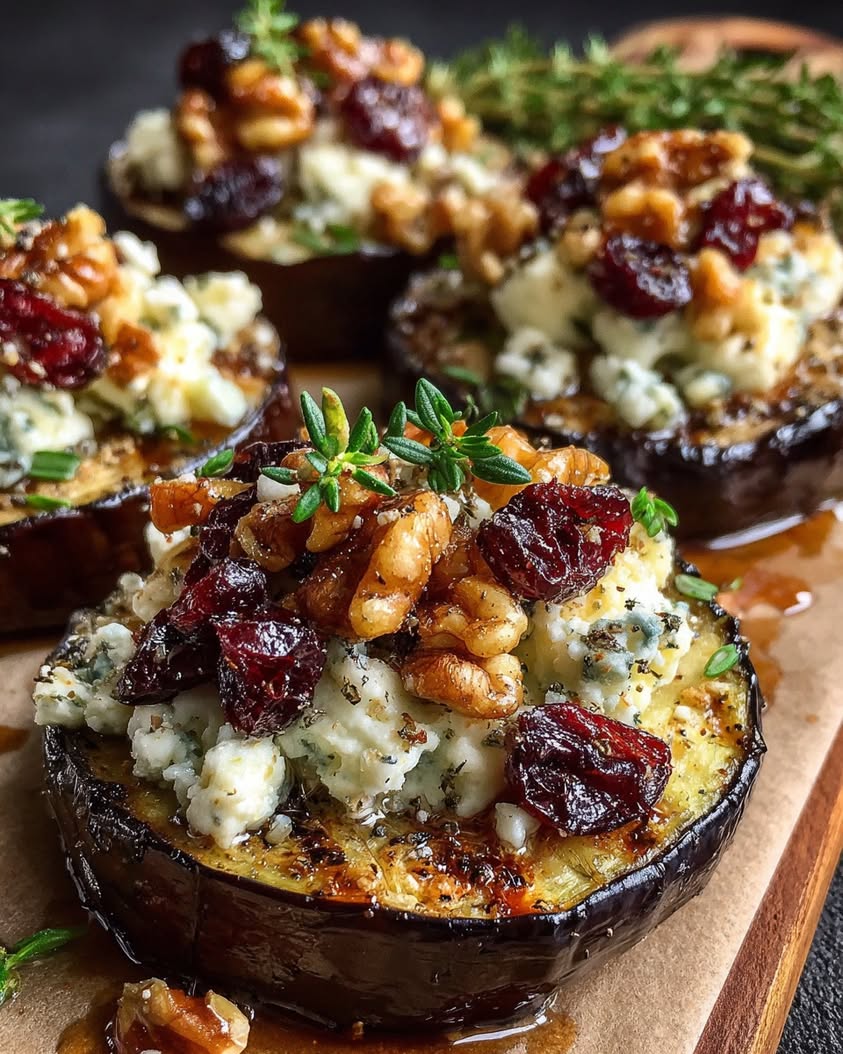
Savory Eggplant Rounds with Bleu Cheese, Cranberries, and Walnuts: An Elegant Appetizer
Imagine a dish that perfectly balances creamy, tangy, sweet, and earthy flavors on a tender, savory base. Consequently, these Savory Eggplant Rounds with Bleu Cheese, Cranberries, and Walnuts deliver exactly that experience. Moreover, they transform the humble eggplant into a sophisticated and visually stunning appetizer. Ultimately, this recipe is a celebration of contrasting textures and bold, harmonious flavors that will impress any guest.
These eggplant rounds offer a fantastic way to enjoy a meatless dish that feels incredibly substantial and satisfying. The process is straightforward, involving roasting eggplant slices until they become beautifully caramelized and tender. Subsequently, you top them with a luxurious blend of pungent bleu cheese, tart dried cranberries, and crunchy toasted walnuts. The result is a bite-sized masterpiece that works wonderfully for holiday gatherings, dinner parties, or even a special weeknight treat.
Furthermore, this dish is incredibly versatile and adaptable to various dietary preferences. For instance, you can easily swap ingredients to create vegan or dairy-free versions without sacrificing flavor. The combination of ingredients not only tastes divine but also provides a pleasing array of nutrients. Ultimately, learning to make these Savory Eggplant Rounds with Bleu Cheese, Cranberries, and Walnuts will add a reliable and impressive recipe to your culinary repertoire.
Quick Recipe Highlights
- Flavor Profile: These rounds masterfully combine the savory, umami-rich taste of roasted eggplant with the sharp, tangy punch of bleu cheese. Simultaneously, sweet-tart cranberries cut through the richness, while toasted walnuts add a deep, nutty finish. Every bite is a complex and delightful flavor journey.
- Texture: You get a wonderfully soft and almost creamy base from the perfectly roasted eggplant. Then, the crumbled bleu cheese offers a slight crumble, the cranberries provide a pleasing chew, and the walnuts deliver a definitive, satisfying crunch. This quartet of textures creates an exciting mouthfeel.
- Aroma: While roasting, the eggplant releases a deep, earthy fragrance that mingles with the toasting nuts. Upon adding the cheese, the kitchen fills with a sharp, savory scent that promises a bold eating experience. The aromatic profile is warm, inviting, and complex.
- Visual Appeal: The presentation is stunning, with the deep purple skin of the eggplant framing the golden flesh. The white and blue veins of the cheese, vibrant red cranberries, and brown walnut pieces create a beautiful mosaic of colors. This dish looks as elegant on the plate as it tastes.
- Skill Level Needed: This is an accessible recipe for cooks of all levels, from beginners to experts. Basically, it requires simple techniques like slicing, roasting, and assembling. Therefore, you can achieve restaurant-quality results with minimal fuss and basic kitchen tools.
- Special Equipment: You only need a sharp knife, a cutting board, and a baking sheet. Parchment paper is highly recommended for easy cleanup and to prevent sticking. A small skillet is useful for toasting the walnuts, but you can also use the oven.
Recipe Overview
- Difficulty Level: We rate this recipe as “Easy” because it involves fundamental cooking techniques. The steps are sequential and simple: slice, season, roast, and top. There is no intricate knife work or complicated procedures, making it a stress-free cooking project. Even a novice cook can follow the instructions and achieve delicious, impressive results.
- Category: This dish fits perfectly into the appetizer or starter category for a multi-course meal. Alternatively, it can serve as a light main course when paired with a fresh green salad. It also works wonderfully as a passed hors d’oeuvre at parties or a flavorful side dish alongside grilled meats.
- Cuisine: While not tied to one specific tradition, the recipe draws inspiration from Mediterranean and modern American fusion cuisine. Eggplant is a staple across Mediterranean cooking, and the combination of cheese, fruit, and nuts is a classic flavor triad found in many culinary traditions. It embodies a contemporary, plant-forward approach to entertaining.
- Cost: This is a relatively economical dish to prepare, especially when eggplants are in season. Bleu cheese can be the priciest component, but a little goes a long way in terms of flavor. Walnuts and dried cranberries are pantry staples that offer great value and longevity. Overall, it delivers high-end taste without a high-end price tag.
- Season: Eggplant is a late-summer vegetable, making this recipe ideal for harvest season gatherings. However, because it uses readily available dried cranberries and walnuts, it transitions beautifully into fall and winter holiday menus. The warm, roasted flavors are particularly comforting during cooler months.
- Occasion: These rounds are perfect for festive occasions like Thanksgiving, Christmas Eve, or New Year’s Eve parties. They also elevate a casual book club meeting or family game night. Essentially, any event where you want to serve something special and memorable is the right occasion for this dish.
Why You’ll Love This Recipe
First and foremost, the taste and texture appeal is immediate and profound. The savory eggplant rounds provide a soft, almost silky canvas that beautifully absorbs the flavors of olive oil and seasoning. Then, the bold, tangy bleu cheese creates a creamy contrast, while the sweet pop of cranberry and the earthy crunch of walnut complete each bite. Consequently, every element plays a crucial role, resulting in a perfectly balanced and utterly addictive appetizer that guests will rave about.
From a convenience standpoint, this recipe is a true winner. The prep work is minimal and largely involves simple slicing and crumbling. Meanwhile, the oven does most of the heavy lifting by roasting the eggplant to tender perfection. Furthermore, you can toast the walnuts and prep the toppings while the eggplant cooks, making efficient use of your time. Ultimately, you can assemble a stunning, gourmet-looking dish in well under an hour with very little active effort.
Nutritionally, these Savory Eggplant Rounds with Bleu Cheese, Cranberries, and Walnuts offer a host of benefits. Eggplant is low in calories but high in fiber and antioxidants like nasunin. Walnuts contribute healthy omega-3 fatty acids and protein, while cranberries add a dose of vitamin C and fiber. Even the bleu cheese provides calcium and protein. Therefore, you are serving a dish that is as nourishing as it is delicious, aligning with a balanced approach to eating.
For social and entertaining value, this recipe is virtually unmatched. The individual rounds are easy to eat with fingers or a small fork, making them ideal for cocktail parties. They look incredibly elegant on a platter, sparking conversation and delight. Moreover, because they are vegetarian, they cater to a wide range of guests. You can confidently serve these knowing they will be the highlight of your appetizer spread, showcasing your skill and thoughtfulness as a host.
Finally, the cost-effectiveness and accessibility of the ingredients make this a practical choice. Eggplant is an affordable vegetable, and you only need one for four servings. You can purchase bleu cheese in a small wedge, and a bag of dried cranberries and walnuts will last for many recipes. There is no need for expensive or exotic components. Essentially, this dish proves that creating impressive, flavor-packed food does not require a lavish budget, just smart combinations.
Historical Background and Cultural Significance
The story of eggplant, or aubergine, spans continents and centuries. Originally cultivated in India and Southeast Asia thousands of years ago, it traveled along trade routes to the Middle East and eventually into Europe. Interestingly, early European varieties were often small, white, and egg-shaped, which is how the vegetable earned its common name. Initially, some cultures viewed it with suspicion, believing it caused madness, but it gradually became a beloved staple in Mediterranean, Middle Eastern, and Asian cuisines for its meaty texture and ability to absorb flavors.
Culturally, eggplant holds significant importance in many food traditions. In Italian cuisine, it is the star of dishes like Parmigiana and caponata. Meanwhile, in the Middle East, it forms the base of baba ganoush and is frequently stuffed or grilled. The practice of pairing cheese with fruit and nuts, however, has a different lineage. This combination is a hallmark of European cheeseboards and medieval cooking, where the balance of sweet, savory, and pungent was highly prized. Our recipe beautifully merges these two historical culinary threads.
The evolution of this specific recipe is a modern one, reflecting contemporary tastes for plant-based, flavor-forward appetizers. It takes the ancient, versatile eggplant and adorns it with classic cheeseboard accompaniments. This evolution speaks to a current culinary trend of deconstructing familiar flavor combinations and presenting them in new, accessible formats. The recipe is less about a specific regional history and more about a global fusion of ingredients that have stood the test of time individually, now united on a single, delicious round.
Regional variations of this concept are endless and exciting. In Greece, one might use feta cheese and Kalamata olives instead of bleu cheese and cranberries. In Persia, a sprinkle of pomegranate molasses and mint could replace the cranberries. For a French twist, you could use goat cheese and herbes de Provence. The basic template of a roasted vegetable round topped with cheese, fruit, and nuts is incredibly adaptable. Consequently, this recipe serves as a fantastic foundation for culinary creativity, allowing you to explore global flavors from your own kitchen.
Ingredient Deep Dive
Let’s start with the star: the eggplant. This versatile nightshade vegetable has been cultivated for millennia and is prized for its spongy, absorbent texture. Nutritionally, it is low in calories but provides a good amount of dietary fiber, potassium, and antioxidants, particularly in its skin. When selecting, choose an eggplant that feels heavy for its size with smooth, shiny, taut skin and a bright green stem. Avoid any with soft spots or wrinkles. Store it at cool room temperature for a day or two, or in the refrigerator crisper drawer for up to a week. For substitutions, large portobello mushroom caps or thick slices of zucchini can work, though cooking times may vary.
Bleu cheese brings the powerful, tangy punch to this dish. This category of cheese, injected with Penicillium cultures to create its characteristic blue veins, has origins dating back to ancient times. It offers calcium, protein, and beneficial bacteria. When shopping, look for a wedge that is moist but not leaking, with visible blue veining and a pungent aroma. Crumbly varieties like Roquefort, Gorgonzola, or Stilton are perfect. Store tightly wrapped in the refrigerator. If bleu cheese is too strong, you can substitute with a milder feta, goat cheese, or even a sharp cheddar for a different flavor profile.
Dried cranberries provide essential sweetness and a chewy texture. Unlike fresh cranberries, which are intensely tart, dried cranberries are typically sweetened, making them a perfect balance for the salty cheese. They contain antioxidants and fiber. Look for brands without added oils or excessive sugar; sometimes you can find “juice-sweetened” varieties. For storage, keep them in a sealed container in your pantry. As an alternative, try chopped dried cherries, apricots, raisins, or even a drizzle of pomegranate molasses after baking for a similar sweet-tart effect.
Walnuts are our chosen nut for their rich, earthy flavor and substantial crunch. They are one of the oldest tree foods, consumed since 7000 B.C. They are an excellent source of plant-based omega-3 fatty acids, protein, and antioxidants. Always buy walnuts in sealed packages and check for freshness, as their high oil content can cause them to become rancid. For the best flavor, toast them lightly before using. Store extras in an airtight container in the freezer to maintain freshness. Pecans, almonds, or pine nuts would be delicious substitutes, each bringing a unique flavor and texture.
The supporting cast is crucial: good extra virgin olive oil, salt, and black pepper. High-quality olive oil not only prevents sticking but also contributes a fruity, peppery note that enhances the roasted eggplant. Sea salt or kosher salt draws out moisture and deepens flavors during roasting. Freshly cracked black pepper adds a subtle heat and aroma. These simple ingredients are the foundation that allows the primary flavors to shine. Do not underestimate their importance; using the best you have will elevate the entire dish.
Common Mistakes to Avoid
- Skipping the Salting Step: Many cooks skip salting eggplant, but it’s crucial for drawing out excess moisture and bitterness. If you omit this, the rounds can steam in their own water and become soggy instead of achieving a caramelized, tender texture. Always salt the slices and let them rest for 10-15 minutes, then pat them thoroughly dry before oiling.
- Using a Dull Knife: Eggplant skin is tough, and a dull knife can slip or crush the flesh. Consequently, you end up with uneven, ragged slices that cook inconsistently. Use a sharp chef’s knife to get clean, uniform rounds about 1/2-inch thick for the perfect balance of structure and tenderness.
- Overcrowding the Baking Sheet: Placing the eggplant rounds too close together causes them to steam rather than roast. They need space for hot air to circulate and create that desirable golden-brown sear. Always arrange them in a single layer with a little breathing room between each piece for the best results.
- Underseasoning the Eggplant: Eggplant flesh is mild and acts like a sponge, so it needs ample seasoning. Simply brushing with oil is not enough. After patting dry, season both sides generously with salt and pepper before roasting. This step builds flavor from the base up.
- Burning the Walnuts: Toasted walnuts are perfect; burnt walnuts are bitter and ruin the dish. They toast quickly, often in just 3-5 minutes over medium heat. Watch them constantly, stir frequently, and remove them from the pan the moment they become fragrant and slightly darker in color.
- Using Cold Bleu Cheese: Crumbling cold, hard bleu cheese is difficult and can result in large, uneven chunks. Let the cheese sit at room temperature for 15-20 minutes before you plan to crumble it. It will be much easier to handle and you’ll get nicer, smaller pieces that distribute evenly.
- Assembling Too Early: If you top the hot eggplant rounds too far in advance, the cheese will melt completely and the walnuts may lose their crunch from the steam. For ideal texture, assemble just before serving. You can have all components prepped and ready on the counter for quick assembly.
- Neglecting the Final Garnish: A final light drizzle of olive oil or a sprinkle of flaky sea salt and fresh herbs like thyme or chives makes a world of difference. This last touch adds sheen, a burst of fresh flavor, and a professional finish. Do not skip this simple but impactful step.
Essential Techniques
Salting and Draining Eggplant: This technique is vital for achieving the perfect texture. Salting draws out excess moisture and some of the vegetable’s natural bitterness through osmosis. After slicing, sprinkle both sides of the rounds with kosher salt and let them rest on a rack or paper towels for 10-15 minutes. You will see beads of moisture form on the surface. Pat them completely dry with paper towels before oiling and roasting. This step ensures the eggplant roasts and caramelizes instead of steaming, giving you a tender, not watery, base.
Roasting for Caramelization: Roasting at a high heat (around 400°F) is key to developing deep flavor. The high temperature encourages the natural sugars in the eggplant to caramelize, creating a savory, slightly sweet flavor and a beautiful golden-brown color. Arrange the dried, oiled rounds in a single layer on a parchment-lined sheet. Avoid crowding. Roast until the bottoms are golden and the flesh is very soft when pierced with a fork, usually 18-20 minutes. This technique transforms the mild eggplant into a flavorful foundation.
Toasting Nuts: Toasting walnuts unlocks their full, rich, earthy potential and adds a crucial crunch. The dry heat of a pan or oven breaks down their oils, intensifying their flavor and aroma. To toast on the stovetop, place walnut pieces in a single layer in a dry skillet over medium heat. Shake or stir constantly for 3-5 minutes until fragrant and lightly browned. Immediately transfer them to a plate to stop the cooking process. This simple technique prevents bitterness and ensures maximum nutty flavor.
Crumbling Cheese Properly: The goal is to distribute small, flavorful bits of bleu cheese across each round. For easy crumbling, start with cheese that is slightly warmed to room temperature. Use your fingers to break off small pieces directly over the roasted eggplant. Alternatively, you can use a fork to break apart a larger chunk on a separate plate. Avoid using a grater, as bleu cheese is too soft and will smear. Proper crumbling ensures every bite gets a hit of tangy flavor without overwhelming the other ingredients.
Pro Tips for Perfect Savory Eggplant Rounds
First, invest in a good, heavy baking sheet. Thin, flimsy sheets can warp in high heat and cause uneven cooking. A sturdy, rimmed half-sheet pan promotes even browning and heat distribution for perfectly roasted eggplant every time.
For extra flavor, infuse your olive oil. Before brushing, warm the oil gently with a sprig of rosemary or a clove of smashed garlic, then let it cool slightly. This simple step adds a subtle aromatic layer that complements the other ingredients beautifully.
Use an ice cream scoop or a melon baller for the walnuts. If you need to chop toasted walnuts further after cooling, placing them in a small bowl and using the edge of an ice cream scoop to chop them is efficient and prevents them from flying off your cutting board.
Create a flavor bridge with a hint of honey. If your cranberries are very tart, toss them with just a teaspoon of honey or maple syrup before assembling. This creates a glossy sheen and helps them adhere to the cheese while balancing the overall flavor profile.
Get the order right for assembly. Place the roasted eggplant round down first, then add the bleu cheese so it slightly melts from the residual heat. Next, scatter the cranberries, and finally, top with the walnuts. This sequence ensures the cheese acts as “glue” for the other toppings.
For a party, prep a “station.” Roast the eggplant rounds ahead of time and let them cool. Place them on a platter, with small bowls of crumbled cheese, cranberries, and toasted walnuts alongside. Let guests assemble their own, which keeps the textures perfect and adds an interactive element.
Add a fresh herb finish. A light sprinkle of finely chopped fresh thyme, chives, or parsley just before serving introduces a bright, green note that cuts through the richness and makes the colors pop visually.
Consider a balsamic drizzle. For an extra touch of sweetness and acidity, reduce balsamic vinegar by half in a small saucepan until syrupy. Drizzle a tiny amount over the assembled rounds for a professional restaurant-style presentation.
Variations and Adaptations
For regional variations, explore global flavor palettes. A Mediterranean version could feature crumbled feta, chopped Kalamata olives, and a sprinkle of oregano. An Italian-inspired twist might use fresh mozzarella, a dot of pesto, and a sun-dried tomato piece. For a Middle Eastern flair, try a tahini-yogurt drizzle with pomegranate seeds and chopped pistachios. The basic template is wonderfully adaptable to the ingredients and spices of any cuisine you wish to explore.
Seasonal adaptations keep this recipe exciting year-round. In spring, use fresh goat cheese and a topping of pea shoots and edible flowers. During summer, swap cranberries for fresh, chopped cherries or diced peaches. In autumn, incorporate crumbled roasted squash or a sprinkle of pumpkin seeds. Winter calls for the classic cranberry and walnut combination, perhaps with a hint of orange zest in the cheese. Let the produce guide your creativity.
Dietary modifications are straightforward. For a vegan version, use a high-quality vegan bleu cheese or a cashew-based “cheese” spread, and ensure your cranberries are sweetened with fruit juice, not honey. To make it gluten-free, the recipe is naturally compliant—just check any pre-packaged ingredient labels. For a nut-free adaptation, substitute toasted sunflower seeds or pepitas for the walnuts. The recipe is incredibly forgiving and inclusive.
Flavor variations can cater to different taste preferences. If you love heat, add a pinch of red pepper flakes to the oil before brushing the eggplant. For an herby profile, mix chopped fresh rosemary or thyme into the crumbled cheese. Smoked salt on the eggplant before roasting adds a deep, savory dimension. A touch of lemon zest mixed with the walnuts can brighten the entire dish. Do not be afraid to experiment with your favorite flavors.
Texture modifications can change the eating experience. For extra creaminess, add a small dollop of ricotta or mascarpone under the bleu cheese. For more crunch, include some finely chopped celery or radish in the topping mix. If you prefer a smoother topping, you can pulse the walnuts, cranberries, and cheese together briefly in a food processor to create a rustic tapenade to spread on the rounds.
Presentation alternatives offer fun ways to serve. Instead of large rounds, slice the eggplant into long, thin planks for “eggplant crostini.” For bite-sized portions, use a small circular cutter on the roasted eggplant. You can also layer the components in a small glass for a deconstructed parfait. Skewer a round with a toothpick along with a fresh basil leaf for easy passing at parties. The possibilities are endless.
Serving and Presentation Guide
Plating techniques matter for visual impact. Arrange the Savory Eggplant Rounds on a large, flat platter or a rustic wooden board. Overlap them slightly in a circular pattern or line them up in rows. Alternatively, place each round on a small individual appetizer plate for a more formal setting. Ensure the colorful topping side faces up and is visible. The goal is to create an arrangement that looks abundant and inviting, encouraging guests to help themselves.
Garnishing ideas add the final touch of elegance. A light drizzle of high-quality extra virgin olive oil or a balsamic glaze adds sheen. Fresh microgreens, baby arugula, or tiny herb leaves like parsley or chervil provide a pop of green. A sprinkle of flaky sea salt, such as Maldon, just before serving enhances both flavor and texture. For a festive touch during the holidays, a few whole cranberries or rosemary sprigs scattered around the platter look beautiful.
Traditional accompaniments might include a simple green salad dressed with lemon vinaigrette to cleanse the palate between bites. For a heartier offering, serve alongside a bowl of marinated olives, sliced cured meats, or a selection of other roasted vegetables. Crusty bread or crackers are also welcome for guests who want to scoop up any delicious toppings that may fall.
Modern serving suggestions embrace simplicity and pairing. These rounds pair wonderfully with a sparkling wine or a crisp white during cocktail hour. For a sit-down dinner, they can precede a main course of roast chicken, grilled fish, or a hearty grain salad. You can also incorporate them into a “small plates” or tapas-style meal with three or four other diverse dishes for a fun, shared dining experience.
Temperature considerations are key. These are best served warm or at room temperature. The cheese should be slightly softened from the warmth of the roasted eggplant, but not fully melted into a pool. Avoid serving them cold from the refrigerator, as the eggplant can become dense and the flavors muted. If you must prep ahead, let them sit out for 20-30 minutes before serving to take the chill off.
Portion control tips are helpful for planning. As an appetizer, plan for 2-3 rounds per person. If serving as part of a larger spread with other heavy hors d’oeuvres, 1-2 rounds per guest is sufficient. For a light lunch or main course alongside a salad, 3-4 rounds make a satisfying portion. Consider your audience and the rest of your menu when determining how many to prepare.
Wine and Beverage Pairing
Wine pairings should complement the bold flavors without overpowering them. The tangy, salty bleu cheese and sweet cranberries create a complex profile. A classic pairing is a sweet white wine like Sauternes or Riesling, whose sweetness contrasts beautifully with the cheese’s saltiness. Alternatively, a medium-bodied red with low tannins, such as a Pinot Noir or Beaujolais, works well with the earthy eggplant and walnuts. For a white option, a rich Chardonnay with notes of oak can stand up to the dish’s intensity. Ultimately, choose a wine you enjoy that has enough character to match the recipe’s robust flavors.
Non-alcoholic alternatives can be just as sophisticated. A sparkling apple cider or a ginger beer offers sweetness and effervescence that cleanses the palate. For a more savory option, a chilled tomato-based beverage like a Virgin Mary or a high-quality non-alcoholic sparkling wine works well. Herbal iced teas, such as hibiscus or mint, provide a refreshing counterpoint to the rich cheese and nuts. The key is to offer a drink with some acidity or sweetness to balance the dish’s savory and tangy notes.
Coffee and tea pairings might seem unusual but can be delightful. A light roast coffee with bright acidity can cut through the richness effectively. For tea, consider an Earl Grey, whose bergamot notes complement the cranberries, or a smoky Lapsang Souchong that echoes the roasted flavors of the eggplant and walnuts. Serve these warm beverages after the appetizer course if moving to a larger meal, or as part of a sophisticated brunch spread.
Temperature considerations for beverages are straightforward. White wines, sparkling wines, and non-alcoholic sparklers should be served well-chilled. Red wines should be served slightly below room temperature, around 60-65°F. Non-alcoholic still drinks like iced tea should be cold, while hot coffee or tea should be freshly brewed and piping hot. Offering beverages at their ideal temperature maximizes their flavor and the pairing experience.
Serving suggestions involve presentation. For a casual gathering, set out bottles and glasses for self-service. For a more formal affair, you can pre-pour wine into glasses or offer a signature mocktail in a pitcher. Labeling your pairings with small cards can be a fun and informative touch for guests, explaining why the beverage complements the Savory Eggplant Rounds with Bleu Cheese, Cranberries, and Walnuts.
Storage and Shelf Life
Storage methods depend on whether the rounds are assembled. Unassembled components store best. Roasted eggplant rounds can be cooled completely, placed in a single layer in an airtight container separated by parchment paper, and refrigerated for up to 3 days. Toasted walnuts should be stored at room temperature in a sealed container for up to a week, or in the freezer for longer. Crumbled bleu cheese should be wrapped tightly and refrigerated. Dried cranberries last for months in the pantry.
Temperature requirements are crucial for food safety. All components containing dairy or cooked vegetables must be refrigerated at or below 40°F. Do not leave assembled rounds at room temperature for more than 2 hours. If serving at a party, replenish the platter with fresh batches from the refrigerator rather than letting one large platter sit out all evening.
Container recommendations help maintain quality. Use shallow, airtight glass or BPA-free plastic containers for the eggplant to prevent condensation and sogginess. For nuts, a mason jar or a zip-top bag with the air pressed out is ideal. Cheese should be rewrapped in its original wax paper or parchment, then placed in a sealed bag or container to prevent odor transfer in the fridge.
Signs of spoilage are important to recognize. Discard the eggplant if it develops a slimy texture, an off smell, or visible mold. Bleu cheese is already moldy, but discard it if foreign mold of a different color (like green or black fuzz) appears, or if it smells excessively ammonia-like. Walnuts are rancid if they smell like paint or chemicals. When in doubt, follow the golden rule: throw it out.
Reheating instructions are simple but specific. To refresh leftover roasted eggplant rounds (without toppings), place them on a baking sheet in a 350°F oven for 5-8 minutes until warmed through. Avoid the microwave, as it will make them rubbery and soggy. Only reheat the eggplant base; add fresh cheese, cranberries, and walnuts after warming for the best texture.
Freezing guidelines are not recommended for the assembled dish. The texture of the thawed eggplant will be mushy and watery. However, you can freeze the plain roasted eggplant rounds separately. Place them on a parchment-lined sheet to freeze solid, then transfer to a freezer bag. They will keep for up to 2 months. Thaw in the refrigerator and re-roast briefly to revive texture before topping and serving.
Make Ahead Strategies
Your prep timeline can stretch over two days for stress-free entertaining. Day 1: Toast the walnuts and store them at room temperature. Crumble the bleu cheese, place it in a container, and refrigerate. Measure the cranberries. Day 2 (3-4 hours before serving): Slice, salt, drain, and roast the eggplant rounds. Let them cool completely. 30 minutes before guests arrive: Assemble the rounds on your platter. This staggered approach breaks the work into manageable tasks.
Storage between steps is key to maintaining quality. As mentioned, keep all components separate until the last possible moment. The roasted eggplant can be held at room temperature for an hour after cooling, or refrigerated if prepped further in advance. Bring the cheese out of the fridge 20 minutes before assembling to take the chill off. Keeping elements apart preserves the distinct textures of crunchy walnuts, soft cheese, and chewy cranberries.
Quality impact assessment is important. Pre-roasting the eggplant has minimal negative impact, especially if you re-crisp it slightly in a warm oven before assembling. Pre-toasting nuts is actually beneficial, as it deepens their flavor. Pre-crumbling cheese is fine. The only element that shouldn’t be prepped too far ahead is the final assembly, as the steam from the warm eggplant will wilt the walnuts and over-melt the cheese if done too early.
Assembly tips for make-ahead success: Have your platter, all prepped toppings in bowls, and a small spoon or fork for each topping ready to go. Place the cooled eggplant rounds on the platter first. Then, quickly distribute the cheese, followed by the cranberries, and finish with the walnuts. Work efficiently to maintain the temperature and texture differentials. A final drizzle of oil and garnish can be done right before carrying the platter to the table.
Reheating guidelines for pre-roasted eggplant are simple. If you roasted the eggplant earlier in the day and it’s now at room temperature, pop the baking sheet back into a 400°F oven for just 3-4 minutes to warm them through before assembling. This brief reheat revitalizes them without further cooking. Do not reheat assembled rounds; the toppings will suffer.
Fresh element additions are your secret weapon. Even with all components prepped, always add a final fresh touch just before serving. This could be a sprinkle of chopped chives from your garden, a few leaves of microgreens, or a grind of fresh black pepper. This last-minute addition provides a burst of freshness that makes the dish taste newly made and vibrant.
Scaling Instructions
Halving the recipe is simple for smaller gatherings. Use one small eggplant (or half a large one), and simply divide all other ingredient quantities by two. The roasting time may decrease slightly, so start checking at the 15-minute mark. Use a smaller baking sheet to keep the rounds in a single layer without too much empty space, which can affect oven airflow. All other techniques and assembly instructions remain exactly the same.
Doubling or tripling the recipe for a crowd requires a bit more planning. You will need multiple baking sheets. Roast in batches, or use two oven racks and rotate the sheets halfway through cooking to ensure even browning. Do not overcrowd the sheets. Consider toasting the walnuts in the oven on a separate sheet while the eggplant roasts to save time. Mix the crumbled cheese and cranberries in a large bowl for easy distribution. Scaling up works perfectly, as the recipe’s ratios are consistent.
Equipment adjustments are necessary when scaling. For a double batch, you will likely need two half-sheet pans. For a triple batch, three pans or roasting in consecutive batches is best. Ensure you have a large enough platter or multiple serving dishes for presentation. Having a few extra small bowls for toppings will make the assembly line process smoother if you are preparing dozens of rounds.
Timing modifications are minimal when scaling up. The actual roasting time per batch does not change. However, your total active time will increase due to more slicing and assembling. Factor in the time needed to roast multiple batches if your oven cannot fit all sheets at once. A good strategy is to have one batch roasting while you assemble the previous, cooled batch.
Storage considerations become more important with larger quantities. If making a huge batch for an event, you can roast all eggplant rounds a day ahead and store them layered with parchment in large containers. Keep the toppings separate. Assemble in stages, perhaps filling one platter at a time to keep everything fresh, rather than assembling all 50 rounds hours before the party starts.
Nutritional Deep Dive
A macro breakdown for one serving (approximately 3 rounds) reveals a balanced profile. You can expect a moderate amount of healthy fats from the olive oil, walnuts, and cheese, providing satiety and flavor. The carbohydrates come primarily from the eggplant and cranberries, offering fiber and natural sugars. Protein is present from the cheese and walnuts, making this a more substantial appetizer than many options. This macro combination helps stabilize energy levels and keeps you feeling satisfied.
The micronutrient analysis is impressive. Eggplant contributes manganese, folate, and potassium, along with antioxidants{“success”:true,”message”:”Recipe created successfully”,”post_id”:7920,”tasty_recipe_id”:7920,”shortcode”:” Print
Eggplant Rounds with Bleu Cheese, Cranberries & Toasted Walnuts
Description
A savory and elegant appetizer featuring roasted eggplant rounds topped with tangy bleu cheese, sweet dried cranberries, and crunchy toasted walnuts.
Ingredients
For the Crust:
- 1 large eggplant, sliced into 1/2-inch rounds
- 2 tablespoons olive oil
- Salt and black pepper to taste
- 1/2 cup crumbled bleu cheese
- 1/4 cup dried cranberries
- 1/4 cup walnuts, toasted and chopped
- 1 tablespoon fresh parsley, chopped
- 1 teaspoon balsamic glaze for drizzling
Instructions
1. Prepare the Crust:
- Preheat oven to 400°F (200°C). Arrange eggplant rounds on a baking sheet lined with parchment paper.
- Brush both sides of eggplant rounds with olive oil and season with salt and pepper. Roast for 20-25 minutes until tender and golden.
- Remove eggplant from oven and top each round with bleu cheese crumbles. Return to oven for 3-5 minutes until cheese softens.
- Sprinkle toasted walnuts and dried cranberries over each round. Garnish with fresh parsley and drizzle with balsamic glaze before serving.
Notes
You can customize the seasonings to taste.

I’m Billy, a classically trained culinary school graduate from The Culinary Institute of America with over 12 years in the restaurant industry and over 19 years of cooking experience.