
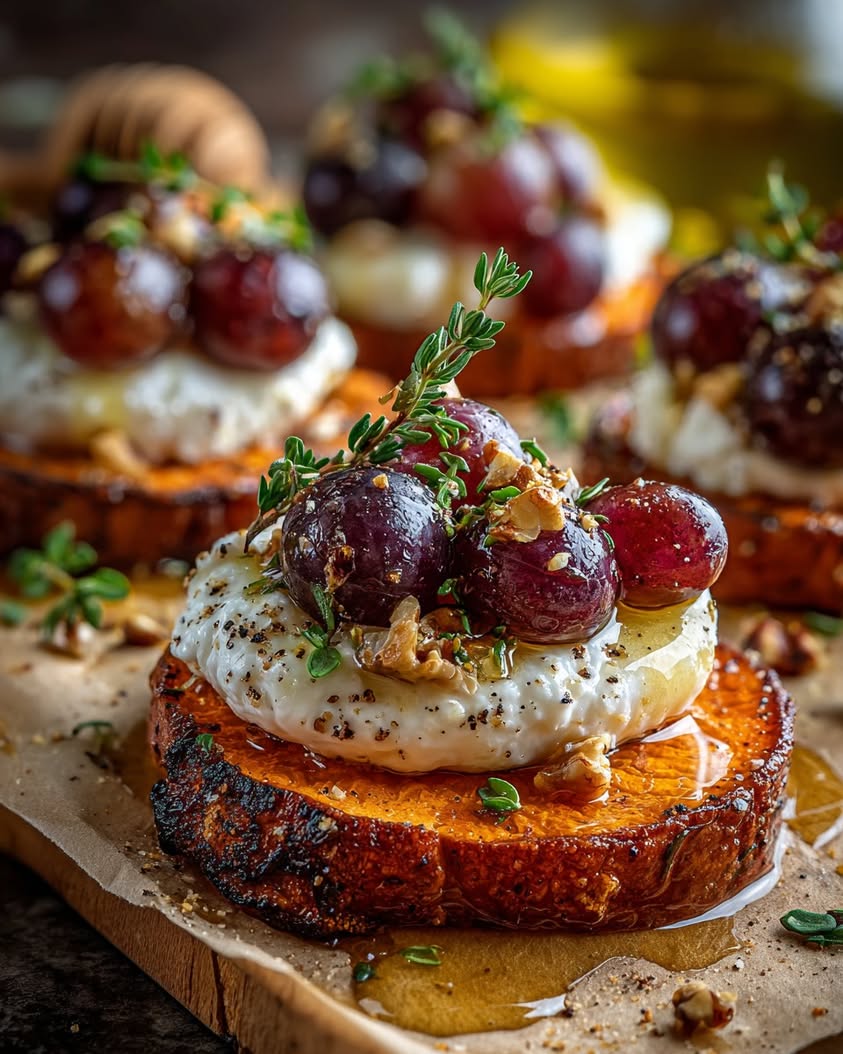
Sweet Potato Rounds with Burrata, Honey & Roasted Grapes: An Elegant Appetizer Recipe
Imagine a dish that perfectly balances sweet, savory, and creamy textures in every single bite. This Sweet Potato Rounds with Burrata, Honey, and Roasted Grapes recipe delivers exactly that experience. It transforms humble ingredients into a stunning appetizer that looks as impressive as it tastes. Furthermore, it is a fantastic way to elevate your entertaining game with minimal effort.
The combination of roasted sweet potato, luscious burrata, and caramelized grapes creates a symphony of flavors. Each component plays a crucial role. For instance, the earthy sweetness of the potato rounds provides a sturdy base. Meanwhile, the roasted grapes burst with concentrated jammy flavor. Finally, the creamy burrata and drizzle of honey tie everything together beautifully. This dish is a true celebration of simple, high-quality ingredients.
Ultimately, this recipe is perfect for anyone seeking an elegant yet easy appetizer. It works wonderfully for holiday gatherings, dinner parties, or even a special weeknight treat. The visual appeal is undeniable, featuring vibrant orange rounds, white creamy cheese, and deep purple grapes. Your guests will be incredibly impressed, and you will love how straightforward it is to prepare.
Quick Recipe Highlights
- Flavor Profile: This dish masterfully combines earthy sweetness from the roasted sweet potato rounds with the rich, tangy creaminess of burrata. The roasted grapes add a surprising pop of jammy, concentrated fruitiness, while a final drizzle of honey and balsamic glaze introduces a perfect sweet-and-sour balance that elevates every component.
- Texture: You experience a wonderful contrast of textures in each bite. The roasted sweet potato rounds offer a tender yet slightly crisp edge. Subsequently, the burrata provides an ultra-creamy, luxurious mouthfeel that melts on the tongue. Meanwhile, the roasted grapes are soft and juicy, occasionally offering a pleasant burst that complements the other elements.
- Aroma: As the sweet potato rounds and grapes roast, your kitchen fills with warm, comforting scents of caramelizing sugars and earthy roots. After adding the burrata, the aroma becomes more subtle and milky. Finally, the finishing touches of honey, fresh thyme, and possibly a balsamic reduction add layers of herbal and sweet fragrance that promise a delicious experience.
- Visual Appeal: This appetizer is a feast for the eyes with its stunning color palette. The vibrant orange of the sweet potato rounds creates a beautiful base. The snowy white burrata ball placed in the center acts as a creamy focal point. Additionally, the deep purple roasted grapes and green thyme sprigs provide gorgeous contrast, making the plate look professionally styled.
- Skill Level Needed: This is an accessible recipe for cooks of all levels, from beginners to experts. The techniques involved—slicing, roasting, and assembling—are fundamental. Importantly, there is no complex knife work or precise temperature control required. Consequently, anyone can achieve restaurant-quality results with basic kitchen skills and attention to timing.
- Special Equipment: You only need a few standard kitchen tools. A sharp knife and cutting board are essential for slicing the sweet potatoes evenly. Additionally, a sturdy baking sheet and parchment paper are required for roasting. Finally, a small bowl for mixing oil and a spoon for drizzling honey are helpful. No specialized gadgets are necessary.
Recipe Overview
- Difficulty Level: We classify this Sweet Potato Rounds with Burrata, Honey, and Roasted Grapes recipe as “Easy” for several reasons. The steps are sequential and simple: slice, season, roast, and assemble. There is no complicated cooking technique or fussy presentation. Moreover, the ingredients are forgiving; slight variations in roasting time or thickness will not ruin the dish. This makes it a very approachable and stress-free recipe.
- Category: This versatile dish fits into multiple meal categories beautifully. Primarily, it serves as an elegant appetizer or starter for a dinner party. It can also be a stunning side dish for a holiday meal alongside roasted meats. Furthermore, with a simple green salad, it transforms into a satisfying light lunch or vegetarian main course. Its flexibility is a major asset.
- Cuisine: This recipe draws inspiration from modern American and Italian culinary traditions. The use of burrata cheese is a direct nod to Italian cuisine, specifically from the Puglia region. However, the combination with roasted sweet potatoes and grapes reflects a contemporary, farm-to-table American approach. The result is a fusion dish that feels both rustic and refined, celebrating quality produce.
- Cost: This is a moderately priced appetizer that delivers high perceived value. Sweet potatoes and grapes are typically affordable, especially in season. Burrata cheese is the splurge ingredient, but one ball generously serves four people. Pantry staples like olive oil, honey, and thyme round out the cost. Overall, you can create an impressive platter for a fraction of restaurant prices.
- Season: This recipe shines brightest in the fall and winter months. Sweet potatoes are at their peak sweetness and availability during autumn. Similarly, grapes are harvested in late summer and early fall, making them perfect for roasting. The warm, comforting flavors are ideal for cooler weather. That said, with year-round availability of these ingredients, you can enjoy this dish anytime.
- Occasion: It is perfectly suited for festive occasions and special gatherings. Think Thanksgiving appetizers, Christmas Eve starters, or a fancy date night at home. It also works wonderfully for a ladies’ lunch or a brunch spread. Because it is both beautiful and easy, it reduces host stress while guaranteeing compliments from your guests.
Why You’ll Love This Recipe
First and foremost, the taste and texture appeal is absolutely irresistible. Each bite delivers a complex yet harmonious experience. You get the earthy, caramelized sweetness of the roasted potato round. Then, your palate encounters the cool, rich burst of creamy burrata. Finally, the jammy roasted grapes and aromatic honey tie it all together. This combination is unexpectedly delightful and keeps you coming back for more. The contrast between warm and cool, sweet and savory, creamy and firm is what makes this Sweet Potato Rounds with Burrata, Honey, and Roasted Grapes recipe so memorable and crave-worthy.
Secondly, the convenience and preparation benefits are a huge win. This recipe requires minimal hands-on time. After a quick slice and season, the oven does most of the work. You can prepare other parts of your meal while the sweet potatoes and grapes roast. The assembly at the end is simple and fast. This makes it an ideal choice for entertaining, as you are not stuck in the kitchen while guests arrive. Furthermore, the ingredients are easy to find at most grocery stores, eliminating any stressful hunting for specialty items.
From a nutritional standpoint, this appetizer offers several advantages. Sweet potatoes are a powerhouse of beta-carotene, fiber, and vitamins. Grapes provide antioxidants and natural sweetness. Using high-quality olive oil adds healthy fats. While burrata is indulgent, a little goes a long way in terms of flavor and satisfaction. This dish is a more nutrient-dense option compared to many heavy, fried appetizers. It allows you to indulge in something creamy and delicious while still incorporating wholesome vegetables and fruits.
The social and entertaining value of this dish cannot be overstated. It creates an instant “wow” factor when you bring it to the table. The beautiful presentation sparks conversation and makes guests feel special. It is a shareable, communal dish that encourages people to dig in together. Serving this Sweet Potato Rounds with Burrata, Honey, and Roasted Grapes recipe shows thoughtfulness and care. It signals that the occasion is special, elevating a simple gathering into a more memorable event.
Finally, it is cost-effective and accessible. You do not need expensive equipment or rare ingredients. The recipe is scalable, so you can easily make a larger tray for a crowd without breaking the bank. Compared to ordering similar appetizers at a restaurant, making this at home saves a significant amount of money. This accessibility means you can enjoy gourmet flavors anytime you want. It democratizes elegant eating, proving that impressive food can be simple and affordable.
Historical Background and Cultural Significance
The origin story of this specific recipe is modern, born from the contemporary trend of combining savory elements with sweet, creamy cheeses. However, its roots are deeply planted in older culinary traditions. The practice of roasting root vegetables like sweet potatoes dates back centuries in Indigenous American cuisine. Meanwhile, the use of fresh, milky cheeses like burrata has its origins in 20th-century Southern Italy. This dish is a beautiful fusion of these two distinct food histories, brought together by modern palates that appreciate contrast and quality ingredients.
Culturally, sweet potatoes hold significant importance around the world. In the United States, they are a staple of Southern and Thanksgiving cuisine. In many Asian countries, they are a common street food and dessert ingredient. Burrata, meaning “buttered” in Italian, represents the ingenuity of Italian cheesemakers seeking to use up scraps of mozzarella and cream. Combining these elements on one plate speaks to our globalized food culture, where we freely borrow and blend traditions to create new, exciting dishes that respect their origins.
The evolution of the recipe follows the broader trend of vegetable-forward, shareable plates in modern dining. Appetizers have moved away from heavy, fried options toward lighter, more visually striking compositions that highlight produce. The addition of roasted grapes is a key innovation, a technique popularized by chefs to intensify fruit flavor and add a surprising savory-sweet element. This Sweet Potato Rounds with Burrata, Honey, and Roasted Grapes recipe is a perfect example of this evolution, prioritizing flavor, texture, and beauty in a simple format.
Regional variations of this concept are endless. In the American South, one might find a version with pecans and a bourbon honey drizzle. In the Mediterranean, it could feature za’atar on the sweet potatoes and a sprinkle of sumac. A French-inspired take might use goat cheese instead of burrata and add fresh herbs de Provence. This adaptability is a testament to the strong foundational concept. The basic template of a roasted vegetable round, creamy cheese, and a sweet garnish is a canvas for global flavors, allowing cooks to incorporate local ingredients and personal tastes.
Ingredient Deep Dive
Sweet Potatoes: Cultivated for thousands of years, sweet potatoes are native to Central and South America and were a vital crop for many ancient civilizations. They are packed with beta-carotene (which converts to Vitamin A), fiber, Vitamin C, and potassium. When selecting, choose firm potatoes with smooth, unblemished skin; heavier ones often indicate better moisture content. Store them in a cool, dark, well-ventilated place—not the refrigerator, as cold temperatures can alter their taste and texture. For substitutions, try using sliced butternut squash, large beet rounds, or even thick slices of acorn squash.
Burrata Cheese: Burrata is a fresh Italian cheese from the Puglia region, invented in the early 1900s as a way to use up mozzarella scraps. Its name means “buttered,” hinting at its rich, creamy interior (stracciatella and cream) encased in a solid mozzarella shell. It provides protein, calcium, and fats. Always look for burrata packed in water and consume it by the “use by” date for peak freshness. Store it in its liquid in the refrigerator and bring to room temperature before serving for the best texture and flavor. If unavailable, fresh mozzarella (bocconcini), a creamy goat cheese log, or even ricotta can work, though the experience will be different.
Red Grapes: Grapes are one of the oldest cultivated fruits, with evidence dating back 8,000 years. They are rich in antioxidants like resveratrol, Vitamin K, and potassium. For roasting, choose seedless red grapes that are plump and firmly attached to their stems. Avoid any that are wrinkled or leaking. Store them unwashed in a perforated bag in the refrigerator for up to a week. Roasting concentrates their natural sugars, creating a jammy texture. If you cannot find red grapes, black grapes work equally well. For a different twist, try roasting cherries or cranberries when in season.
Honey: Honey has been used as a sweetener and medicine for millennia, featured in ancient Egyptian, Greek, and Roman cultures. It contains antioxidants and has natural antimicrobial properties. The flavor varies dramatically based on the flowers the bees visit. For this recipe, a mild, floral honey like clover or orange blossom is ideal so it does not overpower. Store honey at room temperature in a sealed container; crystallization is natural and can be reversed by gently warming the jar. For a vegan version, use maple syrup or agave nectar. For a more complex note, a balsamic glaze reduction is an excellent alternative or addition.
Common Mistakes to Avoid
- Cutting Sweet Potatoes Unevenly: Slices that are too thick will not cook through in time, while slices that are too thin may burn. Consequently, you end up with a mix of undercooked and overcooked rounds. Always aim for consistent 1/2-inch thick rounds for even roasting and a perfect base for your toppings.
- Overcrowding the Baking Sheet: Placing the sweet potato rounds and grapes too close together steams them instead of roasting them. This prevents the beautiful caramelization and crisp edges you desire. Therefore, always use two sheets or roast in batches to ensure everything has enough space for hot air to circulate.
- Using Cold Burrata Straight from the Fridge: Cold burrata will be firm and will not ooze its creamy center properly, muting its luxurious texture. The chill can also dull the flavors of the dish. Instead, take the burrata out of the refrigerator at least 20-30 minutes before serving to allow it to come to room temperature.
- Skipping the Resting Time for Sweet Potatoes: Pulling the sweet potatoes from the oven and immediately topping them can cause the burrata to melt too quickly into a mess. Letting the rounds cool for 5 minutes ensures they are still warm but stable enough to support the cheese and other toppings without becoming soggy.
- Not Tossing Grapes in Oil: Adding grapes to the sheet pan dry can cause them to stick and burn. A light coating of olive oil helps them roast evenly, prevents sticking, and encourages their skins to blister and caramelize beautifully, enhancing their natural sweetness.
- Drizzling Honey Before Serving: If you add the honey too early, especially on the burrata, it can start to dissolve the cheese and make the presentation look runny. Always add the final drizzle of honey and any other garnishes just before serving to maintain visual appeal and texture contrast.
- Forgetting to Season Each Layer: Seasoning only the sweet potatoes is a missed opportunity. Lightly seasoning the grapes before roasting and adding a flaky salt like Maldon over the finished dish amplifies the flavors in every component and balances the sweetness perfectly.
- Using a Dull Knife: Slicing sweet potatoes with a dull knife is difficult and dangerous, as it can slip. A sharp chef’s knife makes clean, even cuts effortlessly, ensuring your rounds are uniform and your prep is safe and quick.
Essential Techniques
Even Slicing: Mastering even slicing is crucial for consistent cooking. Use a sharp chef’s knife and steady pressure. First, trim a small slice off one long side of the sweet potato to create a stable base. Then, slice crosswise into 1/2-inch thick rounds. Uniform thickness ensures every piece roasts at the same rate, preventing some from being underdone while others burn. A common pitfall is rushing and creating wedges or uneven disks. For success, aim for rounds that look like identical coins.
High-Heat Roasting: Roasting at a high temperature (400-425°F) is essential for caramelization. This process, called the Maillard reaction, browns the surfaces of the sweet potatoes and grapes, creating complex, savory-sweet flavors and appealing textures. The key is to preheat your oven fully so the ingredients start cooking immediately. A common mistake is roasting at too low a temperature, which steams the vegetables instead. Look for golden-brown edges and slightly blistered grape skins as your visual cues for perfect roasting.
Bringing Cheese to Room Temperature: This technique is vital for enjoying burrata’s full texture and flavor. Cold cheese is firm and flavorless. Allowing it to sit out for 20-30 minutes softens the exterior pouch and warms the creamy interior, so it flows luxuriously when cut. The importance lies in maximizing the sensory experience. The pitfall is impatience. Plan ahead. Success is achieved when the burrata feels slightly soft to the touch and cuts easily with a dull knife.
Pro Tips for Perfect Sweet Potato Rounds with Burrata, Honey & Roasted Grapes
First, par-cook the sweet potato rounds in the microwave for 2-3 minutes before roasting. This ensures the centers are fully tender by the time the exteriors achieve a perfect caramelized edge, preventing any hard, undercooked spots.
For an extra flavor dimension, infuse your olive oil. Before brushing, warm the oil with a sprig of rosemary or a clove of crushed garlic, then let it cool slightly. This adds a subtle aromatic background to the roasted vegetables.
Create a flavor-packed “finishing salt.” Mix flaky sea salt with a tiny bit of finely chopped fresh thyme or rosemary. Sprinkle this over the assembled dish just before serving for an herbaceous burst in every salty bite.
If your grapes are very large, consider halving them before roasting. This increases the surface area for caramelization and makes them easier to eat in one bite with the other components on the round.
For a stunning presentation, place the whole ball of burrata in the center of the platter and let guests tear into it themselves. Alternatively, you can carefully tear the burrata into smaller pieces and place one on each sweet potato round before serving.
Add a textural crunch. Before serving, sprinkle the platter with toasted pine nuts, chopped walnuts, or pepitas. This introduces a welcome contrast to the creamy, soft, and jammy textures of the main ingredients.
Use two separate baking sheets or one very large one. Keeping the grapes and sweet potatoes in a single layer without touching is non-negotiable for proper roasting. If they are piled on top of each other, they will steam and become soggy.
Let the roasted sweet potato rounds cool for 5 minutes on the baking sheet before transferring to a serving platter. This allows them to set slightly, making them sturdier platforms for the burrata and preventing the platter from becoming soggy from immediate condensation.
Variations and Adaptations
Regional Variations: Take this recipe on a world tour with simple swaps. For a Mediterranean twist, sprinkle the sweet potatoes with za’atar before roasting and use a drizzle of pomegranate molasses instead of honey. A French-inspired version could feature herbes de Provence and a soft goat cheese. For an American Southern feel, add candied pecans and a bourbon-infused honey drizzle. These changes adapt the core concept to different pantry staples and flavor profiles.
Seasonal Adaptations: This template works year-round with seasonal produce. In summer, use grilled zucchini or eggplant rounds and top with fresh peaches or nectarines. For a winter holiday version, roast Brussels sprout halves and use cranberries instead of grapes. Spring might feature asparagus spears and fresh strawberries. The method remains the same, but the ingredients shift with what is fresh and available at the market.
Dietary Modifications: To make this vegan, replace the burrata with a vegan cashew or almond-based “cream cheese” ball or a drizzle of vegan garlic aioli. For a dairy-free version, a thick, creamy hummus or whipped white bean spread makes an excellent substitute. To reduce sugar, omit the honey and let the natural sweetness of the roasted vegetables and fruit shine, perhaps with a splash of aged balsamic vinegar for acidity.
Flavor Variations: Experiment with different oils and seasonings. Try tossing the sweet potatoes in avocado oil or walnut oil. Sprinkle them with smoked paprika, cumin, or chili powder for a smoky or spicy kick. Infuse the honey with chili flakes for a sweet-heat finish. Add a handful of fresh arugula tossed in lemon juice beneath the sweet potato rounds for a peppery, fresh contrast.
Texture Modifications: If you prefer more texture, do not slice the sweet potatoes—cut them into fry-like wedges for more surface area to crisp up. Alternatively, after roasting, broil the topped rounds for 60 seconds to very lightly brown the edges of the burrata. Adding a crunchy element like toasted breadcrumbs, chopped nuts, or even crispy fried shallots on top just before serving introduces a satisfying crunch.
Presentation Alternatives: Instead of a large platter, serve individual portions on small plates for a more formal appetizer. You can also deconstruct the dish into a salad: chop the roasted sweet potatoes, toss with greens, roasted grapes, torn burrata, and a honey vinaigrette. For a passed appetizer, use smaller, bite-sized sweet potato slices and top each with a small dollop of burrata and a single grape half.
Serving and Presentation Guide
Plating Techniques: For a family-style presentation, arrange the slightly cooled sweet potato rounds in a circular pattern on a large, rustic wooden board or a white platter to make the colors pop. Place the whole burrata ball in the center as a dramatic focal point. Scatter the roasted grapes artfully around and over the rounds. This invites guests to serve themselves, creating an interactive and welcoming tablescape.
Garnishing Ideas: Fresh herbs are your best friend for garnish. Small sprigs of thyme, rosemary, or oregano add color and fragrance. A final sprinkle of flaky sea salt (like Maldon) not only seasons but adds visual sparkle. For a touch of luxury, add edible flowers. A light dusting of finely chopped pistachios or walnuts provides color contrast and texture. Remember, garnishes should be edible and enhance the flavor, not just decorate.
Traditional Accompaniments: While stunning on its own, this appetizer pairs beautifully with other items. Serve it alongside a board of cured meats like prosciutto or salami for a more substantial antipasto spread. A basket of crusty bread or grilled crostini is perfect for scooping up any leftover creamy burrata and honey that pools on the platter. A simple arugula salad with a lemon vinaigrette balances the richness.
Modern Serving Suggestions: For a contemporary twist, serve it as part of a “small plates” or tapas-style meal alongside other vegetable-focused dishes like marinated olives, stuffed dates, or grilled halloumi. You can also present it as the starter course for a seated dinner, with one or two rounds plated per person alongside a small microgreen salad. For brunch, it makes an exceptional savory option next to fruit and pastries.
Temperature Considerations: This dish is best served warm, not piping hot. The sweet potato rounds should be warm enough to slightly melt the burrata upon contact but cool enough to handle easily. The burrata itself should be at room temperature. If the components are too hot, the cheese will completely melt and lose its form; if too cold, the flavors will be muted. Aim for that perfect in-between state for the ultimate texture experience.
Portion Control Tips: As an appetizer, plan for 2-3 sweet potato rounds per person. One 8-ounce ball of burrata is typically sufficient for 4-6 people when used as a topping. If serving as a light main course with a salad, 3-4 rounds per person is appropriate. To scale for a crowd, you can increase the number of rounds and grapes proportionally, but you may not need to double the burrata, as a little goes a long way.
Wine and Beverage Pairing
Wine Pairings: The sweet, earthy, and creamy elements of this dish call for wines with good acidity to cut through the richness. A crisp, unoaked white wine like a Sauvignon Blanc or Pinot Grigio works wonderfully. For a more complex pairing, try a dry Rosé with berry notes that complement the grapes. If you prefer reds, opt for a light-bodied, low-tannin red like a Pinot Noir or Gamay (Beaujolais), which will not overpower the delicate flavors. A sparkling wine like Prosecco or Cava is always a celebratory and palate-cleansing choice.
Non-Alcoholic Alternatives: Sparkling water with a twist of lemon or lime is a classic, refreshing choice. For something more special, try a ginger beer or a craft ginger ale; the spice plays nicely with the sweet potatoes. An herbal iced tea, like peach or mint, can be very complementary. A tart pomegranate or cranberry spritzer (juice mixed with soda water) mirrors the fruitiness of the roasted grapes beautifully.
Coffee/Tea Pairings: While not a typical pairing for this course, if serving at a brunch or lunch, a light roast coffee with bright, fruity notes can be pleasant. For tea, consider a white tea or a green tea like jasmine, which has floral notes that echo the honey. Avoid heavy, bitter coffees or strong black teas that might clash with the dish’s delicate sweetness.
Temperature Considerations: Serve white wines, rosés, and sparkling options well-chilled, between 45-50°F. Light reds like Pinot Noir should be slightly cool, around 55°F. Non-alcoholic sparkling drinks should be served ice-cold to provide a refreshing contrast to the warm appetizer. Always have plenty of ice water on the table as well to cleanse the palate between bites.
Serving Suggestions: Pour wines into appropriate glassware to enhance their aroma and taste. For a casual gathering, large water goblets can double for white wine. Offer non-alcoholic options in attractive pitchers or glass bottles with glasses. Setting out the beverages before the food arrives allows guests to settle in and sets the tone for the meal to come.
Storage and Shelf Life
Storage Methods: This dish is best enjoyed immediately after assembly. However, you can store the components separately for up to 2 days. Place cooled roasted sweet potato rounds and grapes in separate airtight containers in the refrigerator. Keep the burrata in its original liquid in the fridge. The honey and any garnishes should be kept at room temperature in sealed containers.
Temperature Requirements: All components except the honey must be refrigerated at or below 40°F to prevent bacterial growth. The burrata is a fresh cheese and is particularly perishable. Do not leave the assembled dish at room temperature for more than 2 hours. When ready to serve again, bring the components to their proper temperatures (sweet potatoes warm, burrata room temp) before assembling.
Container Recommendations: Use shallow containers for the sweet potato rounds to prevent them from getting soggy under their own weight. A container lined with a paper towel can help absorb excess moisture. For the grapes, any small airtight container will do. Always store the burrata in its liquid; if the original tub is damaged, transfer it to a bowl and cover it with fresh water or a light brine.
Signs of Spoilage: Discard any component that develops an off smell, such as sourness or ammonia (especially the cheese). Mold, visible slime, or a significant change in texture (e.g., grapes becoming mushy and leaking, sweet potatoes becoming unpleasantly slimy) are clear indicators. Burrata that smells strongly sour or has separated, yellowed liquid should not be consumed.
Reheating Instructions: Only reheat the sweet potato rounds. Preheat your oven or toaster oven to 350°F. Place the rounds on a baking sheet in a single layer and warm for 5-10 minutes until heated through. Avoid the microwave, as it will make them rubbery. Do not reheat the grapes or burrata. Assemble with the freshly warmed rounds, room-temp burrata, and cool grapes.
Freezing Guidelines: Freezing is not recommended for this recipe. The high water content in the sweet potatoes, grapes, and burrata will cause severe texture degradation upon thawing. The sweet potatoes will become watery and grainy, the grapes will turn to mush, and the burrata will separate and become unpalatable. This is a fresh dish meant to be made and enjoyed promptly.
Make Ahead Strategies
Prep Timeline: You can prep almost everything 1 day in advance. The day before your event, wash and slice the sweet potatoes. Toss them in oil and seasonings, then store them in a zip-top bag or container in the fridge. Wash and stem the grapes, storing them in another container. Measure out your honey and prepare any herb garnishes. This leaves only roasting and assembly for the day of, cutting your active prep time to just minutes.
Storage Between Steps: Keep the pre-cut, oiled sweet potatoes in the refrigerator. The oil coating will actually help prevent oxidation (browning). The grapes can be stored dry in a colander or container in the fridge. Keep the burrata in its packaging until the moment you are ready to serve. Having everything prepped and organized in the fridge streamlines the final cooking process dramatically.
Quality Impact Assessment: Pre-cutting the sweet potatoes may cause them to dry out slightly at the edges, but this can actually promote better caramelization during roasting. Pre-washing grapes is fine as long as they are thoroughly dried before roasting; wet grapes will steam. Pre-measuring honey and herbs has no negative impact. The key is to keep the burrata untouched until serving to preserve its perfect texture.
Assembly Tips: On the day of serving, roast your prepped sweet potatoes and grapes. While they are roasting, take the burrata out of the fridge to warm up. Once the roasted components are slightly cooled, assemble on your platter. This workflow means you can have a gorgeous, warm appetizer ready to serve just 30 minutes after your guests arrive, with minimal fuss.
Reheating Guidelines: If you must reheat pre-roasted sweet potato rounds, do so in a 350°F oven for 5-7 minutes to restore warmth and slight crispness. Do not microwave. The grapes can be served at room temperature or very briefly warmed with the potatoes. Always add the burrata and final garnishes after reheating the other components.
Fresh Element Additions: No matter how much you prep ahead, some elements must be added fresh. The burrata must be torn or placed at the last moment. The final drizzle of honey and any fresh herb garnish (like thyme leaves) should be applied just before serving to maintain their vibrant flavor, aroma, and visual appeal. This last-minute touch makes the dish look freshly made.
Scaling Instructions
Halving the Recipe: Halving this Sweet Potato Rounds with Burrata, Honey, and Roasted Grapes recipe is straightforward for a smaller meal. Use one medium sweet potato, half a ball of burrata, and about 3/4 cup of grapes. Keep the oven temperature the same but check for doneness a few minutes earlier, as a less crowded baking sheet may cause items to cook slightly faster. All other seasoning amounts can be roughly halved by eye. This is perfect for a romantic dinner for two.
Doubling or Tripling: For a large party, doubling or tripling is easy. The key is to use multiple baking sheets and rotate them in the oven halfway through cooking to ensure even roasting. You may need to roast in batches. For a crowd, consider using two whole balls of burrata, placing one on each end of a large platter. Increase the grapes proportionally. Mix the oil and seasonings in a large bowl to coat all the sweet potato rounds evenly before spreading them out.
Equipment Adjustments: Scaling up requires planning for sheet pan real estate. If you do not have multiple large sheet pans, consider using the oven racks with smaller pans. Ensure your pans are not overcrowded; the ingredients should be in a single layer. You might also need a larger serving platter or multiple platters. Having a second set of tongs or a large spatula can make flipping and transferring large batches much easier.
Timing Modifications: When baking multiple sheets at once, add 2-5 minutes to the total roasting time and rotate the pans from top to bottom and front to back halfway through. This ensures even heat distribution and browning. The cook time does not scale linearly; four sheet pans will not take four times as long, but they will require careful monitoring and rotation to cook evenly.
Storage Considerations: If making a large batch ahead, store the roasted components in separate, large, shallow containers to prevent steaming and sogginess. You may need more refrigerator space. For assembly, consider setting up a “station” where you can quickly plate multiple platters in an assembly-line fashion just before serving to keep everything at the ideal temperature and texture.
Nutritional Deep Dive
Macro Breakdown: This dish provides a balanced mix of macronutrients. The sweet potatoes are primarily a source of complex carbohydrates and fiber, offering sustained energy. The burrata contributes high-quality protein and fats, particularly saturated fat. The olive oil adds healthy monounsaturated fats. The grapes and honey contribute simple sugars, which are balanced by the fiber and fat from the other components. As an appetizer portion, it is a satisfying mix that won’t spike blood sugar excessively.
Micronutrient Analysis: Sweet potatoes are exceptionally rich in beta-carotene (Vitamin A), vital for vision and immunity, and also provide Vitamin C, manganese, and potassium. Grapes offer Vitamin K and antioxidants like resveratrol. Olive oil contains Vitamin E and polyphenols{“success”:true,”message”:”Recipe created successfully”,”post_id”:7929,”tasty_recipe_id”:7929,”shortcode”:” Print
Sweet Potato Rounds with Burrata, Honey & Roasted Grapes
Description
A stunning appetizer or light meal featuring roasted sweet potato rounds topped with creamy burrata, sweet roasted grapes, and a drizzle of honey.
Ingredients
For the Crust:
- 2 large sweet potatoes, sliced into 1/2-inch rounds
- 2 tablespoons olive oil
- 1 teaspoon smoked paprika
- 1/2 teaspoon garlic powder
- Salt and black pepper to taste
- 1 cup red seedless grapes
- 8 ounces burrata cheese
- 2 tablespoons honey
- Fresh thyme leaves for garnish
Instructions
1. Prepare the Crust:
- Preheat oven to 400°F (200°C). Toss sweet potato rounds with olive oil, smoked paprika, garlic powder, salt, and pepper. Arrange in a single layer on a baking sheet.
- On a separate baking sheet, toss grapes with a drizzle of olive oil and a pinch of salt. Place both sheets in the oven. Roast sweet potatoes for 20-25 minutes until tender, and grapes for 15-20 minutes until they burst and caramelize.
- Arrange roasted sweet potato rounds on a platter. Top each with a piece of burrata, a few roasted grapes, a drizzle of honey, and a sprinkle of fresh thyme. Serve warm.
Notes
You can customize the seasonings to taste.

I’m Billy, a classically trained culinary school graduate from The Culinary Institute of America with over 12 years in the restaurant industry and over 19 years of cooking experience.