
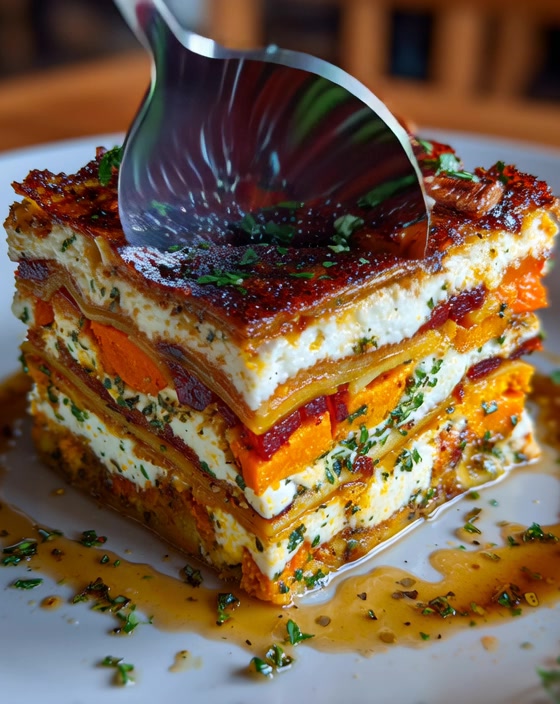
Layered Sweet Potato Pumpkin Carrot Lasagna with Maple Glaze: A Show-Stopping Fall Feast
Imagine a dish that captures the very essence of autumn in every single bite. This Layered Sweet Potato Pumpkin Carrot Lasagna with Maple Glaze does exactly that, transforming humble root vegetables into a stunning, savory masterpiece. This recipe reimagines the classic Italian pasta bake by replacing noodles with thin slices of sweet potato and carrot, layered with a creamy pumpkin filling and topped with a sweet and salty maple-honey glaze. The result is a comforting, visually spectacular casserole perfect for holiday gatherings or a special Sunday supper.
Furthermore, this dish is a celebration of seasonal produce at its finest. Each layer contributes a unique flavor and texture, from the earthy sweetness of roasted carrots to the velvety richness of spiced pumpkin. The final flourish of crunchy pecans and tangy feta cheese creates a perfect contrast, while the glossy maple-honey glaze adds a touch of elegant sweetness. Ultimately, this Layered Sweet Potato Pumpkin Carrot Lasagna is more than just a meal; it’s a warm, aromatic centerpiece that will have everyone asking for seconds.
Quick Recipe Highlights
- Flavor Profile: This dish masterfully balances sweet, savory, and earthy notes. The natural sugars from the sweet potatoes and carrots caramelize beautifully, while the pumpkin filling is warmly spiced. Finally, the salty feta and sweet maple glaze create an unforgettable finish.
- Texture: You will enjoy a wonderful play of textures. Expect tender, melt-in-your-mouth vegetable layers, a luxuriously creamy pumpkin filling, a satisfying crunch from toasted pecans, and a sticky, glossy glaze on top.
- Aroma: As it bakes, your kitchen will fill with the comforting scents of roasting root vegetables, warming cinnamon and nutmeg, and the sweet, caramelized notes of maple syrup. It is the quintessential smell of fall.
- Visual Appeal: The cross-section of this lasagna is stunning, revealing vibrant orange and yellow stripes. The golden-brown top, dotted with white feta and brown pecans, makes it a beautiful centerpiece for any table.
- Skill Level Needed: This recipe requires some patience and basic knife skills for slicing vegetables evenly. However, the steps are straightforward and methodical, making it achievable for confident home cooks looking to impress.
- Special Equipment: A mandoline slicer is highly recommended for achieving uniformly thin vegetable slices, which ensures even cooking. You will also need a good baking dish and a blender or food processor for the pumpkin filling.
Recipe Overview
- Difficulty Level: We rate this Layered Sweet Potato Pumpkin Carrot Lasagna as intermediate. The process involves multiple components—preparing and slicing vegetables, making a filling, and careful assembly. While no single step is overly complex, the coordination and attention to detail elevate it beyond a simple weeknight bake.
- Category: This dish beautifully straddles categories. It serves as a spectacular vegetarian main course, a hearty side dish for a holiday feast, or even a luxurious brunch option. Its versatility is one of its greatest strengths.
- Cuisine: This is a modern fusion recipe with American and Mediterranean influences. It takes the layered concept from Italian lasagna but uses New World vegetables like sweet potato and pumpkin, finished with Greek feta and a North American maple glaze.
- Cost: The cost is moderate, largely dependent on using fresh, in-season produce. Sweet potatoes, carrots, and pumpkin are typically affordable. Feta cheese, pecans, and pure maple syrup are the premium ingredients, but they provide significant impact for the price.
- Season: This recipe is perfect for fall and winter. It utilizes the peak harvest of root vegetables and squash, and its warm, comforting nature is ideal for cooler weather. You can certainly make it year-round, but it truly shines from October through December.
- Occasion: This lasagna is ideal for holidays like Thanksgiving, Christmas, or a festive Friendsgiving. It also makes a wonderful dish for potlucks, Sunday family dinners, or any time you want to serve a visually impressive and delicious vegetarian centerpiece.
Why You’ll Love This Recipe
First and foremost, the taste and texture of this Layered Sweet Potato Pumpkin Carrot Lasagna are utterly divine. Each forkful delivers a complex harmony of flavors. You get the deep, caramelized sweetness from the roasted vegetable layers, contrasted with the creamy, spiced pumpkin filling. Then, the salty pop of feta and the rich crunch of pecans break through, all tied together with that sweet and sticky maple-honey glaze. It is a truly satisfying eating experience that feels both indulgent and nourishing.
Next, consider the convenience and preparation benefits. While there are several components, much of the work can be done ahead of time. You can slice the vegetables and prepare the filling a day in advance. Consequently, assembly on the day of serving becomes a quick and simple task. This make-ahead flexibility makes it a stress-free choice for entertaining, allowing you to enjoy your own party.
Moreover, this dish packs a serious nutritional punch. Sweet potatoes and carrots are loaded with beta-carotene, fiber, and vitamins. Pumpkin adds more fiber and vitamin A. By using vegetables as the “noodles,” you create a gluten-free dish that is lower in carbohydrates and higher in nutrients than traditional pasta lasagna. It is a delicious way to eat more vegetables without feeling like you are sacrificing flavor.
Additionally, the social and entertaining value of this recipe is incredibly high. This Layered Sweet Potato Pumpkin Carrot Lasagna is a guaranteed conversation starter. Its beautiful appearance and unique concept will impress guests. It is substantial enough to serve as a main for vegetarians and a fascinating side for meat-eaters, making menu planning for mixed-diet gatherings much easier.
Finally, this recipe is cost-effective and accessible. The base ingredients are common and affordable, especially in autumn. You likely have many of the spices in your pantry already. While pure maple syrup and good feta are worth the investment, you can adapt with what you have. Ultimately, this dish delivers restaurant-quality presentation and flavor from simple, wholesome ingredients you can find at any grocery store.
Historical Background and Cultural Significance
The concept of layering ingredients is ancient and appears in many cultures, but the modern lasagna we know originates from Italy. Traditionally, lasagna involves alternating sheets of pasta with ragù, béchamel, and cheese. This recipe, however, represents a contemporary, vegetable-forward evolution of that idea. It reflects a growing global culinary trend of using vegetables as substitutes for grains, driven by dietary preferences and a desire for creative, plant-based cooking.
Furthermore, the use of sweet potato, pumpkin, and maple syrup roots this dish firmly in the Americas. Indigenous cultures across North America cultivated and revered these ingredients long before European contact. Sweet potatoes have a history spanning thousands of years in Central and South America. Pumpkins are native to North America. Maple syrup harvesting is a practice pioneered by Indigenous peoples of the Northeastern woodlands. This Layered Sweet Potato Pumpkin Carrot Lasagna, therefore, unintentionally honors these deep food histories.
Over time, the fusion of these New World ingredients with Old World techniques like layering and baking created a new category of “vegetable lasagnas” or “casseroles.” This recipe sits within that modern tradition. It is a product of today’s global pantry, where cooks freely combine ingredients and methods from different cultures to create something new and delicious that reflects personal taste and seasonal abundance.
Regional variations of this concept are endless. In the Southern United States, you might find a similar dish with pecans and a bourbon glaze. In Mediterranean regions, herbs like rosemary and thyme might replace the warm baking spices. The beauty of this Layered Sweet Potato Pumpkin Carrot Lasagna framework is its adaptability. It provides a template that welcomes interpretation based on local produce and cultural flavor profiles, making it a truly modern classic.
Ingredient Deep Dive
Sweet Potatoes: Botanically distinct from yams, sweet potatoes are tuberous roots prized for their sweet, starchy flesh. They are incredibly rich in beta-carotene, which the body converts to vitamin A, crucial for vision and immunity. They also provide vitamin C, potassium, and fiber. For this lasagna, choose firm, medium-sized sweet potatoes with smooth, unbruised skin. Look for varieties like Garnet or Jewel, which have moist, orange flesh that holds its shape when sliced. Store them in a cool, dark, well-ventilated place—not the refrigerator, as cold temperatures can alter their texture and flavor.
Pumpkin Puree: Ensure you use 100% pure pumpkin puree, not pumpkin pie filling, which contains added sugars and spices. Pumpkin puree is simply cooked, mashed pumpkin. It is a fantastic source of fiber, vitamin A, and potassium. It creates the creamy, velvety base for the filling in this lasagna. For the best flavor, you can make your own by roasting a sugar pumpkin, but high-quality canned puree is a perfect and convenient alternative. Store an opened can in an airtight container in the refrigerator for up to a week.
Carrots: Carrots add a slightly less sweet, more earthy flavor and a beautiful color contrast. They are packed with beta-carotene, antioxidants, and vitamin K1. Choose fresh, firm carrots without cracks or excessive wilting at the tops. For uniform slicing in this Layered Sweet Potato Pumpkin Carrot Lasagna, try to select carrots that are similar in diameter. You can store them in the refrigerator’s crisper drawer, loosely wrapped in a plastic bag, for several weeks.
Feta Cheese: This brined Greek cheese made from sheep’s or goat’s milk adds a essential tangy, salty counterpoint to the sweet vegetables. Its crumbly texture provides delightful pockets of flavor. Feta is a good source of calcium and protein. For the best quality, look for feta sold in blocks immersed in brine. Pre-crumbled feta often contains anti-caking agents that can affect melt and texture. If you need a substitute, a fresh goat cheese (chèvre) or a salty ricotta salata would work well.
Maple Syrup & Honey: The glaze combines these two natural sweeteners. Pure maple syrup, the boiled-down sap of sugar maple trees, has a complex, woody sweetness with mineral notes. Honey contributes floral tones and helps the glaze thicken and stick. Together, they create a glossy, flavorful finish that is not overly sweet. Always opt for 100% pure maple syrup over “pancake syrup,” which is primarily corn syrup. Store both in a cool, dark pantry.
Common Mistakes to Avoid
- Slicing Vegetables Too Thick: This is the most critical error. Overly thick slices will not soften properly during baking, resulting in a lasagna with crunchy, undercooked layers. Always aim for slices about 1/8-inch thick, using a mandoline for consistency.
- Using Watery Pumpkin Filling: If your pumpkin puree is very wet, the filling can make the lasagna soggy. To combat this, you can gently cook the pumpkin mixture in a saucepan for a few minutes to evaporate excess moisture before assembling.
- Not Seasoning Each Layer: Vegetables need salt to bring out their natural flavors. Do not forget to lightly season each layer of sweet potato and carrot with salt and pepper as you assemble. This builds depth of flavor throughout the dish.
- Skipping the Toasting Step for Pecans: Raw pecans lack depth. Toasting them in a dry skillet or the oven for a few minutes until fragrant dramatically enhances their nutty flavor and crunch, which is essential for the final texture contrast.
- Applying Glaze Too Early: If you add the maple-honey glaze before baking, it can burn due to its sugar content. Always apply the glaze during the last 10-15 minutes of baking so it just sets and caramelizes slightly without scorching.
- Overcrowding the Baking Dish: Packing the layers too tightly can prevent steam from escaping and lead to a watery final product. Layer the vegetables neatly but without excessive pressure, allowing some space between slices.
- Cutting Immediately After Baking: Like any lasagna or layered casserole, this dish needs a resting period. Allow it to sit for 15-20 minutes after removing it from the oven. This lets the layers set, ensuring clean, beautiful slices that hold their shape on the plate.
- Using Pre-Shredded or Low-Quality Cheese: Pre-crumbled feta often has a drier texture and less flavor. For the best result, buy a block of feta in brine and crumble it yourself just before using. The superior taste and creamier texture are worth the extra minute of effort.
Essential Techniques
Mandoline Slicing: Using a mandoline is the key to perfect, paper-thin vegetable layers for your Layered Sweet Potato Pumpkin Carrot Lasagna. This tool ensures uniform thickness, which guarantees even cooking. Always use the hand guard to protect your fingers. Move the vegetable back and forth in a steady, controlled motion. If you do not have a mandoline, a very sharp chef’s knife and patience will work, but consistency is harder to achieve.
Making a Thick Vegetable Puree Filling: The pumpkin filling should be creamy but not runny. Combine the puree with binding agents like egg and cheese, and season it well. If the mixture seems loose, you can add a tablespoon of almond flour or breadcrumbs to absorb excess moisture. The goal is a spreadable consistency that will hold its place between the vegetable layers without leaking.
Layering for Structure: Proper layering creates the structural integrity of the lasagna. Start with a thin layer of the pumpkin filling on the bottom of the dish to prevent sticking. Then, add a single, slightly overlapping layer of sweet potato. Spread another layer of filling, then a layer of carrot. Repeat this pattern, ending with a final layer of vegetables on top. Press down gently after every two layers to eliminate large air pockets.
Creating a Glaze: A good glaze should be thick enough to coat the back of a spoon but still pourable. Simply warm the maple syrup and honey together until they combine smoothly. Brushing it on during the final stage of baking allows it to caramelize and adhere to the top vegetable layer, creating a shiny, flavorful crust that contrasts with the soft interior.
Pro Tips for Perfect Layered Sweet Potato Pumpkin Carrot Lasagna
First, par-cook your vegetable slices. You can lightly steam or microwave the sweet potato and carrot slices for 2-3 minutes before assembling. This softens them slightly, ensuring they become perfectly tender during baking and reducing the risk of a crunchy texture.
Second, season aggressively. Root vegetables and pumpkin can handle and need generous seasoning. Do not be shy with the salt, pepper, and warming spices like nutmeg and cinnamon in your filling. Taste the filling before assembling to ensure it is flavorful enough.
Third, let the assembled lasagna rest before baking. After you build the layers, cover the dish and let it sit on the counter for 20-30 minutes. This allows the vegetables to start absorbing moisture from the filling, which promotes even cooking and better cohesion.
Fourth, cover with foil for most of the baking time. Start the lasagna covered with aluminum foil. This traps steam and gently cooks the vegetables through. Remove the foil for the last 20-25 minutes to allow the top to brown and crisp up beautifully.
Fifth, use a thermometer for doneness. The safest way to know your lasagna is done is to insert an instant-read thermometer into the center. It should read at least 185°F (85°C), indicating the vegetables are fully tender and the egg in the filling is cooked.
Sixth, garnish with fresh elements after baking. Add the final crumble of feta and toasted pecans after the lasagna comes out of the oven and you have applied the glaze. This keeps the cheese from melting away and the nuts from getting soggy, preserving their texture and fresh flavor.
Variations and Adaptations
For regional variations, consider a Southern twist by adding a pinch of cayenne pepper to the pumpkin filling and using a bourbon-infused maple glaze. A Mediterranean version could incorporate chopped olives and rosemary into the layers, using goat cheese instead of feta. The basic structure of this Layered Sweet Potato Pumpkin Carrot Lasagna welcomes these creative flourishes.
Seasonal adaptations are simple. In winter, add roasted cubes of butternut squash to the layers. For a spring version, incorporate thin slices of zucchini or yellow squash and use fresh herbs like dill in the filling. You can adapt the vegetable base to whatever is fresh and abundant at your local market.
Dietary modifications are straightforward. For a vegan version, omit the egg and use a flax egg, replace the feta with crumbled tofu marinated in lemon juice and salt, and use agave instead of honey in the glaze. To make it nut-free, simply omit the pecans or replace them with toasted sunflower or pumpkin seeds for crunch.
Flavor variations can take this dish in new directions. Add a layer of sautéed spinach or kale between the vegetables for a pop of green and iron. Mix a tablespoon of miso paste into the pumpkin filling for an umami boost. Or, stir a tablespoon of curry powder into the filling for a warmly spiced, exotic version.
Serving and Presentation Guide
Plating this lasagna is part of the enjoyment. Use a sharp, thin-bladed knife to cut clean portions. A flat spatula or pie server helps lift each piece intact. For individual plating, place a square slightly off-center on a warm plate. Alternatively, for a family-style presentation, serve it directly from the baking dish at the table, allowing guests to admire the beautiful layers before serving.
Garnishing adds the final touch. Beyond the feta and pecans, a sprinkle of fresh, chopped parsley or thyme adds color and a bright herbal note. A light drizzle of high-quality extra virgin olive oil or a balsamic reduction around the plate can elevate the presentation to restaurant level. A few microgreens on top also look stunning.
For traditional accompaniments, a simple green salad with a sharp vinaigrette cuts through the richness perfectly. Roasted Brussels sprouts or sautéed green beans also make excellent sides. If serving as a main course, consider a protein like roasted chicken or grilled sausages on the side for meat-eaters.
Consider temperature carefully. This dish is best served warm, not piping hot. The resting time allows the flavors to settle and the structure to firm up. If it cools down too much, you can reheat individual slices in a warm oven for 10 minutes. Avoid the microwave, as it can make the layers soggy.
Wine and Beverage Pairing
Choosing the right wine enhances this meal beautifully. A medium-bodied white wine with good acidity, like an Oregon Pinot Gris or a French Viognier, complements the sweet vegetables and creamy texture. For red wine lovers, a fruity, low-tannin option like a Beaujolais or a Pinot Noir works wonderfully without overpowering the dish’s delicate balance.
For non-alcoholic alternatives, consider sparkling apple cider, which mirrors the autumn flavors. A ginger beer provides a spicy kick that cuts through the richness. Alternatively, a simple glass of chilled, dry hard cider (alcoholic or non-alcoholic) is a classic and perfect pairing for this Layered Sweet Potato Pumpkin Carrot Lasagna.
Coffee and tea also pair well. After the meal, a cup of coffee with notes of nut or caramel can be delightful. For tea, a spiced chai latte echoes the warming spices in the lasagna, or a cup of peppermint tea can provide a refreshing, cleansing finish.
Storage and Shelf Life
Store leftover lasagna covered tightly with plastic wrap or in an airtight container in the refrigerator. It will keep well for 3-4 days. The flavors often meld and improve on the second day. To reheat, place individual portions in an oven-safe dish, cover with foil, and warm in a 350°F (175°C) oven for 15-20 minutes until heated through. This method preserves texture better than microwaving.
For freezing, this lasagna is an excellent candidate. Cool the baked lasagna completely, then wrap the entire dish or individual portions tightly in plastic wrap followed by a layer of heavy-duty aluminum foil. Label with the date and freeze for up to 2 months. Thaw overnight in the refrigerator before reheating as directed above.
Signs of spoilage include an off smell, significant liquid separation, or mold growth. Always use your senses; if anything seems questionable, it is safest to discard the leftovers. Proper storage is key to enjoying this dish safely over several days.
Make Ahead Strategies
You can prepare almost every component ahead of time. Slice the sweet potatoes and carrots up to a day in advance. Store them submerged in cold water in the refrigerator to prevent oxidation (browning). Drain and pat them very dry with towels before using. The pumpkin filling can also be made 1-2 days ahead and stored covered in the fridge.
For full assembly ahead, you can build the entire Layered Sweet Potato Pumpkin Carrot Lasagna, cover it tightly, and refrigerate it for up to 24 hours before baking. When baking from cold, add 10-15 minutes to the covered baking time. Let it sit at room temperature for 20-30 minutes before putting it in the oven for more even heating.
For the best fresh elements, always toast the pecans and make the maple-honey glaze on the day of serving. Also, crumble the feta cheese just before you are ready to use it as a garnish. This ensures the nuts stay crunchy, the glaze is fresh, and the feta retains its texture.
Scaling Instructions
To halve the recipe, simply divide all ingredient quantities by two. Use a smaller baking dish, such as an 8×8 inch square pan. The baking time may be reduced by 10-15 minutes, so start checking for doneness earlier. This is perfect for a smaller family or couple.
Doubling or tripling the recipe for a crowd is easy. Use multiple baking dishes, as a single, overly deep lasagna will not cook evenly. You may need to work in batches to slice all the vegetables. Stagger the dishes in the oven, rotating their positions halfway through baking to ensure even browning. Consider the capacity of your oven to avoid overcrowding.
When scaling, remember that prep time will increase linearly with the amount of vegetables to slice. The assembly time will also be longer. However, the active hands-on time is manageable when you organize your workspace efficiently. Scaling up is highly recommended for potlucks or large holiday meals.
Nutritional Deep Dive
This Layered Sweet Potato Pumpkin Carrot Lasagna is a nutrient-dense powerhouse. A serving provides a substantial amount of vitamin A (from beta-carotene), exceeding daily needs and supporting eye and skin health. It is also a good source of vitamin C, potassium, and dietary fiber, which promotes digestive health and satiety. The eggs and feta contribute protein and calcium.
From a macronutrient perspective, it is moderately high in complex carbohydrates from the vegetables, providing sustained energy. The fats come primarily from the cheese, eggs, and pecans, offering a mix of saturated and healthy unsaturated fats. It is naturally gluten-free and can be adapted to be lower in sugar by moderating the amount of glaze used.
For weight management, this dish is filling and satisfying due to its high fiber and protein content, which can help control overall calorie intake. Be mindful of portion size and the amount of glaze and nuts used if you are closely monitoring calories. It is a far more nutrient-rich choice than a traditional pasta-based lasagna.
Dietary Adaptations
Gluten-Free: This recipe is naturally gluten-free as it uses no flour or traditional pasta. Always check labels on packaged ingredients like spices or canned pumpkin to ensure no cross-contamination if you have celiac disease or a severe sensitivity.
Dairy-Free: Replace the feta cheese with a dairy-free alternative like crumbled tofu marinated in lemon juice and nutritional yeast, or use a store-bought vegan feta. Omit the cheese from the filling or use a dairy-free cream cheese substitute.
Vegan: Follow the dairy-free adaptations and also replace the egg in the filling with a “flax egg” (1 tbsp ground flaxseed mixed with 3 tbsp water, let sit for 5 minutes). Use agave nectar or more maple syrup instead of honey in the glaze.
Lower-Carb/Keto: This recipe is not ideal for strict keto due to the natural sugars in the root vegetables. For a lower-carb version, reduce the amount of sweet potato and carrot, adding layers of zucchini or yellow squash instead. Use a sugar-free maple-flavored syrup in the glaze.
Nut-Free: Simply omit the pecans. For added crunch, substitute with toasted pumpkin seeds (pepitas) or sunflower seeds. Ensure all other ingredients are processed in nut-free facilities if you have a severe allergy.
Troubleshooting Guide
Lasagna is Watery/Soggy: This usually means the vegetable slices were too thick, the filling was too wet, or it was not baked long enough. Next time, ensure thin slices, cook down the filling if needed, and use a thermometer to check for doneness (185°F internally). For salvage, you can scoop servings into a bowl or drain excess liquid carefully from the dish.
Vegetable Layers are Still Crunchy: The lasagna needed more time covered in the oven. Cover it back with foil and return it to the oven for another 10-15 minutes. Check for tenderness with a knife. In the future, par-cooking the slices or ensuring they are uniformly thin will prevent this.
Top is Burning Before Inside is Cooked: You likely baked it uncovered for too long. Always start covered with foil. If the top is browning too quickly but the inside is not done, tent a new piece of foil loosely over the top to shield it while the center finishes cooking.
Glaze is Too Thin or Too Thick: If too thin, simmer it for another minute or two to reduce and thicken. If too thick, warm it gently with a teaspoon of warm water until it reaches a brushable consistency. The glaze should coat the back of a spoon.
Frequently Asked Questions
Q: Can I use butternut squash instead of pumpkin?
A: Absolutely. Butternut squash puree is an excellent substitute for pumpkin puree. The flavor and texture are very similar, and it will work perfectly in the filling for this lasagna.
Q: Do I have to use a mandoline?
A: While highly recommended for even cooking, you can use a very sharp chef’s knife. Take your time to slice the sweet potatoes and carrots as thinly and uniformly as possible. Consistency is the key goal.
Q: Can I make this lasagna completely ahead and freeze it before baking?
A: Yes, you can assemble the lasagna, wrap it tightly, and freeze it unbaked. Thaw in the refrigerator for 24-48 hours before baking. You may need to add a few extra minutes to the baking time since it will start from cold.
Q: What can I use instead of feta cheese?
A: Good substitutes include goat cheese (chèvre), ricotta salata, or even a firm, salty halloumi. For a milder flavor, a whole-milk ricotta (drained of excess liquid) could work, though it will be less tangy.
Q: Is this dish kid-friendly?
A> It can be! The sweet vegetables and maple glaze often appeal to children. You can reduce or omit the pecans if there are texture or allergy concerns. Letting them help assemble the layers can also increase their interest in trying it.
Q: How do I know when it’s done baking?
A> The top should be golden brown and bubbly at the edges. The most reliable method is to insert an instant-read thermometer into the center; it should read at least 185°F (85°C). A knife should also slide easily into the center layers.
Q: Can I add meat to this lasagna?
A> Certainly. A layer of cooked, seasoned ground turkey, Italian sausage, or even shredded roast chicken between the vegetable layers would be delicious. Ensure any meat is fully cooked and cooled before assembling.
Q: My sweet potato slices are turning brown after I slice them. Is this okay?
A> Yes, that is just oxidation and is harmless. To prevent it, you can submerge the slices in a bowl of cold water with a squeeze of lemon juice until you are ready to use them. Just be sure to pat them very dry before assembling.
Additional Resources
If you loved this Layered Sweet Potato Pumpkin Carrot Lasagna, explore other vegetable-centric casseroles on our site. Our Butternut Squash and Kale Gratin or our Root Vegetable Shepherd’s Pie offer similar comforting, seasonal appeal. For more gluten-free main dishes, our collection of stuffed peppers and portobello mushroom “pizzas” are always popular.
To master the techniques used here, check out our guide on “How to Use a Mandoline Safely” or “5 Ways to Thicken a Casserole Filling Without Flour.” Understanding these foundational skills will make you more confident in the kitchen and open up a world of recipe possibilities.
For more information on selecting and storing seasonal produce, we have deep-dive articles on sweet potatoes, winter squash, and heirloom carrots. Knowing how to choose the best ingredients is the first step to making any recipe shine, especially one as ingredient-focused as this beautiful lasagna.
{“success”:true,”message”:”Recipe created successfully”,”post_id”:7950,”tasty_recipe_id”:7950,”shortcode”:” Print
Layered Sweet Potato, Pumpkin & Carrot Lasagna with Feta, Pecans & Maple-Honey Glaze
Description
A savory-sweet vegetarian lasagna featuring roasted vegetable layers, creamy feta, crunchy pecans, and a drizzle of maple-honey glaze.
Ingredients
For the Crust:
- 2 large sweet potatoes, thinly sliced
- 1 small pumpkin, peeled and thinly sliced
- 3 large carrots, thinly sliced
- 1 cup crumbled feta cheese
- 1/2 cup chopped pecans
- 1/4 cup maple syrup
- 2 tablespoons honey
- 2 tablespoons olive oil
- 1 teaspoon dried thyme
- Salt and black pepper to taste
- 1 cup ricotta cheese
- 1/2 cup grated Parmesan cheese
- 1/4 cup fresh parsley, chopped
Instructions
1. Prepare the Crust:
- Preheat oven to 375°F (190°C). Toss sweet potato, pumpkin, and carrot slices with olive oil, thyme, salt, and pepper, then roast on baking sheets for 20 minutes until tender.
- In a bowl, mix ricotta, half the feta, and parsley. In a separate bowl, combine maple syrup and honey for the glaze.
- In a baking dish, layer roasted vegetables, ricotta mixture, and Parmesan, repeating until all ingredients are used, ending with vegetables.
- Sprinkle remaining feta and pecans on top. Bake for 25-30 minutes until bubbly and golden.
- Drizzle with maple-honey glaze before serving warm.
Notes
You can customize the seasonings to taste.

I’m Billy, a classically trained culinary school graduate from The Culinary Institute of America with over 12 years in the restaurant industry and over 19 years of cooking experience.