
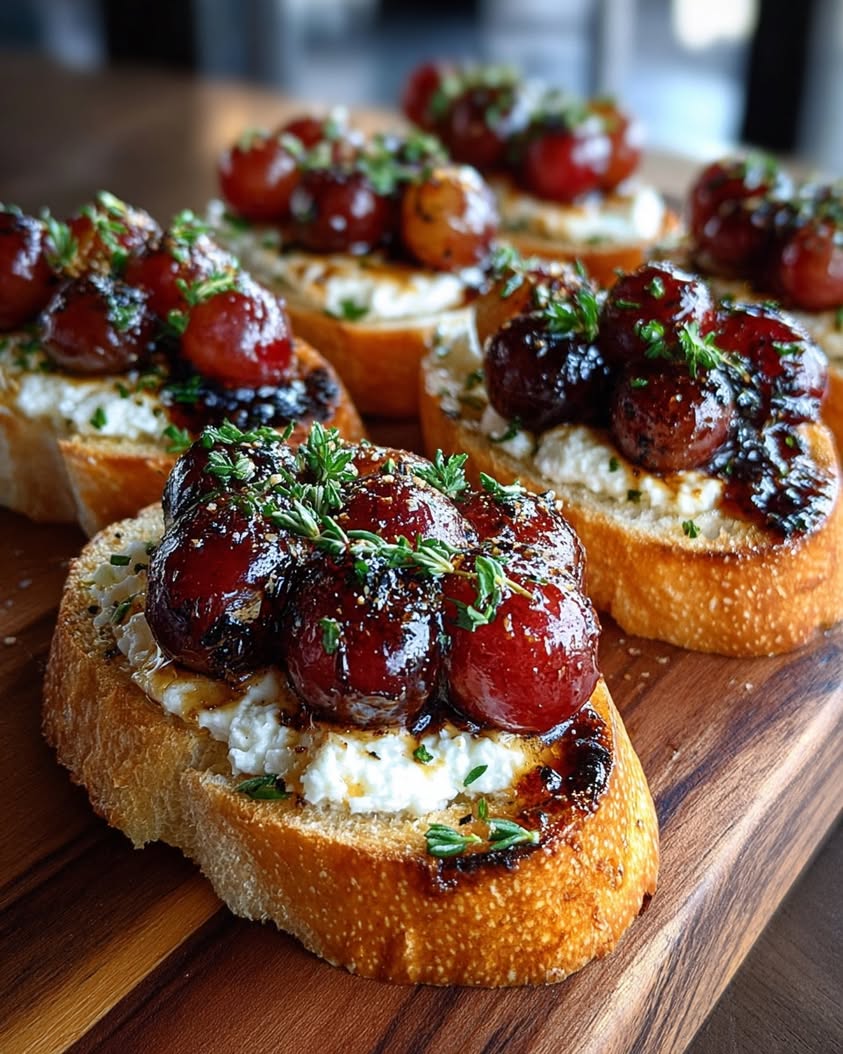
Caramelized Ricotta & Roasted Grape Crostini with Honey Thyme: An Elegant Appetizer
This Caramelized Ricotta & Roasted Grape Crostini with Honey Thyme recipe is a stunning appetizer that transforms simple ingredients into pure elegance. Moreover, it perfectly balances sweet, savory, and tangy notes on a crisp piece of toasted bread. Consequently, it is an ideal choice for holiday gatherings, dinner parties, or even a sophisticated snack. Ultimately, the combination of warm, jammy grapes and creamy, broiled ricotta creates a memorable bite.
Imagine the aroma of roasting grapes and fresh thyme filling your kitchen. This Caramelized Ricotta Crostini with Roasted Grapes and Honey Thyme delivers a beautiful contrast in textures and flavors. The grapes become deeply concentrated and sweet, while the ricotta develops a golden, slightly nutty crust. Finally, a drizzle of honey infused with thyme ties everything together with fragrant sweetness.
This dish is surprisingly simple to prepare, yet it looks and tastes like it came from a gourmet restaurant. Importantly, it uses minimal, high-quality ingredients, allowing each component to shine. Whether you are hosting a large crowd or enjoying a quiet evening, this recipe promises to impress. Let’s explore how to create this delightful Caramelized Ricotta & Roasted Grape Crostini with Honey Thyme.
Quick Recipe Highlights
- Flavor Profile: This Caramelized Ricotta Crostini with Roasted Grapes and Honey Thyme offers a sophisticated blend. You get the sweet burst of roasted grapes, the rich creaminess of ricotta, and the aromatic hint of thyme. Additionally, the honey adds a floral sweetness that complements the savory bread perfectly.
- Texture: The texture journey is exceptional. You experience the satisfying crunch of the toasted baguette first. Then, you encounter the creamy, warm ricotta and the soft, jammy interior of the roasted grapes. Ultimately, it is a delightful play of crispy, creamy, and juicy elements in every bite.
- Aroma: The key aromatic notes are deeply comforting. As the grapes roast, they release a sweet, wine-like fragrance. Meanwhile, the fresh thyme and honey create a herbaceous and floral scent. Finally, the broiled ricotta adds a subtle, toasty aroma that completes the sensory experience.
- Visual Appeal: The presentation is truly beautiful. The deep purple grapes pop against the white and golden ricotta. Furthermore, the green thyme leaves and golden honey drizzle add elegant finishing touches. Consequently, this appetizer looks as impressive as it tastes on any platter.
- Skill Level Needed: This recipe requires very basic cooking expertise. You only need to slice bread, toss grapes in oil, and use your broiler carefully. Therefore, it is perfect for beginner cooks who want to create something special without stress.
- Special Equipment: You need minimal tools for this Caramelized Ricotta & Roasted Grape Crostini. Essentially, a baking sheet, a small bowl, and a broiler-safe dish are required. A good chef’s knife for slicing and a pastry brush for the oil are helpful but not mandatory.
Recipe Overview
- Difficulty Level: We rate this Caramelized Ricotta Crostini with Roasted Grapes and Honey Thyme as easy. The steps are straightforward and involve no complex techniques. You simply roast, broil, and assemble. However, watching the broiler closely is the only step requiring a bit of attention to prevent burning.
- Category: This dish falls squarely into the appetizer or snack category. It is perfect for finger food at parties. Alternatively, you could serve a larger portion as a light lunch or brunch item alongside a simple salad.
- Cuisine: The culinary tradition is modern American with strong Italian and Mediterranean influences. Ricotta and crusty bread are Italian staples, while roasting grapes and using honey is a technique seen across Mediterranean cooking. Ultimately, it is a fusion of rustic, comforting flavors.
- Cost: The cost is relatively moderate and depends on ingredient quality. A baguette, ricotta, and grapes are typically affordable. Meanwhile, good honey and fresh thyme may cost a bit more but are used sparingly. You can easily create an impressive dish without a large grocery bill.
- Season: This recipe is excellent in autumn when grapes are at their peak. However, it works year-round because grapes are usually available. The warm, comforting elements make it especially suitable for fall and winter gatherings.
- Occasion: It is suitable for many occasions. Think holiday cocktail parties, wine tastings, bridal showers, or elegant dinners. It also makes a wonderful addition to a cheeseboard or a special weekend treat.
Why You’ll Love This Recipe
You will adore the taste and texture appeal of this Caramelized Ricotta & Roasted Grape Crostini. Each bite delivers a complex harmony of flavors that is both familiar and exciting. The sweet grapes contrast beautifully with the savory, creamy cheese. Furthermore, the crispy bread provides the perfect vehicle for these luxurious toppings, creating a truly satisfying mouthfeel.
The convenience and preparation benefits are significant. This entire appetizer comes together in about forty minutes with minimal active effort. You can roast the grapes and prepare the ricotta mixture simultaneously. Consequently, you maximize your time in the kitchen efficiently. Moreover, most components can be prepared slightly ahead of time, reducing last-minute stress before guests arrive.
There are notable nutritional advantages to this dish. Ricotta provides a good source of protein and calcium. Grapes offer antioxidants and vitamins. Using whole-grain baguette adds fiber. Compared to many heavy, fried appetizers, this option feels lighter and more wholesome. You can indulge in something delicious without feeling overly full or guilty.
The social and entertaining value is incredibly high. This Caramelized Ricotta Crostini with Roasted Grapes and Honey Thyme looks professionally crafted. It sparks conversation and shows your guests you care about the details. It pairs wonderfully with a variety of wines and cocktails. Therefore, it becomes the centerpiece of your appetizer spread and sets a sophisticated tone for the event.
Finally, the cost-effectiveness and accessibility are major wins. You do not need rare or expensive ingredients. Most items are available at any standard grocery store. The recipe is also easily scalable for larger or smaller groups. You can create a gourmet experience on a reasonable budget, which is always a fantastic benefit for any home cook.
Historical Background and Cultural Significance
The origin story of crostini is deeply rooted in Italian culinary tradition. Essentially, “crostini” means “little toasts” in Italian. Historically, they were a practical way to use stale bread, transforming it into a delicious base for various toppings. This practice of minimizing waste while maximizing flavor is a cornerstone of rustic Italian cooking. Our Caramelized Ricotta & Roasted Grape Crostini is a modern, elegant evolution of this humble beginning.
The cultural importance of such small plates, or “antipasti,” is central to Italian dining. They are meant to stimulate the appetite and encourage conversation before the main meal. Using local, seasonal ingredients like grapes and fresh herbs reflects the Mediterranean emphasis on simplicity and quality. This recipe honors that philosophy by highlighting a few components prepared perfectly.
The evolution of the recipe from simple garlic bread to elaborate toppings is fascinating. Initially, crostini might have been rubbed with garlic and drizzled with olive oil. Over time, creative cooks began adding cheeses, meats, and roasted vegetables. The combination of cheese and fruit, like ricotta and grape, is a classic pairing seen in many Italian regions. Our version with roasted grapes and honey-thyme is a contemporary twist on that sweet-savory tradition.
Regional variations of crostini are abundant throughout Italy. In Tuscany, you might find a chicken liver pâté version. In other areas, toppings could include beans, mushrooms, or tomatoes. The concept of caramelizing cheese under a broiler is also widespread. Therefore, while this specific Caramelized Ricotta Crostini with Roasted Grapes is a modern creation, it stands firmly on a rich foundation of Italian culinary history and innovation.
Ingredient Deep Dive
Let’s start with the ricotta cheese. Ricotta, meaning “recooked” in Italian, is a fresh whey cheese with a mild, slightly sweet flavor and a creamy, granular texture. It is a fantastic source of protein and calcium. For the best results in this Caramelized Ricotta & Roasted Grape Crostini, seek out whole-milk ricotta for maximum richness and creaminess. Always drain any excess liquid from the container to ensure your spread is thick and not watery. If you need a substitute, fresh goat cheese or a thick labneh would work beautifully.
Next, consider the red grapes. Grapes have been cultivated for thousands of years and are symbols of abundance in many cultures. They are rich in antioxidants like resveratrol and vitamin K. For roasting, choose seedless red grapes that are firm and plump. Avoid grapes that are wrinkled or soft. Roasting concentrates their natural sugars, creating a jammy, intense flavor. You can store fresh grapes unwashed in the refrigerator for up to a week. While red grapes are ideal, black grapes or even halved green grapes can be used for a different visual and flavor profile.
The baguette is your foundational canvas. A good, crusty baguette provides the essential crunch that contrasts the soft toppings. Opt for a day-old baguette if possible, as it toasts up even better and is less likely to become soggy. You can use a whole-grain or sourdough baguette for added flavor complexity. Slice it on a slight diagonal to create larger surfaces for your toppings. If you need a gluten-free version, a sturdy gluten-free baguette or even sliced sweet potato rounds can be excellent alternatives.
Finally, the honey and thyme combination is magical. Honey is one of the world’s oldest sweeteners, valued across civilizations. Thyme is an aromatic herb with a long history of culinary and medicinal use. Together, they create an infused drizzle that elevates the entire dish. Use a good-quality, flavorful honey like wildflower or orange blossom. Fresh thyme is non-negotiable for its bright, earthy aroma. You can store fresh thyme in the refrigerator wrapped in a damp paper towel. For a twist, try rosemary or oregano instead of thyme.
Common Mistakes to Avoid
- Using Soggy Bread: Toasting the bread inadequately is a common error. Consequently, the crostini becomes limp under the moist toppings. Always toast the bread until it is deeply golden and crisp throughout. This creates a moisture barrier.
- Overcrowding the Pan: When roasting the grapes, give them space. If the pan is too crowded, the grapes will steam instead of roast. They need room for the hot air to circulate and caramelize their skins properly.
- Broiling Without Watching: The broiler works very quickly. Walking away can lead to burnt ricotta in seconds. Always stay nearby and watch for the perfect golden-brown spots to appear on the cheese.
- Using Watery Ricotta: Not draining ricotta results in a runny spread. This can make the toast soggy and dilute the flavor. Always spoon the ricotta into a bowl and drain off any visible liquid before seasoning.
- Skipping the Oil Brush: Forgetting to brush the bread with olive oil before toasting is a missed opportunity. The oil helps it brown evenly and adds a rich, savory flavor that plain toast lacks.
- Roasting Grapes at Too Low a Temperature: Grapes need a high heat to properly blister and release their juices. Roasting them at too low a temperature will make them shrivel without achieving that jammy interior.
- Adding Honey Before Broiling: If you drizzle the honey before broiling the ricotta, it can burn and become bitter. Always add the honey-thyme drizzle as the final step after the crostini are assembled and warm.
- Using Dried Thyme in the Drizzle: The honey-thyme infusion relies on fresh thyme. Dried thyme will not impart the same bright, aromatic quality and can feel gritty in the honey.
Essential Techniques
Mastering the roasting of grapes is crucial. This technique transforms fresh fruit into a concentrated, jammy condiment. High heat is essential because it causes the grape skins to blister and the internal sugars to caramelize. Toss the grapes in just enough oil to coat them lightly, which promotes browning. The visual cue for success is seeing wrinkled, slightly burst skins and noticing sticky, caramelized juices on the baking sheet. The grapes should be soft but still hold their shape.
Properly broiling the ricotta is the next key technique. Broiling applies intense, direct heat from above to create a beautifully browned and textured surface on the creamy cheese. The importance lies in achieving flavor complexity through the Maillard reaction, which creates nutty, toasty notes. Spread the ricotta in an even layer in a broiler-safe dish. Watch it constantly, as it can go from perfect to burnt in moments. Success is marked by distinct golden-brown spots across the surface while the cheese beneath remains soft and warm.
The art of toasting crostini is foundational. This technique ensures your base is sturdy and flavorful. Brush each slice with olive oil to promote even browning and add richness. You can toast them in the oven or on a grill pan. The goal is a deep golden color and a completely crisp texture. A properly toasted crostini should snap when broken, not bend. This crispness is vital for supporting the toppings without becoming soggy immediately.
Pro Tips for Perfect Caramelized Ricotta & Roasted Grape Crostini
First, season your ricotta well before broiling. Do not just spread plain cheese. Mix in a pinch of salt, black pepper, and even a little lemon zest for brightness. This builds layers of flavor directly into the cheese itself.
Use two baking sheets for efficiency. Roast your grapes on one sheet pan while the bread toasts on another rack in the oven. This parallel cooking saves significant time and streamlines your process.
Let the roasted grapes cool slightly before assembling. They will be extremely hot and can make the ricotta too runny if placed immediately on top. A brief five-minute rest allows their juices to thicken slightly.
Warm your honey before infusing it with thyme. Gently heat the honey for about 15 seconds in the microwave. Consequently, it becomes less viscous and better absorbs the aromatic oils from the fresh thyme leaves.
If preparing ahead, store components separately. Keep the toasted bread in an airtight container, the roasted grapes chilled, and the ricotta mixture ready. Assemble and broil just before serving for the best texture.
For an extra flavor boost, rub the warm, toasted bread lightly with a cut garlic clove. This adds a subtle, aromatic garlic essence that pairs wonderfully with the sweet and creamy toppings.
Garnish with more than just the honey drizzle. A sprinkle of flaky sea salt, cracked black pepper, or even chopped toasted nuts adds final layers of texture and flavor that impress guests.
Variations and Adaptations
Consider regional variations for a different twist. For a French-inspired version, use goat cheese instead of ricotta and top with fig jam. An Italian variation might include adding a thin layer of prosciutto under the ricotta. A Spanish twist could feature manchego cheese and quince paste alongside the grapes.
Seasonal adaptations keep this recipe exciting all year. In summer, use roasted cherries or peaches instead of grapes. For fall, roasted figs or apples are magnificent. In winter, a pear and walnut combination works beautifully. Spring might call for roasted strawberries with a balsamic drizzle.
Dietary modifications are straightforward. For a gluten-free Caramelized Ricotta Crostini, use your favorite gluten-free bread or even polenta cakes. A dairy-free version can utilize a thick, creamy almond or cashew-based cheese spread. Vegan adaptations might include a caramelized tofu ricotta and maple syrup instead of honey.
Experiment with flavor variations by changing the infused honey. Try honey with rosemary, lavender, or even a pinch of chili flakes for heat. You could also mix chopped nuts or herbs directly into the ricotta before broiling for added texture and complexity.
Texture modifications can cater to different preferences. For a smoother spread, blend the ricotta until silky before broiling. For more crunch, sprinkle the topped crostini with chopped pistachios or walnuts after drizzling with honey.
Presentation alternatives offer creative freedom. Instead of individual crostini, create a large, shareable crostini “board” by toasting a whole baguette half, spreading it with ricotta, and piling roasted grapes on top. Let guests tear off pieces for a rustic, communal experience.
Serving and Presentation Guide
Plating techniques can elevate your appetizer instantly. Arrange the Caramelized Ricotta & Roasted Grape Crostini on a large wooden board or a sleek slate platter. Overlap them slightly in a cascading pattern for visual interest. Alternatively, place them in a circular pattern around a small bowl filled with extra honey for dipping.
Garnishing ideas extend beyond the thyme in the honey. After drizzling, add a few whole fresh thyme sprigs for a pop of green. A light dusting of powdered sugar or a sprinkle of edible flowers can make the dish feel extra special for a celebration.
Traditional accompaniments might include other antipasti items. Serve these crostini alongside a selection of olives, cured meats, and marinated vegetables. They also fit perfectly on a cheese board, complementing harder, aged cheeses and fresh fruit.
Modern serving suggestions include pairing them with a soup or salad. These crostini make an excellent starter for a butternut squash soup or a simple arugula salad. They can also be served as a passed hors d’oeuvre at a standing cocktail party.
Temperature considerations are key for the best experience. Serve the crostini warm, when the ricotta is creamy and the grapes are soft. If they sit too long, the bread may soften. You can briefly re-plate them under the broiler for a minute to re-crisp if needed.
Portion control tips are helpful for planning. This recipe yields about 16 pieces, which serves 8 people as an appetizer (2 pieces each). For a larger party where many appetizers are offered, one piece per person is sufficient. Simply adjust the recipe scaling accordingly.
Wine and Beverage Pairing
Wine pairings for this dish should balance sweetness and acidity. A slightly sweet white wine like a Riesling or Gewürztraminer complements the honey and grapes beautifully. Alternatively, a dry sparkling wine like Prosecco or Cava cuts through the richness of the cheese. For red wine lovers, a light-bodied, low-tannin red like a Pinot Noir works well without overpowering the delicate flavors.
Non-alcoholic alternatives can be just as sophisticated. A sparkling grape juice or apple cider mirrors the effervescence of champagne. A honey-ginger lemonade would pick up on the sweet and herbal notes. Iced tea infused with thyme or peach also makes a refreshing and thematic pairing.
Coffee and tea pairings work wonderfully if serving these crostini at a brunch. A medium-roast coffee with nutty notes complements the toasted elements. A pot of Earl Grey tea, with its bergamot citrus flavor, pairs elegantly with the honey and fruit. Avoid overly bitter or dark roasts that might clash with the sweetness.
Temperature considerations for beverages are standard. Serve white wines and sparkling options well-chilled. Red wines should be slightly cooler than room temperature. Non-alcoholic sparkling drinks should also be served cold to provide a refreshing contrast to the warm, rich crostini.
Serving suggestions include offering a variety. For a party, set up a small beverage station with a recommended white wine, a red option, and a signature non-alcoholic drink. This allows guests to choose their perfect pairing for the Caramelized Ricotta Crostini with Roasted Grapes and Honey Thyme.
Storage and Shelf Life
Storage methods depend on whether the crostini are assembled. Never store fully assembled crostini, as the bread will become soggy. Instead, store all components separately in airtight containers. The toasted bread can be kept at room temperature for 2 days. The roasted grapes can be refrigerated for up to 4 days.
Temperature requirements are specific for each component. The ricotta mixture (without broiling) should always be stored in the refrigerator. The honey-thyme infusion can be kept at room temperature in a sealed jar. Always bring the roasted grapes to room temperature or gently reheat them before assembling.
Container recommendations help maintain quality. Use a glass or plastic container for the roasted grapes and their juices. Store the toasted bread in a paper bag or a container with a loose lid to prevent trapping moisture, which causes sogginess.
Signs of spoilage to watch for include mold on the bread, an off smell from the ricotta, or fermented-smelling grapes. The honey is a natural preservative and is very stable. Discard any component that shows signs of spoilage and do not attempt to salvage it.
Reheating instructions are simple for the components. Reheat the roasted grapes gently in a microwave or in a pan over low heat. The ricotta is best broiled fresh. You can re-crisp the toasted bread in a 350°F oven for a few minutes if it has softened.
Freezing guidelines are limited. You can freeze the roasted grapes in a single layer on a tray before transferring to a bag. Thaw in the refrigerator. Do not freeze the assembled crostini or the ricotta mixture, as the textures will be compromised upon thawing.
Make Ahead Strategies
A prep timeline makes entertaining stress-free. The day before, you can wash and dry the grapes. You can also slice the baguette and make the honey-thyme infusion. On the day of, toast the bread and roast the grapes a few hours ahead. Finally, assemble and broil just before serving.
Storage between steps is straightforward. Keep the sliced, untoasted bread in a bag at room temperature. Store the washed grapes in the fridge. The honey infusion can sit at room temperature, allowing the thyme flavor to deepen over several hours.
Quality impact assessment is important. Pre-toasting the bread may cause it to lose a tiny bit of ultimate crispness, but it is still very good. Roasted grapes actually improve in flavor as they cool and the juices thicken. The ricotta should always be broiled fresh for the best texture.
Assembly tips for last-minute success include having all your components lined up and ready. Use a small offset spatula or butter knife for spreading the ricotta neatly. Keep a close eye on the broiler during the final step to achieve that perfect caramelization.
Reheating guidelines for components are useful. If the roasted grapes are cold from the fridge, warm them slightly so they do not cool down the warm ricotta. The bread can be briefly warmed in the oven if it was toasted earlier in the day.
Fresh element additions should be considered. Always use fresh thyme for the final garnish, even if you made the infused honey ahead. A final sprinkle of flaky salt added after broiling ensures a bright, salty contrast that does not dissolve into the dish.
Scaling Instructions
Halving the recipe is simple for smaller gatherings. Use half a baguette, one cup of grapes, and half a cup of ricotta. All other ingredients (oil, honey, thyme) can be halved proportionally. The cooking times will remain roughly the same, but watch carefully as smaller quantities may cook slightly faster.
Doubling or tripling the recipe for a crowd is easy. Use multiple baking sheets to roast the grapes in a single layer without overcrowding. You may need to broil the ricotta in batches unless you have a very large broiler-safe dish. Toast the bread in batches or use both oven racks, rotating the pans halfway through.
Equipment adjustments for larger batches are necessary. You will need more baking sheets and possibly a second broiler-safe dish. Consider using the convection setting on your oven if available, as it helps with even roasting and toasting when the oven is full.
Timing modifications may be needed when scaling up. It will take longer to slice more bread and prepare more grapes. However, the active cooking time does not increase linearly. Factor in extra time for batch cooking, especially under the broiler.
Storage considerations for large batches are similar. Store all components separately until the last possible moment. You can roast all the grapes and toast all the bread ahead of time. Only assemble and broil in manageable batches as needed to keep servings fresh and crisp.
Nutritional Deep Dive
The macro breakdown of this Caramelized Ricotta Crostini is balanced. Each serving provides carbohydrates from the bread and grapes for energy. The ricotta offers a good amount of protein and fat, which promotes satiety. The olive oil and cheese contribute healthy monounsaturated fats. This combination makes it a satisfying appetizer that is not overly heavy.
A micronutrient analysis reveals several benefits. Ricotta is an excellent source of calcium and phosphorus for bone health. Grapes provide vitamin K and antioxidants like resveratrol. Olive oil contains vitamin E. The thyme adds small amounts of vitamin C and iron. Together, they create a nutrient-dense bite.
Health benefits are linked to the individual ingredients. The antioxidants in grapes may support heart health. The calcium in ricotta is crucial for bone density. Olive oil is a cornerstone of the heart-healthy Mediterranean diet. Using whole ingredients minimizes processed additives.
Dietary considerations are important to note. This recipe contains dairy (ricotta) and gluten (baguette). It is vegetarian-friendly. The natural sugars come from fruit and honey. It is not suitable for vegan, gluten-free, or dairy-free diets without the modifications discussed earlier.
Portion analysis helps with mindful eating. One crostini is a satisfying flavor experience. Two pieces make a reasonable appetizer portion. Because the flavors are rich and complex, you are less likely to overindulge compared to blander, saltier snacks.
Weight management tips include being mindful of the bread and cheese portions if you are counting calories. You can use a lighter ricotta or slightly less oil on the bread. Remember, however, that the quality of ingredients and the satisfaction factor can prevent mindless snacking later.
Dietary Adaptations
For a gluten-free adaptation, simply replace the baguette with a sturdy gluten-free bread option. Slice it thickly to ensure it can hold the toppings. You can also use gluten-free crackers or even roasted slices of sweet potato or eggplant as a base.
A dairy-free version requires a ricotta alternative. Look for a high-quality, plain vegan ricotta made from almonds, cashews, or tofu. The broiling step will still work to create a caramelized top. Ensure the alternative has a thick, spreadable consistency for the best results.
Creating a vegan Caramelized Ricotta & Roasted Grape Crostini involves two swaps. Use a plant-based ricotta as mentioned above. Then, replace the honey with agave nectar, maple syrup, or vegan honey made from apple concentrate. All other ingredients are naturally vegan.
A low-carb or keto adaptation focuses on the base. Omit the bread entirely. Instead, spoon the caramelized ricotta and roasted grapes into small lettuce cups like butter lettuce or endive spears. The grapes should be used sparingly to manage sugar content.
For a Paleo version, avoid the grains and dairy. Use a plant-based cheese and a grain-free bread alternative made from almond or coconut flour. Ensure the honey is raw and unprocessed to fit within Paleo guidelines.
A Low-FODMAP adaptation is tricky due to the garlic (if used) and potentially the honey. Omit any garlic rub on the bread. Use maple syrup instead of honey. Use a lactose-free ricotta cheese, as most of the lactose is removed in its production. Limit the number of grapes per serving.
Troubleshooting Guide
If you encounter texture issues like soggy bread, the cause is usually assembling too early. The solution is to always assemble just before serving. If the bread has already softened, you can try re-crisping the assembled crostini under the broiler for a very brief time, watching closely to avoid burning the toppings.
Flavor balance problems might mean the dish tastes too sweet or too bland. If it’s too sweet, add a pinch of flaky sea salt on top to counterbalance. If it’s bland, you likely underseasoned the ricotta. Next time, be more generous with salt and pepper in the cheese mixture before broiling.
Temperature problems occur if components are too cold when served. Cold ricotta and grapes on warm toast creates a jarring experience. Ensure the roasted grapes are at least room temperature, and the ricotta should be warm from the broiler. Assemble quickly and serve immediately.
Equipment challenges often involve the broiler. If your broiler only has an “On” setting and no temperature control, place the ricotta dish on a lower rack to prevent burning. If you lack a broiler-safe dish, you can carefully spread the ricotta on the toasted bread and broil them already assembled, but watch even more closely.
Ingredient substitutions can sometimes go wrong. If your ricotta substitute is too runny, drain it further through cheesecloth. If your grape substitute (like cherries) is too watery after roasting, simmer the juices in a pan to reduce them into a thicker syrup before using.
Timing concerns happen when coordinating multiple components. The key is to start roasting the grapes first, as they take the longest. While they roast, prepare the ricotta and toast the bread. The grapes can rest while you broil the ricotta, ensuring everything finishes at roughly the same time.
Recipe Success Stories
Community feedback on this Caramelized Ricotta Crostini has been overwhelmingly positive. Many home cooks report that it has become their go-to impressive appetizer. They love how guests are always amazed by the combination of flavors. Several have mentioned that even picky eaters and children enjoy the sweet and creamy elements.
Variation successes from readers are inspiring. One reader used a blue cheese and walnut combination instead of ricotta and loved the bold flavor. Another made a fall version with roasted apples and cinnamon-infused honey that was a Thanksgiving hit. A third reader created a savory version with roasted tomatoes and basil.
Adaptation stories for dietary needs have been successful. A gluten-free follower used sourdough gluten-free bread with excellent results. A vegan reader used a cashew ricotta and maple syrup and said it was a hit at their dinner party. These stories show the recipe’s wonderful flexibility.
Reader suggestions have included brilliant ideas. One suggested adding a tiny drop of balsamic glaze over the honey drizzle for extra depth. Another recommended serving the ricotta in a bowl alongside the toast and grapes for a DIY crostini station at parties. These are fantastic ways to personalize the experience.
Photography tips from successful makers include using natural light and a dark background to make the colors of the grapes and honey pop. Getting a close-up shot that shows the creamy ricotta and a burst grape is always appealing. A sprinkle of thyme leaves adds a professional touch to food photos.
Frequently Asked Questions
Can I use a different cheese besides ricotta? Absolutely. Fresh goat cheese (chèvre) is a fantastic alternative with a tangier flavor. A thick cream cheese or even a soft burrata would work, though broiling times may vary slightly. The key is using a cheese that spreads easily and can develop a nice surface under the broiler.
What type of grapes work best? Seedless red grapes are ideal for their sweetness and beautiful color. You can use black grapes for a deeper flavor or even green grapes for a more tart contrast. Just ensure they are seedless to avoid an unpleasant crunch in your final dish.
Can I make this without a broiler? Yes, you have options. You can use a kitchen torch to caramelize the top of the ricotta. Alternatively, you can bake the ricotta in a very hot oven (500°F) on the top rack until bubbly and spotted with brown. The result will be similar but may take a few minutes longer.
How far in advance can I prep the components? You can toast the bread 1-2 days ahead and store it airtight. Roast the grapes up to 3 days ahead and keep them refrigerated. The honey-thyme infusion can be made a week ahead. Only assemble and broil the ricotta right before serving for perfect texture.
My ricotta didn’t brown under the broiler. Why? This usually means the ricotta was too wet or the broiler wasn’t hot enough. Ensure you drain excess liquid from the ricotta. Also, preheat your broiler for a full 5 minutes and place the dish close to the heating element, watching it carefully.
Is there a way to make this recipe sweeter or more savory? To make it sweeter, add a touch more honey or use a sweeter grape variety. To make it more savory, mix a grated hard cheese like Parmesan into the ricotta, add more black pepper, or top with a sprinkle of crispy pancetta after broiling.
Can I use frozen grapes? It’s not recommended. Frozen grapes will release too much water when roasting, leading to a steamed rather than caramelized result. They will also lose their structural integrity. Always use fresh, firm grapes for the best texture and flavor concentration.
What can I do with leftover roasted grapes? Leftover roasted grapes are incredibly versatile! Use them as a topping for oatmeal or yogurt, mix them into a salad with goat cheese, serve them alongside roasted chicken or pork, or simply enjoy them with a scoop of vanilla ice cream.
{“success”:true,”message”:”Recipe created successfully”,”post_id”:8001,”tasty_recipe_id”:8001,”shortcode”:” Print A sophisticated appetizer featuring creamy ricotta caramelized under the broiler, paired with sweet roasted grapes and a drizzle of honey thyme syrup on crispy crostini. You can customize the seasonings to taste.Caramelized Ricotta & Roasted Grape Crostini with Honey Thyme
Description
Ingredients
For the Crust:
Instructions
1. Prepare the Crust:
Notes

I’m Billy, a classically trained culinary school graduate from The Culinary Institute of America with over 12 years in the restaurant industry and over 19 years of cooking experience.