
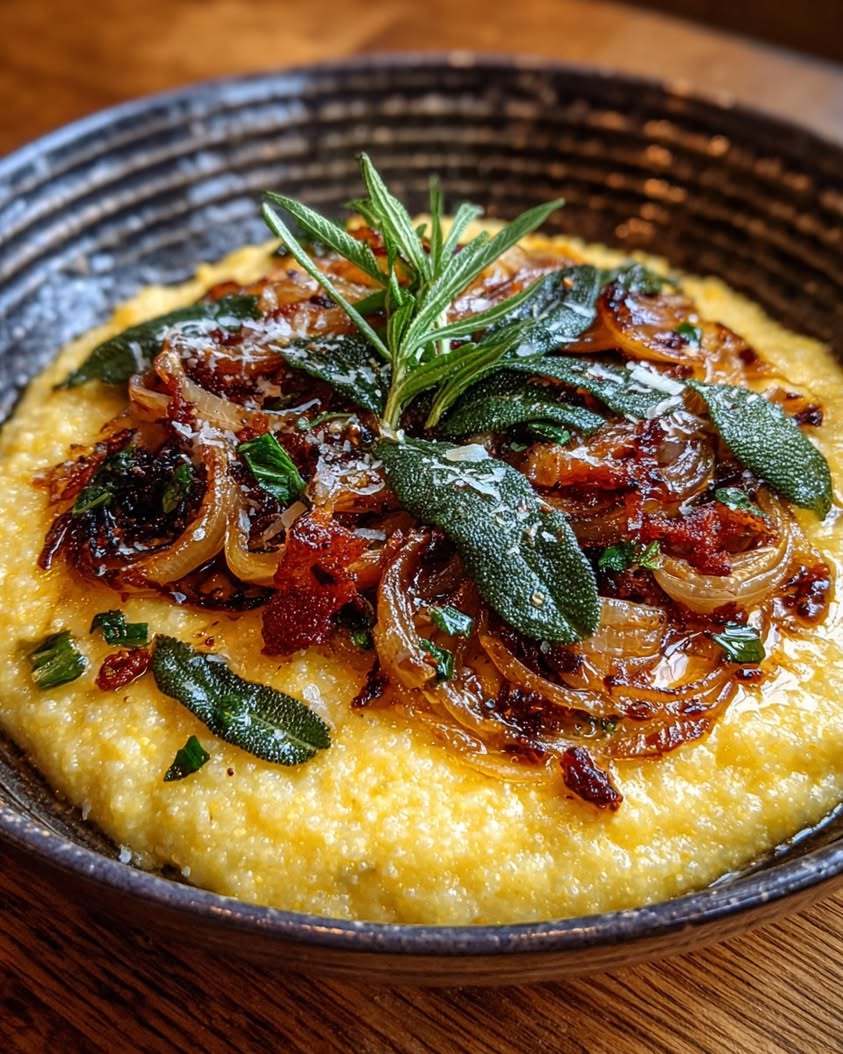
Brown Butter Polenta with Caramelized Onions and Crispy Sage: A Creamy, Savory Masterpiece
Brown Butter Polenta with Caramelized Onions and Crispy Sage is the ultimate comfort food with a sophisticated twist. This dish transforms humble ingredients into a luxurious meal that feels both rustic and elegant. The creamy polenta acts as a perfect canvas for the deep, sweet flavor of slowly cooked onions and the nutty, aromatic punch of brown butter. Each component builds on the last, creating a symphony of textures and tastes in every single bite.
Furthermore, this recipe is a fantastic introduction to essential cooking techniques. You will master the art of browning butter, a simple process that unlocks incredible flavor. Simultaneously, you will learn the patience required for perfect caramelization. The final result is a stunning dish that looks beautiful on the plate. It features golden polenta, deeply colored onions, and delicate, crispy sage leaves that add a final touch of flavor and crunch.
Ultimately, this Brown Butter Polenta with Caramelized Onions and Crispy Sage is incredibly versatile. Serve it as a stunning vegetarian main course for a dinner party. Alternatively, present it as a decadent side dish alongside roasted chicken or pork. The rich, complex flavors are sure to impress anyone at your table. This recipe proves that with a few key techniques, you can create restaurant-quality food right in your own kitchen.
Quick Recipe Highlights
- Flavor Profile: This dish offers a beautiful balance of savory, sweet, and nutty notes. The brown butter provides a deep, toasty foundation. Meanwhile, the caramelized onions contribute a natural sweetness that contrasts perfectly with the earthy, slightly peppery crisp sage.
- Texture: The texture journey is a key part of the experience. You get ultra-creamy and smooth polenta against the soft, jammy strands of onion. Finally, the delicate, shatteringly crisp sage leaves on top provide a wonderful contrasting crunch.
- Aroma: The cooking process fills your kitchen with an irresistible fragrance. First, you will smell the nutty, almost hazelnut-like scent of browning butter. Then, the sweet, savory aroma of onions slowly transforming will take over. Finally, the brief fry of sage leaves releases a warm, herbal perfume.
- Visual Appeal: This dish is a feast for the eyes with its warm, autumnal color palette. The polenta is a rich, creamy yellow. The onions become a deep, golden-brown. The sage fries into delicate, translucent green chips, creating a beautiful and appetizing presentation.
- Skill Level Needed: This recipe is perfect for an intermediate home cook. It requires managing multiple components and understanding visual cues like the color of brown butter and the doneness of caramelized onions. However, the steps are straightforward and clearly explained.
- Special Equipment: You need only a few standard kitchen tools. A heavy-bottomed saucepan is essential for even heat distribution when making polenta and browning butter. Additionally, a good non-stick or cast iron skillet is ideal for caramelizing the onions to perfection.
Recipe Overview
- Difficulty Level: We rate this Brown Butter Polenta with Caramelized Onions and Crispy Sage as medium difficulty. The individual techniques are simple, but success relies on timing and attention. For instance, browning butter can quickly go from nutty to burnt. Similarly, caramelizing onions properly requires patience and occasional stirring. Managing these elements together asks for a bit of kitchen coordination.
- Category: This dish is wonderfully flexible in category. It shines as a satisfying vegetarian main course, especially when paired with a bright side salad. Conversely, it makes an incredibly rich and impressive side dish for roasted meats like chicken, pork, or even a holiday turkey.
- Cuisine: The recipe draws inspiration from Northern Italian cuisine, where polenta is a staple. The technique of browning butter (beurre noisette) is classic French. Combining these elements with the universal appeal of caramelized onions creates a modern, fusion-style comfort food with deep roots in European cooking traditions.
- Cost: This is a very cost-effective dish to prepare. The main ingredients—cornmeal, onions, butter, and fresh sage—are all budget-friendly pantry staples or inexpensive fresh herbs. You can create a restaurant-quality meal for four people for a fraction of the cost of dining out.
- Season: While delicious year-round, this dish feels particularly perfect for fall and winter. The warm, rich, and comforting flavors pair beautifully with cooler weather. Furthermore, sage is often associated with autumn harvests, making this recipe ideal for Thanksgiving or cozy weekend dinners.
- Occasion: This polenta is versatile enough for many occasions. It is elegant enough for a dinner party with friends, comforting enough for a family Sunday supper, and impressive enough for a holiday meal. It is a reliable recipe that always feels special.
Why You’ll Love This Recipe
First and foremost, you will adore the incredible depth of flavor in this Brown Butter Polenta with Caramelized Onions and Crispy Sage. Browning butter transforms it into a liquid with deep, nutty, almost toffee-like notes that infuse the entire polenta. The caramelized onions, cooked low and slow, develop a complex sweetness that balances the richness. Finally, the crispy sage adds a fragrant, earthy crunch that ties every element together beautifully. Each bite is a perfect harmony of savory, sweet, and aromatic components that is deeply satisfying.
Additionally, this recipe teaches you foundational kitchen skills that you will use forever. Mastering the visual cue for perfectly browned butter—waiting for the milk solids to turn a toasty brown and smell nutty—is a game-changer for sauces, pastas, and baked goods. Learning the true, patient method for caramelizing onions, which cannot be rushed, will upgrade countless dishes from burgers to tarts. Consequently, you are not just making one meal; you are building your culinary confidence with techniques that have wide application.
From a nutritional perspective, this dish offers more than just empty calories. Polenta, made from whole-ground corn, provides complex carbohydrates for sustained energy. Onions are rich in antioxidants and prebiotic fibers that support gut health. Using real butter and fresh ingredients means you avoid processed additives and preservatives. While rich, it is a whole-food-based meal that feels nourishing as well as indulgent.
For entertaining, this Brown Butter Polenta with Caramelized Onions and Crispy Sage is an absolute winner. It is visually stunning with its layers of color and texture, guaranteeing compliments. Moreover, much of it can be prepared in advance. You can caramelize the onions ahead of time and re-warm them. You can even make the polenta base and keep it warm, finishing it with the brown butter just before serving. This makes hosting less stressful and more enjoyable.
Finally, the cost-effectiveness and accessibility of this dish are major benefits. You likely have butter, onions, and cornmeal in your pantry already. A small bunch of fresh sage is inexpensive and often available year-round. With these simple, humble ingredients, you can create a meal that tastes luxurious and expensive. This recipe proves that eating well does not require exotic items, just good technique and a little care.
Historical Background and Cultural Significance
Polenta’s story begins long before Italian nonnas stirred it in copper pots. Originally, it was a simple porridge made from various grains like spelt, barley, or chestnut flour by Roman legions and peasants. The introduction of maize, or corn, from the Americas in the 16th century revolutionized the dish. Northern Italian farmers, particularly in regions like Lombardy and Veneto, embraced cornmeal because it was hardy and yielded abundant crops. Consequently, polenta evolved from a coarse peasant food into a cultural cornerstone, served soft and creamy or allowed to set and then grilled or fried.
The cultural importance of polenta in Northern Italy cannot be overstated. For centuries, it was the literal daily bread for rural communities, often served on a wooden board in the center of the table. Families would eat directly from the board, symbolizing unity and sharing. While its status as a staple has diminished with modern diets, polenta remains a powerful symbol of tradition, resilience, and regional identity. It is celebrated in festivals and is a mandatory feature on trattoria menus, connecting people to their agricultural heritage.
The recipe for Brown Butter Polenta with Caramelized Onions and Crispy Sage represents a modern evolution of this ancient dish. It takes the humble peasant base and elevates it with refined French technique—browning butter. Caramelizing onions, while a global practice, adds a layer of universal sweetness and sophistication. The crispy sage garnish introduces an aromatic, herbal note that bridges the rustic and the refined. This fusion creates a contemporary classic that respects tradition while embracing modern palates that seek depth and complexity in comfort food.
Regional variations of polenta are endless, reflecting local ingredients. In Venice, you might find it served with soft-shell crab or squid ink. In the mountains, it is paired with hearty wild game stews or melted cheese like Fontina. Our version with caramelized onions and sage has a Tuscan or Umbrian feel, where sage is frequently used with butter and white beans. This adaptability is polenta’s greatest strength. It is a blank canvas that welcomes regional flavors, from Mediterranean seafood to Alpine cheeses, making it a truly versatile culinary tradition.
Ingredient Deep Dive
Let us start with polenta, which is simply coarsely ground yellow cornmeal. Historically, it sustained generations in Northern Italy. Nutritionally, it is a good source of complex carbohydrates and fiber, especially if you use a whole-grain or stone-ground variety. When selecting polenta, look for packages labeled specifically as “polenta” or coarse-ground cornmeal; avoid instant or quick-cooking varieties for this recipe, as they lack the texture and flavor development. Store it in an airtight container in a cool, dark pantry to prevent the natural oils in the corn from going rancid.
Unsalted butter is the star of the “brown butter” component. Using unsalted butter allows you to control the seasoning of the final dish precisely. The browning process cooks off the water content and toasts the milk solids, creating new flavor compounds that taste nutty and rich. For the best flavor, use a high-quality butter with a higher fat content. You can substitute with ghee for a different nutty flavor, but you will miss the visual cue of the browning milk solids. Always brown butter in a light-colored pan so you can see the color change clearly.
Yellow onions are ideal for caramelization because of their perfect balance of sugars and sulfur compounds. As they cook slowly, their natural sugars break down and undergo the Maillard reaction, creating that deep, savory-sweet flavor and brown color. They are a great source of vitamin C, B vitamins, and the antioxidant quercetin. Choose firm, heavy onions with dry, papery skins. Store them in a cool, dark, well-ventilated place—not in the refrigerator. Sweet onions like Vidalias can be used for a milder, sweeter result, but they contain more water and may take longer to caramelize properly.
Fresh sage is non-negotiable for the crispy garnish. Dried sage will not work here. This hardy herb has a warm, slightly peppery, and earthy flavor that becomes mellower and more fragrant when fried in the brown butter. It pairs classically with brown butter and onions. Look for bunches with perky, vibrant green leaves without any black spots. To store, wrap the stems in a damp paper towel and place the bundle in a plastic bag in the refrigerator. For a different herbal note, you could use fresh rosemary or thyme, but sage is traditional and provides the perfect flavor bridge.
Common Mistakes to Avoid
- Rushing the Onions: The most common error is trying to caramelize onions over too high heat. This leads to burning and bitter flavors instead of sweet, jammy softness. Always cook them low and slow, stirring occasionally, for a full 30-45 minutes for true caramelization.
- Burning the Brown Butter: Butter goes from browned to blackened in seconds. The moment you see golden brown milk solids at the bottom of the pan and smell a nutty aroma, immediately remove it from the heat and pour it into a cool bowl to stop the cooking.
- Using Instant Polenta: Instant or quick-cooking polenta often has a pre-cooked, gummy texture and lacks the hearty corn flavor of traditional coarse polenta. The 30-minute simmering time for traditional polenta is essential for developing its creamy texture and full flavor.
- Adding Cold Liquid to Polenta: Always whisk your polenta into simmering, not cold, liquid. Adding it to cold liquid causes it to clump up instantly, creating lumps that are nearly impossible to whisk out smoothly.
- Underseasoning the Polenta: Polenta acts like a blank canvas and needs generous seasoning. Season the cooking water well with salt. Do not forget to taste and adjust the seasoning again after adding the brown butter and cheese.
- Frying the Sage in Too Hot Butter: If the butter is too hot when you add the sage, the leaves will blacken and turn bitter in a flash. Use the residual heat of the butter after removing it from the heat source, or fry them very briefly over low heat.
- Not Using a Heavy-Bottomed Pot: A thin pot will distribute heat unevenly, causing the polenta to scorch on the bottom and cook inconsistently. A heavy-bottomed saucepan is crucial for gentle, even cooking.
- Skipping the Resting Time: After cooking, letting the polenta rest for 5 minutes off the heat allows it to fully absorb the liquid and thicken to the perfect creamy consistency. Serving it immediately can make it seem too thin.
Essential Techniques
Browning butter, or making beurre noisette, is a simple technique with transformative power. It is important because it creates a deep, nutty flavor base that infuses the entire polenta. To master it, cut your butter into even pieces and melt it in a light-colored saucepan over medium heat. Swirl the pan occasionally. It will foam, then the foam will subside. Watch closely for the milk solids at the bottom to turn a golden brown and smell intensely nutty. Immediately remove from heat and pour into a bowl to prevent burning. The common pitfall is distraction, which leads to burnt, bitter butter.
True caramelization is a chemical process, not just sautéing. It is important because it develops the natural sugars in onions, creating complex sweetness without added sugar. To master it, cook thinly sliced onions in butter or oil over medium-low heat. Stir occasionally, but not constantly, allowing them to slowly sweat and then brown. This process cannot be rushed; expect it to take 30-45 minutes. They are done when uniformly deep golden brown, soft, and sweet. The common pitfall is high heat, which chars the outside while the inside remains raw and pungent.
Cooking traditional polenta requires patience and constant attention initially. The technique is important to achieve a smooth, creamy texture without lumps. The key is the initial whisking: always stream the polenta into simmering liquid while whisking vigorously. Continue to whisk frequently for the first 5-10 minutes to prevent lumps from forming. After that, you can switch to occasional stirring with a wooden spoon as it thickens and bubbles. The visual cue for doneness is when the polenta pulls away from the sides of the pot as you stir and the grains are tender with no gritty texture.
Frying sage leaves perfectly requires precise heat control. The goal is to crisp the leaves while infusing the butter with their flavor, not to burn them. After browning your butter, remove the pan from heat. Using a slotted spoon, quickly dip each sage leaf in the hot butter—it should sizzle gently and become crisp in about 3-5 seconds. If the butter is not hot enough, the leaves will become soggy and oily; if it is too hot, they will blacken instantly. Success is marked by vibrant, crisp, flat leaves that retain a hint of green.
Pro Tips for Perfect Brown Butter Polenta with Caramelized Onions and Crispy Sage
Use a timer for the onions. Set it for 30 minutes as a minimum; good caramelization cannot be hurried, and a timer keeps you from guessing.
Brown the butter in a saucepan you can also use for the polenta. This saves dishes and ensures every last bit of the flavorful brown butter solids make it into your dish.
When adding the polenta to the boiling water, use a steady stream from one hand while whisking constantly with the other. This is the single best method to prevent dreaded lumps.
For ultra-creamy polenta, consider substituting half the water with whole milk or a splash of cream. This adds richness and a velvety mouthfeel that complements the brown butter beautifully.
Caramelize a large batch of onions and freeze portions. Having caramelized onions on hand lets you make this dish, or upgrade burgers and omelets, in a fraction of the time.
If your polenta thickens too much upon standing, whisk in a splash of warm water, milk, or broth to bring it back to a creamy consistency right before serving.
Grate your Parmesan cheese finely right before using it. Pre-grated cheese contains anti-caking agents that can make your polenta grainy and less smooth.
For a dramatic presentation, serve the polenta family-style in a wide, shallow bowl with the caramelized onions artfully swirled on top and the crispy sage leaves scattered over everything.
Variations and Adaptations
For regional variations, look to Italy’s diverse polenta traditions. Stir in Taleggio or Gorgonzola cheese at the end for a rich, funky Northern Italian twist. For a coastal version, top the finished dish with sautéed shrimp or scallops and a squeeze of lemon. A hearty Alpine adaptation includes folding in diced, crisped pancetta or speck along with the caramelized onions.
Seasonal adaptations are easy and rewarding. In spring, top with fresh peas, asparagus tips, and lemon zest. For summer, add a fresh tomato bruschetta topping or grilled corn kernels. In deep winter, incorporate roasted mushrooms or shredded braised short ribs for the ultimate comfort food. The base recipe is a perfect canvas for the best produce of any season.
Dietary modifications are straightforward. For a vegan version, use a high-quality vegan butter to brown and olive oil to fry the sage. Substitute nutritional yeast or a vegan Parmesan for the dairy cheese. To make it gluten-free, ensure your polenta/cornmeal is certified gluten-free, as cross-contamination can sometimes occur in processing facilities—this recipe is naturally gluten-free otherwise.
Flavor variations can personalize the dish. Add a pinch of red pepper flakes to the onions as they cook for a subtle heat. Infuse the browning butter with a few sprigs of thyme or rosemary before straining. Stir a tablespoon of white miso paste into the finished polenta for an extra layer of savory umami depth that complements the brown butter perfectly.
Texture modifications can cater to different preferences. For a firmer polenta, reduce the liquid by 1/2 cup and spread the cooked polenta into an oiled dish to set. Then, slice it and pan-fry the slices for a crispy exterior. For an even creamier, almost soufflé-like texture, whip in an extra tablespoon of cold butter at the very end off the heat.
Presentation alternatives can elevate any meal. For individual servings, plate the polenta in shallow bowls and create a well in the center for the onions. For a party appetizer, spread set, cooled polenta on a sheet pan, cut into squares, top with onion jam and a sage leaf, and bake until warm. The possibilities are nearly endless.
Serving and Presentation Guide
Plating techniques matter for this visually appealing dish. For individual servings, use a warm, shallow bowl. Spoon a generous mound of polenta slightly off-center. Using the back of a spoon, make a shallow swirl or well in the polenta. Nestle a large spoonful of caramelized onions into this well, allowing them to spill over the edges artfully. This creates height and visual interest on the plate.
Garnishing is the final, crucial step. Place the crispy sage leaves strategically around the onions and polenta. You can leave them whole for a rustic look or crumble a few over the top for distributed flavor. A final, light grating of fresh Parmesan cheese over everything adds a salty finish and a touch of white color. A tiny drizzle of the sage-infused brown butter left in the pan can be the final glossy touch.
Traditional accompaniments keep the meal Italian-inspired. A simple arugula salad dressed with lemon juice and olive oil provides a peppery, acidic contrast that cuts the richness. Roasted vegetables like Brussels sprouts or carrots are excellent on the side. For a non-vegetarian meal, simple roasted chicken thighs, a pork chop, or seared sausages pair wonderfully without competing with the polenta’s complex flavors.
Modern serving suggestions might include a soft-poached or fried egg on top for a luxurious brunch dish. For a lighter meal, serve a smaller portion as a starter before a simple grilled fish course. You can also deconstruct it into an appetizer by making polenta crostini: spread fried polenta rounds with caramelized onion jam and top with a crispy sage leaf.
Temperature considerations are key. Polenta is best served piping hot, as it thickens significantly as it cools. Warm your serving bowls beforehand. The caramelized onions should also be hot or very warm when added. The crispy sage, however, is best added at the very last second to preserve its delicate texture. Serve immediately after assembling.
Portion control tips are helpful given the richness of the dish. As a main course, plan for about 1 to 1.5 cups of finished polenta per person. As a side dish, 3/4 cup is sufficient. Remember, this is hearty and satisfying; a little goes a long way. Guests can always have more, but starting with a moderately sized portion ensures the dish is enjoyed without feeling overly heavy.
Wine and Beverage Pairing
Wine pairings should complement the rich, nutty, and slightly sweet elements of the dish. A medium-bodied white wine with good acidity is ideal. A Northern Italian white like a Friulano or a Pinot Grigio from Alto Adige works beautifully, cutting through the butteriness. For red wine lovers, choose a lighter, low-tannin red like a Barbera or a Beaujolais Villages. Their bright acidity and red fruit notes contrast nicely with the savory onions without overwhelming the polenta.
Non-alcoholic alternatives can be just as sophisticated. A sparkling water with a twist of lemon or a dash of bitters cleanses the palate between bites. For something more complex, try a chilled, non-alcoholic ginger beer; its spice and sweetness mirror the warm flavors in the dish. An herbal iced tea, perhaps infused with sage or thyme, can create a harmonious flavor bridge with the crispy sage garnish.
While not a classic coffee dish, certain coffees or teas could work if serving this for a late brunch or lunch. A medium-roast coffee with nutty or caramel notes would echo the flavors in the polenta and onions. For tea, a smoky Lapsang Souchong or a robust English Breakfast tea could stand up to the dish’s richness. Generally, however, reserve these beverages for after the meal.
Temperature considerations for beverages are standard but important. Serve white wines well-chilled, around 45-50°F. Light reds should be slightly cooler than room temperature, about 55-60°F. Non-alcoholic sparkling drinks should be ice-cold. The contrast between a cool, crisp beverage and the warm, creamy polenta is part of the enjoyable dining experience.
Serving suggestions for beverages are simple. Always offer water on the table. If serving wine, pour a modest initial taste for guests to try with their first bite before filling the glass. For non-alcoholic options, present them in nice glassware to make the meal feel special. The right drink elevates the entire meal from simple supper to a memorable dining event.
Storage and Shelf Life
Storage methods depend on the component. Leftover assembled polenta with onions will keep in an airtight container in the refrigerator for 3-4 days. However, for best quality, store the polenta and caramelized onions separately. The crispy sage leaves do not store well once fried; they lose their crispness. It is best to make only what you need for immediate serving and fry fresh sage for leftovers.
Temperature requirements are straightforward: always refrigerate leftovers promptly. Do not leave the creamy polenta at room temperature for more than two hours. When reheating, ensure the internal temperature reaches 165°F to guarantee food safety. You can reheat single portions in the microwave, but stovetop reheating with a splash of liquid yields a better texture.
Container recommendations are important for maintaining quality. Use shallow, airtight containers to allow the polenta to cool quickly and evenly. Glass containers are ideal as they do not absorb odors and allow you to see the contents. For the caramelized onions, a small jar or container with a tight-sealing lid works perfectly.
Signs of spoilage include an off or sour smell, visible mold (often fuzzy spots in white, green, or blue), or a significant change in texture, such as the polenta becoming excessively watery or slimy. If you see any of these signs, discard the food immediately. When in doubt, remember the adage: when in doubt, throw it out.
Reheating instructions are crucial for restoring texture. For polenta, place it in a saucepan over low heat. Add a splash of water, milk, or broth and whisk constantly until smooth and heated through. The onions can be reheated gently in a small skillet or in the microwave. The polenta will thicken considerably when cold, so adding liquid during reheating is non-negotiable for a creamy result.
Freezing guidelines are possible but with caveats. Polenta can be frozen for up to 2 months, though the texture may become slightly grainy upon thawing. Portion it into freezer-safe containers, leaving headspace for expansion. Caramelized onions freeze exceptionally well for up to 6 months. Thaw both components overnight in the refrigerator before reheating. Note that dairy-based polenta may separate slightly when frozen and thawed; vigorous whisking during reheating can help re-emulsify it.
Make Ahead Strategies
A prep timeline can turn this into a weeknight-friendly meal. You can caramelize the onions up to 5 days in advance. Simply store them cooled in an airtight container in the fridge. The polenta base (without the brown butter and cheese) can be made 2 days ahead. Press plastic wrap directly onto the surface to prevent a skin from forming and refrigerate.
Storage between steps is simple. Keep the pre-cooked onions and plain polenta in separate containers in the refrigerator. When ready to serve, reheat the onions gently in a skillet. Reheat the polenta in a saucepan with a little extra liquid, then proceed with stirring in the freshly made brown butter and cheese. This ensures the flavors are vibrant.
Quality impact assessment is important. Making the onions ahead actually improves their flavor, as the sweetness deepens. The plain polenta will thicken significantly when chilled, but reheating with liquid restores its creaminess. The only elements that must be done fresh are browning the butter, frying the sage, and combining the final dish. This preserves the nutty aroma of the butter and the crisp texture of the sage.
Assembly tips for a make-ahead meal are straightforward. Have all your components ready: hot, reheated polenta; hot, reheated onions; freshly browned butter with fried sage removed; and grated cheese. Stir the brown butter and cheese into the polenta until creamy. Divide among bowls, top with onions, and garnish with the crispy sage. The entire assembly from this point takes less than 5 minutes.
Reheating guidelines for pre-made components require attention. Reheat polenta slowly over low heat, adding liquid a tablespoon at a time while whisking. Do not boil it vigorously, as it can spatter. Reheat onions in a covered skillet over low heat with a teaspoon of water to prevent drying out. Gentle, patient reheating is the key to preserving texture and flavor.
Fresh element additions are what make the pre-made dish sing. Always fry the sage leaves fresh in the brown butter just before serving. Also, grate the Parmesan cheese fresh rather than using pre-grated. These last-minute touches provide the peak aroma, texture, and flavor that make the dish feel freshly made, not leftover.
Scaling Instructions
Halving the recipe is simple for a smaller meal. Use a smaller saucepan to ensure the polenta still has enough depth to cook evenly. Halve all ingredients precisely. The caramelized onion step may take slightly less time since there is less volume in the pan. The cooking techniques and times for browning butter and frying sage remain exactly the same, as they are more about visual cues than volume.
Doubling or tripling the recipe for a crowd requires some adjustments. Use a large, wide Dutch oven for the polenta to allow for evaporation and even cooking; you may need to add a bit more liquid if it thickens too quickly. For the onions, cook them in batches or in two separate skillets to avoid steaming—overcrowding prevents proper caramelization. Brown the butter in batches as well; browning too much butter at once can lead to uneven cooking and burning.
Equipment adjustments are necessary when scaling. A larger whisk is helpful for big batches of polenta. For a doubled onion recipe, a very large skillet or a roasting pan in a low oven can work for caramelization. Ensure your pots and pans are proportional to the ingredient volume to maintain control over the cooking process.
Timing modifications are minimal when scaling up. The polenta may take a few minutes longer to reach full creaminess due to the larger volume. The caramelization time for onions remains largely the same per batch. The key is to manage your time by starting the onions first, as they take the longest. Then, begin the polenta about 20 minutes before the onions are finished.
Storage considerations for large batches are practical. If you have significant leftovers from a scaled-up recipe, consider dividing them into meal-sized portions before refrigerating or freezing. This makes reheating for future quick meals much easier. Label containers with the date so you can use the oldest portions first.
Nutritional Deep Dive
A macro breakdown for a serving reveals a balanced profile. The polenta provides complex carbohydrates for energy. The butter and cheese contribute healthy fats and a modest amount of saturated fat, which are important for nutrient absorption and satiety. The onions add a small amount of natural sugar and fiber. This dish is not low-calorie, but it is made from whole, recognizable ingredients that provide sustained energy rather than a quick sugar spike.
The micronutrient analysis shows several benefits. Cornmeal offers B vitamins, essential for energy metabolism. Onions are rich in vitamin C, B6, and the antioxidant quercetin, which has anti-inflammatory properties. Sage provides vitamin K, important for bone health. Parmesan cheese adds calcium and phosphorus. Together, they create a dish that offers more than just empty calories, contributing to overall nutrient intake.
Health benefits stem from the whole-food ingredients. The fiber from the cornmeal and onions supports digestive health and helps regulate blood sugar. The fats from butter and cheese aid in the absorption of fat-soluble vitamins. The antioxidants in onions and sage combat oxidative stress. While rich, this meal can be part of a balanced diet when paired with lighter sides like a green salad.
Dietary considerations are important to note. This dish is naturally gluten-free, making it suitable for those with celiac disease or gluten sensitivity (ensure your cornmeal is certified GF). It is vegetarian but not vegan due to the dairy. It is not suitable for a low-carb or keto diet due to the high carbohydrate content from the polenta. Those with lactose intolerance may tolerate the aged Parmesan but should be cautious with the butter.
Portion analysis is key for enjoyment without overindulgence. A standard serving as a main course is hearty and satisfying, often eliminating the need for a heavy dessert. As a side dish, it complements a protein and vegetable, creating a rounded meal. Understanding that this is a dense, flavorful dish helps with mindful eating—savoring each bite is more rewarding than consuming a large volume quickly.
Weight management tips involve mindful pairing. If watching your weight, enjoy a smaller portion of this rich polenta as a side to a large portion of lean protein (like grilled chicken) and non-starchy vegetables. The powerful flavors mean a little goes a long way in terms of satisfaction. You can also slightly reduce the butter and cheese amounts without sacrificing too much flavor, though the brown butter technique is central to the dish’s character.
Dietary Adaptations
For a gluten-free version, this recipe is already a great candidate. The only critical step is to verify that your polenta or cornmeal is labeled certified gluten-free, as cross-contamination can occur in facilities that also process wheat. All other ingredients—butter, onions, sage, Parmesan—are naturally gluten-free. This makes Brown Butter Polenta with Caramelized Onions and Crispy Sage an excellent, safe choice for gluten-free gatherings.
A dairy-free adaptation requires substitutions. Use a high-quality vegan butter stick to make the brown butter; many brands brown similarly to dairy butter. For the cheese, omit it or use a vegan Parmesan alternative. To fry the sage, you can use a neutral oil like avocado oil instead of the dairy butter. The result will be different but still delicious, with the caramelized onions providing the primary sweetness and depth.
Creating a vegan version combines the dairy-free changes with one more consideration. Use vegan butter and oil as described above. For the cheesy element, stir in 2-3 tablespoons of nutritional yeast along with the brown vegan butter. This adds a cheesy, umami flavor. Ensure any store-bought vegan cheese you use melts well. The caramelized onions and crispy sage remain the flavor stars.
For low-carb or keto diets, this recipe in its traditional form is not suitable due to the high carbohydrate content of cornmeal. A radical adaptation would involve replacing the polenta with a base of mashed cauliflower or a keto “polenta” made from almond flour or ground lupin. You would still{“success”:true,”message”:”Recipe created successfully”,”post_id”:8004,”tasty_recipe_id”:8004,”shortcode”:” Print
Brown Butter Polenta with Caramelized Onions & Crispy Sage
Description
A creamy, savory polenta enriched with nutty brown butter, topped with sweet caramelized onions and crispy fried sage for a comforting, elegant dish.
Ingredients
For the Crust:
- 1 cup coarse polenta (cornmeal)
- 4 cups water or vegetable broth
- 1 teaspoon salt
- 1/2 cup unsalted butter
- 2 large yellow onions, thinly sliced
- 1 tablespoon olive oil
- 1 tablespoon brown sugar (optional)
- 1/4 cup fresh sage leaves
- 1/2 cup grated Parmesan cheese
- Salt and black pepper to taste
Instructions
1. Prepare the Crust:
- In a medium pot, bring water or broth to a boil. Gradually whisk in polenta and salt. Reduce heat to low, cover, and simmer for 25-30 minutes, stirring occasionally, until thick and creamy.
- While polenta cooks, heat olive oil in a large skillet over medium heat. Add onions and cook, stirring occasionally, for 20-25 minutes until golden brown and caramelized. Stir in brown sugar if using, and season with salt and pepper.
- In a small saucepan, melt butter over medium heat. Cook until butter turns golden brown and smells nutty, about 3-5 minutes. Remove from heat, add sage leaves, and fry until crispy, about 30 seconds. Set aside.
- Stir Parmesan cheese into the cooked polenta until melted and combined. Season with additional salt and pepper if needed.
- Serve polenta in bowls, topped with caramelized onions, crispy sage leaves, and a drizzle of the brown butter.
Notes
You can customize the seasonings to taste.

I’m Billy, a classically trained culinary school graduate from The Culinary Institute of America with over 12 years in the restaurant industry and over 19 years of cooking experience.