
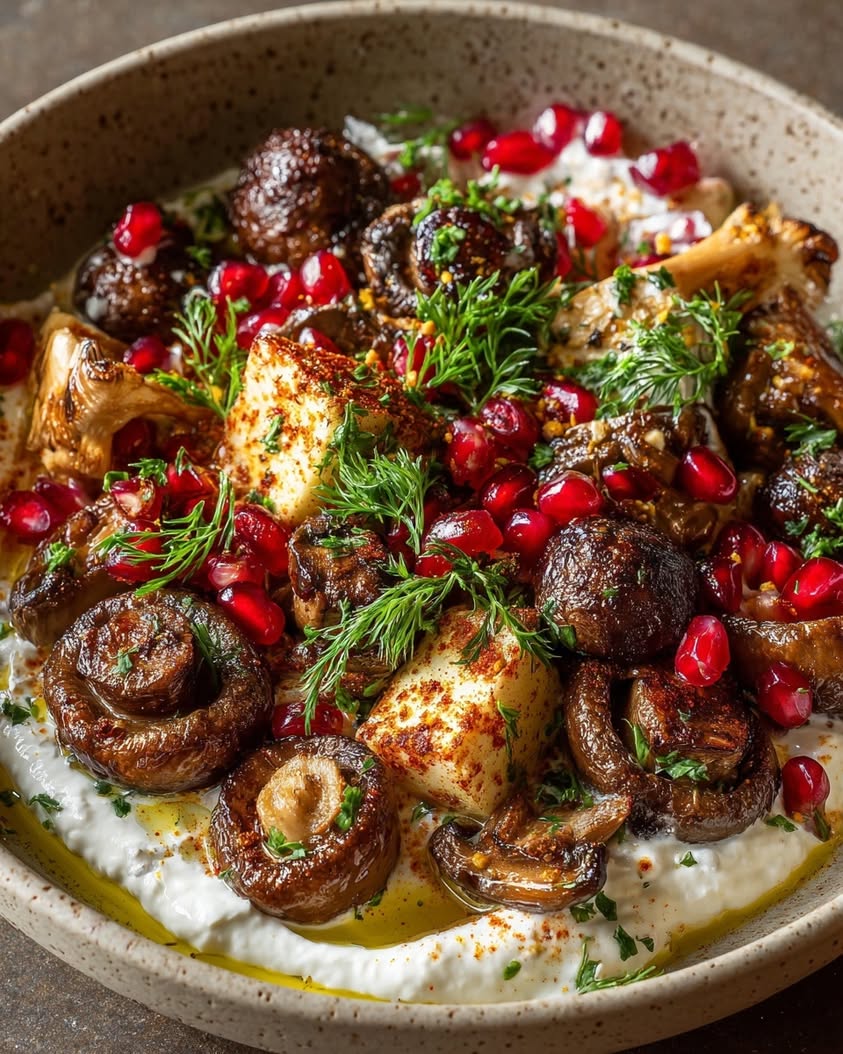
Roasted Mushroom Medley with Garlic Yogurt and Pomegranate Oil: An Elegant, Earthy Feast
Imagine a dish that captures the deep, savory essence of the forest floor and presents it with stunning, restaurant-worthy elegance. This Roasted Mushroom Medley with Garlic Yogurt and Pomegranate Oil does exactly that. Moreover, it transforms humble mushrooms into a spectacular centerpiece. The recipe combines simple roasting techniques with vibrant, contrasting toppings for a result that feels both rustic and refined. Ultimately, it is a celebration of texture and flavor that will impress any dinner guest.
The magic of this dish lies in its beautiful balance. First, earthy mushrooms roast until they become caramelized and meaty. Then, they rest on a cool, tangy bed of garlic-infused yogurt. Finally, a drizzle of jewel-toned pomegranate oil and a sprinkle of fresh herbs add bursts of sweetness and color. Consequently, each bite offers a symphony of sensations: warm and cool, savory and tangy, earthy and bright. This Roasted Mushroom Medley with Garlic Yogurt and Pomegranate Oil is not just a side dish; it is a memorable culinary experience.
Furthermore, this recipe is incredibly versatile. You can serve it as a stunning appetizer for a dinner party, a luxurious side for a holiday meal, or even as a hearty vegetarian main course. The process is straightforward, but the presentation is undeniably sophisticated. Therefore, whether you are a seasoned cook or a kitchen novice, you can achieve spectacular results. Let us explore how to create this beautiful, flavor-packed dish that highlights the best of seasonal, plant-based cooking.
Quick Recipe Highlights
- Flavor Profile: This dish delivers a powerful umami punch from the roasted mushrooms, beautifully cut by the tangy garlic yogurt. The pomegranate oil adds a final, surprising note of fruity sweetness that ties everything together.
- Texture: Expect meaty, tender mushrooms with slightly crisp edges, contrasted against the luxuriously smooth and creamy yogurt sauce. The optional pomegranate arils provide a delightful, juicy pop.
- Aroma: As the mushrooms roast, your kitchen will fill with an irresistible, savory scent. The garlic in the yogurt adds a pungent kick, while fresh herbs like thyme or parsley contribute a final, fragrant lift.
- Visual Appeal: The presentation is a feast for the eyes. Creamy white yogurt acts as a canvas for the golden-brown mushrooms, all adorned with the deep red drizzle of pomegranate oil and vibrant green herbs.
- Skill Level Needed: This is a beginner-friendly recipe. The core skills are simple vegetable chopping, mixing a sauce, and using your oven. No advanced techniques are required for success.
- Special Equipment: You only need a good baking sheet, a mixing bowl, and a small whisk or fork. A mandoline can help slice mushrooms evenly but is not essential.
Recipe Overview
- Difficulty Level: We rate this recipe as easy. The steps are sequential and simple: prepare the mushrooms, mix the yogurt sauce, roast, and assemble. There is no fussy timing or complex techniques. Even a first-time cook can follow the clear instructions and achieve a beautiful, tasty result without stress.
- Category: This dish fits perfectly into multiple categories. It shines as a spectacular vegetarian main course, a show-stopping side dish for roasted meats, or an elegant appetizer when served with crusty bread for scooping. Its flexibility is a key part of its appeal.
- Cuisine: While not tied to one specific tradition, the recipe draws inspiration from Eastern Mediterranean and Middle Eastern flavors. The use of yogurt, pomegranate, and herbs like thyme is common in those regions. It is a modern, fusion-style dish that celebrates global pantry staples.
- Cost: This is a cost-effective recipe, especially if you use a mix of common and exotic mushrooms. Cremini and shiitake are often affordable, while morels or chanterelles increase the price. The yogurt, oil, and herbs are typically inexpensive, making the overall dish budget-friendly for its impressive impact.
- Season: This Roasted Mushroom Medley with Garlic Yogurt and Pomegranate Oil is truly an all-season star. However, it feels particularly fitting in fall and winter when mushrooms are at their peak and we crave warm, roasted vegetables. Conversely, it also makes a fantastic light summer meal when served at room temperature.
- Occasion: It is ideal for dinner parties, holiday gatherings like Thanksgiving or Christmas, or a special date night at home. The stunning presentation makes it feel celebratory, while the easy preparation means the cook can enjoy the party too.
Why You’ll Love This Recipe
First and foremost, the taste and texture combination is utterly addictive. The roasting process concentrates the mushrooms’ natural sugars, creating a deep, caramelized flavor that meat-lovers and vegetarians alike will adore. This savory base is perfectly offset by the bright, tangy garlic yogurt. Then, the pomegranate oil adds a final, elegant layer of flavor that makes each bite exciting. You will find yourself going back for just one more taste, again and again, because the balance is so masterful.
From a practical standpoint, the convenience is a major win. The active prep time is minimal—mostly just cleaning and slicing mushrooms. While the oven does the work, you can prepare the simple yogurt sauce and set the table. Therefore, you are not stuck over a hot stove. This makes the recipe perfect for busy weeknights when you want something special without the hassle, or for entertaining when you need to be a host, not a short-order cook.
Nutritionally, this dish is a powerhouse. Mushrooms are a fantastic source of B vitamins, selenium, and antioxidants. They also provide a satisfying, meaty texture without the saturated fat. The Greek yogurt adds a hefty dose of protein and probiotics for gut health. Additionally, pomegranate oil is rich in beneficial fatty acids. Together, they create a meal that is as nourishing as it is delicious, supporting your health without sacrificing an ounce of flavor.
For social gatherings, this recipe is a true crowd-pleaser. Its stunning visual appeal immediately elevates any table setting. It caters seamlessly to vegetarians, vegans (with a yogurt swap), and those on gluten-free diets, reducing the need for multiple separate dishes. Guests will be impressed by the sophisticated presentation and complex flavors, often assuming you spent far more time in the kitchen than you actually did. It is the kind of dish that sparks conversation and requests for the recipe.
Finally, it is remarkably cost-effective and accessible. Mushrooms, yogurt, and basic herbs are available year-round in any supermarket. Pomegranate oil or molasses can be found in the international aisle or online. You can adapt the mushroom mix based on what is on sale or in season. Consequently, you can create a restaurant-quality experience at a fraction of the price. This Roasted Mushroom Medley with Garlic Yogurt and Pomegranate Oil proves that extraordinary food does not require exotic, expensive ingredients—just a little creativity.
Historical Background and Cultural Significance
Mushrooms have held a place of mystery and sustenance in human diets for millennia. Foraged from forests across Europe and Asia, they were often considered “the meat of the poor” but also featured in royal feasts. The technique of roasting mushrooms over fire is ancient, a simple method to concentrate their earthy flavors. Meanwhile, the combination of yogurt with garlic has roots stretching from the Balkans through the Middle East and into South Asia, where raita and tzatziki are staples. This recipe is a modern fusion, marrying these timeless, widespread culinary traditions into a single, cohesive plate.
Culturally, yogurt sauces represent hospitality and cooling balance in many cuisines. In hot climates, yogurt provided a way to preserve milk and create a refreshing counterpoint to spicy or rich foods. The addition of garlic not only added flavor but was believed to have medicinal properties. Pomegranate, a fruit deeply symbolic in Persian, Greek, and Armenian cultures, often represents abundance, fertility, and beauty. Using its oil as a finishing drizzle is a contemporary twist on sprinkling the fresh arils over dishes, a practice common from Turkey to India.
The evolution of this specific recipe reflects broader food trends of the 21st century. As plant-based eating gained popularity, chefs sought to elevate vegetables to center-plate status. The concept of a “medley” celebrates biodiversity and seasonal eating. Furthermore, the minimalist, component-based plating—swipe of sauce, pile of vegetables, artful drizzle—is a hallmark of modern restaurant presentation that home cooks can now easily replicate. This dish is a product of our current culinary moment: health-conscious, visually driven, and globally inspired.
Regional variations of this concept abound. In Italy, you might find roasted porcini with ricotta and a balsamic reduction. In Japan, mushrooms might be grilled and served with a ponzu dipping sauce. The Greek version would likely feature oregano and a thicker tzatziki. Our version with pomegranate oil leans into Levantine flavors. This adaptability is a testament to the mushroom’s versatility. By understanding these roots, you can appreciate how this Roasted Mushroom Medley with Garlic Yogurt and Pomegranate Oil sits at a delicious crossroads of world cuisine.
Ingredient Deep Dive
Mixed Mushrooms (Cremini, Shiitake, Oyster): Cremini mushrooms are actually young portobellos, offering a robust, earthy flavor. Shiitakes, revered in East Asian cuisine for centuries, contribute a smoky, almost bacon-like umami. Oyster mushrooms have a delicate, velvety texture and a mild, sweet flavor. Together, they create a symphony of textures and tastes. Nutritionally, they are low in calories but high in fiber, B vitamins, and immune-supporting selenium. When selecting, look for firm, dry caps with no slimy spots. Store them in a paper bag in the fridge. For substitutions, use all cremini or add king trumpet mushrooms for a steak-like bite.
Full-Fat Greek Yogurt: Greek yogurt is strained, removing whey to create a thicker, protein-rich product with a tangy flavor. Its history traces back to ancient methods of preserving milk in the Eastern Mediterranean. The fat content is crucial here, as it provides a luxurious, creamy mouthfeel that clings to the mushrooms. It is a fantastic source of protein, calcium, and probiotics for gut health. Choose a plain, unsweetened variety. For a dairy-free version, a thick coconut yogurt or cashew cream works well, though the flavor profile will shift. Always stir the yogurt well before using to ensure a smooth consistency.
Fresh Garlic: Garlic’s use dates back over 5,000 years, originating in Central Asia. It was prized by ancient Egyptians, Greeks, and Romans for both culinary and purported medicinal qualities. In this recipe, it is minced raw into the yogurt, where its pungent, spicy flavor mellows slightly but still provides a vital aromatic kick. Garlic contains allicin, a compound with noted antioxidant and anti-inflammatory properties. Choose firm, plump heads without green sprouts. To mellow its raw bite, you can roast a whole head and squeeze the soft cloves into the yogurt instead.
Pomegranate Oil or Molasses: Pomegranate oil, a relatively modern gourmet product, is cold-pressed from the seeds. It has a deep, fruity, and slightly tart flavor with a beautiful red hue. Pomegranate molasses is a reduction of pomegranate juice, thicker and more tart-sweet. Both provide the signature glossy finish and flavor accent. They are rich in antioxidants and vitamin C. If you cannot find either, a high-quality balsamic glaze or a reduction of cherry juice can provide a similar sweet-tart note and visual appeal, though the unique pomegranate flavor will be different.
Fresh Thyme & Parsley: Thyme, a hardy Mediterranean herb, has a subtle, earthy, and slightly floral aroma that complements mushrooms perfectly. Parsley, often used as a garnish, is not just for looks; its bright, clean flavor cuts through richness. Thyme has a long history of use in medicine and cooking. Parsley is rich in vitamins K, C, and A. Use fresh herbs for the best flavor. If you only have dried thyme, use one-third the amount. For substitutions, try fresh oregano or chives in place of parsley for a different herbal note.
Common Mistakes to Avoid
- Crowding the Pan: Do not dump all the mushrooms onto one baking sheet. If they are too crowded, they will steam instead of roast. Consequently, you will get soggy, boiled mushrooms instead of caramelized, crispy-edged ones. Always use a large enough pan or roast in batches to ensure proper air circulation.
- Not Preheating the Oven: Always start with a fully preheated oven. A cold oven drastically increases cooking time and prevents the immediate searing needed for good browning. Your mushrooms will release all their liquid before they brown, leading to a steamed texture.
- Washing Instead of Wiping Mushrooms: Avoid rinsing mushrooms under running water. They are like sponges and will absorb the moisture, making them impossible to roast properly. Instead, gently wipe them clean with a damp paper towel or use a soft brush to remove any dirt.
- Underseasoning: Mushrooms need a generous amount of salt to enhance their natural flavors. Do not be shy. Season them well before roasting. Also, remember to season the yogurt sauce with salt and pepper. Layered seasoning is key to a balanced final dish.
- Using Low-Fat Yogurt: Avoid non-fat or low-fat yogurt for the sauce. The fat in full-fat Greek yogurt provides necessary richness and body. A thin, watery yogurt will make the sauce runny and less satisfying. The fat also helps carry the flavors of the garlic and lemon.
- Adding Garlic to Hot Yogurt: If you are tempted to warm the yogurt, do not mix raw garlic into it while hot. Heat can turn raw garlic bitter and harsh. Always combine the garlic with room-temperature yogurt for the freshest, most balanced flavor.
- Skipping the Rest Time: Let the roasted mushrooms rest for a few minutes after pulling them from the oven. This allows their juices to redistribute. If you assemble the dish immediately, the hot mushrooms might make the yogurt sauce separate or become too watery.
- Drizzling Oil Too Early: Add the pomegranate oil just before serving. If you drizzle it on the plated dish too far in advance, the oil can soak into the warm mushrooms and yogurt, losing its visual impact and distinct top-note flavor.
Essential Techniques
Dry-Roasting for Caramelization: This is the most critical technique. The goal is to evaporate the mushrooms’ natural moisture quickly so the surfaces can brown and caramelize. A hot oven (at least 400°F) and adequate space on the pan are non-negotiable. Do not stir too often; let them sit undisturbed for the first 10 minutes to develop a good sear. The visual cue for success is golden-brown edges and a shrunken, meaty appearance. The common pitfall is impatience, which leads to stirring too soon and releasing water.
Creating an Emulsified Yogurt Sauce: While simple, properly combining the yogurt, garlic, lemon, and oil ensures a smooth, cohesive sauce. Whisk vigorously until the mixture is completely homogenous with no streaks of oil. If the yogurt seems too thick, a teaspoon of water or milk can loosen it to a perfect, drizzle-able consistency. The key is to achieve a sauce that is thick enough to hold its shape on the plate but smooth enough to spread with the back of a spoon.
Artful Plating and Drizzling: Presentation elevates this dish. Use the back of a spoon to create a wide swoosh of yogurt on the plate. Pile the warm mushrooms in the center. For the pomegranate oil, do not just pour it. Instead, use a spoon to drizzle it in thin, deliberate lines or dots over the mushrooms and yogurt. This controlled application adds professional flair and ensures each bite gets a hint of the fruity oil.
Pro Tips for Perfect Roasted Mushroom Medley
First, tear oyster and shiitake mushrooms instead of slicing them with a knife. This creates more textured, irregular edges that crisp up beautifully in the oven and gives a more rustic, appealing look.
For maximum flavor, toss your mushrooms with the oil, salt, and herbs in a large bowl. Use your hands to massage the oil into every crevice, ensuring even coating and seasoning.
If your mushrooms release a lot of liquid during roasting, do not panic. Simply drain that liquid off the hot pan about halfway through cooking. This prevents steaming and allows the roasting to continue effectively.
Let the garlic yogurt sit for at least 15 minutes after mixing. This resting time allows the raw garlic flavor to mellow and permeate the yogurt, creating a more harmonious and less harsh sauce.
Add a tiny pinch of sugar to the mushrooms before roasting. This small trick encourages even deeper caramelization and browning, enhancing the natural umami flavors.
For an extra layer of texture and flavor, toast some pine nuts or walnuts and sprinkle them over the assembled dish just before serving. The nutty crunch provides a wonderful contrast.
If using pomegranate molasses instead of oil, warm it slightly first. This makes it easier to drizzle in elegant threads over the finished plate.
Serve the dish on warm plates. This keeps the mushrooms at an ideal temperature longer, especially important if you are serving it as a main course.
Variations and Adaptations
Regional Variations: For a French twist, use a mix of chanterelles and morels, and swap the yogurt for crème fraîche with tarragon. An Asian-inspired version could feature shiitake and enoki mushrooms roasted with sesame oil, served on a miso-ginger yogurt with a drizzle of soy sauce. The possibilities are endless, allowing you to travel the world through your mushroom medley.
Seasonal Adaptations: In spring, add roasted asparagus tips or fresh peas to the mix. Summer calls for a garnish of fresh cherry tomatoes or corn kernels. In the heart of winter, incorporate roasted chunks of hearty squash or parsnips alongside the mushrooms for a more substantial dish.
Dietary Modifications: For a vegan Roasted Mushroom Medley, replace the Greek yogurt with a thick, unsweetened coconut yogurt or a cashew sour cream. Ensure your pomegranate product is vegan (some molasses may have added honey). The dish remains just as creamy and satisfying.
Flavor Variations: Infuse the olive oil with rosemary or smoked paprika before tossing the mushrooms. Add a teaspoon of white miso paste to the yogurt for extra umami depth. A sprinkle of sumac or za’atar over the finished dish adds a wonderful Middle Eastern citrusy or herbal note.
Texture Modifications: For extra crispiness, toss the mushrooms with a tablespoon of cornstarch or chickpea flour before roasting. For a richer, saucier dish, deglaze the hot roasting pan with a splash of white wine or vegetable broth after cooking, then pour this reduced liquid over the plated mushrooms.
Presentation Alternatives: Serve individual portions in small bowls or on slate boards. Instead of swiping the yogurt, you can pipe it for a more formal look. Alternatively, serve the components family-style: a bowl of yogurt, a platter of mushrooms, and small pitchers of oil and herbs for guests to assemble themselves.
Serving and Presentation Guide
Plating is where this dish transforms from simple to spectacular. Start with a wide, shallow bowl or a plain white plate to make the colors pop. Use the back of a large spoon to create a generous, off-center swoosh of the garlic yogurt. Pile the warm roasted mushroom medley carefully on top of or next to the yogurt, letting some of the creamy base show around the edges. This creates height and visual interest.
Garnishing is your final artistic touch. Drizzle the pomegranate oil in zig-zags or dots over the mushrooms and yogurt. Then, sprinkle a generous amount of freshly chopped parsley and thyme leaves. If you have them, a small handful of pomegranate arils adds brilliant red jewels and a juicy burst. A final crack of black pepper over the top completes the look.
For traditional accompaniments, warm, crusty bread like a baguette or focaccia is non-negotiable for scooping up every last bit of yogurt and oil. If serving as a main, a simple arugula salad with a lemon vinaigrette balances the richness. As a side, it pairs beautifully with simply grilled chicken, fish, or a hearty grain like farro or quinoa.
Modern serving suggestions include turning it into a brunch item by topping a crispy potato hash or serving it alongside poached eggs. You can also use it as a luxurious topping for crostini or a filling for savory crepes. The key is to let the mushrooms be the star.
Temperature considerations are vital. The mushrooms should be served warm, not piping hot, to prevent melting the yogurt too quickly. The yogurt should be cool or at room temperature. This contrast is part of the magic. If preparing ahead, let the mushrooms cool slightly before assembling.
For portion control, as a main course for four, use the full recipe. As a side dish for six, it stretches perfectly. If serving as an appetizer, you can get six to eight small tasting portions. Always ensure each plate has a visible amount of each component: mushrooms, yogurt, oil, and herbs.
Wine and Beverage Pairing
Wine pairings for this earthy, umami-rich dish should complement, not compete. A medium-bodied Pinot Noir is an excellent choice. Its red fruit notes and earthy undertones mirror the mushrooms, while its acidity cuts through the yogurt’s richness. Alternatively, a crisp, unoaked Chardonnay or a French White Burgundy works beautifully, offering a creamy texture that matches the yogurt and bright acidity to cleanse the palate.
For non-alcoholic alternatives, consider a sparkling water infused with a slice of lemon and a sprig of thyme. A tart cherry or pomegranate juice spritzer (mixed with soda water) echoes the fruity notes in the dish. A warm, earthy mushroom broth or a lightly sweetened iced green tea can also be lovely, refreshing companions.
While not a classic coffee dish, if serving this for a brunch or lunch, a light roast coffee with low acidity can work. Better yet, a herbal tea like peppermint or lemon verbena served after the meal aids digestion and provides a clean, refreshing finish. The goal is to choose beverages that refresh the palate between bites of the savory, rich mushrooms and yogurt.
Always serve white wines well-chilled and red wines slightly below room temperature. For non-alcoholic spritzers, serve them very cold with plenty of ice. The contrast between the cool drink and the warm mushrooms is part of the enjoyable experience. Provide options so guests can choose based on their preference, making the meal more interactive and personalized.
Storage and Shelf Life
Store leftover components separately for best results. Place cooled roasted mushrooms in an airtight container in the refrigerator; they will keep for up to 4 days. The garlic yogurt can be stored in its own sealed container for up to 5 days. Do not combine them until you are ready to serve, as the mushrooms will make the yogurt watery.
For optimal quality, store the mushrooms in a glass container. Avoid plastic bags, as they can trap moisture and make the mushrooms soggy. The yogurt should always be kept in the main body of the refrigerator, not in the door, to maintain a consistent, cold temperature.
Signs of spoilage for mushrooms include a slimy texture, a strong sour or ammonia-like odor, or visible mold. Yogurt that has spoiled may develop visible mold, an off smell, or excessive liquid separation that does not reincorporate when stirred.
Reheating instructions are simple. Gently reheat the mushrooms in a skillet over medium heat or in a 350°F oven for about 10 minutes. This helps re-crisp them slightly. Do not microwave, as this will make them rubbery and release more water. Serve the reheated mushrooms with fresh, cold yogurt.
Freezing is not recommended for the assembled dish or the yogurt, as both will separate and become grainy upon thawing. You can freeze the plain roasted mushrooms for up to 2 months in a freezer bag. Thaw in the refrigerator overnight and re-crisp in a hot skillet before using.
Make Ahead Strategies
You can prep almost every component ahead of time. Clean and slice the mushrooms up to a day in advance; store them in a paper towel-lined container in the fridge. The garlic yogurt can be made 2-3 days ahead—in fact, the flavor improves as the garlic mellows. Keep it tightly covered. Measure out your herbs and have your pomegranate oil ready.
For storage between steps, keep the prepped mushrooms dry and cold. If they seem damp, pat them dry with fresh paper towels before roasting. The prepared yogurt should always be refrigerated until moments before assembly. This staged prep turns active cooking time into just 25 minutes of roasting.
Assessing quality impact, the mushrooms are best roasted fresh. Pre-roasting and reheating is possible but they lose a bit of their perfect texture. The yogurt benefits from make-ahead time. Therefore, the ideal strategy is to do all the prep work ahead, then roast the mushrooms just before your guests arrive or you sit down to eat.
For assembly, have your serving plates ready. Spread the yogurt on the plates first. As soon as the mushrooms come out of the oven, let them rest for 5 minutes, then plate them. This keeps the temperature contrast intact. Add the oil and herbs immediately before serving to preserve their vibrant color and fresh flavor.
If you must reheat mushrooms, do so in a dry skillet to re-crisp. Never reheat the yogurt. Add any fresh elements like delicate herbs or pomegranate arils only after reheating and just before serving to maintain their texture and brightness.
Scaling Instructions
Halving the recipe is straightforward for a romantic dinner for two. Use a smaller baking sheet and reduce the roasting time by 3-5 minutes, as the smaller volume will cook slightly faster. Keep the yogurt sauce ratio the same, or make a half-batch by using ½ cup yogurt, 1 small garlic clove, etc. All other steps remain identical.
Doubling or tripling for a crowd requires planning. Use multiple baking sheets and rotate them in the oven halfway through cooking to ensure even browning. You may need to roast in batches to avoid steaming. For the yogurt sauce, simply multiply the ingredients. Consider serving the components in large bowls for a buffet-style setup, allowing guests to build their own plates.
Equipment adjustments are key when scaling. For larger batches, ensure you have enough large, rimmed baking sheets. Do not overcrowd any single pan. You might need a larger whisk or bowl for mixing a big batch of yogurt sauce. For a halved recipe, a quarter sheet pan is perfect.
Timing modifications are minimal. The roasting time may increase slightly for a doubled batch if the pans are very full, as more moisture will be released into the oven. Start checking at the 20-minute mark and add time as needed. The prep time will increase linearly with the amount of mushrooms you need to clean and slice.
Storage considerations change with scale. Leftovers from a large batch should be divided into smaller containers for quicker cooling and easier reheating. Remember that a large pot of yogurt sauce will stay colder longer in the fridge than a small one, maintaining food safety.
Nutritional Deep Dive
This dish offers a favorable macro breakdown. The mushrooms provide complex carbohydrates and fiber with minimal fat. The Greek yogurt contributes a significant amount of protein—crucial for satiety—along with some fat from its full-fat content. The olive and pomegranate oils add healthy monounsaturated and polyunsaturated fats. Overall, it is a balanced plate that can fit into various dietary approaches, providing sustained energy without a heavy calorie load.
The micronutrient profile is impressive. Mushrooms are one of the few non-animal sources of vitamin D (especially if exposed to UV light), and they provide B vitamins like riboflavin and niacin. Greek yogurt is rich in calcium, potassium, and vitamin B12. Garlic offers manganese and vitamin B6. Pomegranate contributes vitamin C and K. Together, they support bone health, immune function, and energy metabolism.
Specific health benefits include supporting gut health via the probiotics in yogurt, providing anti-inflammatory compounds from the garlic and pomegranate, and offering a wealth of antioxidants that combat oxidative stress. The high fiber content from the mushrooms promotes digestive health and helps regulate blood sugar levels.
For dietary considerations, the recipe is naturally gluten-free. It is vegetarian and can be made vegan with a yogurt swap. It is relatively low in carbohydrates, making it suitable for low-carb or keto diets if you monitor the portion of certain mushrooms. It is also nut-free and soy-free in its basic form.
Portion analysis shows that a serving as a main course provides a satisfying meal for most adults. As a side, it adds substantial flavor and nutrition without excessive calories. The volume from the mushrooms creates a feeling of fullness, which can aid in weight management by preventing overeating of more calorie-dense foods.
Dietary Adaptations
Gluten-Free: This recipe is naturally gluten-free. Simply ensure that any pre-made ingredients like pomegranate molasses do not contain hidden gluten additives (they rarely do). It is a safe and delicious option for those with celiac disease or gluten sensitivity.
Dairy-Free/Vegan: Replace the Greek yogurt with an equal amount of thick, unsweetened coconut yogurt or a homemade cashew cream (soaked cashews blended with water, lemon juice, and garlic). Check that your pomegranate product is vegan. The result is a lush, plant-based version that retains all the creamy contrast.
Low-Carb/Keto: This dish is already low in net carbs. Focus on using mushrooms lower in carbs like white button or cremini, and avoid adding any starchy vegetables. Ensure your yogurt is full-fat and plain. The pomegranate molasses is higher in sugar, so use a very small drizzle or substitute with a sugar-free berry reduction.
Paleo: Use a coconut yogurt to replace the dairy. Ensure the olive oil is high-quality. The dish is otherwise Paleo-friendly, consisting of whole foods, vegetables, and healthy fats. It aligns perfectly with the Paleo emphasis on nutrient-dense, unprocessed ingredients.
Low-FODMAP: Garlic and certain mushrooms (like shiitake) are high in FODMAPs. For a Low-FODMAP version, use garlic-infused oil (without actual garlic pieces) for flavor and stick to low-FODMAP mushrooms like oyster mushrooms (in limited amounts) or common brown cap mushrooms. Omit the garlic from the yogurt or use a garlic-infused oil in it as well.
Troubleshooting Guide
Mushrooms Are Soggy: This is almost always due to overcrowding or an under-heated oven. Solution: Spread them out in a single layer and ensure your oven is fully preheated. If they release a lot of liquid mid-roast, carefully pour it off the hot pan and return to the oven to finish crisping.
Yogurt Sauce Is Too Thin: This can happen if using low-fat yogurt or if the mushrooms are too hot when added. Solution: Use full-fat Greek yogurt. If it’s still thin, strain it through cheesecloth for 30 minutes. Always assemble the dish just before serving to prevent the warm mushrooms from thinning the sauce.
Garlic Taste Is Too Harsh/Bitter: Raw garlic can become overpowering or bitter if chopped too finely or if it’s old. Solution: Use fresh, firm garlic. Let the mixed yogurt sauce sit for 15-30 minutes before serving to mellow. Alternatively, roast a whole garlic head and squeeze the sweet, soft cloves into the yogurt instead.
Lack of Browning on Mushrooms: Insufficient oil, low oven temperature, or wet mushrooms are the culprits. Solution: Dry mushrooms thoroughly, toss with enough oil to coat, and ensure oven temperature is accurate with an oven thermometer. Don’t stir for the first 10-12 minutes of roasting.
Pomegranate Oil Won’t Drizzle Nicely: If it’s too thick, it may clump. Solution: Warm the bottle slightly by placing it in a bowl of warm water for a few minutes. If using molasses, a tiny splash of warm water can thin it to a drizzling consistency.
Dish Feels Bland: Underseasoning is the issue. Solution: Season the mushrooms generously with salt before roasting. Season the yogurt sauce with salt and pepper. Finish the plated dish with flaky sea salt. Acid is also key—a extra squeeze of lemon over the top at the end can brighten everything.
Recipe Success Stories
Community feedback on this Roasted Mushroom Medley with Garlic Yogurt and Pomegranate Oil has been overwhelmingly positive. Many home cooks report that it has become their “secret weapon” for impressing guests. One reader shared that she served it at a dinner party where two guests requested the recipe before the main course even arrived. Another mentioned that her mushroom-skeptical husband now requests it weekly, proving the transformative power of roasting and the flavorful accompaniments.
Variation successes are fun to hear about. A cook from Portland added foraged chanterelles and morels during the fall, creating an ultra-local, luxurious version. Another reader made it vegan for Thanksgiving using cashew cream and said it was the standout dish, even for{“success”:true,”message”:”Recipe created successfully”,”post_id”:8007,”tasty_recipe_id”:8007,”shortcode”:” Print
Roasted Mushroom Medley with Garlic Yogurt & Pomegranate Oil
Description
A savory and elegant dish featuring a mix of roasted mushrooms served over creamy garlic yogurt and drizzled with tangy pomegranate oil.
Ingredients
For the Crust:
- 1 lb mixed mushrooms (such as cremini, shiitake, and oyster)
- 3 tbsp olive oil
- 4 cloves garlic, minced
- 1 tsp fresh thyme leaves
- 1 cup plain Greek yogurt
- 1 tbsp lemon juice
- 2 tbsp pomegranate molasses or oil
- Salt and black pepper to taste
- Fresh parsley, chopped for garnish
Instructions
1. Prepare the Crust:
- Preheat the oven to 400°F (200°C). Clean and slice the mushrooms into even pieces.
- In a large bowl, toss the mushrooms with olive oil, minced garlic, thyme, salt, and pepper until evenly coated.
- Spread the mushrooms in a single layer on a baking sheet and roast for 20-25 minutes, until golden and tender.
- While the mushrooms roast, mix the Greek yogurt with lemon juice, a pinch of salt, and half of the remaining minced garlic in a small bowl.
- To serve, spread the garlic yogurt on a plate, top with the roasted mushrooms, drizzle with pomegranate oil, and garnish with fresh parsley.
Notes
You can customize the seasonings to taste.

I’m Billy, a classically trained culinary school graduate from The Culinary Institute of America with over 12 years in the restaurant industry and over 19 years of cooking experience.