
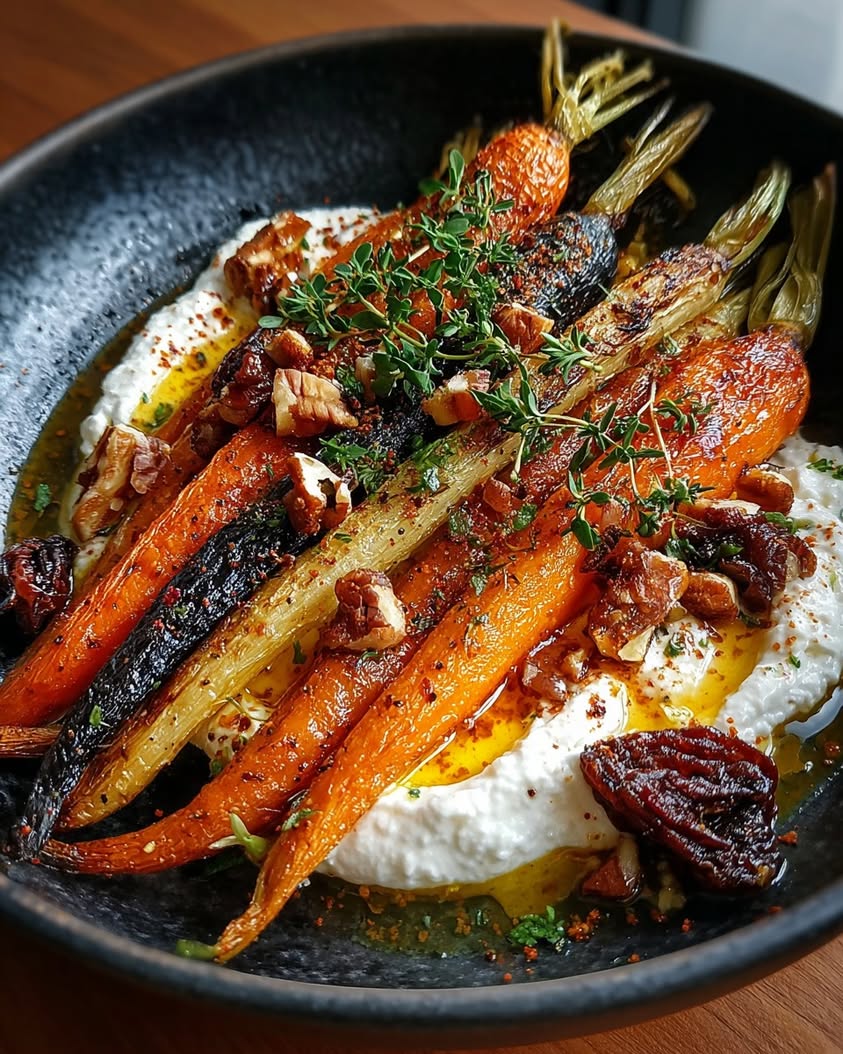
Roasted Carrot and Parsnip Ribbons with Whipped Goat Cheese: An Elegant, Flavor-Packed Side Dish
This stunning recipe for Roasted Carrot and Parsnip Ribbons with Whipped Goat Cheese is a true celebration of winter produce. Moreover, it transforms humble root vegetables into an elegant, restaurant-worthy dish that will impress any guest. The combination of sweet, caramelized ribbons, creamy tangy cheese, and a warm spiced honey drizzle creates a symphony of flavors and textures in every bite. Consequently, it is perfect for a special holiday meal or for elevating a simple weeknight dinner.
Imagine tender, slightly crisp ribbons of carrot and parsnip, roasted until their natural sugars caramelize. Then, picture them artfully arranged over a cloud of light, fluffy whipped goat cheese. Finally, a warm honey infused with warm spices like cinnamon or cardamom is drizzled over the top, punctuated by the rich, chewy sweetness of chopped dates. This dish is a masterclass in balancing sweet, savory, tangy, and earthy notes. Ultimately, the visual appeal is as incredible as the taste, making it a showstopper on any table.
The beauty of this Roasted Carrot and Parsnip Ribbons with Whipped Goat Cheese recipe lies in its simplicity and sophistication. While it looks intricate, the techniques are straightforward and accessible for most home cooks. Using a vegetable peeler to create the ribbons is a fun, simple trick that maximizes surface area for perfect roasting. Additionally, the whipped goat cheese base can be made ahead, streamlining your dinner preparation. This dish proves that with a few quality ingredients and simple methods, you can create something truly extraordinary.
Quick Recipe Highlights
- Flavor Profile: This dish masterfully balances earthy sweetness from the roasted root vegetables with the tangy creaminess of goat cheese. Furthermore, the spiced honey adds a warm, aromatic sweetness that ties all the elements together beautifully.
- Texture: You get a wonderful contrast between the tender-yet-slightly-crisp roasted vegetable ribbons and the luxuriously smooth, airy whipped goat cheese. Meanwhile, the chopped dates offer delightful chewy bites throughout.
- Aroma: As the carrots and parsnips roast, they release a sweet, caramelized scent. Simultaneously, warming the honey with spices fills your kitchen with an inviting, fragrant aroma that hints at the complex flavors to come.
- Visual Appeal: The vibrant orange and pale yellow ribbons create a stunning, colorful nest on the plate. The white cloud of cheese and the glossy honey drizzle make for a professional, elegant presentation.
- Skill Level Needed: This is an approachable recipe for cooks of most levels. Basic knife skills for peeling and a familiarity with your oven are the primary requirements. The whipping of the cheese is simple with a hand mixer.
- Special Equipment: A good Y-peeler is essential for creating long, beautiful ribbons. Additionally, a hand mixer or stand mixer makes whipping the goat cheese effortless, though a sturdy whisk and strong arm can work too.
Recipe Overview
- Difficulty Level: We rate this Roasted Carrot and Parsnip Ribbons with Whipped Goat Cheese as easy. The steps are sequential and simple: peel, toss, roast, whip, and assemble. There is no complex knife work or finicky techniques involved. The most important task is monitoring the vegetables in the oven to prevent burning.
- Category: This recipe fits perfectly into the side dish category, designed to accompany a main protein like roast chicken, pork tenderloin, or seared fish. It can also be served as a substantial vegetarian appetizer or a light lunch when paired with a hearty salad.
- Cuisine: While not tied to one specific tradition, this dish draws inspiration from modern American and Mediterranean cuisines. The use of goat cheese and honey is classic to Mediterranean cooking, while the treatment of root vegetables reflects a contemporary, farm-to-table American sensibility.
- Cost: This is a moderately priced dish. Root vegetables like carrots and parsnips are very affordable, especially in season. Goat cheese and good-quality honey are the primary cost drivers, but a little goes a long way. Overall, it delivers high-end restaurant flavor for a fraction of the price.
- Season: This recipe shines in the fall and winter months when carrots and parsnips are at their peak sweetness and most abundant. It brings warmth and vibrancy to the table during the cooler seasons, though it can be enjoyed year-round with stored root vegetables.
- Occasion: It is ideal for holiday dinners like Thanksgiving or Christmas, dinner parties, and date nights at home. Conversely, it is special enough for celebrations but simple enough to make any weeknight feel a bit more luxurious.
Why You’ll Love This Recipe
First and foremost, the taste and texture combination is utterly irresistible. The natural sugars in the carrots and parsnips concentrate and caramelize in the oven, creating a deep, earthy sweetness. This contrasts perfectly with the bright, tangy flavor of the whipped goat cheese, which is lightened to a mousse-like consistency. Then, the warm spiced honey seeps into every component, adding a layer of aromatic complexity. Finally, the dates provide bursts of rich, caramel-like sweetness and a pleasant chew. Every forkful is a deliberate mix of these elements, ensuring no bite is boring.
From a convenience standpoint, this Roasted Carrot and Parsnip Ribbons with Whipped Goat Cheese is a dream. The prep is straightforward and even therapeutic. Peeling the vegetables into ribbons is a simple, repetitive task. Meanwhile, the roasting time is largely hands-off, allowing you to prepare the rest of your meal or whip the cheese. Importantly, both components can be prepared in advance. You can roast the vegetables and whip the cheese a few hours ahead, then simply assemble and drizzle with warm honey before serving. This makes it an excellent choice for stress-free entertaining.
Nutritionally, this dish is a powerhouse. Carrots are famously rich in beta-carotene, which converts to vitamin A for eye health. Parsnips offer a great source of fiber, vitamin C, and folate. Goat cheese is often easier to digest than cow’s milk cheese for some people and provides protein and calcium. Honey, while a sugar, contains antioxidants, especially when you use a raw, local variety. Together, they create a side dish that is not only delicious but also contributes valuable vitamins, minerals, and fiber to your meal.
The social and entertaining value of this recipe is incredibly high. Visually, it creates an immediate “wow” factor when brought to the table. Guests are always impressed by the ribbon presentation and the elegant combination of flavors. It sparks conversation and shows a level of care and creativity in your cooking. Because it feels special and indulgent, it makes any meal feel like an occasion. Serving this Roasted Carrot and Parsnip Ribbons with Whipped Goat Cheese tells your guests they are worth the extra effort.
Finally, this recipe is cost-effective and accessible. Root vegetables are some of the most affordable produce items, offering great yield for their price. A small log of goat cheese and a jar of honey can be used across multiple recipes, making the investment worthwhile. You do not need any exotic or hard-to-find ingredients. Everything can be sourced from a standard grocery store. Consequently, you can create a dish that looks and tastes luxurious without a luxurious grocery bill, making it a fantastic regular addition to your culinary repertoire.
Historical Background and Cultural Significance
The story of roasting root vegetables is as old as cooking itself, dating back to when humans first used fire. Carrots and parsnips, however, have distinct histories. Originally, the carrot was cultivated for its aromatic leaves and seeds, not its root. The purple and yellow varieties common in Central Asia eventually gave way to the orange carrot we know today, developed in the Netherlands in the 17th century. Parsnips, conversely, were a staple carbohydrate in Europe before the introduction of the potato, prized for their sweetness, especially after a frost.
Culturally, both vegetables hold significance as winter staples. In many European cultures, root cellars filled with carrots, parsnips, and other hardy vegetables ensured survival through lean winter months. Roasting them was a practical way to concentrate flavors and create warmth. Goat cheese, one of the oldest known cheeses, has deep roots in Mediterranean and Middle Eastern pastoral societies. The practice of whipping cheese with cream is a more modern technique, born from a desire for lighter, spreadable textures in contemporary cuisine.
The evolution of this specific recipe, Roasted Carrot and Parsnip Ribbons with Whipped Goat Cheese, is a testament to modern gastronomy. It takes these ancient, humble ingredients and elevates them through presentation and technique. The “ribbon” cut is a contemporary chef’s trick to increase surface area, improve texture, and enhance visual drama. Pairing them with whipped goat cheese and spiced honey reflects a current culinary trend that values contrast: sweet and savory, soft and crisp, earthy and tangy. It is a dish born from the farm-to-table movement’s focus on highlighting quality produce.
Regional variations of this concept abound. In the Mediterranean, you might find roasted carrots with yogurt and dukkah. In the American South, a similar dish could feature a bourbon-infused honey. For a Middle Eastern twist, sumac and tahini might replace the spiced honey and goat cheese. The core concept of dressing sweet, roasted roots with a creamy, tangy element and a sweet or nutty garnish is wonderfully adaptable. This particular version with whipped goat cheese and dates sits comfortably within a modern American culinary framework, celebrating global influences with local ingredients.
Ingredient Deep Dive
Carrots: Cultivated for over a millennium, carrots evolved from thin, bitter roots in Afghanistan to the sweet, orange varieties we eat today, largely thanks to Dutch growers in the 16th and 17th centuries. Nutritionally, they are famous for beta-carotene, which supports vision and immune health, and they also provide fiber, vitamin K1, and potassium. For the best Roasted Carrot and Parsnip Ribbons, choose firm, smooth carrots without cracks; larger carrots are easier to peel into long ribbons. Store them unwashed in the cool, humid crisper drawer of your fridge. If needed, you can substitute with sweet potato ribbons or even golden beets for a different color and flavor profile.
Parsnips: Resembling a pale carrot, the parsnip was a European dietary staple before potatoes arrived from the New World. Its flavor transforms after a frost, as cold temperatures convert its starches into sugars, yielding a notably sweeter, nuttier taste. They are an excellent source of soluble fiber, vitamin C, vitamin K, and folate. Select parsnips that are firm, not limp, and avoid very large ones, as they can have a tough, woody core. Store them alongside carrots in the refrigerator. If parsnips are unavailable, additional carrots, celery root, or rutabaga ribbons can be used, though the flavor will be different.
Goat Cheese (Chèvre): With origins dating back over 10,000 years, goat cheese is believed to be one of the first cheeses ever made. Its tangy, earthy flavor comes from the capric, caprylic, and caproic fatty acids in goat’s milk. Many people find it easier to digest than cow’s milk cheese due to its different protein structure and lower lactose content. For whipping, choose a fresh, soft log of plain chèvre. Avoid pre-crumbled cheese, as it contains anti-caking agents. Store it tightly wrapped in the coldest part of your fridge. For a dairy-free version, whipped coconut cream or a thick plant-based cream cheese can be substituted.
Honey: Honey’s history is intertwined with human civilization, used as food, medicine, and even currency. Its flavor and color depend entirely on the nectar source, from light and floral clover honey to dark, robust buckwheat honey. Raw honey contains antioxidants and trace enzymes. For the spiced honey in this recipe, a mild, liquid honey like clover or wildflower works best, allowing the added spices to shine. Gently warm it to infuse the spices but avoid boiling, which can degrade delicate flavors. Store honey at room temperature in a sealed container. Maple syrup or agave nectar can be used as vegan alternatives, though the flavor profile will change.
Dates: Dates have been a cornerstone of life in the Middle East and North Africa for thousands of years, often called “the bread of the desert.” They are naturally rich in fiber, potassium, copper, and antioxidants. Their high natural sugar content makes them a great energy source and natural sweetener. For this recipe, Medjool dates are ideal for their large size, soft, chewy texture, and caramel-like flavor. Look for plump, shiny dates. Store them in an airtight container in a cool, dry place or in the refrigerator to extend freshness. If dates are not available, dried figs, apricots, or even a sprinkle of toasted nuts can provide texture and sweetness.
Common Mistakes to Avoid
- Using a Dull Peeler: A dull peeler will crush the vegetables rather than slice them cleanly, resulting in broken, uneven ribbons. Always start with a sharp Y-peeler for the best control and longest, most beautiful ribbons for your Roasted Carrot and Parsnip Ribbons with Whipped Goat Cheese.
- Overcrowding the Baking Sheet: Piling the vegetable ribbons on top of each other steams them instead of roasting them. They need space for moisture to evaporate so they can caramelize and crisp slightly. Use two sheets if necessary to ensure a single layer.
- Skipping the Oil Toss: Failing to coat the ribbons evenly in oil and seasoning will lead to dry, bland spots and uneven cooking. Take the time to gently toss them in a bowl with the oil, salt, and pepper until every piece is lightly glossed.
- Over-roasting the Vegetables: Parsnips and carrots can go from perfectly tender to burnt and bitter quickly. Watch them closely in the last 5 minutes of cooking. The goal is caramelized edges, not blackened crisps.
- Whipping Cold Goat Cheese: Attempting to whip goat cheese straight from the fridge is difficult and can lead to a lumpy result. Let it soften at room temperature for at least 30 minutes before whipping for a smooth, fluffy texture.
- Over-whipping the Goat Cheese: Once you add the cream, whip just until the mixture is smooth, light, and holds soft peaks. Over-whipping can cause it to become grainy or, if using heavy cream, potentially turn into butter.
- Boiling the Spiced Honey: Heating the honey too aggressively can destroy its delicate floral notes and beneficial enzymes. Gently warm it over low heat just until it’s thin enough to drizzle and the spices have infused.
- Assembling Too Early: If you layer the warm roasted vegetables directly onto the whipped cheese too far in advance, the heat can cause the cheese to wilt and lose its airy texture. Assemble just before serving for the best contrast.
- Forgetting to Pit the Dates: Medjool dates almost always have a pit. Forgetting to remove it before chopping is a recipe for a dental disaster. Always slice the date open and remove the hard pit first.
- Using Pre-Crumbled Goat Cheese: Pre-crumbled cheese contains additives to prevent clumping, which will prevent it from whipping up smooth and creamy. Always buy a solid log of fresh goat cheese for this recipe.
Essential Techniques
Creating Vegetable Ribbons: This technique is crucial for the signature look and texture of Roasted Carrot and Parsnip Ribbons. Using a sharp Y-peeler, apply firm, even pressure and pull from the top of the vegetable to the bottom in one long stroke. Rotate the vegetable after each peel. The goal is long, wide, thin ribbons that will curl and crisp at the edges when roasted. Avoid pressing too hard, which can make the ribbons too thin and fragile. Success is evident when you have a pile of uniform, flexible ribbons, not broken shards.
Whipping Goat Cheese: Whipping transforms dense goat cheese into a light, spreadable cloud. First, ensure the cheese is at room temperature for easy blending. Using a hand mixer or stand mixer with the paddle attachment, beat the cheese alone until smooth. Then, with the mixer running on low, gradually add room-temperature heavy cream. Increase the speed to medium-high and whip until the mixture is noticeably lighter in color and holds soft peaks. The pitfall is adding cold cream to cold cheese, which leads to lumps. Perfectly whipped cheese should be smooth, spreadable, and hold its shape.
Infusing Honey with Spices: This simple technique layers complex flavor into the sweet element. Combine honey and your chosen whole spices (like cinnamon sticks, cardamom pods, or star anise) in a small saucepan. Warm over the lowest possible heat for 5-10 minutes, stirring occasionally. Do not let it simmer or boil. The gentle heat allows the spice oils to release into the honey without cooking off the honey’s delicate aroma. The visual cue for success is the honey becoming noticeably more fluid and fragrant. Always strain out the whole spices before drizzling for a smooth finish.
Roasting for Caramelization: Proper roasting is what develops the deep, sweet flavor in the vegetables. The key is high heat (400-425°F), adequate oil coating, and space on the pan. The oil conducts heat and promotes browning, while the space allows moisture to escape. Toss the ribbons halfway through cooking to ensure even exposure to the hot pan. The technique is successful when the ribbons are tender, the edges are slightly browned and crisp, and the natural sugars have caramelized, creating a rich, concentrated flavor.
Pro Tips for Perfect Roasted Carrot and Parsnip Ribbons
First, for extra-long ribbons, start peeling from the very top of the carrot or parsnip and use the full length of the peeler blade in one confident motion. Additionally, if your vegetables are very wide, you can slice them in half lengthwise first to create more manageable, flat surfaces for peeling.
Season the vegetable ribbons generously. Do not be shy with salt and pepper before roasting, as this foundational seasoning brings out their natural flavors. Consider adding a pinch of smoked paprika or dried thyme to the oil for an extra flavor dimension.
Let the roasted vegetables cool for just a minute or two before placing them over the whipped goat cheese. This prevents the residual heat from melting the cheese entirely, preserving that desirable contrast of warm vegetables on cool, creamy cheese.
Toast your spices lightly in a dry pan before adding them to the honey. This quick step wakes up their essential oils, resulting in a more potent and aromatic spiced honey for your drizzle.
Chop the dates with a lightly oiled knife. Dates are notoriously sticky; a quick wipe of your chef’s knife with a neutral oil will prevent them from clinging and make chopping much cleaner and easier.
Garnish with texture. Beyond the dates, a final sprinkle of flaky sea salt, chopped toasted pistachios, or fresh thyme leaves adds another layer of flavor and a pleasing crunch that elevates the entire dish.
If making components ahead, store the whipped goat cheese in a sealed container in the fridge and the cooled roasted ribbons at room temperature. Gently reheat the ribbons in a 300°F oven for 5 minutes to refresh them before assembling.
Use the leftover vegetable cores. After peeling ribbons down to the core, do not discard the centers. Chop them up and add them to soups, stews, or a breakfast hash to minimize waste.
Variations and Adaptations
Regional Variations: Travel your taste buds by incorporating global flavors. For a Middle Eastern twist, swap the spiced honey for a drizzle of tahini sauce and a sprinkle of za’atar. A French-inspired version could use herbes de Provence on the vegetables and a layer of whipped fromage blanc. Alternatively, an Asian fusion take might involve a miso-sesame glaze on the ribbons and a wasabi-spiked whipped cream cheese.
Seasonal Adaptations: While perfect for fall and winter, this recipe adapts beautifully year-round. In spring, use young, slender carrots and baby parsnips, and incorporate fresh peas or asparagus tips after roasting. For summer, try ribbons of zucchini and yellow squash with a lemon-zested goat cheese. The core technique remains the same, letting the best produce of the season shine.
Dietary Modifications: This dish is naturally vegetarian and can be easily modified for other diets. For a vegan Roasted Carrot and Parsnip Ribbons, use a thick, whipped coconut cream or vegan cream cheese base and substitute maple syrup for the honey. To make it gluten-free, simply ensure all packaged ingredients like spices are certified GF, which they typically are.
Flavor Variations: Experiment with different spice profiles in the honey. Try fresh ginger and orange zest, a pinch of chili flakes for heat, or vanilla bean and black pepper. You can also infuse the oil for roasting with garlic or rosemary for an herby base note that permeates the vegetables.
Texture Modifications: If you prefer more crunch, add a topping of toasted pecans, walnuts, or pumpkin seeds. For a richer, unwhipped cheese component, try a smear of creamy blue cheese or burrata instead of the goat cheese. You can also roast the vegetable ribbons until they are almost like crispy chips for a different experience.
Presentation Alternatives: Instead of a free-form nest, you can arrange the ribbons in a neat, overlapping circle on individual plates. For a family-style option, spread the whipped cheese in the center of a large platter and pile the ribbons around it. Serving the components in separate bowls for a DIY assembly at the table can also be fun for guests.
Serving and Presentation Guide
Plating Techniques: For individual servings, swoosh or dollop a generous amount of whipped goat cheese onto the center of a plate. Using tongs or two forks, gather a portion of the warm roasted vegetable ribbons and drape them artfully over and around the cheese, allowing some cheese to peek through. The goal is a casual but intentional look, like a vegetable nest. For a family-style presentation, spread the cheese in a broad stripe or circle on a large platter and mound the ribbons on top, letting them cascade over the edges.
Garnishing Ideas: The final touches make the dish pop. After drizzling with spiced honey and scattering the chopped dates, add a sprinkle of vibrant green from fresh herb leaves like parsley, dill, or mint. A dusting of finely chopped toasted nuts (pistachios, almonds) adds crunch and visual contrast. A final pinch of flaky sea salt, such as Maldon, enhances flavor and adds a subtle sparkle.
Traditional Accompaniments: As a side, this dish pairs classically with simply prepared proteins that do not overpower its nuanced flavors. Think herb-roasted chicken, pan-seared pork chops, baked salmon, or a juicy roast turkey. It also complements other vegetable sides like sautéed greens or a simple green salad with a bright vinaigrette to cut through the richness.
Modern Serving Suggestions: Reimagine this recipe as a standalone appetizer or light meal. Serve it on a shared board with crusty bread or seeded crackers for scooping. Alternatively, use it as a sophisticated topping for a grain bowl, layered over farro or quinoa with some bitter greens. For a brunch option, top the whipped cheese and ribbons with a softly poached egg.
Temperature Considerations: The magic of this dish is in the temperature contrast. The roasted carrot and parsnip ribbons should be warm or at room temperature, having just come from the oven or been gently reheated. The whipped goat cheese should be cool from the refrigerator. This contrast makes each component distinct and exciting on the palate.
Portion Control Tips: This recipe yields about four generous side-dish servings. As a rich appetizer, it could serve six. If scaling for a crowd, remember that the vegetable ribbons reduce slightly in volume as they roast, so err on the side of making a little extra. A good rule is one large carrot and one large parsnip per two people as a side.
Wine and Beverage Pairing
Wine Pairings: The sweet, earthy vegetables and tangy cheese in Roasted Carrot and Parsnip Ribbons create a versatile pairing canvas. A crisp, unoaked white wine like a Sauvignon Blanc or Grüner Veltliner complements the tangy goat cheese and cuts through the richness. Alternatively, a light-bodied Pinot Noir with its red fruit and earthy notes can mirror the sweetness of the vegetables beautifully. For a more adventurous match, try an off-dry Riesling; its hint of sweetness will harmonize with the honey and caramelized veggies.
Non-Alcoholic Alternatives: Sparkling water with a twist of orange or a dash of aromatic bitters makes a refreshing palate cleanser. A chilled, slightly sweet ginger beer complements the warm spices in the honey. For a more sophisticated option, a virgin shrub (drinking vinegar) made with apple cider vinegar and fall fruits like pear or apple provides a tangy counterpoint that plays well with all the dish’s flavors.
Coffee and Tea Pairings: While not a classic pairing for this course, if serving as part of a brunch or late fall lunch, consider beverages that mirror the dish’s warmth. A medium-roast coffee with notes of caramel or nut would echo the roasted vegetable flavors. A spiced chai tea latte naturally complements the spiced honey, or a cup of delicate white tea would provide a clean, subtle finish without overwhelming the dish.
Temperature Considerations: Serve white wines well-chilled (45-50°F) and light reds like Pinot Noir slightly cool (55°F). Non-alcoholic sparkling drinks should be ice-cold to refresh the palate. Coffee and tea, of course, should be served hot. The goal is for the beverage temperature to provide a refreshing contrast or a comforting complement to the warm, rich food.
Serving Suggestions: Always offer water alongside any paired beverage to cleanse the palate. When serving wine, pour modestly to allow guests to enjoy the pairing without overwhelming the food. For non-alcoholic options, consider serving them in elegant glassware to make the experience feel just as special as a wine pairing.
Storage and Shelf Life
Storage Methods: Store components separately for best results. Place cooled roasted vegetable ribbons in an airtight container in the refrigerator. They will keep for 3-4 days. Store the whipped goat cheese in a separate sealed container in the fridge for up to 5 days. Keep any leftover spiced honey in a jar at room temperature.
Temperature Requirements: All components except the honey require refrigeration at or below 40°F. The honey can be stored at cool room temperature indefinitely; refrigeration will cause it to crystallize more quickly. Do not leave the assembled dish at room temperature for more than two hours.
Container Recommendations: Use shallow containers for the vegetable ribbons to prevent them from getting squashed and soggy. A glass container is ideal for the whipped cheese. Always press a piece of plastic wrap directly onto the surface of the cheese before sealing the lid to prevent it from drying out and forming a skin.
Signs of Spoilage: Discard the vegetables if they develop a slimy texture, an off odor, or visible mold. The whipped cheese should be discarded if it separates excessively, develops an ammonia-like smell, or shows any signs of mold. Honey is naturally preservative, but if foreign particles or fermentation (bubbles) appear, it should be discarded.
Reheating Instructions: To restore the ribbons’ texture, reheat them on a baking sheet in a 350°F oven for 5-10 minutes until warmed through. Avoid the microwave, as it will make them soggy. The whipped cheese should be served cold; do not reheat it. Gently warm the honey jar in a bowl of hot water if it has thickened.
Freezing Guidelines: Freezing is not recommended for this dish. The roasted vegetables will become mushy and watery upon thawing. The whipped goat cheese will separate and become grainy. The honey may crystallize. It is best enjoyed fresh or stored in the fridge for a few days.
Make Ahead Strategies
Prep Timeline: You can prepare nearly this entire Roasted Carrot and Parsnip Ribbons with Whipped Goat Cheese recipe a day in advance. The evening before, peel and ribbon the vegetables, storing them in a bowl of cold water in the fridge to prevent browning. Whip the goat cheese, cover it tightly, and refrigerate. Make the spiced honey and let it cool. On the day of serving, drain and thoroughly dry the ribbons, roast them, and gently warm the honey.
Storage Between Steps: Keep the prepped raw ribbons submerged in water in the fridge; this keeps them crisp. The whipped cheese must be kept refrigerated in a sealed container. The spiced honey can sit at room temperature. This staged approach breaks the work into manageable chunks and minimizes last-minute stress.
Quality Impact Assessment: Prepping the vegetables a day ahead has no negative impact; the water bath keeps them fresh. The whipped cheese may firm up slightly in the fridge but will still be perfectly spreadable. The flavors in the spiced honey actually improve with a few hours of infusion. The only element that must be done day-of is the roasting, to ensure the ribbons have the perfect texture.
Assembly Tips: For the best presentation and temperature contrast, assemble just before serving. Spread the cool whipped cheese on the platter. Add the warm (or room temp) roasted ribbons. Drizzle with the gently rewarmed honey, and scatter the dates and any final garnishes. This takes only 2 minutes but makes all the difference.
Reheating Guidelines: If you roasted the vegetables ahead and refrigerated them, reheat them on a parchment-lined baking sheet in a 375°F oven for 5-8 minutes to refresh their warmth and crisp the edges slightly. Do not microwave. Warm the honey jar in a bowl of hot water until it’s drizzle-able again.
Fresh Element Additions: Any fresh herb garnishes (like parsley or mint) should be chopped and added at the very last second to maintain their color and vibrancy. If using toasted nuts, add them during assembly so they retain their crunch and do not get soggy from the honey.
Scaling Instructions
Halving the Recipe: To serve two, simply use one large carrot and one large parsnip. Halve all other ingredients: use 4 ounces of goat cheese, 2 tablespoons of cream, 2 tablespoons of honey, and 2-3 dates. The roasting time may decrease by a few minutes since the pan will be less crowded, so start checking for doneness at the 15-minute mark.
Doubling or Tripling: For a crowd, multiply the ingredients linearly. The key is to use multiple baking sheets and roast in batches or on separate oven racks, rotating the sheets halfway through. Do not attempt to whip more than 16 ounces of goat cheese at once in a standard stand mixer; instead, whip in batches. Warm the spiced honey in a larger saucepan.
Equipment Adjustments: Scaling up requires more baking sheets and mixing bowls. Ensure you have a large enough mixer bowl if making a large batch of whipped cheese. For very large quantities, consider using a food processor to whip the cheese in batches. You may also need a larger platter or several serving dishes for presentation.
Timing Modifications: When roasting multiple sheets at once, the total time may increase slightly due to reduced air circulation. Allow an extra 5-10 minutes and rely on visual cues (caramelized edges, tender texture) rather than a strict timer. The whipping time for the cheese remains roughly the same regardless of batch size.
Storage Considerations: A larger batch means more leftovers. Plan your storage containers in advance. It is still best to store the components separately. If you have a very large quantity of roasted ribbons, let them cool completely before dividing them into shallow containers to prevent residual heat from creating condensation and sogginess.
Nutritional Deep Dive
Macro Breakdown: A serving of Roasted Carrot and Parsnip Ribbons with Whipped Goat Cheese provides a balanced mix of macronutrients. The primary carbohydrates come from the vegetables and honey, offering natural sugars and fiber. The goat cheese and heavy cream contribute healthy fats and a moderate amount of protein. This balance helps provide sustained energy. The dish is not overly high in protein, so pairing it with a lean protein source makes for a complete meal.
Micronutrient Analysis: This dish is a micronutrient powerhouse. Carrots deliver a massive dose of vitamin A (as beta-carotene), crucial for vision and immunity. Parsnips contribute vitamin C, folate, and manganese. Goat cheese provides calcium, phosphorus, and vitamin B2 (riboflavin). Dates add potassium, magnesium, and copper. The honey contributes small amounts of antioxidants. Together, they offer a wide spectrum of vitamins and minerals supporting overall health.
Health Benefits: The high fiber content from the vegetables and dates promotes digestive health and satiety. The antioxidants in the colorful vegetables and honey combat oxidative stress. The calcium and phosphorus support bone health. The healthy fats from the cheese aid in the absorption of the fat-soluble vitamins (like vitamin A) present in the carrots. This makes the dish not just delicious, but genuinely nourishing.
Dietary Considerations: This recipe is naturally vegetarian and gluten-free. It contains dairy ({“success”:true,”message”:”Recipe created successfully”,”post_id”:8035,”tasty_recipe_id”:8035,”shortcode”:” Print
Roasted Carrot & Parsnip Ribbons with Whipped Goat Cheese, Dates & Spiced Honey
Description
A vibrant and elegant side dish featuring roasted vegetable ribbons, creamy whipped goat cheese, sweet dates, and a warm spiced honey drizzle.
Ingredients
For the Crust:
- 4 large carrots, peeled into ribbons
- 3 large parsnips, peeled into ribbons
- 2 tablespoons olive oil
- Salt and black pepper to taste
- 8 oz goat cheese, softened
- 1/4 cup heavy cream
- 1/2 cup Medjool dates, pitted and chopped
- 1/4 cup honey
- 1/2 teaspoon ground cinnamon
- 1/4 teaspoon ground nutmeg
- Fresh thyme leaves for garnish
Instructions
1. Prepare the Crust:
- Preheat oven to 400°F (200°C). Toss carrot and parsnip ribbons with olive oil, salt, and pepper on a baking sheet. Roast for 20-25 minutes until tender and slightly crisp at edges.
- While vegetables roast, whip goat cheese and heavy cream in a bowl with a hand mixer until light and fluffy. Set aside.
- In a small saucepan over low heat, warm honey with cinnamon and nutmeg for 2-3 minutes, stirring until fragrant. Remove from heat.
- Spread whipped goat cheese on a serving platter. Arrange roasted vegetable ribbons over the cheese. Scatter chopped dates on top.
- Drizzle the spiced honey over the dish and garnish with fresh thyme leaves. Serve immediately.
Notes
You can customize the seasonings to taste.

I’m Billy, a classically trained culinary school graduate from The Culinary Institute of America with over 12 years in the restaurant industry and over 19 years of cooking experience.