
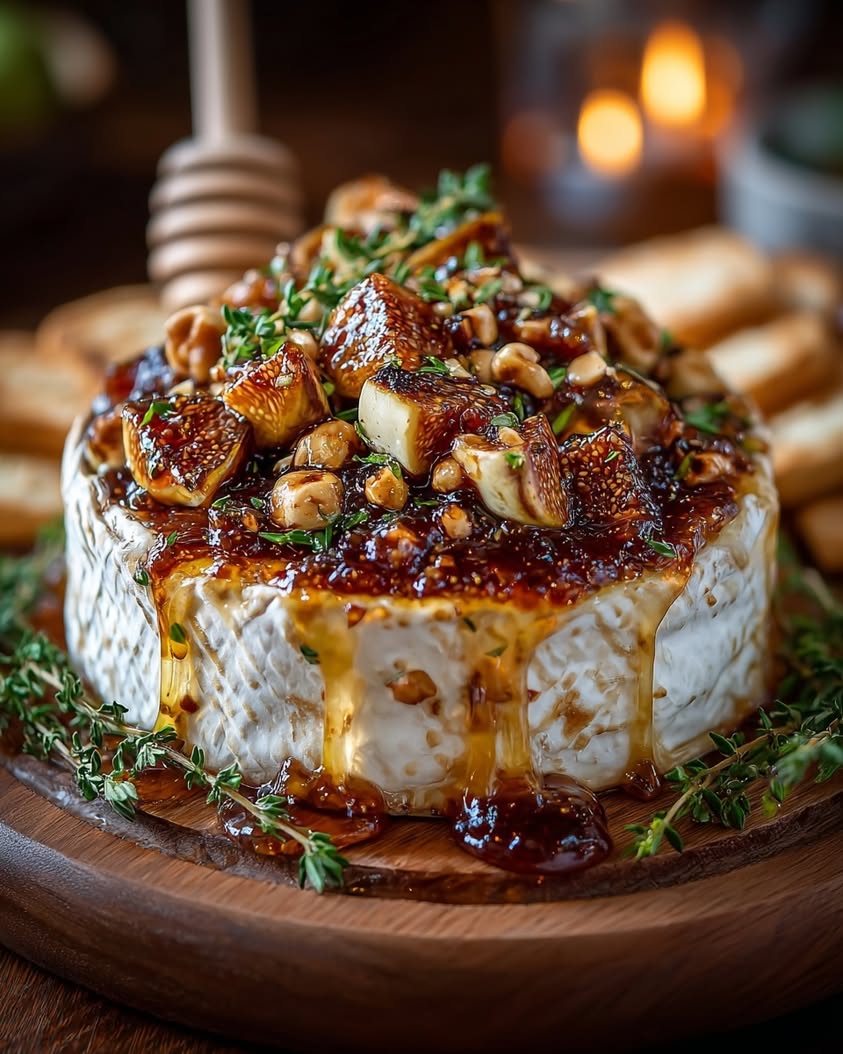
Baked Camembert with Fig Jam and Honey Glazed Hazelnuts: The Ultimate Crowd-Pleasing Appetizer
Imagine pulling a warm, gooey wheel of cheese from the oven, its surface bubbling slightly. Now picture topping it with sweet fig jam, crunchy roasted hazelnuts, and a generous drizzle of warm honey. This Baked Camembert with Fig Jam and Honey Glazed Hazelnuts is not just a recipe; it is a centerpiece for memorable gatherings. Consequently, it transforms simple ingredients into an interactive, luxurious experience that feels both rustic and elegant. Moreover, the combination of savory, sweet, and nutty elements creates a symphony of flavors in every single dip.
This dish is the hero of effortless entertaining. Importantly, it requires minimal hands-on time for maximum visual and flavorful impact. Whether you are hosting a holiday party, a cozy date night, or a casual get-together with friends, this baked Camembert recipe promises to impress. The aroma alone, as it bakes, will draw everyone to the kitchen. Ultimately, it is about creating a shared moment, a communal dish that encourages conversation and connection over delicious food.
Furthermore, the beauty of this Baked Camembert with Fig Jam and Honey Glazed Hazelnuts lies in its versatility. You can easily adapt the toppings based on the season or your personal pantry. Additionally, it serves as a perfect starter before a hearty meal or as the star of a sophisticated snack board. The recipe balances rich creaminess from the cheese, fruity sweetness from the jam, earthy crunch from the nuts, and floral notes from the honey. Therefore, every component plays a crucial role in building a complex and utterly addictive appetizer.
Quick Recipe Highlights
- Flavor Profile: This dish masterfully balances rich, creamy, and savory cheese with the deep, jammy sweetness of figs. The warm honey adds a floral brightness, while the roasted hazelnuts contribute a crucial earthy, toasty crunch that ties everything together.
- Texture: Experience a delightful contrast between the luxuriously molten interior of the baked Camembert and the sticky-smooth fig jam. The honey provides a silky drizzle, and the chopped hazelnuts offer a satisfying, crunchy counterpoint that prevents the dish from feeling one-dimensional.
- Aroma: As it bakes, the kitchen fills with the nutty, earthy scent of melting cheese. The warm honey releases its delicate floral notes, and the toasted hazelnuts add a warm, comforting fragrance that is simply irresistible.
- Visual Appeal: The presentation is stunningly rustic. A golden-brown cheese wheel oozes at the edges, topped with a deep purple fig jam swirl, speckled with golden-brown nut pieces, and finished with a glossy honey drizzle that catches the light.
- Skill Level Needed: This is a beginner-friendly recipe requiring no advanced techniques. Success hinges on simple assembly, careful baking to achieve the perfect melt, and an artistic touch with the final garnish.
- Special Equipment: You need only a small baking dish or a Camembert baker, a small skillet for toasting nuts, and a sharp knife. A wooden spoon or spreader for serving completes the setup.
Recipe Overview
- Difficulty Level: We rate this recipe as easy because it involves straightforward assembly rather than complex cooking techniques. The primary skill is timing the bake to achieve a molten center without the cheese splitting. Even a novice cook can achieve spectacular results by following a few simple visual cues.
- Category: This dish falls squarely into the appetizer or starter category. It also excels as part of a luxurious cheese board or a sharable snack for entertaining. Furthermore, it can serve as a decadent centerpiece for a wine and cheese night.
- Cuisine: While Camembert hails from Normandy, France, this preparation is a modern, global fusion. It combines French cheese with Mediterranean-inspired fig jam and a universal love for honey and nuts. The result is a contemporary appetizer that feels both familiar and excitingly new.
- Cost: This is a moderately priced appetizer. A good quality Camembert wheel is the main investment. Fig jam, honey, and hazelnuts are pantry staples that offer multiple uses. Overall, the cost per serving is reasonable for such an impressive dish.
- Season: This Baked Camembert with Fig Jam and Honey Glazed Hazelnuts is perfect for fall and winter. The warm, comforting flavors align with cooler weather. However, it is truly a year-round crowd-pleaser, especially for indoor gatherings.
- Occasion: It is ideal for holiday parties, book club meetings, romantic evenings, or as a special weekend treat. Its shareable nature makes it perfect for any social event where conversation and good food are the main attractions.
Why You’ll Love This Recipe
First and foremost, the taste and texture are utterly divine. The first scoop through the baked rind reveals a river of warm, creamy cheese. This luxurious base is then elevated by the sweet-tart complexity of fig jam. Next, the honey adds a layer of floral sweetness that enhances the other ingredients without overpowering them. Finally, the roasted hazelnuts provide the essential textural contrast, ensuring each bite is a perfect harmony of smooth, sticky, and crunchy elements. Consequently, your guests will keep coming back for just one more dip.
From a convenience standpoint, this recipe is a host’s dream. The preparation is incredibly simple and takes only minutes. Meanwhile, the oven does most of the work. This allows you to focus on other dishes or simply enjoy your company. Additionally, the ingredients are easy to find at most grocery stores. You can even prepare components ahead of time for seamless assembly when guests arrive. Therefore, you can deliver a show-stopping dish with minimal stress.
Nutritionally, while indulgent, this dish offers some benefits. Camembert provides calcium and protein. Hazelnuts are an excellent source of healthy fats, vitamin E, and fiber. Figs, whether fresh or in jam form, contribute antioxidants and minerals. Honey, in moderation, is a natural sweetener with trace enzymes. Served with whole-grain crackers or sliced apples, it becomes a more balanced snack. Ultimately, it is a treat to be savored and shared mindfully.
The social and entertaining value of this Baked Camembert with Fig Jam and Honey Glazed Hazelnuts cannot be overstated. It creates an interactive, communal eating experience. Placed in the center of the table, it becomes a conversation starter. People love the ritual of breaking into the cheese and customizing their bites with different amounts of topping. It feels generous and welcoming, setting a relaxed and celebratory tone for any gathering.
Finally, it is cost-effective and accessible. Compared to ordering a similar appetizer at a restaurant, making it at home saves significant money. The ingredients are not overly exotic or expensive. Moreover, you can control the quality, opting for organic honey or a locally made fig jam. This flexibility makes it easy to tailor the dish to your budget without sacrificing an ounce of luxury or flavor.
Historical Background and Cultural Significance
The story of Camembert begins in the late 18th century in the Normandy region of France. According to popular legend, a farmer named Marie Harel received the recipe from a priest fleeing the French Revolution. She then refined the technique, creating the soft, white-rinded cheese we know today. Normandy’s rich, grassy pastures provided the perfect milk for this iconic cheese. Consequently, Camembert became a symbol of French agricultural tradition and culinary artistry, eventually gaining protected designation of origin status.
Fig cultivation has an ancient history spanning the Mediterranean and Middle East. Figs were a staple food, revered for their sweetness and nutritional value. Preserving them into jam was a practical way to enjoy their flavor year-round. Pairing fruit preserves with cheese is a tradition in many European cultures, from England’s ploughman’s lunch to Italian cheese boards. The combination of salty, fatty cheese with sweet fruit is a timeless culinary principle that this recipe honors and elevates.
The evolution of baked cheese dishes is a global phenomenon. From Swiss raclette to Italian burrata with olive oil, heating cheese to enhance its texture and flavor is a beloved practice. Baking a whole Camembert likely emerged as a simple, rustic way to serve the cheese in French countryside homes. The modern twist of adding sweet and crunchy toppings reflects contemporary dining trends that prioritize bold flavor contrasts and shareable plates. This recipe is a direct descendant of that evolution.
Regional variations of baked cheese are endless. In the Alps, you might find baked Reblochon. In Greece, saganaki features fried cheese. This specific version with fig jam and nuts has become a modern classic in its own right. It represents a fusion of French technique with globally inspired condiments. The use of honey, a universal ancient sweetener, and hazelnuts, which grow in many temperate regions, makes the dish feel both familiar and special, connecting different culinary traditions on one plate.
Ingredient Deep Dive
Camembert Cheese: Authentic Camembert de Normandie is a soft, surface-ripened cheese with a bloomy white rind made of Penicillium camemberti mold. This edible rind is crucial as it holds the cheese together during baking. The interior should be creamy and slightly elastic when young, becoming runnier as it ages. Nutritionally, it provides protein, calcium, and vitamins A and B12. For baking, choose a cheese that is ripe but not overly soft at room temperature; it should give slightly when pressed. Store it in the refrigerator’s cheese drawer and bring it to room temperature before baking for even melting.
Fig Jam: Fig jam is made by slowly cooking figs with sugar and often a touch of lemon juice or vinegar until broken down into a thick, spreadable conserve. Figs are historically significant, symbolizing abundance and peace in various cultures. They offer dietary fiber, potassium, and antioxidants. When selecting jam, look for one with a high fruit content and minimal added sugars for the best flavor. A good fig jam should have a deep, rich color and contain visible seeds for texture. It can be stored in the pantry until opened, then refrigerated.
Hazelnuts: Also known as filberts, hazelnuts have been foraged and cultivated for thousands of years. They are native to Europe and Asia and are rich in healthy monounsaturated fats, vitamin E, and manganese. Toasting is non-negotiable; it deepens their flavor from mild and slightly bitter to richly nutty and complex. Toast them in a dry skillet over medium heat until fragrant and lightly browned, then chop roughly. Store raw hazelnuts in the freezer to prevent their oils from turning rancid. For a twist, you can use pecans or walnuts.
Honey: Honey’s history as a food and sweetener dates back over 8,000 years. Its flavor profile varies dramatically based on the flowers foraged by bees, from light and floral to dark and robust. Warming the honey before drizzling is key; it becomes less viscous, allowing it to flow beautifully over the cheese and soak into the nuts. Honey contains trace enzymes and antioxidants. Choose a raw, local honey for the most complex flavor. For a vegan adaptation, a warm maple syrup or agave nectar drizzle works wonderfully.
Common Mistakes to Avoid
- Using an Overly Ripe or Cold Cheese: A Camembert that is too ripe may split and become oily when baked. Conversely, a cheese straight from the fridge will not melt evenly. Always let the cheese sit at room temperature for about 30 minutes before baking.
- Skipping the Nut Toasting Step: Raw hazelnuts lack the deep, toasty flavor that defines this dish. Toasting them in a dry pan for a few minutes unlocks their essential oils and crunch, transforming them from a garnish into a key flavor component.
- Overbaking the Cheese: The goal is a molten, dip-able center藩 not a separated, oily pool. Bake just until the cheese feels very soft to the touch and is starting to bulge. Overbaking ruins the texture.
- Adding Cold Honey: Thick, cold honey will clump and not integrate smoothly. Gently warm it for 10-15 seconds in the microwave or in a warm water bath until it becomes fluid and easy to drizzle.
- Cutting the Top Rind Off Completely: While scoring the top helps, removing the entire top rind can cause the cheese to overflow its casing. The rind helps contain the molten interior, so just score it deeply.
- Serving Without Proper Dippers: The choice of accompaniments matters. Avoid only serving soft bread. Include a variety like crusty baguette slices, crisp crackers, apple slices, and pear wedges for different textures.
- Not Letting it Rest: The cheese will be extremely hot straight from the oven. Let it rest for 2-3 minutes. This allows the molten interior to settle slightly, making it easier to dip without burning mouths.
- Using a Baking Dish Without Grip: Placing the round cheese wheel directly on a flat baking sheet can lead to sliding. Use a small, snug baking dish, a cast-iron skillet, or a dedicated Camembert baker to keep it secure.
Essential Techniques
Scoring the Cheese: Scoring the top rind of the Camembert is a critical step for successful melting. Using a sharp knife, cut a shallow crosshatch pattern or a simple series of slits. This technique allows heat to penetrate directly into the cheese’s core, encouraging even melting from the inside out. Importantly, do not cut all the way through to the bottom. The goal is to weaken the top rind so it opens up as it bakes, creating pockets for toppings to seep into. A common pitfall is cutting too deeply, which can cause premature bursting.
Toasting Nuts: Toasting nuts is a dry-heat technique that catalyzes the Maillard reaction, creating new, complex flavor compounds. Place raw hazelnuts in a single layer in a dry skillet over medium heat. Shake the pan frequently for even coloring. Listen for a light cracking sound and watch for a fragrant, toasty smell and a deepening of color. The visual cue for success is a uniform golden-brown hue. The pitfall is walking away; nuts can burn in seconds. Immediately transfer them to a plate to stop the cooking process.
The Perfect Bake: Baking the Camembert requires gentle, consistent heat. A 350°F (180°C) oven is ideal. The technique is about transformation, turning a firm wheel into a liquid center held by its rind. Place the scored cheese in its dish in the center of the oven. The key visual cue is the cheese visibly softening, bulging at the sides, and the scored top opening slightly. It should jiggle like firm jelly when you gently shake the dish. Overbaking leads to separation, where fat pools out from the protein.
Pro Tips for Perfect Baked Camembert with Fig Jam and Honey Glazed Hazelnuts
Select a Camembert that comes in a wooden box. You can bake it directly in the box for a rustic presentation, but first remove any plastic wrapping and lining. For extra safety, place the box on a small baking sheet.
Add a flavor infusion before baking. After scoring, you can tuck a sprig of fresh thyme or rosemary into the cuts, or rub the top with a peeled garlic clove for a subtle aromatic background.
Create a flavor bridge by mixing a teaspoon of the warm honey into the fig jam before spooning it over the baked cheese. This helps all the sweet elements harmonize.
For extra crunch and salt, use roasted *salted* hazelnuts, or toss your toasted nuts with a tiny pinch of flaky sea salt before scattering them over the cheese.
If your cheese seems to be browning too quickly on top but isn’t molten inside, tent it loosely with a piece of aluminum foil for the remainder of the baking time.
Serve with a small knife or spreader for the cheese, and a small spoon for the jam and nuts, allowing guests to customize each bite to their liking.
For a beautiful presentation, drizzle the warm honey in a zig-zag pattern over the entire assembled dish, ensuring some hits the white plate around the cheese for contrast.
Have all your toppings prepared and ready to go before the cheese comes out of the oven. Assembly should be immediate so you serve it at peak warmth and texture.
Variations and Adaptations
Regional Variations: Embrace different cheese cultures. Substitute the Camembert with a small Brie wheel for a similar effect. For a sharper twist, try baking a round of goat cheese (chèvre). Alternatively, use a Spanish Garrotxa or a Italian Taleggio, adjusting bake times as these cheeses may melt differently. The core concept of warm, spreadable cheese with sweet and crunchy accents remains universally appealing.
Seasonal Adaptations: In spring, top with a lemon-thyme honey and fresh pea shoots. Summer calls for a berry compote or fresh peach slices with basil. Autumn is perfect for this fig jam version or a spiced pear chutney. In winter, a cranberry-orange relish or a date and ginger paste makes a festive topping. Rotating toppings with the seasons keeps this appetizer feeling fresh and exciting all year.
Dietary Modifications: For a vegan version, use a high-quality vegan Camembert-style cheese (available from brands like Nurishh or Violife). Substitute the honey with warm maple syrup or agave nectar. Ensure your fig jam is made without gelatin. For a gluten-free serving, offer gluten-free crackers, vegetable crudités, or gluten-free bread slices for dipping.
Flavor Variations: Explore different jam and nut combinations. Try apricot jam with pistachios, blackberry jam with walnuts, or a savory onion marmalade with pecans. For an herbal note, sprinkle with fresh chopped rosemary or thyme after baking. A balsamic glaze reduction drizzled alongside the honey adds a wonderful sweet-tart complexity.
Serving and Presentation Guide
Plating Techniques: Serve the baked Camembert directly in the dish it was cooked in, placed on a larger board or platter. This contains any potential oozing and looks invitingly rustic. Arrange your dippers around the central cheese wheel in a sunburst pattern, grouping different types together for visual appeal. Use small bowls for extra jam or nuts on the side.
Garnishing Ideas: Beyond the hazelnuts, add a final flourish just before serving. A sprinkle of edible flowers (like nasturtiums or pansies) adds color. Fresh fig halves, sliced and fanned out, reinforce the main flavor. A light dusting of powdered sugar or a few cracks of black pepper can create stunning visual contrast on the golden cheese and dark jam.
Traditional Accompaniments: A crusty baguette, sliced and lightly toasted, is the classic and essential dipper. Its sturdy crust and soft interior are perfect for scooping. Additionally, include plain water crackers as a neutral base that lets the cheese flavors shine. These traditional choices ensure there’s something familiar and comforting for every guest.
Modern Serving Suggestions: Expand the dipper selection for texture and flavor contrast. Include crisp apple and pear slices, endive leaves, pretzel crisps, or breadsticks. For a savory balance, add cornichons (small pickles) and cured meats like prosciutto to the board, turning the baked Camembert into the centerpiece of a full grazing experience.
Wine and Beverage Pairing
Wine Pairings: The rich, creamy fat of the Camembert and the sweetness of the fig jam demand a wine with good acidity to cut through. A classic pairing is a French Champagne or dry sparkling wine; the bubbles cleanse the palate beautifully. A medium-bodied Pinot Noir with its red fruit notes complements the jam without overwhelming the cheese. For white wine lovers, an off-dry Riesling or a rich Chardonnay with minimal oak are excellent choices that balance the dish’s sweetness and savoriness.
Non-Alcoholic Alternatives: Sparkling apple cider offers the same palate-cleansing effervescence as Champagne. A tart cherry or pomegranate spritzer made with sparkling water and a dash of syrup can mirror the sweet-tart notes of the fig jam. For a warmer option, a lightly sweetened ginger tea or a honey-lemon herbal infusion complements the flavors harmoniously.
Coffee/Tea Pairings: If serving as a decadent afternoon treat, pair with a medium-roast coffee that has nutty or caramel notes, avoiding bitter dark roasts. A black tea like Earl Grey, with its bergamot citrus aroma, cuts through the richness nicely. A dessert wine substitute could be a small cup of rich hot chocolate for an ultra-indulgent experience.
Storage and Shelf Life
Storage Methods: It is crucial to understand that this dish is best enjoyed immediately. However, if you have leftovers, scrape the cheese and toppings into an airtight container once completely cooled. Do not attempt to store it in its original baked form as the textures will degrade significantly.
Temperature Requirements: Store any leftover cheese mixture in the refrigerator. It will keep for up to 2 days. The cheese will solidify when chilled. The jam and honey will also firm up. The nuts will lose their crunch over time due to moisture from the other components.
Reheating Instructions: Reheating is not generally recommended for the assembled dish, as it will lead to overcooked, separated cheese and soggy nuts. If you must, gently reheat the cheese portion only in a microwave at low power in short bursts, then add fresh toppings.
Freezing Guidelines: Freezing is not advised. The delicate emulsion of the cheese will break upon freezing and thawing, resulting in a grainy, unpleasant texture. The high water content in the jam will form ice crystals, making it watery. Always prepare this recipe fresh for optimal quality.
Make Ahead Strategies
Prep Timeline: You can prepare nearly all components 1-2 days in advance to streamline party day. Toast and chop the hazelnuts, storing them in an airtight container at room temperature. Measure out your fig jam into a small container. Gently score the top of the Camembert, wrap it well, and refrigerate. Leave the honey and final assembly for the last moment.
Storage Between Steps: Keep the pre-toasted nuts in a dry place to preserve crunch. The scored cheese must stay refrigerated until 30 minutes before baking. Having everything measured and ready means you can assemble and bake the Baked Camembert with Fig Jam and Honey Glazed Hazelnuts in under 20 minutes when guests arrive.
Quality Impact Assessment: Pre-toasting nuts has no negative impact; in fact, it can deepen their flavor. Pre-scoring the cheese is also fine. The only element that must be absolutely fresh is the final bake and the warm honey drizzle. This make-ahead approach ensures peak flavor and texture with minimal last-minute fuss.
Scaling Instructions
Halving the Recipe: This recipe naturally serves a small group. Halving it is perfect for a romantic dinner for two. Use a smaller, 4-ounce Camembert or a mini Brie. Reduce the topping quantities by half. The bake time may decrease by a few minutes; watch for the same visual cues of softening and bulging.
Doubling or Tripling: For a large party, you can easily bake multiple wheels of Camembert. Use separate baking dishes for each wheel to ensure even cooking. Space them out on a large baking sheet for easy oven management. Prepare a larger batch of the fig jam and toasted hazelnut mixture in a bowl for spooning over each wheel after baking. The warm honey can be drizzled from a single pitcher.
Equipment Adjustments: When scaling up, ensure your oven racks are positioned to allow for proper air circulation around each dish. You may need to bake in batches or use both racks, rotating the dishes halfway through. For a single large crowd, consider setting up a dedicated “baked cheese station” with multiple wheels being baked in succession to keep a fresh supply coming.
Nutritional Deep Dive
Macro Breakdown: A serving of this Baked Camembert with Fig Jam and Honey Glazed Hazelnuts is rich in fats from the cheese and nuts, providing a source of sustained energy. The cheese and nuts also contribute protein. Carbohydrates come primarily from the fig jam, honey, and accompanying bread or crackers. This makes it a calorie-dense food, so portion mindfulness is key when enjoying it as part of a balanced diet.
Micronutrient Analysis: Camembert is an excellent source of calcium and phosphorus, essential for bone health, and provides Vitamin B12. Hazelnuts are packed with Vitamin E, a powerful antioxidant, and magnesium. Figs offer potassium and a small amount of iron. Honey contains trace amounts of minerals and antioxidants, with darker honeys typically having higher levels.
Health Benefits: When consumed in moderation, the components offer benefits. The calcium supports bone density. The healthy fats from nuts can support heart health. The antioxidants in figs and honey help combat oxidative stress. The communal, joyful eating experience also contributes to mental and social well-being, which is an important aspect of holistic health.
Dietary Adaptations
Gluten-Free: This recipe is naturally gluten-free if you avoid adding flour to the cheese (some brands might use it on the rind, so check labels). The critical adaptation is in the serving accompaniments. Offer gluten-free crackers, bread, or vegetable sticks for dipping. Ensure all packaged ingredients, like fig jam, are certified gluten-free.
Dairy-Free/Vegan: Use a high-quality plant-based Camembert alternative. Brands are improving rapidly, offering cashew or coconut-based cheeses that melt reasonably well. Substitute the honey with warm maple syrup, agave nectar, or a vegan “honey” product. Check that the fig jam does not contain dairy or honey. The toasted hazelnuts remain perfect for this version.
Low-Carb/Keto: The cheese and nuts are keto-friendly. The main adjustments are the fig jam and honey. Replace the fig jam with a low-sugar berry chia jam sweetened with a keto-approved sweetener like erythritol. Substitute the honey with a sugar-free maple-flavored syrup or a monk fruit syrup. Serve with keto-friendly dippers like cucumber rounds, bell pepper strips, or flaxseed crackers.
Troubleshooting Guide
Texture Issues (Cheese Didn’t Melt): If the center is still firm, the cheese may have been too cold or under-baked. Return it to the oven for another 3-5 minutes. If the cheese has split (oily liquid separating), it was likely over-baked or too ripe. Unfortunately, this cannot be reversed. Serve it as is; it will still taste good but be less visually appealing.
Flavor Balance (Too Sweet or Too Savory): If the dish tastes too sweet, balance it on the next bite with a plain cracker or a slice of tart green apple. If it needs more sweetness, add an extra drizzle of honey directly to your portion. For more savory depth, a sprinkle of flaky sea salt or a crack of black pepper can work wonders.
Equipment Challenges (No Small Baking Dish): Improvise by using the cheese’s wooden box (remove plastic), a small cast-iron skillet, or even a parchment-lined oven-safe bowl. The goal is to keep the cheese contained as it melts. Placing it directly on a baking sheet can lead to a messy overflow.
Recipe Success Stories
Readers consistently report that this Baked Camembert with Fig Jam and Honey Glazed Hazelnuts becomes their go-to party trick. One home cook shared how she made it for a book club and was asked for the recipe by every single guest. Another found that using a local wildflower honey transformed the flavor profile uniquely. Many appreciate the flexibility, with one family adapting it for Christmas using a cranberry-orange relish instead of fig jam to rave reviews.
Photography tips from successful makers: shoot the dish immediately after the honey drizzle, when it’s still glistening. Use natural side lighting to highlight the textures of the molten cheese, sticky jam, and crunchy nuts. Include a hand in the frame reaching in with a piece of bread, as it tells the story of sharing. A slightly overhead angle captures the beautiful, organized chaos of the toppings on the cheese wheel perfectly.
Frequently Asked Questions
Can I use Brie instead of Camembert? Absolutely. Brie is a very close relative and melts beautifully. The flavor is slightly milder, and the texture may be a bit creamier, but it works perfectly in this recipe. Follow the same preparation and baking instructions.
How do I know when the cheese is perfectly baked? The cheese should feel very soft to the touch when you gently press the top (use an oven mitt!). It will jiggle as a whole when you shake the dish slightly, and the scored top will have started to open up. It usually takes 12-15 minutes in a preheated oven.
Can I prepare this entirely ahead of time and just reheat it? We do not recommend it. The magic is in the fresh bake. You can prep all components ahead (score cheese, toast nuts, measure jam), but the final bake and assembly should be done just before serving for optimal texture.
What are the best things to serve with it for dipping? A mix is best: crusty baguette slices, plain water crackers, sliced crisp apples or pears, endive leaves, and pretzel crisps. The variety caters to different preferences and provides textural contrast.
My cheese exploded/oozed out everywhere. What went wrong? This usually happens if the rind was cut too deeply, especially around the sides, or if the cheese was over-ripe. Next time, make shallower scores only on the top surface and use a cheese that is soft but not bulging at room temperature.
Is the white rind edible? Yes, the bloomy white rind on Camembert is completely edible and is meant to be eaten. It has a mild, mushroomy flavor and helps contain the melted cheese. It softens during baking and is delicious.
Can I make this in an air fryer? Yes, you can. Place the scored Camembert in an air fryer-safe dish. Cook at 350°F (180°C) for about 8-10 minutes, checking frequently as air fryers can cook very quickly. Watch for the same visual cues of softening.
What’s a good substitute for hazelnuts? Toasted pecans or walnuts are excellent substitutes. For a different flavor, try toasted almonds or pine nuts. The key is to use a nut that offers a good crunch and a flavor that complements sweet and savory notes.
How long can I leave the baked cheese out while serving? For food safety, do not leave dairy products at room temperature for more than 2 hours. In practice, this delicious dish is usually devoured long before that time limit is reached!
Can I use fresh figs instead of jam? You can, but the result will be different. Slice fresh figs and arrange them on top of the cheese before or after baking. They will be less sweet and sticky than jam. For a similar effect, you could make a quick fresh fig compote by cooking sliced figs with a touch of honey until jammy.
Additional Resources
If you loved this Baked Camembert with Fig Jam and Honey Glazed Hazelnuts, explore other easy, impressive appetizers on our site. Our Whipped Feta Dip with Roasted Tomatoes and our Hot Crab Artichoke Dip are similar crowd-pleasing, shareable recipes that follow the same principle of minimal effort for maximum reward. For more cheese-centric ideas, check out our guide to building the ultimate cheese board, which includes pairing charts and garnish ideas.
For technique guides, we have detailed posts on how to select and store cheese, the science of toasting nuts, and how to make your own simple fruit compotes. If you’re interested in the ingredients, dive into our articles on the health benefits of raw honey and a guide to different types of figs. These resources will help you become even more confident and creative in the kitchen.
{“success”:true,”message”:”Recipe created successfully”,”post_id”:8044,”tasty_recipe_id”:8044,”shortcode”:” Print
Baked Camembert with Fig Jam, Roasted Hazelnuts & Warm Honey Drizzle
Description
A decadent, shareable appetizer featuring creamy baked Camembert cheese topped with sweet fig jam, crunchy roasted hazelnuts, and a warm honey drizzle. Perfect for cozy gatherings or holiday entertaining.
Ingredients
For the Crust:
- 1 whole Camembert cheese (about 8 oz/250g) in its wooden box
- 1/4 cup fig jam
- 1/4 cup hazelnuts, roughly chopped and toasted
- 2 tablespoons honey
- 1 teaspoon fresh thyme leaves
- 1 tablespoon olive oil
- Crusty bread or crackers, for serving
Instructions
1. Prepare the Crust:
- Preheat the oven to 350°F (180°C). Remove the Camembert from any plastic wrapping and place it back in its wooden box (or a small oven-safe dish). Score the top of the cheese in a crosshatch pattern with a knife.
- Drizzle the olive oil over the top of the cheese. Bake in the preheated oven for 15-20 minutes, or until the cheese is soft and gooey in the center.
- While the cheese bakes, warm the honey in a small saucepan over low heat for 2-3 minutes until runny. Set aside.
- Remove the baked Camembert from the oven. Spoon the fig jam over the top, then sprinkle with toasted hazelnuts and fresh thyme.
- Drizzle the warm honey over the cheese and toppings. Serve immediately with crusty bread or crackers for dipping.
Notes
You can customize the seasonings to taste.

I’m Billy, a classically trained culinary school graduate from The Culinary Institute of America with over 12 years in the restaurant industry and over 19 years of cooking experience.