
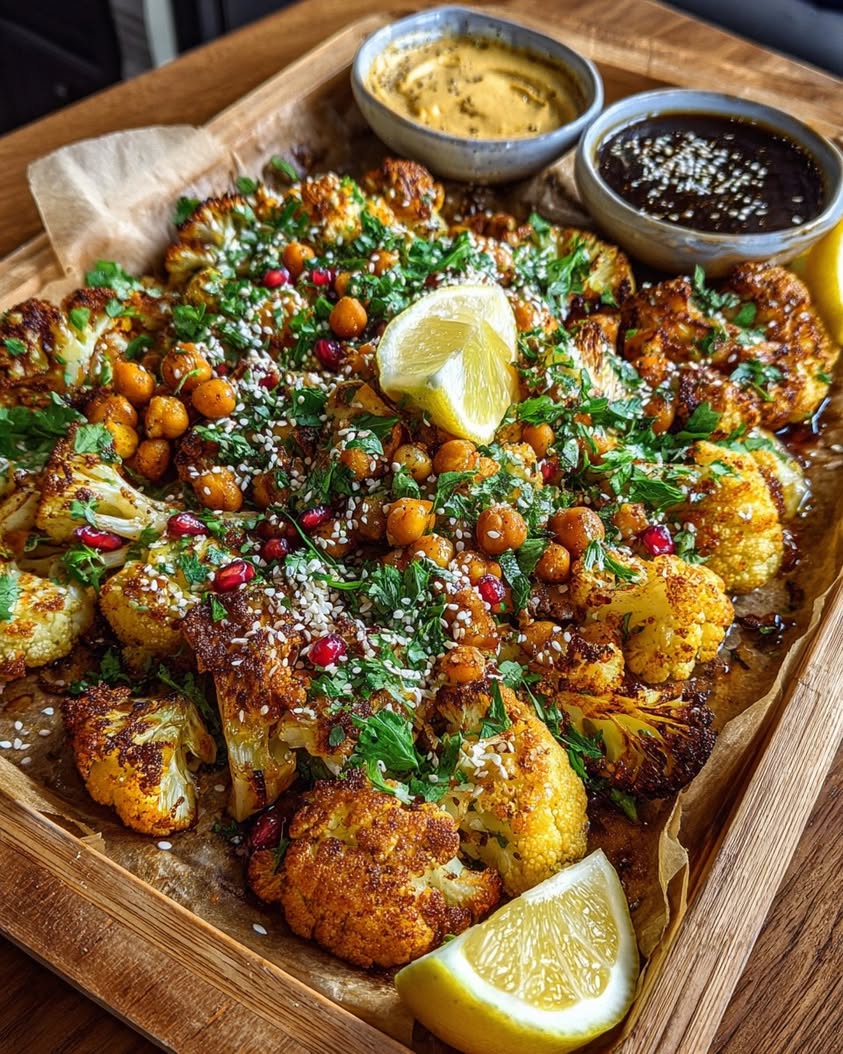
Crispy Chickpea & Cauliflower Sheet Pan with Tahini-Honey Drizzle: A Flavor-Packed Vegetarian Feast
Imagine a single pan emerging from your oven, brimming with golden, crispy chickpeas and caramelized cauliflower florets. This Crispy Chickpea & Cauliflower Sheet Pan with Tahini-Honey Drizzle is not just a meal; it’s a vibrant celebration of textures and flavors. Ultimately, it transforms humble vegetables into a stunning centerpiece that will have everyone reaching for seconds. The magic happens when high heat coaxes out the natural sugars, creating irresistible crispy edges on the chickpeas and tender, flavorful cauliflower.
Furthermore, the crowning glory is a luscious, creamy tahini-honey drizzle that ties everything together with its nutty sweetness and subtle tang. This recipe perfectly embodies the beauty of simple, whole-food cooking. It requires minimal hands-on effort, yet delivers maximum impact on the plate and the palate. Whether you need a speedy weeknight dinner or an impressive dish for guests, this sheet pan wonder delivers every single time.
Consequently, the aroma that fills your kitchen as this dish roasts is utterly intoxicating. It promises a meal that is satisfying, nourishing, and deeply delicious. This Crispy Chickpea & Cauliflower Sheet Pan with Tahini-Honey Drizzle is a testament to how plant-based eating can be incredibly exciting and deeply comforting.
Quick Recipe Highlights
- Flavor Profile: This dish offers a beautiful harmony of savory, sweet, and earthy notes. The roasted vegetables develop a deep, caramelized flavor, while the drizzle adds a creamy, nutty sweetness with a hint of lemon brightness.
- Texture: You get a fantastic contrast between the crispy, almost crunchy chickpeas, the tender-yet-firm roasted cauliflower, and the smooth, velvety sauce. Each bite is a delightful textural experience.
- Aroma: As it roasts, the kitchen fills with the warm, toasty scent of cumin and paprika mingling with the nutty fragrance of roasting chickpeas and the sweet caramelization of cauliflower.
- Visual Appeal: The dish is a feast for the eyes with golden-brown chickpeas, charred cauliflower florets, vibrant fresh herbs, and elegant white drizzle streaks across the warm colors.
- Skill Level Needed: This is a beginner-friendly recipe. The techniques involve simple chopping, tossing, and roasting. The sauce is a straightforward whisk-together affair, making it accessible for cooks of all levels.
- Special Equipment: You truly only need a large, rimmed baking sheet (sheet pan) for even cooking and easy cleanup. A good chef’s knife and cutting board for prepping the cauliflower are also essential.
Recipe Overview
- Difficulty Level: We rate this recipe as “Easy” because it involves fundamental kitchen skills. The steps are sequential and simple: prep vegetables, toss with oil and spices, roast, and make a sauce. There’s no complex timing or advanced techniques required, making it a perfect confidence-builder.
- Category: This dish is wonderfully versatile. It can serve as a hearty vegetarian main course, a substantial side dish alongside grilled proteins, or a fantastic component for meal-prep lunches. It fits into categories like “Healthy Dinners,” “Vegetarian Mains,” and “Easy Weeknight Meals.”
- Cuisine: The recipe draws inspiration from Mediterranean and Middle Eastern culinary traditions, evident in the use of chickpeas, tahini, cumin, and lemon. However, it’s presented in a modern, streamlined sheet-pan format that appeals to global, contemporary home cooking.
- Cost: This is an exceptionally budget-friendly meal. Cauliflower and canned chickpeas are inexpensive staples. The spices and sauce ingredients are pantry items with a long shelf life. You can create a restaurant-quality, nutritious meal for a family for just a few dollars.
- Season: This Crispy Chickpea & Cauliflower Sheet Pan with Tahini-Honey Drizzle is fantastic year-round. It’s comforting in the cooler months but also feels light and fresh enough for spring and summer, especially when garnished with plenty of herbs.
- Occasion: It’s ideal for busy weeknights due to its simplicity. Simultaneously, it’s elegant enough for casual weekend entertaining or a festive meatless Monday. It’s also a stellar potluck or picnic dish as it tastes great warm or at room temperature.
Why You’ll Love This Recipe
First and foremost, the taste and texture are absolutely unbeatable. The crispy chickpeas provide a satisfying crunch that contrasts with the soft, creamy interior of the cauliflower. Meanwhile, the tahini-honey drizzle adds a layer of complex flavor that is both rich and bright. Every forkful is a perfect balance, making it a dish that appeals to even the most devout vegetable skeptics. The roasting process deepens all the flavors in a way that boiling or steaming simply cannot achieve.
Secondly, the convenience factor is a major win. By using a single sheet pan, you minimize both prep time and cleanup. You simply chop, toss, and roast. This hands-off method means you can prepare a side salad, set the table, or simply relax while your oven does the heavy lifting. For busy households, this efficiency is a game-changer. It turns the often chaotic dinner hour into a more manageable and enjoyable experience.
From a nutritional standpoint, this meal is a powerhouse. Chickpeas are loaded with plant-based protein and fiber, promoting satiety and digestive health. Cauliflower is a low-calorie vegetable packed with vitamins C and K, along with antioxidants. Tahini provides healthy fats and minerals like calcium and iron. Together, they create a well-rounded, nourishing meal that fuels your body without weighing you down.
Moreover, this dish has incredible social and entertaining value. It presents beautifully, looking abundant and colorful on a large platter. It’s a naturally inclusive option for gatherings, catering to vegetarians, vegans (with a maple syrup swap), and those with gluten-free needs effortlessly. Serving a beautiful, flavorful plant-based centerpiece can be a wonderful conversation starter and a way to introduce friends to delicious meatless meals.
Finally, the cost-effectiveness and accessibility are undeniable. The ingredients are humble, affordable, and widely available at any standard grocery store. You get a gourmet-tasting result from very basic components. This recipe demonstrates that eating well does not require expensive or exotic ingredients. It’s a testament to the magic that can happen with a well-stocked spice cabinet and a hot oven.
Historical Background and Cultural Significance
The story of this dish is really a fusion of two ancient culinary threads. Chickpeas, one of the world’s oldest cultivated legumes, have been a staple from the Mediterranean to the Middle East and India for over 7,000 years. They were valued for their durability, nutrition, and versatility, appearing in dishes like hummus, falafel, and stews. Cauliflower, believed to have originated in Asia Minor, was later cultivated in Italy and the Mediterranean. The technique of roasting vegetables with oil and spices is timeless, used across cultures to concentrate flavor.
Culturally, the combination speaks to a modern, global pantry. While chickpeas and tahini are cornerstones of Levantine cuisine, and roasting is a universal technique, the sheet-pan method is a distinctly contemporary Western convenience. This recipe represents how global ingredients migrate and adapt into new, streamlined forms for today’s home cook. It honors the traditions of its components while embracing a modern cooking style that prioritizes ease and efficiency.
The evolution of this specific recipe follows the trend of “bowl” and “sheet pan” meals that have dominated healthy eating blogs and cookbooks for the past decade. As people sought ways to incorporate more plants into their diets without sacrificing flavor or spending hours in the kitchen, the sheet pan became a hero tool. The Crispy Chickpea & Cauliflower Sheet Pan with Tahini-Honey Drizzle is a direct product of this movement, combining nutrient-dense ingredients with a foolproof, low-mess technique.
Regional variations of this concept are endless. In the Eastern Mediterranean, you might find roasted cauliflower with a tahini sauce, but the chickpeas might be served as a separate mezze. In Indian cuisine, roasted cauliflower (gobi) and spiced chickpeas (chana) are common, but they’d likely be seasoned with garam masala and turmeric. This recipe borrows the spice profile from one region, the sauce from another, and the cooking method from modern home kitchens, creating a delicious hybrid that feels both familiar and new.
Ingredient Deep Dive
Chickpeas (Garbanzo Beans): These humble legumes are nutritional giants. Historically, they sustained ancient civilizations across the Fertile Crescent. They are an excellent source of plant-based protein, fiber, and essential minerals like iron and folate. For the crispiest result, always pat your canned chickpeas very dry with a clean kitchen towel or paper towels. This removes the starchy aquafaba liquid that steams them instead of letting them roast and crisp. Store dried chickpeas in your pantry indefinitely; store cooked or canned chickpeas in the fridge for up to 4 days. For a substitution, try canned white beans or even crispy roasted lentils.
Cauliflower: This versatile cruciferous vegetable has seen a renaissance in modern cooking. It’s incredibly low in calories but high in fiber and vitamins C and K. When selecting a head, look for tight, compact florets with bright green, fresh-looking leaves attached. Avoid any heads with significant brown spots or a loose, spreading appearance. Store whole cauliflower in the crisper drawer of your refrigerator for up to a week. For this recipe, you can substitute broccoli or romanesco for a different but equally delicious twist.
Tahini: Tahini is simply ground sesame seeds, a paste that’s central to Middle Eastern cuisine. A good tahini should be pourable and creamy, not pasty or dry. Always stir the jar thoroughly before use, as the oil naturally separates. It provides healthy fats, calcium, and a distinct nutty flavor that is irreplaceable. Store tahini in a cool, dark pantry; refrigeration can cause it to thicken and harden. If you need a substitute in a pinch, a smooth, unsweetened almond butter can work, though the flavor will be different.
Spices (Cumin, Paprika, Garlic Powder): This spice trio builds the foundational flavor of the roasted vegetables. Cumin adds earthy warmth, paprika provides sweet smokiness and color, and garlic powder offers a convenient, non-burning garlic flavor. For the best flavor, ensure your spices are fresh—they should smell potent. Whole spices last longer than ground; consider toasting and grinding cumin seeds for an incredible aroma boost. Store spices in a cool, dark place away from the stove to preserve their potency.
Common Mistakes to Avoid
- Not Drying the Chickpeas: This is the number one reason for soggy, chewy chickpeas. The residual moisture from the can steams them. Always pat them thoroughly dry with a towel until the skins start to loosen and they feel dry to the touch.
- Crowding the Pan: If you pile the cauliflower and chickpeas on top of each other, they will steam instead of roast. Spread everything in a single, even layer with a little space between pieces to ensure proper caramelization and crispiness.
- Using Old, Clumpy Tahini: Tahini separates in the jar. If you don’t stir it vigorously from the bottom before measuring, you might get a thick, dry paste that won’t emulsify into a smooth drizzle. Always stir it first.
- Neglecting to Preheat the Oven: A properly hot oven is crucial for getting that initial burst of heat that leads to crispy edges. Putting the pan into a cold oven will result in soggy, unevenly cooked vegetables.
- Overseasoning the Sauce: The tahini sauce is meant to be a drizzle, not a heavy coating. It should be flavorful but balanced. Taste it as you go, especially with the salt and lemon, to ensure it complements rather than overwhelms the roasted vegetables.
- Cutting the Cauliflower Too Small: Tiny florets will burn before the inside is tender. Aim for uniform, bite-sized pieces about 1 to 1.5 inches in size. This ensures they cook through and develop color at the same rate.
- Using a Dark-Colored or Warped Pan: A light-colored, rimmed baking sheet promotes even browning. Dark pans can cause the bottom to burn before the top is done. A warped pan leads to uneven oil pooling and hot spots.
- Skipping the Fresh Garnish: The fresh herbs (parsley, cilantro) and optional pomegranate seeds or red pepper flakes add crucial freshness, color, and textural contrast at the end. They elevate the dish from simple to spectacular.
Essential Techniques
Proper Vegetable Drying: This technique is non-negotiable for crispiness. Moisture is the enemy of browning. After rinsing the chickpeas, spread them on a clean kitchen towel and gently roll them to dry completely and remove loose skins. For the cauliflower, wash it and let it air dry for a few minutes or pat it dry after cutting. Dry surfaces allow the oil to coat evenly and promote direct heat contact with the oven’s air, leading to caramelization instead of steaming.
Even Pan Spacing: The goal is to create a single layer where each piece of cauliflower and chickpea has exposure to the hot air circulating in the oven. If pieces are touching or piled, they create a microenvironment of steam, which softens them. Use two pans if your single pan is too crowded. This simple step is the difference between roasted and steamed vegetables, impacting both texture and flavor concentration dramatically.
Emulsifying the Tahini Sauce: Tahini can seize up when you first add liquid, looking broken and grainy. The key is to start by whisking the tahini with the lemon juice and honey. The acid and thick sweetener help form an initial paste. Then, add the water slowly, whisking constantly, until it transforms magically into a smooth, creamy, pourable consistency. If it’s too thick, add more water a teaspoon at a time. This creates the perfect drizzle texture.
Pro Tips for Perfect Crispy Chickpea & Cauliflower Sheet Pan with Tahini-Honey Drizzle
- For extra crispy chickpeas, you can toss the dried chickpeas in a separate bowl with a half teaspoon of cornstarch or baking powder before adding oil and spices. This draws out more moisture and promotes incredible crunch.
- Rotate your baking sheet halfway through the cooking time. Most ovens have hot spots, and rotating the pan ensures even browning and cooking on all sides of the vegetables.
- Let the roasted vegetables rest on the pan for 5 minutes after pulling them from the oven. This allows them to firm up slightly and makes them easier to transfer to a serving platter without falling apart.
- If your tahini sauce is too thick, thin it with warm water, not cold. Warm water incorporates more easily and helps maintain a smooth emulsion. Add it just a teaspoon at a time until you reach a honey-like consistency.
- For a deeper flavor, toast your whole cumin seeds in a dry skillet for a minute until fragrant, then grind them fresh. The flavor difference between pre-ground and freshly ground cumin is remarkable.
- Don’t toss the loose chickpea skins you remove while drying. You can discard them, or roast them separately on the pan for an extra crispy, salty snack or garnish.
- Use a microplane to zest the lemon before you juice it. You can add a bit of the zest to the tahini sauce or sprinkle it over the finished dish for an extra pop of citrus aroma.
- If serving for a crowd, keep the drizzle in a small squeeze bottle or a pitcher with a spout. This allows guests to add their own amount and makes for a beautiful, restaurant-style presentation.
Variations and Adaptations
For regional twists, try a Moroccan variation by adding ras el hanout spice blend to the vegetables and stirring a pinch of cinnamon into the tahini drizzle. A Mexican-inspired version could use chili powder and smoked paprika on the veggies, with a drizzle blended with lime juice and a touch of chipotle. An Indian adaptation might feature turmeric, garam masala, and coriander on the sheet pan, served with a cilantro-mint chutney instead of tahini sauce.
Seasonal adaptations are simple. In summer, add cherry tomatoes to the pan in the last 10 minutes of roasting. In fall, incorporate cubed sweet potato or delicata squash (adjust roasting time as needed). For winter, add hearty chunks of red onion and carrots. Spring welcomes asparagus spears tossed in during the final 5-7 minutes of cooking. Each season brings new colors and flavors to the base recipe.
Dietary modifications are straightforward. For a vegan Crispy Chickpea & Cauliflower Sheet Pan, replace the honey in the drizzle with maple syrup or agave nectar. For a nut-free version, ensure your tahini is made in a dedicated facility, or substitute with a sunflower seed butter. To make it oil-free, use vegetable broth or aquafaba to coat the vegetables before adding spices, though crispiness will be slightly reduced.
Serving and Presentation Guide
Plating is key for visual appeal. Instead of serving straight from the pan, transfer the roasted vegetables to a large, shallow platter or individual wide bowls. Use the back of a spoon to create a bed, then artfully drizzle the tahini sauce over the top in zig-zags or swirls. This deliberate presentation makes the dish feel special and considered.
Garnishing adds the final touch of freshness and texture. A generous handful of chopped fresh parsley or cilantro is essential. For color and a sweet pop, sprinkle with pomegranate arils or dried cranberries. For heat, add a pinch of red pepper flakes or Aleppo pepper. Toasted pine nuts, slivered almonds, or sesame seeds add a welcome crunch and nutty flavor that complements the tahini beautifully.
Consider traditional and modern accompaniments. Serve it over a bed of fluffy couscous, quinoa, or farro to soak up the flavors and make it more filling. Alongside, offer a simple cucumber-tomato salad, warm pita bread, or a dollop of tangy Greek yogurt or labneh. For a complete meal-in-a-bowl, add a handful of fresh baby spinach or arugula to the bowl first—the warm vegetables will gently wilt the greens.
Wine and Beverage Pairing
Wine pairings should complement the earthy, nutty, and slightly sweet elements. A crisp, unoaked white wine like a Sauvignon Blanc or Pinot Grigio cuts through the richness of the tahini with its acidity. Alternatively, a light-bodied, fruity red with low tannins, such as a Gamay (Beaujolais) or a Pinot Noir, pairs wonderfully with the roasted, caramelized flavors without overwhelming the dish.
For non-alcoholic alternatives, consider sparkling water with a wedge of lemon or lime to cleanse the palate. A tart, slightly sweet pomegranate juice or a minty iced tea would mirror the dish’s Middle Eastern influences beautifully. A warm, lightly spiced chai tea can also be a comforting pairing, especially in cooler weather, as the spices echo the cumin and paprika on the vegetables.
Storage and Shelf Life
Store leftovers in an airtight container in the refrigerator for up to 3 days. It’s best to store the roasted vegetables and the tahini drizzle separately if possible, as the sauce can thin out and make the vegetables soggy overnight. The vegetables will lose some crispiness upon refrigeration but will still taste delicious.
Reheating is best done in an oven or toaster oven at 375°F for about 10 minutes, or until heated through. This helps restore some of the lost crispiness. Avoid microwaving, as it will steam the vegetables and make them soft. The tahini drizzle may thicken in the fridge; simply whisk in a teaspoon of warm water to bring it back to a drizzling consistency.
This dish does not freeze well. The cauliflower becomes mushy and watery upon thawing, and the chickpeas lose their appealing texture. It is truly best enjoyed fresh or within a few days of making. For meal prep, you can pre-cut the cauliflower and make the sauce ahead, but roast the vegetables the day you plan to eat them for optimal quality.
Make Ahead Strategies
You can significantly speed up your dinner prep with a few smart make-ahead steps. Up to two days in advance, wash and cut the cauliflower into florets. Store them in a sealed container or zip-top bag with a dry paper towel to absorb excess moisture in the refrigerator. Also, you can measure out your dry spices into a small bowl so they’re ready to go.
The tahini-honey drizzle can be made up to 3 days ahead. Prepare it as directed and store it in a sealed jar or container in the refrigerator. It will thicken when cold, so let it sit at room temperature for 15-20 minutes before serving, and whisk in a little warm water if needed to loosen it up. This allows the flavors to meld beautifully.
On cooking day, simply pat your pre-cut cauliflower dry if needed, drain and dry the chickpeas, toss everything with oil and your pre-measured spices, and roast. Assemble with the pre-made sauce and fresh garnishes. This strategy cuts active prep time down to just 5 minutes, making this an incredibly fast weeknight option.
Scaling Instructions
Halving the recipe is simple for one or two servings. Use a standard quarter-sheet pan or ensure your vegetables are still in a single layer on a half-sheet pan. Reduce the cooking time slightly, checking for doneness around the 20-minute mark, as a less crowded pan may cook a bit faster. Halve all ingredient quantities precisely for the best balance.
Doubling or tripling for a crowd requires planning. You must use multiple sheet pans and rotate them between oven racks halfway through cooking. Do not stack two pans on one rack, as this blocks airflow. It’s better to roast in batches if oven space is limited. For the sauce, simply multiply the ingredients—it scales up perfectly in a blender or larger bowl.
Timing modifications are minimal when scaling. A single batch and a double batch (on two pans) will cook in roughly the same amount of time, as long as each pan has proper spacing. However, always rely on visual cues—golden brown edges and tender cauliflower—rather than strictly on the clock. Your oven’s capacity and true temperature are the final arbiters.
Nutritional Deep Dive
This meal offers an excellent macro balance. The chickpeas provide a substantial amount of plant-based protein and complex carbohydrates in the form of fiber. The cauliflower adds volume and micronutrients with minimal calories. The olive oil and tahini contribute healthy monounsaturated and polyunsaturated fats, which aid in the absorption of fat-soluble vitamins from the vegetables. Together, they create a satiating meal that provides sustained energy.
Micronutrient analysis reveals a wealth of vitamins and minerals. Cauliflower is rich in vitamin C, vitamin K, and folate. Chickpeas are a great source of iron, magnesium, and B vitamins. Tahini adds a significant amount of calcium, copper, and phosphorus. The spices, particularly cumin and paprika, contain antioxidants and anti-inflammatory compounds. This dish is a nutrient-dense choice that supports overall health.
From a dietary perspective, one serving of this Crispy Chickpea & Cauliflower Sheet Pan with Tahini-Honey Drizzle is naturally gluten-free and vegetarian. It can easily be made vegan. It’s high in fiber, which promotes gut health and helps regulate blood sugar. The combination of protein, fiber, and healthy fats makes it excellent for weight management, as it promotes feelings of fullness and satisfaction, helping to prevent overeating.
Dietary Adaptations
Gluten-Free: This recipe is naturally gluten-free. Simply ensure that all your packaged spices are certified gluten-free, as cross-contamination can sometimes occur in processing facilities. It is a safe and delicious option for those with celiac disease or gluten sensitivity.
Dairy-Free: The recipe contains no dairy ingredients. The creamy element comes entirely from tahini, which is made from sesame seeds. It’s a perfect rich and satisfying dish for those avoiding dairy products.
Vegan: To make a vegan Crispy Chickpea & Cauliflower Sheet Pan, substitute the honey in the drizzle with an equal amount of maple syrup, agave nectar, or date syrup. All other ingredients are plant-based. This adaptation loses no flavor or texture and is completely cruelty-free.
Low-Carb/Keto: For a lower-carb version, increase the cauliflower and reduce or omit the chickpeas, as they are higher in net carbs. Replace the honey in the sauce with a keto-friendly sweetener like monk fruit or erythritol, though the quantity is small enough that omitting it entirely is also an option. The tahini and olive oil fit well within keto fat macros.
Low-FODMAP: This requires careful modification. Chickpeas are high in FODMAPs. Substitute with canned, well-rinsed lentils (in limited quantity per Monash guidelines) or use extra cauliflower. Use garlic-infused oil instead of garlic powder to impart flavor without the high-FODMAP garlic fructans. Ensure the tahini is made from hulled sesame seeds.
Troubleshooting Guide
Vegetables Are Soggy, Not Crispy: This is almost always due to excess moisture or overcrowding. Next time, be militant about drying the chickpeas and cauliflower. Ensure they are spread in a true single layer on the pan. Also, check your oven temperature with a thermometer; an oven that runs cool will steam food rather than roast it.
Chickpeas Are Popping and Jumping in the Oven: This is normal but can be startling! It means moisture inside the chickpea is rapidly turning to steam. Ensuring they are very dry before roasting minimizes this. You can also toss them with a tiny bit of oil to help contain the pops. It doesn’t affect the final taste.
Tahini Sauce is Bitter or Too Thick: Tahini bitterness can vary by brand. Balance it with more lemon juice or a touch more sweetener. If it’s too thick and pasty, you likely didn’t add enough liquid. Remember, it will seize at first. Keep whisking and adding warm water slowly until it suddenly becomes smooth and creamy.
Cauliflower is Browning Too Fast: If the florets are getting dark before they are tender, your oven temperature may be too high, or your pieces may be too small. Tent the pan loosely with aluminum foil for the remainder of the cooking time to slow down browning while allowing the interior to cook through.
Recipe Success Stories
Community feedback on this recipe consistently highlights its reliability and crowd-pleasing nature. Many readers report it becoming a weekly staple in their homes, with one noting, “My kids, who usually protest against cauliflower, now ask for ‘the crispy chickpea bowl.'” Another home cook shared how they used it for a large family gathering, doubling the recipe effortlessly and receiving rave reviews from both vegetarian and meat-eating relatives.
Adaptation stories are inspiring. One reader with an allergy to sesame successfully used sunflower seed butter in the sauce and added a splash of tamari for depth. Another living in a small apartment without a full-sized oven perfected the recipe in a countertop toaster oven, using a smaller pan and adjusting the time. These stories show the recipe’s wonderful flexibility and how it can be tailored to different kitchens and needs.
Photography tips from readers who have shared their beautiful results include using natural side lighting to highlight the textures and drizzling the sauce just before taking the photo so it looks fresh and vibrant. A sprinkle of bright green herbs and red pomegranate seeds against the golden-brown vegetables makes for a stunning, colorful image that captures the essence of the dish perfectly.
Frequently Asked Questions
Can I use frozen cauliflower? Yes, but thaw and pat it completely dry first. Frozen cauliflower releases a lot of water and will not get as crispy as fresh. The texture will be softer, but the flavor will still be good. It’s a convenient shortcut if fresh isn’t available.
My tahini sauce is too thin. How can I thicken it? If you’ve added too much water, you can whisk in a little more tahini to thicken it back up. Alternatively, let it sit for 10 minutes; sometimes it thickens slightly at room temperature as the tahini absorbs the liquid.
Can I make this without oil? You can, but the results will be different. For an oil-free version, use vegetable broth or aquafaba (the liquid from the chickpea can) to help the spices adhere. The vegetables will steam-roast and be softer, not crispy, but still flavorful.
What can I use instead of tahini? For a similar nutty, creamy effect, try unsweetened, runny almond butter or cashew butter. For a nut-free option, sunflower seed butter works, though it will give a greenish tint. The flavor profile will shift, but it will still be delicious.
How do I get my chickpeas extra crunchy? Two pro tips: 1) After drying, toss them with 1/2 tsp of cornstarch before adding oil. 2) Roast them on a separate, preheated pan for the first 10 minutes before adding the cauliflower, as they take longer to crisp.
Is this dish served hot or cold? It is best served warm from the oven, or at room temperature. The flavors are most vibrant when warm. It’s not intended to be served chilled, as the fats in the tahini will solidify and the textures will be less appealing.
Can I add other vegetables to the pan? Absolutely! Dense vegetables like carrots, sweet potatoes, or parsnips should be added at the start. Quick-cooking veggies like bell peppers, zucchini, or cherry tomatoes should be added in the last 10-15 minutes of roasting.
Why did my tahini sauce turn out grainy? This happens if the tahini wasn’t stirred well in the jar before using, or if the liquid was added too quickly. Always stir your tahini from the bottom up. Start by whisking it with the lemon juice and honey first to form a paste, then slowly drizzle in the water while whisking constantly.
How can I tell when the cauliflower is done? The florets should be tender enough to easily pierce with a fork, and the edges should be caramelized and golden brown. A little bit of char on the tips is desirable and adds great flavor.
Can I prep this entire dish ahead and bake it later? You can coat the vegetables in oil and spices, spread them on the pan, cover, and refrigerate for up to 6 hours before roasting. Add 2-3 minutes to the cooking time since you’re starting with a cold pan. The sauce is best made ahead separately.
Additional Resources
If you loved this Crispy Chickpea & Cauliflower Sheet Pan with Tahini-Honey Drizzle, explore other sheet-pan wonders like a Mediterranean Salmon and Vegetable Bake or a Harissa-Roasted Sweet Potato and Kale bowl. The sheet pan method is a gateway to countless easy, healthy dinners that simplify cleanup and maximize flavor.
For technique guides, consider reading up on how to properly roast any vegetable to perfection, the science behind making emulsified sauces, or how to build a balanced vegetarian bowl. Understanding these foundational skills will empower you to create endless variations on this and other recipes with confidence.
For ingredient information, delve deeper into the world of heirloom chickpeas, different varieties of cauliflower (like purple or Romanesco), or the nuances of tahini from different regions like Lebanon or Greece. Exploring your ingredients builds a deeper connection to your food and can inspire your cooking in new and exciting ways.
{“success”:true,”message”:”Recipe created successfully”,”post_id”:8065,”tasty_recipe_id”:8065,”shortcode”:” Print
Crispy Chickpea & Cauliflower Sheet Pan with Tahini-Honey Drizzle
Description
A simple, flavorful sheet pan meal featuring crispy roasted chickpeas and cauliflower florets, drizzled with a creamy tahini-honey sauce for a sweet and savory finish.
Ingredients
For the Crust:
- 1 (15 oz) can chickpeas, drained and rinsed
- 1 medium head cauliflower, cut into florets
- 3 tablespoons olive oil
- 1 teaspoon smoked paprika
- 1/2 teaspoon garlic powder
- 1/2 teaspoon cumin
- Salt and black pepper to taste
- 1/4 cup tahini
- 2 tablespoons honey
- 2 tablespoons lemon juice
- 2–3 tablespoons warm water
- Fresh parsley, chopped (for garnish)
Instructions
1. Prepare the Crust:
- Preheat oven to 425°F (220°C). Line a large sheet pan with parchment paper.
- In a large bowl, toss chickpeas and cauliflower florets with olive oil, smoked paprika, garlic powder, cumin, salt, and pepper until evenly coated.
- Spread the mixture in a single layer on the prepared sheet pan. Roast for 25-30 minutes, stirring halfway, until chickpeas are crispy and cauliflower is tender and golden.
- While roasting, make the drizzle: In a small bowl, whisk together tahini, honey, and lemon juice until smooth. Gradually add warm water, 1 tablespoon at a time, until a pourable consistency is reached.
- Remove sheet pan from oven. Drizzle the tahini-honey sauce over the roasted chickpeas and cauliflower. Garnish with fresh parsley and serve warm.
Notes
You can customize the seasonings to taste.

I’m Billy, a classically trained culinary school graduate from The Culinary Institute of America with over 12 years in the restaurant industry and over 19 years of cooking experience.