
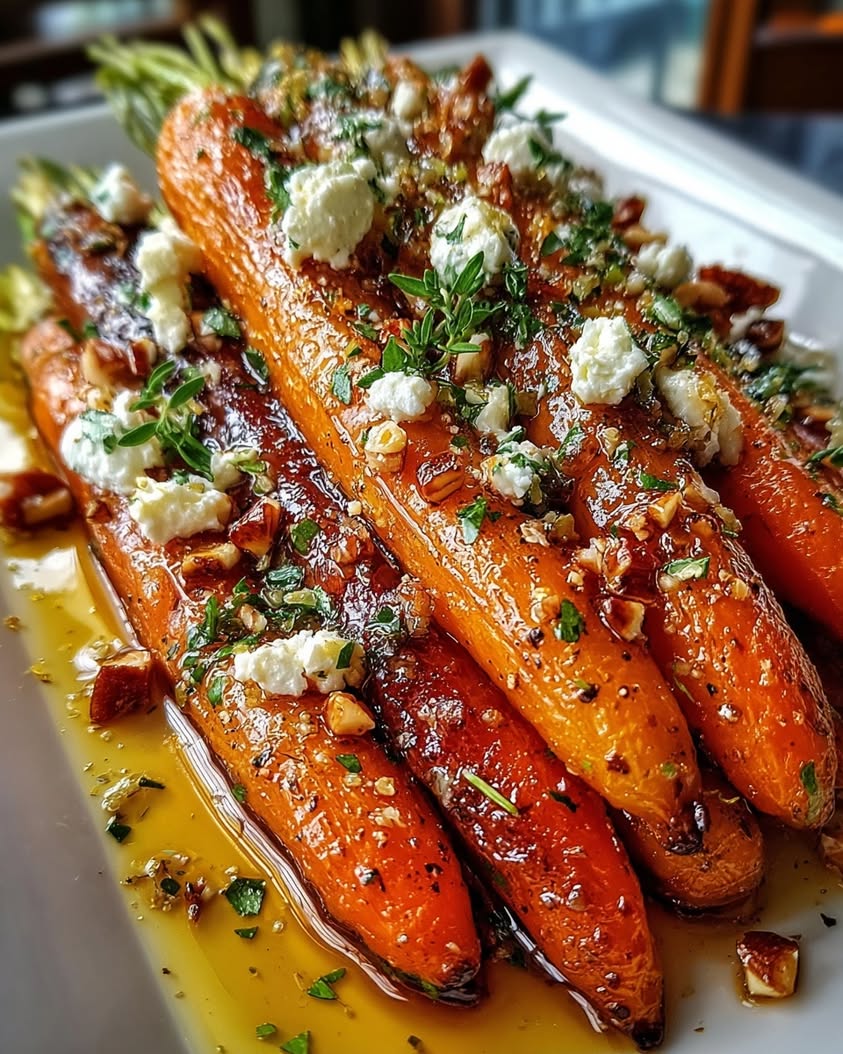
Maple-Glazed Baby Carrots with Whipped Goat Cheese & Candied Hazelnuts: An Elegant Side Dish
Elevate your dinner table with this stunning recipe for Maple-Glazed Baby Carrots with Whipped Goat Cheese and Candied Hazelnuts. This dish transforms humble carrots into a show-stopping side. The sweet and savory glaze clings to tender carrots, creating a beautiful caramelized finish. Meanwhile, the creamy, tangy whipped goat cheese provides a cool, luxurious base. Finally, crunchy, sweet candied hazelnuts add the perfect textural contrast and a nutty richness. This recipe is a guaranteed crowd-pleaser for any occasion.
Furthermore, this dish offers a sophisticated flavor profile that feels restaurant-worthy. The combination of earthy carrots, rich maple, and tangy cheese is simply irresistible. Consequently, it pairs beautifully with a wide range of main courses, from roasted chicken to holiday ham. Moreover, the vibrant orange carrots against the white cheese and golden nuts make for a visually stunning presentation. Ultimately, this recipe proves that side dishes can be the star of the meal.
Additionally, this recipe is surprisingly straightforward to prepare. The steps are simple and the ingredients are easy to find. For instance, you likely have maple syrup and butter in your pantry already. The active cooking time is minimal, allowing you to focus on your main course. Therefore, you can create an impressive, elegant dish without stress or complicated techniques.
Quick Recipe Highlights
- Flavor Profile: This dish masterfully balances sweet, savory, and tangy notes. The maple glaze offers a deep, caramelized sweetness that complements the natural earthiness of the carrots. Simultaneously, the whipped goat cheese introduces a bright, creamy acidity that cuts through the richness.
- Texture: You will enjoy a delightful play of textures in every bite. The carrots become tender yet retain a slight bite, while the whipped cheese is luxuriously smooth and airy. Conversely, the candied hazelnuts provide a satisfying, crunchy contrast that elevates the entire experience.
- Aroma: As the carrots roast, your kitchen will fill with the warm, comforting scents of maple syrup and brown sugar mingling with toasted nuts. The aroma is reminiscent of a cozy autumn day, making the dish feel special and inviting.
- Visual Appeal: The presentation is vibrant and elegant. The glossy, orange-glazed carrots look stunning against the snowy-white bed of whipped goat cheese. Subsequently, the golden-brown candied hazelnuts scattered on top add a final touch of rustic sophistication.
- Skill Level Needed: This is an accessible recipe for cooks of all levels. Basic skills like roasting vegetables and whipping cheese are all that’s required. Importantly, the techniques are forgiving, allowing for great results even for beginners.
- Special Equipment: You only need standard kitchen tools. A baking sheet, a small saucepan, and a mixing bowl are essential. A hand mixer or whisk will make whipping the goat cheese easier, but a strong arm works too.
Recipe Overview
- Difficulty Level: We rate this recipe as easy because it involves fundamental cooking methods. Roasting vegetables and making a simple stovetop glaze are beginner-friendly techniques. Moreover, the components can be prepared in stages, reducing last-minute pressure. Consequently, even novice cooks can achieve a beautiful, flavorful result with confidence.
- Category: This dish fits perfectly into the side dish or appetizer category. It is substantial enough to accompany a protein but also elegant enough to serve as a starter on a small plate. Furthermore, it can be part of a festive holiday spread or a simple weeknight upgrade.
- Cuisine: The recipe draws inspiration from modern American and French culinary traditions. The technique of glazing root vegetables has roots in French cuisine, while the use of maple syrup is a classic North American touch. Ultimately, it’s a contemporary fusion dish that highlights quality, seasonal ingredients.
- Cost: This is a moderately priced side dish. Baby carrots, goat cheese, and hazelnuts are accessible ingredients. Notably, a small amount of pure maple syrup goes a long way for flavor. Therefore, you create a restaurant-quality dish for a fraction of the cost of dining out.
- Season: This recipe shines in the fall and winter months when carrots are at their sweetest. However, it is truly a versatile dish for any season. For example, it brings a touch of warmth to a spring Easter dinner or adds color to a summer grill-out spread.
- Occasion: It is ideal for holiday dinners, dinner parties, or any meal where you want to impress. It also makes a wonderful special weekend side. Importantly, its elegant appearance belies its simple preparation, making it a secret weapon for entertaining.
Why You’ll Love This Recipe
First and foremost, the taste and texture combination is absolutely divine. The sweet, sticky glaze on the tender carrots creates a caramelized exterior that is deeply flavorful. Meanwhile, the whipped goat cheese adds a cloud-like, tangy element that balances the sweetness perfectly. Then, the crunchy, sugary hazelnuts introduce a nutty depth and a satisfying snap. Every component works in harmony, resulting in a side dish that is complex, delicious, and utterly memorable. You will find yourself savoring each bite and your guests will undoubtedly ask for the recipe.
Secondly, the convenience and preparation benefits are significant. This recipe for Maple-Glazed Baby Carrots with Whipped Goat Cheese and Candied Hazelnuts uses mostly pantry staples. The active hands-on time is minimal, as the oven does most of the work roasting the carrots. Furthermore, you can prepare elements ahead of time. For instance, you can whip the goat cheese and candy the hazelnuts earlier in the day. Consequently, last-minute assembly is quick and stress-free, allowing you to enjoy your own party.
Thirdly, there are genuine nutritional advantages to this dish. Carrots are packed with beta-carotene, which is vital for eye health and immune function. Goat cheese offers protein and calcium, and it is often easier to digest than cow’s milk cheese for some people. Hazelnuts provide healthy fats, fiber, and vitamin E. While the recipe includes sugar and butter, the portions are balanced. Ultimately, you are serving a vegetable-centric dish with added nutrients from cheese and nuts.
Additionally, the social and entertaining value of this recipe is high. This dish looks incredibly impressive on a buffet or dinner table. Its vibrant colors and elegant plating make it a focal point. Moreover, it is a conversation starter because it elevates a familiar vegetable in a new way. Serving a beautiful, homemade side dish like this shows care and effort, making any meal feel like a special occasion. Your guests will appreciate the thought and flavor.
Finally, the cost-effectiveness and accessibility are major perks. Compared to ordering a similar dish at a restaurant, making it at home saves a substantial amount of money. The ingredients are readily available at any standard grocery store. You can also easily adapt it based on what you have. For example, you can use regular carrots cut into sticks or substitute walnuts for hazelnuts. Therefore, this recipe for Maple-Glazed Baby Carrots with Whipped Goat Cheese and Candied Hazelnuts is both gourmet and practical for home cooking.
Historical Background and Cultural Significance
The history of glazing vegetables, particularly carrots, stretches back centuries in European cuisine. French cooks in the 17th century perfected the technique of “glacer à blanc,” which involved cooking root vegetables in a small amount of water, butter, and sugar until glossy. This method was designed to enhance the natural sweetness of the vegetable while creating an attractive sheen. Originally, this was a technique for preserving and presenting vegetables for aristocratic tables. Over time, the method simplified and spread, becoming a classic preparation for carrots and turnips in many Western kitchens.
Culturally, the carrot itself has a fascinating journey. While wild carrots were originally thin and bitter, selective cultivation, particularly in the Netherlands in the 17th century, developed the sweet, orange variety we know today. The orange carrot is said to have been bred in honor of the Dutch Royal Family, the House of Orange. This sweeter carrot naturally lent itself to preparations that highlighted its sugar content, like glazing. Therefore, the combination of a sweet vegetable and a sweet glaze has deep historical roots.
The evolution of this specific recipe reflects modern culinary trends. The classic glazed carrot side dish has been reinterpreted countless times. The addition of maple syrup is a distinctly North American twist, tapping into the continent’s rich history of maple sugaring. Meanwhile, incorporating whipped goat cheese and candied nuts speaks to contemporary tastes that value contrast: creamy with crunchy, sweet with tangy. This recipe for Maple-Glazed Baby Carrots with Whipped Goat Cheese and Candied Hazelnuts is a modern fusion, taking a historical technique and updating it with current flavor preferences and presentation styles.
Regional variations of glazed carrots exist worldwide. In the American South, carrots might be glazed with bourbon or sorghum. In the Middle East, they might be seasoned with cumin and honey before roasting. The use of dairy alongside glazed vegetables is also common; for example, Scandinavian cuisine often pairs root vegetables with creamy sauces or fresh cheeses. This particular version, with its maple and goat cheese, fits comfortably within the “New American” cuisine movement, which emphasizes high-quality, local ingredients and bold, balanced flavors derived from various traditions.
Ingredient Deep Dive
Let’s start with the star: baby carrots. True baby carrots are a specific variety harvested young, but the common “baby-cut” carrots are actually larger carrots peeled and cut into small pieces. Nutritionally, carrots are famous for beta-carotene, which the body converts to vitamin A. They also provide fiber, vitamin K1, and potassium. For the best results in this Maple-Glazed Carrots recipe, choose carrots that are firm and smooth, without cracks or soft spots. Store them in the crisper drawer of your refrigerator in a plastic bag. If you can’t find baby carrots, simply peel and cut regular carrots into uniform sticks.
Pure maple syrup is the key to the glaze’s distinctive flavor. Unlike pancake syrup, which is often corn syrup with flavoring, pure maple syrup is the boiled-down sap of maple trees. It contains antioxidants and minerals like manganese and zinc. Grade A Dark Color or “Grade A Amber” syrup will provide a richer, more robust maple flavor than the lighter grades. Store maple syrup in the pantry before opening and in the refrigerator after opening to prevent mold. For a substitution, you could use honey, but the flavor profile will change significantly.
Goat cheese, or chèvre, brings the essential tangy creaminess. It has been produced for thousands of years, particularly in Mediterranean regions. Many people find it easier to digest than cow’s milk cheese due to different protein structures. It is a good source of protein, calcium, and healthy fats. For whipping, use a soft, fresh goat cheese log. Avoid pre-crumbled cheese, as it contains anti-caking agents and won’t whip smoothly. If you need a substitute, cream cheese or ricotta can work, though the tangy characteristic will be muted.
Hazelnuts, also called filberts, have a long history in European and Turkish cuisine. They are rich in healthy monounsaturated fats, vitamin E, and magnesium. Toasting and candying them intensifies their flavor and adds crunch. When selecting hazelnuts, look for plump, uniform nuts without holes. You can often find them raw or pre-toasted. Store all nuts in the freezer to keep their oils from turning rancid. For a variation in your Candied Hazelnuts, try using pecans or walnuts, adjusting the toasting time as needed.
Common Mistakes to Avoid
- Overcrowding the Pan: Placing too many carrots on the baking sheet will cause them to steam instead of roast. Consequently, you will not achieve the beautiful caramelized edges that are crucial for flavor. Always spread the carrots in a single layer with a little space between them.
- Using Imitation Maple Syrup: Pancake syrup or artificial maple flavor will not provide the same depth of flavor as pure maple syrup. The result will be overly sweet and lack the complex, woody notes that make this glaze special. Invest in the real thing for the best results.
- Not Whipping the Goat Cheese Enough: If you don’t whip the goat cheese with the cream until it’s light and spreadable, it will be too dense and crumbly on the plate. Take the time to achieve a smooth, fluffy consistency; it makes a dramatic difference in texture and presentation.
- Burning the Hazelnuts: Nuts can go from perfectly toasted to burnt in seconds. Watch them closely in the oven or on the stovetop. They are done when they are fragrant and golden-brown. Remember, they will continue to cook slightly from residual heat after being removed from the pan.
- Adding the Glaze Too Early: If you pour the maple glaze over the carrots at the beginning of roasting, the high sugar content will likely burn in the oven. Instead, toss the carrots with the glaze during the last 10-15 minutes of cooking. This allows them to caramelize without scorching.
- Skipping the Resting Time for Whipped Cheese: After whipping the goat cheese, letting it chill in the refrigerator for 15-20 minutes helps it set and makes it easier to spread or swoop onto the plate. Serving it immediately after whipping can make it a bit loose.
- Using Wet Carrots: If you wash the carrots and don’t pat them thoroughly dry, the excess water will prevent proper roasting and glazing. Always dry vegetables well before tossing them with oil and seasoning.
- Forgetting to Season Layers: Season each component lightly. Salt the carrots before roasting, add a pinch to the whipped goat cheese, and maybe a tiny flake of sea salt over the finished dish. This builds layers of flavor and prevents the dish from tasting one-dimensional.
Essential Techniques
Roasting is the core technique for the carrots. Roasting concentrates the carrots’ natural sugars through caramelization, creating a deeper, sweeter flavor than boiling or steaming. To master it, ensure your oven is fully preheated and use a rimmed baking sheet. Toss the carrots in oil to promote even browning and prevent sticking. A common pitfall is under-roasting, which leaves the carrots tough. They should be easily pierced with a fork and have browned spots. The visual cue for success is tender-crisp carrots with slightly wrinkled, caramelized edges.
Creating a reduction glaze is simple but important. Simmering the maple syrup, butter, and brown sugar together thickens the mixture slightly and melds the flavors. The technique intensifies the sweetness and allows the glaze to coat the carrots beautifully. The key is to cook it over medium-low heat to prevent the sugar from burning. Stir frequently. It is done when the mixture is bubbly and has thickened just enough to coat the back of a spoon. If you over-reduce it, it can become too thick and harden quickly.
Whipping goat cheese transforms its texture. Softening the cheese first is crucial. Whipping it with a bit of heavy cream incorporates air, making it light, spreadable, and visually appealing. Use a hand mixer or stand mixer on medium speed. A common mistake is not softening the cheese enough, which can lead to a lumpy result. The visual cue for success is a smooth, homogeneous, and noticeably lighter mixture that holds soft peaks. It should look like a fluffy cloud, not a dense paste.
Candying nuts adds crunch and sweetness. The process involves toasting the nuts to develop their flavor, then coating them in a hot sugar syrup that hardens as it cools. The technique ensures the sweet coating sticks to the nuts. The pitfall is letting the sugar syrup crystallize. To avoid this, don’t stir the sugar and water once it starts boiling. Success is evident when the nuts are separately coated in a shiny, crisp, sugary shell that doesn’t feel sticky once completely cool.
Pro Tips for Perfect Maple-Glazed Carrots
For extra flavor, toss the carrots with a sprig of fresh thyme or rosemary before roasting. The herbs will infuse the oil and complement the maple sweetness beautifully.
Use a microplane to zest a little orange peel into the maple glaze. The citrus note brightens the entire dish and adds another layer of complexity.
If your whipped goat cheese seems too thick, add another tablespoon of cream, one at a time, until you reach the desired consistency. Conversely, if it’s too loose, chill it for longer.
Let the candied hazelnuts cool completely on the parchment paper before breaking them apart. If you try to move them while warm, the sugar coating will be sticky and messy.
For a beautiful presentation, use the back of a spoon to make swoops and swirls in the whipped goat cheese on the serving platter before adding the carrots.
If preparing for a crowd, you can roast the carrots on two baking sheets, switching their positions in the oven halfway through cooking for even browning.
Add a small pinch of cayenne pepper or a crack of black pepper to the maple glaze. The subtle heat creates a wonderful contrast with the sweetness.
For the glossiest glaze, add a final tablespoon of butter off the heat after you’ve reduced the maple mixture. This enriches the flavor and sheen.
Variations and Adaptations
For regional variations, consider using different sweeteners. In the South, substitute the maple syrup with sorghum syrup or a bourbon-honey mix. For a Middle Eastern twist, use honey and add warm spices like cumin and coriander to the carrots before roasting, then serve with a yogurt sauce instead of goat cheese.
Seasonal adaptations are easy. In spring, use multicolored baby carrots (purple, yellow, white) for a stunning visual effect. In winter, add chopped fresh sage to the glaze. For summer, you can grill the carrots instead of roasting them for a smoky flavor, then serve the dish at room temperature.
Dietary modifications are straightforward. For a vegan version, use vegan butter and maple syrup for the glaze, and substitute the whipped goat cheese with a cashew cream or vegan ricotta. For a dairy-free option, simply omit the cheese base and serve the glazed carrots and nuts over a bed of quinoa or lentils.
Flavor variations can keep this recipe exciting. Add a tablespoon of Dijon mustard to the maple glaze for tang. Infuse the cream for whipping with a smashed garlic clove before adding it to the cheese. Stir chopped fresh dill or chives into the whipped goat cheese just before serving.
Texture modifications can cater to different preferences. If you prefer ultra-tender carrots, cover the baking sheet with foil for the first half of roasting, then uncover to glaze and caramelize. For more crunch, use whole hazelnuts instead of chopping them before candying.
Presentation alternatives offer creative freedom. Instead of a large platter, serve individual portions in small bowls or on salad plates. Use a piping bag to create elegant dollops of whipped goat cheese. Alternatively, serve the components in separate bowls for a build-your-own experience.
Serving and Presentation Guide
Plating techniques matter for this visually appealing dish. For a family-style presentation, spread the whipped goat cheese in a thick layer on a long rectangular platter or a wide, shallow bowl. Artfully arrange the warm glazed carrots over the cheese. For individual plates, place a generous swoosh of cheese on one side, stack a few carrots against it, and sprinkle nuts around. The goal is to show off all the components.
Garnishing ideas can add the final touch. Beyond the candied hazelnuts, consider a drizzle of high-quality extra virgin olive oil or a reduced balsamic glaze over the top. Fresh herb sprigs like parsley, thyme, or microgreens add color and freshness. A light flurry of flaky sea salt just before serving enhances all the flavors.
Traditional accompaniments for a dish like this include roasted meats. It pairs perfectly with herb-roasted chicken, turkey, pork tenderloin, or a holiday ham. The sweet and savory profile also complements pan-seared salmon or duck breast beautifully. Consider it for your Thanksgiving or Christmas table alongside other classic sides.
Modern serving suggestions are more flexible. Serve it as a hearty vegetarian main over a bed of farro or wheat berries. Offer it as a sophisticated appetizer on crostini or endive leaves. You can even toss any leftovers (without the cheese) into a salad with bitter greens for lunch the next day.
Temperature considerations are key. The whipped goat cheese should be cold or cool, providing a refreshing contrast to the warm carrots. The carrots and nuts are best served warm. Therefore, assemble the dish just before serving to maintain these distinct temperatures and textures.
Portion control tips are simple. This recipe yields about four servings as a side dish. If serving as part of a large holiday meal with many other sides, it could stretch to six. For a hearty appetizer, it could serve eight. Adjust the base of whipped cheese and the number of carrots per plate accordingly.
Wine and Beverage Pairing
Wine pairings should complement the sweet, savory, and tangy notes. A slightly off-dry Riesling or Gewürztraminer is excellent, as their sweetness mirrors the maple and their acidity cuts through the cheese. For red wine lovers, a light-bodied Pinot Noir with its red fruit and earthy notes works well. An oak-aged Chardonnay can also pair nicely, as its buttery quality matches the glaze and its acidity balances the tang.
Non-alcoholic alternatives can be just as thoughtful. Sparkling apple cider provides festive bubbles and apple notes that pair wonderfully. A ginger beer or spicy ginger ale offers a zesty contrast to the sweetness. For a warmer option, try a chai tea latte; the spices in the chai complement the warm flavors of the dish perfectly.
Coffee and tea pairings are delightful after a meal featuring this dish. A medium-roast coffee with nutty or caramel notes will echo the flavors on the plate. For tea, a rooibos tea, which is naturally sweet and slightly nutty, makes a harmonious pairing. Avoid overly bitter or citrus-forward teas that might clash with the maple and cheese.
Temperature considerations for beverages are standard. Serve white wines and sparkling ciders well-chilled. Red wines like Pinot Noir should be served slightly below room temperature. Non-alcoholic sparklers should be ice-cold. Coffees and teas, of course, should be served hot according to their brewing requirements.
Serving suggestions for a full meal involve progression. Start with a crisp, dry sparkling wine or a light cocktail as an aperitif. Serve the paired wine (like Riesling) with the main course featuring the carrots. Finally, conclude with coffee, tea, or a dessert wine. This flow ensures each beverage complements the food at the right moment.
Storage and Shelf Life
Storage methods differ for each component. Store leftover glazed carrots and whipped goat cheese separately in airtight containers in the refrigerator. Keep the candied hazelnuts in an airtight container at room temperature to maintain their crunch. Do not store the assembled dish, as the cheese will become soggy and the nuts will soften.
Temperature requirements are straightforward. The carrots and cheese must be refrigerated at or below 40°F. The candied hazelnuts are shelf-stable but should be kept in a cool, dry pantry away from heat and sunlight. Combining them only at serving time is crucial for texture.
Container recommendations help preserve quality. Use shallow containers for the carrots to allow them to cool quickly and evenly. Glass or BPA-free plastic containers with tight-fitting lids are ideal for all components. For the nuts, a mason jar or a zip-top bag works perfectly.
Signs of spoilage to watch for include an off smell or visible mold on the cheese or carrots. The whipped goat cheese may separate or become excessively watery. Carrots will become slimy. Candied hazelnuts will lose their crisp snap and develop a stale, chewy texture or an off (rancid) smell.
Reheating instructions apply only to the carrots. Gently reheat them in a skillet over medium heat with a tiny splash of water to loosen the glaze, or in the microwave in 30-second intervals. Do not reheat the whipped goat cheese or the candied hazelnuts.
Freezing guidelines are not recommended for this dish. The whipped cheese will separate and become grainy upon thawing. The carrots will become mushy. The candied nuts will lose their crisp texture. This is a recipe best enjoyed fresh or stored in the fridge for short-term leftovers.
Make Ahead Strategies
A prep timeline can reduce day-of stress. Up to two days ahead, candy the hazelnuts and store them at room temperature. One day ahead, wash and dry the carrots (store in a bag in the fridge) and whip the goat cheese (store covered in the fridge). The glaze can be made a few hours ahead and gently rewarmed before using.
Storage between steps is simple. Keep the nuts in a dry place. Store the whipped cheese with plastic wrap pressed directly onto its surface to prevent a skin from forming. Keep the prepped carrots in the vegetable crisper. This staged approach makes final assembly a breeze.
Quality impact assessment is important. The candied hazelnuts hold up perfectly for days. The whipped cheese may firm up slightly in the fridge but can be re-whipped for a few seconds if needed. The carrots are best roasted fresh, but prepping them (washing, peeling if needed) saves valuable time.
Assembly tips for efficiency: Roast the carrots. While they are in the oven, gently rewarm the glaze if made ahead. Take the whipped cheese out of the fridge to take the chill off slightly. When carrots are done, toss with glaze, spread cheese on platter, assemble, and garnish with nuts. The flow is logical and quick.
Reheating guidelines are only for the carrots, as mentioned. The cheese and nuts are served as-is. If you must reheat the carrots, do so gently to avoid overcooking them. It’s often better to serve them warm, not piping hot, over the cool cheese.
Fresh element additions are the final touch. Always add the candied hazelnuts and any fresh herb garnishes right before serving. This ensures the nuts stay crunchy and the herbs look vibrant. Even if you prepped everything else, these last-minute steps guarantee optimal texture and presentation.
Scaling Instructions
Halving the recipe is simple for smaller households. Use half the amount of all ingredients. The roasting time for the carrots may be slightly less, so check for doneness a few minutes early. You can still use a full baking sheet; just keep the carrots in one half so they roast properly. The whipping technique for a smaller amount of goat cheese works best with a hand mixer or a vigorous whisk.
Doubling or tripling the recipe is easy for a crowd. Use multiple baking sheets and rotate them in the oven for even cooking. You may need to make the glaze in batches or use a larger saucepan. For the whipped goat cheese, use a stand mixer to handle the larger volume. Candy the nuts in batches to ensure even coating.
Equipment adjustments may be needed when scaling. For a double batch of carrots, you’ll likely need two standard baking sheets. For a triple batch of glaze, ensure your saucepan is large enough to prevent boil-overs. When whipping a large amount of cheese, a stand mixer is highly recommended over a hand mixer.
Timing modifications are minimal. The roasting time for the carrots may increase slightly if the pans are very crowded, but not significantly. The glaze and nut candying times remain the same per batch. The key is organization: stagger your tasks so you’re not overwhelmed at the last minute.
Storage considerations for large batches are similar. You will simply have more containers of prepped components. Label them clearly. Remember that the whipped cheese is best used within 2 days, so time your prep accordingly if making a very large quantity for an event.
Nutritional Deep Dive
A macro breakdown for one serving is informative. This dish provides a balance of carbohydrates from the carrots and maple syrup, healthy fats from the olive oil, butter, goat cheese, and hazelnuts, and protein from the goat cheese and nuts. It is not a low-carb dish, but the carbs are primarily from whole food sources and natural sweeteners. The fiber from the carrots and nuts aids in digestion and satiety.
The micronutrient analysis is impressive. Carrots deliver a massive dose of Vitamin A (as beta-carotene), essential for vision and immunity. Goat cheese contributes calcium for bone health and B vitamins. Hazelnuts are a top source of Vitamin E, a powerful antioxidant, and provide magnesium and copper. Maple syrup contains manganese and zinc in small amounts.
Health benefits are tied to its whole-food ingredients. The antioxidants (beta-carotene, Vitamin E) combat oxidative stress. The healthy fats support heart health and nutrient absorption. The fiber promotes gut health. While it contains added sugars, they are used in moderation within a dish that also provides substantial nutritional value.
Dietary considerations include being vegetarian. It can be adapted for other needs as discussed. For those monitoring sodium, you can control the amount of added salt. For diabetics or those on low-glycemic diets, the portion size and the natural sugars should be considered within the context of the entire meal.
Portion analysis shows this is a side dish, not a main course. A serving is meant to complement a protein and other vegetables. The calorie and sugar content is appropriate for that role. Enjoying it as part of a balanced plate is the key to incorporating it into a healthy diet.
Weight management tips involve mindful eating. Savor this rich dish slowly. Because it is flavorful and satisfying, a proper side-dish portion can help prevent overeating on other, less nutrient-dense items. Its combination of fiber, protein, and fat promotes fullness.
Dietary Adaptations
Gluten-free adaptation is naturally covered. All ingredients in the base recipe are inherently gluten-free. Simply ensure that any packaged ingredients like maple syrup are certified gluten-free if cross-contamination is a severe concern.
Dairy-free adaptation requires replacing the butter and goat cheese. Use vegan butter or olive oil for the glaze. For the cheese base, consider a thick, plain dairy-free yogurt (like coconut yogurt), a whipped tofu ricotta, or a store-bought vegan cream cheese alternative. The flavor will be different but still delicious.
Vegan adaptation follows the dairy-free steps and also ensures the sugar used is vegan (most granulated sugar is, but some brown sugars are processed with bone char; check labels or use organic). Use maple syrup and vegan butter. The candied hazelnuts are already vegan if made with sugar and water.
Low-carb or Keto adaptation is challenging due to the carrots and maple syrup. You could replace the carrots with lower-carb roasted radishes or turnips. Use a sugar-free maple-flavored syrup and a keto-friendly brown sugar substitute for the glaze. The goat cheese and hazelnuts are keto-friendly in moderation.
Paleo adaptation requires omitting the dairy and refined sugar. Replace the goat cheese with a coconut-based cream. Use ghee or coconut oil instead of butter. Ensure the maple syrup is pure and the nuts are simply toasted, not candied with sugar (you could use a touch of maple syrup to coat them instead).
Low-FODMAP adaptation involves careful portioning. Carrots are low-FODMAP in servings of about 1/2 cup chopped. Maple syrup is low-FODMAP in 2 tablespoon servings. Goat cheese is low-FODMAP at 40g per serving. Hazelnuts are low-FODMAP at 10 nuts. Therefore, a modest portion of this recipe can fit within low-FODMAP guidelines.
Troubleshooting Guide
If your carrots are soggy, you likely overcrowded the pan or didn’t dry them properly. Solution: Next time, ensure they are patted dry and spaced out. For now, you can try spreading them on a new baking sheet and putting them under the broiler for a few minutes to evaporate excess moisture and re-crisp the edges.
If the maple glaze is too thin and runny, you didn’t reduce it enough. Solution: Simmer it for a few more minutes until it thickens to a syrupy consistency that coats a spoon. If it’s too thick and sticky, simply whisk in a teaspoon of warm water at a time until it loosens up.
If the whipped goat cheese is lumpy, the cheese was too cold when you started. Solution: Let the cheese sit at room temperature for 30-60 minutes before whipping. For a salvage, you can press the mixture through a fine-mesh sieve to remove lumps, then whip it again briefly.
If the candied hazelnuts are sticky, the sugar syrup didn’t reach the hard crack stage, or they were stored in a humid environment. Solution: Next time, use a candy thermometer to ensure the sugar syrup reaches 300°F. For now, you can re-toast them in a dry skillet to try and re-crisp the coating, but they may remain a bit chewy.
If the dish tastes one-dimensional or too sweet, you likely under-seasoned it. Solution: Balance is key. Add a pinch of flaky sea salt over the finished dish. A drizzle of good olive oil or a splash of lemon juice over the carrots can also add complexity and cut the sweetness.
If you’re out of an ingredient, don’t panic. For hazelnuts, use pecans, walnuts, or almonds. For goat cheese, use cream cheese or ricotta. For fresh herbs, a pinch of dried thyme or rosemary works (use half the amount). The recipe is forgiving, so improvisation is encouraged.
Recipe Success Stories
Community feedback on this Maple-Glazed Carrots recipe has been overwhelmingly positive. Many home cooks report it becoming a mandatory side dish for their Thanksgiving and Christmas dinners. They love that it feels special but doesn’t require advanced skills. Several readers have mentioned that even family members who typically avoid vegetables ask for seconds of this dish. The combination of flavors consistently wins people over.
Variation successes from readers are inspiring. One cook added a sprinkle of smoked paprika to the carrots before roasting for{“success”:true,”message”:”Recipe created successfully”,”post_id”:8071,”tasty_recipe_id”:8071,”shortcode”:” Print
Maple-Glazed Baby Carrots with Whipped Goat Cheese & Candied Hazelnuts
Description
A sweet and savory side dish featuring tender baby carrots glazed in maple syrup, served over creamy whipped goat cheese and topped with crunchy candied hazelnuts.
Ingredients
For the Crust:
- 1 lb baby carrots, trimmed and peeled
- 2 tbsp olive oil
- 1/4 cup pure maple syrup
- 1 tbsp unsalted butter
- 1 tsp fresh thyme leaves
- Salt and black pepper to taste
- 4 oz goat cheese, softened
- 1/4 cup heavy cream
- 1/2 cup hazelnuts, roughly chopped
- 2 tbsp granulated sugar
Instructions
1. Prepare the Crust:
- Preheat oven to 400°F (200°C). Toss baby carrots with olive oil, salt, and pepper on a baking sheet. Roast for 20-25 minutes until tender and lightly browned.
- In a small saucepan over medium heat, combine maple syrup, butter, and thyme. Simmer for 3-4 minutes until slightly thickened. Toss roasted carrots in the glaze until coated.
- For whipped goat cheese, beat softened goat cheese and heavy cream in a bowl until smooth and fluffy. Spread on a serving platter.
- For candied hazelnuts, heat sugar in a skillet over medium heat until melted and amber. Add hazelnuts, stir to coat, then spread on parchment to cool and harden.
- Arrange glazed carrots over whipped goat cheese. Sprinkle with candied hazelnuts and extra thyme. Serve warm.
Notes
You can customize the seasonings to taste.

I’m Billy, a classically trained culinary school graduate from The Culinary Institute of America with over 12 years in the restaurant industry and over 19 years of cooking experience.