
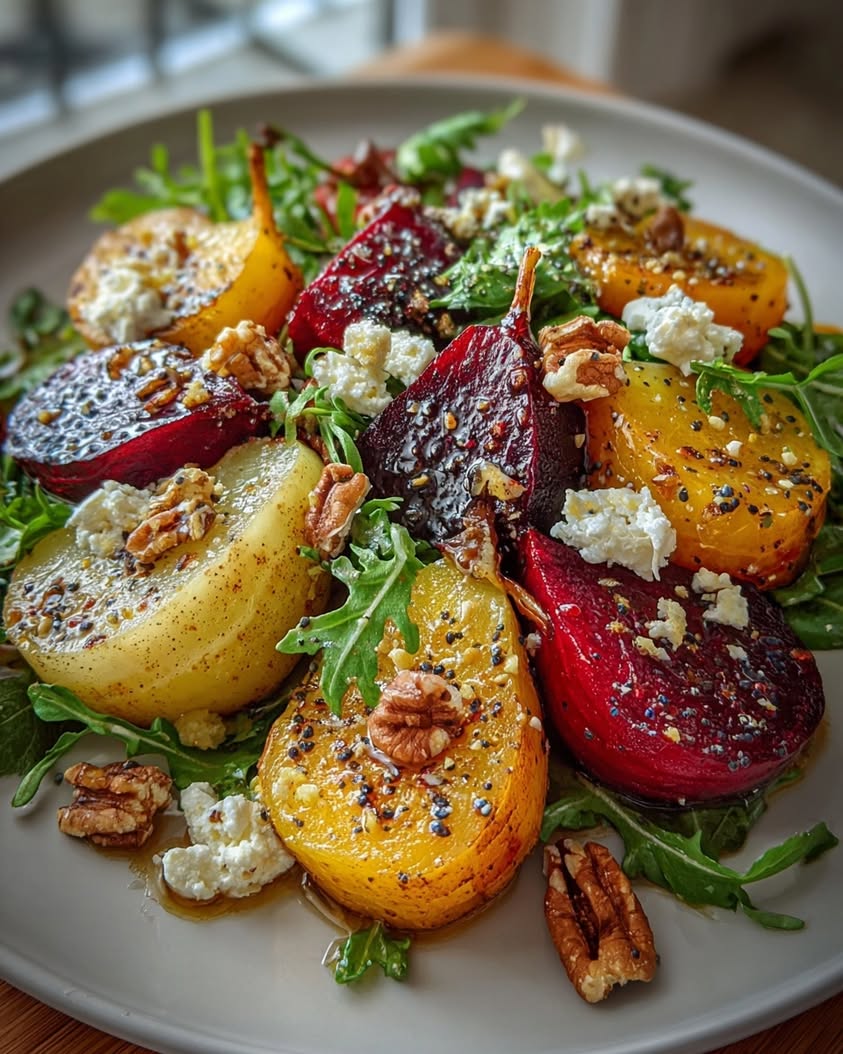
Roasted Beet and Pear Salad with Feta: A Vibrant Fall Recipe
This Roasted Beet and Pear Salad with Feta is a stunning celebration of autumn’s finest produce. Imagine sweet, earthy beets roasted to perfection, paired with juicy, ripe pears and creamy, tangy feta cheese. Consequently, this salad delivers a beautiful balance of flavors and textures in every single bite. Moreover, it’s a perfect centerpiece for a holiday table or a simple, elegant weeknight dinner. Ultimately, this vibrant fall recipe will become your new seasonal favorite.
Creating this salad is surprisingly straightforward. First, you roast the beets to concentrate their natural sugars. Then, you simply assemble the fresh ingredients. The result is a dish that feels both rustic and refined. Furthermore, the colors are absolutely breathtaking, featuring deep ruby red, creamy white, and vibrant green. This Roasted Beet and Pear Salad with Feta is not just food; it’s a feast for the eyes. Therefore, it’s guaranteed to impress any guest.
Additionally, this recipe is incredibly versatile. You can easily adapt it to suit various dietary needs or personal preferences. For instance, swap the nuts or change the cheese. The homemade vinaigrette ties everything together with a bright, acidic punch. In essence, this salad proves that healthy eating can be utterly delicious and visually spectacular. So, gather your ingredients and let’s make this beautiful Roasted Beet and Pear Salad with Feta.
Quick Recipe Highlights
- Flavor Profile: This salad masterfully combines sweet, earthy, tangy, and nutty notes. The roasted beets offer a deep, caramelized sweetness, while the fresh pears provide a bright, juicy contrast. Meanwhile, the salty feta and the acidic vinaigrette create a perfect savory balance.
- Texture: You will enjoy a wonderful interplay of textures. The beets are tender yet firm, the pears are crisp and juicy, and the walnuts add a essential crunchy element. Finally, the creamy feta cheese melts slightly on the warm components, creating a luxurious mouthfeel.
- Aroma: As the beets roast, your kitchen will fill with an earthy, sweet fragrance. Upon tossing the salad, the fresh aroma of pear and the sharp scent of red onion emerge. The toasted walnuts then add a warm, nutty perfume that completes the sensory experience.
- Visual Appeal: This dish is a masterpiece of color with its striking ruby red beets, pale green pears, white feta crumbles, and dark green arugula. The presentation is naturally artistic, making it ideal for photographing and sharing on social media. Consequently, it looks as incredible as it tastes.
- Skill Level Needed: This is an accessible recipe for cooks of all levels. The primary technique is simple oven roasting, and assembly requires no special skills. Therefore, even a beginner can achieve restaurant-quality results with minimal effort and basic kitchen tools.
- Special Equipment: You only need a baking sheet, aluminum foil, a sharp knife, and a mixing bowl. A mandoline slicer can help with uniformly thin pear slices, but a knife works perfectly. Ultimately, no fancy gadgets are required to make this impressive salad.
Recipe Overview
- Difficulty Level: We rate this recipe as easy because it involves fundamental techniques like roasting and simple assembly. There is no complex knife work or precise temperature control needed. The process is forgiving, and the ingredients are readily available. Thus, it’s a stress-free cooking project with a spectacular payoff.
- Category: This dish falls perfectly into the categories of salad, side dish, and light main course. It’s substantial enough for a vegetarian lunch yet elegant enough to accompany a holiday roast. Furthermore, it works beautifully as part of a buffet or a plated first course for a dinner party.
- Cuisine: While not tied to one specific tradition, this salad draws inspiration from modern American and Mediterranean cuisines. The use of roasted vegetables, fresh fruit, nuts, and cheese is a hallmark of contemporary, health-conscious cooking. The flavor profile is clean, bright, and focused on quality seasonal ingredients.
- Cost: This is a moderately priced recipe, with the beets, pear, and arugula being the primary fresh costs. Feta cheese and walnuts are pantry staples that offer good value. Overall, you can create this impressive dish for a fraction of the cost of a restaurant salad, making it very cost-effective.
- Season: This is unquestionably a fall and winter recipe, designed to showcase produce at its peak during the cooler months. Beets and firm pears are harvest favorites, and the hearty nature of the salad suits colder weather. However, you can enjoy it year-round with seasonal adjustments.
- Occasion: It’s perfect for Thanksgiving, Christmas, or a festive autumn potluck. Simultaneously, it’s simple enough for a casual weeknight family meal. This versatility makes it a reliable go-to recipe for both special events and everyday nourishment.
Why You’ll Love This Recipe
First and foremost, the taste and texture appeal is undeniable. Each forkful delivers a complex symphony of sweet, salty, tangy, and earthy flavors. The contrast between the warm, soft beets and the cool, crisp pears is utterly delightful. Moreover, the creamy feta and crunchy walnuts add layers of interest that keep you coming back for more. This Roasted Beet and Pear Salad with Feta is never boring; it’s a truly engaging eating experience from start to finish.
Next, consider the convenience and preparation benefits. You can roast the beets ahead of time, streamlining the assembly process when you’re ready to eat. The vinaigrette comes together in minutes with a simple shake in a jar. Consequently, this salad is a fantastic option for meal prep or entertaining, as most components can be prepared in advance. Therefore, you can spend less time in the kitchen and more time enjoying your company.
Furthermore, the nutritional advantages are significant. Beets are packed with fiber, folate, and immune-boosting vitamins. Pears add more fiber and vitamin C, while arugula provides a dose of vitamin K and antioxidants. Walnuts contribute healthy omega-3 fats. This Roasted Beet and Pear Salad with Feta is a powerhouse of nutrients disguised as a decadent treat. Ultimately, it supports your health without sacrificing an ounce of flavor.
Additionally, the social and entertaining value is high. This salad is a guaranteed conversation starter due to its stunning visual presentation. It looks professional and thoughtfully composed, showing your guests you care. Serving this Roasted Beet and Pear Salad with Feta communicates a sense of occasion, whether it’s a formal dinner or a casual lunch with friends. It’s a recipe that makes everyone feel special.
Finally, the cost-effectiveness and accessibility are major wins. You likely have many of the dressing ingredients in your pantry already. Beets and pears are affordable, especially in season. Compared to a pre-made gourmet salad at a store, this homemade version is far more economical and tastes fresher. This Roasted Beet and Pear Salad with Feta proves that eating well doesn’t require a lavish budget, just a little time and care.
Historical Background and Cultural Significance
The combination of root vegetables and fruit in salads has deep historical roots across many cultures. For instance, ancient Romans often paired fruits like apples and pears with bitter greens and salty cheeses. The practice of roasting beets to enhance their sweetness became more common with the spread of enclosed ovens. This Roasted Beet and Pear Salad with Feta is a modern interpretation of these ancient, flavor-forward pairings, connecting us to centuries of culinary tradition.
In terms of cultural importance, beets hold a special place in Eastern European cuisine, often appearing in soups and salads. Pears have been cultivated for thousands of years and are symbols of longevity and prosperity in Asian cultures. Feta cheese, with its Protected Designation of Origin status, is intrinsically linked to Greek culinary identity. Therefore, this salad is a delicious fusion of ingredients that each carry their own rich cultural stories and significance.
The evolution of this specific recipe reflects broader food trends of the late 20th and early 21st centuries. As chefs and home cooks began emphasizing farm-to-table eating and seasonal ingredients, combinations like beets and pears gained popularity. The addition of nuts for crunch and a tangy vinaigrette became standard in modern salad architecture. This Roasted Beet and Pear Salad with Feta is a product of this era, celebrating simplicity, quality, and bold contrasts.
Regional variations of this concept are endless. In the American South, you might find pecans instead of walnuts and a bourbon-spiked vinaigrette. A French version could use goat cheese (chèvre) and hazelnuts. Some Mediterranean takes incorporate oranges or pomegranate seeds. This adaptability is a testament to the solid foundational formula. Our Roasted Beet and Pear Salad with Feta provides the perfect blueprint for your own creative regional twists.
Ingredient Deep Dive
Beets: Beets have been cultivated since ancient times, originally for their leafy greens. The root itself gained popularity later. Nutritionally, they are rich in folate, manganese, and dietary nitrates, which may support blood pressure and athletic performance. When selecting beets, choose firm, smooth bulbs with vibrant greens attached if possible, indicating freshness. Store them unwashed in the refrigerator crisper drawer. For a substitute, try roasted carrots or golden beets for a different color profile.
Pears: Pears are one of the oldest cultivated fruits, with evidence dating back to prehistoric times. They are a good source of vitamin C, fiber, and copper. A ripe pear will yield slightly to gentle pressure at the stem end. For this salad, choose firm, slightly underripe pears like Bosc or Anjou so they hold their shape when sliced. Store pears at room temperature to ripen, then refrigerate. Apples make an excellent crunchy substitute if pears are unavailable.
Arugula: Also known as rocket, arugula has a peppery history in Mediterranean cuisine. It’s packed with vitamins A, C, and K, as well as cancer-fighting compounds called glucosinolates. Look for bright green, perky leaves without yellowing or wilting. Store it in the refrigerator in a bag with a paper towel to absorb moisture. If arugula is too spicy, baby spinach or mixed greens are milder, suitable alternatives for this salad base.
Feta Cheese: Authentic Greek feta is made from at least 70% sheep’s milk, often blended with goat’s milk, and aged in brine. It provides calcium, protein, and beneficial probiotics. For the best flavor, buy feta in a block stored in brine rather than pre-crumbled. It will last for weeks in its brine in the fridge. For a dairy-free version, try a firm tofu crumbled with salt and lemon juice, or a vegan almond feta.
Walnuts: Walnuts are among the oldest tree foods, revered by ancient Persians and Romans. They are uniquely high in alpha-linolenic acid, a plant-based omega-3 fat. Always taste a walnut before using to ensure it hasn’t turned rancid. Store them in the freezer to maintain freshness. Toasted pecans or hazelnuts would be delicious alternatives, offering a slightly different but complementary flavor and crunch to the salad.
Common Mistakes to Avoid
- Using Overripe Pears: Overripe pears become mushy and brown quickly, ruining the salad’s texture and appearance. Always choose pears that are firm to the touch at the stem end. They should yield only slightly under pressure to ensure they hold their shape when sliced and tossed.
- Not Wearing Gloves to Peel Beets: Beet juice stains skin and clothing a vibrant pink that is difficult to remove. Simply wear disposable kitchen gloves while handling the roasted beets. This small step prevents messy hands and keeps your kitchen cleaner.
- Skipping the Toasting Step for Nuts: Raw walnuts can taste bitter and have a soft texture. Toasting them in a dry pan for a few minutes unlocks their essential oils, enhances their flavor exponentially, and provides a superior crunch. Never skip this simple but transformative step.
- Dressing the Salad Too Early: Adding the vinaigrette too far in advance will cause the arugula to wilt and the pears to oxidize. Always dress the salad just before serving. You can drizzle the dressing over the assembled components right at the table for the freshest result.
- Roasting Beets at Too High a Temperature: High heat can cause the outside of the beet to burn before the inside is tender. Roasting at a moderate temperature allows for even, gentle cooking that caramelizes the sugars without charring. Patience is key for perfectly tender beets.
- Not Letting Beets Cool Before Handling: Attempting to peel hot beets is difficult and dangerous. Allow the roasted beets to cool until they are comfortable to handle. This waiting period also lets their flavors settle and concentrate, improving the overall taste of the salad.
- Using Pre-Crumbled Feta: Pre-crumbled feta is often drier, less flavorful, and coated in anti-caking agents. A block of feta stored in brine is far superior in taste and texture. Crumble it yourself for creamy, moist pieces that meld beautifully with the other ingredients.
- Neglecting to Season Each Layer: Seasoning only the dressing can lead to a bland salad. Lightly season the roasted beets with salt after peeling. Also, season the arugula very lightly before adding other toppings. This builds layers of flavor throughout the entire dish.
Essential Techniques
Roasting Beets: Roasting is crucial because it concentrates the beet’s natural sugars, creating a deep, caramelized sweetness that boiling cannot achieve. To master it, wrap cleaned beets individually in foil to steam in their own moisture, ensuring even cooking. A common pitfall is under-roasting, which leaves a hard, fibrous center. The beets are done when a paring knife or skewer slides into the center with only slight resistance, indicating tender flesh throughout.
Toasting Nuts: Toasting nuts is a non-negotiable step for maximizing flavor and texture. The dry heat triggers the Maillard reaction, browning the proteins and sugars to develop complex, rich tastes. To master it, use a dry skillet over medium-low heat and shake the pan frequently for even coloring. The major pitfall is walking away, as nuts can burn in seconds. Visual and aromatic cues for success are a light golden color and a fragrant, nutty smell filling your kitchen.
Building a Balanced Vinaigrette: A good vinaigrette emulsifies oil and acid into a cohesive dressing that clings to salad greens. The key is a proper ratio, typically 3 parts oil to 1 part acid, and vigorous whisking or shaking. A common mistake is adding too much oil, resulting in a greasy, bland dressing. The vinaigrette is perfect when it slightly coats the back of a spoon and tastes bright but not overwhelmingly sharp.
Composing a Salad: Proper composition ensures every bite contains a mix of flavors and textures. Start with your greens as a base, then strategically place the heavier components like beets and pears. Finally, scatter the cheese and nuts on top. The pitfall is haphazard dumping, which leads to uneven distribution. Success is visually apparent: the salad looks artful and inviting, with colors and textures visibly intermingled.
Pro Tips for Perfect Roasted Beet and Pear Salad with Feta
Use golden beets for a stunning, non-staining variation. They have a slightly milder flavor than red beets and won’t turn the entire salad pink. This creates a beautiful two-tone effect if you use a mix of red and golden beets.
Add a handful of pomegranate arils in the winter months. They provide a burst of juicy tartness and a brilliant ruby color that complements the beets perfectly, enhancing both the visual appeal and the flavor complexity.
Warm the serving plates slightly. Placing the room-temperature salad on a warm plate gently takes the chill off the greens and helps the feta soften just a touch, melding the flavors together more harmoniously upon eating.
Make a double batch of the vinaigrette. Store the extra in a jar in the fridge for up to a week. You can use it on other salads, as a marinade for chicken, or drizzled over roasted vegetables, maximizing your prep time.
If your arugula is especially peppery, balance it with a teaspoon of honey or maple syrup in the vinaigrette. This tiny addition rounds out the sharpness of the greens and the vinegar, creating a more well-rounded dressing.
For a heartier meal, add a protein. Grilled chicken breast, flaked salmon, or cooked lentils transform this side salad into a satisfying and nutritionally complete main course without complicating the recipe.
Toast the walnuts with a pinch of smoked paprika or cinnamon. This infuses them with a warm, subtle spice that adds an unexpected and delightful layer of flavor to the overall salad composition.
Use a vegetable peeler to create long, elegant ribbons from the pear instead of slices. This changes the presentation dramatically, offering a more delicate and sophisticated look on the plate.
Variations and Adaptations
Regional Variations: Explore global twists on this salad. For a French-inspired version, substitute goat cheese (chèvre) for the feta and use toasted hazelnuts. A Middle Eastern adaptation could include a sprinkle of za’atar in the dressing and a garnish of pomegranate molasses. An American Southern take might feature candied pecans and a bourbon-honey vinaigrette. These regional variations keep the core concept fresh and exciting.
Seasonal Adaptations: Adapt the salad to any season. In spring, use roasted asparagus tips and fresh strawberries. For summer, try grilled peaches or nectarines with fresh corn. In deep winter, use roasted squash or sweet potatoes and dried cranberries. This flexibility ensures your Roasted Beet and Pear Salad with Feta blueprint works all year round with the best available produce.
Dietary Modifications: This salad is easily modified for various diets. For vegan versions, use a tofu-based feta or omit cheese entirely, adding extra nuts for richness. Make it nut-free by using toasted sunflower or pumpkin seeds. For a Paleo version, ensure the feta is made from goat or sheep’s milk and omit any sweetener in the dressing. The basic structure is incredibly accommodating.
Flavor Variations: Experiment with different flavor profiles. Add fresh herbs like dill, mint, or tarragon to the greens. Incorporate a teaspoon of grainy mustard or a minced shallot into the vinaigrette. A crumble of crispy bacon or pancetta adds a savory, smoky dimension. A drizzle of balsamic glaze at the end adds a sweet-tart finish that complements the beets beautifully.
Texture Modifications: Play with textures for a different experience. Instead of walnuts, use candied nuts for a sweet crunch. Add crispy fried shallots or garlic chips on top. For a creamier element, add slices of ripe avocado. You could also use massaged kale as a sturdier base instead of arugula, which holds up better if you need to dress the salad slightly in advance.
Presentation Alternatives: Change how you serve the salad for visual impact. Instead of tossing, compose individual salads on each plate for a more elegant, restaurant-style presentation. Serve it deconstructed on a large platter, allowing guests to build their own bites. Layer the ingredients in a clear glass trifle bowl to showcase the beautiful stripes of color.
Serving and Presentation Guide
Plating Techniques: For individual servings, start with a bed of arugula slightly offset on the plate. Artfully arrange the beet wedges and pear slices in a fan or circular pattern. Scatter the feta crumbles and toasted walnuts over the top, allowing some to fall onto the plate. Finally, drizzle the vinaigrette in a zigzag pattern just before serving. This method creates a professional, intentional look.
Garnishing Ideas: Simple garnishes elevate the presentation. A final flurry of freshly cracked black pepper or a light sprinkle of flaky sea salt adds texture and highlights flavors. Fresh herb sprigs like dill or microgreens add a touch of green. Edible flowers are a stunning, elegant garnish for special occasions. A light dusting of finely grated orange zest can brighten the entire dish visually and aromatically.
Traditional Accompaniments: This salad pairs classically with simply prepared proteins. Serve it alongside a herb-roasted chicken, a pan-seared pork chop, or a piece of grilled fish. It also fits perfectly into a holiday menu alongside turkey, stuffing, and mashed potatoes, providing a fresh, acidic counterpoint to richer dishes.
Modern Serving Suggestions: For a contemporary twist, serve the salad as a topping for a bowl of warm farro or quinoa, turning it into a hearty grain bowl. Alternatively, pile it onto toasted crusty bread rubbed with garlic for an epic open-faced sandwich. You can also serve it in endive leaves or little gem lettuce cups as a passed appetizer.
Temperature Considerations: This salad is best served at a cool room temperature. The beets and pears should not be piping hot or ice-cold from the fridge. Allowing everything to come together at a moderate temperature ensures the flavors are most pronounced and the textures are ideal. If you prep components ahead, let them sit out for 15-20 minutes before assembling.
Portion Control Tips: As a side salad, plan for about one medium beet and half a pear per person. As a main course, increase to one large beet and a whole pear per serving, and consider adding a protein. Using a kitchen scale to portion the arugula (about 2 ounces per person as a side) can help with consistency and cost control.
Wine and Beverage Pairing
Wine Pairings: The sweet earthiness of beets and the tangy cheese call for wines with good acidity and some fruitiness. A dry Rosé from Provence is a fantastic match, bridging the gap between red and white. A Pinot Noir with its bright red fruit and low tannins complements without overpowering. For white wine lovers, a Sauvignon Blanc or a dry Riesling cuts through the richness of the cheese and balances the salad’s sweetness perfectly.
Non-Alcoholic Alternatives: Sparkling water with a twist of lemon or lime cleanses the palate between bites. For something more special, try a tart cherry juice spritzer or a ginger beer with a squeeze of lime. An iced herbal tea, like hibiscus or mint, echoes the earthy and fresh notes in the salad beautifully without any alcohol.
Coffee/Tea Pairings: While not a typical pairing for salad, if serving this as a lunch, a light roast coffee with bright, fruity notes can work surprisingly well. A green tea, such as Sencha, has vegetal notes that harmonize with the earthy beets. Avoid heavy, bitter coffees or overly tannic black teas that could clash with the salad’s delicate balance.
Temperature Considerations: Serve white wines and rosés well-chilled, between 45-50°F. Red wines like Pinot Noir should be slightly cool, around 55°F. Non-alcoholic spritzers and teas should be served cold or over ice. The correct temperature ensures the beverage refreshes the palate rather than competing with the food.
Serving Suggestions: Always offer water alongside any other beverage. Pour wine into appropriate glassware to enhance the aroma and experience. For non-alcoholic options, use a tall, elegant glass with plenty of ice and a garnish. Presenting drinks thoughtfully contributes to the overall enjoyment of the meal, making your Roasted Beet and Pear Salad with Feta feel like a complete dining event.
Storage and Shelf Life
Storage Methods: Store the individual components separately for best results. Keep roasted, peeled, and cooled beets in an airtight container in the fridge for up to 5 days. Store sliced pears with a squeeze of lemon juice to prevent browning. Keep the toasted walnuts at room temperature in a sealed bag or jar. The vinaigrette can stay in a jar in the fridge for up to a week. Never store the fully assembled and dressed salad.
Temperature Requirements: All components except the nuts require refrigeration at or below 40°F. The nuts should be stored in a cool, dark pantry or the freezer to prevent their oils from turning rancid. When ready to serve, let the refrigerated components sit out for 15-20 minutes to take the chill off, as extreme cold mutes flavors.
Container Recommendations: Use glass containers with tight-fitting lids for the beets and pears to prevent odor absorption. Store the vinaigrette in a glass jar with a lid for easy shaking. Use a breathable container or a bag with a paper towel for arugula to manage moisture and prevent wilting. Proper containers are key to maximizing shelf life.
Signs of Spoilage: Discard any component that shows signs of mold, an off or sour smell, or significant sliminess. Arugula will wilt and turn yellow. Pears will become mushy and brown. Beets may develop a whitish, slimy coating if gone bad. Always trust your senses; if in doubt, throw it out.
Reheating Instructions: This is a cold/room temperature salad, so reheating is not applicable. If you prefer warm beets, you can gently reheat them in the microwave for 15-20 seconds before adding them to the cool greens. This creates a pleasant temperature contrast but should be done just before serving to avoid wilting the arugula.
Freezing Guidelines: Freezing is not recommended for the assembled salad or its main fresh components. Freezing will utterly destroy the texture of the arugula, pears, and beets, turning them mushy and watery upon thawing. The vinaigrette may separate. This recipe is best enjoyed fresh or from components stored in the refrigerator for a few days.
Make Ahead Strategies
Prep Timeline: You can prep almost everything 1-2 days in advance. Day 1: Roast, peel, and cube the beets; store chilled. Toast the walnuts; store at room temperature. Make the vinaigrette; store in the fridge. Day of Serving: Slice the pears (toss with lemon juice), wash and dry the arugula, and crumble the feta. This timeline spreads the work out and makes final assembly a quick, 5-minute task.
Storage Between Steps: As outlined, keep components separate. The beets and dressing in the fridge, nuts in the pantry, and cheese crumbled in a sealed container in the fridge. Wash and spin the arugula, then wrap it in a clean kitchen towel or paper towels and place it in a produce bag in the crisper drawer to keep it crisp.
Quality Impact Assessment: Pre-roasting beets actually improves their flavor as it allows time for the sugars to settle. Pre-toasting nuts is essential and doesn’t harm quality if stored properly. The vinaigrette’s flavors meld and improve overnight. The only element that suffers from advance prep is the pear, which should be sliced just before serving to prevent oxidation and sogginess.
Assembly Tips: For the freshest result, assemble the salad in layers on a large platter or in a wide, shallow bowl just before serving. Start with arugula, then beets, then pears. Top with feta and walnuts. Serve the dressing on the side or drizzle it over the top at the very last moment to preserve the integrity of the greens.
Reheating Guidelines: If you prefer a warm salad, gently reheat the beets in a microwave for 20-30 seconds or in a warm oven for a few minutes. Assemble the salad with the warm beets on top of the cool greens. The residual heat will slightly wilt the arugula closest to the beets, which can be a pleasant texture, but do not reheat any other component.
Fresh Element Additions: The key to a make-ahead salad tasting fresh is adding certain elements at the last minute. Always add the sliced pears and the dressing right before serving. If using a delicate herb garnish like mint or dill, add that at the end as well. This final touch makes all the difference.
Scaling Instructions
Halving the Recipe: Halving is straightforward for a smaller meal. Use one medium beet, half a pear, and a couple of handfuls of arugula. Halve all dressing ingredients. Use a small baking sheet for the beet. The cooking time may reduce slightly, so check for doneness 5-10 minutes earlier. All other techniques remain identical, making this an easy adjustment for one or two servings.
Doubling or Tripling: For a crowd, simply multiply the ingredients. Use multiple baking sheets for the beets, ensuring they are in a single layer and not overcrowded; you may need to roast in batches. Use a very large, wide bowl for tossing or compose the salad on a massive platter. Make the dressing in a large jar or whisk it in a big measuring cup. Consider toasting the nuts in the oven on a sheet pan instead of a skillet for larger batches.
Equipment Adjustments: Scaling up requires larger equipment. You’ll need a bigger mixing bowl, a larger platter, and possibly an extra baking sheet. A blender or immersion blender can help emulsify a large batch of vinaigrette quickly. For a very large event, consider using a commercial-sized stainless steel bowl for assembly. Ensure you have enough sharp knives and cutting boards for prepping increased quantities of produce.
Timing Modifications: Roasting time for beets remains the same per batch, but you’ll have batch time if oven space is limited. Toasting nuts in the oven (at 350°F for 8-10 minutes, shaking once) is more efficient than skillet-toasting for large quantities. Dressing a huge salad just before serving requires quick, confident hands, so have a helper ready. Overall, prep time increases linearly, but active cooking time may not if you can roast multiple trays at once.
Storage Considerations: When scaling up, storage logistics become important. You’ll need multiple containers for prepped components. Label them clearly. If making for an event, try to prep the beets and dressing two days ahead, the nuts one day ahead, and the arugula/pears/feta the morning of. Having a clear plan prevents refrigerator chaos and ensures everything is fresh and ready for assembly.
Nutritional Deep Dive
Macro Breakdown: This salad provides a balanced mix of macronutrients. The healthy fats come from the olive oil in the dressing, the walnuts, and the feta cheese. Complex carbohydrates and fiber are supplied by the beets, pears, and arugula. The feta cheese offers a modest amount of complete protein. This combination provides sustained energy, promotes satiety, and supports stable blood sugar levels, making it an excellent nutritional choice.
Micronutrient Analysis: The ingredient list is a micronutrient powerhouse. Beets are rich in folate, essential for cell growth, and manganese, important for bone health. Pears contribute vitamin C and copper. Arugula is loaded with vitamin K for blood clotting and bone metabolism, plus vitamin A for vision. Walnuts provide those crucial omega-3 fatty acids. Together, they deliver a wide spectrum of vitamins and minerals in a single, delicious dish.
Health Benefits: Regular consumption of the components in this salad is linked to numerous health benefits. The nitrates in beets may improve blood flow and lower blood pressure. The fiber in pears and beets supports digestive health. Antioxidants in arugula and walnuts combat oxidative stress. The monounsaturated fats in olive oil are heart-healthy. This Roasted Beet and Pear Salad with Feta is a true functional food that tastes indulgent.
Dietary Considerations: This salad is naturally gluten-free. It is vegetarian but not vegan due to the cheese. It can be made lower in fat by reducing the oil and cheese, though the healthy fats are beneficial. It’s moderately high in sodium from the feta and added salt, so those on sodium-restricted diets can use low-sodium feta and limit added salt. Always check labels on pre-made ingredients if you have specific allergies or intolerances.
Portion Analysis: A standard serving as a side dish is nutritionally dense without being excessively high in calories. It provides volume and fiber, which promotes fullness. As a main dish, the portion size increases, providing more calories and nutrients. Understanding that the bulk of calories comes from the dressing, cheese, and nuts allows you to adjust those elements easily if you are monitoring your intake for weight management.
Weight Management Tips: This salad is an excellent ally for weight management due to its high fiber and water content, which increase satiety. To make it even lighter, reduce the oil in the dressing to 2 tablespoons and increase the vinegar or add a splash of water. Use a strong-flavored cheese so you can use less. Measure the nuts with a tablespoon instead of eyeballing. These small tweaks trim calories without sacrificing the satisfying essence of the dish.
Dietary Adaptations
Gluten-free: This recipe is naturally gluten-free as written. Always double-check that your vinegar is gluten-free (most are, but some malt vinegars are not). Ensure any pre-packaged ingredients like walnuts or cheese have no cross-contamination warnings if you have celiac disease or a severe sensitivity{“success”:true,”message”:”Recipe created successfully”,”post_id”:8074,”tasty_recipe_id”:8074,”shortcode”:” Print
Roasted Beet & Pear Salad with Feta
Description
A vibrant and earthy salad featuring roasted beets, sweet pears, and creamy feta cheese, tossed with a tangy balsamic vinaigrette.
Ingredients
For the Crust:
- 3 medium beets, peeled and cubed
- 2 ripe pears, cored and sliced
- 4 cups mixed greens
- 1/2 cup crumbled feta cheese
- 1/4 cup chopped walnuts
- 2 tablespoons olive oil
- 1 tablespoon balsamic vinegar
- 1 teaspoon honey
- Salt and black pepper to taste
Instructions
1. Prepare the Crust:
- Preheat oven to 400°F (200°C). Toss cubed beets with 1 tablespoon olive oil, salt, and pepper, then roast on a baking sheet for 25-30 minutes until tender. Let cool.
- In a small bowl, whisk together remaining olive oil, balsamic vinegar, honey, salt, and pepper to make the vinaigrette.
- In a large bowl, combine mixed greens, roasted beets, sliced pears, feta cheese, and walnuts. Drizzle with vinaigrette, toss gently, and serve immediately.
Notes
You can customize the seasonings to taste.

I’m Billy, a classically trained culinary school graduate from The Culinary Institute of America with over 12 years in the restaurant industry and over 19 years of cooking experience.