
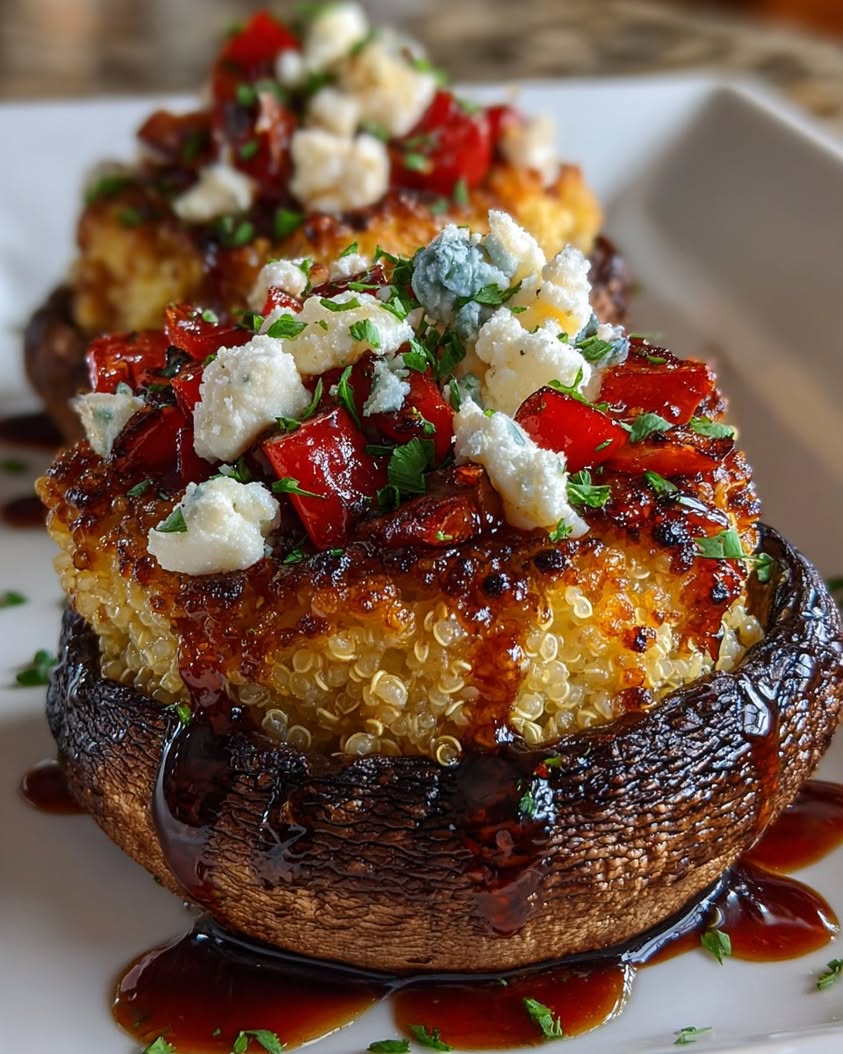
Stuffed Portobello Mushrooms with Quinoa and Feta Glaze: A Savory Vegetarian Masterpiece
Imagine a dish that transforms a simple mushroom into a stunning, hearty meal. These Stuffed Portobello Mushrooms with Quinoa and Feta Glaze do exactly that. They are a celebration of textures and flavors, featuring earthy mushroom caps filled with a fluffy, savory quinoa mixture and crowned with a tangy, creamy glaze. This recipe is perfect for anyone seeking a satisfying vegetarian dinner that feels both elegant and comforting.
Furthermore, this dish is a fantastic way to enjoy a protein-packed meal without any meat. The combination of quinoa and feta cheese creates a complete protein profile. Meanwhile, the roasted red pepper adds a sweet, smoky depth that perfectly balances the salty feta. Ultimately, these stuffed portobello mushrooms are as nutritious as they are delicious, making them a fantastic choice for a weeknight dinner or a special occasion.
Finally, the visual appeal of this dish is undeniable. The deep brown of the roasted portobello, the vibrant red and green of the filling, and the luscious white glaze create a plate that looks straight from a restaurant kitchen. Consequently, you can impress guests with minimal effort. This recipe proves that plant-based cooking can be incredibly flavorful, beautiful, and deeply satisfying.
Quick Recipe Highlights
- Flavor Profile: These Stuffed Portobello Mushrooms with Quinoa and Feta Glaze offer a complex taste journey. You get the deep umami of the roasted mushroom, the nutty savoriness of the quinoa, the sweet smokiness of roasted peppers, and the sharp, salty tang of the feta glaze. Each bite is a perfect harmony of savory, sweet, and tangy notes.
- Texture: The texture contrast is a key highlight. The portobello cap becomes tender and meaty after roasting. Meanwhile, the quinoa filling remains light and fluffy. Additionally, the feta glaze adds a luxurious, creamy element that coats everything beautifully. This combination creates a wonderfully satisfying mouthfeel.
- Aroma: As these bake, your kitchen will fill with an irresistible aroma. First, you’ll smell the earthy, savory scent of roasting mushrooms. Then, the garlic and herbs from the quinoa filling will mingle with the sweet scent of roasted pepper. Finally, the melted feta adds a final, tangy note to the aromatic symphony.
- Visual Appeal: This dish is a feast for the eyes. The large, dark portobello caps make a dramatic base. They are piled high with a colorful filling of quinoa, red pepper, and spinach. The creamy feta glaze drizzled on top adds a beautiful finishing touch, making the plate look professionally crafted.
- Skill Level Needed: This is an accessible recipe for most home cooks. The techniques involve simple sautéing, mixing, and baking. Therefore, even beginners can achieve excellent results by following the clear steps. No advanced culinary skills are required to master these stuffed portobello mushrooms.
- Special Equipment: You only need basic kitchen tools. A baking sheet, a medium saucepan for the quinoa, and a skillet for sautéing vegetables are essential. A small bowl for whisking the glaze is also helpful. No fancy gadgets are necessary to create this impressive meal.
Recipe Overview
- Difficulty Level: We classify this recipe as easy. The steps are straightforward and sequential. You cook the quinoa, prepare the filling, stuff the mushrooms, and bake. Consequently, there is no complicated technique or precise timing that could lead to failure. It’s a forgiving recipe perfect for building kitchen confidence.
- Category: This dish fits multiple categories beautifully. It is a stellar vegetarian main course, a impressive appetizer for a dinner party, or a substantial side dish. Additionally, it works for meal prep, as the components hold up well in the refrigerator. Its versatility is one of its greatest strengths.
- Cuisine: While not tied to one specific tradition, these Stuffed Portobello Mushrooms with Quinoa and Feta Glaze draw inspiration from Mediterranean flavors. The use of quinoa, feta, olive oil, and herbs like oregano is classic to that region. However, the preparation is modern and adaptable to various culinary preferences.
- Cost: This is a very cost-effective meal. Portobello mushrooms and quinoa are relatively inexpensive, especially considering their nutritional payoff. Jarred roasted red peppers and block feta cheese offer great value. Overall, you can create a restaurant-quality dish for a fraction of the price of dining out.
- Season: This recipe is truly versatile across seasons. In cooler months, the warm, baked dish feels comforting. During summer, it makes a fantastic lighter entrée that doesn’t require heating the kitchen for too long. You can also utilize seasonal herbs and greens in the filling to match the time of year.
- Occasion: These stuffed mushrooms are perfect for many occasions. They make an elegant vegetarian option for holiday meals like Thanksgiving. They are also ideal for a date night at home or a dinner party where you want to accommodate diverse diets. Simply put, they are a reliable crowd-pleaser.
Why You’ll Love This Recipe
First and foremost, the taste and texture are utterly captivating. Each component brings something special to the table. The portobello mushroom becomes juicy and meaty, providing a substantial base. The quinoa filling is fluffy and packed with the sweet flavor of roasted peppers and the freshness of spinach. Then, the feta glaze ties it all together with its creamy, briny punch. This combination ensures every forkful is interesting and deeply satisfying. You won’t miss the meat at all in these hearty Stuffed Portobello Mushrooms with Quinoa and Feta Glaze.
Next, consider the convenience and preparation benefits. This recipe uses mostly pantry-stable ingredients. You likely have quinoa, garlic, and basic spices on hand. The assembly is simple and even fun. Moreover, you can prepare parts of the dish ahead of time. For instance, cook the quinoa and chop the vegetables earlier in the day. Then, simply assemble and bake before dinner. This makes it a fantastic option for busy weeknights when you want a healthy meal without the last-minute scramble.
Furthermore, the nutritional advantages are significant. Portobello mushrooms are low in calories but rich in B vitamins, selenium, and potassium. Quinoa is a complete protein and an excellent source of fiber and iron. Spinach adds a boost of vitamins A, C, and K. Together, they create a meal that fuels your body properly. This dish supports energy levels, digestive health, and overall wellness. It’s a delicious way to eat food that truly loves you back.
Additionally, the social and entertaining value is high. Presenting a whole, beautifully stuffed mushroom cap on a plate feels special and intentional. It shows care and effort, which guests always appreciate. Because it’s vegetarian, it easily accommodates various dietary preferences at the table. You can serve it as the star of a meal or as a substantial side. Consequently, it reduces the stress of menu planning when you have friends or family with different eating habits coming over.
Finally, the cost-effectiveness and accessibility are major wins. As mentioned, the ingredients are not expensive or exotic. You can find everything at a standard grocery store. Compared to buying pre-made vegetarian meals or eating at a restaurant, making these Stuffed Portobello Mushrooms with Quinoa and Feta Glaze at home saves a considerable amount of money. You get a gourmet-quality dish for a very reasonable price per serving. This makes it a sustainable choice for regular rotation in your meal plan.
Historical Background and Cultural Significance
The concept of stuffing vegetables is ancient and spans countless cultures. Cooks have been filling hollowed-out vegetables with grains, meats, and other ingredients for millennia as a way to stretch resources and create hearty meals. The portobello mushroom, however, is a relatively modern player in this tradition. Actually, portobellos are simply mature cremini mushrooms. Their large, sturdy cap and meaty texture made them a perfect candidate for stuffing as vegetarian cuisine gained popularity in the late 20th century. Therefore, this recipe is a contemporary twist on a very old culinary practice.
Quinoa’s history, conversely, is deeply rooted in ancient South American cultures. The Inca civilization revered quinoa as the “mother of all grains.” It was a staple food for thousands of years in the Andes region. Its introduction to the global market transformed modern healthy cooking. Combining this ancient, nutritious grain with Mediterranean ingredients like feta cheese represents a beautiful fusion of food histories. This blend of traditions in one dish highlights how global our pantries have become.
The evolution of this specific recipe follows broader food trends. As more people adopted flexitarian or vegetarian diets, the demand for satisfying plant-based main courses soared. The portobello mushroom, with its substantial size and umami flavor, naturally stepped into the role often filled by meat. Stuffed versions became popular in restaurants and home kitchens alike. The addition of quinoa answered the need for plant-based protein. Meanwhile, the feta glaze adds a luxurious, restaurant-style finish that makes the dish feel indulgent. This evolution reflects a desire for food that is healthy, ethical, and also deeply flavorful.
Regional variations of stuffed mushrooms are endless. In Italy, you might find mushrooms stuffed with breadcrumbs, parsley, and garlic. In Greece, a filling of spinach and feta is classic. This recipe for Stuffed Portobello Mushrooms with Quinoa and Feta Glaze borrows from these Mediterranean ideas but updates them with a superfood grain. You could easily adapt it further by using different cheeses, adding nuts for crunch, or incorporating spices from other cuisines. This adaptability is a testament to the foundational soundness of the stuffed vegetable concept.
Ingredient Deep Dive
Let’s start with the star: Portobello Mushrooms. These are the mature form of the common cremini mushroom. Their large, flat caps are perfect for holding filling. Culturally, mushrooms have been foraged and cherished worldwide for their unique umami flavor. Nutritionally, they are a powerhouse. They are very low in calories and fat but provide B vitamins, selenium, potassium, and even a small amount of vitamin D when exposed to light. When selecting portobellos, choose firm caps with intact gills that are not slimy. Store them in a paper bag in the refrigerator for up to a week. For a substitution, large king oyster mushroom stems or even bell pepper halves can work, though the cooking time may vary.
Next, Quinoa. This ancient seed from South America is technically a pseudocereal. It was sacred to the Inca civilization. Today, it’s celebrated as a complete protein, containing all nine essential amino acids. It’s also high in fiber, magnesium, and iron. Always rinse quinoa thoroughly under cold water before cooking to remove its natural coating of saponins, which can taste bitter. Store uncooked quinoa in an airtight container in a cool, dark place. You can substitute it with cooked rice, farro, or couscous in this recipe, though the protein content will change.
Now, Feta Cheese. This brined cheese has a history dating back thousands of years in Greece. Traditionally made from sheep’s or goat’s milk, it has a tangy, salty flavor and crumbly texture. It’s a good source of calcium and protein. For the glaze in these Stuffed Portobello Mushrooms with Quinoa and Feta Glaze, a block feta that you crumble yourself is superior to pre-crumbled, as it melts more smoothly. Look for feta labeled “PDO” (Protected Designation of Origin) for authentic Greek quality. Store it in its brine in the refrigerator. For a dairy-free version, a blended tofu with lemon juice and nutritional yeast can mimic the tangy creaminess.
Finally, Roasted Red Peppers. These add a crucial sweet and smoky note. You can roast your own over a flame or in the oven, but high-quality jarred peppers are a fantastic time-saver. They are rich in vitamins A and C. When selecting jarred peppers, check the ingredient list to avoid added sugars or excessive preservatives. Drain and pat them dry before chopping to prevent a watery filling. You can substitute them with sun-dried tomatoes (oil-packed, chopped) for a more intense, tangy sweetness. Both ingredients bring a vibrant color and deep flavor that elevates the entire dish.
Common Mistakes to Avoid
- Not Cleaning the Mushrooms Properly: Avoid washing portobellos under running water. They act like sponges and will become soggy. Instead, use a damp paper towel or a soft brush to gently wipe away any dirt from the cap. This keeps their texture meaty and perfect for stuffing.
- Skipping the Quinoa Rinse: Forgetting to rinse quinoa is a common error. The saponin coating can leave a bitter, soapy aftertaste. Always place quinoa in a fine-mesh strainer and rinse under cold water for a minute until the water runs clear. This simple step ensures a clean, nutty flavor.
- Overcooking the Quinoa: Quinoa should be fluffy, not mushy. Follow the package instructions for the liquid ratio and cook just until the germ spirals out and the liquid is absorbed. Then, fluff it immediately with a fork. Overcooked quinoa will make the filling gummy and dense.
- Not Removing the Mushroom Gills: The dark gills on the underside of the cap are edible but can release a lot of dark liquid during baking, making the dish look muddy. Use a spoon to gently scrape them out before baking. This creates a neat, deep cavity for more filling and a cleaner presentation.
- Using Watery Vegetables: If your spinach is fresh, make sure to wilt it thoroughly and squeeze out ALL excess liquid. If using jarred roasted peppers, pat them very dry. Any extra moisture will steam inside the mushroom and create a soggy filling instead of a light, fluffy one.
- Underseasoning the Filling: The quinoa and vegetables need ample seasoning on their own. Taste the filling mixture before stuffing the mushrooms. Remember, the feta glaze is salty, but the interior should be flavorful too. Don’t be shy with herbs, garlic, and a pinch of salt.
- Overcrowding the Baking Sheet: Give the stuffed mushrooms room on the pan. If they are too close together, they will steam instead of roast. This prevents the mushroom cap from developing a nice, slightly caramelized texture. Use a large enough sheet or use two.
- Adding the Glaze Too Early: The feta glaze should be added in the last few minutes of baking. If you add it at the beginning, it can separate, brown too much, or become oily. Adding it late ensures it just melts, becomes creamy, and lightly golden without breaking.
Essential Techniques
Preparing the Portobello Caps: This technique is crucial for success. First, gently twist off the stems. Then, using a small spoon, scrape out the dark gills from the underside of the cap. Why is this important? The gills hold moisture and can make your final dish watery and visually dark. Removing them creates a perfect, clean vessel for your filling. The common pitfall is being too aggressive and tearing the cap. Use a gentle, scraping motion. A visual cue for success is a smooth, pale interior surface in the mushroom.
Cooking Fluffy Quinoa: Mastering quinoa is simple but essential. The key is the ratio, usually 1 part quinoa to 2 parts liquid. Rinse it first. Bring the liquid to a boil, add the quinoa, then reduce to a simmer and cover. Do not peek. Cook for about 15 minutes until the liquid is absorbed and the germ has spiraled out. Then, remove from heat, keep covered, and let it steam for 5-10 minutes. Finally, fluff with a fork. This technique ensures each grain is separate and light, not clumpy or wet. The pitfall is stirring it while cooking, which releases starch and causes mushiness.
Creating the Feta Glaze: This isn’t just melted cheese; it’s an emulsion. Crumble the feta into a bowl with Greek yogurt or sour cream. The dairy adds creaminess and stability. Whisk vigorously while adding a small stream of olive oil or milk until smooth and pourable. The importance is achieving a creamy, cohesive sauce that won’t separate when baked. The pitfall is adding too much liquid too fast, which can make it grainy. A successful glaze should be thick but drizzle-able, like a loose ranch dressing. If it’s too thick, add liquid a teaspoon at a time.
Pro Tips for Perfect Stuffed Portobello Mushrooms
For the meatiest texture, bake the cleaned mushroom caps alone for 5-7 minutes before stuffing. This process, called “sweating,” draws out some of their inherent moisture. Consequently, they won’t release as much liquid into the filling during the final bake, preventing sogginess.
Toast your quinoa in a dry skillet for a few minutes before adding water. This enhances its natural nutty flavor, adding another layer of depth to your Stuffed Portobello Mushrooms with Quinoa and Feta Glaze. Just stir it over medium heat until it becomes fragrant.
Let the cooked quinoa filling cool slightly before stuffing the mushrooms. Stuffing with piping hot filling can start cooking the mushroom prematurely and create excess steam. A warm or room-temperature filling is ideal for easy handling and even cooking.
Use an ice cream scoop or a measuring cup to portion the filling into the mushroom caps. This ensures you get an even, generous mound in each one and keeps the process neat and quick. Press the filling down lightly so it holds together.
For a beautiful golden top, lightly brush the exposed quinoa filling with a tiny bit of olive oil before baking. This helps it crisp up slightly and develop an appealing color, contrasting nicely with the creamy glaze added later.
If your feta glaze is too thick after whisking, warm it gently. Place the bowl over a pot of simmering water (a double boiler) for a minute while whisking. The gentle heat will help the feta melt smoothly into the other ingredients for a perfectly silky texture.
Garnish with fresh herbs *after* baking. A sprinkle of fresh chopped parsley, dill, or chives added just before serving introduces a bright, fresh flavor and a pop of green color that makes the dish look professionally finished.
Variations and Adaptations
For regional variations, take inspiration from different cuisines. Give the dish an Italian twist by using marinara sauce and mozzarella cheese in the filling, topped with Parmesan. For a Mexican flair, mix black beans, corn, and cumin into the quinoa, and use a Monterey Jack cheese sauce. A Middle Eastern version could include chickpeas, tahini in the glaze, and a sprinkle of za’atar. These adaptations show how versatile the basic stuffed mushroom concept truly is.
Seasonal adaptations are easy. In spring, add fresh peas and asparagus tips to the quinoa. During summer, incorporate fresh sweet corn and basil. For autumn, mix in roasted cubed butternut squash and sage. In winter, use hearty kale instead of spinach and add chopped walnuts for crunch. This keeps your Stuffed Portobello Mushrooms with Quinoa and Feta Glaze exciting all year round.
Dietary modifications are straightforward. For a vegan version, use a dairy-free yogurt for the glaze and a plant-based feta alternative or blended cashews with lemon. To make it gluten-free, ensure all packaged ingredients like vegetable broth are certified GF—this recipe is naturally compliant. For a keto or low-carb option, replace the quinoa with finely chopped cauliflower rice sautéed until dry.
Flavor variations can personalize the dish. Add heat with a diced jalapeño in the filling or red pepper flakes in the glaze. For more umami, stir a teaspoon of white miso paste into the quinoa. Incorporate different herbs like fresh dill, tarragon, or rosemary to change the aromatic profile. A splash of balsamic glaze drizzled over the top before serving adds a sweet-tart finish.
Serving and Presentation Guide
Plating is key for visual impact. Place one stuffed portobello mushroom cap in the center of a warm plate. Drizzle the feta glaze not only over the top but also in a slight swoosh on the plate underneath for a restaurant-style look. This adds height and dimension. Use a spoon to create a clean, intentional drizzle rather than random splatters.
Garnishing adds the final touch. Fresh, soft herbs like Italian parsley, chives, or microgreens provide a color contrast. A light sprinkle of paprika or smoked paprika adds a spot of color and a hint of flavor. For texture, a few toasted pine nuts or pumpkin seeds scattered over the top offer a delightful crunch against the creamy and soft elements.
Consider traditional accompaniments. A simple side salad of mixed greens with a lemon vinaigrette cuts through the richness perfectly. For a heartier meal, serve alongside roasted vegetables like asparagus or zucchini. A crusty piece of whole-grain bread is also excellent for soaking up any extra glaze left on the plate.
For modern serving suggestions, slice the baked stuffed mushroom into wedges and arrange them on a sharing platter as an appetizer. Alternatively, chop a baked mushroom and toss it into a grain bowl with additional greens and vegetables for a deconstructed lunch. You can also miniaturize the recipe using smaller cremini mushrooms for a passed hors d’oeuvre.
Wine and Beverage Pairing
Wine pairings should complement the earthy, savory, and tangy notes. A crisp, unoaked white wine like Sauvignon Blanc or Pinot Grigio works beautifully. Their acidity cuts through the richness of the cheese and balances the dish. Alternatively, a light-bodied red with low tannins, such as a Pinot Noir or Beaujolais, can pair well with the meaty mushroom without overpowering it. The key is to avoid heavily oaked or high-tannin wines that might clash with the feta’s saltiness.
For non-alcoholic alternatives, consider sparkling water with a squeeze of lemon or lime to cleanse the palate. A tart cherry juice or pomegranate juice provides a sweet-tart counterpoint that mirrors the role of red wine. Herbal iced teas, like mint or lemon verbena, are also refreshing and won’t compete with the complex flavors of the Stuffed Portobello Mushrooms with Quinoa and Feta Glaze.
If considering coffee or tea pairings, a light roast coffee or a green tea would be best after the meal. Their subtle bitterness and clean finish can be a nice palate cleanser following the savory, umami-rich dinner. Avoid strong, dark roasts or heavily spiced teas that might overwhelm the delicate balance of flavors you’ve just enjoyed.
Storage and Shelf Life
Store leftover stuffed mushrooms in an airtight container in the refrigerator for up to 3 days. It’s best to store the mushrooms and any remaining feta glaze separately if possible. This prevents the mushroom from becoming overly soft from the moisture in the sauce. Always allow the mushrooms to cool completely to room temperature before sealing the container to prevent condensation.
For reheating, the oven or toaster oven is superior to the microwave. Preheat your oven to 350°F (175°C). Place the mushrooms on a baking sheet and warm for 10-15 minutes, or until heated through. If the filling seems dry, sprinkle a teaspoon of water or broth over the top before reheating. Reheat the glaze gently in a small saucepan over low heat or in the microwave at 50% power, stirring frequently.
You can freeze the baked stuffed mushrooms, though the texture of the mushroom itself may become softer upon thawing. Cool them completely, then wrap each one individually in plastic wrap and place in a freezer-safe bag. Freeze for up to 2 months. Thaw overnight in the refrigerator before reheating in the oven. Note that the feta glaze does not freeze well; it’s best made fresh.
Make Ahead Strategies
You can prep nearly every component 1-2 days in advance. Cook the quinoa and store it in a sealed container in the fridge. Clean the mushroom caps and store them in a paper towel-lined container. Chop the onions, garlic, and roasted peppers, and store them together. Even wilt and squeeze the spinach ahead of time. This “mise en place” turns the final assembly into a quick 10-minute task before baking.
For storage between steps, keep all prepped ingredients in separate containers. This maintains their individual textures and prevents the spinach from making everything else soggy. The quinoa can be reheated slightly in the microwave with a splash of water to loosen it up before mixing with the other filling ingredients.
Assemble the stuffed mushrooms up to 4 hours before you plan to bake them. Cover the baking sheet with plastic wrap and refrigerate. Let them sit at room temperature for about 20 minutes before putting them in the oven. Do not add the feta glaze until the final minutes of baking. Prepare the glaze separately and store it in the fridge, then bring it to room temperature or warm it slightly before drizzling.
Scaling Instructions
Halving the recipe is simple for a smaller meal. Use two large portobello caps. Halve all other ingredients precisely. The baking time may be slightly reduced by a few minutes, so start checking for doneness early. Use a smaller baking sheet to prevent the mushrooms from rolling around.
Doubling or tripling for a crowd works well. Use multiple baking sheets and rotate them from top to bottom rack halfway through the baking time for even cooking. You may need to add a few extra minutes to the total bake time due to the increased volume in the oven. Mix the filling in a very large bowl to ensure even seasoning distribution.
When scaling, equipment adjustments are minimal. Just ensure you have enough baking sheet space. For very large batches, consider cooking the quinoa in two separate pots to avoid overcrowding the pan, which can lead to uneven cooking. For the glaze, whisking in a larger bowl or using a hand mixer can help emulsify a double or triple batch smoothly.
Nutritional Deep Dive
This dish offers a strong macro balance. One serving provides a good balance of complex carbohydrates from the quinoa, plant-based protein from both the quinoa and mushrooms, and healthy fats from the olive oil and feta cheese. It’s a satiating meal that provides sustained energy without a heavy calorie load, making it excellent for weight management goals.
The micronutrient profile is impressive. Portobello mushrooms are a notable source of B vitamins, crucial for energy metabolism, and selenium, a powerful antioxidant. Spinach contributes iron, vitamin K, and folate. Quinoa adds magnesium and manganese. The red peppers are loaded with vitamins A and C. Together, they support immune function, bone health, and cellular repair.
For dietary considerations, this meal is naturally vegetarian and gluten-free (check broth labels). It can be adapted to be vegan or dairy-free as discussed. The fiber content from the quinoa, mushrooms, and spinach promotes digestive health and helps maintain healthy cholesterol levels. It’s a heart-healthy choice that doesn’t sacrifice flavor for nutrition.
Dietary Adaptations
For a Gluten-Free version, this recipe is already compliant if you use certified gluten-free vegetable broth. Always double-check labels on pre-packaged items like roasted red peppers, though they are typically safe.
For Dairy-Free/Vegan adaptation, omit the feta. For the glaze, blend 1/2 cup raw cashews (soaked and drained) with 3 tbsp water, 2 tbsp lemon juice, 1 tbsp nutritional yeast, and 1/4 tsp salt until completely smooth. Use this creamy “cheese” sauce as your glaze. For the filling, a sprinkle of nutritional yeast can add a cheesy flavor.
For a Low-Carb or Keto version, replace the quinoa with 2 cups of riced cauliflower. Sauté it in the skillet after the onions until all moisture has evaporated. Proceed with the rest of the recipe. The filling will be less fluffy but still flavorful and very low in carbohydrates.
For a Paleo adaptation, follow the low-carb cauliflower rice substitution above and omit the dairy. For the glaze, use a compliant Paleo mayonnaise or coconut cream mixed with a little lemon juice and herbs. Ensure all other ingredients, like broth, are Paleo-approved.
Troubleshooting Guide
If your filling is soggy, the culprit is likely excess moisture. Next time, be meticulous about sweating the mushroom caps first and squeezing all liquid from the spinach and roasted peppers. If it happens, you can salvage the meal by carefully spooning out the wet filling, spreading it on a baking sheet, and broiling it for a few minutes to dry it out slightly before returning it to the mushroom.
If the feta glaze is grainy or separated, it may have gotten too hot. To fix it, try blending it with an immersion blender or a small countertop blender to re-emulsify. Adding a teaspoon of cold water or milk while blending can help bring it back together. If it’s beyond repair, simply crumble the feta over the hot mushrooms after baking—it will still taste great.
If the mushroom caps are tough or rubbery, they may be undercooked. Portobellos release moisture as they cook, which needs time to evaporate. Ensure your oven is fully preheated and bake until the caps are tender when pierced with a fork. If they are done but the filling isn’t hot, you can briefly broil the top of the filling, watching carefully to avoid burning.
Recipe Success Stories
Many home cooks have shared how this recipe became a family favorite. One reader reported that her mushroom-skeptic husband now requests these Stuffed Portobello Mushrooms with Quinoa and Feta Glaze weekly. She credits the meaty texture and savory flavor for winning him over. Another cook successfully doubled the recipe for a potluck, and it was the first dish to disappear, with several guests asking for the recipe.
Adaptation stories are inspiring. A reader following a vegan diet used the cashew glaze variation and added smoked paprika to mimic a “bacon” flavor, creating a hit at her dinner party. Another home cook with a nut allergy used sunflower seed butter as a base for the dairy-free glaze with great success. These stories highlight the recipe’s fantastic adaptability.
Photography tips from successful makers include using natural side lighting to highlight the textures of the quinoa and the sheen of the glaze. A dark-colored plate makes the colors of the dish pop. Garnishing with a single, perfect herb leaf right before taking the photo adds a professional touch. Many find that capturing a cross-section shot showing the layers of mushroom and filling is particularly appealing.
Frequently Asked Questions
Can I use a different grain instead of quinoa? Absolutely. Cooked brown rice, farro, couscous, or even finely chopped cauliflower rice are excellent substitutes. Adjust cooking times according to the grain you choose. The texture and nutritional profile will vary slightly, but the dish will still be delicious.
How do I prevent the mushrooms from getting watery? The key steps are to clean them with a damp cloth (not water), scrape out the gills, and consider pre-baking (sweating) them for 5-7 minutes before stuffing. This draws out a significant amount of their natural moisture, resulting in a meatier, less soggy final product.
Can I make these entirely ahead and reheat? Yes, you can assemble the stuffed mushrooms (without glaze) up to a day ahead, cover, and refrigerate. Bake as directed, adding a few extra minutes if going straight from the fridge. The glaze is best made fresh or reheated gently separately.
Is there a substitute for feta cheese? For a similar tangy, salty profile, try goat cheese (chèvre) or ricotta salata. For a milder flavor, use a grated mozzarella or Monterey Jack. For a vegan version, a store-bought vegan feta or the cashew cream sauce described earlier works well.
Can I grill these instead of baking them? Definitely. Preheat your grill to medium heat. Prepare the recipe as directed, then place the stuffed mushrooms on a piece of foil or a grill basket. Close the lid and grill for 15-20 minutes, adding the glaze in the last few minutes. This adds a wonderful smoky flavor.
My glaze is too thick. How can I thin it? Whisk in a small amount of milk, water, or vegetable broth, one teaspoon at a time, until it reaches your desired consistency. Warming the glaze gently can also help it become more fluid. Avoid adding too much liquid at once.
Are portobello mushrooms healthy? Yes, they are very healthy. They are low in calories and fat, a good source of fiber, and provide important nutrients like B vitamins, potassium, and selenium. They also contain antioxidants and have been studied for potential immune-boosting properties.
Can I use frozen spinach? Yes, frozen chopped spinach is a convenient option. Thaw it completely and then squeeze it in a clean kitchen towel or with your hands to remove ALL excess water. This step is even more critical with frozen spinach to prevent a soggy filling.
What can I serve with this as a side dish? A simple green salad, roasted asparagus, garlic sautéed green beans, or a tomato cucumber salad are all perfect pairings. A crusty baguette is also great for soaking up the delicious feta glaze left on the plate.
How do I know when the stuffed mushrooms are done baking? The mushrooms should be tender when pierced with a fork, and the filling should be hot throughout. The top of the quinoa filling may become slightly golden. If you added the glaze, it should be melted and bubbly. The total time is usually 25-30 minutes.
Additional Resources
If you loved the flavors here, explore other recipes that use similar ingredients. A Quinoa and Roasted Vegetable Salad makes a fantastic cold lunch option. Spanakopita Stuffed Peppers use the classic spinach-feta combination in a different vessel. For another impressive vegetarian main, try a Lentil and Walnut “Meat{“success”:true,”message”:”Recipe created successfully”,”post_id”:8077,”tasty_recipe_id”:8077,”shortcode”:” Print
Stuffed Portobello Mushrooms with Quinoa, Roasted Red Pepper & Feta Glaze
Description
A hearty vegetarian dish featuring meaty portobello mushrooms stuffed with a savory quinoa filling, topped with a tangy roasted red pepper and feta glaze.
Ingredients
For the Crust:
- 4 large portobello mushrooms, stems removed and gills scraped
- 1 cup quinoa, rinsed
- 2 cups vegetable broth
- 1/2 cup roasted red peppers, finely chopped
- 1/2 cup crumbled feta cheese
- 1/4 cup chopped fresh parsley
- 2 cloves garlic, minced
- 1 tablespoon olive oil
- Salt and black pepper to taste
- For the glaze: 1/2 cup roasted red peppers, pureed
- 1/4 cup crumbled feta cheese
- 1 tablespoon lemon juice
- 1 teaspoon honey
Instructions
1. Prepare the Crust:
- Preheat oven to 400°F (200°C). Place portobello mushrooms cap-side down on a baking sheet, drizzle with olive oil, and season with salt and pepper. Bake for 10 minutes to soften.
- In a saucepan, combine quinoa and vegetable broth. Bring to a boil, reduce heat, cover, and simmer for 15 minutes until liquid is absorbed. Fluff with a fork.
- In a bowl, mix cooked quinoa, chopped roasted red peppers, feta cheese, parsley, minced garlic, salt, and pepper. Spoon the mixture into the baked mushroom caps.
- Return stuffed mushrooms to the oven and bake for another 15-20 minutes until golden and heated through.
- For the glaze, blend pureed roasted red peppers, feta cheese, lemon juice, and honey until smooth. Drizzle over mushrooms before serving.
Notes
You can customize the seasonings to taste.

I’m Billy, a classically trained culinary school graduate from The Culinary Institute of America with over 12 years in the restaurant industry and over 19 years of cooking experience.