
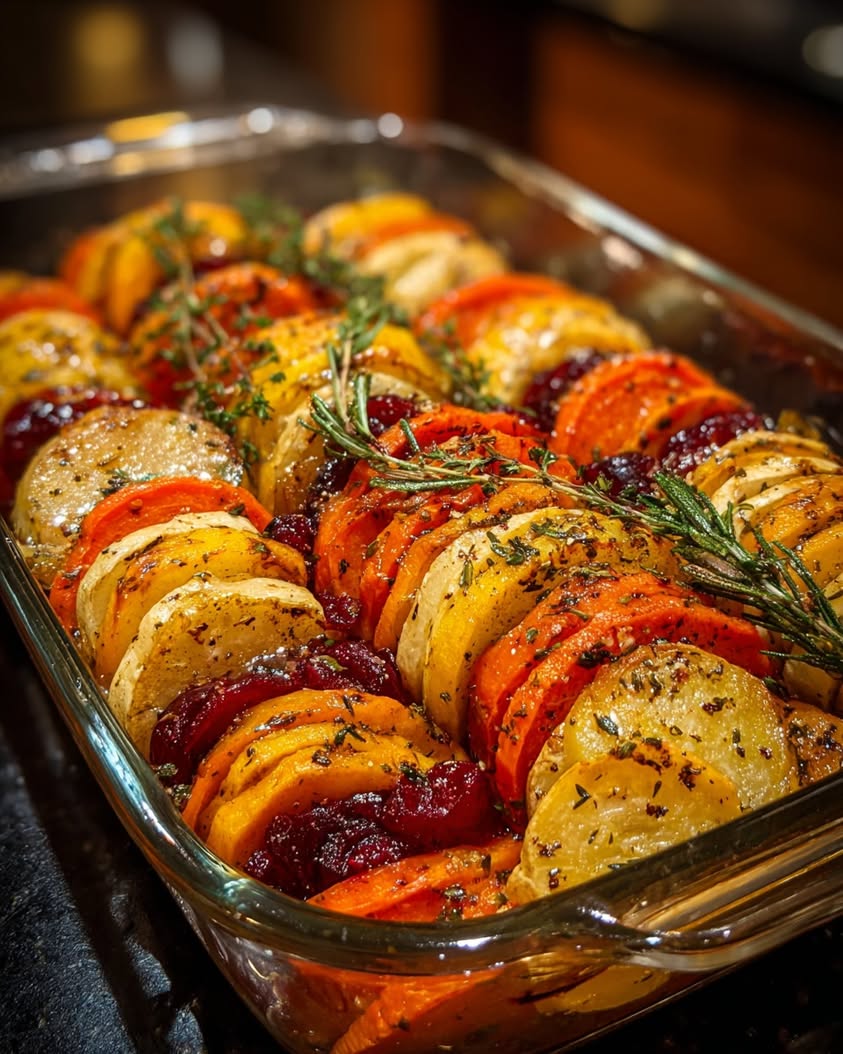
Layered Sweet Potato, Carrot, and Squash Bake with Cranberry Drizzle: A Festive Vegetable Masterpiece
Imagine a dish that captures the very essence of autumn on a single plate. This Layered Sweet Potato, Carrot, and Squash Bake with Cranberry Drizzle is exactly that. It is a stunning, flavorful, and nutritious centerpiece that transforms humble root vegetables into a show-stopping culinary event. Moreover, each colorful layer tells a story of seasonal harvest, while the vibrant cranberry-honey drizzle adds a perfect sweet-tart finish. Consequently, this dish is not just food; it is a celebration of flavor, color, and texture designed to impress at any gathering.
This recipe elevates simple ingredients through thoughtful preparation and beautiful presentation. The process of thinly slicing and layering the vegetables creates a visually striking pattern that bakes into a tender, cohesive bake. Meanwhile, the aromatic blend of thyme, rosemary, and garlic infuses every bite with deep, savory notes. Finally, the crowning glory is that brilliant cranberry drizzle, which cuts through the richness with its bright, festive flavor. Ultimately, this Layered Sweet Potato, Carrot, and Squash Bake with Cranberry Drizzle is a testament to how beautiful plant-based cooking can be.
Whether you need an impressive side for Thanksgiving or a cozy main for a weeknight dinner, this vegetable bake delivers. It is hearty enough to satisfy vegetarians and captivating enough to win over any meat-lover. Furthermore, the make-ahead potential means you can prepare components in advance, reducing holiday kitchen stress. In essence, this dish is a versatile, reliable, and utterly delicious addition to your recipe repertoire that promises to become a new family favorite.
Quick Recipe Highlights
- Flavor Profile: This bake offers a masterful balance. You get the natural sweetness from the roasted sweet potato, carrot, and squash, which is perfectly complemented by earthy herbs and a tangy-sweet cranberry drizzle. The result is a complex, satisfying taste that is neither too sweet nor too savory.
- Texture: Expect a delightful contrast between the soft, almost melt-in-your-mouth layers of roasted vegetables and the slight chew from the edges where they caramelize. The cranberry drizzle adds a lovely, jammy texture that clings beautifully to each serving.
- Aroma: As this bake cooks, your kitchen will fill with the warm, comforting scents of roasting root vegetables, fragrant rosemary, and earthy thyme. The cranberry drizzle introduces a bright, fruity note that makes the entire experience incredibly inviting.
- Visual Appeal: The precise layering creates a gorgeous cross-section of orange, yellow, and deep orange hues. When plated and drizzled with the vibrant red cranberry sauce, the dish looks like a piece of edible art, perfect for holiday tables and special occasions.
- Skill Level Needed: This recipe requires basic knife skills for consistent slicing and a bit of patience for layering. However, the techniques are straightforward, making it accessible for confident beginners and a enjoyable project for experienced cooks looking for a beautiful result.
- Special Equipment: A mandoline slicer is highly recommended for achieving uniformly thin vegetable slices, which ensures even cooking. You will also need a sturdy baking dish, a good chef’s knife, and a small saucepan for the drizzle.
Recipe Overview
- Difficulty Level: We rate this Layered Sweet Potato, Carrot, and Squash Bake with Cranberry Drizzle as medium difficulty. The challenge lies not in complex techniques, but in the precision of slicing and the time commitment for layering. Using a mandoline slicer significantly simplifies the prep work and leads to a more professional, even bake.
- Category: This dish shines as a spectacular holiday side dish or a vegetarian main course. It fits perfectly into festive menus, Sunday family dinners, and potluck gatherings where you want to bring something both healthy and impressive.
- Cuisine: While not tied to one specific tradition, this bake draws inspiration from modern American and European farm-to-table cooking. It emphasizes seasonal, whole ingredients and elegant presentation, celebrating the autumn harvest in a globally appealing way.
- Cost: This is a very cost-effective recipe, especially in the fall and winter when root vegetables are at their peak and most affordable. The primary expenses are the fresh vegetables, fresh herbs, and cranberries. Overall, it delivers restaurant-quality presentation on a modest home-cooking budget.
- Season: This recipe is quintessential autumn and winter fare. It utilizes the best of the cold-weather harvest when sweet potatoes, squash, and carrots are sweetest and most flavorful. The warm, baking spices and cranberries also evoke the classic flavors of the holiday season.
- Occasion: It is ideal for Thanksgiving, Christmas, and Friendsgiving celebrations as a standout side. Furthermore, it works beautifully for cozy dinner parties, Sunday roasts, or any time you want to elevate a meal with a nutritious and beautiful centerpiece.
Why You’ll Love This Recipe
First and foremost, the taste and texture of this Layered Sweet Potato, Carrot, and Squash Bake with Cranberry Drizzle are utterly irresistible. Each forkful delivers a harmonious blend of sweet, savory, and tangy notes. The vegetables become incredibly tender and almost creamy as they bake together, while the herbed oil and cranberry drizzle create layers of flavor that keep you coming back for more. It is a dish that satisfies the palate completely without feeling heavy or overly rich.
From a convenience standpoint, this recipe offers significant preparation benefits. You can slice the vegetables a day in advance and store them in water in the refrigerator. Similarly, you can make the cranberry drizzle ahead of time. This strategic prep means that on the day of serving, you simply need to layer, bake, and drizzle. Consequently, it is an excellent strategy for managing a busy holiday kitchen timeline without sacrificing quality or presentation.
Nutritionally, this vegetable bake is a powerhouse. Sweet potatoes and carrots are loaded with beta-carotene, which supports eye health and immunity. Butternut squash provides vitamins C and E, along with fiber. Together, these ingredients create a dish high in vitamins, minerals, and antioxidants. Choosing this bake means you are serving a side dish that is as good for the body as it is for the soul, aligning perfectly with a health-conscious lifestyle.
For social and entertaining value, this dish is a true showstopper. Its stunning visual appeal guarantees it will be the talk of the table. It caters beautifully to vegetarian and vegan guests when prepared with plant-based alternatives. Serving this Layered Sweet Potato, Carrot, and Squash Bake with Cranberry Drizzle demonstrates care and effort, making your guests feel special. It is a recipe that sparks conversation and requests for the recipe every single time.
Finally, this recipe is remarkably cost-effective and accessible. The ingredients are common and affordable, especially in season. You likely have many of the pantry staples like oil, honey, and herbs on hand already. This accessibility means you can create a gourmet-looking dish without a gourmet budget. It proves that eating well and impressively does not require expensive or hard-to-find ingredients, just a little creativity and technique.
Historical Background and Cultural Significance
The concept of layering vegetables for a baked dish has roots in many global cuisines. For instance, dishes like the French Tian Provençal or Italian Parmigiana di Melanzane showcase the technique of arranging sliced vegetables in a pattern. This Layered Sweet Potato, Carrot, and Squash Bake with Cranberry Drizzle is a modern, seasonal interpretation of that timeless idea. It borrows the elegant presentation but uses New World ingredients like sweet potatoes and cranberries, creating a fusion that is distinctly celebratory of the American autumn harvest.
Culturally, this bake speaks to the tradition of the harvest feast. Sweet potatoes and squash are indigenous to the Americas and have been central to Native American foodways for millennia. Cranberries, also native, were used by Indigenous peoples for food, medicine, and dye. Incorporating these ingredients into a structured, celebratory dish connects us to a deep food history. It transforms ancestral staples into a contemporary centerpiece, honoring their origins while adapting them for modern tables and tastes.
The evolution of this recipe follows the trend towards vegetable-forward, visually striking centerpieces in home cooking. As home cooks seek alternatives to heavy, meat-centric meals, dishes like this gain prominence. The addition of a sweet-tart drizzle is a relatively modern twist, adding a layer of complexity and brightness that elevates the vegetables. This evolution reflects a broader culinary movement that values plants, presentation, and balanced flavors, moving beyond simple steamed or roasted sides.
Regional variations of this concept are endless. In the American South, you might find a similar bake with pecans and a bourbon-maple glaze. A Mediterranean version could include layers of potato, zucchini, and tomato with Herbes de Provence. The cranberry drizzle itself could be adapted with orange zest, ginger, or a splash of port wine depending on regional preferences. This adaptability is the recipe’s strength, allowing it to be a canvas for local flavors and personal creativity while maintaining its stunning layered structure.
Ingredient Deep Dive
Sweet Potatoes: Originating in Central or South America over 5,000 years ago, sweet potatoes are a global staple prized for their versatility and nutrition. They are an excellent source of beta-carotene (which converts to Vitamin A), Vitamin C, manganese, and fiber. When selecting, choose firm potatoes with smooth, unblemished skin. Avoid any with soft spots or signs of sprouting. Store them in a cool, dark, well-ventilated place—not the refrigerator, as cold temperatures can alter their texture and flavor. For a substitution, garnet yams work perfectly, though true yams are a different tuber altogether.
Butternut Squash: A type of winter squash, butternut squash is known for its sweet, nutty flavor and smooth texture. It is a fantastic source of vitamins A and C, potassium, and magnesium. Its long storage life made it a valuable food source through winter for many cultures. Pick a squash that feels heavy for its size with a firm, matte skin and a long, solid neck. Store whole squash in a cool, dark place for months. Once cut, wrap tightly and refrigerate. Acorn or kabocha squash can be used as substitutes, though their shapes make layering more challenging.
Carrots: Carrots have a long history, originally cultivated for their aromatic leaves and seeds rather than their roots. The orange carrot we know today was developed in the Netherlands in the 17th century. They are rich in beta-carotene, fiber, vitamin K1, and antioxidants. Look for firm, smooth carrots with bright color and fresh, green tops if attached. Store them in the refrigerator’s crisper drawer in a plastic bag. For this bake, avoid overly thick carrots, as they can be woody. There is no perfect substitute for their sweet flavor and color, but parsnips could offer a different, earthier twist.
Fresh Cranberries: Native to North America, cranberries were used by Indigenous peoples for food, dye, and medicine. They are packed with vitamin C, fiber, and unique phytonutrients like proanthocyanidins, known for supporting urinary tract health. Choose berries that are plump, shiny, and bright to deep red. They should bounce when dropped—a sign of freshness. Refrigerate them in their original bag or a sealed container; they can also be frozen for up to a year. For the drizzle, dried cranberries can be rehydrated in warm water, though the flavor and texture will differ slightly.
Fresh Herbs (Thyme & Rosemary): These woody herbs are pillars of Mediterranean and European cooking, symbolizing everything from courage to remembrance. They provide powerful aromatic compounds and antioxidants without adding calories. Fresh herbs are essential here for their bright, pungent flavor. Look for perky, green sprigs without black spots or wilting. Store them loosely wrapped in a damp paper towel in a plastic bag in the fridge. In a pinch, you can use dried herbs, but reduce the quantity by two-thirds, as dried herbs are more concentrated.
Common Mistakes to Avoid
- Uneven Vegetable Slices: Slices of varying thickness will cook at different rates. Consequently, some pieces may be undercooked while others turn mushy. Using a mandoline slicer is the best solution for perfect, paper-thin uniformity, which is key to a cohesive bake.
- Skipping the Oil and Herb Toss: Do not simply layer the vegetables and pour oil over the top. You must toss each type of vegetable separately in the herbed oil mixture. This ensures every single slice is evenly coated, leading to maximum flavor and preventing dry spots.
- Overcrowding the Baking Dish: Packing the slices too tightly can steam the vegetables instead of allowing them to roast and caramelize. Arrange them snugly but not forcefully. They should have a little room to breathe, which helps achieve those delicious caramelized edges.
- Under-seasoning: Root vegetables need generous seasoning. Do not be shy with the salt and pepper during the tossing stage. Remember, you are seasoning a large volume of vegetable, and the flavor mellows slightly during baking. Taste the oil mixture before tossing to check the seasoning level.
- Using a Glass Dish Un-greased: While the recipe calls for greasing the dish, it is a critical step. Vegetables can stick fiercely, especially the sweet potato. Use butter, oil, or non-stick spray on the bottom and sides to ensure you can serve beautiful, intact slices.
- Not Covering with Foil Initially: Baking uncovered the entire time will likely dry out the top layers before the center is tender. The initial covered bake steams the vegetables to tenderness, while the final uncovered time creates the beautiful caramelized top.
- Overcooking the Cranberry Drizzle: Cook the drizzle just until the cranberries pop and the sauce thickens slightly. Overcooking will make it too thick and jam-like, and it can become bitter. It will also thicken more as it cools. Aim for a pourable, syrup consistency.
- Slicing and Serving Immediately: Let the bake rest for at least 15-20 minutes after removing it from the oven. This allows the layers to set, making it much easier to cut clean portions. Serving it piping hot often results in a messy, collapsed slice.
Essential Techniques
Mandoline Slicing: Using a mandoline is non-negotiable for this Layered Sweet Potato, Carrot, and Squash Bake with Cranberry Drizzle. It guarantees uniform, paper-thin slices that cook evenly and stack neatly. Always use the safety guard to protect your fingers. Move the vegetable in a smooth, consistent motion. If you do not have a mandoline, a very sharp chef’s knife and extreme patience are required, but the result will be harder to achieve.
Layering for Structure: The layering technique is what gives this dish its signature look and texture. Start by placing slices vertically along the edge of the dish, slightly overlapping. Then, work your way inward in a concentric pattern. The goal is to create a tight, shingled effect so the bake holds together when served. Take your time with this step; the visual payoff is immense.
Blind Baking with Foil: Covering the dish tightly with foil for the first portion of baking is a crucial technique. It creates a steamy environment that gently cooks the dense root vegetables through without drying out or burning the top. This “braising” step ensures every layer is tender before you uncover the dish to encourage browning and caramelization.
Creating a Reduction Drizzle: The cranberry drizzle is a simple reduction. The key is to simmer gently until the cranberries just burst and the liquid thickens enough to coat the back of a spoon. Avoid rapid boiling, which can break down the pectin too much and lead to a gummy texture. The sauce will continue to thicken as it cools, so err on the side of slightly runnier.
Pro Tips for Perfect Layered Sweet Potato, Carrot, and Squash Bake
First, for easier handling, microwave the whole butternut squash for 2-3 minutes before cutting. This softens the skin just enough to make peeling and slicing safer and less of a struggle.
Second, keep a bowl of acidulated water (water with a squeeze of lemon juice) nearby when slicing. You can briefly soak the sweet potato slices to prevent oxidation and browning, especially if you are prepping ahead.
Third, use a pastry brush to help distribute any remaining herbed oil over the top layer before baking. This ensures the top gets beautifully golden and flavorful.
Fourth, test for doneness by inserting a sharp paring knife into the center of the bake. It should slide through all the vegetable layers with no resistance, indicating they are fully tender.
Fifth, if the top is browning too quickly during the final uncovered bake, simply lay a loose piece of foil over the top to shield it while the center finishes cooking.
Sixth, garnish with more than just the drizzle. A sprinkle of fresh thyme leaves, chopped toasted pecans, or pomegranate arils adds extra texture, color, and flavor for a professional finish.
Seventh, let the cranberry drizzle cool to just warm or room temperature before drizzling over the hot bake. A very hot drizzle might soak in too much, while a cold one could seize up.
Eighth, use the leftover cranberry drizzle beyond this bake. It is fantastic on pancakes, yogurt, oatmeal, or even as a glaze for roasted chicken or pork.
Variations and Adaptations
For regional variations, consider a Southern twist by adding a layer of thinly sliced tart apple and a topping of crushed pecans mixed with brown sugar. A Mediterranean version could incorporate layers of thinly sliced fennel bulb and use olive oil with oregano and lemon zest, skipping the cranberry for a lemon-herb vinaigrette.
Seasonal adaptations are simple. In spring, try a version with layers of golden beet, sweet potato, and carrot. For summer, a zucchini, yellow squash, and tomato tian using this method would be lovely, though it will bake much faster due to the higher water content.
Dietary modifications are straightforward. For a vegan Layered Sweet Potato, Carrot, and Squash Bake, use maple syrup or agave in the drizzle instead of honey. To make it nut-free, ensure any garnishes like pecans are omitted. For a richer version, add thin slices of goat cheese or feta between some of the vegetable layers.
Flavor variations can personalize the dish. Add warmth with a teaspoon of ground cumin or smoked paprika to the herbed oil. For an aromatic lift, include orange zest in the cranberry drizzle. You could also infuse the oil with a sprig of sage for a deeper, earthier herb note.
Texture modifications might include adding a crispy topping. During the last 10 minutes of baking, sprinkle the top with panko breadcrumbs mixed with a little Parmesan cheese or nutritional yeast for a delightful crunchy contrast to the soft vegetables.
Presentation alternatives include baking individual portions in small ramekins or mason jars for a personalized touch. You can also experiment with different layering patterns, like a spiral or rows of alternating colors, to create a unique visual effect every time.
Serving and Presentation Guide
Plating this bake is part of the enjoyment. Use a sharp, thin-bladed knife or a flat spatula to cut clean portions. Wipe the knife between cuts for neat edges. Slide the spatula underneath a portion and lift it straight up to transfer to a plate, keeping the layered structure intact.
Garnishing elevates the dish from great to extraordinary. Drizzle the cranberry sauce in a zig-zag pattern over the slice. Then, add small clusters of fresh thyme or rosemary. Finally, a scattering of pomegranate arils or finely chopped toasted nuts adds a final pop of color and crunch that delights the eye and palate.
Traditional accompaniments for this vegetable-centric dish include a simple roasted protein like herb-crusted chicken, turkey, or pork tenderloin. It also pairs wonderfully with a lentil loaf or stuffed mushrooms for a full vegetarian feast. Do not forget a simple green salad with a bright vinaigrette to balance the richness.
Modern serving suggestions might feature this bake as the main event on a board with complementary sides. Arrange a slice alongside a scoop of quinoa salad, some marinated white beans, and a dollop of garlicky yogurt sauce for a complete, plant-forward meal that is both stylish and satisfying.
Temperature considerations are important. This dish is best served warm, not scalding hot. The resting period allows the flavors to settle and makes slicing cleaner. If it cools down too much, you can gently reheat individual portions in the microwave or cover the whole dish with foil and warm it in a 300°F oven for 15-20 minutes.
Portion control is easy with this visually distinct dish. A single layer from the baking dish typically serves 8 as a generous side. If serving as a vegetarian main, plan for a larger portion, potentially serving 6. The defined layers make it simple to gauge and adjust serving sizes for your guest count.
Wine and Beverage Pairing
Wine pairings should complement the sweet and earthy notes. An off-dry Riesling or Gewürztraminer is a classic choice, as their slight sweetness mirrors the vegetables and their acidity cuts through the richness. For red wine lovers, a light-bodied, low-tannin Pinot Noir with its red fruit flavors works beautifully without overpowering the dish. An oaked Chardonnay can also pair well, matching the baked, creamy textures.
Non-alcoholic alternatives offer just as much complexity. A sparkling apple cider provides festive bubbles and autumnal flavor. For a warmer option, a ginger-turmeric tea latte complements the earthy spices. Alternatively, a tart cranberry spritzer made with club soda and a splash of the homemade cranberry drizzle syrup keeps the flavor theme cohesive and refreshing.
Coffee and tea pairings are excellent for a brunch or late-afternoon serving. A medium-roast coffee with notes of caramel or nut will echo the bake’s roasted sweetness. For tea, choose a spiced chai to complement the warm herbs, or a delicate Darjeeling, whose muscatel notes can highlight the fruity cranberry drizzle beautifully.
Temperature considerations for beverages depend on the meal. Serve white wines and spritzers well-chilled. Red wines should be slightly below room temperature. Non-alcoholic hot drinks should be served piping hot, while iced alternatives should be very cold to provide a refreshing contrast to the warm, baked dish.
Serving suggestions include offering a choice. Set up a small beverage station with a bottle of each recommended wine and a pitcher of a signature non-alcoholic spritzer. This allows guests to choose their perfect pairing and adds an interactive, thoughtful element to your meal presentation.
Storage and Shelf Life
Storage methods for leftovers are straightforward. First, let the bake cool completely to room temperature. Then, cover the baking dish tightly with plastic wrap or aluminum foil, or transfer individual portions to airtight containers. Proper storage is key to maintaining texture and preventing the absorption of other refrigerator odors.
Temperature requirements are standard refrigerator cold. Store the Layered Sweet Potato, Carrot, and Squash Bake in the main body of your refrigerator, not in the door, where temperatures fluctuate. The ideal temperature is below 40°F (4°C). Properly stored, the baked dish will keep for 3-4 days.
Container recommendations include glass or BPA-free plastic containers with tight-fitting lids. If storing in the original baking dish, ensure the wrap is sealed tightly over the entire surface. For the cranberry drizzle, store it separately in a small jar or container to maintain its texture and vibrant color.
Signs of spoilage to watch for include an off or sour smell, significant liquid separation in the bottom of the dish, or visible mold growth (which is rare but possible). If the vegetables develop an excessively slimy texture, it is best to discard the bake.
Reheating instructions are simple for best results. Reheat individual portions in the microwave on medium power in 60-second intervals until warmed through. For larger amounts, cover with foil and reheat in a 325°F oven for 15-20 minutes. Adding a tablespoon of water or broth to the dish before reheating can help reintroduce moisture.
Freezing guidelines are possible but with a caveat. The texture of the thawed vegetables will be softer, as freezing breaks down cell walls. If you must freeze, do so in an airtight container for up to 2 months. Thaw overnight in the refrigerator before reheating. Note that the cranberry drizzle freezes exceptionally well.
Make Ahead Strategies
Your prep timeline can be spread over two days for stress-free entertaining. On Day 1, wash, peel, and slice all vegetables. Submerge the slices in cold water in separate containers in the refrigerator; this prevents oxidation and keeps them crisp. Also, prepare the cranberry drizzle and store it in a jar in the fridge.
Storage between steps is simple with the water bath method. The vegetable slices can stay submerged in the refrigerator for up to 24 hours. When ready to assemble, drain them thoroughly and pat them very dry with clean kitchen towels or paper towels. Excess water will steam the bake and prevent proper caramelization.
The quality impact assessment is positive. Pre-slicing does not harm the vegetables and actually saves significant time on the day of baking. The cranberry drizzle’s flavor often improves as it sits, allowing the flavors to meld. The only element best done day-of is the final assembly and baking for the freshest texture and appearance.
Assembly tips for a make-ahead plan: When ready to bake, simply toss your pre-sliced, dried vegetables with the herbed oil and proceed with layering. Having everything prepped means assembly is a quick, almost therapeutic process of creating the beautiful pattern without the pressure of also doing the knife work.
Reheating guidelines for a fully baked make-ahead dish: You can bake the dish completely 1 day ahead. Cool, cover, and refrigerate. To reheat, bring it to room temperature for 30 minutes, then cover with foil and warm in a 325°F oven for 25-30 minutes, uncovering for the last 5-10 minutes to refresh the top.
Fresh element additions are key when making ahead. If you baked the dish ahead, prepare a little extra cranberry drizzle for serving, or garnish with freshly chopped herbs and nuts just before presenting. This adds a burst of freshness and texture that makes the dish taste newly made.
Scaling Instructions
Halving the recipe is perfect for smaller households. Use an 8×8 inch baking dish. Simply divide all ingredient quantities in half. The bake time may be slightly reduced; start checking for tenderness at the 50-minute mark (covered) and the 15-minute mark (uncovered). The cranberry drizzle can still be made in the full batch and used on other dishes.
Doubling or tripling for a crowd requires planning. Use multiple baking dishes rather than one enormous one, as the center of a very deep bake may not cook through. Double or triple the ingredient quantities proportionally. You may need to roast in batches or on multiple oven racks, rotating the dishes halfway through baking for even cooking.
Equipment adjustments are necessary when scaling. A larger crowd means you will need a larger mixing bowl for tossing the vegetables. If doubling, you might need to toss the vegetables in two separate batches to ensure even coating. Ensure your baking dishes are the correct volume; overfilling leads to steaming and uneven results.
Timing modifications are minimal when scaling up or down. The covered baking time is mostly dependent on the thickness of the vegetable layers, not the surface area. A deeper dish (from doubling in the same pan) will require a longer covered bake time. Always rely on the knife-tenderness test rather than the clock alone.
Storage considerations change with scale. A single batch yields leftovers perfect for lunches. A double or triple batch means more leftovers, so ensure you have enough airtight containers for storage. Remember, the bake is best within 3-4 days, so scale according to your ability to consume or freeze the leftovers.
Nutritional Deep Dive
The macro breakdown of this dish is favorable for balanced eating. It is primarily a complex carbohydrate source from the vegetables, providing sustained energy. The olive oil contributes healthy monounsaturated fats. The cranberries add a small amount of natural sugar. Overall, it is low in protein, so pairing it with a protein source creates a complete meal. It is also naturally low in saturated fat and cholesterol.
Micronutrient analysis reveals a wealth of vitamins and minerals. Sweet potatoes and carrots are famously rich in beta-carotene (Vitamin A), crucial for vision and immunity. Butternut squash adds Vitamin C and potassium. The herbs provide trace minerals and antioxidants. Cranberries contribute Vitamin C and unique phytonutrients. This makes the bake a nutrient-dense choice that supports overall health.
Health benefits are significant due to the high fiber and antioxidant content. The fiber promotes digestive health and helps regulate blood sugar by slowing the absorption of the natural sugars. The antioxidants from the colorful vegetables and cranberries combat oxidative stress and inflammation in the body. Regularly consuming such whole-food, plant-based dishes is linked to reduced risk of chronic diseases.
Dietary considerations are mostly positive. The dish is naturally gluten-free and can be made dairy-free and vegan with a simple sweetener swap. It is suitable for vegetarian and plant-based diets. For those on low-carb or keto diets, the carbohydrate count from the root vegetables is too high, but a small portion could fit into a balanced plate for some individuals.
Portion analysis shows that one serving (1/8th of the bake) is satisfying without being excessive. The visual nature of the slices makes portion control intuitive. Because it is so flavorful and nutrient-dense, you are likely to feel satisfied with a reasonable portion, which aligns well with mindful eating practices and weight management goals.
Weight management tips include using this bake as the foundation of your plate. Fill half your plate with a serving of this vegetable bake, one-quarter with a lean protein like grilled chicken or fish, and one-quarter with a leafy green salad. This balanced approach provides volume, nutrients, and satisfaction, helping to control overall calorie intake while enjoying delicious, hearty food.
Dietary Adaptations
Gluten-Free: This Layered Sweet Potato, Carrot, and Squash Bake is naturally gluten-free as written. All ingredients—fresh vegetables, oil, herbs, cranberries, and honey—are free from gluten. Always check labels on pre-packaged ingredients like broth if used, but the core recipe requires no modification for those with celiac disease or gluten sensitivity.
Dairy-Free: The recipe is inherently dairy-free. No butter, milk, or cheese is required in the standard preparation. The richness comes from the olive oil and the natural creaminess of the roasted vegetables. This makes it an excellent choice for those avoiding dairy due to allergy, intolerance, or lifestyle preference without any substitutions needed.
Vegan: Adapting this bake for a vegan diet requires one simple change: replace the honey in the cranberry drizzle with an equal amount of maple syrup, agave nectar, or even a vegan brown sugar syrup. The rest of the recipe is plant-based. This swap creates a delicious vegan centerpiece perfect for holiday tables.
Low-Carb/Keto: This dish is not suitable for strict low-carb or ketogenic diets due to the high carbohydrate content of the root vegetables. For a keto-friendly version, you would need to replace the starchy vegetables with low-carb alternatives like daikon radish, turnips, and zucchini, which would drastically alter the flavor, texture, and cooking time.
Paleo: To make this recipe Paleo-compliant, ensure you use a Paleo-approved sweetener like pure maple syrup or raw honey in the drizzle. Use avocado oil or coconut oil instead of olive oil if preferred. All other ingredients are whole foods that fit within the Paleo framework, making this a great nutrient-dense side for that lifestyle.
Low-FODMAP: This recipe can be adapted for a low-FODMAP diet. The primary issue is the butternut squash; only 1/3 cup is considered low-FODMAP per serving. You would need to significantly reduce the squash quantity and increase the carrot and sweet potato (in moderation). Also, replace the honey in the drizzle with maple syrup and use only the green tops of scallions if included.
Nut-Free: The recipe is naturally nut-free. Simply ensure that any garnishes you add, such as toasted pecans or walnuts, are omitted to keep it safe for those with nut allergies. All other ingredients pose no risk, making this a safe and impressive dish to serve when allergies are a concern.
Troubleshooting Guide
Vegetables are still hard after baking: This means they needed more time covered. Re-cover the dish tightly with foil and return it to the oven for another 10-15 minutes. Test again with a knife. The slices may have been too thick, or your oven temperature could be running low. An oven thermometer is a useful tool for accuracy.
The bake is too watery or soggy: Sogginess usually results from not patting the vegetable slices dry after washing or soaking, or from overcrowding the dish which creates steam. Next time, ensure slices are thoroughly dried. For this batch, you can carefully pour off any excess liquid from the dish after baking and then broil for 2-3 minutes to crisp the top.
The top is burning before the center is cooked: Your oven heat may be too high from the top element. Next time, try baking on a lower rack. For now, cover the top loosely with a piece of foil to shield it while the center continues to cook. You can also reduce the oven temperature by 25°F for the remainder of the bake{“success”:true,”message”:”Recipe created successfully”,”post_id”:8080,”tasty_recipe_id”:8080,”shortcode”:” Print
Layered Sweet Potato, Butternut Squash & Carrot Bake with Cranberry-Honey Drizzle
Description
A vibrant, comforting casserole with layers of roasted root vegetables, topped with a sweet-tart cranberry-honey drizzle for a festive touch.
Ingredients
For the Crust:
- 2 medium sweet potatoes, peeled and thinly sliced
- 1 small butternut squash, peeled and thinly sliced
- 3 large carrots, peeled and thinly sliced
- 3 tablespoons olive oil
- 1 teaspoon garlic powder
- 1 teaspoon dried thyme
- Salt and black pepper to taste
- 1 cup fresh cranberries
- 1/4 cup honey
- 2 tablespoons orange juice
- 1/4 cup chopped pecans for garnish (optional)
Instructions
1. Prepare the Crust:
- Preheat oven to 375°F (190°C). Grease a 9×13 inch baking dish.
- In a large bowl, toss sweet potato, butternut squash, and carrot slices with olive oil, garlic powder, thyme, salt, and pepper until evenly coated.
- Arrange the vegetable slices in overlapping layers in the prepared baking dish. Cover with foil and bake for 25 minutes.
- While baking, combine cranberries, honey, and orange juice in a small saucepan. Simmer over medium heat for 8-10 minutes until cranberries burst and sauce thickens slightly.
- Remove foil from the bake and drizzle the cranberry-honey sauce over the top. Bake uncovered for an additional 10-15 minutes until vegetables are tender.
- Garnish with chopped pecans if desired and serve warm.
Notes
You can customize the seasonings to taste.

I’m Billy, a classically trained culinary school graduate from The Culinary Institute of America with over 12 years in the restaurant industry and over 19 years of cooking experience.