
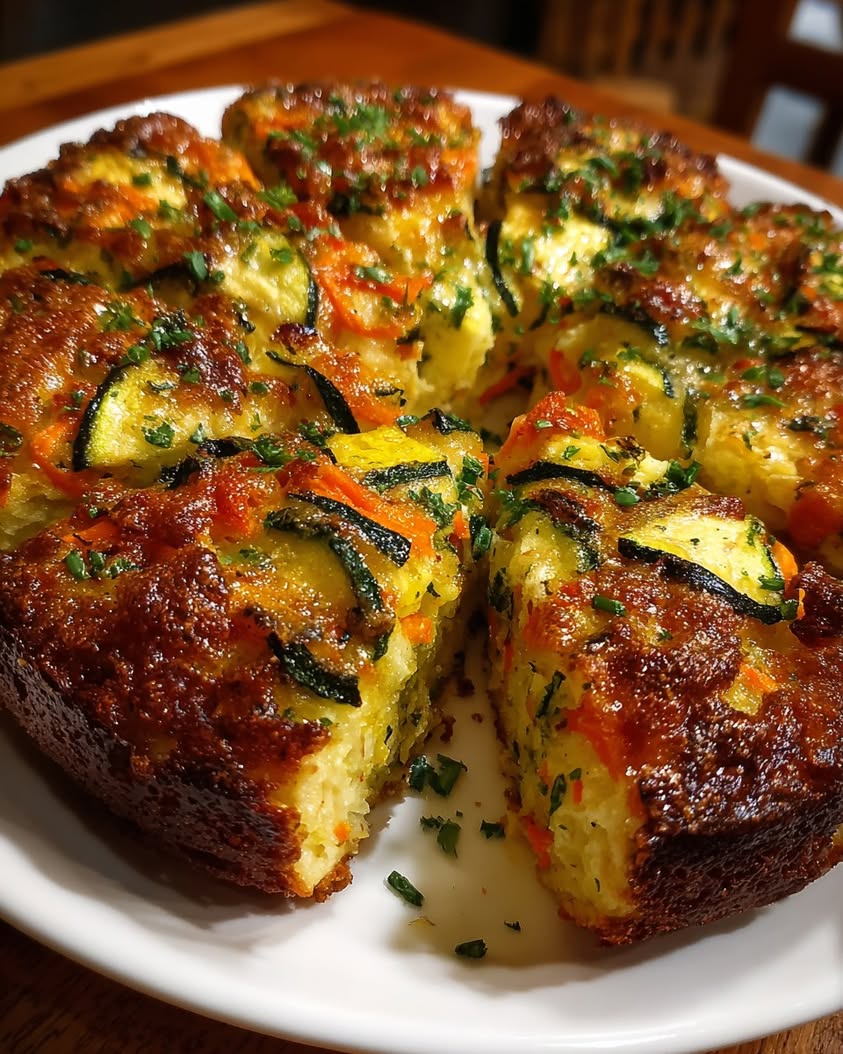
Mediterranean Veggie Crinkle Cake: A Savory Zucchini and Carrot Delight
Imagine a dish that captures the sun-drenched essence of the Mediterranean in every bite. This Mediterranean Veggie Crinkle Cake does exactly that, transforming humble zucchini and carrots into a stunning, savory masterpiece. Moreover, it brings a vibrant, vegetable-forward centerpiece to your table that is as nutritious as it is beautiful. The golden, crinkled top gives way to a moist, flavorful interior packed with fresh herbs and feta cheese. Ultimately, it is a celebration of simple ingredients elevated through thoughtful preparation.
This recipe redefines the concept of a “cake” for the savory palate. Instead of sugar and flour, the structure comes from grated vegetables, eggs, and a touch of baking powder. Consequently, you get a light, airy texture that holds together beautifully when sliced. The aroma of dill, parsley, and garlic wafting from your oven is utterly irresistible. Furthermore, it is a versatile dish that works equally well for a cozy family dinner, a brunch gathering, or a portable picnic lunch. Each slice offers a perfect balance of earthy sweetness from the carrots and a subtle freshness from the zucchini.
Creating this Mediterranean Veggie Crinkle Cake is a joyful process. You will love the hands-on step of squeezing the moisture from the zucchini, a key technique for perfect texture. Additionally, the process of mixing the vibrant batter and watching it rise into a golden dome is incredibly satisfying. This dish is a testament to how plant-based cooking can be both hearty and elegant. It is a guaranteed crowd-pleaser that will have everyone asking for the recipe. Finally, it stores and reheats wonderfully, making it a fantastic make-ahead option for busy weeks.
Quick Recipe Highlights
- Flavor Profile: This Mediterranean Veggie Crinkle Cake delivers a harmonious blend of savory, herbal, and slightly salty notes. Fresh dill and parsley provide a bright, aromatic lift, while the feta cheese adds a creamy tang. Simultaneously, the natural sweetness of the carrots and zucchini forms a delicious foundation.
- Texture: The texture is wonderfully complex, featuring a golden, slightly crisp exterior that contrasts with a tender, moist, and almost quiche-like interior. Importantly, the crinkled top creates delightful crispy edges, while the inside remains soft and packed with vegetable goodness.
- Aroma: As it bakes, the kitchen fills with an inviting fragrance of garlic, onions, and fresh herbs. The scent of caramelizing vegetables and melting cheese is warm and comforting, promising a delicious meal to come.
- Visual Appeal: This cake is a showstopper with its deep golden-brown, craggy top and vibrant green flecks of herbs. When sliced, it reveals a beautiful mosaic of orange carrot and pale green zucchini, making it as pleasing to the eye as it is to the palate.
- Skill Level Needed: This is an accessible recipe for cooks of all levels. The techniques are straightforward, primarily involving grating, mixing, and baking. However, mastering the moisture removal from the zucchini is the key skill that ensures success.
- Special Equipment: You need only basic kitchen tools: a box grater or food processor for the vegetables, a couple of mixing bowls, and a standard 9-inch springform pan. A cheesecloth or clean kitchen towel is essential for wringing out the zucchini effectively.
Recipe Overview
- Difficulty Level: We rate this Mediterranean Veggie Crinkle Cake as “Easy.” The steps are simple and sequential, with no advanced culinary techniques required. The most important task, removing moisture from the zucchini, is simple but crucial. Overall, it is a forgiving recipe that yields impressive results with minimal fuss.
- Category: This versatile dish straddles several categories beautifully. It is perfect as a vegetarian main course, a substantial side dish, or a standout brunch item. Additionally, it makes excellent finger food when cut into smaller squares for appetizers.
- Cuisine: The recipe draws direct inspiration from the sun-soaked flavors of the Eastern Mediterranean. The use of fresh dill, parsley, feta cheese, and olive oil is classic to Greek and Turkish cooking. It embodies the region’s philosophy of highlighting fresh, seasonal produce with simple, bold flavors.
- Cost: This is a very budget-friendly recipe, especially when zucchini and carrots are in season. The base ingredients are inexpensive vegetables, eggs, and flour. Feta cheese and fresh herbs are the primary splurges, but they provide immense flavor value. You can easily feed a family for a fraction of the cost of a meat-centric meal.
- Season: This cake shines brightest in late summer and early fall when zucchini is at its peak of freshness and abundance. However, it is a wonderful year-round dish because carrots are always available. It brings a taste of summer sunshine to even the coldest winter day.
- Occasion: Its versatility makes it suitable for countless occasions. Serve it warm for a Sunday family dinner, at room temperature for a picnic or potluck, or slice it thinly for an elegant party appetizer. It is also a fantastic addition to a holiday brunch spread alongside other dishes.
Why You’ll Love This Recipe
First and foremost, the taste and texture of this Mediterranean Veggie Crinkle Cake are utterly captivating. Each bite delivers a satisfying savory flavor with pops of herbal freshness and the salty creaminess of feta. The contrast between the crispy, golden top and the soft, moist interior creates a delightful eating experience. Furthermore, the natural sweetness of the carrots balances the milder zucchini perfectly. It is a flavor profile that feels both comforting and sophisticated, appealing to adults and children alike.
From a convenience standpoint, this recipe is a true winner. The preparation is straightforward and mostly involves simple grating and mixing. Importantly, you can prepare the batter in advance and bake it just before you need it. Moreover, the cake tastes fantastic warm, at room temperature, or even cold the next day. This makes it an ideal make-ahead dish for entertaining or for easy weekday lunches. You simply cannot beat having a ready-to-eat, nutritious slice waiting in the refrigerator.
Nutritionally, this dish is a powerhouse. It is packed with vitamins A and C from the carrots and zucchini, and it provides a good dose of fiber. The eggs and feta contribute high-quality protein and calcium, making it a well-rounded meal. Because you use a moderate amount of flour and oil, it feels substantial without being overly heavy. Consequently, it is a fantastic way to increase your vegetable intake in a delicious and satisfying format. You are nourishing your body with every flavorful slice.
For social gatherings, this Mediterranean Veggie Crinkle Cake is a guaranteed conversation starter. Its unique appearance and delicious flavor will impress your guests. It caters beautifully to vegetarians and can be easily adapted for other dietary needs, which simplifies menu planning. Additionally, it pairs wonderfully with a wide array of sides, from a simple green salad to roasted potatoes. Serving this dish shows thoughtfulness and culinary flair, making any meal feel like a special occasion.
Finally, this recipe is incredibly cost-effective and accessible. The main ingredients are affordable and readily available in any grocery store. You can often find zucchini and carrots on sale, especially in season. Even the “splurge” ingredients like feta and fresh herbs go a long way in terms of flavor impact. Therefore, you can create a restaurant-quality dish on a home-cooking budget. It proves that eating well does not require expensive or hard-to-find components.
Historical Background and Cultural Significance
The concept of savory vegetable cakes has deep roots in Mediterranean and Eastern European culinary traditions. Dishes like the Italian “torta di verdure” or the Greek “spanakopita” share a similar philosophy: encasing seasonal greens and herbs in a starchy binder. This Mediterranean Veggie Crinkle Cake is a modern, crustless interpretation of those ancient ideas. Specifically, it draws inspiration from various zucchini fritter and pancake recipes found from Turkey to Provence. These dishes historically provided a delicious way to preserve and use the abundant summer harvest.
Culturally, these types of dishes represent resourcefulness and seasonality. Mediterranean cooks have always excelled at transforming simple, garden-grown ingredients into celebratory meals. The addition of feta cheese anchors this recipe in Greek cuisine, where brined cheeses are a staple. Fresh herbs like dill and parsley are not mere garnishes in this region; they are essential flavor components that define a dish. This cake embodies the Mediterranean dietary pattern, which is celebrated worldwide for its health benefits and vibrant flavors. It is food that is meant to be shared, enjoyed slowly, and appreciated for its connection to the land.
The evolution of this specific recipe likely stems from the global popularity of crustless quiches and vegetable bakes. The “crinkle” texture, achieved through baking powder and proper moisture control, is a more recent technique for creating appealing visual and textural contrast. As home cooks sought healthier, gluten-conscious alternatives, recipes using grated vegetables as a primary structural element gained traction. This cake is a perfect example of that evolution, merging traditional flavors with a modern, easy-to-execute form. It respects its culinary heritage while adapting to contemporary kitchens and tastes.
Regional variations of this concept are endless. In the south of France, you might find a similar cake with added olives and herbes de Provence. An Italian version could include ricotta instead of feta and a handful of chopped sun-dried tomatoes. In the Middle East, a touch of mint and a sprinkle of sumac might be added. This adaptability is a testament to the recipe’s solid foundation. The core technique of binding grated vegetables with eggs and a little flour is a canvas for countless regional flavors. Your own kitchen becomes part of this ongoing culinary story when you add your personal touch.
Ingredient Deep Dive
Zucchini: Also known as courgette, this summer squash originated in the Americas but was cultivated into its modern form in Italy. It is incredibly versatile and mild in flavor, making it a perfect carrier for other ingredients. Nutritionally, it is low in calories but high in water, fiber, and antioxidants like vitamin C and manganese. When selecting zucchini, choose firm, medium-sized ones with glossy, unblemished skin. Avoid very large zucchini as they can be seedy and watery. Store them unwashed in a plastic bag in the refrigerator for up to a week. For this cake, salting and squeezing out the excess moisture is non-negotiable for the right texture.
Carrots: Carrots have a long history, initially cultivated for their aromatic leaves and seeds rather than their roots. The orange carrot we know today was developed in the Netherlands in the 17th century. They are famously rich in beta-carotene, which the body converts to vitamin A, essential for vision and immune health. Look for firm, smooth carrots with a bright orange color and fresh, green tops if attached. Store them in the crisper drawer, loosely wrapped in plastic. Grating them finely ensures they cook through and distribute their sweetness evenly throughout the Mediterranean Veggie Crinkle Cake.
Feta Cheese: Feta is a brined curd cheese with a protected designation of origin (PDO) in Greece, meaning authentic feta must come from specific regions and be made from sheep’s milk or a sheep/goat milk blend. Its tangy, salty flavor is iconic. It provides protein, calcium, and beneficial fats. For the best flavor in your cake, seek out authentic Greek feta packed in brine. It will be crumbly and intensely flavorful. Store leftover feta in its brine in the refrigerator. If you need a substitute, a firm ricotta salata or a salty cotija cheese can work, though the flavor profile will shift.
Fresh Dill and Parsley: These herbs are the soul of the Mediterranean flavor profile in this cake. Dill, with its feathery fronds and slightly anise-like flavor, is widely used in Greek and Eastern European cooking. Parsley, particularly the flat-leaf (Italian) variety, adds a clean, peppery freshness. Herbs are packed with phytonutrients and vitamins. Choose bunches with vibrant, perky leaves and no signs of wilting or yellowing. Store them stem-down in a glass of water in the fridge, loosely covered with a bag. Do not substitute dried herbs here, as the fresh flavor is central to the dish’s character.
Olive Oil: The cornerstone of Mediterranean cooking, olive oil is used here both in the batter and for greasing the pan. Extra virgin olive oil (EVOO) is the first cold pressing of the olives and contains the most flavor and health benefits, including monounsaturated fats and antioxidants. Its fruity, peppery notes enhance the vegetables. Use a good-quality EVOO for drizzling and a standard olive oil for greasing. Store it in a cool, dark place to prevent rancidity. The oil contributes to the moist crumb and golden crust of the finished cake.
Common Mistakes to Avoid
- Skipping the Zucchini Draining Step: This is the most critical error. Zucchini contains a tremendous amount of water. If you do not salt, drain, and squeeze it thoroughly, your batter will be too wet. Consequently, the cake will steam instead of bake properly, resulting in a soggy, dense texture that may not hold together.
- Using Pre-Shredded Cheese: Pre-shredded cheeses contain anti-caking agents like cellulose that can prevent proper melting and integration. For the best texture and flavor in your Mediterranean Veggie Crinkle Cake, always buy a block of feta and crumble it yourself just before adding it to the batter.
- Overmixing the Batter: Once you add the flour, mix just until the ingredients are combined. Overmixing develops the gluten in the flour, which can lead to a tough, rubbery cake instead of a tender, crumbly one. A few streaks of flour are perfectly fine.
- Not Greasing the Pan Well: Even with a non-stick springform pan, you must grease it thoroughly with olive oil or butter. This ensures the beautiful golden crust releases cleanly without sticking. Pay special attention to the crevice where the base meets the side.
- Opening the Oven Door Too Early: Resist the urge to open the oven during the first 30 minutes of baking. The sudden drop in temperature can cause the rising cake to collapse. Trust the visual cues and toothpick test near the end of the bake time.
- Underseasoning the Batter: Vegetables and eggs can absorb a fair amount of seasoning. Taste the batter before adding the eggs (for safety) to check the salt level. Remember that feta is salty, but the vegetables still need adequate seasoning to shine.
- Cutting the Cake While Hot: Allow the cake to cool in the pan for at least 15-20 minutes before releasing the springform and slicing. This resting period lets the structure set, so it slices neatly without falling apart. It will still be wonderfully warm.
- Using Old Baking Powder: Baking powder loses its potency over time. If yours is older than 6 months, it may not provide enough lift, resulting in a flat, dense cake. Test it by mixing a teaspoon with hot water; it should fizz vigorously.
Essential Techniques
Salting and Draining Zucchini: This technique is paramount for success. Salting grated zucchini draws out excess cellular water via osmosis. After letting it sit for 10-15 minutes, you must wring it out aggressively in a clean kitchen towel or cheesecloth. Removing this moisture concentrates the zucchini’s flavor and prevents a watery batter. The goal is to get the zucchini shreds as dry as possible. This step ensures your Mediterranean Veggie Crinkle Cake bakes up light and holds its structure instead of becoming a soggy mess.
Properly Greasing a Springform Pan: A springform pan is essential for easy removal but requires proper preparation. Use a pastry brush or paper towel to coat the entire interior, including the bottom and the tall sides, with a thin, even layer of olive oil. Do not forget the small gap where the base meets the side wall. This creates a non-stick barrier and promotes even browning and easy release. For extra insurance, you can line the bottom with a round of parchment paper after greasing.
The “Muffin Method” of Mixing: This recipe uses a standard quick-bread mixing technique. You combine all the dry ingredients (flour, baking powder, seasonings) in one bowl. In another, you mix the wet ingredients (eggs, oil) and fold in the prepared vegetables and cheese. Finally, you add the dry mix to the wet mix and stir just until combined. This method minimizes gluten development, ensuring a tender crumb. Overmixing is the enemy of a light texture.
Testing for Doneness: Visual cues are important; the cake should be deeply golden brown on top and pulling away slightly from the pan’s sides. However, the definitive test is the toothpick or skewer test. Insert it into the center of the cake; it should come out clean or with a few moist crumbs attached, but no wet batter. If batter clings to it, continue baking in 5-minute increments. Underbaking will cause the center to collapse as it cools.
Pro Tips for Perfect Mediterranean Veggie Crinkle Cake
First, use the large holes on your box grater for both the zucchini and carrots. This creates uniform shreds that cook evenly and provide the right texture. Alternatively, a food processor with a grating disk saves significant time, especially when doubling the recipe.
Let the squeezed zucchini sit on paper towels for a few extra minutes after wringing. This captures any remaining droplets of moisture that might have been missed, guaranteeing the driest possible vegetable base for your batter.
For an extra flavor boost, sauté the grated onion in a teaspoon of olive oil until just softened and translucent before adding it to the mix. This step mellows the raw onion flavor and adds a subtle sweetness to the overall cake.
If your fresh herbs are looking a bit wilted, revive them by soaking them in a bowl of ice water for 10 minutes before chopping. This crisps them up beautifully and intensifies their green color, which will show in the finished cake.
For a stunning presentation, reserve a small handful of the crumbled feta and fresh herbs. Sprinkle these over the top of the batter just before baking. They will create attractive, flavorful spots on the golden crust.
Allow the baked cake to cool completely on a wire rack before attempting to slice it with a serrated knife. A serrated knife saws gently through the crumbly texture without squashing the beautiful interior of the cake.
If making ahead, cool the cake completely, then wrap the whole thing tightly in plastic wrap. Store it at room temperature for a day or refrigerate for up to three days. Reheat individual slices in a toaster oven or conventional oven to restore the crisp top.
Variations and Adaptations
Regional Variations: Travel the Mediterranean with your ingredients. For a Greek island twist, add a handful of chopped Kalamata olives and a teaspoon of dried oregano. For a Provençal version, use herbes de Provence instead of dill and parsley, and add a few tablespoons of chopped sun-dried tomatoes. A Turkish-inspired cake might include a pinch of red pepper flakes and a garnish of toasted pine nuts and a drizzle of pomegranate molasses after baking.
Seasonal Adaptations: While perfect for summer, this cake adapts to any season. In fall, substitute half the zucchini with grated sweet potato or butternut squash. For a winter version, use parsnips and carrots and add a teaspoon of ground cumin for warmth. In spring, incorporate chopped asparagus tips and fresh chives. Each variation celebrates the best produce available while maintaining the recipe’s core structure.
Dietary Modifications: For a gluten-free Mediterranean Veggie Crinkle Cake, substitute the all-purpose flour with an equal weight of a 1:1 gluten-free baking blend. Ensure your baking powder is gluten-free. For a dairy-free version, omit the feta and add a tablespoon of nutritional yeast for a cheesy flavor, or use a vegan feta alternative. The cake will still be delicious and hold together well.
Flavor Variations: Experiment with different cheese profiles. Try crumbled goat cheese for tanginess, grated Parmesan for umami depth, or a sharp cheddar for a more robust flavor. You can also add a tablespoon of pesto to the wet ingredients or mix in a teaspoon of smoked paprika or za’atar for a different aromatic profile. The basic recipe is wonderfully adaptable.
Texture Modifications: For added crunch and protein, fold in a quarter cup of toasted sunflower seeds or chopped walnuts into the batter. For a creamier interior, add a half cup of ricotta cheese to the wet ingredients. If you prefer a more uniform, less crinkled top, smooth the batter in the pan before baking, though you will lose some of the signature rustic appeal.
Presentation Alternatives: Instead of a large cake, bake the batter in a greased muffin tin for individual “crinkle muffins.” Reduce the baking time to 20-25 minutes. Alternatively, press the batter into a greased square baking dish and cut it into bars for easy, portable lunches. You can also make mini cakes using small springform pans for an elegant dinner party presentation.
Serving and Presentation Guide
Plating Techniques: For a beautiful presentation, place a warm slice of Mediterranean Veggie Crinkle Cake in the center of a white or neutral-colored plate. This allows the vibrant colors of the cake to stand out. You can fan out a second, smaller slice beside it for a more substantial look. Alternatively, for a family-style meal, present the whole cake on a wooden board or a decorative platter, garnished simply with fresh herb sprigs, and let guests serve themselves.
Garnishing Ideas: A simple garnish elevates the visual appeal instantly. A dollop of thick Greek yogurt or tzatziki on the side adds a cool, creamy contrast. A light drizzle of high-quality extra virgin olive oil or a balsamic glaze over the slice adds shine and flavor. A sprinkle of flaky sea salt, microgreens, or edible flowers just before serving provides a professional, finished look with minimal effort.
Traditional Accompaniments: In the Mediterranean spirit, serve the cake with a crisp, lemony Greek salad of tomatoes, cucumber, red onion, and olives. A bowl of creamy hummus or a roasted eggplant dip like baba ganoush makes a perfect starter or side. Warm pita bread or crusty baguette slices are ideal for scooping up any crumbs and extra garnishes.
Modern Serving Suggestions: For a trendy brunch, serve a slice alongside a poached egg and a lightly dressed arugula salad. For a light dinner, pair it with a bowl of lentil soup or a quinoa tabbouleh. You can also cut the cake into small cubes, skewer them with cherry tomatoes and basil leaves, and serve as a sophisticated appetizer with a yogurt-dill dipping sauce.
Temperature Considerations: This cake is incredibly versatile temperature-wise. It is excellent served warm from the oven when the textures are most pronounced. It is also superb at room temperature, making it ideal for picnics and buffets. Chilled slices hold their shape perfectly and make a refreshing lunch on a hot day. Choose the temperature that best suits your meal occasion.
Portion Control Tips: A standard 9-inch cake yields 6 generous wedges as a main course or 8-10 smaller slices as a side dish or appetizer. For precise portions, especially for dietary tracking, allow the cake to cool completely and cut it into uniform squares using a ruler as a guide. This method is perfect for meal prepping balanced lunches for the week.
Wine and Beverage Pairing
Wine Pairings: The savory, herbal, and slightly salty notes of the Mediterranean Veggie Crinkle Cake pair beautifully with crisp, acidic white wines. A Greek Assyrtiko, with its citrus and mineral notes, is a classic regional match. A Sauvignon Blanc from New Zealand or the Loire Valley also complements the fresh herbs and feta perfectly. For a light red option, choose a chilled Beaujolais or a dry rosé from Provence, which can handle the vegetable flavors and creamy cheese without overpowering them.
Non-Alcoholic Alternatives: Sparkling water with a squeeze of lemon or lime and a sprig of fresh mint is a refreshing, palate-cleansing choice. For something more complex, try a chilled herbal iced tea, such as mint or lemon verbena. A tart pomegranate juice spritzer (mixed with soda water) mirrors the fruity notes of Mediterranean cuisine and cuts through the richness of the eggs and cheese delightfully.
Coffee/Tea Pairings: For a brunch setting, a medium-roast coffee with low acidity pairs well, as it will not clash with the savory elements. A cup of strong English Breakfast tea with a splash of milk can also be a comforting accompaniment. For an after-dinner serving, consider a cup of mint tea, which is traditional in many Mediterranean cultures and aids digestion after a flavorful meal.
Temperature Considerations: Always serve white wines and rosés well-chilled, between 45-55°F. Red wines, if chosen, should be lightly chilled to about 55°F. Non-alcoholic sparkling drinks should be served ice-cold to provide a refreshing contrast to the warm, savory cake. Iced teas and juices are best served over ice to maintain their cool temperature throughout the meal.
Serving Suggestions: Pour wine into appropriate stemware to enhance the aroma and tasting experience. Serve sparkling waters and spritzers in tall, elegant glasses with plenty of ice. Present coffee and tea in clean, warm mugs. Offering a choice of beverages caters to all guests and elevates the entire dining experience centered around your homemade cake.
Storage and Shelf Life
Storage Methods: Once completely cooled, the Mediterranean Veggie Crinkle Cake can be stored in several ways. For short-term storage, wrap the whole cake or individual slices tightly in plastic wrap or place them in an airtight container. You can store it at room temperature in a cool kitchen for up to one day. For longer storage, refrigeration is necessary.
Temperature Requirements: For optimal food safety and quality, refrigerate the cake if you plan to keep it for more than 24 hours. The ideal refrigerator temperature is at or below 40°F (4°C). The cake will keep well for 3-4 days when properly stored in the fridge. Always allow it to cool completely before refrigerating to prevent condensation from making it soggy.
Container Recommendations: Use an airtight container that is just large enough to hold the cake without squashing it. You can also wrap the cake securely in aluminum foil and then place it in a resealable plastic bag, pressing out excess air. For individual slices, separate them with parchment paper before stacking in a container to prevent sticking.
Signs of Spoilage: Discard the cake if you notice any off odors, such as sourness or rancidity. Visible mold growth, of course, means it should be thrown away. A significant change in texture, like excessive sogginess or slime, is also a sign of spoilage. When in doubt, follow the golden rule: if you are unsure, it is safest to discard it.
Reheating Instructions: To restore the delightful crisp top, reheating in an oven or toaster oven is best. Preheat your oven to 300°F (150°C). Place slices on a baking sheet and warm for 10-15 minutes, or until heated through. You can also reheat individual slices in a skillet over medium-low heat for a few minutes per side to re-crisp the exterior. Avoid the microwave, as it will make the cake uniformly soft and steamy.
Freezing Guidelines: This cake freezes exceptionally well. Wrap the completely cooled whole cake or slices tightly in plastic wrap, then in a layer of aluminum foil, or place in a heavy-duty freezer bag. Label with the date. Freeze for up to 2 months. Thaw overnight in the refrigerator and reheat using the oven method above for best results.
Make Ahead Strategies
Prep Timeline: You can prepare the entire batter up to 24 hours in advance. After mixing, cover the bowl tightly with plastic wrap and refrigerate. The flavors will actually meld and improve during this resting period. When ready to bake, let the batter sit at room temperature for 20-30 minutes while you preheat the oven. Give it one gentle stir before pouring it into the prepared pan.
Storage Between Steps: For component prep, you can grate the zucchini and carrots a day ahead. Store them separately in airtight containers in the refrigerator. Crucially, you must still salt and squeeze the zucchini just before making the batter to remove the moisture that will have leached out in the fridge. Chop the herbs and onions a day ahead as well, storing them in small containers.
Quality Impact Assessment: Making the batter ahead does not negatively impact quality; in fact, it can enhance the flavor integration. The key is to ensure all moisture is controlled. The baking powder will still be active after a night in the fridge, though the cake may rise slightly less than with freshly mixed batter. The final texture and taste, however, will be excellent.
Assembly Tips: For the freshest presentation when entertaining, bake the cake up to 3-4 hours before serving. Let it cool completely, then wrap it loosely at room temperature. This allows you to focus on other dishes while knowing your centerpiece is ready. The cake slices cleanly when cooled and can be gently reheated if desired.
Reheating Guidelines: To serve a make-ahead cake warm, reheat it in a 325°F (160°C) oven for 15-20 minutes if whole, or 8-10 minutes for individual slices. Cover loosely with foil if the top is already sufficiently browned to prevent over-darkening. This method restores the fresh-baked warmth and texture perfectly.
Fresh Element Additions: If making ahead, consider adding a final fresh touch just before serving. A new drizzle of vibrant green olive oil, a sprinkle of freshly chopped herbs, or a few crumbles of additional feta on top of the warmed slices will make the dish look and taste freshly made.
Scaling Instructions
Halving the Recipe: To make a smaller Mediterranean Veggie Crinkle Cake, simply divide all ingredient quantities by two. Use a 7-inch springform pan or a standard loaf pan. The baking time will be shorter; start checking for doneness at around 30-35 minutes. All techniques, especially draining the zucchini, remain exactly the same. This is perfect for a smaller household or for testing the recipe first.
Doubling or Tripling: Doubling is straightforward for a crowd. Double all ingredients. You can bake two 9-inch cakes simultaneously, but ensure your oven racks are positioned to allow for proper air circulation. Rotate the pans halfway through baking. Alternatively, bake in a large 9×13-inch baking dish; the texture will be slightly denser, and the baking time may increase by 10-15 minutes. Tripling is best done in multiple batches to ensure even cooking.
Equipment Adjustments: When scaling up, ensure you have a large enough mixing bowl to accommodate the increased volume of batter. A stand mixer with a paddle attachment can help combine the ingredients for a double batch efficiently. If using a different pan size, calculate the volume to ensure it can hold the batter (it should fill the pan no more than 2/3 to 3/4 full).
Timing Modifications: While prep time scales linearly, baking time does not. A doubled recipe in a single larger pan will take longer to bake through the center. A halved recipe in a smaller pan will bake faster. Always rely on visual cues and the toothpick test rather than strictly following the original time. Check early and often near the estimated finish.
Storage Considerations: A larger batch means more leftovers. Plan your storage containers in advance. Consider freezing portions of a large batch immediately after cooling to enjoy later. Label everything clearly with the date and contents. Scaling up is an excellent strategy for efficient meal prep for the week ahead.
Nutritional Deep Dive
Macro Breakdown: A serving of this Mediterranean Veggie Crinkle Cake provides a balanced mix of macronutrients. The eggs and feta cheese are excellent sources of high-quality protein and healthy fats, which promote satiety. The carbohydrates come primarily from the vegetables and a modest amount of flour, offering complex carbs and fiber for sustained energy. The olive oil contributes heart-healthy monounsaturated fats. This balance makes it a sustaining meal that won’t cause a rapid spike in blood sugar.
Micronutrient Analysis: This dish is a micronutrient powerhouse. Carrots are famously rich in beta-carotene (vitamin A), crucial for vision and immune function. Zucchini provides vitamin C, manganese, and antioxidants. Eggs offer choline for brain health and vitamin B12. Feta cheese is a significant source of calcium and phosphorus for bone health. The fresh herbs, though used in smaller quantities, contribute trace minerals and phytonutrients with anti-inflammatory properties.
Health Benefits: Regularly consuming dishes like this supports a heart-healthy diet pattern, thanks to the vegetables, olive oil, and moderate cheese. The high fiber content from the vegetables aids digestion and promotes gut health. The protein and fat combination helps maintain muscle mass and keeps you feeling full. Furthermore, the array of vitamins and antioxidants supports overall cellular health and may help reduce the risk of chronic disease.
Dietary Considerations: This recipe is naturally vegetarian. It can be adapted for gluten-free needs with a simple flour swap. For those monitoring sodium, you can{“success”:true,”message”:”Recipe created successfully”,”post_id”:8092,”tasty_recipe_id”:8092,”shortcode”:” Print
Mediterranean Veggies Crinkle Cake with Zucchini and Carrots
Description
A savory, moist cake packed with grated zucchini, carrots, and Mediterranean herbs, perfect as a side dish or light main course.
Ingredients
For the Crust:
- 2 medium zucchinis, grated and drained
- 2 large carrots, grated
- 1 cup all-purpose flour
- 3 large eggs
- 1/2 cup olive oil
- 1/2 cup grated Parmesan cheese
- 1 teaspoon dried oregano
- 1 teaspoon dried thyme
- 1/2 teaspoon garlic powder
- 1 teaspoon baking powder
- Salt and black pepper to taste
Instructions
1. Prepare the Crust:
- Preheat oven to 350°F (175°C) and grease a 9-inch round cake pan.
- In a large bowl, combine grated zucchini, carrots, eggs, olive oil, and Parmesan cheese. Mix well.
- Add flour, oregano, thyme, garlic powder, baking powder, salt, and pepper. Stir until just combined.
- Pour batter into the prepared pan and smooth the top.
- Bake for 30 minutes or until a toothpick inserted comes out clean. Let cool slightly before serving.
Notes
You can customize the seasonings to taste.

I’m Billy, a classically trained culinary school graduate from The Culinary Institute of America with over 12 years in the restaurant industry and over 19 years of cooking experience.