
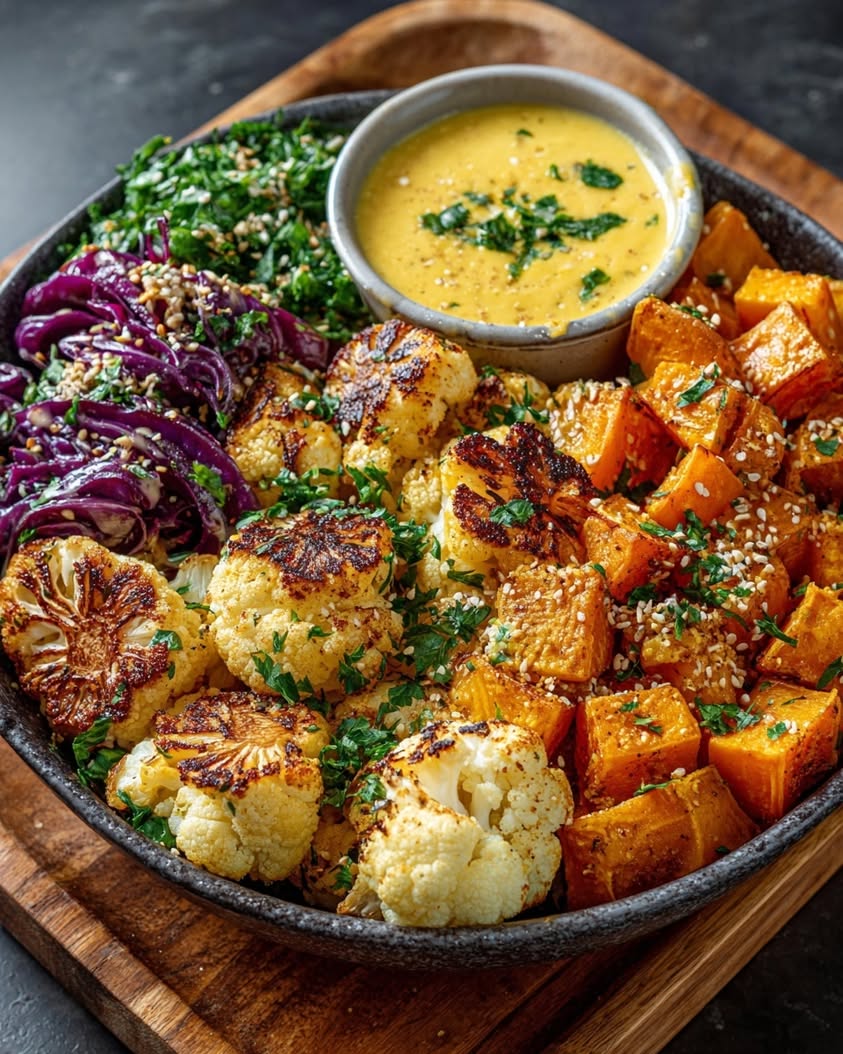
Roasted Sweet Potato and Cauliflower Bowls with Tahini Honey Drizzle: A Vibrant Plant-Powered Feast
Imagine a meal that feels both nourishing and indulgent, a colorful canvas of flavors that comes together with minimal effort. These Roasted Sweet Potato and Cauliflower Bowls with Tahini Honey Drizzle deliver exactly that experience. This recipe transforms humble vegetables into a spectacular, satisfying dinner. The process is wonderfully simple, yet the result feels gourmet and special.
Furthermore, the magic lies in the contrast of textures and tastes. You get caramelized, sweet potatoes and tender, nutty cauliflower straight from the oven. Then, you add creamy, protein-rich chickpeas and a handful of fresh greens. Finally, a luscious tahini honey sauce ties everything together with its perfect balance of nutty, sweet, and tangy notes. Ultimately, this dish is a celebration of whole foods that will leave you feeling energized and completely satisfied.
Consequently, this recipe has become a staple for busy weeknights and leisurely weekend lunches alike. It is incredibly versatile, easily adapting to what you have in your pantry. Moreover, it is a fantastic meal prep option, as the components hold up beautifully in the refrigerator. Whether you are a seasoned home cook or just starting your culinary journey, these bowls are a guaranteed win for your table.
Quick Recipe Highlights
- Flavor Profile: These bowls offer a masterful balance. The natural sweetness of the roasted vegetables plays beautifully against the earthy, nutty tahini. Meanwhile, the lemon juice and honey in the sauce add essential brightness and a touch of floral sweetness that elevates every bite.
- Texture: Expect a delightful textural journey. The exterior of the sweet potato and cauliflower becomes beautifully crisp and caramelized in the oven. Inside, they remain tender. The chickpeas add a pleasant, soft bite, and the fresh greens provide a crucial, refreshing crunch that completes the bowl.
- Aroma: As the vegetables roast, your kitchen will fill with an irresistible, warm fragrance. The scent of caramelizing sweet potato and toasting spices like cumin or paprika is deeply comforting. Additionally, the fresh, tangy aroma of the lemon-tahini sauce cutting through the richness signals that your meal is almost ready.
- Visual Appeal: This dish is a feast for the eyes with its vibrant color palette. The bright orange sweet potatoes, pale cauliflower, green herbs, and creamy beige sauce create a stunning, Instagram-worthy presentation. The visual appeal makes it perfect for serving to guests.
- Skill Level Needed: This is a beginner-friendly recipe designed for success. The techniques involved—chopping vegetables, tossing them with oil, and roasting—are fundamental. Similarly, whisking the sauce ingredients together is straightforward. No advanced culinary skills are required to achieve a delicious result.
- Special Equipment: You need only basic kitchen tools. A good baking sheet is essential for achieving that perfect roast on the vegetables. Beyond that, a sharp knife for chopping, a mixing bowl, and a whisk or fork for the sauce are all you require. A blender can make the sauce extra smooth, but it is optional.
Recipe Overview
- Difficulty Level: We classify this recipe as easy for several important reasons. First, the steps are sequential and simple: chop, season, roast, and whisk. There is no complicated timing or finicky techniques. Second, the margin for error is wide; even if you roast the vegetables a few minutes longer, they remain delicious. Ultimately, it is an accessible recipe that builds kitchen confidence.
- Category: This dish beautifully straddles multiple meal categories. It is a hearty and complete vegetarian main course, packed with fiber and plant-based protein. Alternatively, it serves as a stellar side dish for grilled chicken or fish. It also fits perfectly into the lunch bowl category, as it is ideal for make-ahead preparation and portable eating.
- Cuisine: While not tied to one specific tradition, this bowl draws inspiration from Mediterranean and Middle Eastern culinary principles. The use of tahini, chickpeas, lemon, and cumin is classic to those regions. However, the combination with roasted sweet potato and cauliflower creates a modern, fusion-style dish that celebrates global, vegetable-forward eating.
- Cost: This is an exceptionally budget-friendly meal. Sweet potatoes, cauliflower, and canned chickpeas are inexpensive, nutrient-dense staples. The sauce ingredients, like tahini and honey, are pantry items that last a long time and can be used in many other recipes. You can create a restaurant-quality, healthy meal for a family for just a few dollars.
- Season: This recipe shines brightest in the fall and winter months. During this time, sweet potatoes and cauliflower are at their peak of flavor and affordability. Conversely, the bright, fresh elements make it a wonderful transition dish for spring. It is truly a versatile option for any season, offering comfort or lightness as needed.
- Occasion: These bowls are perfect for almost any dining scenario. They are quick enough for a casual Tuesday night dinner yet impressive enough for a weekend gathering with friends. They are an excellent choice for a healthy reset after the holidays. Moreover, they are a fantastic potluck contribution, as they travel well and appeal to a wide range of dietary preferences.
Why You’ll Love This Recipe
First and foremost, the taste and texture combination is utterly addictive. The deep, caramelized sweetness from the roasted vegetables provides a hearty base. Then, the creamy, savory tahini sauce with its hint of honey and lemon cuts through the richness perfectly. Each forkful delivers a mix of soft, crisp, and creamy elements that keep your palate engaged from the first bite to the last. This harmonious balance makes the Roasted Sweet Potato and Cauliflower Bowls with Tahini Honey Drizzle feel like a treat, even though it is packed with wholesome ingredients.
Additionally, the convenience factor is a major win for any home cook. The recipe follows a simple, hands-off method where the oven does most of the work. You simply chop your vegetables, toss them with oil and spices, and let them roast to perfection. Meanwhile, you can quickly whisk together the no-cook sauce and prepare any fresh toppings. This streamlined process means you can have a gorgeous, healthy meal on the table in under an hour with minimal active cooking time, making it ideal for busy evenings.
From a nutritional standpoint, this bowl is a powerhouse. Sweet potatoes are loaded with beta-carotene and fiber, while cauliflower offers a wealth of vitamins C and K. Chickpeas contribute substantial plant-based protein and fiber to keep you full. The tahini sauce adds healthy fats from sesame seeds, which aid in nutrient absorption. Together, these ingredients create a meal that supports sustained energy, gut health, and overall wellness without any sense of deprivation.
Furthermore, this dish holds tremendous social and entertaining value. Its vibrant, colorful presentation is guaranteed to impress guests. Since the components are served separately or composed in a bowl, it easily accommodates different dietary needs; someone can skip the cheese or add extra protein without disrupting the meal flow. It encourages a relaxed, interactive dining experience where everyone can build their perfect bowl, making it a fantastic centerpiece for a casual dinner party or family meal.
Finally, the cost-effectiveness and accessibility of the ingredients cannot be overstated. You do not need any rare or expensive items to create this meal. The core vegetables and legumes are some of the most affordable in the produce and pantry aisles. Tahini and spices are one-time investments that last for many recipes. This accessibility means you can enjoy a gourmet-tasting, nutrient-dense meal regularly without straining your grocery budget, proving that eating well does not have to be complicated or costly.
Historical Background and Cultural Significance
The individual components of this bowl have deep and diverse historical roots. Sweet potatoes, for instance, have a long history in Central and South America, dating back thousands of years. They were a staple crop for many indigenous cultures before spreading across the globe through exploration and trade. Cauliflower, on the other hand, has its origins in the Mediterranean region, with evidence of cultivation in Asia Minor over two millennia ago. The journey of these vegetables to modern tables is a story of agricultural adaptation and global exchange.
Meanwhile, the sauce anchors the dish in Middle Eastern and Mediterranean culinary traditions. Tahini, a paste made from ground sesame seeds, has been a fundamental ingredient in these regions for centuries. It is a cornerstone of foods like hummus and baba ganoush. Similarly, the practice of combining tahini with lemon and garlic is a classic flavor profile. The addition of honey, a universal sweetener used since ancient times, creates a bridge between the savory vegetables and the creamy sauce, showcasing how ancient ingredients can be combined in new ways.
The concept of the “grain bowl” or “Buddha bowl” is a more recent evolution, gaining immense popularity in the last decade with the rise of health-conscious and plant-based eating. This style of eating emphasizes whole, unprocessed ingredients arranged in a single bowl for visual appeal and nutritional completeness. Our Roasted Sweet Potato and Cauliflower Bowls with Tahini Honey Drizzle fit perfectly into this modern trend. They represent a fusion of ancient, nutrient-dense ingredients presented in a contemporary, convenient format that appeals to today’s desire for meals that are both Instagram-worthy and deeply nourishing.
Ultimately, this recipe is a beautiful example of how global cuisine evolves. It takes the ancient, staple ingredients from different parts of the world—the sweet potato from the Americas, the cauliflower from the Mediterranean, and the tahini from the Middle East—and combines them with a modern sensibility. It reflects a current food philosophy that values vegetable-centric meals, bold flavors, and flexible cooking. This bowl is less about a single cultural story and more about a delicious, modern synthesis of nutritious, globally-inspired ingredients.
Ingredient Deep Dive
Let us start with sweet potatoes, the vibrant heart of this dish. This root vegetable has been cultivated for over 5,000 years, originally in Central and South America. Nutritionally, they are a superstar, packed with beta-carotene (which converts to vitamin A), fiber, and vitamin C. When selecting sweet potatoes, look for firm specimens with smooth, unblemished skin. Avoid any with soft spots or signs of sprouting. Store them in a cool, dark, well-ventilated place—not the refrigerator, as cold temperatures can alter their texture and flavor. For a substitution, you could use butternut squash or carrots, though the cooking time may vary slightly.
Next, consider cauliflower, the versatile cruciferous vegetable. A member of the Brassica family, it has been enjoyed since Roman times. It is an excellent source of vitamins C and K, folate, and contains beneficial antioxidants. Choose a head that is firm and heavy for its size, with tightly packed, creamy-white florets and fresh, green leaves attached. Avoid heads with brown spots or a loose, spreading appearance. Store it in a perforated plastic bag in the refrigerator’s crisper drawer. Broccoli or Brussels sprouts make a great substitute, offering a similar texture and ability to roast well.
The protein comes from humble chickpeas, also known as garbanzo beans. With a history of cultivation in the Middle East stretching back over 7,000 years, they are one of the world’s oldest cultivated legumes. They are rich in plant-based protein, fiber, and minerals like iron and folate. For this recipe, canned chickpeas are perfectly convenient; just be sure to rinse and drain them well to remove excess sodium and the starchy liquid. Dried chickpeas, cooked from scratch, can also be used for a firmer texture. For a different twist, white beans or lentils would work beautifully.
Finally, the star of the sauce: tahini. This smooth paste made from toasted, ground sesame seeds is a cornerstone of Levantine cuisine. It is a good source of healthy fats, calcium, and copper. When shopping, look for pure sesame seed tahini, ideally with just one ingredient: sesame seeds. The oil may separate, which is natural; simply stir it back in before using. Store opened tahini in the refrigerator to prevent rancidity. If you need a substitute, a thick, unsweetened almond or cashew butter can work in a pinch, though the flavor will be distinctively different.
Common Mistakes to Avoid
- Overcrowding the Baking Sheet: This is the most common error. If the vegetables are piled on top of each other, they will steam instead of roast. Consequently, you will miss out on the essential caramelized, crispy edges. Always use a large enough sheet and spread the pieces in a single layer with a little space between them.
- Underseasoning the Vegetables: Do not be shy with salt, pepper, and spices before roasting. The seasoning needs to penetrate the vegetable pieces during cooking. Bland roasted vegetables will make the entire bowl taste flat, even with a flavorful sauce. Season generously and toss well to ensure even coverage.
- Using Cold Tahini Straight from the Fridge: Refrigerated tahini often becomes very thick and difficult to whisk. Always take your tahini out ahead of time to let it come to room temperature. Alternatively, you can gently warm the sealed jar in a bowl of hot water to loosen it up before making the sauce.
- Adding Water to Thin the Sauce Too Quickly: If your tahini sauce is too thick, add water just one tablespoon at a time. Adding too much liquid at once can cause the sauce to break or become too thin and runny. The goal is a creamy, drizzle-able consistency that coats the back of a spoon.
- Skipping the Acid (Lemon Juice): The lemon juice in the tahini honey sauce is not optional. It provides the crucial acidity that balances the richness of the tahini and the sweetness of the honey and vegetables. Without it, the sauce can taste one-dimensional and overly heavy. Fresh lemon juice is always best.
- Not Drying the Chickpeas: If you are using canned chickpeas, pat them very dry with a clean kitchen towel or paper towels after rinsing. Excess moisture on the chickpeas will prevent them from getting slightly crispy in the oven and can make the vegetables on the same pan steam.
- Neglecting to Preheat the Oven: Always preheat your oven fully before adding the baking sheet. Roasting in an oven that is not hot enough will cause the vegetables to cook unevenly and become soggy as they release their moisture before browning can occur.
- Forgetting to Taste and Adjust the Sauce: Always taste your tahini honey sauce before serving. You may find it needs another pinch of salt, a squeeze more lemon for brightness, or a tiny bit more honey to balance any bitterness from the tahini. Adjusting to your personal taste is key.
Essential Techniques
Mastering the roast is the most important technique for this recipe. Roasting at a high temperature (around 425°F) is crucial because it causes the natural sugars in the sweet potato and cauliflower to caramelize, creating deep, complex flavors and a desirable crispy texture on the edges. To master it, ensure your vegetables are cut into uniform, bite-sized pieces so they cook evenly. Toss them thoroughly with oil to coat every surface; this promotes browning and prevents sticking. The common pitfall is under-oiling or overcrowding the pan. Look for visual cues of success: the sweet potato edges will be slightly darkened and crisp, and the cauliflower will have golden-brown spots.
Another key technique is achieving the perfect tahini sauce consistency. The process of whisking tahini with liquid is an emulsion, similar to making a vinaigrette. Start by whisking the tahini with the lemon juice and garlic. At first, the mixture will seize up and become very thick—this is normal and expected. Then, slowly add water, one tablespoon at a time, while whisking vigorously. The sauce will gradually thin out and become smooth, creamy, and light in color. The pitfall is adding too much water too quickly, which can cause a thin, broken sauce. The visual cue for success is a creamy, pourable consistency that ribbons off your whisk.
Pro Tips for Perfect Roasted Sweet Potato and Cauliflower Bowls
For extra crispy chickpeas, toss them in a separate, small oven-safe dish or on a corner of the baking sheet during the last 10-15 minutes of roasting. This gives them direct heat exposure to get crunchy without overcooking the vegetables.
Massage your kale or hearty greens with a tiny bit of olive oil and lemon juice before adding them to the bowl. This technique, called “massaging,” breaks down the tough fibers, making the greens more tender, flavorful, and easier to digest.
Double the tahini honey sauce recipe. It is so delicious that you will want extra for drizzling, and it stores wonderfully in the fridge for up to a week. Use it as a salad dressing, a dip for vegetables, or a sauce for grilled chicken or fish.
Let the roasted vegetables cool for a few minutes before assembling your bowls. This prevents the fresh greens from wilting immediately upon contact with the hot ingredients, preserving their pleasant crunch.
Use a microplane to grate the garlic directly into the tahini sauce. This creates a fine, almost paste-like garlic that distributes flavor evenly throughout the sauce without leaving any harsh, large chunks.
If your sweet potatoes are releasing a lot of starch, you can soak the chopped pieces in cold water for 10 minutes before drying and seasoning. This can help achieve a slightly crispier exterior during roasting.
Toast your spices before using. If you are using whole cumin seeds or coriander, toast them in a dry pan for a minute until fragrant, then grind them. This simple step unlocks exponentially more flavor in your spice blend.
Garnish generously. Fresh herbs like parsley or cilantro, a sprinkle of sesame seeds or chopped nuts, and a pinch of flaky sea salt just before serving add layers of texture, color, and a final burst of flavor that elevates the entire dish.
Variations and Adaptations
For regional variations, draw inspiration from different global pantries. Give the bowl a Moroccan twist by adding ras el hanout to the roasted vegetables and topping with dates and toasted almonds. For a Mexican-inspired version, use chili powder and smoked paprika on the veggies, swap the tahini sauce for a creamy avocado-lime dressing, and add black beans and corn. A Greek-style bowl could include oregano on the vegetables, a tzatziki-style yogurt sauce, and toppings like kalamata olives and diced cucumber.
Seasonal adaptations are simple and rewarding. In spring, add roasted asparagus or fresh peas. Summer bowls can incorporate zucchini, bell peppers, or cherry tomatoes roasted alongside the main vegetables. For a heartier winter version, add roasted Brussels sprouts or parsnips and use a warming spice blend like garam masala. The base recipe is a perfect template for using whatever produce is freshest and most abundant.
Dietary modifications are straightforward. For a vegan Roasted Sweet Potato and Cauliflower Bowl, replace the honey in the tahini sauce with maple syrup or agave nectar. To make it gluten-free, simply ensure any added garnishes or condiments are certified GF—the core recipe naturally is. For a higher-protein version, add a scoop of quinoa or farro to the base, or top with pan-seared tofu or tempeh. A lower-carb option would involve increasing the cauliflower and reducing the sweet potato, or substituting the sweet potato with lower-starch vegetables like broccoli.
Serving and Presentation Guide
Plating is key for visual appeal. Start by creating a colorful base layer with your fresh greens or grains. Then, artfully arrange the roasted sweet potato, cauliflower, and chickpeas in distinct sections or gently piled together. This allows each component to be visible. Drizzle the tahini honey sauce in a zig-zag pattern or around the edges of the bowl rather than dumping it in the center. Finally, add your garnishes in small, intentional clusters for a professional, restaurant-quality look.
Consider temperature and texture for the ideal eating experience. Serve the bowls immediately after assembling so the roasted vegetables are still warm, gently wilting the greens just slightly. If preparing ahead, keep the components separate and assemble just before eating to maintain the contrast between the warm, soft vegetables and the cool, crisp greens. Portion control is easy with bowls; a good rule is to fill half the bowl with vegetables, a quarter with your base (greens/grains), and a quarter with protein and garnishes.
Wine and Beverage Pairing
The complex flavors in these bowls pair beautifully with a variety of wines. A crisp, unoaked white wine like a Sauvignon Blanc or Pinot Gris complements the lemon in the sauce and cuts through the richness of the tahini. Alternatively, a light-bodied, fruity red with low tannins, such as a Gamay or Pinot Noir, can stand up to the sweet, earthy vegetables without overpowering them. For a non-alcoholic option, sparkling water with a squeeze of lemon or lime is always refreshing. A lightly sweetened, minty iced tea or a tart cherry juice spritzer would also harmonize well with the dish’s flavor profile.
Storage and Shelf Life
Store all components separately in airtight containers in the refrigerator for the best results. The roasted vegetables and chickpeas will keep for 3-4 days. The tahini honey sauce can last for up to a week. The fresh greens should be stored in their own container. Signs of spoilage include an off smell, significant moisture or slime on the vegetables, or mold. To reheat, spread the roasted vegetables on a baking sheet and warm in a 350°F oven for about 10 minutes, or until heated through. This method helps restore some crispness better than microwaving. The sauce can be served cold or at room temperature; if it thickens in the fridge, whisk in a teaspoon of warm water to loosen it.
Make Ahead Strategies
This recipe is a meal prep champion. You can roast the sweet potatoes, cauliflower, and chickpeas up to 3 days in advance. Let them cool completely before storing in separate containers in the fridge. The tahini honey sauce can be made up to 5 days ahead; its flavors often improve as they meld. When ready to eat, simply reheat the roasted components and assemble your bowls with fresh greens. To maintain optimal quality, add any fresh herbs, nuts, or seeds as garnishes right before serving. This strategy makes having a healthy, delicious lunch or dinner during a busy week effortless.
Scaling Instructions
Scaling this recipe is simple. To halve it, use one medium sweet potato and half a large cauliflower head. Keep the oven temperature and time the same, but use a smaller baking sheet. To double or triple for a crowd, use multiple baking sheets and rotate them in the oven halfway through cooking to ensure even roasting. You may need to add a few extra minutes to the cook time. When scaling the sauce, maintain the basic ratio of tahini to lemon juice to water, but taste and adjust seasoning as you go, as garlic and salt intensity can vary. For large batches, consider using a blender or food processor to mix the sauce smoothly and quickly.
Nutritional Deep Dive
This bowl is a nutritional powerhouse designed for sustained energy. The sweet potatoes provide complex carbohydrates and fiber, while the cauliflower adds volume and micronutrients with very few calories. The chickpeas contribute a significant amount of plant-based protein and additional fiber, promoting satiety. The tahini sauce offers healthy monounsaturated and polyunsaturated fats from sesame seeds, which are essential for nutrient absorption and hormone health. Together, this macronutrient balance supports stable blood sugar levels. For weight management, the high fiber and protein content help you feel full longer on a reasonable calorie count. It is a meal that truly fuels your body from the inside out.
Dietary Adaptations
For a vegan adaptation, substitute the honey in the tahini honey sauce with an equal amount of maple syrup, agave nectar, or date syrup. The result is equally delicious and sticky-sweet. To make the bowl Paleo or Whole30-compliant, omit the chickpeas and ensure your tahini is 100% sesame seeds with no additives (check labels carefully). Increase the vegetable portions or add a compliant protein like grilled chicken or shrimp. For a lower-FODMAP version, replace the sweet potato with an equal weight of carrots and use only the green tops of scallions for garnish, omitting the garlic in the sauce or using a garlic-infused oil instead.
Troubleshooting Guide
If your vegetables are soggy, the likely culprits are overcrowding the pan or not roasting at a high enough temperature. Next time, ensure your oven is fully preheated and use two baking sheets if necessary to give the pieces space. For a broken or too-thin tahini sauce, you can try to rescue it. If it is too thin, whisk in another spoonful of tahini. If it has separated, try blending it briefly with an immersion blender or whisking in a teaspoon of very hot water to re-emulsify it. If the sauce tastes bitter, balance it with a touch more honey or maple syrup and a pinch of salt to round out the flavors.
Recipe Success Stories
Readers and home cooks consistently rave about the versatility of this recipe. One home cook shared how she added leftover shredded chicken for her family and kept it vegetarian for herself, making it a perfect weekly staple. Another reported that doubling the sauce recipe transformed her week, using it on everything from salads to grilled fish. Many have successfully adapted it for various diets, proving its flexibility. A common piece of feedback is about the presentation—taking an extra minute to arrange the bowl beautifully makes the meal feel special and restaurant-worthy, even on a regular Tuesday night. It is a recipe that people make once and then integrate into their regular rotation.
Frequently Asked Questions
Can I use frozen cauliflower? Yes, you can. However, do not thaw it first. Toss the frozen florets directly with oil and spices, but expect a slightly softer texture and more moisture released during cooking. You may need to extend the roasting time by 5-10 minutes.
My tahini sauce is too thick. What do I do? This is very common. Simply whisk in warm water, one tablespoon at a time, until you reach a smooth, drizzle-able consistency. The sauce will thin out significantly as you incorporate the water.
Can I make this nut-free? Absolutely. Tahini is a seed butter made from sesame seeds, so it is naturally nut-free. Just double-check that your tahini is processed in a dedicated facility if you have a severe allergy.
What can I use instead of tahini? For a similar creamy, nutty flavor, you could use unsweetened sunflower seed butter or a thick, full-fat Greek yogurt thinned with a little lemon juice. The flavor profile will change, but it will still be tasty.
How do I get my chickpeas crispy? Ensure they are patted very dry after rinsing. Toss them with a little oil and spread them in a single layer on the baking sheet, giving them a little space from the other vegetables. Roast until golden.
Is this recipe gluten-free? Yes, the core ingredients are naturally gluten-free. Always check labels on any pre-made spices or garnishes you add to ensure no cross-contamination if you have celiac disease.
Can I prep the bowls completely ahead of time? It is best to store components separately. Assembling ahead will cause the greens to wilt and the roasted vegetables to lose their texture. Assemble just before serving for the best experience.
What other vegetables can I add? This recipe is very flexible. Red onion wedges, bell pepper strips, broccoli, or Brussels sprouts all roast beautifully alongside the sweet potato and cauliflower. Just adjust cutting sizes for even cooking.
How can I add more protein? Top your bowl with a fried or poached egg, pan-seared tofu or tempeh, grilled shrimp, or sliced chicken breast. You can also add a scoop of quinoa or lentils to the base.
Can I freeze the roasted vegetables? You can, but the texture will become softer upon thawing and reheating. They are best enjoyed fresh or refrigerated for a few days. The sauce does not freeze well due to separation.
Additional Resources
If you loved the flavors in these Roasted Sweet Potato and Cauliflower Bowls, explore more recipes that use tahini, like a classic homemade hummus or a vibrant beetroot dip. To master vegetable roasting, check out our guide on perfect oven temperatures and techniques for every type of veggie. For building endless bowl meals, we have a template that helps you mix and match bases, proteins, vegetables, and sauces for infinite healthy dinner ideas. Investing in a few good half-sheet pans and a set of glass storage containers will make preparing and storing recipes like this one a breeze.
{“success”:true,”message”:”Recipe created successfully”,”post_id”:8098,”tasty_recipe_id”:8098,”shortcode”:” Print
Roasted Sweet Potato & Cauliflower Bowls with Tahini Honey Sauce
Description
A vibrant, nutrient-packed bowl featuring roasted sweet potatoes and cauliflower, topped with a creamy tahini honey sauce for a sweet and savory flavor.
Ingredients
For the Crust:
- 2 medium sweet potatoes, peeled and cubed
- 1 head cauliflower, cut into florets
- 2 tablespoons olive oil
- 1 teaspoon smoked paprika
- 1/2 teaspoon garlic powder
- Salt and black pepper to taste
- 1/4 cup tahini
- 2 tablespoons honey
- 2 tablespoons lemon juice
- 2–3 tablespoons water
- 4 cups cooked quinoa or brown rice
- Fresh parsley or cilantro for garnish
Instructions
1. Prepare the Crust:
- Preheat oven to 400°F (200°C). Line a baking sheet with parchment paper.
- In a large bowl, toss sweet potatoes and cauliflower with olive oil, smoked paprika, garlic powder, salt, and pepper. Spread evenly on the baking sheet.
- Roast for 25-30 minutes, stirring halfway, until vegetables are tender and lightly browned.
- While roasting, whisk together tahini, honey, lemon juice, and water in a small bowl until smooth. Adjust consistency with more water if needed.
- Assemble bowls by dividing cooked quinoa or brown rice among four bowls. Top with roasted vegetables.
- Drizzle with tahini honey sauce and garnish with fresh herbs before serving.
Notes
You can customize the seasonings to taste.

I’m Billy, a classically trained culinary school graduate from The Culinary Institute of America with over 12 years in the restaurant industry and over 19 years of cooking experience.