
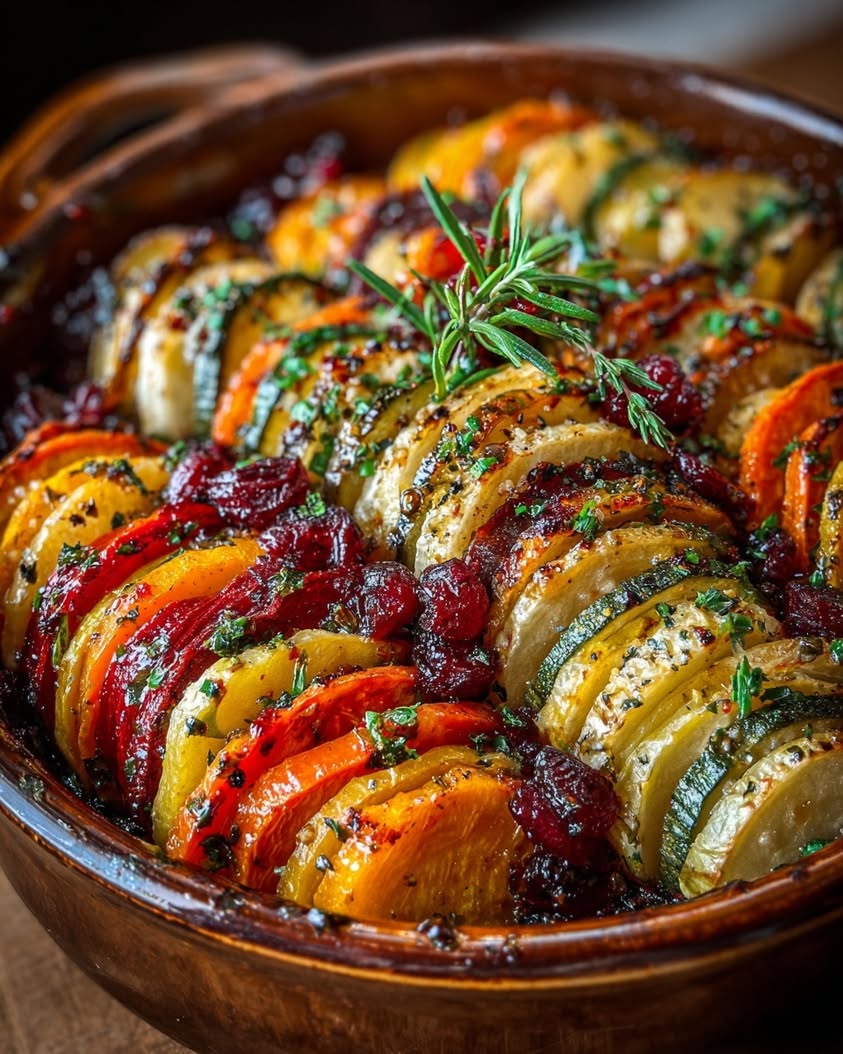
Autumn Vegetable Layer Bake with Cranberry-Maple Glaze: A Stunning Centerpiece for Fall Feasts
Imagine a dish that captures the very essence of autumn in one breathtaking, savory-sweet package. This Autumn Vegetable Layer Bake with Cranberry-Maple Glaze is precisely that. It transforms humble root vegetables and hearty squash into an elegant, layered masterpiece. The final result is a stunning centerpiece that promises to be the star of your holiday table or any cozy fall gathering.
Furthermore, this recipe celebrates the seasonal bounty with layers of flavor and texture. Each slice reveals beautiful strata of sweet potato, parsnip, butternut squash, and Brussels sprouts. The magic happens with a glossy, ruby-red Cranberry-Maple Glaze that caramelizes in the oven. Consequently, it creates a perfect balance of tart, sweet, and savory notes in every single bite.
Ultimately, this Autumn Vegetable Layer Bake is more than just a side dish. It is a culinary project that yields impressive rewards. The process of layering and glazing is meditative and satisfying. Meanwhile, the final presentation is guaranteed to elicit genuine admiration from your guests.
Quick Recipe Highlights
- Flavor Profile: This bake delivers a complex harmony. Earthy, roasted vegetables meet a bright, tart-sweet cranberry-maple glaze. Additionally, aromatic herbs like rosemary and thyme provide a savory backbone. The overall taste is deeply comforting yet sophisticated.
- Texture: Expect a delightful contrast in textures. The vegetables become meltingly tender inside while developing caramelized, slightly crisp edges. The glaze reduces to a sticky, jam-like coating. This combination creates a wonderfully satisfying mouthfeel.
- Aroma: As it bakes, your kitchen will fill with an irresistible fragrance. The scent of roasting root vegetables blends with sweet maple syrup and tart cranberries. Moreover, the herbal notes of rosemary and thyme perfume the air, signaling a truly special meal.
- Visual Appeal: This dish is a feast for the eyes. The cross-section reveals stunning, colorful layers of orange, yellow, and green. The glossy, deep-red glaze on top adds a beautiful, professional finish. It looks as spectacular as it tastes.
- Skill Level Needed: This recipe is perfect for a confident home cook. It requires basic knife skills for vegetable prep and patience for careful layering. However, the techniques are straightforward and well within reach for anyone who enjoys cooking.
- Special Equipment: You will need a sharp chef’s knife, a sturdy vegetable peeler, and a mandoline for even slices. A 9×13 inch baking dish is essential. A small saucepan for the glaze and a pastry brush for application are also helpful tools.
Recipe Overview
- Difficulty Level: We rate this Autumn Vegetable Layer Bake as intermediate. The challenge lies not in complex techniques, but in organization and precision. Slicing vegetables uniformly is crucial for even cooking and clean layers. Additionally, managing the glaze requires attention to prevent burning. With careful prep, however, the steps are very manageable.
- Category: This dish shines as a spectacular vegetarian main course for holiday meals. Alternatively, it serves as a luxurious side dish alongside roasted turkey or ham. It is hearty enough for a centerpiece yet versatile enough to complement other autumnal flavors.
- Cuisine: This recipe draws inspiration from modern American farm-to-table cuisine. It highlights native North American ingredients like cranberries, maple syrup, and squash. The layering technique has echoes of European vegetable terrines, creating a beautiful fusion of style and seasonal substance.
- Cost: The cost is moderate and depends largely on seasonal produce. Root vegetables and squash are typically affordable in autumn. Fresh cranberries, pure maple syrup, and fresh herbs are the main splurges. Overall, it delivers restaurant-quality presentation at a fraction of the price.
- Season: This is the quintessential fall and winter recipe. It is best made from late September through December when all the key ingredients are at their peak of freshness and flavor. The warm, hearty nature of the bake is perfect for cooler weather.
- Occasion: This bake is ideal for Thanksgiving, Friendsgiving, Christmas dinner, or any festive autumn potluck. It also makes a wonderful Sunday supper centerpiece for family gatherings. Essentially, it suits any occasion where you want to serve something truly special and seasonal.
Why You’ll Love This Recipe
First and foremost, the taste and texture of this Autumn Vegetable Layer Bake are utterly captivating. Each forkful delivers a symphony of sweet, savory, and earthy flavors. The tender-crisp vegetables soak up the tangy cranberry-maple glaze, creating a perfect bite. Moreover, the contrast between the soft interior and the slightly caramelized edges is deeply satisfying. This dish reminds you why seasonal cooking is so rewarding, as every ingredient sings in harmony.
Next, consider the convenience and preparation benefits. Although it requires some upfront prep, the assembly can be done ahead of time. You can slice and layer the vegetables hours before baking. Consequently, you simply pop it in the oven when needed, freeing you up for other tasks. The bake itself is largely hands-off, allowing the oven to do the work. This makes entertaining much less stressful and more enjoyable.
From a nutritional standpoint, this dish is a powerhouse. It is packed with vitamins, minerals, and fiber from a diverse array of colorful vegetables. Sweet potatoes and butternut squash provide beta-carotene. Meanwhile, Brussels sprouts and parsnips contribute vitamin C and potassium. Using maple syrup as a natural sweetener is a better choice than refined sugars. Therefore, you can feel good about serving a dish that is as nourishing as it is delicious.
Furthermore, the social and entertaining value of this bake is immense. It creates a dramatic “wow” moment when brought to the table. The beautiful layers and glossy glaze invite conversation and admiration. It shows a level of care and effort that guests truly appreciate. Serving a stunning, homemade centerpiece like this elevates any meal from ordinary to memorable.
Finally, this recipe is cost-effective and accessible. It transforms inexpensive, humble vegetables into something extraordinary. The ingredients are easy to find at any grocery store during the fall season. You do not need rare or expensive components to achieve incredible flavor and presentation. This Autumn Vegetable Layer Bake proves that eating well does not have to break the bank.
Historical Background and Cultural Significance
The concept of layering vegetables dates back centuries across many cultures. European cooks have long made vegetable terrines and layered bakes, often called “tians,” to preserve and celebrate harvests. These dishes were practical, using what was abundant and creating a hearty, communal meal. The technique of slicing and arranging vegetables vertically is both aesthetic and functional, ensuring even cooking. Our Autumn Vegetable Layer Bake is a direct descendant of this thrifty, beautiful tradition.
In North America, the combination of ingredients tells a story of indigenous foodways. Cranberries and maple syrup are native foods that have been harvested and used for thousands of years. Squash, too, is one of the “Three Sisters” cultivated by Native American tribes. Incorporating these elements into a layered bake connects the dish to a deep, local culinary history. It is a modern celebration of flavors that have sustained people on this continent for generations.
The evolution of this specific recipe reflects modern dining trends. As vegetarian and vegetable-centric meals have gained popularity, home cooks and chefs have sought show-stopping mains. The Autumn Vegetable Layer Bake answers that call perfectly. It takes the familiar comfort of roasted vegetables and presents them in a new, elegant form. The addition of a sweet-tart glaze is a contemporary twist that balances the earthiness of the roots.
Regional variations of this concept are endless. In the American South, you might find a similar bake with sweet potatoes and a pecan streusel. In New England, apples or pears might join the layers. Some European versions use cream or cheese between the vegetable strata. Our version, with its cranberry-maple glaze, feels distinctly of the Northeast and Great Lakes regions, where these ingredients are iconic. This adaptability is a testament to the recipe’s solid foundation.
Ingredient Deep Dive
Let us start with butternut squash. This winter squash is a staple of autumnal cooking, known for its sweet, nutty flavor and vibrant orange flesh. Historically, squash was a vital food source for indigenous peoples across the Americas. Nutritionally, it is rich in vitamin A, vitamin C, and fiber. When selecting squash, choose one that feels heavy for its size with a hard, matte rind. Store it in a cool, dark place for weeks. For this bake, peeling and slicing it uniformly is key to even layers.
Next, consider the sweet potato. Often confused with yams, true sweet potatoes have copper skin and orange flesh. They are native to Central and South America and have been cultivated for over 5,000 years. They are an excellent source of beta-carotene, vitamin C, and manganese. Look for firm potatoes without soft spots. Store them in a cool, dark pantry, but not in the refrigerator. Their natural sweetness caramelizes beautifully in the oven, complementing the tart glaze perfectly.
Now, examine the Brussels sprouts. These miniature cabbages gained popularity in Europe before becoming a modern favorite. They are packed with vitamins K and C, as well as antioxidants. Choose small, firm, bright green sprouts for the best flavor and texture. Avoid yellowing or loose leaves. For this recipe, halving them allows them to integrate into the layers while still offering a pleasant, slightly bitter contrast to the sweeter vegetables.
Finally, focus on the glaze stars: cranberries and maple syrup. Cranberries are one of North America’s few native fruits, traditionally used by Native Americans for food, dye, and medicine. They are famous for their high vitamin C and antioxidant content. Maple syrup is the boiled sap of sugar maple trees, a process first developed by Indigenous peoples. Pure maple syrup contains minerals like manganese and zinc. For the glaze, use fresh or frozen cranberries and always opt for 100% pure maple syrup for the best flavor.
Common Mistakes to Avoid
- Slicing Vegetables Inconsistently: Using uneven slices is a major pitfall. Thick slices will remain hard, while thin slices may burn. Consequently, invest time in using a mandoline or sharp knife for uniform thickness. This ensures every layer cooks at the same rate.
- Overcrowding the Baking Dish: Packing the vegetables too tightly prevents proper caramelization and steaming can make them soggy. Instead, arrange the slices snugly but with a tiny bit of breathing room. This allows hot air to circulate and creates those desirable crispy edges.
- Neglecting to Season Each Layer: Salting only the top layer results in bland vegetables underneath. Therefore, lightly season each new layer of vegetables as you build the bake. This builds flavor from the bottom up.
- Overcooking the Cranberry Glaze: Boiling the glaze too vigorously can cause it to become bitter or overly thick. Simmer it gently until it just coats the back of a spoon. Remember, it will reduce further in the oven.
- Applying Glaze Too Early: Brushing on all the glaze at the start of baking can lead to burning. Instead, apply it in stages. Add half at the beginning and the rest during the last 15-20 minutes. This gives you a glossy, caramelized finish without char.
- Not Using a Sharp Knife for Serving: A dull knife will mash the beautiful layers you worked so hard to create. Always use a sharp, thin-bladed knife to cut clean portions. Wiping the blade between cuts helps maintain a pristine presentation.
- Skipping the Resting Time: Cutting into the bake immediately will cause it to fall apart. Let it rest for 10-15 minutes after removing it from the oven. This allows the vegetables to set, making slicing much cleaner and easier.
- Using Pre-Cut Vegetables from the Store: While convenient, pre-cut butternut squash and sweet potatoes are often uneven and dry out quickly. For the best texture and flavor, take the time to peel and slice fresh vegetables yourself.
Essential Techniques
Uniform Slicing is the cornerstone of this recipe. Why is it so important? Consistent thickness ensures that every piece of vegetable cooks at the exact same rate. This prevents some layers from being undercooked while others turn to mush. To master it, use a mandoline slicer set to a 1/4-inch thickness. If using a knife, take your time and aim for precision. A common pitfall is rushing and producing wedges of varying sizes. The visual cue for success is a stack of vegetable slices that look like identical twins.
Building the Layers is a technique that affects both cooking and presentation. The goal is to create stable, vertical strata that hold their shape when sliced. Start by placing the largest, sturdiest slices, like sweet potato, at a slight angle against the end of the dish. Continue layering different vegetables, alternating colors and types for visual appeal. Pack them snugly but not forcefully. The common mistake is laying them flat, which can lead to a denser, more compressed texture. Success looks like a colorful, tightly packed mosaic before it goes into the oven.
Managing the Glaze requires a gentle touch. The purpose of the glaze is to add flavor, moisture, and a beautiful sheen. The key is to reduce it slowly to a syrupy consistency that will brush on easily. Do not walk away while it simmers, as it can go from perfect to burnt quickly. When applying, use a pastry brush to coat the vegetables evenly. A common error is dumping the glaze in one spot, which can pool and create soggy areas. The perfect glaze will be thick, glossy, and deeply aromatic.
Pro Tips for Perfect Autumn Vegetable Layer Bake
First, par-cook denser vegetables like sweet potatoes and parsnips for 3-4 minutes in the microwave. This softens them just enough to ensure they become perfectly tender alongside quicker-cooking veggies like Brussels sprouts.
Second, toss your sliced vegetables in a very light drizzle of olive oil before layering. This promotes even roasting and helps prevent them from drying out during the long bake time.
Third, place your baking dish on a sheet pan before putting it in the oven. This catches any bubbling overflow from the glaze and makes handling the hot, full dish much safer and easier.
Fourth, if your glaze thickens too much while cooling, simply warm it gently over low heat or add a teaspoon of warm water to loosen it back to a brushable consistency.
Fifth, for an extra flavor dimension, sprinkle a small amount of finely chopped fresh herbs like rosemary or thyme between some of the vegetable layers as you build.
Sixth, let the baked dish rest for a full 15 minutes after removing it from the oven. This allows the pectin in the vegetables to set, guaranteeing clean, picture-perfect slices.
Seventh, use the leftover cranberry-maple glaze as a condiment. Serve a small bowl on the side for guests to add an extra drizzle if they desire.
Variations and Adaptations
For regional variations, consider incorporating local produce. A Southern version might include sliced peaches or pecans in the layers. A Pacific Northwest adaptation could feature wild mushrooms and hazelnuts. In the Southwest, add a sprinkle of chili powder to the glaze for a sweet-heat combination. The basic framework of the Autumn Vegetable Layer Bake is wonderfully adaptable to whatever is freshest in your area.
Seasonal adaptations are simple. In winter, swap in celery root or rutabaga for the parsnips. For a spring version, use thin slices of fennel, asparagus, and new potatoes with a lemon-herb glaze. Summer might bring a bake with zucchini, eggplant, and tomatoes with a balsamic reduction. The cranberry-maple glaze is quintessential fall, but the layering technique works year-round.
Dietary modifications are straightforward. For a vegan Autumn Vegetable Layer Bake, ensure your maple syrup is vegan and use a plant-based butter or oil in the glaze. To make it gluten-free, this recipe is naturally compliant as written. For a lower-sugar version, reduce the maple syrup in the glaze by half and add a splash of orange juice for acidity.
Flavor variations can personalize the dish. Add warmth with a pinch of cinnamon or nutmeg to the glaze. For savory depth, stir a teaspoon of miso paste or soy sauce into the glaze mixture. Cheese lovers can sprinkle grated Gruyère or Parmesan between the vegetable layers during assembly. A drizzle of truffle oil after baking adds instant luxury.
Serving and Presentation Guide
Plating this bake is part of the enjoyment. Use a sharp, thin spatula or pie server to lift out clean portions. Place each slice slightly off-center on a warm dinner plate to create visual interest. Wipe any drips or smudges from the plate rim for a polished look. For a family-style presentation, bring the entire baking dish to the table and slice it in front of your guests for maximum impact.
Garnishing adds the final touch. A simple sprinkle of flaky sea salt and cracked black pepper heightens flavors. Fresh herbs like rosemary sprigs, thyme leaves, or chopped parsley provide color and freshness. For a festive touch, scatter a few whole fresh cranberries or pomegranate arils around the plate. Toasted nuts like pecans or walnuts add crunch and richness.
Consider traditional accompaniments. This bake pairs beautifully with a simple roast turkey or a glazed ham for a holiday feast. For a vegetarian spread, serve it alongside a wild rice pilaf and a bitter greens salad. It also stands up well to rich gravies or pan sauces. Remember, the dish is flavorful on its own, so keep side dishes simple to let it shine.
Wine and Beverage Pairing
Choosing the right wine enhances the experience. A medium-bodied Pinot Noir is an excellent choice. Its red fruit notes complement the cranberries, while its earthy undertones mirror the root vegetables. Alternatively, a dry Riesling or Gewürztraminer works wonderfully. Their slight sweetness and acidity cut through the richness and play off the maple glaze. For a fuller white, try an oaked Chardonnay; its buttery notes pair well with the caramelized vegetables.
Non-alcoholic alternatives can be just as thoughtful. Sparkling apple cider is a classic fall pairing that echoes the dish’s sweetness. A tart cranberry spritzer made with club soda and a splash of cranberry juice balances the savory elements. For a warm option, mulled apple cider with cinnamon and orange zest creates a cozy, aromatic companion to the bake.
If considering coffee or tea, opt for lighter roasts and blends. A medium-roast coffee with low acidity won’t overpower the dish’s subtle flavors. A cup of Earl Grey tea, with its bergamot citrus notes, can provide a lovely, cleansing finish to the meal. Serve these beverages after the main course to aid digestion and extend the conversation.
Storage and Shelf Life
Proper storage is key to enjoying leftovers. Cool the bake completely to room temperature before covering. Transfer leftovers to an airtight container or wrap the baking dish tightly with plastic wrap. Refrigerate for up to 4 days. The flavors often meld and improve on the second day, making excellent leftovers.
Reheating requires care to restore texture. The best method is to reheat individual portions in a 350°F oven for 15-20 minutes, covered with foil. This revives the caramelized edges without drying it out. You can also use an air fryer for a few minutes for a crisper finish. Avoid the microwave, as it will make the vegetables soggy.
Freezing is possible but with texture trade-offs. Freeze individual slices on a parchment-lined tray before transferring to a freezer bag. This prevents them from sticking together. Thaw overnight in the refrigerator before reheating in the oven. Note that the vegetable texture will become softer after freezing and thawing, but the flavor will remain good for up to 2 months.
Make Ahead Strategies
A smart prep timeline reduces day-of stress. Two days ahead, make the cranberry-maple glaze and store it in a jar in the refrigerator. One day ahead, wash, peel, and slice all vegetables. Store them in separate airtight containers or bags in the fridge. You can even layer the vegetables in the baking dish, cover tightly with plastic wrap, and refrigerate overnight.
Understanding quality impact is important. Pre-sliced vegetables may release a little moisture, but this is minimal. The glaze thickens when chilled, so gently reheat it with a splash of water to make it brushable again. Assembling the dish cold will add 5-10 minutes to the baking time, so plan accordingly.
For final assembly, take the pre-assembled dish out of the fridge 30 minutes before baking. Brush with the first half of the warmed glaze, then proceed with the recipe as written. Add any fresh herb garnishes after baking, not before. This strategy allows you to enjoy the process and your guests without last-minute kitchen chaos.
Scaling Instructions
Halving the recipe is simple for smaller gatherings. Use an 8×8 inch baking dish and simply reduce all ingredient quantities by half. The baking time may be reduced by 10-15 minutes, so start checking for doneness early. The layering technique remains identical, just on a smaller canvas.
Doubling or tripling for a crowd requires planning. Double all ingredients and use two separate 9×13 inch dishes. Do not try to use one enormous dish, as the center will steam instead of roast. You may need to rotate the dishes in the oven for even cooking. The glaze can be made in a larger saucepan in a single batch.
Consider equipment adjustments when scaling. Ensure you have enough sheet pans to place under the baking dishes. You may also need a larger mandoline or more prep bowls for the increased volume of sliced vegetables. Timing modifications are minimal; a doubled recipe in two dishes will bake in roughly the same time as a single batch.
Nutritional Deep Dive
This Autumn Vegetable Layer Bake is a nutrient-dense choice. A typical serving provides a substantial amount of dietary fiber, supporting digestive health. The colorful vegetables are rich in antioxidants like beta-carotene and vitamin C, which combat oxidative stress. Furthermore, the dish is naturally low in saturated fat and cholesterol, making it heart-healthy.
The macronutrient breakdown favors complex carbohydrates from the vegetables, providing sustained energy. The small amount of fat comes primarily from olive oil, a source of healthy monounsaturated fats. Protein content is modest, so pairing it with a protein source like lentils, beans, or a side of roast meat creates a balanced meal.
For dietary considerations, this dish is vegetarian and can easily be made vegan. It is naturally gluten-free. Those monitoring carbohydrates should note the natural sugars from the vegetables and maple syrup. For weight management, the high fiber and water content of the vegetables promote satiety, helping you feel full on a reasonable portion.
Dietary Adaptations
For a gluten-free version, this recipe is perfect as written. Just double-check that your maple syrup and any other packaged ingredients are certified gluten-free. Most pure maple syrup is naturally gluten-free, but cross-contamination can occur in processing facilities.
To make this Autumn Vegetable Layer Bake dairy-free or vegan, the adaptation is simple. Replace the butter in the glaze with an equal amount of vegan butter or extra virgin olive oil. Ensure your maple syrup is vegan-friendly. The rest of the ingredients are plant-based, creating a stunning centerpiece for any vegan holiday table.
For a lower-carb or keto adaptation, significant changes are needed. Replace the starchy root vegetables with layers of zucchini, eggplant, bell peppers, and mushrooms. The glaze would need a sugar-free substitute like a monk fruit-maple flavored syrup and fresh cranberries would need to be used sparingly or swapped for lower-carb berries.
A Paleo version aligns closely with the standard recipe. Simply use ghee or coconut oil instead of butter in the glaze. Ensure all other ingredients are whole, unprocessed foods. This bake, with its emphasis on vegetables and natural sweeteners, fits beautifully into a Paleo framework.
Troubleshooting Guide
If your vegetables are still hard after baking, the slices were likely too thick or the dish was overcrowded. Cover the bake with foil and return it to the oven for another 15-20 minutes. Check for doneness with a paring knife. For future attempts, ensure uniform slicing and consider par-cooking denser veggies.
A soggy bottom layer usually means too much glaze was applied initially or the vegetables released excess water. Next time, brush the first layer of glaze more sparingly. Also, avoid washing vegetables and not drying them thoroughly before slicing. Placing the dish on a lower oven rack can help crisp the base.
If the glaze burns, the oven temperature may be too high or the sugar content caramelized too quickly. Scrape off any blackened bits. Next time, apply the glaze in two stages as directed and tent the dish with foil if the top is browning too fast. An oven thermometer can ensure your temperature is accurate.
For falling-apart slices, the bake likely needed more resting time. Let it cool for a full 15 minutes to allow the pectin to set. If it’s still too loose, the vegetables may have been undercooked. A sharper knife will also help achieve cleaner cuts, even if the structure is a bit soft.
Recipe Success Stories
Community feedback on this Autumn Vegetable Layer Bake has been overwhelmingly positive. Many home cooks report it becoming their new “signature” holiday dish. One reader shared that her vegetarian daughter was thrilled to have a beautiful centerpiece just for her. Another mentioned that the leftovers were fought over the next day, which is the highest compliment.
Variation successes are fun to hear. A cook from Vermont added a layer of thinly sliced apples with great results. Another incorporated crumbled goat cheese between some of the vegetable strata for a creamy surprise. A family with nut allergies used toasted pumpkin seeds as a garnish for crunch. These adaptations show the recipe’s wonderful flexibility.
Photography tips from successful makers include using natural side lighting to highlight the gorgeous layers. Shooting a slice on a dark plate makes the colors pop. Many recommend garnishing with fresh herbs right before taking the photo for a vibrant, finished look. The visual appeal of this dish makes it a star on social media and at the dinner table.
Frequently Asked Questions
Can I use frozen vegetables? We do not recommend it for the best texture. Frozen vegetables contain too much water and will make the bake soggy. The success of this dish relies on fresh, firm vegetables that roast and caramelize properly.
What can I substitute for fresh cranberries? In a pinch, you can use high-quality cranberry sauce. Puree it and mix with maple syrup. The flavor will be slightly different—less tart and more cooked—but still delicious. Dried cranberries are not a good substitute for the glaze.
Can I make this in a cast iron skillet? Absolutely. A large, oven-safe skillet works beautifully and can go from stovetop to table. Just ensure you can fit all the layered vegetables. The cooking time may be slightly shorter due to the efficient heat conduction of cast iron.
How do I know when it’s done baking? The vegetables should be tender when pierced with a paring knife, and the top should be caramelized and glossy. The edges will be slightly browned, and the glaze will be bubbling. The total time is usually 70-80 minutes.
Is it possible to make this without a mandoline? Yes, a sharp chef’s knife and a steady hand will work. Aim for slices just under 1/4-inch thick. Take your time to ensure they are as even as possible. Consistency is more important than the tool you use.
Can I prepare it completely ahead and bake later? Yes, you can assemble the entire dish, cover it tightly, and refrigerate for up to 24 hours before baking. Add about 10 minutes to the baking time since it will start from cold. Add the glaze just before it goes in the oven.
What’s the best way to reheat leftovers? Reheat in a 350°F oven, covered with foil, until warmed through (15-20 mins). This preserves the texture better than a microwave. The air fryer is also excellent for crisping up individual portions quickly.
Can I add protein to this bake? While delicious as is, you can add layers of cooked lentils, crumbled sausage, or diced tofu for added protein. Add them in thin layers between the vegetables. Adjust baking time if adding cold protein straight from the fridge.
My glaze is too thin. How can I thicken it? Continue simmering it over low heat until it reduces further. Alternatively, mix a teaspoon of cornstarch with a tablespoon of cold water to make a slurry. Whisk it into the simmering glaze and cook for one minute until thickened.
Can I use other types of squash? Definitely. Acorn squash, delicata squash (which you don’t need to peel), or kabocha squash are all excellent alternatives to butternut. Adjust peeling as needed based on the toughness of the squash’s skin.
Additional Resources
For related recipes, explore other vegetable-centric dishes like a Harvest Grain Salad with Roasted Squash or a Creamy Parsnip and Apple Soup. These share similar seasonal ingredients and can round out a full autumn menu. A simple Spiced Cranberry Sauce recipe is also a great companion to have in your repertoire.
If you enjoyed the layering technique, consider a Summer Vegetable Tian with tomatoes, zucchini, and eggplant. The principle is the same, showcasing seasonal produce in a beautiful, organized way. Mastering this method opens up a world of presentation possibilities for simple ingredients.
For equipment recommendations, a good quality mandoline slicer with a safety guard is a worthwhile investment for this and many other recipes. A sturdy, ceramic baking dish conducts heat evenly and looks beautiful for serving. A microplane grater is perfect for zesting citrus if you choose to add orange zest to your glaze.
{“success”:true,”message”:”Recipe created successfully”,”post_id”:8128,”tasty_recipe_id”:8128,”shortcode”:” Print
Autumn Vegetable Layer Bake with Cranberry-Maple Glaze
Description
A hearty, colorful casserole featuring layers of seasonal root vegetables and squash, topped with a sweet-tart cranberry-maple glaze that caramelizes beautifully in the oven.
Ingredients
For the Crust:
- 1 medium sweet potato, peeled and thinly sliced
- 1 medium butternut squash, peeled and thinly sliced
- 2 parsnips, peeled and thinly sliced
- 1 large red onion, thinly sliced
- 3 tablespoons olive oil
- 1 teaspoon dried thyme
- 1 teaspoon smoked paprika
- Salt and black pepper to taste
- 1 cup fresh cranberries
- 1/4 cup pure maple syrup
- 2 tablespoons apple cider vinegar
- 1 tablespoon Dijon mustard
- 1/2 cup vegetable broth
- Fresh parsley for garnish
Instructions
1. Prepare the Crust:
- Preheat oven to 400°F (200°C). Lightly grease a 9×13-inch baking dish.
- In a large bowl, toss the sweet potato, butternut squash, parsnips, and red onion with olive oil, thyme, smoked paprika, salt, and pepper until evenly coated.
- Arrange the vegetables in overlapping layers in the prepared baking dish. Pour vegetable broth evenly over the top.
- Cover the dish with foil and bake for 25 minutes.
- Meanwhile, in a small saucepan, combine cranberries, maple syrup, apple cider vinegar, and Dijon mustard. Bring to a simmer over medium heat, stirring occasionally, until cranberries burst and sauce thickens slightly, about 8-10 minutes.
- Remove foil from the bake and spoon the cranberry-maple glaze evenly over the vegetables. Return to the oven, uncovered, and bake for an additional 15-20 minutes, until vegetables are tender and glaze is bubbly.
- Let cool for 5 minutes, garnish with fresh parsley, and serve warm.
Notes
You can customize the seasonings to taste.

I’m Billy, a classically trained culinary school graduate from The Culinary Institute of America with over 12 years in the restaurant industry and over 19 years of cooking experience.