
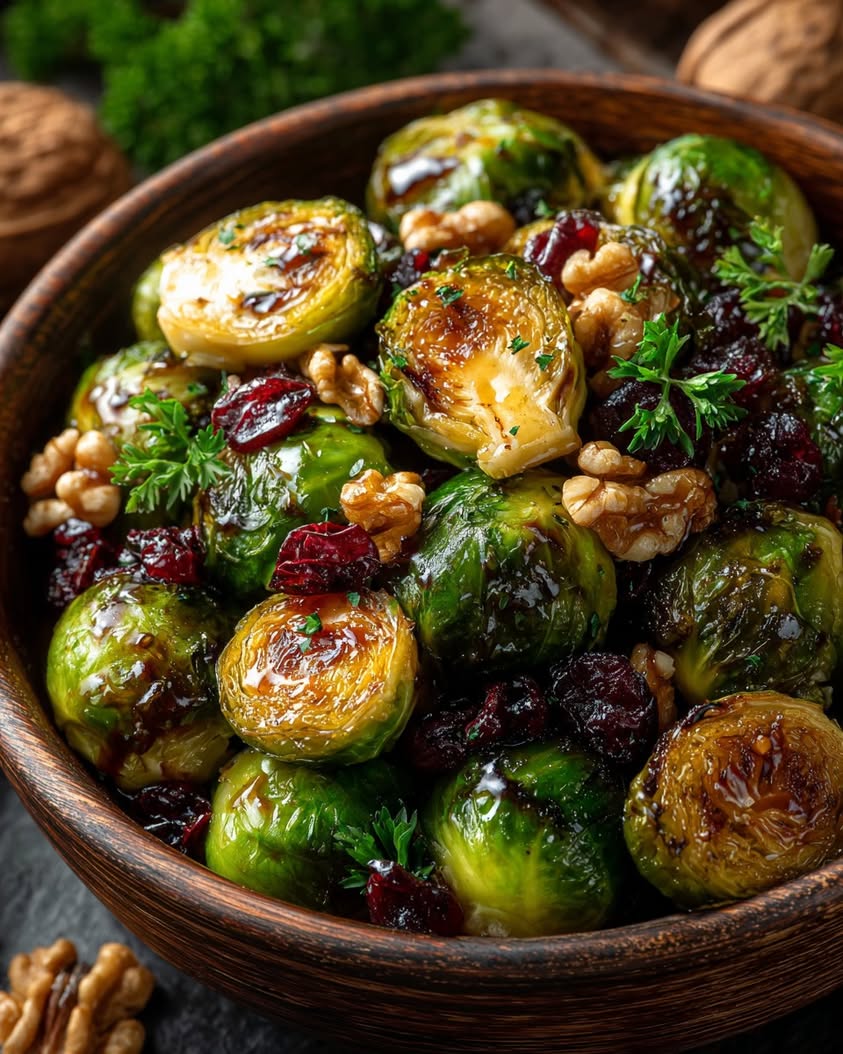
Balsamic Glazed Brussels Sprouts with Cranberries & Walnuts: Your New Favorite Holiday Side Dish
Picture a dish that transforms the humble Brussels sprout into a show-stopping centerpiece. This Balsamic Glazed Brussels Sprouts with Cranberries and Walnuts recipe does exactly that. It masterfully combines savory, sweet, tangy, and crunchy elements into one unforgettable side. Consequently, it will become the star of your holiday table or any weeknight dinner. The rich, caramelized balsamic reduction clings to each roasted sprout, creating a glossy, flavorful coating. Meanwhile, tart dried cranberries and toasted walnuts provide bursts of contrasting texture and taste. Ultimately, this dish proves that vegetables can be both incredibly healthy and irresistibly delicious.
Furthermore, this recipe is deceptively simple to prepare. It requires just a handful of wholesome ingredients and one sheet pan for easy cleanup. The magic happens in the oven where high heat coaxes out the natural sweetness of the sprouts. Simultaneously, it creates those coveted crispy, caramelized edges. The final drizzle of reduced balsamic vinegar adds a sophisticated, restaurant-quality finish. This Balsamic Glazed Brussels Sprouts with Cranberries and Walnuts recipe is a guaranteed crowd-pleaser. It will convert even the most skeptical sprout haters into enthusiastic fans. Moreover, its vibrant colors and elegant presentation make it perfect for special occasions.
Finally, let’s talk about versatility. This dish pairs beautifully with roasted turkey, baked ham, or a simple grilled chicken breast. It also stands proudly as a vegetarian main course when served over a bed of grains like quinoa or farro. The balance of flavors is complex, yet the preparation is straightforward. This Balsamic Glazed Brussels Sprouts with Cranberries and Walnuts recipe delivers maximum impact with minimal effort. Therefore, it deserves a permanent spot in your culinary repertoire. Get ready to experience Brussels sprouts in a whole new, utterly delicious light.
Quick Recipe Highlights
- Flavor Profile: This dish offers a sophisticated harmony of tastes. The deep, sweet-tangy balsamic glaze perfectly complements the earthy, slightly bitter roasted Brussels sprouts. Meanwhile, the sweet-tart cranberries and rich, buttery walnuts add layers of complexity, creating a truly balanced bite.
- Texture: Expect a delightful textural journey. The sprouts become tender on the inside with wonderfully crispy, caramelized outer leaves. The chewy dried cranberries provide a pleasant contrast, and the toasted walnuts contribute a satisfying, crunchy finish that elevates every mouthful.
- Aroma: As this cooks, your kitchen will fill with an irresistible fragrance. The savory scent of roasting sprouts mingles with the sweet, syrupy aroma of reducing balsamic vinegar. Finally, the toasty, nutty notes from the walnuts round out a truly mouthwatering olfactory experience.
- Visual Appeal: This dish is a feast for the eyes. The deep green sprouts glisten with a mahogany-colored glaze, creating a beautiful base. Vibrant red cranberries and golden-brown walnut pieces are scattered throughout, making for a stunning, festive presentation on any plate.
- Skill Level Needed: This is a beginner-friendly recipe designed for success. It requires basic knife skills for trimming sprouts and simple techniques like roasting and reducing. With clear instructions, even a first-time cook can achieve impressive, delicious results.
- Special Equipment: You need only standard kitchen tools. A large baking sheet, a mixing bowl, and a small saucepan are essential. Parchment paper is highly recommended for easy cleanup and to prevent sticking, but it is not strictly required.
Recipe Overview
- Difficulty Level: We rate this recipe as “Easy” for several important reasons. The steps are sequential and simple, involving basic cutting, tossing, and roasting. There is no complex timing or advanced culinary techniques required. Furthermore, the margin for error is forgiving; slightly over-roasted sprouts are still delicious. Ultimately, this accessibility makes it a perfect recipe for cooks of all experience levels to tackle with confidence.
- Category: This versatile dish fits multiple meal categories beautifully. Primarily, it shines as a standout holiday side dish for Thanksgiving or Christmas dinners. Additionally, it works wonderfully as a hearty vegetable side for weeknight family meals. It can even serve as a main component in a vegetarian grain bowl, making it a flexible addition to your cooking routine.
- Cuisine: This recipe draws inspiration from modern American cuisine with Italian influences. The use of balsamic vinegar, a staple of Modena, Italy, adds a classic European touch. However, the combination with cranberries and walnuts is a distinctly New World creation, often associated with American holiday traditions. This fusion results in a contemporary, globally-inspired dish that feels both familiar and exciting.
- Cost: This is a remarkably cost-effective dish to prepare. Brussels sprouts, cranberries, and walnuts are all affordable, especially when purchased in bulk or during their peak seasons. The balsamic vinegar and olive oil are pantry staples with a high cost-per-use value. Overall, you can create this impressive side dish for a fraction of the cost of a restaurant version, making it budget-friendly for entertaining.
- Season: This recipe is perfectly suited for the fall and winter seasons. Brussels sprouts are at their sweetest and most abundant after a frost. Cranberries are a classic autumn harvest, and walnuts are typically gathered in the fall. The warm, roasted flavors and festive appearance make it an ideal comfort food for cooler weather and holiday gatherings.
- Occasion: It is exceptionally versatile for various occasions. It is, of course, a superstar for formal holiday feasts like Thanksgiving and Christmas. Simultaneously, it is elegant enough for dinner parties and potlucks. Moreover, it is simple enough for a comforting family Sunday supper, proving its utility across the spectrum of dining events.
Why You’ll Love This Recipe
First and foremost, the taste and texture appeal is undeniable. This Balsamic Glazed Brussels Sprouts with Cranberries and Walnuts recipe delivers a symphony of flavors in every bite. The caramelized sprouts offer a savory, slightly sweet base. Then, the tangy-sweet balsamic glaze cuts through with acidity. Next, the pop of tart cranberries and the rich crunch of walnuts complete the experience. Consequently, your palate never gets bored. It is a dish that satisfies the craving for something both healthy and deeply flavorful. Even children and vegetable skeptics often find themselves reaching for seconds because the flavors are so well-balanced and inviting.
Secondly, the convenience and preparation benefits are significant. This entire dish comes together on one sheet pan, minimizing cleanup. The active prep time is under 15 minutes, and the oven does most of the work. You can easily prepare the balsamic glaze while the sprouts roast. Furthermore, the ingredients are simple and often already in a well-stocked pantry. This simplicity means you can whip up an impressive side dish without stress, even on a busy weeknight. It is the perfect solution for when you need something delicious and beautiful without spending hours in the kitchen.
Thirdly, the nutritional advantages are substantial. Brussels sprouts are a nutritional powerhouse, packed with vitamins C and K, fiber, and antioxidants. Walnuts add healthy omega-3 fatty acids and plant-based protein. Cranberries contribute additional antioxidants and vitamin C. Using olive oil and a modest amount of natural sweetener in the glaze keeps the dish heart-healthy. Therefore, you are serving a side dish that is as good for your body as it is for your taste buds. It is a guilt-free way to enjoy decadent-tasting food.
Moreover, the social and entertaining value of this dish is high. Its vibrant, colorful presentation makes it a beautiful addition to any table. It looks like you spent far more time and effort than you actually did. Guests are always impressed by the glossy glaze and thoughtful combination of ingredients. This Balsamic Glazed Brussels Sprouts with Cranberries and Walnuts recipe often becomes a requested favorite at gatherings. It sparks conversation and demonstrates your culinary flair. Serving a vegetable dish that everyone genuinely enjoys is a host’s dream come true.
Finally, the cost-effectiveness and accessibility seal the deal. As mentioned, the ingredients are affordable and easy to find year-round in most grocery stores. You can often find pre-trimmed Brussels sprouts to save even more time. Compared to other fancy side dishes, this one offers incredible bang for your buck. It feeds a crowd without straining your budget. Additionally, its components are widely accepted and don’t contain common allergens like dairy or gluten, making it a safe and inclusive option for many guests. This combination of flavor, ease, nutrition, and value is truly unbeatable.
Historical Background and Cultural Significance
The story of Brussels sprouts begins in ancient Rome, but their cultivation near Brussels, Belgium, from which they get their name, began in the 13th century. They are a member of the Gemmifera Group of cabbages, bred for their edible buds. For centuries, they were a staple in Northern European cuisine, particularly in Belgium, the Netherlands, and the UK. However, their journey to American holiday tables was slow. Often boiled or steamed into bland submission, they developed a poor reputation. The modern renaissance of the Brussels sprout, thankfully, is rooted in better cooking techniques like roasting and sautéing, which unlock their natural sweetness.
The cultural significance of this specific recipe is a fusion of Old World and New World traditions. Balsamic vinegar, or “aceto balsamico,” hails from the Italian regions of Modena and Reggio Emilia, with a history dating back to the Middle Ages. It was prized as a medicinal tonic and a luxury item for nobility. Combining this esteemed Italian condiment with the New World cranberry, a fruit native to North America and a staple of Indigenous diets and Pilgrim feasts, creates a symbolic culinary bridge. The walnut, with origins in ancient Persia, further adds to the global tapestry of this dish, representing a history of trade and culinary exchange.
The evolution of this recipe mirrors broader trends in vegetable cookery. The late 20th and early 21st centuries saw a shift towards celebrating vegetables as centerpieces. Chefs began pairing Brussels sprouts with bold, contrasting flavors to counteract their former blandness. The addition of sweet elements like dried fruit and syrupy glazes, along with crunchy nuts, became a popular formula for success. This Balsamic Glazed Brussels Sprouts with Cranberries and Walnuts recipe is a direct product of that evolution. It represents a modern, sophisticated approach to vegetable sides that prioritizes flavor and texture harmony over simple sustenance.
Regional variations of this concept abound, showcasing its adaptability. In the American South, you might find sprouts with pecans and a bourbon glaze. A Mediterranean twist could include pine nuts, currants, and a lemon-olive oil dressing. Some chefs incorporate bacon or pancetta for a smoky, savory depth. The core concept—balancing the sprout’s earthiness with sweet, tangy, and crunchy elements—remains constant. This particular combination with cranberries and walnuts has cemented itself as a modern classic, especially around the winter holidays. It embodies a contemporary, global palate while paying homage to the individual histories of its components.
Ingredient Deep Dive
Brussels Sprouts: These miniature cabbages are nutritional champions. They are incredibly rich in Vitamin K, essential for blood clotting and bone health, and Vitamin C, a powerful antioxidant. They also provide a good amount of fiber, folate, and potassium. When selecting sprouts, look for firm, bright green heads that are compact and heavy for their size. Avoid any with yellowing leaves or a strong odor. Store them unwashed in a perforated plastic bag in your refrigerator’s crisper drawer for up to a week. For a substitution, broccoli florets or cauliflower cut into bite-sized pieces can be roasted using a similar method, though the cooking time may vary slightly.
Balsamic Vinegar: Authentic traditional balsamic vinegar (Aceto Balsamico Tradizionale) is aged for years and often costs a small fortune. For cooking, a good-quality “condimento” or commercial balsamic works perfectly. The reduction process concentrates its flavors, mimicking the complexity of aged varieties. Nutritionally, it contains antioxidants from grapes and may have minimal impact on blood sugar. Always choose a vinegar that lists grape must as the first ingredient. Store it in a cool, dark place. If you need a substitute, a mix of red wine vinegar and a teaspoon of maple syrup can approximate the sweet-tangy profile, though the distinct depth of balsamic will be missing.
Dried Cranberries: These chewy, tart berries are a modern convenience food, created by dehydrating fresh cranberries often with added sugar. They provide antioxidants like proanthocyanidins, linked to urinary tract health, and dietary fiber. For a healthier option, seek out unsweetened or fruit-juice-sweetened dried cranberries. They can be stored in an airtight container in your pantry for months. If you don’t have cranberries, other dried fruits like cherries, chopped apricots, or golden raisins make excellent substitutes, each bringing a slightly different flavor profile to the dish.
Walnuts: Walnuts are unique among nuts for their high concentration of alpha-linolenic acid (ALA), a plant-based omega-3 fatty acid beneficial for heart and brain health. They are also a good source of protein, magnesium, and antioxidants. Toasting walnuts is crucial; it deepens their flavor and improves their crunch. Always buy walnuts in small quantities from a source with high turnover, as their high fat content makes them prone to rancidity. Store them in an airtight container in the refrigerator or freezer. Pecans or hazelnuts can be used as alternatives, offering a different but equally delicious nutty character.
Olive Oil & Maple Syrup: Extra virgin olive oil provides healthy monounsaturated fats and helps the sprouts caramelize beautifully. Its fruity, peppery notes form the flavor base. Pure maple syrup, the reduced sap of sugar maple trees, is a natural sweetener containing minerals like manganese and zinc. It sweetens the balsamic glaze without being overly processed. For oil, avocado oil is a good high-heat alternative. For the sweetener, honey or agave nectar can replace maple syrup in a pinch, though they will impart their own distinct flavors.
Common Mistakes to Avoid
- Overcrowding the Pan: This is the number one mistake. If the sprouts are piled on top of each other, they will steam instead of roast. You need space for hot air to circulate and create those crispy edges. Always use a large enough baking sheet and spread the sprouts in a single layer.
- Not Trimming Properly: Leaving the tough stem end intact or not removing loose, yellowed outer leaves results in an unpleasant texture. Always trim the bottom stem and peel away any damaged leaves. Cutting larger sprouts in half ensures even cooking and more surface area for caramelization.
- Using Low-Quality Balsamic Vinegar: A very cheap, overly acidic balsamic will not reduce to a sweet, syrupy glaze. It may just become more sour. Invest in a decent mid-range balsamic vinegar meant for cooking, with grape must as the primary ingredient, for the best flavor results.
- Adding Cranberries and Walnuts Too Early: If you add the cranberries and walnuts at the beginning of roasting, they will burn. The cranberries become bitter, and the walnuts turn acrid. Always stir them in during the last 5-10 minutes of cooking so they just warm through and toast slightly.
- Neglecting to Toast the Walnuts Separately: While adding them at the end works, toasting walnuts in a dry skillet for a few minutes before adding them to the dish maximizes their flavor and crunch. This extra, simple step makes a noticeable difference in the final texture.
- Underseasoning: Vegetables need salt to bring out their natural flavors. Do not be shy with kosher salt and freshly ground black pepper when tossing the sprouts with oil. Seasoning in layers—at the oil stage and again lightly after glazing—ensures a well-seasoned dish from the inside out.
- Not Preheating the Oven: A properly preheated oven is essential for immediate roasting and caramelization. Putting sprouts into a cold oven causes them to cook unevenly and can make them soggy. Always allow your oven to fully reach the specified temperature before adding your baking sheet.
- Skipping the Balsamic Reduction: Simply drizzling vinegar over the cooked sprouts will make them wet and overly acidic. Reducing the vinegar in a saucepan concentrates its sugars, thickens it into a glaze, and mellows its sharpness. This step is non-negotiable for the signature flavor and glossy finish.
- Using a Dark Baking Sheet Without Adjustment: Dark pans absorb more heat and can cause the bottoms of the sprouts to burn faster. If using a dark sheet, consider reducing the oven temperature by 25°F and keeping a closer eye on them, or use parchment paper as a protective barrier.
- Forgetting to Let it Rest: Pulling the dish from the oven and serving immediately is fine, but letting it sit for 5 minutes allows the glaze to set slightly and the flavors to meld. This short rest can improve the overall eating experience.
Essential Techniques
Roasting Vegetables: Roasting is a dry-heat cooking method that uses hot air to caramelize the natural sugars in vegetables. It is crucial for developing deep, complex flavors and creating desirable crispy textures. To master it, ensure your oven is fully preheated and your vegetables are dry, evenly coated in oil, and in a single layer. A common pitfall is overcrowding, which leads to steaming. Visual cues for success include golden-brown, slightly charred edges and a tender interior when pierced with a fork. The sprouts should smell nutty and sweet, not bitter.
Reducing a Vinegar Glaze: Reduction is the process of simmering a liquid to evaporate water, concentrating its flavors and thickening its consistency. For a balsamic glaze, this transforms sharp, acidic vinegar into a sweet, syrupy coating. It is important because it prevents the dish from becoming soggy and adds a professional finish. To master it, use a small saucepan and simmer gently over medium-low heat, watching closely as it can burn quickly once thickened. A common pitfall is boiling too vigorously, which can create a harsh flavor. The visual cue for success is when the vinegar coats the back of a spoon and has reduced by about half, leaving you with several tablespoons of glossy syrup.
Toasting Nuts: Toasting nuts unlocks their oils, intensifying their flavor and improving their crunch. This step is important because it adds a deeper, richer dimension to the final dish. To master it, use a dry skillet over medium heat. Constantly shake the pan or stir the nuts until they become fragrant and lightly browned. Common pitfalls include walking away (they burn in seconds) and using too high heat. The visual and aromatic cues are key: they will turn a shade darker and emit a warm, nutty aroma. Immediately transfer them to a plate to stop the cooking process.
Pro Tips for Perfect Balsamic Glazed Brussels Sprouts
Cut Uniformly: Try to cut your Brussels sprouts into similar sizes. Halve the small ones and quarter very large ones. This ensures everything cooks at the same rate, so you don’t end up with some pieces burnt and others undercooked.
Dry Your Sprouts Thoroughly: After washing, pat the sprouts completely dry with a clean kitchen towel. Excess water will create steam on the pan, hindering the crisping process. Dry sprouts equal crispy, caramelized sprouts.
Use the Convection Setting: If your oven has a convection bake setting, use it. The circulating hot air promotes even browning and extra crispiness all around the sprouts, leading to a superior texture.
Finish with Flaky Salt: Just before serving, sprinkle a tiny pinch of flaky sea salt (like Maldon) over the finished dish. The delicate crunch and burst of salinity elevate the flavors and add a gourmet touch.
Add a Pat of Butter: For an extra-rich finish, stir a tablespoon of cold butter into the reduced balsamic glaze just after taking it off the heat. It will emulsify into the glaze, making it even glossier and more luxurious.
Reserve Some Garnishes: When adding the cranberries and walnuts, set aside a small handful of each. Scatter these reserved bits over the top of the plated dish for a beautiful, textured presentation that looks freshly assembled.
Acid at the End: If you feel the dish needs a brighter note after cooking, a very light squeeze of fresh lemon juice over the top can work wonders. It should be subtle, just to lift all the other flavors.
Check Your Oven’s Accuracy: Oven temperatures can be off. If your sprouts aren’t browning as expected, your oven might run cool. Consider using an oven thermometer to ensure you’re cooking at the true correct temperature.
Variations and Adaptations
Regional Variations: Explore global flavors by changing the nut and fruit components. For a Mediterranean twist, use toasted pine nuts and chopped sun-dried tomatoes. An autumnal version could feature diced apples and pecans. For a savory profile, crisp up some chopped bacon or pancetta and use the rendered fat to roast the sprouts, omitting or reducing the olive oil.
Seasonal Adaptations: Make this recipe year-round by swapping the mix-ins. In spring, use fresh peas and mint with a lemon zest finish. Summer calls for fresh cherries and almonds. The classic cranberry-walnut combo is perfect for fall and winter, but feel free to adapt based on what’s fresh and inspiring.
Dietary Modifications: This dish is naturally gluten-free and easily made vegan by ensuring your sweetener is plant-based (maple syrup is perfect). For a Whole30 or sugar-free version, omit the dried cranberries and use a date paste or omit the sweetener in the glaze, relying on the vinegar’s natural reduction for sweetness.
Flavor Variations: Infuse the olive oil before roasting by warming it with a sprig of rosemary or a few cloves of garlic, then straining. Add a teaspoon of Dijon mustard to the balsamic reduction for a tangy kick. A pinch of red pepper flakes tossed with the sprouts adds a gentle heat that balances the sweetness.
Texture Modifications: For maximum crispiness, place the baking sheet in the oven as it preheats. Carefully add the oiled sprouts to the hot pan for an immediate sear. For a softer, more caramelized texture, roast at a slightly lower temperature (375°F) for a longer period, stirring occasionally.
Presentation Alternatives: Instead of mixing everything, create a composed plate. Arrange the roasted sprouts on a platter, drizzle artistically with the glaze, then deliberately scatter the cranberries and walnuts over the top. Skewer halved sprouts, a cranberry, and a walnut piece on toothpicks for elegant, easy-to-eat appetizers.
Serving and Presentation Guide
Plating Techniques: For family style, pile the warm sprouts high on a shallow, wide platter or in a low bowl. This creates an inviting, abundant look. For individual plates, use a ring mold to create a neat, vertical stack in the center of the plate, then carefully remove the mold. Alternatively, spoon a generous portion alongside the main protein, allowing the colors to contrast beautifully.
Garnishing Ideas: Beyond the cranberries and walnuts, consider fresh herb garnishes. Chopped fresh parsley or chives add a pop of green and freshness. For the holidays, a few fresh pomegranate arils scattered over the top provide stunning color and a juicy burst. A light grating of Parmesan or Pecorino cheese adds a salty, umami finish if dairy is acceptable.
Traditional Accompaniments: This dish is a classic partner for holiday roasts. It pairs perfectly with roast turkey, honey-glazed ham, prime rib, or roast chicken. The bright, tangy flavors cut through the richness of the meat, cleansing the palate between bites.
Modern Serving Suggestions: Think beyond the holiday table. Serve it atop a bowl of creamy polenta or risotto for a vegetarian main. Toss it with cooked farro or wheat berries and a simple vinaigrette for a hearty grain salad. Chop any leftovers and fold them into an omelet or frittata the next morning.
Temperature Considerations: This dish is best served warm, shortly after coming out of the oven. The glaze will be at its glossiest, and the walnuts at their crunchiest. However, it is also delicious at room temperature, making it an excellent option for buffets or potlucks where it may sit out for a while.
Portion Control Tips: As a side dish, plan for about ¾ to 1 cup of finished sprouts per person. The recipe yields about 6 servings, but it is so flavorful that people often take smaller portions of other sides, so it can stretch if needed. If doubling for a crowd, ensure you have enough oven space and baking sheets to avoid overcrowding.
Wine and Beverage Pairing
Wine Pairings: The sweet-tart profile of this dish calls for wines with good acidity and some fruitiness. A dry Riesling or Gewürztraminer from Alsace complements the sweetness and cuts through the glaze. For red wine lovers, a lighter-bodied Pinot Noir with its red fruit notes and earthy undertones pairs beautifully without overpowering the sprouts. An off-dry Rosé can also be a delightful, versatile match.
Non-Alcoholic Alternatives: Sparkling apple cider or a tart cranberry spritzer (cranberry juice mixed with club soda and a squeeze of lime) mirror the festive, fruity elements. For a warmer option, a ginger-lemon tea or even a mulled cider (non-alcoholic) with cinnamon and orange complements the dish’s warm, autumnal spices if you’ve added any.
Coffee/Tea Pairings: While not a typical pairing for this savory dish, if serving at a brunch or lunch, a medium-roast coffee with low acidity would not clash. A smoky Lapsang Souchong tea could provide an interesting contrast to the sweet glaze, but it’s a bold choice best suited for adventurous palates.
Temperature Considerations: Serve white wines and sparkling beverages well-chilled, around 45-50°F. Red wines like Pinot Noir should be served slightly cooler than room temperature, around 55°F, to keep their freshness. Non-alcoholic spritzers should be ice-cold, while teas and ciders should be served hot to provide a comforting contrast.
Serving Suggestions: Always offer water alongside any beverage pairing to cleanse the palate. If serving wine, pour a taste before the meal begins to allow guests to experience the pairing from the first bite. For non-alcoholic options, consider garnishing with a citrus twist or herb sprig to make them feel special and integrated into the meal.
Storage and Shelf Life
Storage Methods: Allow the dish to cool completely to room temperature before storing. Transfer it to an airtight container. Do not leave it at room temperature for more than two hours to prevent bacterial growth. For best texture, store the components separately if possible: sprouts in one container, cranberries and walnuts in another, and add them together when reheating.
Temperature Requirements: Refrigerate leftovers promptly. The ideal refrigerator temperature is at or below 40°F (4°C). In these conditions, the balsamic glazed Brussels sprouts will keep for 3-4 days. They are not suitable for long-term room temperature storage after cooking.
Container Recommendations: Use glass or BPA-free plastic containers with tight-fitting lids. These prevent odor transfer and keep the sprouts from drying out. If using a large batch, consider dividing it into smaller portions for easier reheating later.
Signs of Spoilage: Discard the sprouts if you notice an off, sour, or unpleasant odor, significant sliminess on the surface, or visible mold growth. While the balsamic glaze darkens over time, any drastic color change combined with a foul smell indicates spoilage.
Reheating Instructions: For best results, reheat in the oven or toaster oven. Spread the sprouts on a baking sheet and warm at 350°F for 10-15 minutes until heated through. This helps restore some crispiness. The microwave is quicker but will make them soft; use a microwave-safe dish, cover loosely, and heat in 30-second intervals, stirring in between.
Freezing Guidelines: Freezing is not recommended for this specific recipe. The high water content in Brussels sprouts causes them to become mushy and watery upon thawing. The walnuts will lose their crunch and become soggy. The texture degradation is significant, so it’s best enjoyed fresh or refrigerated for a few days.
Make Ahead Strategies
Prep Timeline: You can prep components 1-2 days in advance to streamline day-of cooking. Trim and halve the Brussels sprouts, storing them in a sealed bag or container in the fridge. Toast the walnuts and store them at room temperature. Measure out the dried cranberries. Make the balsamic glaze, let it cool, and store it in a small jar in the refrigerator.
Storage Between Steps: Keep pre-cut sprouts dry in the fridge; if they seem damp before roasting, pat them dry again. The cooled balsamic glaze will thicken in the fridge; gently warm it in a saucepan or the microwave for a few seconds to return it to a drizzling consistency before using.
Quality Impact Assessment: Pre-cutting sprouts may cause the cut edges to brown slightly, but this does not affect flavor. The walnuts will stay crunchy for days if stored properly. The make-ahead approach has minimal impact on final quality and is a major time-saver for entertaining.
Assembly Tips: On the day of serving, simply toss the pre-cut sprouts with oil, salt, and pepper, then roast. In the last 5 minutes of roasting, add the pre-measured cranberries and walnuts to the sheet pan. Warm the glaze. Once sprouts are out of the oven, drizzle with the glaze and toss to combine.
Reheating Guidelines: If you fully assemble the dish a day ahead, reheat it on a baking sheet at 375°F for 10-15 minutes to re-crisp. Note that the walnuts will soften slightly with storage and reheating, which is why adding them fresh is ideal.
Fresh Element Additions: For the absolute best presentation and texture, even with pre-prepped components, add a final garnish of a few fresh, untoasted walnuts and cranberries after reheating. A final sprinkle of flaky salt and a fresh herb like chopped parsley will make the dish look and taste freshly made.
Scaling Instructions
Halving the Recipe: To serve 2-3 people, simply divide all ingredient quantities by two. Use a standard quarter-sheet pan or a smaller baking sheet to maintain the single-layer spacing crucial for roasting. The cook time may be slightly reduced by 3-5 minutes, so start checking for doneness early. The balsamic reduction will happen faster due to the smaller volume, so watch it closely to prevent burning.
Doubling or Tripling: For a large crowd, multiply the ingredients accordingly. The key here is to use multiple baking sheets and roast in batches, or on separate oven racks, rotating the sheets halfway through. Do not pile twice the sprouts on one sheet. If your oven has convection, use it to promote even cooking with multiple pans. The balsamic glaze can be made in a larger saucepan; the reduction time will increase slightly.
Equipment Adjustments: Scaling up requires planning for sheet pan real estate. Ensure you have enough large, rimmed baking sheets. If roasting in batches, have a large heatproof bowl ready to hold the first batch while the second cooks, and combine them all at the end with the glaze. A larger saucepan is needed for making a bigger batch of glaze.
Timing Modifications: When doubling and using two sheets, the total oven time may increase slightly due to reduced air circulation. Allow an extra 5-10 minutes and rely on visual cues (golden brown, tender) rather than strict timing. Stir each pan individually to ensure even cooking.
Storage Considerations: A larger batch means more potential leftovers. Plan your storage containers in advance. Consider if you have enough refrigerator space for a large bowl or multiple containers. For buffets, it’s often better to refresh the serving platter with a new, hot batch rather than trying to keep one massive batch warm for hours.
Nutritional Deep Dive
Macro Breakdown: A serving of this dish provides a balanced mix of macronutrients. The primary source of healthy fats comes from the olive oil and walnuts, offering monounsaturated and omega-3 fatty acids. Carbohydrates are present from the Brussels sprouts (fiber-rich complex carbs) and the natural sugars in the cranberries and maple syrup. Plant-based protein is contributed by both the Brussels sprouts and walnuts, making this a satisfying side dish that helps promote fullness.
Micronutrient Analysis: This recipe is a micronutrient powerhouse. Brussels sprouts are exceptionally high in Vitamin K (important for bone and blood health) and Vitamin C (a potent antioxidant). They also provide folate, potassium, and manganese. Walnuts add biotin, copper, and magnesium. Cranberries contribute additional Vitamin C and manganese. Using extra virgin olive oil also introduces vitamin E and various polyphenols with anti-inflammatory properties.
Health Benefits: Consuming this dish supports overall health in multiple ways. The fiber promotes digestive{“success”:true,”message”:”Recipe created successfully”,”post_id”:8131,”tasty_recipe_id”:8131,”shortcode”:” Print
Balsamic Glazed Brussels Sprouts with Cranberries & Walnuts
Description
A festive and flavorful side dish featuring roasted Brussels sprouts tossed in a sweet-tangy balsamic glaze, studded with dried cranberries and crunchy walnuts.
Ingredients
For the Crust:
- 1 lb Brussels sprouts, trimmed and halved
- 2 tbsp olive oil
- 1/2 tsp salt
- 1/4 tsp black pepper
- 1/4 cup balsamic vinegar
- 2 tbsp honey or maple syrup
- 1/3 cup dried cranberries
- 1/3 cup walnuts, roughly chopped
- 1 tbsp fresh thyme leaves (optional)
Instructions
1. Prepare the Crust:
- Preheat oven to 400°F (200°C). Toss Brussels sprouts with olive oil, salt, and pepper on a baking sheet. Roast for 20-25 minutes until tender and lightly browned.
- While sprouts roast, combine balsamic vinegar and honey in a small saucepan. Simmer over medium heat for 5-7 minutes until slightly thickened into a glaze.
- Transfer roasted Brussels sprouts to a bowl. Drizzle with balsamic glaze and add cranberries and walnuts. Toss gently to coat.
- Garnish with fresh thyme if desired. Serve warm as a side dish.
Notes
You can customize the seasonings to taste.

I’m Billy, a classically trained culinary school graduate from The Culinary Institute of America with over 12 years in the restaurant industry and over 19 years of cooking experience.