
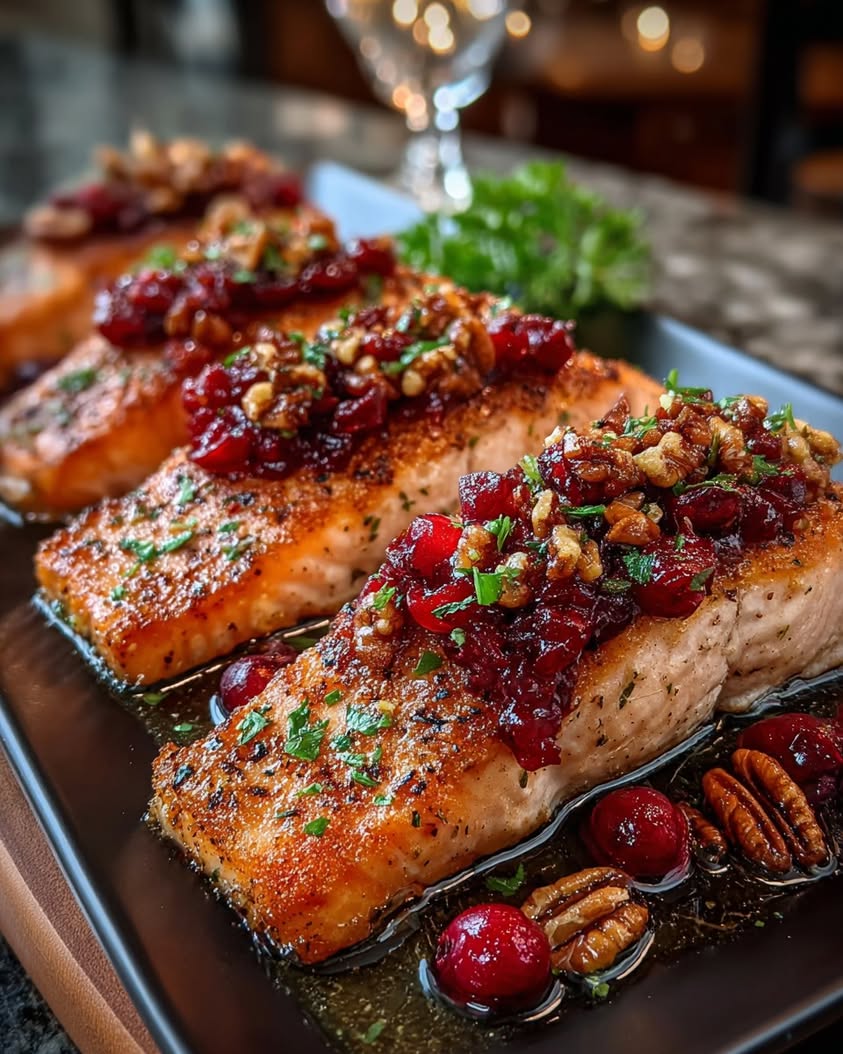
Baked Salmon with Cranberry Pecan Salsa: An Easy Holiday Recipe
Elevate your dinner table with this stunning Baked Salmon with Cranberry Pecan Salsa. This recipe masterfully combines the rich, buttery flavor of perfectly cooked salmon with a vibrant, sweet-tart salsa. Consequently, you get a dish that is as beautiful as it is delicious. Moreover, it is surprisingly simple to prepare, making it perfect for both busy weeknights and special holiday gatherings. Ultimately, this Baked Salmon with Cranberry Pecan Salsa delivers restaurant-quality elegance with minimal effort in your own kitchen.
Imagine tender, flaky salmon topped with a jewel-toned salsa bursting with fresh cranberries, toasted pecans, and zesty lime. The contrast of warm fish and cool, crunchy salsa creates an unforgettable eating experience. Furthermore, the recipe uses wholesome ingredients that come together to create a meal that feels indulgent yet is packed with nutrition. Whether you are hosting a festive dinner or simply want to treat your family, this Baked Salmon with Cranberry Pecan Salsa is a guaranteed crowd-pleaser that will have everyone asking for seconds.
This Baked Salmon with Cranberry Pecan Salsa is a celebration of texture and flavor. The salmon itself is seasoned simply and baked until it is just opaque and flakes easily with a fork. Meanwhile, the star of the show is the fresh cranberry salsa, which requires no cooking. You simply chop the ingredients and mix them together. The result is a bright, chunky condiment that cuts through the richness of the fish. Additionally, the toasted pecans add a crucial layer of buttery crunch that ties the whole dish together beautifully.
Quick Recipe Highlights
- Flavor Profile: This dish offers a perfect balance. The savory, umami-rich salmon pairs with a salsa that is simultaneously sweet from honey, tart from fresh cranberries and lime, and subtly spicy from jalapeño.
- Texture: Enjoy the contrast of moist, flaky salmon against the juicy pop of cranberries and the satisfying crunch of toasted pecans and red onion.
- Aroma: As it bakes, the salmon releases a warm, oceanic scent. Meanwhile, the salsa fills the air with bright citrus and the earthy, toasty fragrance of pecans.
- Visual Appeal: The presentation is stunning. The deep pink salmon is topped with a vibrant red salsa dotted with green cilantro, white onion, and brown pecans, creating a festive plate.
- Skill Level Needed: This is a beginner-friendly recipe. The techniques involved—chopping, mixing, and simple baking—are fundamental and easy to master.
- Special Equipment: You need only a baking sheet, a mixing bowl, and a sharp knife. A food processor can chop the salsa ingredients quickly, but it is not required.
Recipe Overview
- Difficulty Level: This Baked Salmon with Cranberry Pecan Salsa is rated easy because it involves straightforward techniques. There is no complex searing or flipping; the oven does most of the work. The salsa is a no-cook component that comes together in minutes. Therefore, even novice cooks can achieve impressive results with minimal stress.
- Category: This recipe fits perfectly into the main course category for lunch or dinner. It is also an excellent choice for a healthy protein-focused meal. Furthermore, it can be served as part of a larger holiday or celebratory feast.
- Cuisine: While not tied to one specific tradition, this dish draws inspiration from modern American and Pacific Northwest cuisine, where salmon is a staple. The use of cranberries nods to traditional North American harvest ingredients, creating a contemporary fusion dish.
- Cost: The cost is moderate, primarily driven by the price of fresh salmon. Cranberries are seasonal and affordable in autumn and winter. Pecans, cilantro, and other salsa ingredients are generally inexpensive. Overall, it provides a high-value, restaurant-style meal for less than dining out.
- Season: This Baked Salmon with Cranberry Pecan Salsa is ideal for the fall and winter seasons when fresh cranberries are at their peak. However, using frozen cranberries makes it a viable year-round option. The warm, comforting salmon and festive salsa make it particularly suited for holiday meals.
- Occasion: It is versatile enough for a simple family dinner yet elegant enough for Thanksgiving, Christmas Eve, or a dinner party. It is also a fantastic option for a healthy meal prep lunch that feels special.
Why You’ll Love This Recipe
First, the taste and texture appeal is undeniable. Each forkful delivers a symphony of sensations. The rich, fatty salmon melts in your mouth, while the cranberry salsa provides a refreshing, tangy counterpoint. The pecans add a final note of earthy crunch. This combination ensures that no single bite is boring. Instead, you experience layers of flavor that keep you coming back for more. Ultimately, this Baked Salmon with Cranberry Pecan Salsa satisfies cravings for something both hearty and bright.
Next, consider the convenience and preparation benefits. This entire meal comes together in about thirty minutes with minimal active cooking time. You can prepare the salsa while the salmon bakes, maximizing efficiency. Moreover, cleanup is a breeze since you mainly use one baking sheet and a bowl. For busy individuals and families, this recipe is a lifesaver. It proves that you do not need to spend hours in the kitchen to create a spectacular, healthy meal that wows your guests or family.
Furthermore, the nutritional advantages are significant. Salmon is an excellent source of high-quality protein and omega-3 fatty acids, which support heart and brain health. Cranberries are packed with antioxidants and vitamin C. Additionally, pecans provide healthy fats and fiber. This dish is naturally gluten-free and can be adapted to be dairy-free. Consequently, you are nourishing your body with every delicious bite. Choosing this Baked Salmon with Cranberry Pecan Salsa is a choice for both pleasure and well-being.
Additionally, the social and entertaining value is high. This dish looks incredibly impressive on a platter, making you feel like a gourmet chef. It is a fantastic conversation starter at parties. Guests will be delighted by the unique flavor combination. Because it is not overly heavy, it leaves room for enjoying other courses and desserts. Hosting becomes less stressful when your centerpiece recipe is this reliable and beautiful. This Baked Salmon with Cranberry Pecan Salsa can become your signature dish for memorable gatherings.
Finally, the cost-effectiveness and accessibility are major wins. While salmon can be an investment, this recipe stretches its impact with flavorful, inexpensive accompaniments. The salsa ingredients are affordable, especially in season. Compared to ordering a similar dish at a restaurant, cooking at home saves considerable money. You also control the quality of ingredients, opting for sustainable seafood and organic produce if desired. This Baked Salmon with Cranberry Pecan Salsa delivers luxury dining at a fraction of the cost, right in your own home.
Historical Background and Cultural Significance
The origin story of this dish is a modern tale of culinary fusion. Salmon has been a vital food source for Indigenous peoples along the Pacific Northwest coast for millennia, often baked or smoked over open fires. Cranberries, native to North America, were used by Native American tribes both fresh and dried, and later became a staple of colonial and Thanksgiving cooking. This recipe creatively marries these two iconic North American ingredients, representing a contemporary celebration of local and seasonal bounty rather than a dish with ancient roots.
Regarding cultural importance, both main ingredients hold deep significance. Salmon is culturally and spiritually central to many coastal tribes, symbolizing abundance and life. Cranberries have been part of American food culture since the first Thanksgiving, representing harvest and survival. By combining them, this Baked Salmon with Cranberry Pecan Salsa creates a bridge between tradition and modern palate. It honors the history of these ingredients while presenting them in a fresh, innovative way that appeals to today’s diverse tastes.
The evolution of the recipe follows trends in modern home cooking. As consumers seek meals that are both healthy and quick, chefs and home cooks have moved beyond heavy, cream-based sauces for fish. Instead, vibrant, uncooked salsas and relishes have gained popularity for their ease and ability to add brightness. The addition of toasted nuts for texture and healthy fat is another contemporary touch. This Baked Salmon with Cranberry Pecan Salsa is a perfect example of this evolution—a light, flavorful, and visually striking dish that fits current culinary preferences.
Regional variations of this concept are plentiful. In the Pacific Northwest, you might find similar salmon dishes topped with a huckleberry or blackberry relish. In New England, a cranberry-orange relish might accompany fish. Some variations could include substituting walnuts or almonds for pecans, or adding ingredients like diced avocado or orange segments to the salsa. The basic formula of rich protein + sweet/tart fruit salsa + crunchy nut is highly adaptable. This flexibility allows the Baked Salmon with Cranberry Pecan Salsa to inspire countless personalized versions based on local ingredients and tastes.
Ingredient Deep Dive
Salmon is the star. Culturally, it is a keystone species, especially in the Pacific Northwest, where it supports ecosystems and communities. Nutritionally, it is a powerhouse of omega-3 fatty acids EPA and DHA, high-quality protein, vitamin D, and selenium. For selection, look for firm, bright flesh with a pleasant sea smell; avoid any grayish discoloration or strong fishy odor. Wild-caught varieties like Sockeye or Coho offer robust flavor, while farmed Atlantic is often richer and fattier. Store it in the coldest part of your fridge and cook within a day of purchase. For substitution, other oily fish like arctic char or steelhead trout work well.
Fresh cranberries provide the salsa’s signature tartness. Native to North America, they were used by Indigenous peoples for food, dye, and medicine. They are loaded with vitamin C, fiber, and unique antioxidants called proanthocyanidins, known for supporting urinary tract health. Choose berries that are firm, shiny, and deep red; discard any soft or discolored ones. They store well in the refrigerator for weeks and freeze beautifully for year-round use. If you cannot find fresh, frozen cranberries are an excellent substitute; do not thaw before chopping. In a pinch, a high-quality whole-berry cranberry sauce, drained and chopped, can be used, though the texture will be softer.
Pecans add essential crunch and richness. As the only major tree nut native to North America, they have a long history in Southern U.S. cuisine. They are a great source of monounsaturated fats, manganese, and copper. Toasting is non-negotiable; it deepens their flavor and improves texture. For selection, buy halves or pieces from a store with good turnover to ensure freshness. Store them in an airtight container in the freezer to prevent rancidity. For substitutions, walnuts are the closest match, offering a similar texture and slightly more bitter note. Toasted almonds or hazelnuts would also provide a delicious, though distinct, crunch.
Common Mistakes to Avoid
- Overcooking the Salmon: This is the most common error. Salmon continues to cook after removal from the oven. Pull it out when it is just slightly translucent in the very center; it will finish cooking during resting. Overcooked salmon becomes dry and chalky.
- Not Toasting the Pecans: Skipping this step leaves you with soft, bland nuts. Toasting unlocks their oils and intensifies their flavor, providing the necessary textural contrast and depth that the salsa needs.
- Using a Dull Knife for Cranberries: A dull knife will crush the berries instead of cleanly chopping them, making the salsa watery and messy. Use a sharp chef’s knife for clean cuts and the best texture.
- Forgetting to Rest the Salmon: Cutting into the salmon immediately lets all the precious juices run out. Let it rest for 5 minutes after baking. This allows the fibers to relax and reabsorb moisture, ensuring every bite is succulent.
- Not Tasting the Salsa Before Serving: Seasoning is key. Always taste your salsa and adjust the salt, lime, or honey after mixing. Remember, the flavors will meld and intensify as it sits.
- Using Pre-Juiced Lime Bottles: Fresh lime juice is essential. Bottled juice often has a metallic or stale taste that will dull the bright, fresh flavor of your cranberry pecan salsa.
- Crowding the Baking Sheet: Place the salmon fillets with space between them. If they are too close, they will steam instead of roast, resulting in a less appealing texture and pale color.
- Adding the Salsa Too Early: The salsa should be added just before serving. If it sits on the hot salmon for too long, the cranberries will wilt, the nuts will soften, and the vibrant colors will fade.
Essential Techniques
Properly Toasting Nuts is crucial for flavor and texture. Spread pecans in a single layer on a dry skillet over medium heat. Cook, shaking the pan frequently, for 3-5 minutes until they become fragrant and lightly browned. Why is this important? Toasting drives off moisture and triggers the Maillard reaction, creating complex, roasted flavors. The common pitfall is walking away; nuts can burn in seconds. The visual cue for success is a golden-brown color and a rich, nutty aroma. Immediately transfer them to a plate to stop the cooking process.
Checking Salmon for Doneness ensures perfect texture. The best method is the “flake test.” Gently press the top of the salmon with a fork or your finger; it should feel firm but still have a slight give. Alternatively, insert a fork at an angle into the thickest part and twist gently; the flesh should separate into large, moist flakes. Why is this important? Salmon is best enjoyed when just cooked through, remaining juicy and tender. The visual cue is an opaque pink color with a slightly darker, still-translucent center when you peek inside. It will finish cooking from residual heat.
Creating a Balanced Salsa relies on the chop and the mix. Chop all ingredients to a consistent, small dice for even distribution in every bite. Combine them gently to avoid bruising the cranberries. Why is this important? A uniform texture ensures a harmonious eating experience, and gentle mixing preserves the individual integrity of each component. The common pitfall is over-mixing, which can make the salsa mushy. The visual cue for success is a vibrant, chunky mixture where you can clearly see each distinct ingredient. Let it sit for 10 minutes before serving to allow the flavors to marry.
Pro Tips for Perfect Baked Salmon with Cranberry Pecan Salsa
Bring your salmon to room temperature for 15 minutes before baking. This simple step promotes even cooking from edge to center, preventing a dry exterior and cold interior.
Pat the salmon fillets very dry with paper towels. Removing surface moisture is key to achieving a nice, slightly caramelized surface in the oven, rather than a steamed texture.
Line your baking sheet with parchment paper for effortless cleanup. The salmon skin may stick slightly, but the parchment prevents any major scrubbing afterward.
Use the zest of the lime in addition to the juice. The oils in the zest carry intense citrus aroma that will elevate the flavor of your cranberry pecan salsa dramatically.
If your cranberries are particularly tart, balance them with a tiny drizzle of maple syrup or agave in the salsa instead of, or in addition to, the honey.
For a more elegant presentation, finely chop half of the cranberries and roughly chop the other half. This creates a more complex texture in the salsa.
Let the finished salsa rest at room temperature while the salmon bakes and rests. This allows the sugar to dissolve, the lime to mellow, and the flavors to fully develop.
Garnish the entire platter with a few whole cranberries and pecan halves for a professional, finished look that hints at the flavors within.
Variations and Adaptations
For regional variations, consider a Pacific Northwest twist by using smoked salmon and a blueberry-pecan salsa. A Southern adaptation might include a spoonful of bourbon in the salsa and serving the salmon over creamy grits. Mediterranean flavors can be introduced by replacing the cranberries with chopped sun-dried tomatoes and Kalamata olives, using oregano instead of cilantro, and topping with feta cheese.
Seasonal adaptations are easy. In spring, try a salsa with strawberries, rhubarb, and mint. Summer invites a version with peaches, corn, and basil. For a winter holiday table, add a pinch of cinnamon and orange zest to the cranberry salsa for a warm, spiced note that pairs beautifully with the time of year.
Dietary modifications are straightforward. For a Whole30 or sugar-free version, omit the honey and ensure your mustard is compliant. To make it nut-free, substitute toasted pumpkin seeds (pepitas) for the pecans. For a lower-fat option, simply reduce the amount of pecans by half, though the textural contrast will be less pronounced.
Flavor variations can take this dish around the world. Add a tablespoon of finely grated ginger to the salsa for an Asian-inspired kick. Incorporate diced mango or pineapple for a tropical feel. For an herby change, use fresh dill or parsley in place of cilantro, which is perfect for those who detect a soapy taste from cilantro.
Texture modifications can cater to personal preference. For a smoother salsa, pulse all ingredients briefly in a food processor. For added creaminess, fold in a diced avocado just before serving. If you prefer a sweeter, jammy component, simmer half the cranberries with the honey and lime juice until they burst before mixing with the fresh ingredients.
Presentation alternatives include serving individual fillets on each plate with a mound of salsa on top. Alternatively, for a family-style feast, bake a whole side of salmon on a large platter and spoon the cranberry pecan salsa down the center for a stunning, shareable centerpiece.
Serving and Presentation Guide
Plating techniques matter. For individual servings, place a salmon fillet slightly off-center on a warm plate. Spoon a generous amount of the cranberry pecan salsa over the top, allowing some to cascade down the sides. Use the back of the spoon to gently spread it. This creates height and visual interest. For a family-style presentation, arrange all fillets on a large platter and mound the salsa in the center or along one side, scattering a few extra pecan halves and cilantro leaves around.
Garnishing ideas are simple but effective. A final sprinkle of flaky sea salt over the salmon adds a pleasant crunch. A few whole fresh cranberries and pecan halves placed strategically on the platter look beautiful. A light drizzle of high-quality extra virgin olive oil around the plate adds sheen. A final dusting of freshly cracked black pepper provides a visual pop and a flavor boost.
Traditional accompaniments keep the meal balanced. Simple roasted vegetables like asparagus, broccoli, or Brussels sprouts complement the dish without competing. A side of quinoa, farro, or wild rice pilaf absorbs the delicious juices. For a lighter option, a simple green salad with a citrus vinaigrette echoes the flavors in the salsa and cleanses the palate.
Modern serving suggestions might include serving the salmon on a bed of creamy cauliflower puree or lemon-herb couscous. Deconstruct the salsa into components for an interactive experience, letting guests build their own bites. For an appetizer version, use the baked salmon flaked over crostini and topped with a small spoonful of the cranberry pecan salsa.
Temperature considerations are key. Serve the salmon warm, not piping hot, to prevent wilting the fresh salsa. The salsa itself should be at cool room temperature. Warm your serving plates slightly to keep the salmon at an ideal eating temperature for longer once it leaves the oven.
Portion control tips are helpful. A typical serving is 4-6 ounces of salmon per person. The salsa recipe makes enough for generous topping; you can scale it up easily if your guests love extra. If serving as part of a larger holiday meal with multiple sides, you can opt for slightly smaller 4-ounce fillets to ensure everyone has room to enjoy the full spread.
Wine and Beverage Pairing
Wine pairings should complement both the richness of the salmon and the tartness of the cranberry. A classic Pinot Noir is a superb choice; its bright red fruit acidity and light tannins cut through the fat of the fish without overpowering it. For white wine lovers, an oak-aged Chardonnay with notes of butter and vanilla mirrors the salmon’s richness, while its acidity balances the salsa. A dry Riesling or Grüner Veltliner, with their pronounced acidity and stone fruit notes, can beautifully match the cranberry’s tartness and the dish’s overall vibrancy.
Non-alcoholic alternatives offer sophisticated pairing options. A sparkling water with a squeeze of lime and a few muddled cranberries makes a festive, refreshing drink. For something richer, a chilled, unsweetened hibiscus tea (agua de jamaica) has a tart, cranberry-like flavor that echoes the salsa. A crisp, non-alcoholic cider can also work well, especially one that is on the drier side to avoid clashing with the salsa’s sweetness.
Coffee and tea pairings are less common but can work post-meal. After enjoying this dish, a medium-roast coffee with low acidity would be a pleasant finish without competing flavors. For tea, a light oolong or white tea would be delicate enough not to overwhelm the palate. However, these are better considered as after-dinner beverages rather than direct pairings during the meal.
Temperature considerations are universal. White wines and non-alcoholic sparklers should be served well-chilled, around 45-50°F. Red wines like Pinot Noir are best served slightly cool, around 55°F, to highlight their fruit and acidity. Iced teas or sparkling drinks should be very cold to provide a refreshing contrast to the warm salmon.
Serving suggestions include offering a couple of options if you are hosting. Place both a white and a red wine on the table to let guests choose based on their preference. Always provide a carafe of cold water with lemon or cucumber slices to cleanse the palate between bites. For non-drinkers, have a prepared pitcher of a signature mocktail, like the sparkling cranberry-lime water, ready to pour.
Storage and Shelf Life
Storage methods differ for components. Store leftover baked salmon and cranberry pecan salsa separately in airtight containers in the refrigerator. Do not store them combined, as the salsa will make the salmon soggy. The salmon will keep for up to 2 days. The salsa, due to its fresh acidity, will keep for 3-4 days. The pecans may soften slightly in the salsa over time but will still be tasty.
Temperature requirements are strict. Both the cooked salmon and the salsa must be refrigerated within two hours of cooking/preparation. The danger zone for bacterial growth is between 40°F and 140°F. Prompt cooling is essential for food safety. Let the salmon cool just to room temperature before covering and refrigerating to prevent condensation from making the skin soggy.
Container recommendations include shallow containers for the salmon to allow for quick, even cooling. Glass containers are ideal as they do not absorb odors. For the salsa, a container with a tight-sealing lid is best to maintain freshness and prevent the strong aromas from permeating your fridge.
Signs of spoilage for salmon include a strong, sour, or ammonia-like odor, a slimy texture on the surface, or any discoloration. For the salsa, look for excessive liquid separation, a dull color, or any signs of mold, especially on the cranberries. When in doubt, throw it out.
Reheating instructions apply only to the salmon. Reheat gently to avoid further drying. The best method is in a 275°F oven, covered loosely with foil, until just warmed through. You can also reheat it in a skillet with a tiny splash of water or broth over low heat. The salsa should always be served cold or at room temperature; do not reheat it.
Freezing guidelines are possible but with caveats. You can freeze baked salmon for up to 2 months, though the texture will become drier and more fibrous upon thawing. Thaw overnight in the refrigerator. The fresh cranberry pecan salsa does not freeze well, as the fresh ingredients will become mushy and watery when thawed. It is best made fresh.
Make Ahead Strategies
Prep timeline can streamline your cooking day. You can toast the pecans and chop the red onion and cilantro up to 2 days in advance. Store each in separate small containers in the fridge. The cranberries can be washed and dried a day ahead. The full salsa can be assembled up to 4 hours before serving; wait to add the pecans until the last 30 minutes to keep them crisp.
Storage between steps is simple. Keep pre-chopped aromatics (onion, cilantro, jalapeño) in small airtight containers or zip-top bags. Toasted pecans can be stored at room temperature in a sealed container. The salmon itself is best seasoned and baked fresh, but you can pat it dry, place it on the parchment-lined tray, and season it up to an hour before baking, keeping it in the fridge.
Quality impact assessment is important. Pre-chopping onions and cilantro has minimal impact. Toasting nuts ahead actually improves flavor as it stabilizes their oils. However, chopping the cranberries more than a few hours ahead can lead to excess juice and a less vibrant color. Assembling the full salsa too far in advance will cause the nuts to soften.
Assembly tips for efficiency: Have your prepped ingredients in small bowls (mise en place). While the salmon bakes, you can quickly combine the salsa ingredients. This way, both components are ready at the same time with minimal last-minute fuss. This is the ideal make-ahead strategy for this particular recipe.
Reheating guidelines for pre-cooked salmon are not generally recommended for best quality. However, if you must bake it ahead, cool it completely, refrigerate, and then reheat very gently as described in the storage section. The salsa should never be reheated.
Fresh element additions are the final touch. If you pre-mix the salsa, stir in the toasted pecans just before serving to preserve their crunch. A final squeeze of fresh lime juice and a sprinkle of fresh cilantro over the assembled dish can brighten flavors that may have muted slightly during storage.
Scaling Instructions
Halving the recipe is straightforward for a smaller meal. Use two salmon fillets (about 8-12 oz total). Halve all salsa ingredients precisely. Use a smaller baking sheet or quarter sheet pan. The bake time may reduce by 1-2 minutes due to less mass in the oven, so start checking for doneness early. All other techniques remain the same.
Doubling or tripling for a crowd is easy. Use a very large baking sheet or two separate sheets. Ensure there is still space between the fillets; you may need to bake in batches or use multiple oven racks. Rotate the sheets halfway through baking for even cooking. For the salsa, simply multiply the ingredients. Consider mixing the salsa in a very large bowl. Toasting a large batch of pecans is best done in the oven on a sheet pan at 350°F for 5-8 minutes, stirring once.
Equipment adjustments may be needed. When scaling up, ensure you have a bowl large enough to mix the salsa. For a very large batch of salmon, you might need to use your oven’s convection setting (if available) to promote even browning and cooking when using multiple racks. If baking in batches, keep the cooked salmon loosely tented with foil in a warm oven (around 200°F) while the next batch cooks.
Timing modifications are minimal. The bake time per batch of salmon should remain consistent if the fillet thickness is similar. The primary time increase comes from prep—chopping more ingredients. Toasting a large batch of pecans in the oven takes about the same time as a small batch in a skillet. Factor in extra time for assembling the larger quantity of salsa.
Storage considerations change with scale. Leftovers will be more plentiful, so ensure you have enough appropriate-sized containers to store components separately. A large batch of salsa will keep just as well as a small one. If serving buffet-style, consider keeping the salsa in a chilled bowl set over ice to maintain its freshness and crisp texture throughout the meal.
Nutritional Deep Dive
The macro breakdown of this dish is favorable for a balanced diet. A typical serving provides high-quality protein from the salmon (about 25-30 grams), healthy fats from both the salmon and pecans (primarily monounsaturated and omega-3s), and complex carbohydrates and fiber from the cranberries, onion, and cilantro. The added honey contributes a small amount of simple sugar. This combination promotes satiety and provides sustained energy without a heavy, bloated feeling.
Micronutrient analysis reveals a wealth of vitamins and minerals. Salmon is an excellent source of Vitamin B12, selenium, and potassium. Cranberries contribute Vitamin C and manganese. Pecans provide copper, thiamin, and zinc. Cilantro offers small amounts of Vitamin K and antioxidants. Together, this meal supports immune function, energy metabolism, and antioxidant defense in the body.
Health benefits are significant. The omega-3 fatty acids in salmon are renowned for reducing inflammation, supporting brain health, and improving cardiovascular markers. The antioxidants in cranberries (proanthocyanidins) are linked to urinary tract health and may reduce the risk of certain chronic diseases. The fiber from the whole-food ingredients supports digestive health and helps regulate blood sugar levels.
Dietary considerations are easily addressed. This recipe is naturally gluten-free and dairy-free. It is suitable for pescatarian diets. For those on low-carb or keto diets, the cranberries and honey add carbs, so portion size of the salsa may need to be reduced. For a Paleo adaptation, ensure the mustard used is Paleo-compliant (without added sugar or vinegar from grains).
Portion analysis shows that a 6-ounce salmon fillet with a half-cup of salsa is a satisfying and nutrient-dense meal. The fats are primarily heart-healthy, and the protein content is substantial. This portion fits well into a balanced plate model, leaving room for adding a side of non-starchy vegetables and a small portion of whole grains if desired.
Weight management tips include being mindful of the pecan portion, as nuts are calorie-dense. Measuring a quarter-cup of pecans for the full recipe ensures you get the flavor and crunch without excessive calories. Using a light hand with the olive oil for baking also helps. The dish is inherently filling due to its protein and fiber content, which can help prevent overeating later.
Dietary Adaptations
For a gluten-free version, this recipe is already compliant. Simply ensure that any prepared mustard you use is certified gluten-free, as some may contain trace gluten from vinegar or additives. All other ingredients are naturally gluten-free.
For a dairy-free version, no changes are needed. The recipe contains no dairy products. The richness comes from the salmon and pecans, making it creamy and satisfying without any milk, butter, or cheese.
For a vegan adaptation, replace the salmon with a hearty plant-based protein like thick slabs of extra-firm tofu, tempeh, or even large portobello mushroom caps. Prepare the cranberry pecan salsa as directed. The baking time will vary based on the substitute. The flavor profile will shift but remain deliciously sweet, tart, and crunchy.
For a low-carb or keto version, significantly reduce the amount of cranberries and omit the honey. Increase the proportion of pecans, onion, and cilantro in the salsa. Consider adding a keto-friendly sweetener like erythritol or monk fruit to taste if needed. The salmon remains perfectly suitable for these diets.
For a Paleo version, the main checkpoints are the mustard and honey. Use a mustard made with apple cider vinegar and no non-Paleo additives. Raw honey is Paleo-approved. Ensure your salmon is wild-caught if following strict Paleo guidelines. All other ingredients are Paleo-friendly.
For a low-FODMAP version, the primary concerns are the onion and honey. Replace the red onion with the green tops of green onions (scallions), which are low in FODMAPs. Use maple syrup instead of honey, as it is low-FODMAP in moderate servings (about 2 tablespoons for the recipe). Limit the pecan portion to 10 pecan halves per serving to stay within Monash University guidelines.
For other specific diets like Whole30, omit the honey entirely. The tartness of the cranberries will be pronounced, which some enjoy. You could add a date or two to the food processor when chopping the cranberries for natural sweetness, though this is a gray-area adaptation. Ensure your mustard is compliant (no sugar, sulfites, or non-compliant additives).
Troubleshooting Guide
If your salmon is dry, you likely overcooked it. Next time, reduce the baking time by 2-3 minutes and use a thermometer; aim for 125°F internal temperature before resting. For the current dry salmon, serve it with a generous dollop of the juicy salsa and a drizzle of olive oil or a squeeze of lemon to add moisture back.
If your salsa is too tart, balance it with an additional half teaspoon of honey or maple syrup. You can also add a pinch of salt, which can help mitigate perceived sourness. If it’s still too sharp, finely grate a small amount of orange zest into it; the natural oils will add sweetness without more sugar.
If your salsa is too sweet, add more lime juice, one teaspoon at a time, until the balance is restored. A little extra chopped jalapeño can also help counter sweetness with a mild heat. A pinch of flaky sea salt can help balance the flavor profile as well.
If the pecans become soggy in the salsa, they were likely added too far in advance or the salsa was very watery. For future batches, add the toasted pecans at the very last minute. Also, ensure your cranberries and onion are thoroughly dried after washing/chopping to minimize excess liquid.
If the salmon skin sticks to the pan, you may not have used parchment paper or the skin was not patted completely dry. For now, gently slide a thin spatula between the skin and the flesh to separate. The skin can be discarded. Next time, line your pan with parchment and ensure the skin is very{“success”:true,”message”:”Recipe created successfully”,”post_id”:8146,”tasty_recipe_id”:8146,”shortcode”:” Print
Baked Salmon with Cranberry Salsa and Pecans
Description
A festive and flavorful baked salmon topped with a tangy cranberry salsa and crunchy toasted pecans, perfect for a quick and elegant meal.
Ingredients
For the Crust:
- 4 salmon fillets (6 oz each)
- 1 cup fresh cranberries, finely chopped
- 1/4 cup red onion, finely diced
- 1 jalapeño, seeded and minced
- 2 tablespoons fresh cilantro, chopped
- 1 tablespoon lime juice
- 1 teaspoon honey
- 1/2 cup pecans, toasted and chopped
- 2 tablespoons olive oil
- Salt and black pepper to taste
Instructions
1. Prepare the Crust:
- Preheat the oven to 400°F (200°C). Line a baking sheet with parchment paper.
- Place salmon fillets on the baking sheet, drizzle with olive oil, and season with salt and pepper. Bake for 12-15 minutes until cooked through.
- While salmon bakes, combine cranberries, red onion, jalapeño, cilantro, lime juice, and honey in a bowl. Mix well and set aside.
- Toast pecans in a dry skillet over medium heat for 3-5 minutes until fragrant, then chop.
- Serve salmon topped with cranberry salsa and sprinkled with toasted pecans.
Notes
You can customize the seasonings to taste.

I’m Billy, a classically trained culinary school graduate from The Culinary Institute of America with over 12 years in the restaurant industry and over 19 years of cooking experience.