
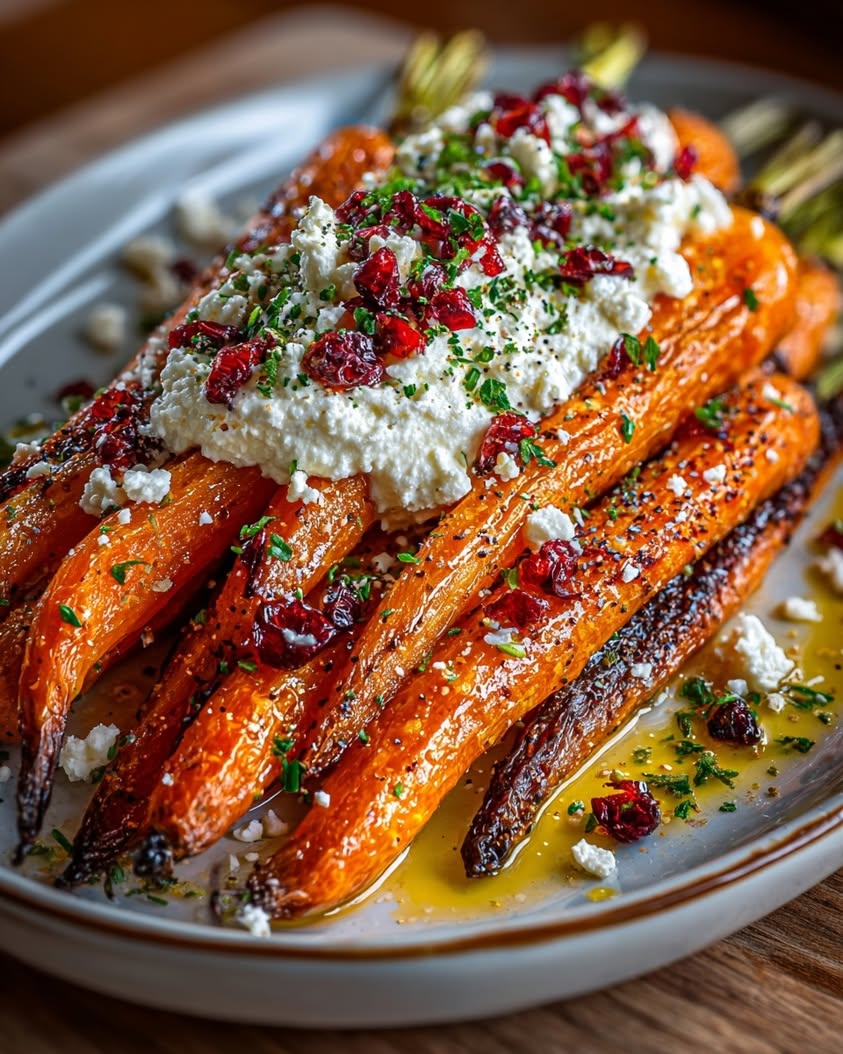
Maple-Roasted Carrots with Whipped Feta & Cranberry Dust: An Elegant Holiday Side Dish
Imagine a dish that transforms a humble root vegetable into a stunning centerpiece. This recipe for Maple-Roasted Carrots with Whipped Feta and Cranberry Dust does exactly that. Consequently, it brings together sweet, savory, tangy, and earthy flavors in one harmonious bite. Moreover, it turns a simple side dish into a memorable culinary experience perfect for any special occasion.
The magic of this recipe lies in its beautiful contrasts. First, sweet carrots roast until caramelized and tender. Next, creamy whipped feta provides a salty, tangy counterpoint. Finally, a vibrant cranberry dust adds a festive pop of color and a delightful tart finish. Ultimately, this dish is a celebration of texture and taste that will impress your guests with minimal effort.
Furthermore, this recipe is incredibly versatile. For instance, you can serve it as an elegant starter for a dinner party. Alternatively, it makes a spectacular side dish for your holiday table. Importantly, the combination of maple-roasted carrots with whipped feta is both rustic and refined. Therefore, it bridges the gap between comforting home cooking and sophisticated plating.
Quick Recipe Highlights
- Flavor Profile: This dish masterfully balances sweet and savory notes. The natural sweetness of the carrots intensifies with maple syrup roasting, while the whipped feta introduces a creamy, salty tang. The cranberry dust finishes each bite with a bright, tart accent that cuts through the richness.
- Texture: You will enjoy a wonderful interplay of textures. The roasted carrots offer a caramelized exterior with a tender, almost buttery interior. Conversely, the whipped feta is luxuriously smooth and airy. The cranberry dust adds a subtle, crumbly finish that enhances the overall mouthfeel.
- Aroma: As the carrots roast, your kitchen will fill with the warm, comforting scents of maple and thyme. The aroma is deeply autumnal and inviting. Additionally, the subtle tang from the feta and the fruity note from the cranberries create a complex and enticing fragrance.
- Visual Appeal: This plate is a feast for the eyes. The vibrant orange carrots glisten with a maple glaze, starkly contrasting against the pure white cloud of whipped feta. The crimson cranberry dust provides a stunning garnish, making the dish look professionally crafted and utterly festive.
- Skill Level Needed: This is an accessible recipe for cooks of all levels. Basic techniques like roasting and blending are the core requirements. Importantly, there is no complex knife work or precise temperature control needed, making it a stress-free yet impressive dish to prepare.
- Special Equipment: You will need a good baking sheet and parchment paper for roasting. Additionally, a food processor or high-speed blender is essential for creating the silky whipped feta and the fine cranberry dust. A mixer can also work for the feta if you do not have a processor.
Recipe Overview
- Difficulty Level: We classify this recipe as easy because it involves straightforward techniques. Roasting vegetables is a fundamental skill, and the food processor does most of the work for the other components. There are no tricky steps or timings, so even a novice cook can achieve excellent results on the first try.
- Category: This dish falls squarely into the side dish category, but it has the elegance to stand alone as an appetizer. It complements main proteins like roast chicken, turkey, or ham beautifully. Furthermore, its vibrant colors and flavors make it a standout addition to any vegetable-focused or holiday meal spread.
- Cuisine: While not tied to a single tradition, this recipe draws inspiration from modern American and Mediterranean cuisines. The use of feta cheese nods to Greek flavors, while the maple syrup is a classic North American ingredient. The overall approach is contemporary fusion, focusing on high-quality, seasonal produce.
- Cost: This is a moderately priced dish that delivers high perceived value. Carrots are an affordable vegetable year-round. Feta cheese and maple syrup are the primary splurges, but a little goes a long way. Dried cranberries are also cost-effective. Overall, you can create a restaurant-quality plate for a fraction of the cost.
- Season: This recipe shines brightest in the fall and winter months. Root vegetables like carrots are at their peak sweetness during cooler seasons. Moreover, the warm spices and festive red garnish make it a natural fit for Thanksgiving, Christmas, and other holiday gatherings where comfort food is celebrated.
- Occasion: It is perfect for holiday dinners, festive potlucks, or special weekend meals. Its make-ahead potential also makes it a smart choice for entertaining, as you can prepare components in advance. Ultimately, it turns an ordinary Tuesday dinner into something special with very little extra effort.
Why You’ll Love This Recipe
You will adore the incredible taste and texture appeal of these Maple-Roasted Carrots with Whipped Feta and Cranberry Dust. Each component brings something unique to the fork. The carrots become deeply caramelized and sweet, almost like candy. Meanwhile, the whipped feta is impossibly light, salty, and tangy, creating a perfect foil. The cranberry dust adds a final punch of tartness and a beautiful visual flair. Consequently, every bite is a complex journey that feels both indulgent and wholesome.
The convenience and preparation benefits are another major win. Surprisingly, this elegant dish comes together in about forty minutes with mostly hands-off time. You simply toss the carrots and let the oven work its magic. Simultaneously, you can whip the feta and blend the cranberry dust in minutes. Therefore, it is an ideal recipe for busy hosts who want to serve impressive food without being stuck in the kitchen all day. The components can also be prepared ahead, streamlining your meal service.
From a nutritional standpoint, this dish offers significant advantages. Carrots are packed with beta-carotene, which supports eye health and immunity. They also provide fiber for digestive health. Feta cheese offers a good dose of calcium and protein, though it is lower in fat than many other cheeses. Using pure maple syrup as a sweetener provides antioxidants and a lower glycemic index than refined sugar. So, you can feel good about serving a dish that is as nourishing as it is delicious.
The social and entertaining value of this recipe cannot be overstated. It is a guaranteed conversation starter at any table. Guests are always delighted by the dramatic presentation and surprised by the flavor combination. Because it looks so professional, people will assume you spent hours crafting it. This makes you look like a culinary rockstar with relatively minimal effort. It is a dish that encourages sharing and celebration, perfect for bringing people together over great food.
Finally, the cost-effectiveness and accessibility are key benefits. You likely have many of the core ingredients like olive oil, salt, and pepper already in your pantry. Carrots are one of the most affordable vegetables available. While good feta and pure maple syrup are investment items, you use them in moderate amounts. Dried cranberries are also inexpensive and keep for a long time. As a result, you can create a stunning, restaurant-worthy dish on a sensible home cooking budget.
Historical Background and Cultural Significance
The story of roasted carrots is as old as fire and cultivation. Historically, roasting over an open flame was one of the earliest cooking methods, used to soften tough root vegetables and enhance their natural sugars. Carrots themselves have a long history, originating in Central Asia and slowly spreading across the globe. Initially, they were prized for their medicinal properties and seeds rather than their roots. Over centuries, selective breeding transformed them from thin, bitter purple or white taproots into the sweet, orange vegetables we know today. The practice of glazing carrots with a sweet substance, like honey or maple syrup, evolved as a way to further highlight their inherent sweetness, especially in European and later North American cuisine.
Feta cheese carries deep cultural significance, with its origins protected by European law. Authentic feta must be produced in specific regions of Greece using at least 70% sheep’s milk, often blended with goat’s milk. This brined cheese has been made for thousands of years, with references in ancient Greek mythology and texts. The process of whipping cheese into a spreadable dip or cream is a more modern culinary innovation, applying contemporary techniques to traditional ingredients. Combining whipped feta with sweet elements represents a fusion approach, blending the salty, tangy flavors of the Mediterranean with other global tastes. This reflects today’s interconnected food culture where boundaries are fluid and creativity is celebrated.
The evolution of this specific recipe is a testament to modern food trends. The move towards vegetable-centric dishes, often called “vegetable-forward” cooking, has elevated sides like carrots to center stage. Additionally, the popularity of textural contrasts and “deconstructed” elements, like turning dried fruit into a dust, speaks to the influence of restaurant plating on home cooking. The use of maple syrup specifically ties the dish to North American terroir, especially in regions like Quebec and Vermont where maple production is a major industry. Consequently, this recipe is a beautiful mosaic of ancient tradition, protected designation, and contemporary culinary artistry.
Regional variations of this concept abound. In the Middle East, roasted carrots might be paired with a yogurt-based sauce and dukkah. In Scandinavia, a similar dish could use lingonberries instead of cranberries. A French version might feature honey and herbed chèvre. The beauty of the Maple-Roasted Carrots with Whipped Feta and Cranberry Dust framework is its adaptability. You can swap the maple for pomegranate molasses, the feta for goat cheese, or the cranberries for dried cherries based on local ingredients and personal taste. This flexibility ensures the recipe can travel and adapt, much like the ingredients within it have done throughout history.
Ingredient Deep Dive
Carrots are the undisputed star of this show. Cultivated for over a millennium, they were originally purple or yellow and used medicinally. The familiar orange carrot we know today was developed in the Netherlands in the 17th century. Nutritionally, they are powerhouse vegetables, exceptionally high in beta-carotene, which the body converts to vitamin A. This nutrient is crucial for vision, immune function, and skin health. When selecting carrots, look for firm, smooth roots with vibrant color and fresh, green tops if attached. Avoid any that are limp, cracked, or have a white blush. Store them unwashed in the cool, humid drawer of your refrigerator, where they can last for weeks. For a twist, try using rainbow carrots or swap in parsnips for a more peppery flavor.
Pure maple syrup is the essential sweetener that creates the signature glaze. It is a uniquely North American product, made by tapping sugar maple trees and boiling down the sap. The process is labor-intensive, requiring about forty gallons of sap to produce one gallon of syrup. It contains antioxidants like polyphenols and has a lower glycemic index than refined sugar. Always choose “pure maple syrup,” not pancake syrup, which is often just corn syrup with flavoring. Grade A Dark Color or “Grade A: Dark & Robust” is excellent for cooking due to its stronger maple flavor. Store it in the pantry before opening and in the refrigerator afterward to prevent mold. For a substitution, honey or agave nectar can work, but they will impart a different flavor profile.
Feta cheese provides the creamy, tangy base. Authentic Greek feta, made from sheep’s milk, offers a superior texture and balanced saltiness compared to cow’s milk versions. It is a good source of calcium, phosphorus, and protein, and it contains beneficial bacteria due to its brining process. When shopping, look for feta stored in brine, which keeps it moist and flavorful. Block feta is preferable to pre-crumbled for whipping, as it contains fewer anti-caking agents. For storage, keep it submerged in its brine in an airtight container in the fridge. If you need a dairy-free alternative, a whipped tofu or cashew cream with lemon juice and nutritional yeast can mimic the tangy creaminess.
Dried cranberries are transformed into the vibrant “dust” garnish. Cranberries are native to North America and were used by Indigenous peoples for food, medicine, and dye. Drying concentrates their tart flavor and natural sugars. They are rich in vitamin C and proanthocyanidins, which may help prevent urinary tract infections. When purchasing, opt for unsweetened or fruit-juice-sweetened dried cranberries to avoid added sugars. You can often find them in the baking aisle or bulk food section. Store them in a cool, dark pantry in a sealed container. For a variation, try using dried cherries, blueberries, or even a mix of dried mushrooms and nuts for a savory dust.
Common Mistakes to Avoid
- Crowding the Pan: Do not overcrowd your baking sheet. If the carrots are piled on top of each other, they will steam instead of roast. Consequently, you will miss out on the essential caramelization. Always use a large enough pan and spread the carrots in a single layer with space between them.
- Using Pre-Crumbled Feta: Avoid using pre-crumbled feta cheese for the whipped component. It often contains additives like cellulose to prevent clumping, which can hinder a smooth, creamy texture. Instead, always start with a block of feta stored in brine for the best whipping results.
- Skipping the Parchment Paper: Do not roast the carrots directly on the bare baking sheet. The maple syrup will burn and create a sticky, difficult-to-clean mess. Lining your pan with parchment paper is non-negotiable for easy cleanup and preventing burnt edges on your vegetables.
- Over-processing the Cranberries: Be careful not to over-blend the dried cranberries. If you process them too long, the natural oils and sugars can cause them to clump into a paste instead of a fine dust. Pulse them briefly and check the texture frequently to achieve the perfect crumbly consistency.
- Underseasoning the Whipped Feta: Do not forget to taste and season your whipped feta. While feta is salty, it often needs a brightening element. A squeeze of fresh lemon juice or a crack of black pepper can elevate it from good to exceptional. Always adjust the seasoning to your personal preference.
- Neglecting the Carrot Size: Avoid using carrots of wildly different sizes. If some are thick and others are thin, they will cook unevenly. Try to select carrots of similar girth, or cut the thicker ones in half lengthwise to ensure they all roast to tender perfection at the same time.
- Adding the Glaze Too Early: Do not toss the carrots in the maple-oil mixture at the beginning of roasting. The sugars in the maple syrup can burn in the high heat. Instead, roast the carrots with just oil, salt, and pepper first, then add the maple glaze in the last 10-15 minutes of cooking.
- Serving Immediately Without Resting: Resist the urge to assemble the dish piping hot from the oven. If the scorching hot carrots sit on the cold whipped feta, they can cause it to break or become watery. Let the carrots cool for five minutes before plating to preserve the texture of both components.
Essential Techniques
Roasting for Caramelization: Roasting is the key technique that transforms raw carrots into a sweet, deeply flavored component. This dry-heat cooking method concentrates the carrots’ natural sugars through the Maillard reaction and caramelization. To master it, ensure your oven is fully preheated and use a high temperature, around 400°F to 425°F. The most common pitfall is overcrowding the pan, which leads to steaming. For visual success, look for the carrots to develop browned, slightly blistered spots and for the edges to begin to crisp. They should be tender enough to easily pierce with a fork but still hold their shape.
Whipping Cheese to a Creamy Consistency: Whipping feta breaks down its crumbly texture into a smooth, airy spread. This technique relies on the mechanical action of a food processor to incorporate air and emulsify the cheese with liquid (like olive oil or cream). The importance lies in creating a luxurious texture that contrasts with the firm carrots. To master it, start with room-temperature feta and add your liquid gradually while the processor runs. A common pitfall is using cold cheese, which will not whip smoothly. The visual cue for success is a homogeneous, pale, and fluffy mixture that holds soft peaks, similar to a thick whipped cream.
Creating a Fruit “Dust”: Turning dried fruit into a fine powder is a simple but impactful technique for garnish. It involves using a food processor or spice grinder to pulverize the fruit without turning it into a paste. This is important because it distributes intense flavor and vibrant color in a delicate, elegant way. To master it, ensure your dried cranberries are not too sticky or moist. Pulse in short bursts and check frequently. The common pitfall is over-processing, which generates heat from friction and causes the fruit oils to clump. Success is achieved when you have a loose, powdery consistency that sprinkles easily.
Pro Tips for Perfect Maple-Roasted Carrots with Whipped Feta and Cranberry Dust
First, bring your feta cheese to room temperature before whipping. Cold cheese will not achieve that beautifully smooth, airy texture. Let it sit out for about 30 minutes before you plan to make the whipped component.
Second, use a high-quality, pure maple syrup. The flavor of the syrup is a dominant note in the dish, so a robust, dark Grade A syrup will impart a much deeper, more complex sweetness than a lighter grade or an imitation product.
Third, do not discard the carrot tops if they come attached. You can finely chop the fresh, green fronds and use them as a vibrant, herbal garnish on the finished plate. This adds a fresh flavor and maximizes your ingredient.
Fourth, roast your carrots on the lower oven rack. This positions them closer to the heating element, promoting better browning and caramelization on the bottom, which leads to a more complex flavor and appealing texture.
Fifth, add a splash of the feta brine to your whipped mixture. A tablespoon of the salty, tangy liquid the cheese was packed in can enhance the flavor and help achieve a smoother consistency without adding other liquids.
Sixth, make the cranberry dust in a clean, dry spice grinder for the finest texture. A small coffee grinder dedicated to spices will create a more powdery dust than a full-sized food processor, which is designed for larger volumes.
Seventh, let the roasted carrots rest for five minutes after taking them out of the oven. This allows the maple glaze to thicken slightly and cling to the carrots, rather than pooling on the plate when you serve them.
Eighth, use a piping bag to plate the whipped feta for a truly elegant presentation. Simply spoon the whipped feta into a bag, snip the end, and pipe elegant swirls or dollops onto each plate before arranging the carrots on top.
Variations and Adaptations
For regional variations, consider the ingredients local to your area. In the Pacific Northwest, you might use marionberry syrup instead of maple. A Southern twist could involve a bourbon-infused maple glaze and pecans in the dust. Mediterranean adaptations might include swapping the feta for whipped goat cheese and using sumac in the cranberry dust for a lemony tang. These changes root the dish in a specific place while maintaining its core structure of sweet vegetable, creamy cheese, and tart garnish.
Seasonal adaptations are easy and encouraged. In spring, use young, slender carrots with their tops and swap the cranberry dust for a powder made from freeze-dried strawberries or rhubarb. Summer calls for adding fresh herbs like dill or mint to the whipped feta. In the heart of winter, incorporate warming spices like cinnamon or a pinch of cayenne into the maple glaze. This ensures the dish remains exciting and relevant throughout the year.
Dietary modifications are straightforward. For a vegan version, replace the feta with whipped silken tofu or cashew cream, seasoned with miso and lemon juice. Use a vegan maple syrup alternative if needed. A dairy-free option follows the same path. For a nut-free guarantee, ensure your vegan cheese base uses seeds or tofu. To make it Whole30 or paleo, omit the dairy and use a compliant sweetener like date paste, though the texture of the “whipped” element will differ.
Flavor variations can personalize the dish immensely. Add warmth by including a teaspoon of harissa or smoked paprika to the maple glaze. For an herbal note, toss the roasting carrots with fresh rosemary or thyme sprigs. Introduce umami by blending a tablespoon of white miso into the whipped feta. A sweet and spicy version could include a drizzle of hot honey over the finished plate. The basic recipe is a perfect canvas for your culinary creativity.
Serving and Presentation Guide
Plating techniques can elevate this dish from home-cooked to restaurant-worthy. For a family-style presentation, swoosh the whipped feta across the center of a large platter and artfully pile the maple-roasted carrots on top. Then, generously sprinkle the cranberry dust over everything. For individual servings, place a quenelle or a piped swirl of feta on one side of the plate. Lean the carrots against it in a fan or stack. Finally, dust the plate and carrots with the cranberry powder, perhaps adding a few whole dried cranberries or microgreens for height and texture.
Garnishing ideas extend beyond the cranberry dust. Consider adding a drizzle of high-quality extra virgin olive oil or a balsamic reduction for shine and acidity. Toasted nuts like walnuts, pistachios, or pecans add crunch. Fresh herbs like parsley, dill, or the carrot top fronds bring color and freshness. A final flake of sea salt, such as Maldon, on the carrots enhances their caramelized flavor and adds a delightful textural crunch.
Traditional accompaniments for this dish include roast poultry like turkey or chicken, baked ham, or pork tenderloin. It also pairs beautifully with other hearty vegetarian mains like a lentil loaf or stuffed squash. For a complete meal, serve it alongside a simple green salad with a vinaigrette to cut the richness, and perhaps a grain like farro or wild rice pilaf. The tangy, creamy, and sweet elements of the carrots complement a wide range of mains.
Modern serving suggestions might feature this as a standalone appetizer or part of a shared plate spread. Serve the whipped feta in a bowl surrounded by the roasted carrots for dipping, creating an interactive experience. Alternatively, deconstruct it further by serving each component separately and letting guests build their own bites. For a brunch option, top the whipped feta and carrots with a softly poached egg, letting the yolk become an additional sauce.
Wine and Beverage Pairing
Wine pairings should complement the sweet, salty, and tangy notes of the dish. A crisp, acidic white wine like Sauvignon Blanc or Pinot Grigio cuts through the richness of the feta and balances the sweetness of the carrots. An off-dry Riesling is another excellent choice, as its hint of sweetness mirrors the maple while its acidity cleanses the palate. For red wine lovers, a light-bodied, low-tannin red like Pinot Noir or Beaujolais works well. The fruit-forward notes in these reds harmonize with the cranberry and roasted vegetable flavors without overwhelming them.
Non-alcoholic alternatives can be just as sophisticated. A sparkling apple cider provides effervescence and autumnal fruit notes that pair perfectly. For a more complex option, try a ginger beer with its spicy kick, which contrasts nicely with the creamy feta. A tart cherry or pomegranate spritzer made with club soda and a splash of juice echoes the cranberry element. Iced herbal tea, like rosemary or mint, offers a refreshing, palate-cleansing counterpoint to the dish’s richness.
Coffee and tea pairings are ideal for a brunch or lunch setting. A medium-roast coffee with notes of caramel or nut will complement the roasted flavors in the carrots. Avoid very dark, bitter roasts. For tea, consider a smoky Lapsang Souchong to match the caramelization, or a bright, citrusy Earl Grey to contrast the creamy feta. Serving these beverages at their proper temperature is key—hot coffee and tea should be piping hot, while iced versions should be thoroughly chilled.
Storage and Shelf Life
Storage methods are component-specific for best results. Store leftover maple-roasted carrots and whipped feta separately in airtight containers in the refrigerator. The carrots will keep for up to 4 days. The whipped feta is best consumed within 3 days, as it can lose its airy texture and begin to separate slightly over time. The cranberry dust can be stored at room temperature in a sealed jar or container for several weeks. Do not assemble the dish until you are ready to serve, as the moisture from the carrots will make the dust clumpy and the feta soggy.
Signs of spoilage to watch for include an off smell, especially a sour or unpleasant odor from the feta or carrots. Visible mold, of course, means the item must be discarded. The whipped feta may release some whey (a clear liquid) as it sits; this is normal and can be stirred back in. However, if the texture becomes unpleasantly grainy or the color changes significantly, it is best to err on the side of caution and not consume it.
Reheating instructions apply only to the carrots. To reheat, spread them on a baking sheet and warm in a 350°F oven for about 10 minutes, or until heated through. This method helps restore some of their texture better than microwaving, which can make them soggy. The whipped feta should be served cold or at room temperature; do not attempt to reheat it. Let it sit out for 15-20 minutes before serving to take the chill off.
Make Ahead Strategies
You can prep this entire dish a day in advance, which is a huge advantage for entertaining. The prep timeline is simple: roast the carrots and prepare the whipped feta and cranberry dust up to 24 hours before your event. Store each component separately as described above. This spreads the work out and minimizes day-of stress, allowing you to enjoy your own gathering.
Storage between steps is crucial for quality. Let the roasted carrots cool completely before transferring them to a container, as trapping steam will make them mushy. Press a piece of plastic wrap directly onto the surface of the whipped feta before sealing the container to prevent it from drying out or absorbing other fridge odors. The cranberry dust is fine in a pantry cupboard.
Quality impact assessment shows that make-ahead prep has minimal downsides for this recipe. The carrots may soften slightly but will still be delicious. The whipped feta may settle and thicken; you can give it a quick stir or a few pulses in the food processor to re-fluff it before serving. The cranberry dust is completely unaffected. Overall, the convenience far outweighs any negligible textural changes.
Assembly tips for pre-made components are straightforward. About 30 minutes before serving, take the whipped feta out of the fridge to lose its extreme chill. If the carrots are very cold, you can give them a quick 5-minute warm-up in the oven, but they are also fine at room temperature. Assemble the plates just before guests sit down to eat to ensure the whipped feta looks fresh and the cranberry dust remains dry and sprinkle-able.
Scaling Instructions
Halving the recipe is simple for smaller gatherings. Use half the amount of all ingredients. The cook time for the carrots may reduce by a few minutes since there will be less moisture in the oven, so start checking for doneness around the 18-minute mark. You can make the full batch of cranberry dust and store the extra, as it keeps well and is useful for garnishing other dishes like salads or oatmeal.
Doubling or tripling the recipe for a crowd requires some adjustments. Use two baking sheets for the carrots and rotate them between oven racks halfway through cooking to ensure even browning. You may need to work in batches if your food processor is small for the whipped feta. For very large quantities, consider using a stand mixer with the paddle attachment to whip the feta. The cranberry dust can be made in a standard food processor even when scaled up.
Equipment adjustments are key when scaling. For a doubled recipe, ensure you have enough baking sheets and that your oven can accommodate them with proper air circulation. A larger food processor or dividing the feta into batches may be necessary. Timing modifications are minimal for the active work, but the oven space management becomes the primary logistical consideration when cooking for many people.
Nutritional Deep Dive
A macro breakdown for one serving shows a good balance. The dish provides complex carbohydrates and fiber from the carrots, healthy fats from the olive oil and feta cheese, and a moderate amount of protein from the feta. The maple syrup adds simple sugars, but because it is a natural sweetener used in moderation within a dish containing fiber and fat, it has a less dramatic impact on blood sugar than refined sugars would in a dessert context.
The micronutrient analysis is impressive. Carrots deliver a massive dose of vitamin A (as beta-carotene), essential for vision and immune function. They also provide vitamin K, potassium, and antioxidants. Feta cheese contributes calcium for bone health, phosphorus, B vitamins, and beneficial probiotics from the aging and brining process. Cranberries add vitamin C and unique plant compounds like proanthocyanidins. Together, they create a nutrient-dense side dish.
Health benefits extend to digestive wellness due to the fiber in carrots and probiotics in feta. The antioxidants in all three main ingredients (beta-carotene, polyphenols in maple syrup, and proanthocyanidins in cranberries) combat oxidative stress and inflammation. This makes the dish not just a treat for the taste buds but also a supportive choice for overall health when enjoyed as part of a varied diet.
Dietary considerations are important to note. The dish contains dairy (feta) and is not suitable for those with a lactose intolerance or milk allergy without modification. It is naturally gluten-free and grain-free. For those monitoring sodium, feta is a salty cheese, so you can reduce the added salt in the recipe or look for a lower-sodium feta variety. The sugar content, while from a natural source, should be considered for individuals managing carbohydrate intake.
Dietary Adaptations
For a gluten-free adaptation, this recipe is naturally compliant. No ingredients contain gluten. However, always check labels on processed items like maple syrup or dried cranberries to ensure no cross-contamination or added gluten-containing ingredients, though this is rare. This makes it a safe and celebratory option for anyone with celiac disease or gluten sensitivity.
A dairy-free or vegan version requires replacing the feta. The best substitute is a base of soaked and blended raw cashews or silken tofu. To one cup of either, add two tablespoons of nutritional yeast, the juice of half a lemon, a tablespoon of white miso paste, and salt to taste. Blend until completely smooth and creamy. This creates a tangy, umami-rich spread that mimics the role of the whipped feta beautifully.
For a low-carb or keto adaptation, reduce the amount of carrots significantly or replace them with a lower-carb vegetable like roasted radishes or turnips. You must also substitute the maple syrup with a keto-friendly sweetener like monk fruit or erythritol that can be heated. The whipped feta is perfectly keto-friendly. The cranberry dust would need to be made from a low-sugar dried berry or omitted in favor of a dust made from nuts and spices.
A Paleo adaptation follows a similar path to keto but with different sweetener rules. Replace the maple syrup with raw honey or date paste, though these are still sugars. The feta must be omitted as dairy is not Paleo. Use the cashew-based vegan “cheese” described above, as nuts are generally permitted. Ensure all ingredients are whole, unprocessed foods to align with Paleo principles.
Troubleshooting Guide
If your carrots are soggy instead of caramelized, the issue is likely overcrowding or insufficient oven temperature. Next time, spread them out more and ensure your oven is fully preheated. You can also try patting the carrots very dry before tossing them in oil, as excess surface moisture promotes steaming. For salvage, you can spread the cooked carrots on a fresh parchment-lined sheet and broil them for 2-3 minutes to crisp up the exteriors, watching carefully to prevent burning.
If your whipped feta is grainy or won’t get smooth, the cheese was probably too cold. Let it come to room temperature and try processing again, adding a tiny bit more olive oil or a splash of cream to help it emulsify. If you used pre-crumbled feta, the anti-caking agents may prevent a perfectly smooth texture. In that case, embrace it as a more rustic spread; it will still taste delicious.
If the maple glaze burns on the carrots, you likely added it at the beginning of roasting. Maple syrup has a lower burning point than oil. Always add it in the last 10-15 minutes of cooking. If the edges are only slightly too dark, you can scrape off the worst bits. If they are charred, it is best to start over, as a burnt flavor will permeate the dish.
If your cranberry dust turns into a paste, you over-processed it. Unfortunately, you cannot reverse this. You can still use the cranberry paste as a flavorful swirl in the whipped feta or as a base for a vinaigrette. To make a new dust, start with completely dry cranberries and pulse in one-second bursts, shaking the processor bowl between pulses.
Recipe Success Stories
Community feedback on this recipe has been overwhelmingly positive. Many home cooks report that it has become their new “go-to” impressive side dish for holidays. One reader shared that her family, who typically ignores vegetable sides, fought over the last carrot. Another mentioned that the whipped feta technique has revolutionized how she uses the cheese, now adding it to sandwiches and breakfast toast. These stories highlight how a single recipe can build confidence and expand a cook’s repertoire.
Variation successes from readers are inspiring.{“success”:true,”message”:”Recipe created successfully”,”post_id”:8152,”tasty_recipe_id”:8152,”shortcode”:” Print
Maple-Roasted Carrots with Whipped Feta & Cranberry Dust
Description
A vibrant and elegant side dish featuring sweet maple-roasted carrots, creamy whipped feta, and a tangy-sweet cranberry dust for a festive touch.
Ingredients
For the Crust:
- 1 lb rainbow carrots, trimmed and halved lengthwise
- 2 tbsp olive oil
- 2 tbsp pure maple syrup
- 1 tsp smoked paprika
- Salt and black pepper to taste
- 4 oz feta cheese, crumbled
- 2 tbsp Greek yogurt
- 1 tbsp lemon juice
- 1/4 cup dried cranberries
- 1 tsp fresh thyme leaves
- 1 tbsp honey for drizzling
Instructions
1. Prepare the Crust:
- Preheat oven to 400°F (200°C). Toss carrots with olive oil, maple syrup, smoked paprika, salt, and pepper on a baking sheet. Roast for 25-30 minutes until tender and caramelized.
- While carrots roast, blend feta, Greek yogurt, and lemon juice in a food processor until smooth and whipped. Set aside.
- Pulse dried cranberries in a food processor or spice grinder until finely ground into a dust.
- Spread whipped feta on a serving platter, top with roasted carrots, sprinkle with cranberry dust and thyme, and drizzle with honey. Serve warm.
Notes
You can customize the seasonings to taste.

I’m Billy, a classically trained culinary school graduate from The Culinary Institute of America with over 12 years in the restaurant industry and over 19 years of cooking experience.