
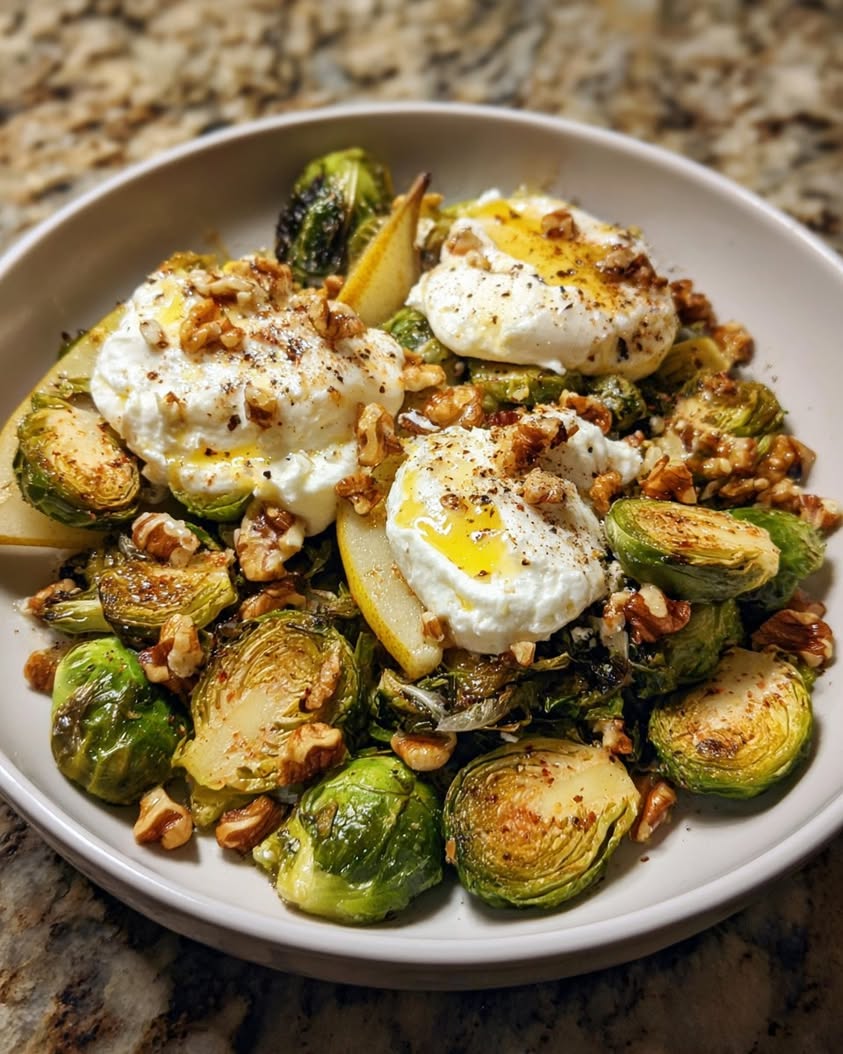
Roasted Brussels Sprouts and Pear Skillet with Burrata and Hot Honey: A Sweet, Savory, and Show-Stopping Side
Imagine a dish that perfectly captures the essence of autumn on a single plate. This Roasted Brussels Sprouts and Pear Skillet with Burrata and Hot Honey does exactly that. It transforms humble ingredients into a stunning, restaurant-worthy creation you can easily make at home. The recipe masterfully balances deep, caramelized flavors with creamy, spicy, and crunchy elements. Consequently, every bite offers a complex and utterly satisfying experience.
This dish is a celebration of seasonal produce, specifically highlighting the best of fall and early winter. Roasted Brussels sprouts develop a nutty sweetness, while pears caramelize into tender, jammy jewels. Meanwhile, the luxurious burrata cheese adds a cool, rich creaminess that contrasts the warm vegetables. Finally, a drizzle of spicy hot honey and a sprinkle of toasted walnuts tie everything together. The result is a side dish so impressive it could easily be the main event for a vegetarian meal.
Furthermore, this Roasted Brussels Sprouts and Pear Skillet with Burrata and Hot Honey is incredibly versatile. You can serve it as an elegant side for a holiday feast, a hearty lunch over grains, or a beautiful appetizer with crusty bread. Its combination of textures and flavors appeals to a wide range of palates, even those who might be skeptical of Brussels sprouts. Ultimately, it’s a recipe that feels special without requiring special skills, making it a perfect addition to your culinary repertoire.
Quick Recipe Highlights
- Flavor Profile: This dish is a symphony of sweet, savory, spicy, and tangy notes. The caramelized Brussels sprouts and pears offer a deep, natural sweetness. Subsequently, the hot honey introduces a gentle, floral heat that awakens the palate. Finally, the burrata provides a mild, milky tang that balances the entire composition.
- Texture: You will experience a delightful contrast in every mouthful. The Brussels sprouts become crispy on the outside and tender within. Meanwhile, the pears soften to a luscious, almost melt-in-your-mouth consistency. The toasted walnuts add a crucial crunchy element, and the burrata delivers an unforgettable, creamy burst.
- Aroma: As this skillet cooks, your kitchen will fill with an irresistible fragrance. First, you’ll smell the earthy, slightly sulfurous notes of roasting Brussels sprouts transforming into something nutty and sweet. Then, the scent of caramelizing fruit and warming spices from the hot honey will take over. It’s an aroma that promises a deeply comforting and delicious meal.
- Visual Appeal: This dish is a feast for the eyes with its vibrant color palette. You get deep green and charred bits from the sprouts, golden-brown from the pears, and snowy white from the burrata. The reddish hue of the hot honey and the brown of the walnuts create beautiful finishing touches. Presentation is simple yet stunning when served directly from the skillet.
- Skill Level Needed: This is an accessible recipe for cooks of all levels. The techniques involved—chopping, roasting, and simple assembly—are fundamental. Therefore, even a beginner can achieve fantastic results by following the clear steps. The most important skill is paying attention to the roasting time to achieve perfect caramelization without burning.
- Special Equipment: You need only a few basic kitchen tools. A reliable, oven-safe skillet is the star of the show, allowing you to move from stovetop to oven seamlessly. Other than that, a good knife, a cutting board, and a small bowl for mixing the honey are all you require. No fancy gadgets are necessary for this rustic, beautiful dish.
Recipe Overview
- Difficulty Level: We classify this Roasted Brussels Sprouts and Pear Skillet as an easy recipe. The steps are straightforward and logical, involving basic cooking methods like chopping and roasting. There is no intricate knife work or complex sauce-making. The key to success is simply managing your oven temperature and timing to get that perfect roast on the vegetables and fruit.
- Category: This versatile dish fits into multiple meal categories beautifully. Primarily, it shines as an elevated side dish for dinners and holiday gatherings. Alternatively, it can serve as a light vegetarian main course when paired with a grain like farro or quinoa. It also makes an impressive appetizer or brunch item when served with slices of toasted baguette.
- Cuisine: This recipe draws inspiration from modern American farm-to-table cuisine and Italian influences. The use of burrata is a direct nod to Italian cheesemaking traditions. Meanwhile, the technique of roasting vegetables and fruit together is a hallmark of contemporary American cooking that emphasizes seasonal, whole ingredients. The hot honey adds a trendy, artisanal twist that’s popular in today’s culinary scene.
- Cost: This dish offers excellent value, especially considering its impressive presentation. Brussels sprouts and pears are typically affordable, particularly in season. Burrata is the splurge ingredient, but a little goes a long way in terms of impact. Walnuts and honey are pantry staples for many. Overall, you can create a restaurant-quality dish for a fraction of the cost of dining out.
- Season: This recipe is ideal for late fall and winter when both Brussels sprouts and pears are at their peak. During these cooler months, the produce is sweetest and most flavorful. The warm, roasting method of cooking is also particularly comforting when the weather turns cold. That said, with modern grocery availability, you can enjoy this flavorful skillet year-round.
- Occasion: It is perfect for any occasion where you want to serve something memorable. It’s elegant enough for Thanksgiving, Christmas, or a dinner party. Simultaneously, it’s simple enough for a cozy weeknight meal that feels special. It’s also a fantastic potluck contribution because it travels well and looks gorgeous. This dish consistently impresses guests and family alike.
Why You’ll Love This Recipe
First and foremost, the taste and texture appeal of this Roasted Brussels Sprouts and Pear Skillet is undeniable. Each component is carefully chosen to create a harmonious balance. You get the savory, slightly bitter char of the sprouts, the lush sweetness of the pear, the rich creaminess of burrata, the spicy kick of honey, and the earthy crunch of walnuts. Consequently, every forkful is a complex and satisfying adventure that keeps you coming back for more. This dish successfully converts Brussels sprout skeptics by showcasing their best, most delicious qualities.
Next, consider the convenience and preparation benefits. This is a one-pan wonder that minimizes cleanup. You perform most of the work in a single oven-safe skillet, from the initial roast to the final presentation. The active prep time is minimal, mostly involving chopping and tossing. While the oven does the heavy lifting, you are free to prepare the rest of your meal. This efficient method makes hosting stress-free and enjoyable.
Moreover, the nutritional advantages are significant. Brussels sprouts are a powerhouse of vitamins C and K, fiber, and antioxidants. Pears add additional fiber and vitamin C. Walnuts contribute healthy omega-3 fatty acids and protein. Using honey as a sweetener offers a more natural alternative to refined sugar. Therefore, this dish is not only indulgent-tasting but also packed with nutrients that support overall health. It’s a perfect example of eating well without sacrificing flavor.
Additionally, the social and entertaining value of this recipe is high. It is a visually stunning dish that creates an instant “wow” factor when you bring it to the table. The act of breaking into the creamy burrata center is theatrical and fun. It encourages sharing and conversation, making any meal feel more communal and special. Guests will always ask for the recipe, making you feel like a culinary star.
Finally, the cost-effectiveness and accessibility are major wins. You can create a dish that looks and tastes expensive using mostly humble, seasonal ingredients. The one special item, burrata, is now widely available in most grocery stores. You likely already have olive oil, salt, and pepper in your pantry. This accessibility means you can whip up this impressive skillet anytime the craving strikes, without a special shopping trip or a big budget.
Historical Background and Cultural Significance
The story of this dish begins with its individual components, each with a rich history. Brussels sprouts, believe it or not, have been cultivated since the 13th century in the region now known as Belgium. They were later popularized across Europe and brought to North America by French settlers. For centuries, they were often boiled into submission, which contributed to their poor reputation. The modern culinary revolution, however, rediscovered them through techniques like roasting and sautéing, which unlock their natural sweetness and make them a star ingredient.
Pears have an even longer and more royal history, cultivated for over three thousand years. They were prized by the Romans and later by European royalty. Their sweet, delicate flavor made them a favorite for both fresh eating and cooking. The practice of cooking fruit with savory items is ancient, found in many global cuisines as a way to balance flavors and add luxury. Combining pears with savory vegetables like Brussels sprouts is a contemporary take on this classic pairing principle, highlighting the best of autumn’s bounty.
The inclusion of burrata is a nod to Italian culinary tradition, though it is a relatively recent invention. Burrata was created in the early 20th century in the Puglia region as a way to use up the scraps of mozzarella production. The word “burrata” means “buttered,” referring to its incredibly rich, creamy interior. Its global popularity soared in the last two decades as chefs sought out luxurious, artisanal cheeses. Placing a ball of burrata on a warm dish is a modern restaurant trend that allows the cheese to melt slightly, creating a instant, elegant sauce.
The final flourish, hot honey, represents the current fusion food movement. Honey itself is one of humanity’s oldest sweeteners, with evidence of beekeeping dating back thousands of years. Infusing it with chili peppers is a practice found in various cultures, from Italian ‘nduja honey to American Southern traditions. The recent commercial success of brands like Mike’s Hot Honey has made this condiment a pantry staple. Drizzling it over a savory dish adds a trendy, sweet-heat complexity that defines much of today’s innovative cooking. This Roasted Brussels Sprouts and Pear Skillet is a delicious culmination of these historical threads, woven into a single, modern recipe.
Ingredient Deep Dive
Let’s start with Brussels sprouts. These miniature cabbages are packed with history and nutrition. Originally from the Mediterranean region, they gained fame in Brussels, Belgium, hence their name. They are an excellent source of vitamins C and K, folate, and fiber. When selecting them, look for firm, bright green sprouts with tightly packed leaves; avoid any that are yellowing or have loose leaves. Store them unwashed in an open bag in your refrigerator’s crisper drawer. For a twist, you could substitute broccoli florets or cubed butternut squash, though the cooking time may vary slightly.
Next, consider the pears. Choose a variety that holds its shape when heated, such as Bosc or Anjou. These pears have a denser flesh that caramelizes beautifully without turning to mush. Pears provide a good dose of fiber, vitamin C, and copper. Select fruit that is firm with only a slight give at the stem for roasting. Store ripe pears in the fridge to slow further ripening. If pears aren’t available, firm apples like Honeycrisp or Granny Smith make a wonderful, slightly tarter substitution in this skillet dish.
Now, for the star: burrata. This cheese is a masterpiece of Italian cheesemaking, consisting of a mozzarella shell filled with stracciatella (cream and soft cheese curds). It is rich in calcium and protein but also high in fat, which is why a little goes a long way. Always buy burrata as fresh as possible and check the “use by” date. Keep it sealed in its liquid in the refrigerator until just before serving. For a dairy-free version, a creamy vegan mozzarella ball or a dollop of thick cashew cream can provide a similar visual and textural role, though the flavor will differ.
The hot honey brings the magic. You can use a store-bought version or easily make your own by gently warming honey with crushed red pepper flakes. Honey contains antioxidants and has antimicrobial properties. The chili heat stimulates endorphins, creating a pleasant flavor rush. For a different flavor profile, try maple syrup infused with a pinch of cayenne. Finally, the walnuts add essential crunch and earthy depth. Walnuts are renowned for their omega-3 fatty acids. Toast them to maximize their flavor. Pecans or hazelnuts would be delicious alternatives, offering their own unique taste to the finished Roasted Brussels Sprouts and Pear Skillet with Burrata and Hot Honey.
Common Mistakes to Avoid
- Crowding the Skillet: Do not overcrowd the Brussels sprouts and pears. If the pan is too full, the vegetables will steam instead of roast. Consequently, you will miss out on the essential caramelized, crispy edges that provide so much flavor and texture. Use a large enough skillet or roast in batches if necessary.
- Using Overripe Pears: Avoid using pears that are too soft or juicy. Overripe pears will release too much water during roasting. This excess moisture will prevent proper browning and can make the dish soggy. Always choose firm, just-ripe pears that will hold their shape and caramelize nicely.
- Skipping the Toast on Nuts: Never add raw walnuts directly to the dish. Toasting nuts is a critical step that unlocks their oils and deepens their flavor. Raw walnuts can taste bitter and have a soft, unsatisfying texture. Take the few extra minutes to toast them in a dry pan or the oven.
- Adding Burrata Too Early: Do not place the burrata on the hot skillet until you are ready to serve. If it sits on the heat for too long, it will completely melt and lose its beautiful, creamy center. The goal is for it to be slightly warmed and gooey, not dissolved into the dish.
- Not Preheating the Skillet: Failing to preheat your oven-safe skillet before adding the oil and vegetables is a common error. A hot skillet ensures the ingredients start sizzling immediately, which is key for developing a good sear. Starting in a cold pan leads to steaming and uneven cooking.
- Underseasoning the Vegetables: Do not be shy with salt and pepper when tossing the Brussels sprouts and pears. Seasoning before roasting is crucial because it draws out moisture and flavors the food from within. Vegetables roasted without enough seasoning can taste flat and bland, no matter how well they are cooked.
- Using Burrata Straight from the Fridge: Avoid adding ice-cold burrata to the hot dish. Let it sit at room temperature for 15-20 minutes before serving. This allows the cheese to soften slightly, ensuring a luscious, creamy texture when you cut into it. Cold cheese can be too firm and shock the warm components.
- Ignoring the Hot Honey Consistency: If making your own hot honey, do not overheat it. Gently warm the honey just enough to infuse the chili flavor and make it pourable. Boiling honey can destroy its delicate enzymes and alter its flavor. It can also become dangerously hot and cause burns.
Essential Techniques
Mastering the roast is the most important technique for this recipe. Roasting at a high heat (around 400°F) is crucial because it causes the natural sugars in the Brussels sprouts and pears to caramelize. This process, known as the Maillard reaction, creates complex, savory flavors and appealing browned bits. To master it, ensure your vegetables are dry before tossing them in oil, and give them plenty of space in the pan. The common pitfall is roasting at too low a temperature, which steams the food. Look for visual cues: the sprouts should be tender when pierced with a fork and have dark, crispy leaves around the edges.
Properly caramelizing the pears is another key skill. Unlike the sprouts, pears have higher sugar and water content. The goal is to cook them until they are golden brown and tender but still hold their shape. Achieve this by adding them to the skillet after the sprouts have started to brown. This staggered timing prevents the pears from turning to mush. A common mistake is cutting the pears too small, which causes them to disintegrate. Visual success is a pear wedge that is soft and glistening with caramelized juices but hasn’t lost its defined edges.
Finally, understanding the “finish and assemble” technique elevates the dish. This involves bringing all components together at the perfect moment. You must transfer the hot roasted ingredients to a serving platter or serve directly from the skillet. Then, you immediately place the room-temperature burrata on top so it just begins to wilt. Drizzle the hot honey and scatter the toasted walnuts right before serving. The pitfall is letting the roasted base cool down too much, which prevents the burrata from warming properly. The visual cue for success is a slightly oozing burrata that creates a creamy sauce when cut, mingling with the warm honey and roasted vegetables.
Pro Tips for Perfect Roasted Brussels Sprouts and Pear Skillet
First, cut your Brussels sprouts in half from stem to top. This creates a flat surface that makes direct contact with the hot pan, guaranteeing better browning and caramelization. If you have very large sprouts, consider quartering them so they cook evenly with the smaller ones.
Second, use an oven-safe skillet like cast iron or stainless steel. These materials retain and distribute heat evenly, giving you consistent results. A cast iron skillet, in particular, will give the sprouts an incredible sear and can go straight from the stovetop to the oven.
Third, reserve a little of the hot honey and walnuts for garnish after plating. This adds a fresh, final layer of flavor and texture that hasn’t been warmed by the skillet. The contrast between the warm honey from the dish and the cooler drizzle on top is delightful.
Fourth, if your pears are not quite ripe, you can speed up the process by placing them in a paper bag with a banana. The ethylene gas the banana emits will help soften the pears naturally within a day or two, ensuring they are perfect for roasting.
Fifth, for an extra flavor dimension, add a sprinkle of fresh thyme leaves or chopped rosemary to the Brussels sprouts and pears before they go into the oven. The herbal notes pair beautifully with the sweet and savory elements of the dish.
Sixth, let the roasted skillet ingredients rest for a minute or two after removing them from the oven before adding the burrata. This brief pause allows the intense heat to dissipate slightly, so it gently warms the cheese without causing it to completely liquefy.
Variations and Adaptations
For regional variations, consider the ingredients local to your area. In the American South, you might add crumbled cooked bacon or use pecans instead of walnuts. For a Mediterranean twist, substitute the burrata with creamy feta and add a handful of Kalamata olives. An Asian-inspired version could use a miso-honey glaze and garnish with sesame seeds, omitting the cheese altogether. These adaptations show how versatile the core concept of a roasted vegetable and fruit skillet can be.
Seasonal adaptations are easy and encouraged. In winter, use hardy squash or sweet potatoes instead of pears. For a spring version, asparagus and lemon zest work wonderfully. Summer might call for peaches or nectarines paired with cherry tomatoes. The hot honey and creamy cheese elements remain constant, providing a familiar thread through the changing seasons. This flexibility makes the recipe a year-round favorite.
Dietary modifications are straightforward. For a vegan dish, replace the burrata with a vegan mozzarella ball or a generous dollop of almond-based ricotta. Use agave syrup mixed with chili instead of honey to keep it plant-based. For a nut-free version, use toasted pumpkin seeds (pepitas) or sunflower seeds for crunch. To make it gluten-free, simply ensure all your packaged ingredients like hot honey are certified GF, which they typically are.
Flavor variations can personalize the dish to your taste. Try using balsamic glaze instead of hot honey for a tangy-sweet finish. Add a pinch of smoked paprika or cumin to the oil before tossing the vegetables for a smoky depth. Incorporate sliced red onion or shallots to roast alongside the sprouts for added savory sweetness. A squeeze of fresh lemon juice right before serving can brighten all the other flavors beautifully.
Serving and Presentation Guide
Plating this dish is part of its appeal. For a rustic, family-style presentation, serve it directly in the skillet you used for roasting. Place the whole ball of burrata in the center and let guests break into it themselves. For individual plates, divide the roasted mixture among four warm plates, then tear the burrata into pieces and place a portion on each mound. Drizzle the honey in a zigzag pattern for visual interest. Always scatter the toasted walnuts last so they remain on top and stay crunchy.
Garnishing adds the final professional touch. Beyond the walnuts, a few fresh herb leaves like parsley, thyme, or microgreens add a pop of color and freshness. A light flake of sea salt, such as Maldon, over the burrata enhances its creaminess. A grind of black pepper over the whole dish adds visual speckles and aroma. If you have edible flowers, a single one makes the dish truly spectacular for a special occasion.
Traditional accompaniments include crusty bread to soak up the creamy burrata and honey juices. For a fuller meal, serve it over a bed of creamy polenta, farro, or quinoa. As a holiday side, it pairs wonderfully with roast chicken, turkey, or pork. For a vegetarian feast, complement it with other roasted root vegetables and a hearty grain salad. Consider the balance of your entire menu when deciding how to present and serve this standout skillet.
Wine and Beverage Pairing
Wine pairings should complement the dish’s sweet, savory, and creamy elements. A dry Riesling or Gewürztraminer is excellent because their slight sweetness mirrors the pears and honey, while their acidity cuts through the richness of the burrata. A light-bodied Pinot Noir with its red fruit notes also pairs beautifully, especially if you add a hint of herbs to the roast. For a more adventurous choice, try an orange wine; its oxidative, nutty character aligns wonderfully with the toasted walnuts and roasted flavors.
Non-alcoholic alternatives can be just as thoughtful. A sparkling apple cider provides effervescence and echoes the fruit in the dish. For a warmer option, a ginger-lemon tea complements the spicy honey and cleanses the palate. A simple glass of chilled, still water with a slice of lemon is always a perfect choice to refresh between bites of this flavorful skillet. The key is to choose a beverage that offers either a contrasting cleanse or a harmonious flavor bridge.
Storage and Shelf Life
Store leftovers properly to enjoy them later. First, separate the components if possible. Place the roasted Brussels sprouts and pear mixture in an airtight container in the refrigerator; it will keep for up to 3 days. Store any unused burrata in its original liquid in the fridge. Keep the hot honey at room temperature. The walnuts should be stored in a separate airtight container at room temperature to maintain their crunch.
Reheating requires care to preserve texture. Reheat the roasted vegetable mixture in a skillet over medium heat or in a 350°F oven until warmed through. Do not microwave, as this can make the sprouts and pears mushy. The burrata should not be reheated; add it fresh to the warmed base. This method ensures your leftover Roasted Brussels Sprouts and Pear Skillet tastes nearly as good as when first made.
Make Ahead Strategies
You can prep several components ahead of time to streamline dinner or party preparation. The day before, wash, trim, and halve the Brussels sprouts. Store them in a sealed container lined with a paper towel in the fridge. Toast the walnuts and store them at room temperature. Make your hot honey infusion and let it sit to develop flavor. You can even slice the pears a few hours ahead; just toss them with a little lemon juice to prevent browning and store them in the fridge.
On the day of serving, all you need to do is toss the sprouts and pears with oil and seasoning, then roast. The final assembly takes just minutes. This make-ahead approach is perfect for entertaining, as it minimizes last-minute stress. The quality impact is minimal if you follow these steps; the roasted vegetables will still caramelize beautifully, and the fresh additions will retain their intended textures.
Scaling Instructions
Scaling this recipe up or down is simple because it uses mostly whole, fresh ingredients. To halve the recipe, simply use half the amount of each ingredient. Use a medium-sized skillet to ensure the vegetables still have room to brown. The cook time may be slightly reduced, so start checking for doneness around the 15-minute mark. For doubling or tripling, use two separate large skillets or roast in batches on sheet pans. Do not overcrowd; proper browning is key. If using sheet pans, stir the vegetables halfway through cooking to ensure even roasting.
Nutritional Deep Dive
This dish offers a well-rounded nutritional profile. Brussels sprouts are the standout, providing a massive dose of vitamin K for bone health and blood clotting, plus vitamin C for immunity. The pears contribute soluble fiber, which aids digestion and helps regulate blood sugar. Walnuts are one of the best plant-based sources of omega-3 fatty acids, supporting heart and brain health. The burrata provides calcium and protein, though it is higher in saturated fat, so portion awareness is key. The honey, while a sugar, is a natural sweetener with trace antioxidants.
For weight management, this skillet is a satisfying choice that is high in fiber and healthy fats, which promote fullness. To make it lighter, you can reduce the amount of oil used for roasting by using an oil spray, and use a smaller portion of burrata. Remember, this is a dish where the vegetables are the main event, making it a nutrient-dense option compared to sides heavy with cream or butter.
Dietary Adaptations
For a gluten-free diet, this recipe is naturally compliant. Just confirm that your hot honey brand doesn’t contain any additives with gluten. For dairy-free or vegan adaptations, omit the burrata. A great substitute is a ball of high-quality vegan mozzarella, or for a sauce, a cashew cream drizzle (blend soaked cashews with water, nutritional yeast, and salt). Use maple syrup instead of honey to keep it vegan. For a Paleo version, ensure the cheese is omitted and the honey is raw. For a Low-FODMAP adaptation, use maple syrup instead of honey and limit the portion of Brussels sprouts to a serving that fits within Monash University guidelines, omitting the pear or using a small amount of a low-FODMAP fruit alternative.
Troubleshooting Guide
If your Brussels sprouts are soggy, the pan was likely overcrowded or the oven temperature was too low. Next time, ensure they are in a single layer with space between them and that your oven is fully preheated. If the pears turned to mush, they were probably overripe or cut too small. Use firmer fruit and cut them into sturdy wedges. If the honey solidified when drizzled, it might have been too cold. Warm it gently in a microwave for 5-10 seconds or in a bowl of hot water to make it pourable again. If the burrata didn’t melt at all, the roasted base may have cooled too much. Serve immediately after roasting, and let the burrata sit out to take the chill off first.
Recipe Success Stories
Community feedback on this recipe has been overwhelmingly positive. Many home cooks report that it has become their go-to impressive side dish for holidays. One reader shared that she made it for a Friendsgiving and received three requests for the recipe before the meal was over. Another mentioned that her children, who normally refuse Brussels sprouts, asked for seconds because of the sweet pears and honey. These stories highlight the recipe’s universal appeal and its power to make vegetable-centric cooking exciting and delicious for everyone at the table.
Frequently Asked Questions
Q: Can I make this without an oven-safe skillet?
A: Absolutely. You can roast the Brussels sprouts and pears on a parchment-lined baking sheet. Then, transfer the roasted mixture to a regular serving dish or platter before adding the burrata and toppings. The presentation will be slightly different, but the flavors will be just as wonderful.
Q: What can I use instead of burrata?
A: Fresh mozzarella (mozzarella di bufala) is the closest substitute in flavor and texture. For a different creamy element, a log of goat cheese crumbled over the top works beautifully. For a non-dairy option, a vegan mozzarella or a drizzle of tahini sauce can be delicious.
Q: How do I make my own hot honey?
A: It’s very simple. Combine 1/2 cup of honey with 1-2 teaspoons of crushed red pepper flakes in a small saucepan. Warm over low heat for 3-5 minutes, just until the honey is thin and fragrant. Do not boil. Let it steep off the heat for at least 30 minutes, then strain if you prefer a smooth honey.
Q: Can I prepare the entire dish ahead of time?
A: You can prep the components ahead, but for best results, assemble just before serving. The roasted vegetables can be made up to an hour in advance and kept warm. Add the burrata, honey, and nuts right as you bring it to the table to preserve the contrasting textures.
Q: Is this dish served hot or warm?
A: It is best served warm. The roasted base should be hot from the oven, which slightly warms the burrata. The honey and walnuts are at room temperature. This temperature contrast is part of the experience, so aim for “warm” rather than piping hot.
Q: Can I use frozen Brussels sprouts?
A: We do not recommend frozen Brussels sprouts for this recipe. They contain too much water and will not roast properly; they will steam and become soggy, preventing the necessary caramelization. Fresh sprouts are essential for the right texture and flavor.
Q: What type of pear is best?
A: Bosc or Anjou pears are ideal because they are firm and hold their shape well during roasting. Avoid very soft varieties like Bartlett for this application, as they may become too mushy.
Q: How can I tell when the Brussels sprouts are done?
A: They are done when they are tender when pierced with a fork and the outer leaves are crispy and dark brown in spots. The caramelization is a key sign of doneness and developed flavor.
Additional Resources
If you loved this Roasted Brussels Sprouts and Pear Skillet with Burrata and Hot Honey, explore other recipes that celebrate seasonal produce. Our roasted carrot salad with tahini and za’atar follows a similar philosophy of balancing sweet vegetables with creamy and tangy elements. For another show-stopping side, try our butternut squash galette with goat cheese and sage. To master the art of roasting any vegetable perfectly, check out our comprehensive guide to oven temperatures and times. For more information on selecting and storing artisan cheeses like burrata, we have a detailed cheesemonger’s guide that will help you navigate the dairy case with confidence.
{“success”:true,”message”:”Recipe created successfully”,”post_id”:8158,”tasty_recipe_id”:8158,”shortcode”:” Print
Roasted Brussels Sprouts & Pear Skillet with Burrata, Walnuts & Hot Honey
Description
A warm, savory-sweet skillet dish featuring roasted Brussels sprouts and pears, topped with creamy burrata, crunchy walnuts, and a drizzle of spicy hot honey.
Ingredients
For the Crust:
- 1 lb Brussels sprouts, trimmed and halved
- 2 ripe but firm pears, cored and sliced
- 1/4 cup olive oil
- 1 tsp salt
- 1/2 tsp black pepper
- 1/2 tsp smoked paprika
- 1/4 cup walnuts, roughly chopped
- 8 oz burrata cheese
- 3 tbsp hot honey
- Fresh thyme leaves for garnish
Instructions
1. Prepare the Crust:
- Preheat oven to 400°F (200°C). Toss Brussels sprouts and pear slices with olive oil, salt, pepper, and smoked paprika in a large bowl.
- Spread mixture in a single layer in a cast-iron or oven-safe skillet. Roast for 20-25 minutes, stirring halfway, until sprouts are tender and caramelized.
- Remove skillet from oven. Top with burrata and sprinkle walnuts over the roasted vegetables and pears.
- Return skillet to oven for 3-5 minutes, just until burrata is slightly melted and walnuts are toasted.
- Drizzle with hot honey and garnish with fresh thyme. Serve immediately while warm.
Notes
You can customize the seasonings to taste.

I’m Billy, a classically trained culinary school graduate from The Culinary Institute of America with over 12 years in the restaurant industry and over 19 years of cooking experience.