
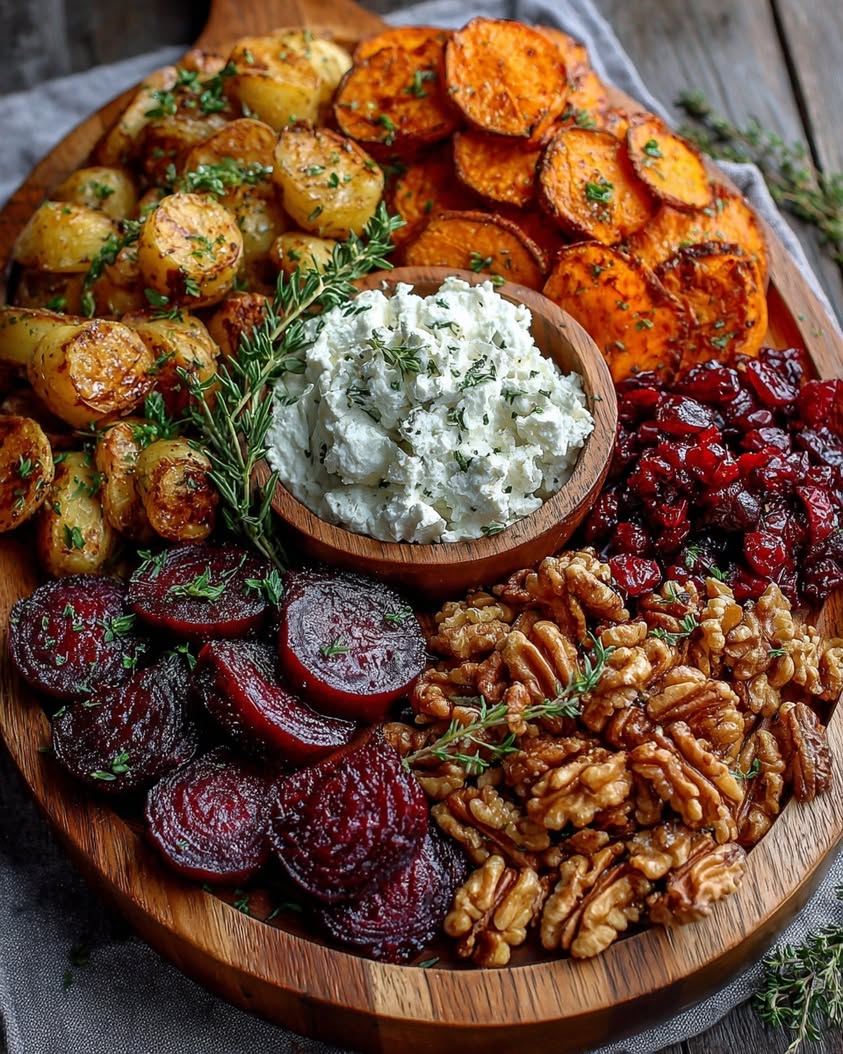
Roasted Beet & Sweet Potato Christmas Board with Whipped Feta & Cranberries: A Festive Centerpiece for Your Holiday Table
Welcome the holiday season with a stunning and delicious centerpiece that is as beautiful as it is flavorful. This Roasted Beet & Sweet Potato Christmas Board with Whipped Feta & Cranberries is the ultimate solution for festive entertaining. It combines earthy, sweet, and tangy elements on one gorgeous platter, creating a memorable experience for your guests. Moreover, it’s a vibrant, colorful dish that brings the spirit of Christmas to your table with minimal fuss.
Imagine tender, caramelized roasted beets and sweet potatoes paired with a cloud of creamy, salty whipped feta. The addition of tart cranberries, crunchy nuts, and fresh herbs creates a symphony of textures and tastes. This board is not just a recipe; it’s an edible work of art designed for sharing and celebration. Consequently, it takes the stress out of holiday hosting by being mostly make-ahead, allowing you to enjoy the party alongside your guests.
Ultimately, this festive roasted beet and sweet potato board is a celebration of winter produce. It’s a healthy, vibrant, and utterly impressive dish that caters to a variety of dietary preferences. Whether you serve it as a hearty appetizer, a stunning side, or a vegetarian main, it promises to be the star of your holiday feast. Let’s dive into how you can create this show-stopping centerpiece for your own Christmas table.
Quick Recipe Highlights
- Flavor Profile: This board delivers a perfect balance. You get the earthy sweetness from the roasted beets and sweet potatoes, which contrasts beautifully with the tangy, salty whipped feta. Finally, the pop of tart cranberries and the freshness of herbs tie everything together harmoniously.
- Texture: Every bite offers a delightful contrast. The roasted vegetables are tender and caramelized, while the whipped feta is luxuriously smooth and creamy. Additionally, you get a satisfying crunch from toasted nuts and a juicy burst from the fresh cranberries.
- Aroma: As the vegetables roast, your kitchen will fill with the warm, sweet scent of caramelizing roots and herbs. The whipped feta adds a subtle, tangy dairy note, while fresh rosemary or thyme provides an earthy, aromatic backbone that screams holiday comfort.
- Visual Appeal: This board is a feast for the eyes with its stunning red and orange hues from the beets and sweet potatoes. The white whipped feta and green herbs create a beautiful Christmas color palette that looks spectacular on any table.
- Skill Level Needed: This recipe is perfect for cooks of all levels. It involves simple techniques like chopping, roasting, and blending. Therefore, even a beginner can achieve impressive, restaurant-quality results with ease.
- Special Equipment: You only need basic kitchen tools: a good baking sheet, a food processor or blender for the feta, and a large wooden board or platter for serving. A sharp knife for chopping vegetables is also essential.
Recipe Overview
- Difficulty Level: This festive roasted beet and sweet potato board is remarkably easy to assemble. The most complex task is roasting the vegetables, which is largely hands-off. The whipped feta comes together in minutes in a food processor. Consequently, the overall difficulty is low, making it accessible for holiday hosts who may be preparing multiple dishes.
- Category: This versatile dish straddles several categories beautifully. It functions perfectly as a shareable appetizer or a stunning side dish for a holiday roast. For a vegetarian-focused meal, it can even serve as a hearty and satisfying main course.
- Cuisine: While not tied to one specific tradition, this board draws inspiration from Mediterranean and modern American cuisine. The use of feta, olive oil, and herbs is classically Mediterranean. Meanwhile, the concept of a abundant, vegetable-forward “board” is a contemporary entertaining trend.
- Cost: This recipe is quite cost-effective, especially when root vegetables are in season. Beets, sweet potatoes, and onions are inexpensive staples. Feta cheese and nuts represent the primary cost, but they go a long way. Overall, you can create an impressive platter for a crowd without breaking the bank.
- Season: This dish is quintessentially a winter and holiday recipe. Beets and sweet potatoes are at their peak in the colder months, offering the best flavor and texture. Their warm colors and hearty nature are perfectly suited for Christmas and Thanksgiving gatherings.
- Occasion: It is ideal for any festive gathering where sharing food is central. Think Christmas Eve dinners, holiday potlucks, Friendsgiving, or even a cozy New Year’s Eve party. It’s also excellent for a special weekend brunch or a visually striking addition to a buffet table.
Why You’ll Love This Recipe
First and foremost, the taste and texture appeal of this board is undeniable. The natural sugars in the beets and sweet potatoes caramelize during roasting, creating deep, complex sweetness. This contrasts spectacularly with the bright, tangy creaminess of the whipped feta. Every component, from the juicy cranberries to the crunchy nuts, adds a new layer of interest, ensuring that no two bites are exactly the same. It’s a sensory experience that delights the palate from start to finish.
From a convenience standpoint, this recipe is a holiday host’s dream. A significant portion of the work can be done ahead of time. You can roast the vegetables and prepare the whipped feta hours in advance. When guests arrive, you simply need to artfully arrange everything on a board. This forward planning means you spend less time in the kitchen and more time enjoying the celebration with your loved ones.
Nutritionally, this festive board is packed with benefits. Beets and sweet potatoes are excellent sources of fiber, vitamins, and antioxidants. They provide sustained energy without heaviness. The feta offers protein and calcium, while the nuts contribute healthy fats. Compared to many rich holiday dishes, this platter feels nourishing and vibrant. It’s a way to indulge in celebration while still feeding your body well.
The social and entertaining value of a shareable board cannot be overstated. It naturally encourages conversation and interaction as guests gather around to serve themselves. A beautiful board like this becomes a focal point of your party. It feels abundant, generous, and inviting, setting a warm and welcoming tone for your entire holiday meal. It takes the pressure off formal plating and allows everyone to eat at their own pace.
Finally, this recipe is wonderfully cost-effective and accessible. The ingredients are easy to find at any grocery store, with no exotic or expensive items required. You can easily scale it up or down depending on your guest count. Additionally, it’s naturally vegetarian and can be adapted for other dietary needs with simple swaps. This versatility and affordability make it a reliable go-to for festive occasions year after year.
Historical Background and Cultural Significance
The concept of serving food on a shared board or platter has ancient roots. Historically, communal eating from a central dish was a sign of trust and fellowship. In many cultures, a lavishly filled board symbolized abundance and hospitality. Our modern “charcuterie” or “cheese board” trend directly descends from this tradition. This festive roasted beet and sweet potato board is a vegetable-centric twist on that classic idea, reflecting today’s desire for vibrant, plant-forward celebration food.
Beets and sweet potatoes both hold significant cultural importance in winter traditions. Beets have been a staple in Eastern European cuisines for centuries, often appearing in holiday soups like borscht. Their deep red color is associated with vitality and warmth in the cold months. Similarly, sweet potatoes, native to the Americas, became a cornerstone of fall and winter feasts, especially in the United States around Thanksgiving. Combining them on one board marries these diverse culinary histories into a single, celebratory dish.
The evolution of this specific recipe is a product of contemporary food trends. Firstly, the rise of vegetarian and “eat the rainbow” movements encouraged more colorful, vegetable-based centerpieces. Secondly, the popularity of whipped dips and spreads, like whipped feta, added a modern, luxurious texture to simple ingredients. Finally, the desire for “instagrammable” food that is beautiful and shareable cemented the appeal of such a visually striking board. It’s a recipe born from the intersection of health consciousness, visual food culture, and the timeless love of gathering around good food.
Regional variations of this board are endless, which is part of its charm. In the Mediterranean, one might add olives, artichoke hearts, and different herbs. A Middle Eastern variation could include pomegranate seeds instead of cranberries and a drizzle of tahini. For a North American twist, maple-roasted walnuts or pecans would be perfect. This adaptability is key to its success; it provides a framework that welcomes personalization based on local ingredients and family traditions, making it a truly global holiday dish.
Ingredient Deep Dive
Beets: Beets have a history dating back to ancient times, originally cultivated for their greens. The root itself became prized for its sweetness and vibrant color, which comes from betalain pigments. Nutritionally, beets are rich in folate, manganese, and nitrates, which can support heart health and stamina. When selecting beets, look for firm, smooth bulbs with vibrant greens attached if possible. Store them unwashed in the refrigerator. For roasting, golden beets can be used for a less messy, equally sweet alternative.
Sweet Potatoes: Contrary to popular belief, sweet potatoes are not yams; they are a distinct root vegetable native to Central and South America. They were a vital crop for indigenous peoples and later became a Southern U.S. staple. They are an exceptional source of beta-carotene (which converts to Vitamin A), Vitamin C, and fiber. Choose firm sweet potatoes without soft spots or wrinkles. Store them in a cool, dark, well-ventilated place—not the refrigerator. For a different flavor, you could substitute with cubed butternut squash.
Feta Cheese: Feta is a brined curd cheese with a protected designation of origin (PDO) in Greece, traditionally made from sheep’s milk or a sheep/goat blend. Its tangy, salty flavor and crumbly texture are iconic. Whipping it transforms it into a smooth, spreadable delight. Feta provides protein, calcium, and beneficial fats. For the best whipped texture, use a block of feta in brine, not pre-crumbled cheese. If you need a dairy-free version, whipped tofu with lemon and salt can mimic the tangy creaminess.
Fresh Cranberries: The American cranberry is one of only three commercially grown fruits native to North America. Native Americans used them for food, dye, and medicine. They are famously tart due to high levels of proanthocyanidins, which also have antioxidant properties. Their bright red color is perfect for Christmas. Use fresh, firm berries that bounce when dropped. For a cooked alternative, you can quickly simmer a handful with a touch of orange juice and sugar to make a quick compote for spreading.
Common Mistakes to Avoid
- Overcrowding the Pan: Piling all the vegetables onto one baking sheet causes them to steam instead of roast. Consequently, you’ll get soggy, steamed cubes instead of caramelized, crispy-edged ones. Always use two sheets if needed to ensure each piece has space.
- Not Drying the Vegetables: Skipping the step of patting the cubed beets and sweet potatoes dry means excess moisture will hinder browning. Take a moment with a clean kitchen towel to absorb surface water for the best roast.
- Underseasoning the Vegetables: Vegetables need ample seasoning before roasting. Don’t be shy with the salt, pepper, and herbs. The seasoning should penetrate during cooking, as it’s harder to add flavor evenly after they’re roasted and on the board.
- Using Pre-Crumbled Feta: Pre-crumbled feta often contains anti-caking agents that can prevent it from whipping up smoothly. For a silky, cloud-like texture, always start with a solid block of feta stored in brine.
- Skipping the Oil in the Whipped Feta: The olive oil (or heavy cream) is crucial for transforming the crumbly feta into a spreadable dip. Without enough fat, the mixture will be grainy and difficult to blend properly.
- Arranging the Board Too Early: If you assemble the entire board hours ahead, the whipped feta can dry out and the vegetables can lose their warmth. Prepare components ahead, but do the final assembly just before serving for the best textures.
- Forgetting to Toast the Nuts: Raw nuts can taste bland and lack crunch. Taking five minutes to toast walnuts, pecans, or almonds in a dry pan unlocks their oils and deepens their flavor dramatically, adding a necessary textural element.
- Neglecting Acid Balance: The rich, sweet, and salty components need a bright counterpoint. If you omit the cranberries or a drizzle of balsamic glaze, the board can taste one-dimensional. Always include an acidic element to cut through the richness.
Essential Techniques
Uniform Chopping: Cutting your beets and sweet potatoes into even, one-inch cubes is the most important technique for this recipe. Consistent size ensures everything cooks at the same rate, preventing some pieces from being burnt while others are undercooked. Use a sharp chef’s knife and take your time. A good visual cue is that all pieces should look roughly the same when scattered on the pan.
High-Heat Roasting: Roasting at a high temperature (around 400°F) is key for caramelization. This process, called the Maillard reaction, creates complex, sweet, and savory flavors on the surface of the vegetables. The pitfall is roasting at too low a temperature, which simply dries them out. Success is visible when the edges of the cubes are golden brown and slightly crisp, while the interiors are fork-tender.
Whipping the Feta: The technique here is to let your food processor do the work. Start by pulsing the broken feta block to crumble it, then stream in the olive oil or cream while the motor runs. Process for a full 1-2 minutes until completely smooth and fluffy. The common mistake is stopping too soon, resulting in a grainy texture. You’ll know it’s perfect when it has the consistency of soft whipped cream cheese.
Pro Tips for Perfect Roasted Beet & Sweet Potato Christmas Board
First, wear disposable gloves when peeling and cutting beets to avoid stained hands. Secondly, toss the beet cubes in oil separately from the sweet potatoes before combining them on the tray; this prevents the sweet potatoes from turning pink. For the whipped feta, add a tablespoon of honey or maple syrup to the food processor for a subtle sweetness that complements the vegetables beautifully.
Use fresh herbs generously. Rosemary and thyme are classic, but fresh dill or chives offer a different, bright flavor profile. Toast your nuts with a pinch of salt and a sprinkle of cinnamon or smoked paprika for an extra festive touch. When arranging, place the bowl of whipped feta first, then build the vegetables and garnishes around it for a balanced, abundant look.
If preparing ahead, store the roasted vegetables and whipped feta in separate airtight containers in the fridge. Let the vegetables come to room temperature and briefly re-warm them in the oven before assembling. Finally, have a small dish of high-quality extra virgin olive oil and a flaky sea salt, like Maldon, on the table for guests to add a final luxurious drizzle and crunch.
Variations and Adaptations
For regional variations, consider a Mediterranean twist with added Kalamata olives, marinated artichokes, and roasted chickpeas. A Middle Eastern version could feature pomegranate arils instead of cranberries, a sprinkle of za’atar on the vegetables, and a drizzle of date syrup. Seasonally, in spring, you could use roasted asparagus and radishes with a lemon-herb whipped goat cheese.
Dietary modifications are straightforward. For a vegan board, substitute the whipped feta with a whipped cannellini bean or cashew dip seasoned with lemon juice and nutritional yeast. Make it gluten-free by ensuring any added crackers or breads on the side are certified gluten-free. For a nut-free version, use toasted pumpkin seeds (pepitas) or sunflower seeds instead of walnuts or pecans.
Flavor variations are endless. Toss the vegetables with harissa paste or smoked paprika before roasting for a smoky, spicy kick. Add orange zest to the whipped feta for a citrus note. Incorporate different cheeses, like whipping goat cheese with the feta for a tangier spread. For texture, include crispy roasted chickpeas or crunchy seed clusters on the board alongside the soft vegetables and creamy dip.
Serving and Presentation Guide
Plating is where this dish truly shines. Start with a large wooden board, slate slab, or even a beautiful platter. Place the bowl of whipped feta slightly off-center. Arrange the mounds of warm roasted beets and sweet potatoes around it, allowing them to spill into each other slightly. This creates a casual, abundant feel. Scatter the fresh cranberries and toasted nuts in the gaps.
Garnishing is crucial for visual appeal and flavor. Tuck in whole sprigs of fresh rosemary or thyme. Sprinkle with finely chopped parsley or chives for a pop of green. A final drizzle of balsamic glaze or pomegranate molasses in zig-zags over the vegetables adds shine and sweetness. For accompaniments, provide crusty bread, sliced baguette, or an assortment of crackers and crispbreads around the board for scooping and spreading.
Wine and Beverage Pairing
The earthy sweetness of the vegetables and tangy saltiness of the feta pair wonderfully with a variety of wines. A crisp, acidic white like Sauvignon Blanc or Pinot Grigio cuts through the richness beautifully. Alternatively, a light-bodied, fruity red with low tannins, such as a Pinot Noir or Beaujolais, complements the earthiness of the beets without overwhelming the dish.
For non-alcoholic alternatives, consider sparkling water with a twist of orange or a few cranberries frozen in the ice cubes. A tart cranberry spritzer (cranberry juice mixed with club soda) echoes the flavors on the board. Warm spiced apple cider or a ginger-forward mocktail also pairs wonderfully with the wintery, spiced notes of the roasted vegetables.
Storage and Shelf Life
Store leftover components separately for best quality. Place roasted vegetables in an airtight container in the refrigerator for up to 4 days. The whipped feta should be stored in a sealed container for up to 5 days. Note that the vegetables will soften over time. Reheat the vegetables in a 350°F oven or air fryer until warmed through to restore some crispness; avoid the microwave, which will make them soggy.
The assembled board is not meant for long-term storage. If you have leftovers after serving, scoop the whipped feta back into a container and transfer the remaining vegetables and garnishes to another. The nuts will lose their crunch if stored with moist ingredients. This dish does not freeze well, as the textures of the roasted vegetables and whipped dairy will degrade significantly upon thawing.
Make Ahead Strategies
This recipe is ideal for make-ahead preparation. Up to two days in advance, peel and cube the beets and sweet potatoes. Store them in separate containers or bags in the refrigerator. The day before, roast the vegetables, let them cool completely, and refrigerate. Also, prepare the whipped feta and store it covered. Toast the nuts and store them at room temperature.
On the day of serving, take the vegetables and feta out of the fridge about 30-60 minutes before assembling. Briefly reheat the vegetables on a baking sheet in a 375°F oven for 10-15 minutes just to take the chill off and refresh their texture. Then, assemble your board with the warmed vegetables, whipped feta, and all garnishes. This strategy ensures every element is at its peak flavor and texture for your guests.
Scaling Instructions
Halving this recipe for a smaller gathering is simple. Use one medium beet and one medium sweet potato. Reduce all other ingredients proportionally. The roasting time may be slightly less, so check for doneness at the 25-minute mark. You can whip a smaller amount of feta in a mini food processor or even with a hand mixer.
To double or triple the recipe for a large party, you will need multiple baking sheets. Roast the vegetables in batches or on separate oven racks, rotating the sheets halfway through cooking. For the whipped feta, you may need to make two batches in your food processor to avoid overfilling it. When arranging, consider using two boards or one very large platter to prevent overcrowding and maintain the beautiful presentation.
Nutritional Deep Dive
This festive board offers a well-rounded nutritional profile. The beets and sweet potatoes are complex carbohydrates, providing sustained energy and a wealth of fiber to support digestion. They are also rich in vitamins A (from beta-carotene in sweet potatoes) and C, as well as minerals like potassium and manganese. The feta cheese contributes protein and calcium, while the nuts and olive oil provide heart-healthy monounsaturated fats.
From a dietary standpoint, one serving offers a balance of macronutrients without excessive calories. The fiber and protein content promote satiety, helping to prevent overindulgence on other holiday treats. For weight management, it’s a satisfying choice that focuses on whole, nutrient-dense foods. Remember, portion size on a sharing board is flexible, allowing guests to take what they feel is appropriate.
Dietary Adaptations
Gluten-Free: This recipe is naturally gluten-free. Simply ensure that any bread, crackers, or other accompaniments served alongside are certified gluten-free.
Dairy-Free/Vegan: Replace the whipped feta with a creamy plant-based dip. A great option is to blend soaked cashews or canned white beans with lemon juice, nutritional yeast, garlic, and salt until smooth. Use olive oil instead of cream. Check that any bread served is vegan.
Low-Carb/Keto: Focus the board on the whipped feta, nuts, and cranberries in very small amounts. Replace the beets and sweet potatoes with low-carb roasted vegetables like cauliflower, broccoli, or Brussels sprouts.
Paleo: Omit the dairy-based whipped feta. Create a compliant “whipped” dip from avocado or a coconut milk-based blend. Use only olive oil or avocado oil for roasting, and ensure nuts are paleo-approved (e.g., walnuts, pecans).
Troubleshooting Guide
Vegetables Are Soggy: This is almost always due to overcrowding on the pan or insufficient oven temperature. Next time, spread them in a single layer with space between pieces and ensure your oven is fully preheated. For a quick fix, spread the soggy leftovers on a pan and broil for a few minutes to crisp up the edges.
Whipped Feta Is Grainy: You likely didn’t process it long enough or used pre-crumbled feta. To salvage it, add another tablespoon of olive oil or a splash of cream and process for a full additional minute. If it’s still not smooth, it will still taste great, just with a different texture.
Beets Stained Everything Pink: To prevent this in the future, toss the beet cubes in oil separately in a bowl, then add them to the pan. You can also roast the beets on a separate piece of parchment paper from the sweet potatoes. If it’s already happened, embrace the pink—it’s festive!
Board Looks Sparse: Fill empty spaces with extra garnishes. Add clusters of grapes, extra herb sprigs, additional nuts, or even some dark chocolate pieces for a surprise. The key to a beautiful board is abundance and variety.
Recipe Success Stories
Readers have shared wonderful adaptations of this festive roasted beet and sweet potato board. One home cook added crumbled crispy bacon and blue cheese for a “loaded” version that was a hit at her football holiday party. Another, hosting vegan friends, used the whipped white bean dip and reported it was devoured even by the meat-eaters. Many note that it’s become their requested contribution for potlucks because it travels well and always looks impressive.
Photography tips from successful makers include using natural light near a window and shooting from directly above to capture the full, beautiful spread. Adding a few festive elements in the frame, like a sprig of holly, a Christmas ornament, or a vintage napkin, can enhance the holiday feel. The most important tip is to take the photo quickly after assembling, while the vegetables are still steaming slightly and the herbs look fresh.
Frequently Asked Questions
Q: Can I use canned beets?
A: We don’t recommend canned beets for this recipe. They are already cooked and packed in liquid, so they will not roast properly. They will become mushy and lack the caramelized flavor that is essential to the dish. Fresh beets are worth the extra peeling effort.
Q: How do I prevent the beets from staining my cutting board?
A: Immediately wash your cutting board with soap and water after use. For plastic boards, a bleach solution can help. Alternatively, you can peel and cube the beets on a piece of parchment paper or a plate you don’t mind staining, or use a dedicated board for brightly colored vegetables.
Q: Can I make the whipped feta without a food processor?
A: Yes, you can use a high-powered blender. If you don’t have either, you can mash the feta with a fork until as fine as possible, then vigorously whisk in the olive oil or cream. The texture will be more rustic but still delicious.
Q: What can I use instead of fresh cranberries?
A: Dried cranberries are a fine substitute, though they are sweeter. Pomegranate arils are an excellent alternative with a similar tart pop and festive color. Alternatively, a dollop of whole-berry cranberry sauce on the side works well.
Q: Is this board served warm or cold?
A: It’s best served warm or at room temperature. The vegetables should be warm or room temp, and the whipped feta should be cool but not ice-cold. This temperature contrast is part of the appeal.
Q: Can I prepare the entire board the night before?
A: It’s not recommended to fully assemble the board overnight. The vegetables will release moisture into the whipped feta and make the nuts soggy. Prepare all components separately, then assemble an hour before serving for the best quality.
Q: What are the best herbs to use?
A: Rosemary and thyme are classic, woody herbs that pair perfectly with roasted roots. Fresh dill offers a lighter, grassy note. Sage is also wonderful, especially if fried briefly for a garnish. Use what you love and have available.
Q: How far in advance can I roast the vegetables?
A: You can roast the vegetables up to 2 days in advance. Store them covered in the refrigerator. Reheat them in the oven before assembling to restore their texture and warmth.
Additional Resources
If you love this festive roasted beet and sweet potato board, explore other vegetable-centric celebration dishes. A roasted carrot and hummus board with za’atar is a great option, or a winter crudité platter with a rich romesco sauce. For more holiday side inspiration, consider recipes for maple-glazed Brussels sprouts, creamy potato gratin, or a vibrant citrus salad.
To master the techniques used here, practice basic knife skills for uniform chopping and learn the principles of high-heat roasting for other vegetables. Understanding how to balance flavors—sweet, salty, tangy, crunchy—will make you a more confident cook for any entertaining occasion. Finally, invest in a few beautiful serving boards or platters in different sizes; they are versatile tools that make any spread look intentional and inviting.
{“success”:true,”message”:”Recipe created successfully”,”post_id”:8167,”tasty_recipe_id”:8167,”shortcode”:” Print
Roasted Beet & Sweet Potato Christmas Board with Whipped Feta & Cranberries
Description
A festive, colorful holiday board featuring roasted beets and sweet potatoes, creamy whipped feta, and tart cranberries, perfect for sharing as an appetizer or side dish.
Ingredients
For the Crust:
- 2 medium beets, peeled and cubed
- 2 large sweet potatoes, peeled and cubed
- 2 tablespoons olive oil
- 1 teaspoon salt
- 1/2 teaspoon black pepper
- 1 teaspoon dried thyme
- 8 oz feta cheese, crumbled
- 1/4 cup Greek yogurt
- 1 tablespoon honey
- 1/2 cup fresh cranberries
- 1/4 cup chopped walnuts
- Fresh rosemary sprigs for garnish
Instructions
1. Prepare the Crust:
- Preheat oven to 400°F (200°C). Toss beets and sweet potatoes with olive oil, salt, pepper, and thyme on a baking sheet.
- Roast for 25-30 minutes until tender and slightly caramelized, stirring halfway through.
- While vegetables roast, blend feta, Greek yogurt, and honey in a food processor until smooth and creamy.
- Spread whipped feta on a serving board or platter. Arrange roasted beets and sweet potatoes around it.
- Scatter cranberries and walnuts over the board. Garnish with rosemary sprigs and serve warm or at room temperature.
Notes
You can customize the seasonings to taste.

I’m Billy, a classically trained culinary school graduate from The Culinary Institute of America with over 12 years in the restaurant industry and over 19 years of cooking experience.