
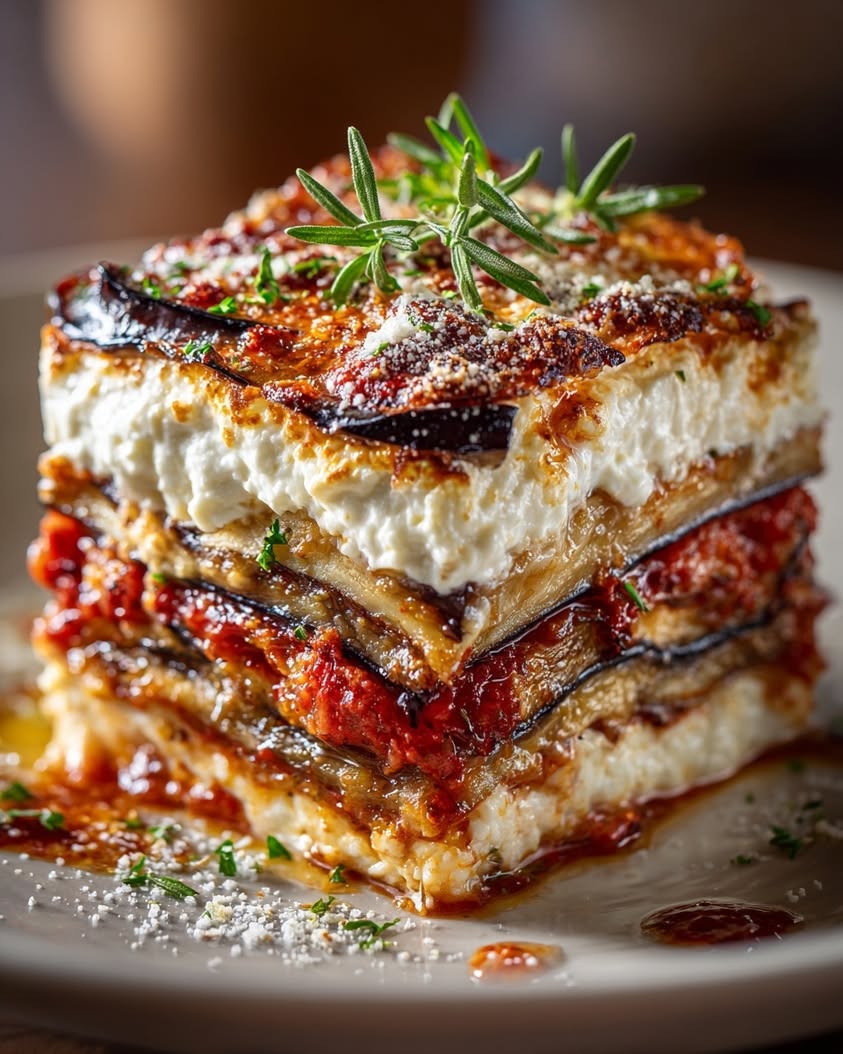
Layered Eggplant Ricotta Bake: A Creamy, Roasted Delight
Imagine a dish that captures the essence of rustic Italian comfort food while feeling elegant enough for a dinner party. This Layered Eggplant Ricotta Bake is exactly that. It transforms simple, humble ingredients into a stunning centerpiece. The process begins with roasting eggplant slices until they become tender and caramelized. Meanwhile, you prepare a creamy, herbed ricotta filling that is impossibly light. Finally, you assemble everything with rich marinara and bubbling mozzarella. The result is a vegetarian casserole that is both hearty and sophisticated.
Moreover, this recipe is a celebration of texture and flavor. Each bite offers a perfect harmony. You get the melt-in-your-mouth softness of the roasted eggplant. Then, you experience the cloud-like richness of the seasoned ricotta. Additionally, the tangy tomato sauce and stretchy, golden cheese bring everything together. Consequently, this dish satisfies cravings for something cheesy and baked without being overly heavy. It is a fantastic way to enjoy seasonal produce. Ultimately, it proves that meatless meals can be incredibly satisfying and deeply flavorful.
Furthermore, this Layered Eggplant Ricotta Bake is surprisingly straightforward to prepare. It uses accessible ingredients and simple techniques. For instance, roasting the eggplant is mostly hands-off time. Similarly, mixing the ricotta filling takes just minutes. The assembly is fun and creative, like building a flavorful lasagna. This dish is perfect for a cozy family dinner or for meal prepping. It reheats beautifully, often tasting even better the next day. Therefore, whether you are a seasoned cook or a beginner, you can achieve fantastic results with this guide.
Quick Recipe Highlights
- Flavor Profile: This bake delivers a complex symphony of tastes. Savory roasted eggplant meets bright, herby ricotta and tangy marinara. The melted mozzarella adds a rich, salty finish that ties every layer together beautifully.
- Texture: The texture contrast is absolutely key. Silky, tender eggplant slices alternate with fluffy ricotta and gooey cheese. The top layer gets delightfully crispy and golden brown in the oven.
- Aroma: While baking, your kitchen will fill with an irresistible fragrance. You will smell the earthy eggplant, the garlic and herbs from the ricotta, and the sweet acidity of the tomato sauce all mingling together.
- Visual Appeal: This dish is a feast for the eyes with its beautiful stripes of purple eggplant, white ricotta, and red sauce. The golden, bubbly cheese crust on top makes it look incredibly inviting straight from the oven.
- Skill Level Needed: This is an accessible recipe for most home cooks. It requires basic skills like slicing, mixing, and layering. There is no fancy knife work or complex techniques involved, making it very approachable.
- Special Equipment: You only need a few standard kitchen tools. A good baking sheet, a mixing bowl, and a 9×13 inch casserole dish are essential. A mandoline slicer can make slicing the eggplant faster and more uniform, but a sharp knife works perfectly.
Recipe Overview
- Difficulty Level: We rate this recipe as easy because it breaks down into simple, manageable steps. Most of the work is passive roasting time. The assembly is intuitive, similar to making lasagna. Consequently, even novice cooks can follow along and create an impressive dish without stress.
- Category: This dish fits wonderfully into several meal categories. It is a fantastic vegetarian main course, a substantial side dish for grilled meats, or a standout potluck contribution. It is also excellent for make-ahead meals and elegant enough for entertaining.
- Cuisine: This bake is firmly rooted in Italian culinary traditions, specifically reminiscent of dishes like eggplant Parmesan or a vegetable lasagna. It uses classic Mediterranean ingredients like eggplant, ricotta, tomatoes, and basil, celebrating simple, high-quality components.
- Cost: This is a very budget-friendly recipe, especially when eggplants are in season. Ricotta and mozzarella are relatively inexpensive cheeses. You can use a high-quality store-bought marinara to save time, or make your own from canned tomatoes for even greater savings.
- Season: Late summer and early fall are the ideal seasons for this recipe. This is when eggplants are at their peak flavor, sweetness, and affordability. However, it is a comforting dish that can be enjoyed year-round with great results.
- Occasion: This versatile bake suits many occasions. Serve it for a casual Sunday family supper, as the star of a meatless Monday, or as part of a festive holiday spread for vegetarian guests. It travels well and is always a crowd-pleaser.
Why You’ll Love This Recipe
First and foremost, the taste and texture of this Layered Eggplant Ricotta Bake are utterly divine. The roasted eggplant develops a deep, almost smoky sweetness that pairs perfectly with the creamy, garlicky ricotta. Each layer contributes something special, creating a mouthful that is complex yet comforting. The melted cheese provides a satisfying stretch and a salty punch. This dish is the ultimate comfort food that feels gourmet. It will make you forget all about meat-based casseroles.
Next, consider the convenience and preparation benefits. This recipe is a master of efficient kitchen time. While the eggplant roasts, you can prepare the ricotta mixture and gather other components. The assembly is quick and forgiving. Additionally, you can prepare parts of it ahead of time. For example, roast the eggplant slices a day in advance. This makes final assembly on a busy weeknight a total breeze. It is a strategic recipe for easy, impressive meals.
Furthermore, this bake offers notable nutritional advantages. Eggplant is low in calories but high in fiber and antioxidants like nasunin. Ricotta cheese provides a good source of protein and calcium. By using a light hand with the cheese and focusing on vegetables, you create a balanced meal. It is inherently vegetarian and can be easily adapted to be gluten-free. This dish proves that eating well can also mean eating deliciously and heartily.
Another key point is its social and entertaining value. This Layered Eggplant Ricotta Bake is a spectacular dish to bring to a potluck or serve to guests. It looks impressive when presented in its baking dish. Moreover, it slices neatly into beautiful portions. It caters wonderfully to vegetarians without requiring a separate meal. It is a conversation starter and a guaranteed hit. People will always ask for the recipe.
Finally, this recipe is remarkably cost-effective and accessible. The ingredients are pantry staples and common grocery items. You do not need any expensive or hard-to-find components. Eggplant is often very affordable, especially in season. This makes it a fantastic way to feed a family or a group without straining your budget. It is a luxurious-tasting dish that is humble in its origins and cost.
Historical Background and Cultural Significance
The story of this dish is intertwined with the history of eggplant in Italian cuisine. Eggplant, or “melanzana,” was not originally native to Italy. It was introduced by Arab traders to Sicily and Southern Italy around the Middle Ages. Initially, it was viewed with suspicion and even called “mala insana” or “unhealthy apple.” However, over centuries, Italian cooks, particularly in regions like Campania and Sicily, embraced the vegetable. They developed iconic dishes like Melanzane alla Parmigiana, which shares a direct lineage with our layered bake.
This Layered Eggplant Ricotta Bake carries significant cultural importance as a testament to “cucina povera” or “poor kitchen” traditions. This style of cooking focuses on transforming inexpensive, readily available ingredients into extraordinary meals. Eggplant, ricotta (often made from leftover whey), and tomatoes were staples for many families. Layering them together created a hearty, nutritious, and satisfying dish that could feed many. It represents resourcefulness and a deep respect for ingredients.
The evolution of the recipe shows how culinary traditions adapt. The classic Eggplant Parmesan is typically breaded and fried before layering. This version takes a lighter, modern approach by roasting the eggplant. Roasting highlights the vegetable’s natural sweetness without the added oil from frying. The inclusion of a well-seasoned ricotta layer is a common variation found in many family recipes. It adds a creamy texture that contrasts beautifully with the tomato sauce. This evolution reflects contemporary desires for both flavor and healthier preparation methods.
Regional variations of this concept abound throughout Italy and the Mediterranean. In Greece, you might find a similar dish called “Moussaka,” which often includes spiced meat. In the Middle East, layers of eggplant appear in dishes like “Sheikh al-Mahshi.” In Southern Italy, some versions include hard-boiled eggs or salami between layers. Other variations might use a béchamel sauce instead of or in addition to the ricotta. These regional twists highlight the versatility of the core concept—layering eggplant with rich, savory elements and baking it to perfection.
Ingredient Deep Dive
Let us start with the star: eggplant. This versatile fruit, often treated as a vegetable, has a rich history spanning Asia, the Middle East, and Europe. It is a nutritional powerhouse, offering dietary fiber, vitamins B1 and B6, and potassium. Notably, it contains antioxidants like nasunin in its skin. When selecting eggplants, choose ones that feel heavy for their size with smooth, shiny, taut skin and a bright green stem. Avoid any with soft spots or wrinkles. Store them at cool room temperature for a day or two, or in the refrigerator’s crisper drawer for up to a week. For substitutions, consider using large zucchini or portobello mushroom caps for a different but delicious layered bake.
Next, examine ricotta cheese. This fresh Italian cheese has a history dating back to the Bronze Age, made from the whey leftover from producing other cheeses. It is a excellent source of protein and calcium while being lower in fat and sodium than many hard cheeses. When buying ricotta, seek out whole-milk ricotta for the creamiest texture and richest flavor. Always drain any excess liquid from the container before using. Store ricotta tightly sealed in the refrigerator and use it within a few days of opening. If you need a substitute, cottage cheese (blended until smooth) or a soft goat cheese can work, though the flavor profile will change.
Now, consider the marinara sauce. This simple tomato sauce is a cornerstone of Italian-American cooking. It provides lycopene, an antioxidant linked to many health benefits. You can use a high-quality store-bought sauce for convenience or make a quick version by simmering crushed San Marzano tomatoes with garlic, onion, and herbs. The key is to choose a sauce you enjoy eating on its own. For storage, an opened jar of sauce should be refrigerated and used within a week. For substitutions, a simple tomato passata or even a homemade roasted red pepper sauce would create a wonderful variation.
Finally, look at the mozzarella. Traditionally made from buffalo or cow’s milk, fresh mozzarella has a delicate, milky flavor. The low-moisture, block-style mozzarella specified here melts beautifully and creates that iconic stretch. It provides protein and calcium. For the best melt and flavor, shred the cheese yourself from a block; pre-shredded cheese contains anti-caking agents that can make it grainy when melted. Store unopened mozzarella in the refrigerator. As a substitute, other good melting cheeses like Fontina, Provolone, or a mild Monterey Jack could be used successfully.
Common Mistakes to Avoid
- Skipping the Salting Step: Salting eggplant draws out excess moisture and bitter compounds. If you skip this, your bake may end up watery and the eggplant texture can be spongy. Always salt, let it sit, and then pat the slices thoroughly dry.
- Underseasoning the Ricotta: Ricotta on its own is quite mild. Forgetting to season it generously with salt, pepper, garlic, and herbs will result in a bland layer that gets lost. Taste the ricotta mixture before assembling and adjust the seasoning.
- Overcrowding the Baking Sheet: When roasting the eggplant, give the slices space. Overcrowding steams them instead of roasting, preventing proper caramelization and moisture evaporation. Use two sheets if necessary for a single layer.
- Using Watery Marinara Sauce: A thin, watery sauce will make the entire casserole soggy. Choose a thick, robust marinara or simmer your sauce to reduce it slightly before assembling. The layers need structure.
- Not Draining the Ricotta: Even if the container seems dry, ricotta often holds liquid. Draining it in a fine-mesh strainer for 10-15 minutes ensures your filling is thick and creamy, not loose and wet.
- Cutting the Eggplant Too Thick or Too Thin: Slices about 1/4-inch thick are ideal. Thicker slices won’t become tender enough; thinner slices can overcook and fall apart. Aim for uniformity so they cook evenly.
- Forgetting to Grease the Baking Dish: This seems simple, but it is crucial. A well-greased dish ensures easy serving and beautiful, intact portions. Use olive oil or cooking spray on the bottom and sides.
- Under-baking at the End: The final bake time is not just about heating through. It is essential for the flavors to meld and for the top to become beautifully golden and bubbly. Be patient and let it achieve that perfect finish.
Essential Techniques
Salting and Draining Eggplant: This technique is vital for texture. Salting draws out moisture via osmosis, which concentrates flavor and removes potential bitterness. To master it, slice the eggplant, salt both sides liberally, and let it rest on a rack for 30-60 minutes. You will see beads of moisture form. Then, firmly pat each slice dry with paper towels. The common pitfall is not patting them dry enough, leaving excess water on the surface. Success is visible when the slices look slightly wilted and feel less firm.
Roasting for Caramelization: Roasting, as opposed to frying, develops deep flavor with less oil. The high heat causes the natural sugars in the eggplant to caramelize. For success, brush slices lightly with oil, arrange them in a single layer, and do not move them too early. A key pitfall is flipping the slices before they have released from the pan and developed a sear. Wait until the bottoms are golden brown. The visual cue for success is tender slices with browned, slightly crispy edges.
Creating a Flavorful Ricotta Filling: This technique transforms plain ricotta into a seasoned layer. The goal is to incorporate air and distribute flavors evenly. Start with well-drained ricotta. Add your seasonings—salt, pepper, garlic, herbs, lemon zest. Use a fork to mix gently but thoroughly. Overmixing can make it gummy. The pitfall is adding wet ingredients like raw egg without adjusting, which can make the filling loose. Success looks like a homogenous, fluffy mixture that holds its shape on a spoon.
Pro Tips for Perfect Layered Eggplant Ricotta Bake
Use a mandoline slicer for perfectly even eggplant rounds. This ensures uniform cooking and a professional-looking layered presentation. Just remember to use the safety guard.
Let the assembled bake rest for 10-15 minutes after coming out of the oven. This allows the layers to set, making it much easier to cut clean, beautiful portions.
Add a pinch of red pepper flakes to the ricotta mixture. This introduces a subtle warmth that cuts through the richness and adds complexity to every bite.
For a deeper flavor, roast a whole head of garlic alongside the eggplant. Squeeze the soft, caramelized cloves into the ricotta mixture instead of using raw garlic.
If your eggplant slices are still releasing liquid after salting, press them gently between layers of paper towels or a clean kitchen towel to remove every last drop.
For a stunning golden top, brush the final layer of cheese with a very light drizzle of olive oil or melted butter before baking.
Fresh basil is a garnish with purpose. Add it after baking, not before. The heat wilts it instantly, preserving its bright color and fresh, peppery aroma.
Variations and Adaptations
For regional variations, explore a Greek-inspired version. Add a layer of sautéed spinach and feta cheese to the ricotta mixture. Alternatively, try a Turkish twist by incorporating a spice blend like baharat into the tomato sauce and using a mint garnish.
Seasonal adaptations are simple and rewarding. In spring, add layers of roasted asparagus or artichoke hearts. For a winter version, incorporate roasted cubes of butternut squash or sautéed wild mushrooms for an earthy depth.
Dietary modifications are straightforward. For a gluten-free bake, ensure your marinara sauce is certified gluten-free. To make it dairy-free, use a firm tofu ricotta blend and a plant-based mozzarella shred. For a keto adaptation, reduce the amount of onion in the sauce and carefully monitor the tomato content.
Flavor variations can personalize the dish. Stir sun-dried tomatoes or chopped kalamata olives into the ricotta. Add a tablespoon of pesto to the cheese mixture. Alternatively, use a spicy arrabbiata sauce instead of classic marinara for a kick.
Texture modifications can add interest. For a crunch, sprinkle toasted pine nuts or breadcrumbs between the layers. For extra creaminess, add a thin layer of béchamel sauce on top of the ricotta before adding the next layer of eggplant.
Presentation alternatives offer fun changes. Instead of a large rectangular bake, create individual portions in small ramekins or oven-safe bowls. This is elegant for dinner parties and ensures everyone gets a perfect, personal serving.
Serving and Presentation Guide
Plating techniques matter for visual appeal. For a family-style presentation, bring the bubbling dish straight to the table. For individual plates, use a wide, shallow bowl or plate. Slide a spatula underneath a portion, lift firmly, and tilt slightly to transfer the layered slice intact. Wipe the plate edge clean for a polished look.
Garnishing ideas elevate the dish instantly. A scattering of fresh basil or parsley is classic. For color and flavor, add a sprinkle of red pepper flakes, a drizzle of high-quality extra virgin olive oil, or a few shavings of Parmesan cheese. Microgreens also add a beautiful, fresh touch.
Traditional accompaniments keep the meal Italian-focused. A simple green salad with a lemony vinaigrette balances the richness. Crusty bread or garlic bread is essential for soaking up any delicious sauce left on the plate. For a heartier meal, serve with a side of Italian sausage or grilled chicken.
Modern serving suggestions might include pairing it with a farro salad or roasted broccolini. For a lighter meal, it stands beautifully alongside a simple tomato and cucumber salad. It also makes a fantastic filling for a sandwich the next day, served on a ciabatta roll.
Temperature considerations are key. This dish is best served hot and freshly baked, when the cheese is supremely stretchy. However, it is also delicious at room temperature, making it great for picnics or buffets. Reheat leftovers gently in the oven or a toaster oven to restore the texture.
Portion control tips are helpful. A standard 9×13 inch dish typically yields six generous servings or eight slightly smaller ones. Since it is quite rich, a smaller portion paired with a large salad is often perfectly satisfying. Use a sharp knife to cut clean portions.
Wine and Beverage Pairing
Wine pairings should complement the dish’s richness and acidity. A medium-bodied Italian red like Chianti Classico or Barbera is a classic choice. Their bright acidity cuts through the cheese and tomato beautifully. Alternatively, a fuller-bodied white like an oak-aged Chardonnay can stand up to the creamy ricotta. For a lighter option, a dry Rosé offers refreshing berry notes that work well with the roasted vegetables.
Non-alcoholic alternatives provide sophisticated pairing options. A sparkling water with a squeeze of lemon or lime cleanses the palate. For more flavor, try a tart cherry juice spritzer or a ginger beer. Iced herbal tea, like basil or mint, can echo the herbal notes in the dish. A tomato-based mocktail could also be a fun, thematic pairing.
Coffee and tea pairings work well if serving the bake for a weekend brunch or lunch. A medium-roast coffee with low acidity won’t clash with the tomatoes. For tea, consider a black tea like Earl Grey, whose bergamot notes can complement the herbal elements, or a simple peppermint tea for a digestive finish.
Temperature considerations for beverages are straightforward. Serve red wines slightly below room temperature, around 60-65°F. White wines and Rosés should be well-chilled. Non-alcoholic sparkling drinks are best served ice-cold to provide a refreshing contrast to the warm, baked dish.
Serving suggestions include offering a variety of options to guests. Place a bottle of red and a bottle of chilled white or Rosé on the table. Have a pitcher of infused water or iced tea available. This ensures all your guests find a beverage they enjoy with this versatile Layered Eggplant Ricotta Bake.
Storage and Shelf Life
Storage methods are simple but important. Allow any leftovers to cool completely to room temperature, which should take no more than two hours. Then, transfer portions to an airtight container or cover the baking dish tightly with plastic wrap or aluminum foil. Proper storage prevents the dish from drying out and protects it from absorbing other odors in the refrigerator.
Temperature requirements are strict for safety. The baked casserole must be stored in the refrigerator at 40°F or below. Do not leave it on the counter for extended periods. When properly stored, it will maintain good quality for 3-4 days. Always use your senses to check for spoilage before consuming leftovers.
Container recommendations include glass or BPA-free plastic containers with tight-fitting lids. If storing in the original baking dish, ensure the wrap is sealed tightly over the entire surface. For individual portions, smaller containers are convenient for grab-and-go lunches and help with portion control.
Signs of spoilage are usually clear. Look for an off smell, a significant change in texture (excessive sogginess or dryness), or any visible mold growth, which may appear as fuzzy spots. If in doubt, it is safest to discard the leftovers. Do not taste-test food you suspect may be spoiled.
Reheating instructions are best followed for optimal texture. Reheat individual portions in the microwave until hot throughout, usually 1-2 minutes. For larger amounts or to restore a crispy top, reheat in a 350°F oven. Cover with foil for the first 10-15 minutes to prevent over-browning, then uncover for the final 5-10 minutes.
Freezing guidelines allow for longer storage. You can freeze the fully assembled and baked casserole. Cool it completely, wrap it tightly in both plastic wrap and foil, or place it in a heavy-duty freezer bag. Label it with the date. It will keep for up to 2-3 months. Thaw overnight in the refrigerator before reheating.
Make Ahead Strategies
A prep timeline makes entertaining stress-free. You can roast the eggplant slices up to 2 days in advance. Store them layered between parchment paper in an airtight container in the fridge. The ricotta mixture can be prepared 1 day ahead and kept covered in the refrigerator. The marinara sauce can be made or opened days in advance. On the day of serving, simply assemble and bake.
Storage between steps is crucial for quality. Keep prepped components in separate, sealed containers. Do not assemble the casserole until you are ready to bake it, as the eggplant may release more moisture into the other layers if left sitting. This separation maintains the integrity of each element.
Quality impact assessment is positive. In fact, making components ahead often improves flavor. The roasted eggplant’s flavor deepens, and the ricotta mixture allows the garlic and herbs to meld. The final baked product may even be more flavorful than one made completely from fresh prepped ingredients.
Assembly tips for a make-ahead plan are simple. When ready to bake, take all components out of the fridge about 20-30 minutes beforehand to take the chill off. This helps the casserole heat through more evenly. Assemble in your baking dish as directed, then proceed with baking. You may need to add 5-10 extra minutes to the bake time if the ingredients were very cold.
Reheating guidelines for a fully made-ahead bake are similar to storage reheating. If you baked it ahead, cool, cover, and refrigerate. To reheat, cover with foil and bake at 350°F until hot in the center, usually 25-35 minutes depending on the portion size. Uncover for the last few minutes to re-crisp the top.
Fresh element additions are the final touch. Always add delicate garnishes like fresh basil or a drizzle of olive oil after reheating, just before serving. This preserves their vibrant color, texture, and aroma, giving the dish a freshly made appearance and taste.
Scaling Instructions
Halving the recipe is easy for smaller households. Simply divide all ingredient quantities by two. Use an 8×8 inch or 9×9 inch square baking dish. The prep and cook times will remain roughly the same, though the final bake time might be slightly reduced by 5-10 minutes. Keep an eye on it for a bubbly, golden top.
Doubling or tripling the recipe is perfect for a crowd. Multiply all ingredients accordingly. You will need multiple baking sheets to roast all the eggplant in a single layer—do not skip this step. Assemble in two separate 9×13 inch dishes or one very large roasting pan. The total bake time may increase by 10-15 minutes; use a thermometer to ensure the center reaches 165°F.
Equipment adjustments are necessary when scaling. For a larger batch, ensure your oven can accommodate multiple baking sheets or a larger dish. You may need to roast the eggplant in batches. For a halved recipe, a smaller mixing bowl for the ricotta might be more convenient. Planning your equipment setup beforehand prevents last-minute scrambling.
Timing modifications are minimal but important. The active prep time (slicing, salting, mixing) will scale linearly with the batch size. However, the oven time for roasting the eggplant may require batches, adding to the total clock time but not active work time. The final bake time may need slight adjustment based on the depth and surface area of your baking vessel.
Storage considerations change with scale. A double batch yields more leftovers, so ensure you have enough airtight containers. Consider freezing half of the assembled but unbaked casserole for a future meal. Wrap it well, label it, and bake from frozen (adding significant bake time) or thaw first. This is a fantastic time-saving strategy.
Nutritional Deep Dive
A macro breakdown reveals a balanced profile. A serving provides a good amount of plant-based protein from the ricotta and mozzarella, along with complex carbohydrates and fiber from the eggplant and tomato sauce. The fats come primarily from the cheese and olive oil, offering satiety. This combination helps keep blood sugar levels stable and provides lasting energy.
The micronutrient analysis is impressive. Eggplant contributes manganese, folate, and potassium. Tomatoes are famous for their vitamin C and lycopene content. Ricotta and mozzarella are excellent sources of calcium and phosphorus, which are vital for bone health. The herbs, particularly basil, add small amounts of vitamins A and K.
Health benefits are linked to its whole-food ingredients. The fiber promotes digestive health, while the antioxidants in eggplant and tomatoes combat oxidative stress. The calcium supports bone density. As a vegetable-forward meal, it aligns with dietary patterns associated with heart health and maintaining a healthy weight.
Dietary considerations are mostly positive. This dish is naturally vegetarian and can be gluten-free with careful sauce selection. It is not suitable for a strict vegan or dairy-free diet without modifications. For those monitoring sodium, you can control the salt added during cooking and choose low-sodium cheeses and marinara.
Portion analysis shows that a single serving from a 6-serving bake is satisfying and nutrient-dense. It is rich enough that a smaller portion paired with a large salad can make a complete meal. Paying attention to portion size helps manage calorie intake while still enjoying this flavorful, cheesy dish.
Weight management tips include being mindful of cheese quantity. You can slightly reduce the amount of mozzarella on top without sacrificing much flavor. Ensuring you pat the eggplant very dry reduces the need to absorb excess oil during roasting. Pairing a serving with a large volume of non-starchy vegetables, like a big salad, increases fullness and nutrient intake.
Dietary Adaptations
For a gluten-free adaptation, the recipe is almost inherently compliant. The critical step is verifying that your chosen marinara sauce is certified gluten-free, as some brands may use additives containing gluten. All other core ingredients—eggplant, cheese, herbs—are naturally gluten-free.
A dairy-free version requires clever substitutions. Replace the ricotta with a blended mixture of firm tofu, nutritional yeast, lemon juice, and garlic to mimic the tang and texture. Use a high-quality plant-based mozzarella shred that melts well. Ensure your marinara sauce is dairy-free, as some contain cheese or cream.
Creating a vegan Layered Eggplant Ricotta Bake combines the dairy-free cheese substitutions with an egg-free binder. The tofu ricotta blend works perfectly here. For extra richness, a cashew cream layer could be added. Be sure all other ingredients, like the marinara, are vegan-certified.
A low-carb or keto adaptation focuses on reducing the carb content from tomatoes and eggplant. Use a low-sugar marinara sauce sparingly. You can increase the ratio of ricotta filling to eggplant. Some versions might replace some eggplant layers with thinly sliced zucchini, which is lower in carbs.
For a Paleo adaptation, you must omit all dairy. Use the dairy-free ricotta substitute mentioned above, ensuring any thickeners are Paleo-compliant (like arrowroot instead of cornstarch). Omit any processed ingredients in the sauce, making your own from fresh tomatoes, herbs, and spices.
A Low-FODMAP version requires careful ingredient selection. Eggplant is low-FODMAP in servings of 1 cup or 75 grams. Use a garlic-infused oil instead of raw garlic to flavor the ricotta and sauce, as the fructans in garlic are not FODMAP-friendly. Ensure the ricotta is lactose-free, as many are naturally very low in lactose.
Troubleshooting Guide
If you encounter a watery bake, the issue is almost always excess moisture. The solution is to be more thorough in salting and drying the eggplant slices. Next time, also ensure your marinara sauce is thick and your ricotta is well-drained. For this batch, you can carefully spoon out any pooled liquid after baking and let it rest longer before serving to allow absorption.
For flavor balance problems, such as blandness, the ricotta layer is often the culprit. Remember to season every component aggressively. Salt the eggplant before roasting, season the ricotta mixture generously, and taste your sauce. If the baked dish is bland, you can add flavor at the table with flaky sea salt, red pepper flakes, or a drizzle of balsamic glaze.
Temperature problems usually involve a cold center or a burnt top. If the top is browning too fast but the inside is cold, tent the dish loosely with aluminum foil for the remainder of the baking time. If it is not browning enough at the end, switch the oven to broil for the last 2-3 minutes, watching it constantly to prevent burning.
Equipment challenges might include not having a large enough baking sheet for the eggplant. The fix is to roast in batches. It takes a little more time but is essential for proper caramelization. If you lack a mandoline, use a sharp knife and take your time to cut even slices. Consistency is more important than perfect thinness.
Ingredient substitution concerns arise if you cannot find an item. If you cannot find ricotta, blended cottage cheese or a soft goat cheese can work. No fresh mozzarella? Use provolone or fontina. The key is to maintain the balance of creamy filling and melty topping. The recipe is forgiving, so do not be afraid to adapt with what you have.
Timing concerns often happen when coordinating multiple steps. To streamline, read the recipe completely first. Prep all your ingredients (mise en place) before starting. Remember that the eggplant salting time is mostly passive, so use that window to clean up, make the ricotta filling, and preheat the oven. Organization prevents last-minute rushes.
Recipe Success Stories
Community feedback on this Layered Eggplant Ricotta Bake has been overwhelmingly positive. Many home cooks report it becoming a new family favorite, even with picky eaters who claim not to like eggplant. The roasting technique consistently receives praise for transforming the vegetable’s texture. Readers love that it feels like a special occasion dish without requiring special occasion effort or ingredients.
Variation successes from our readers are inspiring. One cook added a layer of sautéed Italian sausage for a meat-lover’s version, which was a hit. Another used grilled eggplant slices for a smoky summer twist. A family with dairy allergies successfully used the vegan substitutions and reported that everyone asked for seconds. These stories show the recipe’s fantastic adaptability.
Adaptation stories often focus on dietary needs. A reader following a low-carb diet layered the ricotta between slices of roasted zucchini instead of eggplant and loved the result. Another, cooking for a gluten-free guest, was thrilled at how easily the recipe accommodated the restriction without any compromise on taste or satisfaction.
Reader suggestions have improved the recipe over time. The tip to add lemon zest to the ricotta came from a community member. Another suggested letting the salted eggplant drain on a wire rack over a sheet pan, which improves airflow and drying. We love incorporating these practical tips that come from real kitchen experience.
Photography{“success”:true,”message”:”Recipe created successfully”,”post_id”:8182,”tasty_recipe_id”:8182,”shortcode”:” Print
Layered with Creamy Ricotta and Roasted Eggplant
Description
A comforting and flavorful dish featuring roasted eggplant layered with a creamy ricotta mixture, baked until golden and bubbly.
Ingredients
For the Crust:
- 2 medium eggplants, sliced into 1/2-inch rounds
- 2 tablespoons olive oil
- 1 teaspoon salt
- 1/2 teaspoon black pepper
- 2 cups ricotta cheese
- 1 large egg
- 1/2 cup grated Parmesan cheese
- 1/4 cup chopped fresh basil
- 2 cloves garlic, minced
- 2 cups marinara sauce
- 1 cup shredded mozzarella cheese
Instructions
1. Prepare the Crust:
- Preheat oven to 400°F (200°C). Arrange eggplant slices on baking sheets, brush with olive oil, and season with salt and pepper. Roast for 20-25 minutes until tender and golden.
- In a bowl, mix ricotta, egg, Parmesan, basil, and garlic until well combined.
- Spread a thin layer of marinara sauce in a baking dish. Layer half the roasted eggplant, then half the ricotta mixture. Repeat layers.
- Top with remaining marinara sauce and sprinkle mozzarella evenly over the top.
- Bake at 375°F (190°C) for 25-30 minutes until cheese is melted and bubbly. Let cool for 10 minutes before serving.
Notes
You can customize the seasonings to taste.

I’m Billy, a classically trained culinary school graduate from The Culinary Institute of America with over 12 years in the restaurant industry and over 19 years of cooking experience.