
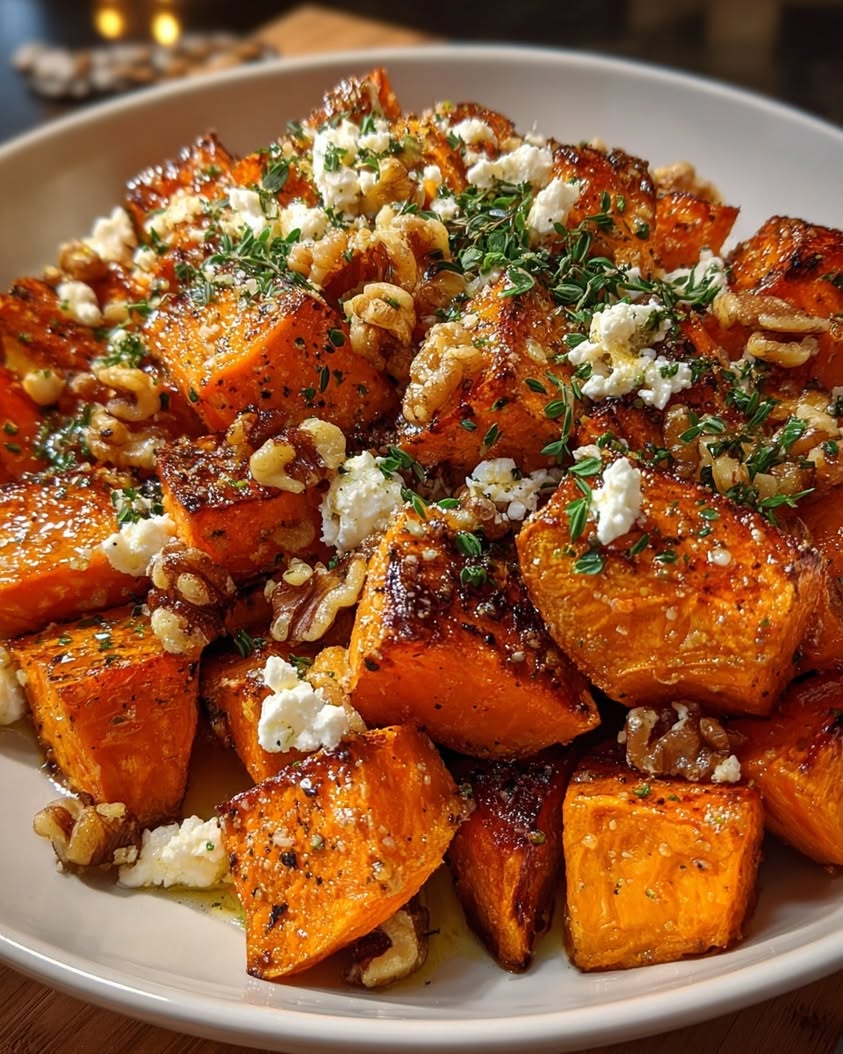
Caramelized Sweet Potatoes with Maple, Feta & Crunchy Walnuts: The Ultimate Sweet and Savory Side Dish
Imagine a dish that perfectly balances the cozy warmth of autumn with a sophisticated, restaurant-quality flair. This recipe for Caramelized Sweet Potatoes with Maple, Feta & Crunchy Walnuts delivers exactly that experience. It transforms humble root vegetables into a stunning side dish that will steal the spotlight on any dinner table. The process involves roasting sweet potato cubes until their natural sugars intensify and their edges crisp into a beautiful caramelized crust. Then, you’ll toss them in a simple, glossy maple glaze that amplifies their sweetness without being cloying.
Finally, the magic happens with the finishing touches. A generous sprinkle of salty, crumbled feta cheese and a handful of toasted walnuts create a symphony of contrasting flavors and textures. The result is a side dish that feels both indulgent and wholesome. It’s the perfect answer for holiday menus, weeknight dinners that need a lift, or potlucks where you want to impress. This recipe proves that with a few quality ingredients and simple techniques, you can create something truly extraordinary. Let’s explore how to master this delightful combination of sweet, savory, and crunchy elements.
Quick Recipe Highlights
- Flavor Profile: This dish masterfully combines the deep, caramelized sweetness of roasted sweet potatoes with the rich, complex notes of pure maple syrup. The salty tang of feta cheese cuts through the sweetness, while the earthy, bitter notes from the walnuts add a sophisticated layer. Ultimately, every bite offers a perfect harmony of sweet and savory flavors that dance on your palate.
- Texture: You get a wonderful contrast in every forkful. The sweet potato cubes are tender and creamy on the inside with delightfully crispy, caramelized edges. The walnuts provide a satisfying, crunchy counterpoint that is both hearty and elegant. Meanwhile, the feta cheese adds soft, crumbly pockets that melt slightly from the warmth of the potatoes.
- Aroma: As the sweet potatoes roast, your kitchen will fill with the warm, comforting scent of caramelizing sugars and cinnamon. The toasting walnuts release a deep, nutty fragrance that is incredibly inviting. When you add the maple glaze, it creates a sweet, almost buttery aroma that promises a delicious meal.
- Visual Appeal: This dish is a feast for the eyes with its vibrant orange sweet potatoes glistening with a maple glaze. The white crumbles of feta and the rustic brown walnuts create beautiful color contrast on the plate. It looks abundant, rustic, and elegantly composed, making it ideal for photographing or serving to guests.
- Skill Level Needed: This is a beginner-friendly recipe that requires only basic kitchen skills like chopping, tossing, and roasting. There’s no complicated technique, making it accessible for novice cooks. However, the final result looks and tastes like it came from a professional kitchen.
- Special Equipment: You need only a good baking sheet, a sharp knife for chopping, and a mixing bowl. A sturdy baking sheet ensures even caramelization without steaming the potatoes. Additionally, parchment paper is helpful for easy cleanup and preventing sticking.
Recipe Overview
- Difficulty Level: We rate this recipe as “Easy” because it involves straightforward steps like chopping, tossing, and roasting. There is no finicky technique or precise timing required for success. Even a first-time cook can achieve excellent results by simply following the clear instructions. The process is forgiving and allows for minor variations without ruining the dish.
- Category: This dish fits perfectly into the “Side Dishes” category, complementing proteins like roasted chicken, turkey, or pork. It can also serve as a hearty component in a vegetarian or vegan bowl when you modify the toppings. Furthermore, it’s substantial enough to be a light main course when served over a bed of greens.
- Cuisine: While not tied to one specific tradition, it draws inspiration from modern American and Canadian farm-to-table cooking. The use of maple syrup nods to North American culinary heritage. The combination of sweet and savory with cheese and nuts reflects a contemporary, global approach to vegetable-focused dishes.
- Cost: This is a cost-effective recipe, especially when sweet potatoes are in season. Maple syrup and walnuts are the premium ingredients, but a little goes a long way. You can expect to feed four people generously for a very reasonable price, making it a budget-friendly gourmet option.
- Season: This recipe shines in the fall and winter when sweet potatoes are at their peak sweetness and hearty dishes are most desired. It brings warmth and comfort to cold-weather meals. That said, its bright flavors also make it a lovely transition dish for early spring gatherings.
- Occasion: It’s incredibly versatile for everything from a casual family Sunday supper to the centerpiece of a Thanksgiving or Christmas feast. It’s a guaranteed crowd-pleaser at potlucks and dinner parties. Moreover, it’s elegant enough for a date night at home yet simple enough for a busy weeknight.
Why You’ll Love This Recipe
First and foremost, the taste and texture appeal is absolutely irresistible. The caramelization process unlocks a deep, almost nutty sweetness from the potatoes that is far superior to simple boiling or steaming. When you add the maple glaze, it creates a sticky, glossy coating that makes each piece utterly craveable. The sudden crunch of a walnut followed by the creamy, salty pop of feta keeps your palate engaged and delighted from the first bite to the last. This combination is sophisticated enough for adults yet sweet enough to win over picky eaters, making it a true family-friendly winner.
Next, consider the sheer convenience and preparation benefits. You can have this stunning dish on the table in under an hour with mostly hands-off cooking time. The active prep involves just chopping and tossing, leaving the oven to do the heavy lifting. You can easily prepare the components ahead of time, making it a stress-free option for entertaining. Cleanup is a breeze, especially if you use parchment paper on your baking sheet. This recipe proves that impressive food doesn’t require hours of slaving in the kitchen or a sink full of dirty pots and pans.
From a nutritional standpoint, this dish packs a powerful punch. Sweet potatoes are loaded with beta-carotene, vitamin C, and fiber. Walnuts contribute healthy omega-3 fatty acids and protein. Using a moderate amount of pure maple syrup adds flavor without the processed qualities of refined sugar. When you compare it to other holiday side dishes laden with cream and butter, this option feels vibrant and nourishing. You can enjoy it fully knowing you’re feeding your body well while satisfying your taste buds completely.
The social and entertaining value of this recipe cannot be overstated. It consistently receives rave reviews and requests for the recipe whenever I serve it. The beautiful presentation makes it look like you spent far more effort than you actually did. It pairs wonderfully with a wide variety of main courses, from roast turkey to grilled salmon, making it a versatile addition to any menu. Bringing this dish to a potluck ensures you’ll come home with an empty plate and plenty of compliments.
Finally, its cost-effectiveness and accessibility are major wins. Sweet potatoes are an affordable vegetable available year-round in most grocery stores. The other ingredients are pantry staples for many, or they are easy to find. You can easily scale the recipe up or down depending on your guest count. This dish delivers a gourmet dining experience without the gourmet price tag, making it a smart choice for everyday meals and special occasions alike.
Historical Background and Cultural Significance
The story of the sweet potato is a long and global one, originating in Central or South America over 5,000 years ago. Spanish and Portuguese explorers then transported it across the world, where it became a staple in Asia, Africa, and the Pacific Islands. In the United States, sweet potatoes have deep roots in Southern cuisine, often candied or baked into pies. The concept of caramelizing them taps into this historical love for their natural sweetness, elevating them from simple sustenance to a celebrated dish.
Maple syrup, the other star ingredient, holds profound cultural importance for Indigenous peoples of Northeastern North America. They were the first to harvest and process sap into syrup, a practice later adopted by European settlers. Using maple syrup in cooking connects this recipe to a tradition of seasonal, land-based harvesting. Combining it with a native North American vegetable like the sweet potato creates a dish that feels authentically rooted in the continent’s culinary history, even in its modern interpretation.
The evolution of this specific recipe reflects broader food trends of the last few decades. It moves away from the ultra-sweet, marshmallow-topped casseroles of mid-20th century America towards a more balanced, ingredient-forward approach. The addition of feta cheese, a briny cheese from Greece, and walnuts, used globally, shows the influence of modern fusion cuisine. This evolution highlights how home cooks and chefs now prioritize contrasting flavors and textures to create more complex and interesting vegetable dishes.
Regional variations of this concept abound. In the American South, you might find pecans instead of walnuts and a bourbon-infused glaze. A Mediterranean version could use honey instead of maple and top with goat cheese and pistachios. In a vegan adaptation, nutritional yeast or vegan feta could replace the dairy. This adaptability is a testament to the sweet potato’s versatility and the universal appeal of the sweet-salty-crunchy flavor profile. Our recipe sits comfortably within this global conversation, offering a reliable and delicious version you can make your own.
Ingredient Deep Dive
Let’s start with the sweet potatoes. These vibrant tubers are not just colorful; they’re nutritional powerhouses packed with beta-carotene, which your body converts to vitamin A. For the best caramelization, choose firm sweet potatoes with smooth, unblemished skin. Orange-fleshed varieties like Beauregard or Garnet are ideal for their moisture content and sweetness. Store them in a cool, dark, well-ventilated place—not the refrigerator, as cold temperatures can alter their texture and flavor. If you need a substitute, consider butternut squash, which will caramelize beautifully, though the cooking time may vary slightly.
Pure maple syrup is the key to our simple glaze. It’s crucial to use the real stuff, not pancake syrup, which is often just corn syrup with artificial flavor. Grade A Amber or Dark syrup will provide a robust maple flavor that stands up to roasting. Maple syrup contains antioxidants and minerals like manganese and zinc. Store it in the pantry before opening and in the refrigerator afterward to prevent fermentation. For a different flavor profile, you could substitute honey, agave nectar, or a brown sugar glaze, but each will change the dish’s character.
Feta cheese brings the essential salty, tangy contrast. Traditionally made from sheep’s or goat’s milk in Greece, feta has a crumbly texture and a bright, acidic bite. It’s a good source of calcium and protein. For this recipe, buy a block of feta in brine rather than pre-crumbled, as it tends to be creamier and more flavorful. Crumble it yourself just before serving. If you’re not a feta fan, goat cheese, blue cheese crumbles, or even a sharp aged cheddar can work, but they will create a different balance.
Walnuts provide the essential crunch and earthy depth. They are rich in omega-3 fatty acids, which are beneficial for heart and brain health. Toasting them is a non-negotiable step—it wakes up their oils and intensifies their flavor dramatically. You can toast them in a dry skillet or in the oven alongside the potatoes for the last few minutes. Store walnuts in an airtight container in the freezer to prevent their natural oils from turning rancid. For a different crunch, pecans, almonds, or pepitas would be excellent alternatives.
Common Mistakes to Avoid
- Cutting the Potatoes Unevenly: Inconsistent cube sizes lead to uneven cooking. Some pieces will burn while others remain undercooked. Always take a moment to trim and cut your potatoes into uniform ¾-inch cubes for perfect, simultaneous caramelization.
- Overcrowding the Baking Sheet: Piling the potatoes too close together causes them to steam instead of roast. They need space for hot air to circulate and create those crispy edges. Use a large sheet pan or even two if necessary to give them room.
- Using “Pancake Syrup” Instead of Pure Maple: Artificial pancake syrup lacks the depth and complexity of real maple and can make the glaze taste overly sweet and artificial. The investment in pure maple syrup is absolutely worth it for the flavor it provides.
- Skipping the Walnut Toasting Step: Raw walnuts can taste bitter and have a soft, sometimes rubbery texture. Toasting them for just 5-7 minutes transforms them, bringing out a nutty, almost buttery flavor and a satisfying crispness.
- Adding the Feta Too Early: If you add the feta before serving or while the potatoes are piping hot, it will melt into a gooey mess instead of maintaining its delightful crumbly texture. Always add it as a final, cool garnish.
- Not Tossing the Potatoes Midway: For even browning and glaze distribution, you must toss or flip the potatoes halfway through the roasting time. This simple step ensures every side gets contact with the hot pan and caramelizes beautifully.
- Underseasoning: Sweet potatoes and maple need salt to balance their sweetness. Don’t be shy with the kosher salt before roasting. The salt amplifies all the other flavors and prevents the dish from tasting one-dimensional.
- Using a Dull Knife: Sweet potatoes are dense and can be tricky to cut. A sharp chef’s knife makes the prep work safer, faster, and more precise, leading to better-looking and better-cooking results.
Essential Techniques
Uniform Chopping: Mastering a consistent dice is critical for even cooking. First, slice a thin piece off one long side of the sweet potato to create a stable base. Then, cut it into even planks, stack the planks, and cut them into uniform sticks. Finally, cross-cut the sticks into cubes. This method, called the “battonet and dice,” is faster and safer than hacking at a round vegetable. The goal is cubes that are all roughly the same size so they roast at the same rate.
Dry Roasting for Caramelization: The key to caramelization is high, dry heat. Pat your cubed potatoes completely dry before tossing them in oil. Any excess moisture will create steam and inhibit browning. Preheat your baking sheet in the oven for a few minutes before adding the potatoes—this gives them an immediate sear. Resist the urge to stir too often; let them sit undisturbed to develop a crust before tossing.
Making a Simple Glaze: The glaze is just maple syrup warmed with a touch of olive oil and cinnamon. The goal is to thin it slightly so it coats the potatoes evenly without making them soggy. Warm the mixture gently—you don’t need to boil it. Tossing the hot potatoes in the glaze immediately after they come out of the oven allows the residual heat to thicken the glaze slightly as it clings to each cube.
Toasting Nuts: Toasting nuts is a simple but transformative technique. Spread them in a single layer on a dry skillet or baking sheet. Cook over medium heat or in a 350°F oven, shaking frequently, until they become fragrant and take on a slightly darker color. Watch them closely, as they can go from perfectly toasted to burnt in moments. Always let them cool before chopping to preserve their texture.
Pro Tips for Perfect Caramelized Sweet Potatoes
For the crispiest edges, soak your cubed sweet potatoes in cold water for 30 minutes before drying and roasting. This removes excess surface starch. Always preheat your oven fully and consider using the convection roast setting if you have it, as the circulating air promotes superior browning. Use a light-colored, heavy-duty baking sheet; dark sheets can cause the bottoms to burn before the potatoes are fully tender. Add a sprinkle of smoked paprika or a pinch of cayenne pepper to the oil mixture for a subtle, warm complexity that plays well with the sweetness. Let the roasted potatoes sit for 5 minutes after adding the maple glaze; this allows the glaze to set slightly and become sticky rather than runny. Crumble the feta with your fingers for irregular, interesting pieces rather than using uniformly small crumbles. Finally, garnish with fresh herbs like thyme or rosemary just before serving to add a pop of color and a fragrant, aromatic note.
Variations and Adaptations
For regional variations, consider a Southern twist with pecans and a bourbon-maple glaze. A Mediterranean version could use honey, za’atar, and crumbled goat cheese. For seasonal adaptations, in spring, add fresh peas and mint; in summer, serve the potatoes at room temperature over a salad with berries. For dietary modifications, a vegan version is easy: use a vegan feta alternative or omit the cheese and add a sprinkle of nutritional yeast for a cheesy flavor. A nut-free version can use toasted sunflower or pumpkin seeds for crunch.
Flavor variations are endless. Infuse the olive oil with garlic or rosemary before tossing the potatoes. Add orange zest to the maple glaze for a citrusy brightness. Swap the cinnamon for ground ginger or Chinese five-spice powder. For texture modifications, try adding pomegranate arils for a juicy burst or crispy fried shallots for an oniony crunch. Presentation alternatives include serving the potatoes in individual ramekins, stuffing them into roasted acorn squash halves, or piling them onto a platter over a swipe of Greek yogurt or labneh.
Serving and Presentation Guide
For beautiful plating, choose a wide, shallow bowl or a neutral-colored platter to let the vibrant colors shine. Pile the warm glazed potatoes in the center, allowing them to mound naturally for height. Sprinkle the toasted walnuts and crumbled feta generously over the top, letting some fall onto the plate. Finally, add your fresh herb garnish. This creates a visually appealing, textured landscape that looks abundant and inviting.
Consider traditional accompaniments like a simple roast chicken, herb-crusted pork tenderloin, or a holiday turkey. For a modern, vegetarian spread, serve it alongside a kale salad with lemon vinaigrette and a bowl of lentil soup. Temperature is key—serve the dish warm, not piping hot, so the feta maintains its shape. For portion control, a heaping ¾ cup per person is a generous side serving. If serving buffet-style, provide a large spoon and keep a small bowl of extra feta and walnuts on the side for guests to add more.
Wine and Beverage Pairing
The sweet and savory profile of this dish pairs wonderfully with wines that have good acidity to cut through the richness. A dry Riesling or Gewürztraminer complements the sweetness without overpowering it. For red wine lovers, a light-bodied Pinot Noir with its red fruit notes works beautifully. If you prefer a rosé, choose a dry Provençal style for a refreshing contrast.
For non-alcoholic alternatives, sparkling apple cider is a classic and festive choice. A ginger beer or a homemade lemon-ginger sparkler provides a spicy kick that cleanses the palate. Iced hibiscus tea offers a tart, cranberry-like flavor that balances the maple sweetness. Serve all beverages well-chilled to provide a refreshing counterpoint to the warm, roasted dish. For a cozy touch, a chai tea latte or a cup of black coffee with a hint of cream can be a delightful end to the meal.
Storage and Shelf Life
Store leftovers in an airtight container in the refrigerator for up to 3 days. The walnuts will lose some crunch, and the potatoes will soften, but the flavors will still be delicious. I do not recommend freezing the fully assembled dish, as the texture of the potatoes and cheese will suffer significantly upon thawing. You can, however, freeze the plain roasted sweet potato cubes on a tray before transferring to a bag; reheat from frozen in a hot oven to recrisp.
For reheating, spread the potatoes in a single layer on a baking sheet and warm in a 375°F oven for 10-15 minutes. This method helps restore some crispness better than the microwave, which will make them soggy. If the glaze seems dry, you can drizzle a tiny bit of fresh maple syrup over them before reheating. Always add fresh feta, walnuts, and herbs after reheating to maintain their best texture and appearance. Discard the dish if you notice any off odors, significant discoloration, or mold.
Make Ahead Strategies
You can prep this dish in stages to streamline your cooking day. The day before, peel and cube the sweet potatoes. Store them submerged in cold water in the refrigerator to prevent browning. Toast the walnuts and store them at room temperature in an airtight container. Crumble the feta and keep it wrapped in the fridge. Measure out your maple syrup and spices.
On the day of serving, simply drain and thoroughly dry the potatoes, then proceed with the recipe. The quality impact is minimal when you prep the components separately. The key is to only combine the hot potatoes with the glaze and the final toppings right before serving. This ensures the potatoes are hot, the walnuts are crunchy, and the feta is cool and crumbly. If you must assemble fully ahead, wait to add the walnuts until the last minute to preserve their texture.
Scaling Instructions
This recipe scales beautifully. To halve it, simply use half of all ingredients and consider using a quarter sheet pan. The cook time may be slightly shorter, so start checking for doneness at the 25-minute mark. To double or triple for a crowd, use multiple baking sheets and rotate their positions in the oven halfway through cooking to ensure even browning. You may need to roast in batches depending on your oven size.
When scaling up, mix the sweet potatoes with oil and seasonings in a very large bowl to ensure even coating. You can warm the maple glaze in a saucepan to make tossing a large batch easier. For storage considerations, if making a very large batch, it’s best to keep the components separate until just before serving to maintain ideal textures. Allow a few extra minutes of cook time when the pans are very full, as the added moisture can slow the caramelization process.
Nutritional Deep Dive
This dish offers a well-rounded nutritional profile. Sweet potatoes provide complex carbohydrates and are an excellent source of vitamin A (from beta-carotene), vitamin C, and manganese. The olive oil contributes heart-healthy monounsaturated fats. Walnuts add plant-based protein, fiber, and essential omega-3 fatty acids. Maple syrup, while a sweetener, contains antioxidants like polyphenols and minerals like zinc and manganese in smaller amounts.
Feta cheese adds calcium and protein but also saturated fat and sodium, so a moderate sprinkle is key for balance. A serving of this dish is energizing and satisfying, making it a great choice for a balanced meal. For weight management, be mindful of portion size due to the natural sugars and fats, but remember these are nutrient-dense ingredients. Pairing it with a lean protein and non-starchy vegetables creates a complete, satisfying plate that supports overall health.
Dietary Adaptations
Gluten-Free: This recipe is naturally gluten-free. Just ensure all packaged ingredients like maple syrup are certified gluten-free if you have celiac disease or a severe sensitivity.
Dairy-Free/Vegan: Omit the feta cheese. For a creamy, tangy element, add a drizzle of tahini sauce or use a store-bought vegan feta alternative. Ensure your maple syrup is vegan (most are).
Low-Carb/Keto: This dish is not suitable for strict keto due to the high carb count in sweet potatoes and maple syrup. Substitute with cubed radishes or turnips and use a sugar-free maple-flavored syrup.
Paleo: Omit the feta cheese. The remaining ingredients—sweet potatoes, olive oil, maple syrup, cinnamon, walnuts—are paleo-friendly.
Low-FODMAP: Sweet potatoes are low-FODMAP in servings of ½ cup. Stick to a strict portion. Omit the walnuts if sensitive, and ensure no garlic or onion has been added to the seasoning.
Troubleshooting Guide
Potatoes Are Soggy, Not Crispy: This is usually due to overcrowding or insufficient oven heat. Next time, ensure the cubes are dry before oiling, use a preheated pan, and don’t overcrowd. If they’re soggy now, you can spread them back on a sheet and broil for a few minutes to crisp up the edges.
Glaze is Too Thin and Runny: If the glaze pools on the plate, you may have added too much syrup or not tossed the potatoes while they were hot enough. To fix, return the glazed potatoes to the hot oven for 3-5 minutes to thicken the glaze.
Walnuts Burned: Toasted nuts go from perfect to burnt quickly. Always watch them closely and stir frequently. If they’re burnt, unfortunately, they will impart a bitter flavor and should be discarded. Use raw walnuts as a last resort.
Dish Tastes Too Sweet: Balance is key. Add an extra pinch of salt to the finished dish or a squeeze of fresh lemon juice. Next time, increase the salt in the initial seasoning or add a dash of black pepper or cayenne to the oil mixture.
Recipe Success Stories
This recipe has become a reader favorite, with many sharing their own twists. One home cook reported adding crispy bacon bits for a “next-level” savory element. Another successfully made it for a large Thanksgiving dinner by tripling the recipe and roasting the potatoes in shifts, keeping them warm in a low oven until serving time. A vegan reader loved using a almond-based feta and said it was a hit with her entire family.
Photography tips from readers include shooting in natural light to capture the glaze’s shine and using a dark slate board or a white marble background to make the orange potatoes pop. Many have found that this dish is a guaranteed way to get kids to eat their vegetables, with the sweet maple flavor being the ultimate persuader. The flexibility of the recipe is its greatest strength, inviting cooks to make it their own while still achieving a spectacular result.
Frequently Asked Questions
Q: Can I use yams instead of sweet potatoes?
A: In most U.S. grocery stores, the orange-fleshed vegetables labeled “yams” are actually a variety of sweet potato, and they will work perfectly in this recipe. True yams have a different texture and are less sweet.
Q: How do I prevent the maple syrup from burning in the oven?
A: The syrup is added after roasting, so it doesn’t go in the oven. You toss the hot potatoes in the warmed glaze after they come out, which prevents burning and allows the glaze to cling perfectly.
Q: Can I make this recipe without nuts?
A: Absolutely. For a nut-free version, simply omit the walnuts. You could add toasted pumpkin seeds (pepitas) or sunflower seeds for a similar crunchy element, or just enjoy the contrast of the soft potato and feta.
Q: What’s the best way to reheat leftovers?
A: Always reheat in the oven or toaster oven at 375°F until warmed through. This helps re-crisp the edges. The microwave will steam them and make the texture soft.
Q: Can I prep the sweet potatoes the night before?
A: Yes. Peel and cube them, then store them completely submerged in a bowl of cold water in the refrigerator. This prevents oxidation (browning). Drain and pat them very dry before roasting.
Q: Is this dish served hot or cold?
A: It is best served warm. The potatoes should be hot when you add the glaze so it sticks, and the feta should be added cool. Room temperature is also acceptable, especially for a picnic or potluck.
Q: Can I use pre-crumbled feta?
A: You can, but a block of feta stored in brine tends to be creamier and more flavorful. Pre-crumbled feta often has anti-caking agents that can make it drier. For the best texture and taste, crumble your own.
Q: My sweet potatoes are caramelizing too fast on the bottom. What should I do?
A: Your oven rack might be too low, or your baking sheet might be dark metal (which retains more heat). Move the rack to the center, use parchment paper, or try a light-colored sheet pan. You can also toss them more frequently.
Q: Can I add other vegetables to the mix?
A: Be cautious. Vegetables with high water content (like zucchini) will steam and prevent caramelization. Denser veggies like carrots or parsnips could work if cut to a similar size, but they may have different cook times.
Q: How can I tell when the sweet potatoes are done roasting?
A: They should be tender enough to easily pierce with a fork, and the edges should be browned and slightly crisp. The caramelized bits are where the flavor is, so don’t be afraid of a little dark color.
Additional Resources
If you loved this recipe, explore other ways to enjoy sweet potatoes. Try a savory sweet potato hash for breakfast, a creamy sweet potato soup, or crispy sweet potato fries. For more on roasting techniques, our guide “How to Roast Any Vegetable Perfectly” covers temperatures, oils, and seasoning strategies. Learn more about the health benefits of walnuts and other superfood nuts in our nutrition deep-dives.
For equipment, a reliable half-sheet pan is a kitchen workhorse. A good quality maple syrup from a reputable producer makes all the difference. If you’re cooking for a crowd, consider investing in a set of stainless steel mixing bowls in various sizes. Finally, explore seasonal variations by pairing this dish with other fall favorites like our apple cider brined pork chops or a simple arugula and pear salad for a complete, autumnal feast.
{“success”:true,”message”:”Recipe created successfully”,”post_id”:8203,”tasty_recipe_id”:8203,”shortcode”:” Print
Caramelized Sweet Potatoes with Maple, Feta & Crunchy Walnuts
Description
A savory-sweet side dish featuring tender roasted sweet potatoes glazed with maple syrup, topped with tangy feta cheese and toasted walnuts for a delightful crunch.
Ingredients
For the Crust:
- 2 large sweet potatoes, peeled and cubed
- 2 tablespoons olive oil
- 1/4 cup pure maple syrup
- 1 teaspoon smoked paprika
- 1/2 teaspoon sea salt
- 1/4 teaspoon black pepper
- 1/2 cup crumbled feta cheese
- 1/3 cup chopped walnuts, toasted
- 2 tablespoons fresh parsley, chopped
Instructions
1. Prepare the Crust:
- Preheat oven to 400°F (200°C). Line a baking sheet with parchment paper.
- In a large bowl, toss sweet potato cubes with olive oil, maple syrup, smoked paprika, salt, and pepper until evenly coated.
- Spread the sweet potatoes in a single layer on the prepared baking sheet. Roast for 25-30 minutes, stirring halfway, until caramelized and tender.
- Transfer roasted sweet potatoes to a serving dish. Sprinkle with feta cheese, toasted walnuts, and fresh parsley. Serve warm.
Notes
You can customize the seasonings to taste.

I’m Billy, a classically trained culinary school graduate from The Culinary Institute of America with over 12 years in the restaurant industry and over 19 years of cooking experience.