
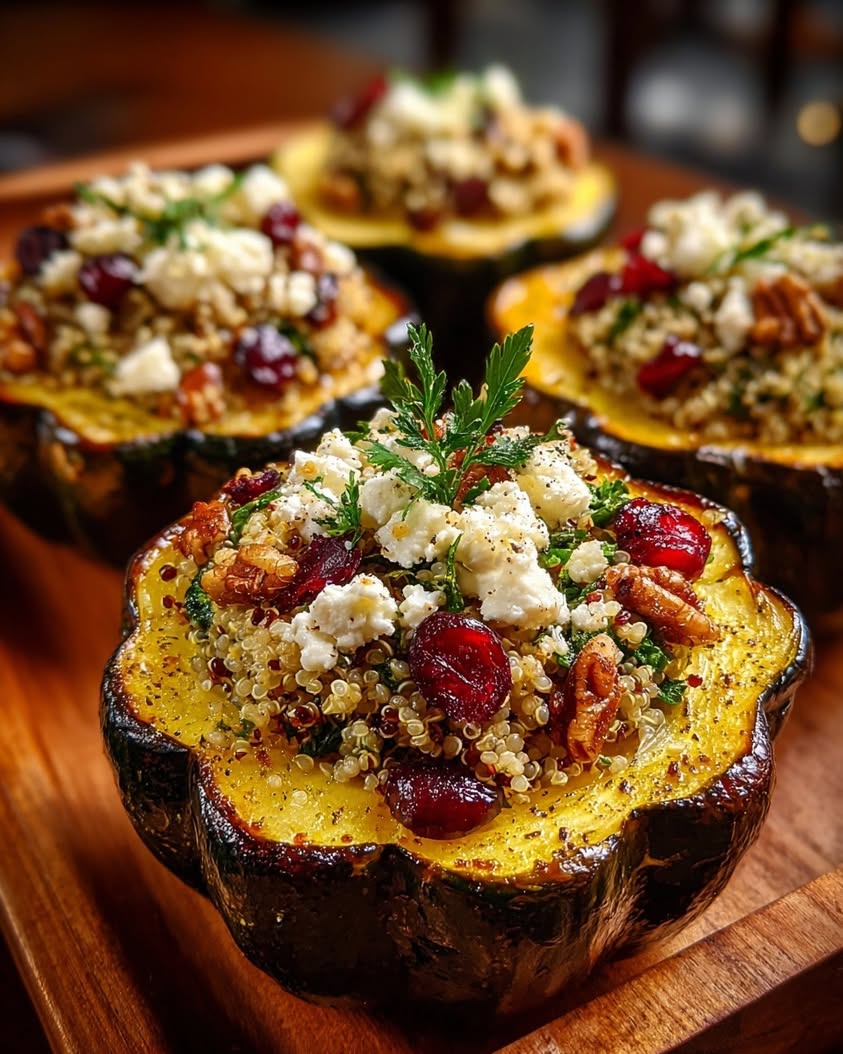
Savory Stuffed Acorn Squash with Quinoa, Cranberries, and Feta: A Festive Fall Feast
Welcome to a recipe that captures the very essence of autumn on a plate. This Savory Stuffed Acorn Squash with Quinoa, Cranberries, and Feta is a stunning, wholesome dish perfect for cozy weeknights or impressive holiday gatherings. Moreover, it combines sweet roasted squash with a hearty, flavorful filling for a complete meal that feels both nourishing and indulgent.
Imagine tender, caramelized acorn squash halves cradling a vibrant mixture of fluffy quinoa, tart dried cranberries, salty feta cheese, and aromatic herbs. Consequently, every bite delivers a symphony of textures and tastes. Ultimately, this dish is a celebration of seasonal produce, transforming simple ingredients into a beautiful centerpiece.
This recipe for Savory Stuffed Acorn Squash with Quinoa, Cranberries, and Feta is incredibly versatile. For instance, you can easily adapt it for various dietary needs. Furthermore, it makes fantastic leftovers, meaning your meal prep is handled. Let’s dive into creating this autumn masterpiece.
Quick Recipe Highlights
- Flavor Profile: This dish masterfully balances sweet, savory, and tangy notes. The natural sweetness of the roasted acorn squash pairs perfectly with the savory quinoa and herbs. Meanwhile, the pop of tart cranberries and salty feta cheese creates a complex and satisfying taste experience.
- Texture: You get a wonderful contrast in every forkful. The flesh of the squash becomes soft and almost creamy. Conversely, the quinoa filling remains light and fluffy with little bursts from the cranberries and a creamy crumble from the feta.
- Aroma: While baking, your kitchen will fill with the warm, comforting scents of roasting squash and toasting pecans. Additionally, the rosemary and thyme release their earthy, piney fragrances, creating an unmistakably festive atmosphere.
- Visual Appeal: The presentation is truly stunning. The deep green, scalloped edges of the acorn squash halves create a natural bowl. Inside, the colorful filling of white quinoa, red cranberries, green herbs, and white feta is beautiful and inviting.
- Skill Level Needed: This is a beginner-friendly recipe. Basically, it involves simple techniques like roasting, sautéing, and simmering. Therefore, even novice cooks can achieve impressive results with minimal stress.
- Special Equipment: You need only standard kitchen tools. A baking sheet, a medium saucepan, and a skillet are the main items. A sharp knife and a sturdy spoon for scooping are also essential.
Recipe Overview
- Difficulty Level: We rate this recipe as easy. The steps are straightforward and sequential. First, you roast the squash. Then, you cook the quinoa and prepare the filling separately. Finally, you combine and bake. There are no advanced techniques required, making it accessible for all cooks.
- Category: This dish fits multiple categories beautifully. It is a fantastic vegetarian main course. Alternatively, it serves as a substantial side dish for a holiday feast. It also works well for meal prep and healthy lunches throughout the week.
- Cuisine: While not tied to one specific tradition, it draws inspiration from modern American and Mediterranean cuisines. The use of quinoa, a South American grain, and feta cheese, a Mediterranean staple, creates a globally-inspired, fusion-style dish focused on whole foods.
- Cost: This is a very cost-effective meal, especially during the fall squash season. Acorn squash and onions are inexpensive. Quinoa, while sometimes pricey, stretches far in this recipe. Dried cranberries, pecans, and feta are the splurge items, but you use them in moderate amounts.
- Season: This recipe is perfect for fall and winter. Acorn squash is at its peak from early fall through December. The warm, hearty flavors are ideal for cooler weather. However, you can enjoy it year-round as squash is often available in supermarkets.
- Occasion: It’s incredibly versatile for occasions. Serve it as a meatless Monday dinner. Alternatively, present it as the star of a Thanksgiving spread. It also makes an elegant dish for a dinner party because it’s both beautiful and delicious.
Why You’ll Love This Recipe
First and foremost, the taste and texture are utterly irresistible. The combination of sweet, nutty squash with the savory, herby quinoa filling is a match made in heaven. Each component complements the others perfectly. The cranberries add a necessary tartness that cuts through the richness, while the feta provides a salty, creamy finish. Every bite is a delightful adventure for your palate, offering comfort and sophistication simultaneously.
Secondly, the convenience factor is a major win. This Savory Stuffed Acorn Squash with Quinoa, Cranberries, and Feta is a complete meal in one package. You get your vegetable, whole grain, and protein all in a single, edible bowl. Cleanup is relatively simple, too. Furthermore, the hands-on prep time is minimal; the oven does most of the work. You can easily prepare the filling while the squash roasts, making efficient use of your time in the kitchen.
Nutritionally, this dish is a powerhouse. Acorn squash is loaded with vitamins A and C, fiber, and potassium. Quinoa is a complete plant-based protein, providing all nine essential amino acids. It’s also high in fiber and minerals like magnesium and iron. The pecans add healthy fats and crunch. Consequently, this meal supports energy levels, digestion, and overall wellness, leaving you satisfied but not heavy.
For social and entertaining value, this recipe is a superstar. It presents beautifully on the table, creating an instant “wow” factor. It’s an excellent conversation starter and shows thoughtfulness in preparation. Because it’s vegetarian, it caters to a wide range of guests. You can easily double or triple the recipe for a crowd without much extra effort. It’s a dish that feels special and celebratory.
Finally, it’s cost-effective and accessible. The ingredients are common and easy to find in any grocery store. Seasonal squash keeps the price low. You can also adapt based on what you have. For example, swap walnuts for pecans or use another grain like rice. This flexibility makes it a reliable go-to recipe that won’t break the bank but will always deliver on flavor and satisfaction.
Historical Background and Cultural Significance
The practice of stuffing vegetables is ancient and spans countless cultures. Historically, people stuffed vegetables like peppers, tomatoes, and squash to create hearty, economical meals that stretched precious ingredients. In the Americas, indigenous cultures have long utilized squash as a staple food, often roasting or stuffing them with beans, corn, and other local grains. This recipe for Savory Stuffed Acorn Squash with Quinoa, Cranberries, and Feta is a modern interpretation of that timeless, resourceful cooking tradition.
Acorn squash itself is a winter squash native to North and Central America. It was a vital food source for Native American tribes, who valued it for its hard shell that allowed for long storage through winter. They would roast it in the coals of a fire or boil it. The concept of stuffing it likely evolved as a way to create a more substantial meal, combining the squash with foraged nuts, berries, and eventually cultivated grains introduced by settlers.
The evolution of this specific recipe reflects contemporary food trends. The inclusion of quinoa, a grain revered by the Inca, shows our modern appreciation for ancient, nutrient-dense foods. The addition of feta cheese introduces a Mediterranean influence, highlighting today’s global pantry. Dried cranberries are a nod to the native American cranberry, but their sweetened, dried form is a modern convenience. This dish is a fusion, connecting historical sustenance with current tastes for balance, nutrition, and visual appeal.
Regional variations of stuffed squash are endless. In the Southern United States, you might find squash stuffed with sausage and cornbread. In Italy, delicata squash might be filled with risotto and Parmesan. A Middle Eastern version could feature lamb, rice, and spices like allspice and cinnamon. Our version with quinoa and cranberries leans into a healthier, vegetarian-focused cuisine that has gained immense popularity in recent decades. It represents a shift towards plant-forward eating while honoring the rustic, comforting roots of the stuffed vegetable.
Ingredient Deep Dive
Acorn Squash: This winter squash is named for its distinctive acorn-like shape. Cultivated for thousands of years in the Americas, it was one of the “Three Sisters” planted alongside corn and beans by Native Americans. Nutritionally, it’s an excellent source of vitamin C, potassium, and dietary fiber, particularly soluble fiber which supports heart health. When selecting, choose squash that feels heavy for its size with a deep green rind and a small patch of orange; avoid any with soft spots or cracks. Store in a cool, dark place for up to a month. For a substitution, try delicata or sweet dumpling squash, which have similar sweet, nutty flavors and edible skins.
Quinoa: Hailing from the Andean region of South America, quinoa was sacred to the Inca civilization, who called it the “mother of all grains.” Technically a seed, it’s a complete protein, containing all nine essential amino acids, making it rare in the plant world. It’s also gluten-free and high in magnesium, iron, and fiber. Always rinse quinoa thoroughly under cold water before cooking to remove its natural coating of saponins, which can taste bitter. Store uncooked quinoa in an airtight container in a cool, dry pantry. For a substitution in this stuffed acorn squash recipe, you can use cooked brown rice, farro, or couscous, though cooking times will vary.
Dried Cranberries: These are a modern, sweetened version of the native North American cranberry. The fresh berry was used by Indigenous peoples for food, dye, and medicine. The dried version provides concentrated sweetness and a chewy texture. They offer antioxidants like proanthocyanidins, which are linked to urinary tract health. However, many dried cranberries are sweetened with added sugar. Look for “juice-sweetened” varieties for a less processed option. Store them in a sealed container in your pantry. As a substitute, try dried cherries, chopped dried apricots, or even raisins for a different fruity note in your stuffing.
Feta Cheese: This brined curd cheese has origins in Greece and is traditionally made from sheep’s milk or a sheep-goat milk blend. Its tangy, salty flavor and crumbly texture are iconic. Feta provides calcium and protein but is also high in sodium. For this recipe, it adds a crucial salty, creamy element that balances the sweet squash and tart cranberries. Look for feta blocks packed in brine for the best flavor and texture. Store it in its brine in the refrigerator. For a dairy-free version of this stuffed acorn squash, use a firm, salty vegan cheese or nutritional yeast for a cheesy flavor.
Common Mistakes to Avoid
- Not Roasting the Squash Long Enough: Undercooked squash is hard and difficult to scoop. Always roast until a fork easily pierces the flesh. The edges should be caramelized and tender. Otherwise, you’ll struggle to eat it and miss out on the sweet, roasted flavor.
- Skipping the Rinse for Quinoa: Unrinsed quinoa can have a bitter, soapy aftertaste from saponins. Always place quinoa in a fine-mesh strainer and rinse under cold water for a minute, rubbing the seeds with your fingers. This simple step ensures a clean, neutral flavor.
- Overcooking the Quinoa: Mushy quinoa ruins the texture of the filling. Follow the package instructions precisely and fluff it with a fork immediately after cooking. It should be light and separate, not gummy or wet.
- Using Raw Onions and Garlic: Sautéing the onion and garlic is non-negotiable. This step mellows their sharp, raw bite and develops a sweet, savory base flavor for the stuffing. Adding them raw will result in a harsh, overpowering taste.
- Forgetting to Toast the Pecans: Toasting nuts unlocks their oils and intensifies their flavor. Simply tossing raw pecans into the mix is a missed opportunity. Take the few minutes to toast them in a dry skillet until fragrant for a deeper, nuttier crunch.
- Overstuffing the Squash Halves: Piling the filling too high can cause it to dry out or spill over in the oven. Mound the filling gently, leaving a slight border. You can always warm any extra filling separately.
- Neglecting to Season Each Layer: Season the squash cavities with salt and pepper before roasting. Season the quinoa as it cooks. Season the final filling mixture. Layered seasoning ensures every component is flavorful, not just the top.
- Adding the Feta Too Early: If you mix all the feta into the filling before baking, it may melt completely and disappear. For best results, reserve half of the feta to sprinkle on top during the final bake so it gets slightly golden and stays distinct.
Essential Techniques
Roasting Squash: Roasting is crucial for developing the squash’s natural sugars, resulting in a caramelized, tender, and sweet flesh. To master it, cut the squash evenly so halves cook at the same rate. Brush generously with oil and season well. Place cut-side down initially to steam the flesh and achieve even tenderness, then flip to caramelize the edges. The visual cue for success is easily pierced flesh with a fork and golden-brown, slightly crisp edges.
Cooking Fluffy Quinoa: The key to perfect quinoa is the water-to-grain ratio and proper resting. Use a 2:1 ratio of liquid to quinoa. Bring to a boil, then reduce to a simmer and cover tightly. Do not peek. Cook for about 15 minutes until the liquid is absorbed. Remove from heat and let it sit, covered, for 10 minutes. Then fluff with a fork. This resting period allows the grains to separate and become light, avoiding a gummy texture.
Sautéing Aromatics: This technique builds the flavor foundation for your stuffing. Use medium heat and enough oil to coat the pan. Cook the onions until they become translucent and soft, not browned. Add the garlic for just the last minute until fragrant. The goal is to soften and sweeten them, releasing their essential oils without burning. Burnt garlic will taste bitter and ruin the delicate balance of the dish.
Pro Tips for Perfect Savory Stuffed Acorn Squash
First, use a sharp, heavy chef’s knife and a damp towel under your cutting board to safely halve the acorn squash. Secondly, scoop the seeds thoroughly with a sturdy spoon; a grapefruit spoon or ice cream scoop works perfectly. Thirdly, consider par-cooking the squash in the microwave for 2-3 minutes before cutting to soften it slightly, making it easier to slice.
For the quinoa, use vegetable broth instead of water for cooking. This simple swap infuses the grain with extra savory depth from the beginning. Furthermore, let your cooked quinoa spread out on a baking sheet for five minutes to cool and dry slightly before mixing; this prevents a soggy filling.
Toast your pecans in the oven while the squash roasts for efficiency. Just watch them closely as they can burn quickly. When assembling, pack the filling lightly into the squash cavities to allow heat to circulate. Finally, let the stuffed squash rest for 5-10 minutes after baking. This allows the filling to set slightly, making it easier to serve neatly.
Variations and Adaptations
For regional twists, try a Southwest version with black beans, corn, cumin, and chili powder, topped with Monterey Jack cheese and avocado. A Mediterranean adaptation could include spinach, kalamata olives, sun-dried tomatoes, and oregano, using goat cheese instead of feta. An Italian-inspired filling might feature sausage (plant-based or meat), chopped kale, and Parmesan cheese.
Seasonal adaptations are easy. In spring, use zucchini or pattypan squash and fill with peas, asparagus, and fresh herbs. For summer, try stuffing bell peppers with the same quinoa mixture. In deep winter, swap in hearty kale or mushrooms for a earthier flavor profile. You can also incorporate different nuts like walnuts or pepitas based on what’s available.
Dietary modifications are straightforward. For a vegan stuffed acorn squash, omit the feta or use a vegan alternative, and ensure your vegetable broth is vegan. To make it gluten-free, simply confirm your broth and other ingredients are certified GF—quinoa is naturally gluten-free. For a nut-free version, replace pecans with toasted sunflower seeds for crunch.
Serving and Presentation Guide
Plating is simple yet effective. Place one stuffed squash half on each plate, perhaps on a bed of simple arugula or massaged kale for color contrast. Drizzle a little extra virgin olive oil or a balsamic glaze around the plate for a restaurant-style finish. Sprinkle with fresh chopped parsley or thyme leaves just before serving for a burst of green.
For garnishing, consider a final flourish of pomegranate arils in the winter for a jewel-like, tart pop. Alternatively, a few extra pecan halves or a small dollop of Greek yogurt or sour cream adds visual and textural interest. A microgreen salad on top looks elegant and adds a fresh, peppery note.
Traditional accompaniments might include a simple green salad with a vinaigrette to cut the richness. For a heartier meal, serve with a bowl of soup like butternut squash or lentil. Modern suggestions include pairing it with roasted Brussels sprouts or a farro salad. It also stands beautifully on its own as a complete vegetarian entrée.
Wine and Beverage Pairing
For wine, choose something that complements the sweet and savory elements without overpowering them. A dry Riesling or Gewürztraminer has enough acidity to cut through the richness and a slight sweetness that mirrors the squash. A light-bodied Pinot Noir with its red fruit notes also pairs wonderfully with the earthiness of the dish and the tart cranberries.
Non-alcoholic alternatives are plentiful. Sparkling apple cider is a festive and natural pairing, echoing the autumn flavors. A ginger beer or kombucha provides a spicy, effervescent contrast. For a warm option, try a chai tea or a mulled cider, which share the warm spice notes often associated with squash dishes.
Serving suggestions are key. Serve white wines chilled but not ice-cold. Allow red wines to breathe slightly before serving. Non-alcoholic sparklers should be well-chilled. The goal is for the beverage to refresh the palate between bites of the hearty, flavorful stuffed squash.
Storage and Shelf Life
Store leftover stuffed acorn squash in an airtight container in the refrigerator for up to 4 days. For best results, store the squash and any extra filling separately if possible, as the squash skin can become soggy. The flavors often meld and improve after a day, making fantastic leftovers.
Reheating instructions are simple. Reheat in a 350°F oven for 15-20 minutes until warmed through. This method helps re-crisp the edges of the squash. You can also microwave individual portions for 2-3 minutes, though the texture of the squash may soften further. Cover loosely with a damp paper towel to prevent drying out.
Freezing is possible but with caveats. The texture of the cooked squash may become watery and mushy upon thawing. If you must freeze, freeze the cooked quinoa filling separately in a sealed bag for up to 3 months. Thaw in the refrigerator overnight and re-stuff freshly roasted or reheated squash halves when ready to serve.
Make Ahead Strategies
You can prep almost every component ahead of time. Roast the squash halves 1-2 days in advance, let them cool, and store them covered in the fridge. Cook the quinoa and prepare the sautéed vegetable mixture separately; store them in airtight containers in the fridge for up to 3 days.
For assembly, bring the cold components to room temperature for about 30 minutes before you plan to bake. Combine the cold quinoa, veggie mix, cranberries, and half the pecans. Stuff the squash halves and place them on a baking sheet. Then, bake as directed, adding 5-10 minutes to the final bake time since you’re starting from cold. Add the reserved feta and pecans in the last 10 minutes as usual.
This make-ahead strategy is perfect for holiday dinners or busy weeks. It breaks the work into manageable stages, so final assembly and baking are quick and stress-free, allowing you to enjoy time with your guests.
Scaling Instructions
Halving the recipe is simple for a smaller household. Use one medium acorn squash, halve all other ingredient quantities, and use a smaller skillet and saucepan. The roasting and cooking times will remain roughly the same. Keep an eye on the squash as it roasts, as a smaller half may cook slightly faster.
Doubling or tripling for a crowd is easy. You will need multiple baking sheets; rotate them in the oven halfway through roasting for even cooking. Cook the quinoa in batches to avoid overcrowding the pot, which leads to uneven cooking. You can sauté the onion and garlic in a large Dutch oven or in batches.
The main equipment adjustment for scaling up is oven space. Plan your baking sheets accordingly. Timing modifications are minimal for the actual cooking, but prep time will increase linearly. Consider enlisting help for chopping and prepping when making large quantities.
Nutritional Deep Dive
This dish provides a well-rounded macronutrient profile. The acorn squash and quinoa offer complex carbohydrates for sustained energy. The quinoa and feta contribute protein, essential for muscle repair and satiety. The olive oil and pecans provide healthy monounsaturated and polyunsaturated fats, which support heart health and nutrient absorption.
Micronutrient-wise, it’s a vitamin powerhouse. The squash is exceptionally high in vitamin C and beta-carotene (which converts to vitamin A), crucial for immune function and vision. Quinoa is rich in magnesium and iron, minerals important for bone health and oxygen transport in the blood. The herbs and onions provide various antioxidants and phytonutrients.
For dietary considerations, one serving is naturally vegetarian and can be made vegan and gluten-free with simple swaps. It’s high in fiber, promoting digestive health. For weight management, it’s a volumous, satisfying meal that helps control hunger due to its high fiber, protein, and water content from the vegetables.
Dietary Adaptations
Gluten-Free: This recipe is naturally gluten-free as written. Simply double-check that your vegetable broth is certified gluten-free, as some brands may contain gluten-derived additives or be processed in shared facilities.
Dairy-Free/Vegan: Omit the feta cheese. For creaminess and a salty, tangy element, add a drizzle of tahini sauce after baking or use a crumbled vegan feta alternative. Nutritional yeast (about 2 tablespoons) mixed into the filling can also provide a cheesy, umami flavor.
Low-Carb/Keto: Acorn squash and quinoa are carbohydrate-dense. For a keto version, use spaghetti squash or roasted portobello mushroom caps as the base. Replace the quinoa with cauliflower rice sautéed until dry. Use fewer cranberries or substitute with a few raspberries, and increase the pecans and feta.
Paleo: Omit the quinoa and feta, as grains and dairy are not Paleo. Increase the sautéed vegetables and use ground meat like turkey or sausage in the filling. Add extra pecans and use dried fruit sweetened only with fruit juice.
Troubleshooting Guide
Squash is Too Hard After Baking: Your squash may have been very large or dense. Simply return it to the oven, cover the pan with foil to prevent over-browning, and bake in 10-minute increments until tender. Next time, prick the whole squash with a fork and microwave for 2-3 minutes before cutting to help it start cooking.
Filling is Too Dry: The quinoa may have absorbed too much liquid or the squash didn’t release enough moisture. Before baking, drizzle a tablespoon of broth or water over each stuffed half. You can also mix a beaten egg into the filling before stuffing; it will bind and add moisture as it bakes.
Filling is Too Wet/Soggy: This usually means the quinoa or sautéed veggies weren’t drained properly or the squash released excess water. Ensure your cooked quinoa is fluffed and has rested. Let your sautéed onion mixture cool completely so any liquid evaporates. If pre-making, store components separately until assembly.
Bottom of Squash is Pale and Steamed, Not Roasted: You likely didn’t flip it during roasting. Always start cut-side down to steam and tenderize, then flip cut-side up for the second half of roasting to caramelize the edges and cavity.
Recipe Success Stories
Readers love how this recipe wows their guests. One home cook reported it was the star of her Friendsgiving, with several guests requesting the recipe. Another found it was the perfect way to get her family to eat more vegetables, as the sweet squash and flavorful filling were an instant hit with even the pickiest eaters.
Variation successes are common. A reader with nut allergies used toasted sunflower seeds with great results. Another added cooked lentils to the filling for extra protein and loved the heartier result. One creative cook used leftover Thanksgiving turkey in the stuffing for a post-holiday treat, proving the recipe’s fantastic adaptability.
For photography, readers find natural window light works best. Placing the stuffed squash on a dark wooden board or a white plate creates beautiful contrast. Garnishing with fresh green herbs and a few stray cranberries or pecan halves right before shooting makes the photo look fresh and appetizing.
Frequently Asked Questions
Can I use a different type of squash? Absolutely. Delicata, sweet dumpling, or even small sugar pumpkins work beautifully. Adjust roasting times based on the size and density of the squash you choose.
Is it necessary to peel the acorn squash? No, the skin becomes tender enough to eat when roasted. It adds texture and makes for a natural, edible bowl. However, if you prefer, you can scoop the flesh out after roasting and mix it with the filling.
Can I make this recipe vegan? Yes, easily. Omit the feta cheese or use a vegan alternative. Ensure your vegetable broth is vegan. The dish will still be flavorful and satisfying.
How do I know when the acorn squash is done roasting? It should be easily pierced with a fork all the way through the thickest part of the flesh. The edges will be caramelized and slightly browned, and the flesh will be very tender.
Can I use fresh cranberries instead of dried? Fresh cranberries are much tarter and contain more water. If using fresh, chop them and sauté with the onions to soften them slightly. You may also want to add a teaspoon of maple syrup to balance the sharp tartness.
What can I use instead of quinoa? Cooked brown rice, farro, couscous, or even bulgur wheat are excellent substitutes. Adjust liquid and cooking times according to the grain you choose.
My quinoa turned out mushy. What happened? You likely used too much water or didn’t let it rest covered off the heat. Next time, measure carefully, simmer gently, and let it steam with the lid on for 10 minutes after cooking before fluffing.
Can I prep this entire dish the night before? You can prep all components separately. Store roasted squash, cooked quinoa, and the sautéed veggie mixture in separate containers in the fridge. Assemble and bake the next day, adding a few extra minutes to the bake time.
Is this recipe freezer-friendly? The filling freezes well for up to 3 months. The roasted squash does not freeze well, as it becomes watery. For best results, freeze the filling alone and stuff freshly roasted squash when ready to eat.
What’s the best way to reheat leftovers? Reheat in the oven at 350°F for 15-20 minutes to maintain the best texture. The microwave (2-3 minutes) is quicker but will result in a softer squash.
Additional Resources
If you loved this Savory Stuffed Acorn Squash with Quinoa, Cranberries, and Feta, explore other stuffed vegetable recipes. Stuffed bell peppers with ground turkey and rice, or portobello mushrooms filled with spinach and artichoke dip are fantastic options. The technique of creating a complete meal in a natural vessel is both fun and practical.
For mastering grains, check out our guide on how to cook perfect quinoa, farro, and brown rice every time. Understanding these basics opens up a world of healthy, versatile meal options. Learning to properly roast a variety of vegetables is another fundamental skill that will serve you well in countless recipes.
Seasonal eating guides can inspire you to adapt this recipe throughout the year. Learn what produce is at its peak each season and how to incorporate it into your cooking. This practice not only yields the best flavor but is often more economical and environmentally friendly.
{“success”:true,”message”:”Recipe created successfully”,”post_id”:8209,”tasty_recipe_id”:8209,”shortcode”:” Print
Stuffed Acorn Squash with Quinoa, Cranberries & Feta
Description
A hearty, vegetarian fall dish featuring roasted acorn squash halves stuffed with fluffy quinoa, sweet cranberries, and tangy feta.
Ingredients
For the Crust:
- 2 medium acorn squash, halved and seeded
- 1 cup quinoa, rinsed
- 2 cups vegetable broth
- 1/2 cup dried cranberries
- 1/2 cup crumbled feta cheese
- 1/4 cup chopped pecans
- 2 tablespoons olive oil
- 1 teaspoon dried thyme
- 1/2 teaspoon garlic powder
- Salt and black pepper to taste
Instructions
1. Prepare the Crust:
- Preheat oven to 400°F (200°C). Place squash halves cut-side up on a baking sheet, drizzle with 1 tablespoon olive oil, and season with salt and pepper. Roast for 30-35 minutes until tender.
- While squash roasts, combine quinoa and vegetable broth in a saucepan. Bring to a boil, reduce heat, cover, and simmer for 15 minutes until liquid is absorbed. Fluff with a fork.
- In a bowl, mix cooked quinoa, cranberries, feta, pecans, remaining olive oil, thyme, and garlic powder. Season with salt and pepper.
- Remove squash from oven and fill each half generously with the quinoa mixture. Return to oven for 5-10 minutes to warm through. Serve immediately.
Notes
You can customize the seasonings to taste.

I’m Billy, a classically trained culinary school graduate from The Culinary Institute of America with over 12 years in the restaurant industry and over 19 years of cooking experience.