
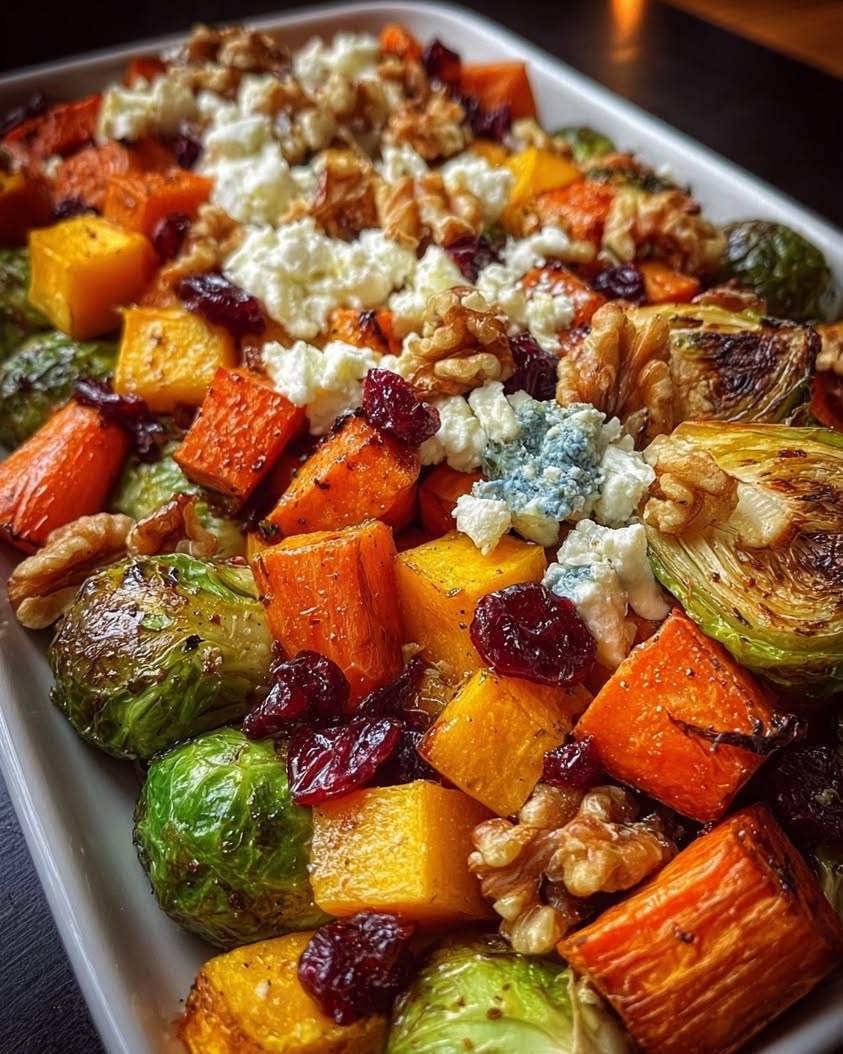
Roasted Winter Vegetables with Feta, Walnuts, and Honey Glaze: A Festive and Flavorful Side Dish
This recipe for Roasted Winter Vegetables with Feta, Walnuts, and Honey Glaze is a celebration of the season’s best produce. Moreover, it transforms humble root vegetables and sprouts into a stunning, caramelized masterpiece. The natural sugars in the butternut squash, carrots, and sweet potato concentrate and deepen in the oven’s heat. Consequently, you get a side dish that is both sweet and savory, with pops of tangy feta, crunchy walnuts, and a glossy cranberry-honey glaze.
Imagine a platter that looks as incredible as it tastes. This dish is perfect for holiday dinners, Sunday roasts, or any meal where you want to impress. The combination of textures and flavors is truly unforgettable. Ultimately, this recipe proves that vegetables can be the star of the show. They are hearty, satisfying, and packed with vibrant color.
Quick Recipe Highlights
- Flavor Profile: This dish offers a beautiful balance. You get the deep, caramelized sweetness from the roasted vegetables, contrasted by salty feta and earthy walnuts. Finally, the tart-sweet cranberry-honey glaze ties everything together perfectly.
- Texture: Expect a wonderful contrast. The roasted vegetables become tender with crispy, caramelized edges. Meanwhile, the walnuts add a crucial crunch, and the feta provides a creamy, crumbly element that melts in your mouth.
- Aroma: As it roasts, your kitchen will fill with the warm, sweet scent of caramelizing squash and carrots. Additionally, the rosemary and garlic release their herbal and pungent notes, creating an incredibly inviting fragrance.
- Visual Appeal: This platter is a feast for the eyes. It features vibrant orange squash, deep green Brussels sprouts, and bright carrots, all drizzled with a ruby-red glaze and sprinkled with white feta and toasted walnuts.
- Skill Level Needed: This is a beginner-friendly recipe. Basically, it involves chopping, tossing, and roasting. Therefore, no advanced techniques are required, making it accessible for cooks of all levels.
- Special Equipment: You only need a good, large baking sheet. For best results, use a rimmed half-sheet pan to allow for even roasting and to contain any juices. A sharp chef’s knife is also helpful for prepping the vegetables.
Recipe Overview
- Difficulty Level: This recipe is rated easy. The steps are straightforward: chop, season, roast, and assemble. There is no fussy technique or precise timing required beyond checking for doneness. Even novice cooks can achieve fantastic results with this method.
- Category: This dish falls squarely into the side dish category. It is an ideal accompaniment to roasted meats like turkey, chicken, or ham. Alternatively, it can be served as a hearty vegetarian main course over a bed of grains like quinoa or farro.
- Cuisine: While not tied to one specific tradition, it draws inspiration from modern American and Mediterranean cuisines. The use of feta, olive oil, and walnuts is classically Mediterranean. Meanwhile, the combination of winter squash and cranberries is a hallmark of American holiday tables.
- Cost: This is a very cost-effective recipe, especially in the fall and winter. Root vegetables are typically inexpensive. Furthermore, a little feta and a handful of walnuts go a long way. You can create an impressive, restaurant-quality dish without a restaurant price tag.
- Season: This recipe is perfect for late fall through winter. This is when butternut squash, sweet potatoes, and Brussels sprouts are at their peak of flavor and affordability. The warm, hearty nature of the dish is ideal for colder weather.
- Occasion: It is a superstar for holidays like Thanksgiving and Christmas. It also shines at potlucks and dinner parties. Basically, any gathering where you want a beautiful, make-ahead side dish is the perfect occasion for these roasted winter vegetables.
Why You’ll Love This Recipe
First and foremost, the taste and texture are simply outstanding. Each bite delivers a complex symphony of flavors. You experience the deep, almost nutty sweetness of the caramelized vegetables. Then, you get the salty punch from the feta, followed by the rich crunch of the walnuts. Finally, the sweet-tart glaze adds a final layer of brightness that makes the whole dish sing. This is not a boring vegetable side; it is a destination.
Convenience is another major benefit. Once the vegetables are chopped and on the sheet pan, the oven does most of the work. This gives you time to prepare the rest of your meal or entertain guests. Additionally, the components can be prepared ahead of time. You can chop the vegetables hours in advance, and the glaze can be made and stored in the fridge. Therefore, last-minute assembly is a breeze.
Nutritionally, this dish is a powerhouse. These roasted winter vegetables are loaded with vitamins, fiber, and antioxidants. Butternut squash and sweet potatoes are excellent sources of Vitamin A. Brussels sprouts offer Vitamin C and K. Meanwhile, walnuts provide healthy fats and protein. Consequently, you are serving a side dish that is as good for your body as it is for your taste buds.
For social gatherings, this platter has immense value. It looks incredibly impressive and abundant, making it perfect for sharing. The colorful presentation is a guaranteed conversation starter. Guests will appreciate the thoughtful combination of flavors and textures. Moreover, it caters to a variety of dietary preferences, as it is naturally vegetarian and can be easily adapted to be vegan or dairy-free.
Finally, it is remarkably cost-effective and accessible. The ingredients are humble and easy to find at any grocery store, especially in season. You do not need expensive or exotic items to create something special. This recipe demonstrates how a little technique and thoughtful pairing can elevate everyday ingredients into a celebratory dish. It is an approachable way to eat well and entertain beautifully.
Historical Background and Cultural Significance
The practice of roasting root vegetables is ancient, stemming from cooking over open fires. Every culture with a cold winter has a tradition of preserving and cooking hardy storage vegetables. In Europe, turnips, parsnips, and cabbages were staples. Meanwhile, in the Americas, indigenous peoples cultivated squash, sweet potatoes, and corn. The method of roasting concentrates flavors and sweetness, a technique understood and valued long before modern ovens.
Specifically, the combination on this platter reflects a more modern, fusion approach to cuisine. The use of feta cheese connects the dish to Greek and Eastern Mediterranean traditions, where brined cheeses are common. Walnuts have a long history in the Caucasus and Mediterranean regions. However, the inclusion of cranberries is distinctly North American, used by Native Americans and adopted into colonial and modern Thanksgiving celebrations.
This recipe’s evolution is a story of seasonal eating and global ingredient exchange. A century ago, these ingredients might not have shared a plate. Today, thanks to global trade and culinary experimentation, they come together harmoniously. The dish represents how contemporary cooking often blends local, seasonal produce with global pantry staples. It is a celebration of both tradition and innovation on one sheet pan.
Regional variations of roasted vegetable medleys are endless. In the American South, you might find sweet potatoes with pecans and a bourbon glaze. In Italy, roasted radicchio and squash with rosemary is common. A French version might include shallots and herbes de Provence. This particular version, with its sweet-tart glaze and salty cheese, has become a favorite on modern holiday tables across the United States and beyond, symbolizing abundance and harvest.
Ingredient Deep Dive
Butternut squash is a type of winter squash native to the Americas. It was a vital food source for indigenous peoples due to its hard shell, which allowed for long storage through winter. Nutritionally, it is incredibly rich in beta-carotene, which the body converts to Vitamin A, essential for eye and immune health. When selecting, choose squash that feels heavy for its size with a firm, matte skin. Store whole squash in a cool, dark place for months. For a substitution, try acorn squash or pumpkin.
Brussels sprouts, believe it or not, are a cultivar of the same species as cabbage and were likely cultivated in ancient Rome. They gained popularity in Brussels, Belgium, hence the name. They are packed with vitamins C and K, fiber, and antioxidants. Look for small, firm, bright green sprouts with tightly packed leaves. Avoid yellowing or loose leaves. Store them unwashed in a plastic bag in the refrigerator’s crisper. For a different flavor, broccolini or halved baby bok choy can be roasted similarly.
Feta cheese is a brined curd cheese traditionally made in Greece from sheep’s milk or a sheep-goat milk blend. Its history dates back to antiquity, and it has a protected designation of origin (PDO) in the EU. It provides a salty, tangy contrast and is a good source of calcium and protein. For a dairy-free version, use a firm, salty vegan cheese or omit it. For storage, keep feta submerged in its brine in the refrigerator to maintain moisture and flavor.
Walnuts are among the oldest tree foods, with remnants found in Neolithic sites. They are prized for their brain-like shape and high content of omega-3 fatty acids, which support heart and brain health. Always taste walnuts before using to ensure they are not rancid. For the best flavor, buy them raw and toast them yourself. Store walnuts in an airtight container in the freezer to prevent their oils from oxidizing. Pecans or toasted almonds make excellent substitutes.
The cranberry-honey glaze is a modern condiment that brings together two ancient foods. Cranberries are native North American berries used by Indigenous peoples for food and dye. Honey has been harvested for thousands of years across cultures. The combination creates a balance of tartness and floral sweetness that cuts through the richness of the dish. Use pure maple syrup or agave nectar for a vegan version. The glaze can be made ahead and gently reheated before serving.
Common Mistakes to Avoid
- Overcrowding the Pan: This is the most common error. If the vegetables are piled on top of each other, they will steam instead of roast. Consequently, you will miss out on the crucial caramelization. Always use a large enough pan and spread the vegetables in a single layer.
- Uneven Vegetable Sizes: Chopping your vegetables into different sizes guarantees uneven cooking. Smaller pieces will burn before larger ones are tender. Therefore, take care to cut them into uniform, bite-sized pieces for consistent roasting.
- Skipping the Preheating Step: Putting vegetables into a cold oven is a recipe for soggy results. A properly preheated oven ensures immediate searing and caramelization. Always allow your oven to reach the full temperature before adding the sheet pan.
- Using Old, Dull Spices: Dried rosemary and garlic powder lose potency over time. If your spices are more than a year old, their flavor will be weak. For the best taste, check the freshness of your dried herbs and spices before using them.
- Not Tossing the Vegetables Midway: Roasting without turning leads to one-sided browning. The parts touching the pan will cook faster. To ensure all sides get beautifully caramelized, give the vegetables a good stir or flip halfway through the cooking time.
- Adding the Toppings Too Early: If you add the feta, walnuts, and glaze before roasting, they will burn or melt away. These are finishing elements. Always add them after the vegetables are fully roasted and out of the oven for perfect texture and flavor.
- Neglecting to Taste for Seasoning: Vegetables need ample seasoning. Do not be shy with the salt and pepper before roasting. After roasting, taste the vegetables again. You can always add a final pinch of flaky sea salt or a crack of black pepper before serving.
- Using a Wet Baking Sheet: If you wash your vegetables and do not dry them thoroughly, or if the pan is wet, you introduce extra moisture. This steam hinders browning. Always pat vegetables dry and ensure your sheet pan is dry before adding oil.
Essential Techniques
Uniform Chopping: This technique is critical for even cooking. The goal is to create pieces with similar surface area and thickness. For the butternut squash and sweet potato, aim for ¾-inch cubes. Halve the Brussels sprouts if they are large. Cut the carrots into similar-sized coins or batons. Consistent size means every piece will be perfectly tender and caramelized at the same time, preventing a mix of burnt and undercooked vegetables.
High-Heat Roasting: Roasting at 400°F (200°C) is the key to caramelization, not just cooking. This high heat causes the natural sugars in the vegetables to brown and intensify in flavor, a process known as the Maillard reaction. The technique transforms the vegetables from simply soft to deeply flavorful and complex. The visual cue for success is golden-brown, slightly crispy edges on most pieces. If the vegetables are just soft and pale, they need more time or a higher oven temperature.
Creating a Simple Glaze: Reducing a liquid mixture on the stove concentrates its flavor. For this cranberry-honey glaze, simmering gently allows the cranberry juice to thicken slightly and the honey to integrate fully. The technique is about patience; boiling too vigorously can cause the honey to scorch or the mixture to become too thick and sticky. A successful glaze will coat the back of a spoon and have a glossy, syrupy consistency that drizzles beautifully.
Pro Tips for Perfect Roasted Winter Vegetables
For extra crispy edges, place the sheet pan in the oven while it preheats. Adding the oiled vegetables to a hot pan gives them an immediate sear.
If your vegetables are releasing a lot of water, roast them for 20 minutes, then remove the pan and carefully pour off any accumulated liquid before returning it to the oven to finish crisping.
To prevent the walnuts from becoming soggy, toast them separately in a dry skillet or in the oven for 5-7 minutes until fragrant. Let them cool before sprinkling over the dish.
For a more robust flavor, toss the vegetables with a tablespoon of balsamic vinegar along with the olive oil and spices before roasting. The acidity balances the sweetness.
If preparing for a crowd, use two sheet pans instead of overcrowding one. Rotate the pans between the upper and lower oven racks halfway through cooking for even browning.
Let the roasted vegetables rest for 5 minutes after removing them from the oven before adding the toppings. This allows them to firm up slightly, making them easier to handle and plate.
For a beautiful presentation, drizzle the glaze in zig-zags over the arranged vegetables, then sprinkle the feta and walnuts on top. This creates visual interest and ensures every bite gets a bit of everything.
Variations and Adaptations
For regional twists, consider a Moroccan variation by swapping the rosemary for ras el hanout and adding chickpeas to the roasting pan. Finish with chopped mint and a drizzle of yogurt. A Southern adaptation could use sweet potatoes as the base, with pecans instead of walnuts and a maple-bourbon glaze. An Italian-inspired version might include cherry tomatoes, red onion, and fresh basil with a balsamic reduction.
Seasonal adaptations are simple. In spring, swap in asparagus, baby carrots, and new potatoes. For summer, use zucchini, bell peppers, and eggplant. The roasting method remains the same; just adjust cooking time for more delicate vegetables. In deep winter, add parsnips or turnips to the mix for an even heartier dish. The cranberry glaze can become a pomegranate molasses glaze in the winter or an orange-honey glaze in the spring.
Dietary modifications are straightforward. For a vegan version, omit the feta or use a vegan alternative, and ensure the honey in the glaze is replaced with maple syrup or agave. For a nut-free dish, substitute toasted pumpkin seeds (pepitas) or sunflower seeds for the walnuts. To make it gluten-free, simply verify that all packaged ingredients like cranberry juice are certified gluten-free, though they naturally should be.
Flavor variations can keep this recipe exciting. Try using smoked paprika or chili powder in the seasoning mix for a smoky, spicy kick. Swap the feta for goat cheese for a tangier, creamier finish, or use blue cheese for a stronger flavor profile. Add fresh herbs like thyme or sage to the roasting oil. For the glaze, experiment with different juices like pomegranate or orange, or add a pinch of cinnamon or cayenne pepper.
Serving and Presentation Guide
Plating is key for visual impact. Transfer the roasted vegetables to a large, shallow platter or a rustic wooden board instead of serving them from the sheet pan. Arrange them with some intentionality, perhaps grouping some of the different vegetable types together rather than mixing them completely. This creates a more artistic and abundant look. Leave a little negative space on the platter for the toppings to shine.
Garnishing adds the final touch. Drizzle the cranberry-honey glaze in an artistic pattern over the vegetables. Generously scatter the crumbled feta and toasted walnuts over the top. For a fresh, colorful finish, add a handful of bright green chopped parsley, fresh rosemary sprigs, or even a few extra whole cranberries if you have them. This adds a pop of color and a hint of freshness.
For traditional accompaniments, this dish pairs classically with roasted turkey, baked ham, or a standing rib roast. It also complements simpler proteins like roasted chicken breasts or pan-seared pork chops. For a vegetarian feast, serve it alongside a lentil loaf, stuffed mushrooms, or a rich mushroom gravy. It is substantial enough to be the centerpiece of a meatless meal.
Modern serving suggestions include using the roasted vegetables as a topping for a fall-inspired salad with mixed greens and a sharp vinaigrette. Alternatively, spoon them over a bowl of creamy polenta or risotto. They also make an incredible filling for a savory galette or tart, or can be folded into cooked pasta with a little of the glaze thinned out as a sauce.
Wine and Beverage Pairing
Wine pairings should complement the dish’s sweet, savory, and earthy notes. A medium-bodied white wine like an Oregon Pinot Gris or a French Viognier has enough acidity to cut through the richness and fruitiness to match the sweetness. For red wine lovers, a fruity but low-tannin red like a Beaujolais (Gamay) or a Pinot Noir works beautifully. Their bright red fruit flavors echo the cranberry and won’t overpower the vegetables.
Non-alcoholic alternatives can be just as sophisticated. A sparkling apple cider provides sweet effervescence. For a warmer option, try a mulled cranberry juice spiced with cinnamon and orange. A simple honey-ginger lemonade would also be delightful, as the ginger complements the earthy vegetables and the honey ties into the glaze. Iced herbal tea, like a peppermint or hibiscus blend, offers a refreshing contrast.
If serving this as part of a holiday brunch or considering a post-meal drink, coffee and tea pairings work well. A medium-roast coffee with notes of caramel or nut will mirror the flavors in the dish. For tea, a smoky Lapsang Souchong can stand up to the roasted flavors, or a spiced chai tea will complement the warm spices if you’ve added any. Serve these beverages hot to provide a comforting balance to the meal.
Storage and Shelf Life
Proper storage is essential for leftovers. First, allow the assembled dish to cool completely to room temperature. Then, transfer the vegetables (without any fresh herb garnishes) to an airtight container. They can be stored in the refrigerator for up to 4 days. Note that the walnuts may lose some crunch over time, so you may want to store them separately and add them fresh when reheating.
Reheating instructions are important for restoring texture. The best method is to reheat in a 350°F (175°C) oven spread on a baking sheet for 10-15 minutes until warmed through. This will help re-crisp the edges. You can also use an air fryer for a few minutes. Avoid microwaving if possible, as it will make the vegetables soft and the feta may melt unevenly. If you must microwave, do so in short bursts.
Freezing is possible but with caveats. The roasted vegetables themselves (without toppings or glaze) can be frozen in a single layer on a baking sheet, then transferred to a freezer bag for up to 3 months. However, the texture will be softer upon thawing and reheating. The feta and walnuts do not freeze well separately. The glaze can be frozen in an ice cube tray for easy portioning. Thaw everything in the refrigerator overnight before reheating and assembling.
Make Ahead Strategies
A detailed prep timeline can save stress. Up to two days ahead, chop all the vegetables. Store them in separate airtight containers or resealable bags in the refrigerator. The day before, make the cranberry-honey glaze and store it in a jar in the fridge. Toast the walnuts and store them at room temperature. On the day of serving, simply toss the cold vegetables with oil and seasonings, roast, and assemble with the prepped components.
Understanding the quality impact is key. Pre-chopping vegetables may cause minimal moisture loss but does not affect flavor. The glaze actually benefits from sitting, as the flavors meld. The only element that must be done close to serving is the roasting itself and the final assembly with feta and walnuts. This ensures the vegetables are hot and crisp and the toppings retain their intended textures.
For assembly, have all your components ready: the roasted vegetables hot from the oven, the glaze gently warmed (so it drizzles easily), and the feta and walnuts measured out. Assemble directly on the serving platter for both efficiency and presentation. This last-minute assembly is quick but makes all the difference in serving a dish that looks and tastes freshly made.
Scaling Instructions
Halving the recipe is simple for smaller households. Use exactly half of each ingredient. A standard quarter-sheet pan is perfect for this amount. The roasting time may be slightly reduced by 5-10 minutes, so start checking for doneness early. All other techniques remain the same. This is a great way to enjoy this dish without a week of leftovers, though the leftovers are fantastic.
Doubling or tripling for a crowd requires planning. You must use multiple sheet pans to avoid overcrowding. Do not stack two pans on one oven rack; instead, use the upper and lower thirds of your oven and swap their positions halfway through cooking. You may need to roast in batches if your oven is small. The glaze can be easily multiplied in a saucepan. Consider mixing the dry seasonings in a small bowl beforehand to ensure even distribution over the large volume of vegetables.
Nutritional Deep Dive
This dish is a macronutrient-balanced side. It provides complex carbohydrates from the vegetables for sustained energy. The olive oil and walnuts contribute healthy monounsaturated and polyunsaturated fats, including omega-3s. The feta cheese adds a modest amount of protein and fat. While not a high-protein meal on its own, it contributes valuable fiber, vitamins, and minerals that complement a protein main course perfectly.
The micronutrient profile is impressive. Butternut squash and sweet potatoes are loaded with beta-carotene (Vitamin A), crucial for vision and immunity. Brussels sprouts are an excellent source of Vitamin K for bone health and Vitamin C. Carrots add more Vitamin A and potassium. Walnuts provide manganese and copper. Together, they create a nutrient-dense dish that supports overall health, reduces inflammation, and provides a wide spectrum of antioxidants.
Dietary Adaptations
For a gluten-free version, this recipe is naturally compliant. Simply ensure that any pre-packaged ingredients, like the cranberry juice, are certified gluten-free, though fruit juice rarely contains gluten. No other modifications are needed.
For a dairy-free or vegan adaptation, omit the feta cheese. You can leave it out entirely or substitute with a firm, salty vegan cheese alternative. For the glaze, replace the honey with an equal amount of pure maple syrup, agave nectar, or even vegan brown rice syrup.
For a Paleo version, omit the feta cheese and ensure the cranberry juice has no added sugar. The honey is Paleo-approved. All vegetables, olive oil, nuts, and natural sweeteners are staples of the Paleo diet, making this an excellent compliant side dish.
For a lower-carb or Keto adaptation, focus on the Brussels sprouts and reduce or omit the higher-carb sweet potato and butternut squash. Increase the volume with more Brussels sprouts, broccoli, and cauliflower. The walnuts, feta, oil, and glaze (made with a sugar-free sweetener) can remain.
Troubleshooting Guide
If your vegetables are soggy and not browning, the oven temperature is likely too low, the pan is overcrowded, or the vegetables were too wet. For next time, ensure the oven is fully preheated, use two pans if needed, and thoroughly pat vegetables dry. To salvage the current batch, you can spread them back out on a hot pan and broil for 2-3 minutes, watching closely to add some color.
If the vegetables are burning on the bottom before they are tender, your oven rack may be too low, or your oven may have hot spots. Try moving the rack to the center position. Using parchment paper on the sheet pan can also provide a slight buffer against direct heat. Stirring the vegetables more frequently during roasting can help prevent one side from taking all the heat.
If the glaze is too thick, it may have reduced too much. Simply whisk in a teaspoon of warm water or more cranberry juice until it reaches a drizzle-able consistency. If it is too thin, return it to the stove and simmer for a few more minutes to reduce further. Remember it will thicken slightly as it cools.
Recipe Success Stories
Community feedback on this roasted winter vegetables recipe has been overwhelmingly positive. Many readers report it becoming their new go-to holiday side, often receiving more compliments than the main turkey. One common success story involves picky eaters, especially children, who normally avoid Brussels sprouts but devour them when caramelized and paired with the sweet glaze and crunchy walnuts. It is a proven crowd-pleaser.
Adaptation stories from readers are inspiring. Some have added diced apples or pears in the last 15 minutes of roasting. Others have used it as a hearty pizza topping with goat cheese. One reader blended the leftovers with broth to make a fantastic roasted vegetable soup. These stories highlight the recipe’s versatility and how it sparks creativity in the kitchen, encouraging cooks to make it their own.
Frequently Asked Questions
Can I use frozen vegetables? I do not recommend it for this recipe. Frozen vegetables release too much water during roasting, preventing proper caramelization. The result will be steamed, soggy vegetables. For the best texture and flavor, fresh vegetables are essential.
Can I make this without the cranberry-honey glaze? Absolutely. The roasted vegetables with feta and walnuts are delicious on their own. You could simply drizzle with a good balsamic vinegar or a squeeze of fresh orange juice before serving for acidity.
What can I use instead of walnuts? Pecans, almonds, or pine nuts are excellent substitutes. For a nut-free version, try toasted pumpkin seeds (pepitas) or sunflower seeds for a similar crunchy element.
How do I know when the vegetables are done? They should be tender enough to easily pierce with a fork and have golden-brown, caramelized spots on the edges. The Brussels sprouts may have some darker, crispy outer leaves, which is desirable.
Can I prepare this dish entirely ahead of time? You can prep all components ahead, but for the best texture, roast the vegetables and assemble the dish just before serving. You can roast them up to 2 hours ahead and leave them at room temperature, then briefly reheat in a warm oven before adding toppings.
Is there a way to reduce the sweetness? Yes. You can reduce or omit the honey in the glaze, relying on the tartness of the cranberry juice. You can also add a tablespoon of apple cider vinegar to the glaze to balance it. On the vegetables, use more black pepper and rosemary to emphasize savory notes.
My feta seems very salty. What can I do? If your feta is particularly salty, you can rinse the block briefly under cold water and pat it dry before crumbling. Alternatively, reduce the amount you sprinkle over the top, or seek out a milder feta or goat cheese.
Can I use different herbs? Definitely. Fresh thyme, sage, or oregano would be wonderful. If using dried herbs other than rosemary, remember that their potency varies. Start with a teaspoon and adjust to taste.
Additional Resources
If you loved this recipe for Roasted Winter Vegetables, explore other seasonal sheet-pan dinners. A sheet-pan salmon with asparagus and lemon or a chicken sausage with potatoes and peppers uses the same convenient, low-cleanup method. Mastering the sheet-pan technique opens up a world of easy, healthy weeknight meals.
For more technique guides, consider reading about how to properly cut and peel butternut squash safely, or the best methods for toasting nuts to perfection. Understanding these fundamental skills will improve your efficiency and results in all your cooking endeavors, making recipes like this one even easier to execute flawlessly.
{“success”:true,”message”:”Recipe created successfully”,”post_id”:8215,”tasty_recipe_id”:8215,”shortcode”:” Print
Caramelized Butternut Squash, Carrots, Brussels Sprouts, and Sweet Potato with Feta, Walnuts, and Cranberry-Honey Glaze
Description
A vibrant roasted vegetable medley with sweet caramelization, tangy feta, crunchy walnuts, and a glossy cranberry-honey glaze for a festive side dish.
Ingredients
For the Crust:
- 1 small butternut squash, peeled and cubed
- 2 large carrots, sliced into rounds
- 1 lb Brussels sprouts, trimmed and halved
- 1 large sweet potato, peeled and cubed
- 3 tbsp olive oil
- 1 tsp salt
- 1/2 tsp black pepper
- 1 tsp dried thyme
- 1/2 cup crumbled feta cheese
- 1/2 cup chopped walnuts
- 1/4 cup dried cranberries
- 2 tbsp honey
- 1 tbsp balsamic vinegar
Instructions
1. Prepare the Crust:
- Preheat oven to 400°F (200°C). Line a large baking sheet with parchment paper.
- In a large bowl, toss butternut squash, carrots, Brussels sprouts, and sweet potato with olive oil, salt, pepper, and thyme until evenly coated.
- Spread vegetables in a single layer on the baking sheet. Roast for 25-30 minutes, stirring halfway, until tender and caramelized.
- While vegetables roast, combine honey and balsamic vinegar in a small bowl. Stir in dried cranberries and set aside.
- Remove vegetables from oven. Drizzle with cranberry-honey glaze and toss gently. Top with crumbled feta and walnuts before serving.
Notes
You can customize the seasonings to taste.

I’m Billy, a classically trained culinary school graduate from The Culinary Institute of America with over 12 years in the restaurant industry and over 19 years of cooking experience.