
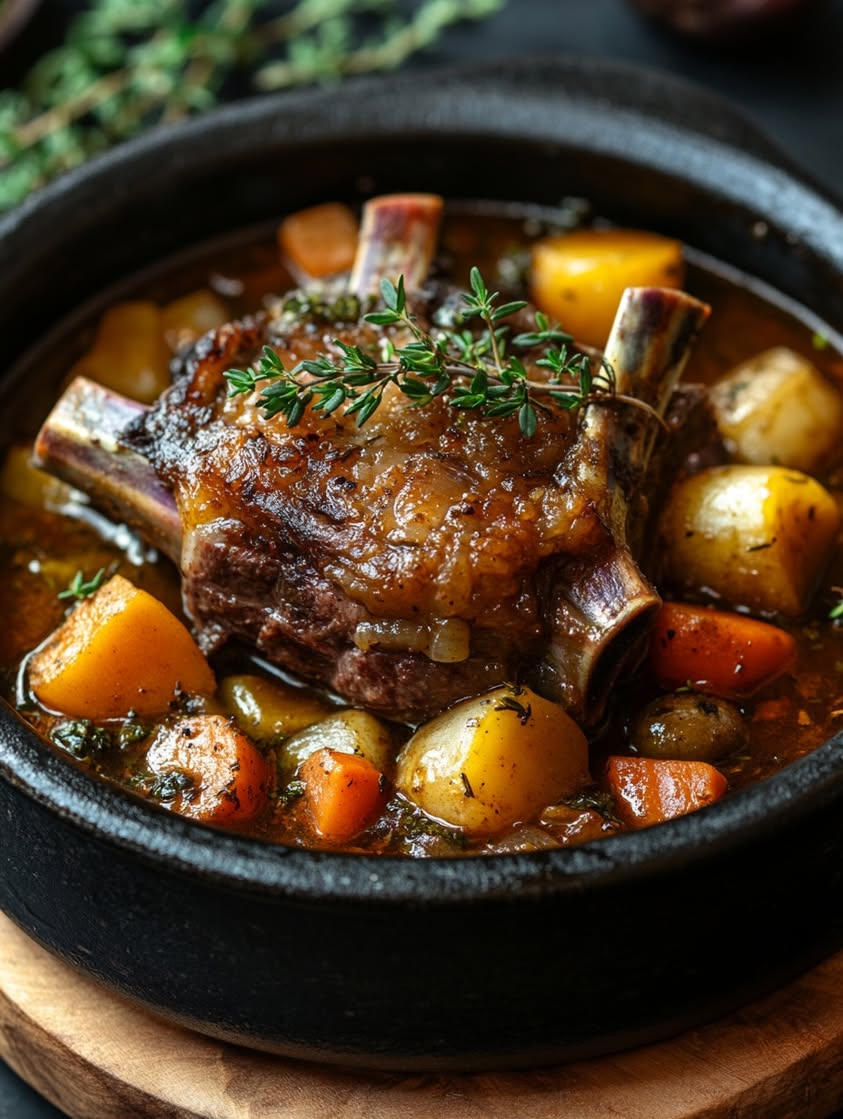
Slow-Braised Lamb Shanks with Garden Vegetables and Thyme-Infused Gravy: A Cozy, Fall-Apart Feast
Imagine a dish so comforting and rich that it warms you from the inside out. That is the magic of Slow-Braised Lamb Shanks with Garden Vegetables and Thyme-Infused Gravy. This recipe transforms humble ingredients into a spectacular meal. The process is a labor of love, but the result is pure culinary gold. The meat becomes incredibly tender, falling off the bone with the gentlest nudge of a fork. Meanwhile, the vegetables melt into the sauce, creating a gravy that is deeply flavorful and aromatic.
Furthermore, this dish is perfect for a special Sunday dinner or a festive gathering. The long, slow cooking time allows the flavors to develop and meld beautifully. As the lamb shanks braise, your kitchen fills with an irresistible scent of herbs, wine, and roasting meat. Ultimately, this meal feels both rustic and elegant. It promises to impress your guests and satisfy your soul. Let’s explore how to create this unforgettable Slow-Braised Lamb Shanks with Thyme Gravy and Garden Vegetables.
Quick Recipe Highlights
- Flavor Profile: This dish delivers a complex, savory depth. The lamb offers a rich, slightly gamey base, beautifully balanced by the sweetness of carrots and parsnips. Additionally, the red wine and tomato paste add a robust acidity, while the thyme and bay leaf provide an earthy, aromatic backbone.
- Texture: The texture is a study in beautiful contrasts. The lamb shank meat becomes meltingly tender and succulent. Conversely, the root vegetables soften but retain a pleasant bite. Finally, the gravy is luxuriously silky and coats every element perfectly.
- Aroma: The cooking aroma is absolutely intoxicating. Initially, you’ll smell the savory sear of the lamb. Then, the scent of sautéed onions and garlic fills the air. Finally, as it braises, the herbal notes of thyme and the rich fragrance of red wine and stock take over.
- Visual Appeal: This is a stunning, rustic dish. The browned lamb shanks rest majestically on a bed of colorful vegetables. Subsequently, the glossy, deep brown gravy drapes over everything, making the plate look hearty and inviting. A final sprinkle of fresh thyme adds a vibrant green touch.
- Skill Level Needed: This recipe is accessible to an intermediate home cook. It requires patience and attention to foundational techniques like searing and deglazing. However, the hands-on time is minimal; the oven does most of the work. Following the steps carefully ensures a perfect result.
- Special Equipment: You will need a large, heavy-bottomed Dutch oven or oven-safe pot with a tight-fitting lid. This vessel is crucial for even heat distribution and braising. A good pair of kitchen tongs is also essential for safely turning the shanks. Finally, a fine-mesh sieve helps strain the gravy for a smooth finish.
Recipe Overview
- Difficulty Level: We rate this recipe as intermediate. The techniques themselves are not overly complex, but they require precision. Success hinges on properly searing the meat to develop flavor and patiently braising it low and slow. Managing the gravy reduction also needs a watchful eye. Overall, it’s a forgiving process that rewards careful preparation.
- Category: This is a quintessential main course, perfect for a hearty dinner. It fits beautifully into categories like “comfort food,” “special occasion meals,” and “Sunday suppers.” Moreover, it’s a fantastic “make-ahead” dish, as the flavors often improve after a day in the refrigerator.
- Cuisine: The dish draws inspiration from classic French and Mediterranean braising traditions. The use of red wine, aromatic vegetables, and herbs like thyme is foundational to these cuisines. It’s a rustic, peasant-style dish elevated through careful technique, representing a global approach to braising tough cuts of meat.
- Cost: This is a moderately priced meal for a special occasion. Lamb shanks are a premium cut, but they are often more affordable than other lamb roasts. The vegetables and pantry staples are inexpensive. Considering the impressive yield and restaurant-quality result, it offers excellent value for a celebratory dinner.
- Season: This recipe shines in the cooler months of fall and winter. The hearty, warming nature of the braise is ideal for cold weather. Additionally, root vegetables like carrots and parsnips are at their peak in autumn, providing the best flavor and texture for the dish.
- Occasion: It is perfect for a relaxed yet impressive dinner party, a holiday meal like Easter, or a cozy family gathering. The long cook time allows you to prepare in advance and enjoy time with your guests. It creates a sense of occasion and shared comfort.
Why You’ll Love This Recipe
First, the taste and texture are utterly divine. The slow braising process breaks down the lamb’s connective tissue, resulting in meat that is unbelievably tender and flavorful. Each bite is infused with the rich, savory notes of the gravy, the sweetness of the vegetables, and the herbal hint of thyme. It’s a deeply satisfying eating experience that feels both rustic and luxurious. The contrast between the fall-apart meat and the soft vegetables in the silky gravy creates a perfect harmony on your palate.
Next, consider the convenience and preparation benefits. Although the total cook time is long, the active hands-on time is surprisingly short. You can sear the shanks and sauté the vegetables in about 30 minutes. After that, the oven takes over for several hours. This frees you up to prepare side dishes, set the table, or simply relax. Furthermore, this dish often tastes even better the next day, making it a fantastic option for meal prep or stress-free entertaining.
Moreover, this meal offers notable nutritional advantages. Lamb is an excellent source of high-quality protein, iron, zinc, and B vitamins. The garden vegetables contribute essential vitamins, minerals, and dietary fiber. Cooking everything together in one pot helps retain nutrients. Choosing a balanced side, like mashed cauliflower or a green salad, can create a well-rounded, nourishing meal that fuels your body while delighting your senses.
Additionally, the social and entertaining value is immense. Presenting a whole braised lamb shank to each guest is dramatic and generous. It sparks conversation and creates a memorable dining event. The process of sharing such a hearty, family-style dish fosters connection and warmth. It tells your guests that you cared enough to prepare something special, turning a simple dinner into a cherished experience.
Finally, it is cost-effective and accessible. While lamb shanks are a special-occasion cut, they are typically less expensive than leg of lamb or chops. You can feed four people generously with just four shanks. The remaining ingredients are common pantry staples. Compared to dining out at a restaurant serving a similar dish, making this at home saves significant money and allows you to control the quality of every ingredient.
Historical Background and Cultural Significance
The tradition of braising tough cuts of meat like lamb shanks is ancient and global. Essentially, it was a practical solution for making less desirable, sinewy cuts palatable and tender through long, moist cooking. Every culture with a history of sheep herding has its version of a slow-cooked lamb dish. The method of Slow-Braised Lamb Shanks with Thyme Gravy and Garden Vegetables we know today is heavily influenced by European peasant cooking, where maximizing flavor from minimal resources was essential.
In terms of cultural importance, braised lamb shanks hold a special place in many culinary traditions. For instance, in Mediterranean countries like Greece and Italy, lamb is often the centerpiece of Easter celebrations. The slow-cooking method symbolizes patience and the transformation of simple ingredients into a feast. Similarly, in French cuisine, dishes like “Souris d’Agneau” (lamb shanks) are classic bistro fare, representing the heart and soul of rustic French cooking known for its deep, developed flavors.
The evolution of this recipe mirrors the history of home cooking and restaurant cuisine. Originally, it would have been cooked in a heavy pot over an open fire or in a hearth. The addition of wine, which was a way to use leftover wine, and local herbs refined the dish. As cooking technology advanced with the home oven, the technique became more standardized. Today, chefs and home cooks alike continue to refine the braise, experimenting with different braising liquids and aromatics while honoring the core technique.
Regional variations are fascinating and abundant. In Greece, lamb shanks might be braised with lemon, oregano, and olive oil. A Moroccan tagine version would include warm spices like cumin, cinnamon, and apricots. An Italian “osso buco” style uses white wine and gremolata. The version with Garden Vegetables and Thyme-Infused Gravy leans into a more French-inspired profile, highlighting the natural flavors of the meat and root vegetables with a red wine base. This adaptability is a testament to the recipe’s fundamental soundness and universal appeal.
Ingredient Deep Dive
Lamb Shanks: The lamb shank is a cut from the lower leg of the sheep, a muscle that works hard, making it tough but full of collagen. During the long, slow braise, this collagen melts into gelatin, creating that signature fall-off-the-bone tenderness and enriching the gravy. Nutritionally, lamb is a powerhouse of heme iron, which is easily absorbed, and zinc, crucial for immune function. When selecting shanks, look for ones that are well-trimmed of excess fat but still have a good layer of fat and connective tissue, as this is key to flavor and texture. For the best results, choose shanks of similar size so they cook evenly.
Fresh Thyme: Thyme is a quintessential herb in Western braising. Its tiny leaves pack a potent, earthy, and slightly minty flavor that stands up beautifully to long cooking without becoming bitter. Historically, thyme has been associated with courage and purification. From a health perspective, it contains thymol, a compound with antioxidant properties. For this recipe, you use both whole sprigs during braising and fresh leaves for garnish. To store fresh thyme, wrap it in a damp paper towel and place it in a plastic bag in the refrigerator. If you must substitute, dried thyme can work, but use one-third the amount, as it is more concentrated.
Root Vegetables (Carrots, Parsnips, Onion): These vegetables form the “sofrito” or flavor base of the braise. The onions caramelize, providing sweetness and depth. Carrots and parsnips add their own sugars, which further caramelize and balance the savory notes. They also contribute body to the gravy as they break down. Nutritionally, they are excellent sources of beta-carotene (from carrots), fiber, and vitamins. Choose firm, unblemished vegetables. Their sturdy nature allows them to hold up during the extended cooking time, unlike more delicate veggies which would turn to mush. They are the essential Garden Vegetables that define this dish.
Red Wine: The red wine in the braising liquid serves multiple purposes. Its acidity helps tenderize the meat and brightens the rich flavors. The alcohol carries fat-soluble flavors, enhancing the overall taste profile. As it reduces, it contributes complex fruit and tannic notes to the Thyme-Infused Gravy. Choose a dry, drinkable red wine like a Cabernet Sauvignon, Merlot, or Syrah. Avoid “cooking wine” as it contains added salt and preservatives. The rule of thumb is to cook with a wine you would enjoy drinking. The alcohol cooks off during the braising process, leaving only the flavor behind.
Common Mistakes to Avoid
- Not Searing the Meat Properly: Skipping or rushing the searing step is a major error. Searing creates a flavorful fond (the browned bits) on the bottom of the pot, which is the foundation of your gravy. Pat the shanks very dry with paper towels before searing to ensure a good crust, and do not crowd the pot.
- Using Boiling Liquid to Deglaze: When you add wine or stock to deglaze the pot, make sure it is at room temperature or slightly warm. Pouring cold liquid into a very hot pot can cause the pot to warp. Conversely, using boiling liquid is fine and helps the deglazing process happen quickly.
- Braising at Too High a Temperature: A gentle simmer is the goal, not a rolling boil. If the braising liquid is boiling aggressively, the meat will become tough and dry, not tender. The ideal oven temperature is around 325°F (163°C), which maintains a steady, gentle bubble.
- Overcrowding the Pot with Vegetables: While you want a good vegetable base, piling in too many can create steam and prevent proper browning of the meat and vegetables. It can also dilute the braising liquid. Cut the vegetables into large, uniform chunks to prevent them from disintegrating.
- Not Straining the Gravy: After braising, the vegetables and herbs have given up their flavor. Straining the liquid is crucial for a smooth, elegant Thyme-Infused Gravy. Skipping this step results in a chunky, rustic sauce, which may be desirable for some, but not for the classic refined finish.
- Seasoning at the End Only: Season in layers. Salt and pepper the lamb before searing. Season the vegetables as you sauté them. Taste and adjust the seasoning of the gravy after reducing it. This builds a more complex and balanced flavor profile throughout the dish.
- Cutting the Meat to Test Doneness: Do not cut into the lamb shank to see if it’s done. This will release precious juices. Instead, test doneness by gently poking with a fork or trying to pull the meat away from the bone. It should offer very little resistance.
- Skipping the Resting Period: Allow the shanks to rest for about 10 minutes after removing them from the gravy. This lets the juices redistribute throughout the meat, ensuring each bite is moist and succulent. Cover them loosely with foil to keep warm.
Essential Techniques
Searing: Searing is the first and most critical step for building flavor in your Slow-Braised Lamb Shanks. It involves cooking the meat over high heat to create a caramelized brown crust via the Maillard reaction. This reaction develops hundreds of new flavor compounds. To master it, ensure your pot is very hot before adding the oil, and pat the lamb shanks completely dry. Do not move them for a few minutes to allow a proper crust to form. A common pitfall is crowding the pot, which steams the meat instead of searing it. Success is visible when the shanks release easily from the pot and have a deep, even brown color.
Deglazing: Deglazing is the process of adding liquid to a hot pan to dissolve the flavorful fond (browned bits) left after searing. This technique captures all the concentrated flavor and integrates it into your sauce. After removing the seared meat, you typically add aromatics like onions, then pour in your wine or stock. Use a wooden spoon to scrape the bottom of the pot vigorously as the liquid bubbles. The key is to ensure all the browned bits are lifted. If you skip this, you leave a tremendous amount of flavor behind. A successful deglaze will result in a dark, fragrant liquid base for your braise.
Braising: Braising is a combination cooking method: first searing (dry heat), then simmering in liquid (moist heat) in a covered pot. This technique is perfect for tough cuts like lamb shanks. The moist heat gently breaks down collagen into gelatin over several hours, making the meat tender. The covered environment prevents evaporation, keeping everything moist. The liquid should come about halfway up the sides of the meat, not submerge it completely. A visual cue for proper braising is a very gentle, occasional bubble in the liquid, not a vigorous boil. The oven provides the most consistent, hands-off heat for this process.
Reducing a Sauce: Reducing is simply simmering a liquid to evaporate water, which concentrates the flavors and thickens the consistency. After straining your braising liquid to make the Thyme-Infused Gravy, you simmer it uncovered. As it reduces, the flavors intensify and the sauce will coat the back of a spoon. Be patient and stir occasionally. A common mistake is reducing too much, resulting in an overly salty, thick paste. To avoid this, taste frequently and stop when the flavor is rich and balanced. You can always reduce more, but you can’t add the evaporated liquid back.
Pro Tips for Perfect Slow-Braised Lamb Shanks
- For the deepest flavor, season the lamb shanks generously with salt and pepper the night before and leave them uncovered on a rack in the fridge. This dry-brine helps season the meat throughout and promotes better browning.
- Use a mix of stock and water if your stock is very strong or salty. A rich homemade stock is ideal, but a good-quality, low-sodium store-bought broth works perfectly. The goal is to enhance, not overpower, the lamb’s natural flavor.
- Add a tablespoon of tomato paste to the sautéing vegetables and cook it for a minute until it darkens slightly. This “toasting” removes any raw, tinny taste and adds a wonderful savory depth (umami) to the entire dish.
- If your braising liquid seems too thin after reducing, you can create a quick slurry. Mix a teaspoon of cornstarch with a tablespoon of cold water and whisk it into the simmering gravy. Let it cook for a minute to thicken and lose the starchy taste.
- For an extra layer of flavor, add a Parmesan rind to the braising pot. It will melt into the sauce, adding a subtle savory, nutty complexity that complements the lamb beautifully. Remove any unmelted bits before straining.
- Let the finished dish rest for 10-15 minutes before serving. This allows the meat fibers to relax and reabsorb juices, ensuring every bite is moist. It also gives you time to finish your side dishes and set the table.
- Garnish with more than just thyme. A sprinkle of finely chopped fresh parsley or a gremolata (lemon zest, garlic, parsley) added just before serving introduces a bright, fresh contrast that cuts through the richness.
Variations and Adaptations
Regional Variations: Explore the world through your Dutch oven. For a Greek twist, use oregano instead of thyme, add a cinnamon stick, and finish with a squeeze of lemon. A Moroccan-inspired version involves spices like cumin, coriander, and smoked paprika, with dried apricots and chickpeas added halfway through braising. For an Italian “Osso Buco” style, use white wine, omit the root vegetables, and garnish with a gremolata of lemon zest, garlic, and parsley.
Seasonal Adaptations: While root vegetables are classic for fall and winter, adapt the Garden Vegetables for spring and summer. In spring, use fresh peas, asparagus, and fava beans, adding them in the last 30 minutes of braising. For summer, incorporate zucchini, eggplant, and bell peppers, again adding them later to prevent them from becoming too soft. The braising technique remains the same, but the vegetable profile changes with the season.
Dietary Modifications: This recipe is naturally gluten-free if you use a gluten-free thickener like cornstarch or simply rely on reduction. For a dairy-free version, ensure your stock has no dairy and use olive oil instead of butter for sautéing if preferred. To make it Whole30 or paleo, omit the wine and use additional stock mixed with a tablespoon of red wine vinegar for acidity, and thicken the gravy by reduction only.
Flavor Variations: Experiment with different aromatic bases. Swap half the onion for leeks or shallots. Add a few cloves of smashed garlic to the pot. Introduce other herbs like rosemary or a bay leaf. For a deeper, smoky note, add a teaspoon of smoked paprika or a single chipotle in adobo sauce to the braising liquid.
Texture Modifications: For an ultra-smooth, restaurant-style Thyme-Infused Gravy, after straining, you can blend a small amount of the softened vegetables back into the liquid using an immersion blender. For a chunkier, more rustic stew-like consistency, skip straining altogether and serve the shanks directly with the softened vegetables and liquid as is.
Presentation Alternatives: Instead of serving one whole shank per person, you can shred all the meat off the bone after cooking. Mix the shredded meat back into the gravy and serve over creamy polenta, mashed potatoes, or pappardelle pasta. This stretches the dish further and offers a different, equally delicious eating experience.
Serving and Presentation Guide
Plating is key to showcasing this beautiful dish. Place a generous scoop of creamy mashed potatoes, polenta, or couscous in the center of a wide, shallow bowl. Carefully lean a lamb shank against the mound. Spoon the glossy Thyme-Infused Gravy over the meat and around the plate, allowing some to pool at the bottom. Scatter some of the tender braised Garden Vegetables around the sides. This creates height and visual interest, making the plate look abundant and chef-crafted.
Garnishing adds the final touch of freshness and color. A simple sprinkle of finely chopped fresh thyme or parsley is classic. For a brighter note, add a gremolata of lemon zest, garlic, and parsley. A few microgreens or a drizzle of high-quality extra virgin olive oil just before serving can elevate the presentation from home-cooked to gourmet. Remember, garnish should complement, not overwhelm, the main event.
Traditional accompaniments are simple and starchy, designed to soak up the incredible gravy. Creamy mashed potatoes are the ultimate partner. Buttered egg noodles, soft polenta, or a crusty loaf of sourdough bread are also perfect. For a lighter side, consider a simple arugula salad with a lemon vinaigrette to cut the richness, or some simply steamed green beans.
Modern serving suggestions might include deconstructing the dish. Serve the shredded lamb on a crispy potato galette. Alternatively, use the rich gravy as a base for a gourmet shepherd’s pie topped with cauliflower mash. For a family-style feast, present the whole pot at the table and let everyone serve themselves, creating a warm, communal atmosphere.
Temperature considerations are crucial. Serve the dish on warmed plates to keep everything hot from kitchen to table. The gravy should be piping hot when spooned over the meat. If the shanks have rested and cooled slightly, you can briefly warm them in the finished gravy before plating. The goal is for every component to be served at the perfect, steaming temperature.
Portion control is inherent with this dish, as one shank is a standard serving. However, they can vary in size. For larger appetites or a lighter meal, you can serve one shank between two people, shredding the meat and dividing it. Always provide extra gravy on the side, as it is the star of the show and people will want more.
Wine and Beverage Pairing
Wine pairing for this rich dish is a delight. The ideal choice is a wine that can match the intensity of the lamb and cut through the fat. A full-bodied red with good acidity and tannins is perfect. A classic Syrah/Shiraz from the Rhône Valley or Australia offers peppery notes that complement the herbs. A Cabernet Sauvignon with its structure holds up well. Alternatively, a Grenache-based blend like a Châteauneuf-du-Pape provides fruit and spice that harmonizes beautifully with the Slow-Braised Lamb Shanks.
For non-alcoholic alternatives, think about beverages that offer complexity or cleansing contrast. A tart cherry juice or pomegranate juice spritzer can mimic the fruit and acidity of red wine. A rich, savory bone broth sipped on the side complements the meal. Sparkling water with a twist of orange or a dash of bitters can cleanse the palate between bites effectively.
While not traditional, certain coffees and teas can pair wonderfully post-meal. A strong, black coffee like an Italian espresso can cut through the richness as a digestif. For tea, consider a smoky Lapsang Souchong, whose campfire notes echo the seared flavors of the meat, or a mint tea which is a classic pairing with lamb in many cultures.
Temperature considerations for beverages are standard. Serve red wine slightly below room temperature, around 60-65°F (15-18°C). Chilling it too much mutes the flavors. Non-alcoholic sparkling drinks should be well-chilled. Coffee and tea, of course, should be served hot to provide a warming contrast to the end of the meal.
Serving suggestions include decanting your red wine about 30 minutes before serving to allow it to breathe and open up. Always provide a water glass for each guest to stay hydrated. If offering multiple beverages, consider serving the non-alcoholic option throughout the meal and introducing the wine specifically with the main course to highlight the pairing.
Storage and Shelf Life
Proper storage is key to enjoying leftovers. First, let the lamb shanks and gravy cool to room temperature, but do not leave them out for more than two hours. Separate the shanks from the gravy for best results. Store the meat and gravy in airtight containers in the refrigerator. The fat will rise and solidify on top of the gravy; this layer actually helps preserve it and can be removed or stirred in when reheating.
The ideal refrigerator temperature is below 40°F (4°C). Stored properly, Slow-Braised Lamb Shanks will keep for 3 to 4 days. The flavors often improve after a day, as they continue to meld. Use glass or BPA-free plastic containers. Avoid storing in the braising pot, as the reactive metal can impart off-flavors over time.
Recognizing signs of spoilage is important. If you notice an off or sour smell, visible mold, or if the gravy appears bubbly or slimy, discard the dish immediately. When in doubt, throw it out. The high gelatin content of the gravy may cause it to solidify when cold; this is normal and not a sign of spoilage.
Reheating instructions are simple but important. The goal is to warm the meat gently without overcooking it. Place the shanks and gravy in a covered saucepan over low heat. Add a splash of water or stock to the gravy if it has thickened too much. Heat slowly, stirring occasionally, until steaming hot throughout. You can also reheat in a covered dish in the oven at 300°F (150°C) until warmed through.
Freezing guidelines are excellent for longer storage. The dish freezes remarkably well for up to 3 months. Freeze the shanks and gravy together in a single layer in a freezer-safe bag or container. Thaw overnight in the refrigerator before reheating using the methods above. Note that the texture of the vegetables may become softer after freezing and thawing.
Make Ahead Strategies
A detailed prep timeline can turn this into a stress-free entertaining dish. You can complete the entire recipe up to 2 days in advance. After braising, let it cool, then store the shanks and strained gravy separately in the fridge. The flavors will deepen magnificently. On the day of serving, gently reheat the gravy in a pot. Add the cold shanks to the warm gravy and simmer gently, covered, for 20-25 minutes until the meat is heated through. This method is often superior to serving it immediately after cooking.
For storage between steps, if you need to pause after searing the meat and sautéing the vegetables, that’s fine. You can leave the components in the pot at room temperature for an hour before adding the liquid and proceeding with braising. Do not leave seared meat out for extended periods. If the delay will be longer, refrigerate the seared shanks and vegetable base separately.
Assessing the quality impact of make-ahead steps is positive. Braised dishes are famously better the next day. The resting time allows the meat to fully absorb the flavors of the gravy and for the fat to redistribute. The only potential downside is that the vegetables may become very soft if left in the gravy. Therefore, straining the gravy and storing it separately is the pro move for the best texture upon reheating.
Final assembly tips for a make-ahead meal are simple. Reheat the gravy first. Then add the cold shanks and let them warm up in the sauce. This prevents the meat from drying out. If you saved some fresh herbs for garnish, chop them just before serving. Have your side dishes ready to go so everything comes together hot at the same time.
For reheating guidelines, always use gentle, low heat whether on the stovetop or in the oven. A microwave is not recommended as it can heat unevenly and make the meat rubbery. If the gravy has thickened too much in the fridge, thin it with a little water, stock, or even a splash of red wine as it reheats.
Adding fresh elements after make-ahead storage is crucial for brightness. The long-cooked herbs will have faded. Always plan to finish the dish with a sprinkle of freshly chopped thyme, parsley, or a gremolata. This adds a pop of color and a burst of fresh flavor that brings the entire dish back to life.
Scaling Instructions
Halving the recipe is straightforward if cooking for two. Use two lamb shanks and halve all other ingredients precisely. Use a smaller Dutch oven or pot to ensure the braising liquid still comes halfway up the sides of the meat. The cooking time may be slightly reduced, perhaps by 30 minutes, so start checking for tenderness around the 2-hour mark. The key is to maintain the same ratio of liquid to meat and vegetables.
Doubling or tripling the recipe for a crowd requires some adjustments. Use a very large, wide Dutch oven or divide the shanks between two pots to ensure they sear properly and aren’t crowded during braising. You may need to sear in more batches. The oven time will remain roughly the same, as the shanks will still cook at the same rate. However, the volume of gravy will take longer to reduce at the end. Taste carefully when seasoning, as scaling up spices and salt is not always a direct multiplication.
Equipment adjustments are necessary when scaling. A standard 5-7 quart Dutch oven can hold about 4 shanks comfortably. For 8 shanks, you’ll need an enormous pot or must use two. Ensure your oven can accommodate the size and weight of the larger pot(s). Have a correspondingly larger fine-mesh strainer and saucepan for reducing the increased volume of gravy.
Timing modifications are minimal for scaling up or down. The braising time is dependent on the size and toughness of the individual shanks, not the quantity. Therefore, four shanks will take the same 2.5 to 3 hours as one shank if they are of similar size. The only timing difference comes in the searing (more batches take more time) and the gravy reduction (more liquid takes longer to reduce).
Storage considerations change with scale. If you’ve made a large batch, divide the leftovers into meal-sized portions before refrigerating or freezing. This allows for quicker cooling (important for food safety) and easier reheating later. Label containers with the date so you can keep track of freshness.
Nutritional Deep Dive
A macro breakdown for one serving (one lamb shank with gravy and vegetables) is substantial. It is high in protein, essential for muscle repair and satiety, providing roughly 35-45 grams. The fat content can vary based on the shank’s trimming and how much gravy fat is used, but it provides energy and helps absorb fat-soluble vitamins. Carbohydrates are present primarily from the root vegetables and wine, offering fiber and natural sugars. This is a balanced, nutrient-dense meal that provides sustained energy.
The micronutrient analysis is impressive. Lamb is an exceptional source of heme iron, which is highly bioavailable and crucial for preventing anemia and supporting energy levels. It’s also rich in zinc, vital for immune function and wound healing, and Vitamin B12, necessary for nerve health. The Garden Vegetables contribute significant Vitamin A (from beta-carotene in carrots), Vitamin C, potassium, and various antioxidants from the onions and herbs.
Health benefits extend beyond basic nutrition. The collagen and gelatin released from the bones and connective tissue during braising are excellent for gut health and may support joint health. The combination of protein, fat, and fiber promotes strong satiety, helping to regulate appetite. The herbs like thyme have anti-inflammatory and antimicrobial properties. This is a wholesome, healing food when enjoyed as part of a varied diet.
Dietary considerations are important to note. The dish is naturally gluten-free if thickened by reduction alone. It is high in protein and can fit into low-carb or keto diets if served without starchy sides and with careful portioning of the carrots and onions. Those on a low-FODMAP diet may need to modify the onion and garlic content. It is not suitable for vegetarians or vegans, of course.
Portion analysis shows that one lamb shank is a satisfying and appropriate main course portion. The richness of the dish means you likely won’t need or want a second serving. Pairing it with a large green salad or non-starchy vegetables can create a very balanced plate. The gravy, while flavorful, is also where a significant amount of the fat and sodium will be, so moderate your use if you are watching intake.
Weight management tips include being mindful of the side dishes. Opt for cauliflower mash instead of potato mash, or a large salad instead of bread. You can also skim the solidified fat from the chilled gravy before reheating to reduce the overall fat content significantly. The high protein content is very filling, which can help prevent overeating later. Enjoy it as a satisfying, occasional centerpiece meal rather than an everyday dish.
Dietary Adapt{“success”:true,”message”:”Recipe created successfully”,”post_id”:8336,”tasty_recipe_id”:8336,”shortcode”:” Print Slow-Braised Lamb Shanks with Garden Vegetables and Thyme-Infused Gravy
Description
Tender, fall-off-the-bone lamb shanks braised with a medley of fresh vegetables in a rich, herbaceous gravy, perfect for a comforting meal.
Ingredients
Scale For the Crust:
- 4 lamb shanks
- 2 tablespoons olive oil
- 1 large onion, chopped
- 3 carrots, peeled and chopped
- 3 celery stalks, chopped
- 4 garlic cloves, minced
- 2 tablespoons tomato paste
- 1 cup red wine
- 4 cups beef broth
- 4 sprigs fresh thyme
- 2 bay leaves
- Salt and black pepper to taste
- 2 tablespoons all-purpose flour (for gravy)
Instructions
1. Prepare the Crust:
- Season lamb shanks with salt and pepper. Heat olive oil in a large Dutch oven over medium-high heat and sear shanks until browned on all sides, about 8-10 minutes. Remove and set aside.
- In the same pot, add onion, carrots, and celery. Cook until softened, about 5 minutes. Stir in garlic and tomato paste, cooking for 1 minute until fragrant.
- Pour in red wine to deglaze, scraping up browned bits. Add beef broth, thyme, and bay leaves. Return lamb shanks to the pot, bring to a simmer.
- Cover and transfer to a preheated 325°F oven. Braise for 2.5 to 3 hours, until lamb is tender. Remove shanks and vegetables, strain liquid into a saucepan.
- Whisk flour into the liquid and simmer for 10 minutes until gravy thickens. Serve lamb shanks and vegetables topped with gravy.
Notes
You can customize the seasonings to taste.
“}
I’m Billy, a classically trained culinary school graduate from The Culinary Institute of America with over 12 years in the restaurant industry and over 19 years of cooking experience.
Slow-Braised Lamb Shanks with Garden Vegetables and Thyme-Infused Gravy
Description
Tender, fall-off-the-bone lamb shanks braised with a medley of fresh vegetables in a rich, herbaceous gravy, perfect for a comforting meal.
Ingredients
For the Crust:
- 4 lamb shanks
- 2 tablespoons olive oil
- 1 large onion, chopped
- 3 carrots, peeled and chopped
- 3 celery stalks, chopped
- 4 garlic cloves, minced
- 2 tablespoons tomato paste
- 1 cup red wine
- 4 cups beef broth
- 4 sprigs fresh thyme
- 2 bay leaves
- Salt and black pepper to taste
- 2 tablespoons all-purpose flour (for gravy)
Instructions
1. Prepare the Crust:
- Season lamb shanks with salt and pepper. Heat olive oil in a large Dutch oven over medium-high heat and sear shanks until browned on all sides, about 8-10 minutes. Remove and set aside.
- In the same pot, add onion, carrots, and celery. Cook until softened, about 5 minutes. Stir in garlic and tomato paste, cooking for 1 minute until fragrant.
- Pour in red wine to deglaze, scraping up browned bits. Add beef broth, thyme, and bay leaves. Return lamb shanks to the pot, bring to a simmer.
- Cover and transfer to a preheated 325°F oven. Braise for 2.5 to 3 hours, until lamb is tender. Remove shanks and vegetables, strain liquid into a saucepan.
- Whisk flour into the liquid and simmer for 10 minutes until gravy thickens. Serve lamb shanks and vegetables topped with gravy.
Notes
You can customize the seasonings to taste.

I’m Billy, a classically trained culinary school graduate from The Culinary Institute of America with over 12 years in the restaurant industry and over 19 years of cooking experience.