
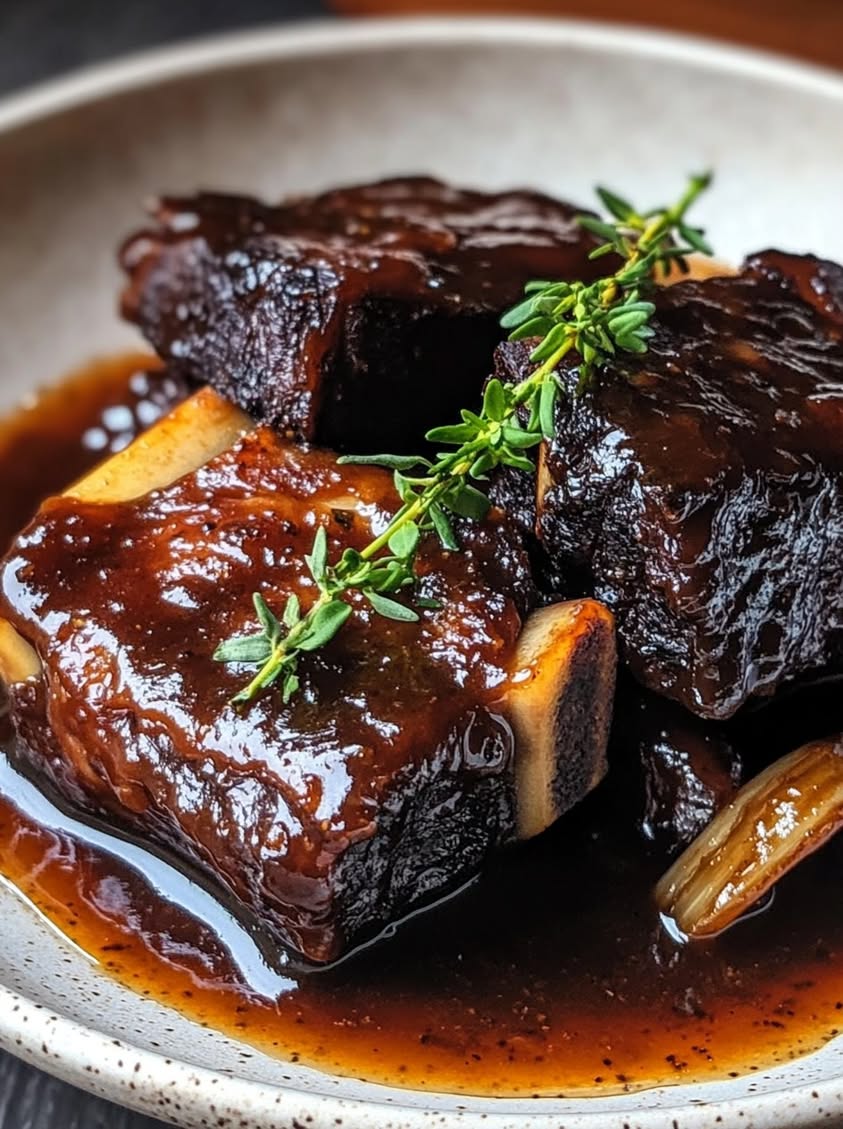
Slow-Braised Short Ribs with Sticky Maple Bourbon Glaze: The Ultimate Comfort Food Masterpiece
Imagine the most tender, succulent meat you have ever tasted. Now, picture it falling effortlessly from the bone, coated in a glossy, sweet, and smoky glaze that caramelizes under the broiler. This is the promise of our Slow-Braised Short Ribs with Sticky Maple Bourbon Glaze. This recipe transforms humble, tough cuts of beef into a luxurious, melt-in-your-mouth experience. The process is a labor of love, but the result is a show-stopping centerpiece for any special dinner or cozy weekend feast.
Furthermore, the magic of this dish lies in the low-and-slow cooking method. Braising breaks down the tough connective tissues in the beef short ribs, rendering them incredibly tender. Meanwhile, the sticky maple bourbon glaze adds a complex layer of flavor that balances sweet, savory, and boozy notes. Consequently, your kitchen will fill with an irresistible aroma that builds anticipation for hours. Ultimately, this recipe delivers restaurant-quality results with the comforting feel of a home-cooked meal.
Finally, this guide will walk you through every step to achieve perfect braised short ribs. We will cover essential techniques, common pitfalls to avoid, and pro tips for success. Whether you are cooking for a holiday gathering or a simple family dinner, this dish is guaranteed to impress. So, gather your ingredients and prepare for a culinary journey that ends with the most delicious, fork-tender beef you will ever make.
Quick Recipe Highlights
- Flavor Profile: This dish delivers a profound savory depth from the slow-braised beef, beautifully contrasted by the sweet maple and complex, oaky notes of bourbon. Additionally, aromatic vegetables and herbs create a rich foundation, while a hint of acidity cuts through the richness perfectly.
- Texture: The meat achieves an unparalleled tenderness, pulling cleanly from the bone with minimal effort. Meanwhile, the reduced braising liquid forms a luxurious, velvety sauce, and the final glaze under the broiler adds a delightful sticky, caramelized finish to each rib.
- Aroma: As the short ribs braise, your home will fill with the warm, comforting scent of simmering beef, sweet onions, and woody herbs. Later, the reduction of the maple bourbon glaze introduces enticing notes of caramel and vanilla, creating an unforgettable olfactory experience.
- Visual Appeal: The finished ribs boast a deep, mahogany-colored glaze that shines under the light. Served atop a pool of glossy sauce with fresh herb garnish, the presentation is both rustic and elegant, promising a feast for the eyes before the first bite.
- Skill Level Needed: This recipe requires patience and attention to detail more than advanced chef skills. Key steps include proper searing, deglazing, and monitoring the braise, making it ideal for a confident home cook ready to elevate their comfort food game.
- Special Equipment: A heavy, oven-safe Dutch oven or braising pot with a tight-fitting lid is essential for even heat distribution. Additionally, you will need a fine-mesh strainer for the sauce and a reliable instant-read thermometer to check the meat’s doneness.
Recipe Overview
- Difficulty Level: We rate this recipe as intermediate due to its multiple stages and the importance of technique. While not overly complex, achieving perfect sear, managing braising liquid, and reducing the glaze require focused attention. However, clear instructions make the process very manageable for any dedicated cook.
- Category: This dish firmly belongs in the category of hearty main courses and special occasion dinners. It is the epitome of comfort food but with a gourmet twist, making it suitable for everything from a Sunday family supper to an impressive dinner party centerpiece.
- Cuisine: The recipe draws inspiration from American Southern and rustic French culinary traditions. The use of bourbon and maple syrup nods to American ingredients, while the slow-braising technique is a classic French method for transforming tough cuts into tender delicacies.
- Cost: Using beef short ribs, a relatively affordable cut, makes this a cost-effective way to enjoy luxurious beef. The bourbon and maple syrup are investment ingredients, but a little goes a long way. Overall, the cost per serving is favorable compared to a similar restaurant dish.
- Season: This is the ultimate cold-weather recipe, perfect for fall and winter. The rich, warming qualities of the braised meat and sticky glaze provide deep comfort on chilly days. That said, its deliciousness knows no season for those who crave it year-round.
- Occasion: These short ribs are perfect for holidays, celebratory dinners, date nights, or any time you want to create a memorable meal. The long, hands-off braising time allows you to prepare in advance and enjoy time with your guests.
Why You’ll Love This Recipe
First and foremost, the taste and texture of these Slow-Braised Short Ribs are simply extraordinary. The long, slow cook time transforms the beef into something magical—tender enough to cut with a fork and packed with deep, savory flavor. Moreover, the sticky maple bourbon glaze adds a perfect sweet-and-smoky counterpoint that caramelizes into a glossy coating. Every bite is a harmonious blend of rich beef, aromatic vegetables, and that unforgettable sweet and boozy finish. Consequently, this dish satisfies cravings for both hearty comfort food and sophisticated dining in one unforgettable package.
From a convenience standpoint, this recipe is a dream for entertaining. Although the total cook time is long, the active preparation time is surprisingly short. Once the ribs are seared and the pot goes into the oven, you have hours of hands-free time. This makes it ideal for hosting; you can socialize with guests instead of being stuck at the stove. Furthermore, the dish actually improves when made a day ahead, allowing flavors to meld and giving you a stress-free main course on the day of your event.
Nutritionally, beef short ribs offer a good source of high-quality protein, iron, zinc, and B vitamins. While it is a richer cut, the braising process allows much of the fat to render out into the sauce, which you can easily skim off. Serving the ribs with a side of roasted vegetables or a crisp salad creates a more balanced meal. Therefore, you can enjoy this indulgent-tasting dish as part of a varied and thoughtful diet.
The social and entertaining value of this dish cannot be overstated. Presenting a platter of these glazed, fall-off-the-bone short ribs is a guaranteed showstopper. It creates a sense of occasion and shared celebration. The process of slow cooking itself builds anticipation, and the incredible aroma sets a welcoming, cozy mood. Ultimately, this recipe is about more than food; it is about creating a warm, memorable experience for everyone at your table.
Finally, this recipe is remarkably cost-effective and accessible. Short ribs are often more affordable than premium steak cuts like filet mignon, yet they deliver incredible flavor and tenderness when cooked properly. The other ingredients are pantry staples or easy to find. By mastering this braising technique at home, you can enjoy a restaurant-quality meal for a fraction of the price, making luxury dining an accessible treat for your family and friends.
Historical Background and Cultural Significance
The practice of braising tough cuts of meat is ancient and global, born from necessity. Before modern butchery, every part of the animal was used, and slow, moist cooking was the key to making less tender pieces edible and delicious. This technique appears in culinary traditions from French “daube” to Italian “brasato.” The specific use of short ribs gained popularity in American cuisine in the late 20th century, often featured in upscale comfort food menus. Chefs recognized the potential of this flavorful, marbled cut to become supremely tender and luxurious through patient cooking.
Culturally, dishes like braised short ribs represent a celebration of resourcefulness and patience. They symbolize the transformation of the ordinary into the extraordinary with time and care. In American gastropubs and fine dining establishments, the short rib became a staple, often glazed or paired with bold flavors like red wine or, in this case, bourbon. The addition of maple syrup ties the dish to North American traditions, particularly in regions like New England and Canada where maple harvesting is a cherished craft.
The evolution of the short rib recipe mirrors broader food trends. Initially a humble, slow-cooked family meal, it was elevated by chefs seeking to showcase technique and depth of flavor. The introduction of glazes, like our sticky maple bourbon version, added a modern, sweet-savory dimension that appeals to contemporary palates. This evolution demonstrates how classic cooking methods can be adapted with new-world ingredients to create something both timeless and exciting.
Regional variations of braised short ribs abound. In Korea, “galbi jjim” features short ribs braised in a sweet and savory soy-based sauce with Asian pears. In Italy, “brasato al Barolo” simmers beef in rich red wine. Our recipe with maple and bourbon is a distinctly American take, utilizing iconic national products. Each variation reflects local tastes and available ingredients, proving the versatility of the short rib as a canvas for global flavors while honoring the universal principle of low-and-slow cooking.
Ingredient Deep Dive
Beef short ribs are the star. Specifically, choose bone-in, English-cut ribs for the best flavor and presentation. The bone contributes immense depth to the braising liquid, and the surrounding meat is richly marbled with fat and collagen. This collagen melts during the long braise, creating that signature unctuous, tender texture and naturally thickening the sauce. Look for ribs with a good amount of meat on top of the bone and a creamy white fat cap. Before cooking, pat them extremely dry; this is the secret to achieving a perfect, caramelized sear.
Pure maple syrup is our primary sweetener. Avoid pancake syrup, which contains corn syrup and artificial flavors. Real maple syrup adds a complex, woody sweetness with hints of caramel and vanilla that perfectly complement the bourbon and beef. It is a natural product rich in antioxidants like polyphenols. Grade A Dark Color or “Grade A Robust” will provide the most pronounced maple flavor. Store it in the refrigerator after opening to maintain quality. In a pinch, a good honey could substitute, but the flavor profile will shift.
Bourbon brings smoky, oaky, and vanilla notes. Its alcohol cooks off during reduction, leaving behind its distinctive character. Choose a mid-range bourbon you enjoy drinking neat; the flavor concentrates in the glaze. The alcohol also helps deglaze the pot, lifting the flavorful browned bits (fond) from the bottom. If you prefer not to use alcohol, substitute with additional beef broth and a teaspoon of vanilla extract plus a drop of liquid smoke for complexity, though the flavor will be different.
Aromatics form the flavor base. Yellow onions and carrots provide natural sweetness, while garlic adds pungent depth. Tomato paste is crucial for umami and acidity, helping to balance the richness. It also contributes to the sauce’s deep color and body. Fresh thyme and bay leaves offer herbal, woody notes that infuse the braising liquid. Always use fresh herbs for the brightest flavor, and remember to remove the bay leaves before serving. These vegetables eventually break down, thickening the sauce and becoming a delicious accompaniment to the meat.
Common Mistakes to Avoid
- Not Drying the Meat: Skipping the step of patting the short ribs completely dry with paper towels before seasoning will prevent a proper sear. Consequently, the ribs will steam instead of brown, missing out on the deep, flavorful fond essential for the sauce.
- Crowding the Pot: Searing too many ribs at once drops the pan temperature dramatically and causes them to release liquid. Always sear in batches, ensuring each piece has space around it to achieve an even, dark brown crust on all sides.
- Underseasoning: Beef short ribs are a thick, substantial cut. Be generous with salt and pepper during the initial seasoning. The seasoning penetrates the meat and forms the foundation of flavor. Remember, you can adjust seasoning later in the sauce.
- Skipping the Deglaze: After searing, those browned bits stuck to the pot are flavor gold. Failing to deglaze properly with bourbon or broth leaves that flavor behind. Use your liquid to scrape the bottom clean, dissolving all the fond into your braising liquid.
- Braising at a Boil: A gentle simmer is the goal. If your liquid is at a rolling boil, the meat will become tough and stringy. The oven’s consistent, low heat is ideal for maintaining that perfect gentle bubble that breaks down collagen slowly.
- Lifting the Lid: Resist the urge to peek frequently during braising. Every time you lift the lid, you release valuable heat and steam, disrupting the cooking environment and potentially extending the cooking time unnecessarily.
- Not Skimming the Fat: After braising, the cooking liquid will have rendered fat from the ribs. Skipping the step of skimming this fat will result in a greasy, unbalanced sauce. Use a spoon or fat separator for a clean, luxurious sauce.
- Over-Reducing the Glaze: When reducing the maple bourbon mixture, watch it carefully. It can go from perfectly sticky to burnt and bitter very quickly. Remove it from the heat when it coats the back of a spoon and has a syrupy consistency.
Essential Techniques
Searing is the non-negotiable first step. This technique, known as the Maillard reaction, creates hundreds of new flavor compounds on the meat’s surface, providing a deep, savory base for the entire dish. To master it, ensure your pot is very hot and your meat is bone-dry. Do not move the ribs for several minutes to allow a proper crust to form. The visual cue for success is a dark brown, caramelized surface that releases easily from the pot when ready. If it sticks, it needs more time.
Deglazing is how you capture all the flavor from searing. After removing the meat, add your bourbon to the hot pot. As it sizzles, use a wooden spoon to vigorously scrape up all the browned bits from the bottom. This process dissolves those flavorful particles into the liquid, ensuring no taste is wasted. The sound will change from a fierce sizzle to a softer simmer when most fond is released. This liquid becomes the foundation of your braising sauce.
Braising itself is a combination cooking method. You first sear (dry heat) and then simmer in liquid (moist heat). The key is maintaining a low, steady temperature—just below a simmer—for a long time. This gentle heat slowly melts the tough collagen in the meat into gelatin, resulting in tenderness. The visual cue is tiny, lazy bubbles breaking the surface of the liquid occasionally, not a vigorous boil. The oven provides the most consistent, hands-off environment for this.
Reducing and glazing transforms the braising liquid into a luxurious finish. After skimming fat, you boil the liquid to evaporate water, concentrating the flavors and thickening the texture naturally. For the maple bourbon glaze, you reduce it separately to a syrupy consistency. The pro tip is to watch for the “napé” stage: when the sauce coats the back of a spoon and you can draw a line through it that holds. Applying this reduction and finishing under the broiler creates the signature sticky, caramelized crust.
Pro Tips for Perfect Slow-Braised Short Ribs with Sticky Maple Bourbon Glaze
Season the ribs generously at least an hour before cooking, or even the night before, and leave them uncovered in the fridge. This dry-brine technique allows the salt to penetrate deeply, seasoning the meat from within and helping the surface dry for a better sear.
Use a timer when searing. Commit to not moving the ribs for a full 3-4 minutes per side. This patience is crucial for developing a proper crust. Listen for the sizzle to quiet down, a sign that moisture has evaporated and browning is occurring.
Choose the right pot. A heavy, enameled cast-iron Dutch oven distributes heat evenly and retains it perfectly, preventing hot spots that could cause burning during the long braise. Its tight-fitting lid is also essential for maintaining moisture.
Let the braised ribs rest in their liquid. After removing them from the oven, allow the pot to sit, covered, for about 20 minutes. This lets the meat relax and reabsorb some juices, ensuring it stays moist when you handle it for glazing.
Chill the braising liquid to skim fat easily. If time allows, refrigerate the strained liquid for an hour or overnight. The fat will solidify on top, allowing you to lift it off in one piece, resulting in a cleaner, purer sauce.
Reduce your glaze slowly over medium-low heat. Rushing this step over high heat risks burning the sugars in the maple syrup, which will make the glaze taste bitter. A patient simmer allows the flavors to concentrate perfectly.
Broil the glazed ribs on a rack set over a baking sheet. This elevates them and allows heat to circulate, caramelizing the glaze evenly on all sides. Watch them closely, as the sugar can go from caramelized to charred in under a minute.
Variations and Adaptations
For regional twists, consider a Korean-inspired version using soy sauce, brown sugar, sesame oil, and grated pear in the braise. Alternatively, a French-style “Bourguignon” variation substitutes red wine for the bourbon and broth, and adds pearl onions and mushrooms at the end. A Mexican “birria” style could use dried chiles, cumin, and oregano in the braising liquid, serving the shredded meat with consommé for dipping.
Seasonal adaptations are simple. In spring, serve the ribs with fresh pea purée and mint. For summer, a lighter side like a citrus and fennel salad cuts the richness. In fall, pair with roasted root vegetables or creamy polenta. Winter calls for the classic pairing with mashed potatoes or creamy grits to soak up every drop of sauce.
Dietary modifications are straightforward. For a gluten-free meal, ensure your bourbon is gluten-free (most are) and use tamari instead of soy sauce if adapting. To make it dairy-free, simply omit any butter used for finishing the sauce; the dish is naturally dairy-free. For a lower-carb or keto version, replace the maple syrup with a sugar-free maple-flavored syrup and use a low-carb thickener like xanthan gum if needed for the sauce.
Flavor variations can personalize the dish. Add a tablespoon of miso paste to the braising liquid for extra umami. Introduce a smoky element with a chipotle pepper in adobo. For an herbal note, stir in a tablespoon of chopped fresh rosemary with the thyme. A splash of balsamic vinegar added during the sauce reduction can provide a nice tangy complexity.
Serving and Presentation Guide
Plating is key for visual impact. Place a generous scoop of creamy mashed potatoes, polenta, or cauliflower purée in the center of a wide, shallow bowl. Carefully set one or two glazed short ribs atop the base, leaning them against each other. Ladle the warm, strained sauce around the base, not over the top, to preserve the glossy glaze on the meat. This creates a beautiful contrast and keeps the presentation clean.
Garnishing adds the final touch. A simple sprinkle of flaky sea salt and a few cracks of black pepper enhance flavor and texture. Fresh, delicate herbs like chopped chives, parsley, or thyme leaves add a pop of color and freshness. For a textural contrast, a few crispy fried shallots or a small handful of microgreens work beautifully.
Traditional accompaniments include buttery mashed potatoes, creamy polenta, or soft grits to absorb the sauce. Roasted or mashed root vegetables like parsnips or carrots complement the sweetness in the glaze. A simple, crisp green salad with a vinaigrette dressing is essential to balance the meal’s richness.
For modern serving, consider deconstructing the dish. Shred the braised meat from the bone, mix it with some reduced sauce, and serve it on toasted brioche buns as an epic sandwich. Alternatively, serve the tender meat in a small cast-iron skillet with the glaze, accompanied by crusty bread for dipping.
Wine and Beverage Pairing
Wine pairings should complement the rich, savory-sweet profile. A full-bodied red wine with good acidity cuts through the fat beautifully. Consider a California Zinfandel with its jammy fruit, a spicy Syrah, or an aged Cabernet Sauvignon. For a classic pairing, a French Bordeaux or a Rioja Reserva with their structured tannins and earthy notes stand up to the beef wonderfully.
Non-alcoholic alternatives can be just as thoughtful. A tart cherry juice or pomegranate juice spritzer mimics the acidity of red wine. A craft ginger beer provides a spicy kick that cleanses the palate. For a warmer option, a smoked tea like Lapsang Souchong echoes the smoky notes from the sear and bourbon.
Coffee and tea pairings work surprisingly well. A dark roast coffee with notes of chocolate or caramel can mirror the deep flavors in the glaze. A strong, malty black tea like Assam pairs nicely. After the meal, a small glass of the same bourbon used in the recipe makes for a perfect digestif, creating a harmonious flavor circle.
Storage and Shelf Life
Store leftover short ribs and sauce together in an airtight container in the refrigerator for up to 4 days. The flavors often improve on the second day as they continue to meld. Ensure the meat is fully submerged in the sauce to prevent it from drying out. For longer storage, you can freeze the ribs and sauce for up to 3 months. Use a freezer-safe container or heavy-duty bag, removing as much air as possible to prevent freezer burn.
Signs of spoilage include an off or sour smell, a slimy texture on the meat’s surface, or mold growth. If the sauce appears bubbly or fermented, discard it immediately. Always reheat leftovers to an internal temperature of 165°F to ensure food safety.
Reheating requires care to preserve tenderness. The best method is to gently warm the ribs and sauce together in a covered saucepan over low heat, adding a splash of water or broth if the sauce has thickened too much. Alternatively, reheat in a covered dish in a 300°F oven until warmed through. Avoid the microwave if possible, as it can make the meat rubbery.
Make Ahead Strategies
This recipe is ideal for making ahead. You can complete the entire braising process up to two days in advance. After braising, let the ribs cool in their liquid, then store them (still submerged) in the refrigerator. The chilled fat will solidify on top, making it effortless to remove for a leaner sauce. This advance prep not only saves time but deepens the flavors.
On the day of serving, gently reheat the ribs in their sauce on the stovetop or in a low oven until warmed through. Then, proceed with reducing the braising liquid into a sauce and making the separate maple bourbon glaze. This split workflow makes serving for a dinner party remarkably manageable, as the main component is ready to go.
For the freshest presentation, only apply the final glaze and broil the ribs just before serving. This ensures the sticky, caramelized crust is at its peak texture and shine. You can even reduce the maple bourbon glaze ahead of time and gently rewarm it to a brushable consistency.
Scaling Instructions
Halving the recipe is straightforward for a smaller meal. Use a smaller Dutch oven and ensure the short ribs still fit in a single layer for proper searing and braising. The cooking times will remain largely the same, as the braise time depends on the thickness of the individual ribs, not the quantity. Always check for tenderness with a fork after 2.5 hours.
Doubling or tripling for a crowd requires planning. You will likely need to sear the ribs in more batches to avoid crowding. Use the largest heavy pot you have, or consider using two separate Dutch ovens. The total braising time may increase slightly due to the greater volume of cold ingredients. Check for doneness on a few different ribs from different areas of the pot.
Equipment adjustments are crucial when scaling up. Ensure your oven racks are positioned to accommodate larger or multiple pots. You may need a larger fine-mesh strainer and a bigger bowl for straining the sauce. For very large batches, a roasting pan covered tightly with heavy-duty foil can work in place of multiple Dutch ovens.
Nutritional Deep Dive
A serving of these Slow-Braised Short Ribs with Sticky Maple Bourbon Glaze is a rich source of high-quality protein, essential for muscle repair and satiety. The beef provides significant amounts of heme iron, which is easily absorbed by the body, along with zinc for immune function and B vitamins for energy metabolism. The collagen from the bones and connective tissue breaks down into gelatin, which may support joint and gut health.
The dish is calorie-dense due to the marbling in the short ribs and the sugars in the glaze. However, much of the saturated fat renders into the braising liquid, which you can skim off. To manage portions, serve one rib per person as part of a balanced plate filled with non-starchy vegetables and a complex carbohydrate like sweet potato or quinoa. This creates a meal with a better macro balance.
For those monitoring specific intake, the maple syrup adds natural sugars. Using a moderate amount and pairing the dish with fiber-rich sides helps moderate the glycemic impact. Remember, the nutritional profile is for a special occasion or hearty main course. Enjoy it mindfully as part of an overall varied diet.
Dietary Adaptations
For a gluten-free version, the recipe is naturally compliant if you use a gluten-free bourbon (most are distilled from corn) and ensure any store-bought broth is certified gluten-free. Thicken the sauce with a cornstarch slurry instead of flour if needed.
A dairy-free adaptation requires no changes, as the core recipe contains no dairy. If you wish to finish the sauce with a pat of butter for richness, simply omit it or use a plant-based butter alternative. The dish will still be luxurious from the reduced braising liquid.
Creating a vegan version is a significant adaptation but possible. Substitute the short ribs with large, meaty king oyster mushrooms or seitan slabs. Use a robust vegetable broth and add umami boosters like soy sauce, tomato paste, and dried mushrooms. The maple bourbon glaze can be made similarly, using vegetable broth to deglaze.
For a low-carb or keto adaptation, replace the maple syrup with a sugar-free maple-flavored syrup and use a low-carb thickener like xanthan gum to adjust the sauce consistency if necessary. Serve with cauliflower mash or roasted broccoli instead of starchy sides.
Troubleshooting Guide
If the meat is tough, it likely needs more braising time. Return the pot to the oven and continue cooking, checking every 30 minutes. Toughness indicates the collagen hasn’t fully converted to gelatin. Ensure your oven temperature is accurate with an oven thermometer; if it runs cool, the process will take longer.
If the sauce is too thin, you have a few options. You can continue simmering it on the stovetop to reduce and concentrate it further. Alternatively, make a slurry with one tablespoon of cornstarch and two tablespoons of cold water, then whisk it into the simmering sauce until it thickens. Avoid adding flour directly to a hot liquid to prevent lumps.
If the glaze is too sweet or too boozy, balance is key. For an overly sweet glaze, add a squeeze of fresh lemon juice or a splash of apple cider vinegar to cut the sweetness. If the bourbon flavor is too strong, dilute the glaze with a few tablespoons of the reduced braising sauce and simmer again to combine.
If you’ve over-salted the sauce, don’t panic. The best fix is to add volume. Dilute with a bit of unsalted beef broth or water. Alternatively, adding a peeled, raw potato to the simmering sauce can help absorb some salt; remove it after 15-20 minutes. A small pinch of brown sugar can also help balance excessive saltiness.
Recipe Success Stories
Our community of home cooks has embraced this recipe with incredible creativity. One reader, Sarah from Colorado, shared that she made it for her husband’s birthday and he declared it the best meal of his life. She paired it with blue cheese mashed potatoes, which she said cut through the richness perfectly. Another, Mike from Texas, successfully adapted it for his smoker, giving the ribs an extra layer of smoke before braising them in the oven with the liquid.
Many have found success with the make-ahead strategy for stress-free entertaining. Jennifer, a busy mom from Ohio, prepares it on Saturday for Sunday dinner, noting that the flavors are even deeper the next day. She also shared a brilliant tip: using the leftover braising liquid as a base for a incredible French onion soup later in the week, minimizing waste.
Photography tips from our readers highlight natural light. Shoot the glazed ribs on a dark slate or wooden board to make the glossy glaze pop. A drizzle of extra sauce around the plate and a sprinkle of fresh herbs adds life. Several readers have won their weekly family cooking challenges with this recipe, proving its crowd-pleasing power.
Frequently Asked Questions
Can I use boneless short ribs? Yes, boneless short ribs will work, but the bone adds significant flavor to the braising liquid. Cooking time may be slightly reduced, so check for tenderness earlier. The presentation will be different, but the taste will still be excellent.
What can I use instead of bourbon? A good substitute is a combination of beef broth with a teaspoon of vanilla extract and a teaspoon of molasses to mimic some of bourbon’s complexity. Alternatively, a dark rum or brandy can be used, though the flavor profile will shift.
My sauce is too fatty even after skimming. What can I do? If the sauce still tastes greasy, try the “ice cube method.” Drop a few ice cubes into the warm sauce; the fat will solidify and cling to them. Remove the ice cubes quickly, and you’ll pull away more fat. You can also use a paper towel laid on the surface to blot.
Can I make this in a slow cooker? Absolutely. Follow the stovetop steps for searing and deglazing, then transfer everything to your slow cooker. Cook on LOW for 8-9 hours or on HIGH for 5-6 hours, until fork-tender. You’ll still need to reduce the liquid and make the glaze separately on the stovetop.
Why is my glaze not sticky or glossy? This usually means it hasn’t reduced enough. The sugars need to concentrate to create that sticky, coating texture. Continue simmering the maple-bourbon mixture over medium-low heat until it thickly coats the back of a spoon. It will also set and become glossier as it cools slightly.
How do I know when the ribs are done braising? The meat should be extremely tender and pull away from the bone easily with a fork. If you try to pick up a rib with tongs, the meat should almost want to fall off. An instant-read thermometer inserted into the thickest part (away from bone) should read at least 200-205°F for well-done, tender braised meat.
Can I prepare the glaze ahead of time? Yes, you can reduce the maple bourbon glaze ahead of time and store it in the refrigerator for up to 3 days. Gently reheat it in a saucepan or microwave until it returns to a brushable, syrupy consistency before using.
What’s the best side dish to serve? Creamy, starchy sides are classic for soaking up the sauce: mashed potatoes, polenta, grits, or risotto. For balance, always include a green vegetable like roasted asparagus, sautéed greens, or a crisp salad with a vinaigrette.
Additional Resources
If you loved this Slow-Braised Short Ribs with Sticky Maple Bourbon Glaze, explore our other braising recipes like Classic Beef Bourguignon or Coq au Vin. Mastering the braise opens up a world of comforting, impressive dishes. We also have a detailed guide on “How to Sear Meat Perfectly Every Time” that delves deeper into the Maillard reaction and pan techniques.
For ingredient sourcing, we recommend seeking out locally sourced, grass-fed beef short ribs for exceptional flavor. A quality, small-batch bourbon and real maple syrup from a farmers’ market will elevate your dish. Visit our equipment review section for our top picks on Dutch ovens and instant-read thermometers, essential tools for reliable braising.
Finally, consider seasonal spins. In summer, try a lighter braise with chicken or fish. Our recipe archive is sorted by technique and season to help you find the perfect dish for any occasion. Cooking is a journey, and mastering foundational recipes like this one builds confidence for endless culinary creativity.
{“success”:true,”message”:”Recipe created successfully”,”post_id”:8351,”tasty_recipe_id”:8351,”shortcode”:” Print
Slow-Braised Short Ribs with Sticky Maple Bourbon Glaze
Description
Tender, fall-off-the-bone beef short ribs braised low and slow, then finished with a rich, sweet, and smoky maple bourbon glaze.
Ingredients
For the Crust:
- 2.5 lbs bone-in beef short ribs
- 1 tablespoon kosher salt
- 1 teaspoon black pepper
- 2 tablespoons olive oil
- 1 large onion, chopped
- 3 carrots, chopped
- 3 celery stalks, chopped
- 4 garlic cloves, minced
- 1 cup beef broth
- 1/2 cup bourbon
- 1/4 cup pure maple syrup
- 2 tablespoons soy sauce
- 2 sprigs fresh thyme
- 1 bay leaf
Instructions
1. Prepare the Crust:
- Preheat oven to 325°F. Season short ribs generously with salt and pepper.
- Heat olive oil in a large Dutch oven over medium-high heat. Sear ribs on all sides until browned, about 3-4 minutes per side. Remove and set aside.
- In the same pot, add onion, carrots, and celery. Cook until softened, about 5 minutes. Add garlic and cook for 1 minute more.
- Pour in beef broth, bourbon, maple syrup, and soy sauce. Stir to combine, then add thyme and bay leaf.
- Return short ribs to the pot, submerging them in the liquid. Cover and braise in the oven for 3 hours, until meat is very tender.
- Remove ribs and set aside. Skim excess fat from the braising liquid, then simmer on the stovetop until reduced to a thick glaze, about 10-15 minutes. Spoon glaze over ribs before serving.
Notes
You can customize the seasonings to taste.

I’m Billy, a classically trained culinary school graduate from The Culinary Institute of America with over 12 years in the restaurant industry and over 19 years of cooking experience.