
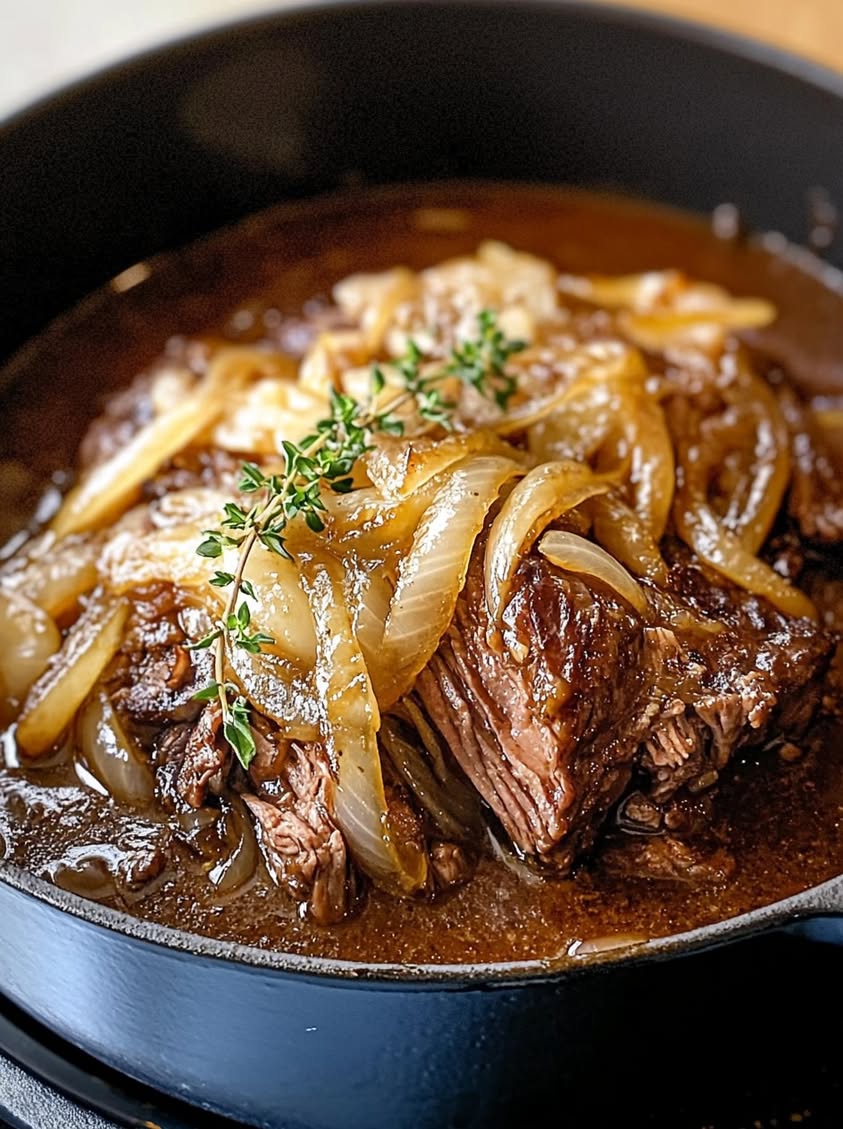
Slow-Braised French Onion Pot Roast for Family Gatherings: A Cozy Family Feast
Imagine walking into a home filled with the rich, savory aroma of caramelized onions and slow-cooked beef. This Slow-Braised French Onion Pot Roast for Family Gatherings transforms a classic comfort food into a show-stopping centerpiece. Ultimately, it promises a meal that feels like a warm hug. The process involves patiently cooking a humble chuck roast until it becomes impossibly tender. Meanwhile, the onions melt down into a sweet, deeply flavorful gravy that coats every bite.
This recipe is perfect for your next family dinner. It delivers incredible flavor with surprisingly simple hands-on work. You simply sear the meat, caramelize a mountain of onions, and let your oven or slow cooker do the rest. Consequently, you free up your time to enjoy your guests. The result is a pot roast that tastes far more complex than the effort suggests. Every forkful features succulent beef bathed in a rich, onion-infused jus that begs to be sopped up with crusty bread or creamy mashed potatoes.
Furthermore, this dish embodies the essence of hearty, satisfying cooking. It bridges the gap between rustic peasant food and elegant entertaining. The key lies in the slow braising technique, which breaks down tough connective tissue and creates a luxurious sauce. This Slow-Braised French Onion Pot Roast is more than just a meal. It is an experience that brings people together around the table. It is the ultimate cozy family feast for any season.
Quick Recipe Highlights
- Flavor Profile: This pot roast boasts a deep, savory-sweet foundation from slowly caramelized onions, balanced by the umami of beef broth and the subtle herbal notes of thyme and bay. The flavor is complex yet incredibly comforting.
- Texture: The chuck roast becomes fall-apart tender after hours of braising, easily shredding with a fork. The onions dissolve into the gravy, creating a luxuriously smooth and velvety sauce with minimal texture contrast.
- Aroma: As it cooks, your kitchen will fill with the unmistakable, mouthwatering scent of sweet caramelizing onions, savory roasted beef, and earthy herbs. It is the quintessential aroma of home and hospitality.
- Visual Appeal: The finished dish presents a beautiful, glossy mahogany-brown roast nestled in a dark, rich gravy. It looks hearty and generous, perfect for serving straight from the Dutch oven at the table.
- Skill Level Needed: This is a beginner-friendly recipe. The techniques—searing and sautéing—are fundamental. The magic happens unattended in the oven, making it forgiving for cooks of all levels.
- Special Equipment: A heavy-bottomed Dutch oven is highly recommended for even heat distribution and superior searing. Alternatively, you can use a large oven-safe pot or even adapt it for a slow cooker or Instant Pot.
Recipe Overview
- Difficulty Level: We rate this recipe as easy. The active prep time is minimal and involves basic kitchen skills. Most of the cooking time is hands-off braising. Therefore, even novice cooks can achieve a spectacular result with confidence.
- Category: This dish falls squarely into the main course category. It is a hearty, protein-centric meal ideal for dinner. Additionally, it can be the star of a special weekend lunch or holiday gathering.
- Cuisine: The recipe draws direct inspiration from classic French onion soup, translating its iconic flavors into a substantial pot roast. It is a French-American fusion comfort food classic.
- Cost: This is a cost-effective meal for a crowd. A chuck roast is an affordable cut of beef. Onions, broth, and basic pantry staples form the rest of the ingredient list, making it budget-friendly.
- Season: This Slow-Braised French Onion Pot Roast shines in the cooler months of fall and winter. Its rich, warming qualities are ideal for chilly evenings. However, it is a beloved comfort food year-round.
- Occasion: It is perfect for casual family dinners, Sunday suppers, and festive holiday gatherings like Thanksgiving or Christmas. It also excels as a make-ahead meal for busy weeks or for delivering to friends.
Why You’ll Love This Recipe
First, the taste and texture are utterly irresistible. The slow braising process works magic on an economical chuck roast, transforming it into meat so tender it requires no knife. Simultaneously, the onions undergo a magnificent change, shedding their sharpness for a profound sweetness that forms the base of the gravy. Each bite is a harmonious blend of savory beef and sweet, silky onion jus. This depth of flavor, typically reserved for restaurant dishes, is achieved right in your own kitchen.
Next, consider the sheer convenience. After the initial half-hour of prep, the oven does nearly all the work. This hands-off approach is a game-changer for hosting. You can socialize with your family and guests instead of being stuck at the stove. Moreover, the recipe is incredibly forgiving. A little extra time in the oven only makes it better, eliminating the stress of precise timing. This makes the Slow-Braised French Onion Pot Roast a stress-free centerpiece for any family gathering.
From a nutritional perspective, this dish offers substantial benefits. Chuck roast is a good source of high-quality protein, iron, and B vitamins, essential for energy. Onions provide antioxidants and prebiotic fibers that support gut health. Using a leaner chuck roast and controlling the sodium in your broth allows you to create a nourishing meal. You are serving real, whole foods cooked from scratch.
The social and entertaining value of this pot roast is immense. There is something profoundly communal about presenting a large, fragrant pot of food to share. It encourages conversation and a relaxed, family-style dining experience. This dish is designed to feed a group, making it the perfect catalyst for connection. It evokes nostalgia and creates new memories around the dinner table.
Finally, this recipe is remarkably cost-effective and accessible. It utilizes a budget-friendly cut of beef and transforms it through time and technique into a luxurious-tasting meal. The other ingredients are pantry staples. This accessibility means you can create a spectacular feast without a spectacular grocery bill. The Slow-Braised French Onion Pot Roast proves that extraordinary family meals don’t require extraordinary expense.
Historical Background and Cultural Significance
The story of this dish begins with two distinct culinary traditions: the French technique of braising and the iconic French onion soup. Braising, the method of searing meat then cooking it slowly in liquid, is an ancient practice used globally to tenderize tough cuts. In France, this technique was refined over centuries, particularly for dishes like boeuf bourguignon. French onion soup, meanwhile, has humble origins as a simple, restorative broth for Parisian market workers, famously enriched with caramelized onions and topped with cheese-toasted bread.
This pot roast recipe represents a delicious fusion of these ideas. It takes the soul-warming, onion-forward profile of the soup and applies it to a substantial piece of braised beef. This adaptation speaks to the American love for pot roast, a staple of Sunday dinner tables across the country. The marriage creates a dish that feels both familiar and elegantly elevated. It carries the cultural weight of French culinary artistry and American home-style comfort.
The evolution of this specific recipe is a testament to home cooking innovation. A creative cook likely thought, “What if we used the flavors of French onion soup as the braising liquid for a roast?” The result was a breakthrough. This innovation spread through communities, cookbooks, and now food blogs, becoming a modern classic. It exemplifies how home cooks adapt and combine traditions to create new family favorites.
Regional variations naturally exist. Some cooks add a splash of red wine or brandy for extra depth, mirroring French provincial cooking. Others might incorporate mushrooms or a touch of tomato paste. In different households, the herb profile may shift from thyme to rosemary or herbes de Provence. These subtle tweaks make each family’s version unique, yet the core principle of onions slow-cooked into a sweet gravy for beef remains the delicious constant.
Ingredient Deep Dive
Chuck Roast: This cut comes from the shoulder of the cow, a well-exercised area rich in connective tissue and fat. During the long, slow braise, this collagen melts into gelatin, creating that signature fall-apart tenderness and enriching the sauce. Nutritionally, it is an excellent source of protein, zinc, and iron. When selecting, look for a roast with good marbling (white fat streaks) for the best flavor and texture. You can ask your butcher for a “chuck eye roast” or “chuck roll” for particularly good results.
Yellow Onions: The undisputed star of the flavor base. Yellow onions are chosen for their perfect balance of sharpness and sugar content, which caramelizes beautifully. They are rich in quercetin, an antioxidant, and contain prebiotic fibers that aid digestion. Choose firm, heavy onions with dry, papery skins. Avoid any with soft spots or green sprouts. Properly stored in a cool, dark, well-ventilated place, they can last for months.
Beef Broth: This forms the liquid foundation of your braise. Using a high-quality, low-sodium broth is crucial, as it reduces during cooking and you control the final salt level. For superior flavor, consider using homemade stock or a reputable brand. Bone broth is an excellent choice for added collagen and richness. As a substitute, you can use a combination of water and beef bouillon, but adjust seasoning carefully.
Fresh Thyme & Bay Leaf: These herbs provide the essential aromatic backbone. Thyme offers a subtle, earthy lemon note that complements beef perfectly. Bay leaf contributes a more complex, almost floral bitterness that rounds out the sauce. Always use fresh thyme if possible for the brightest flavor; dried thyme works in a pinch but use half the amount. A single bay leaf is enough—it is a background note, not the main event.
Common Mistakes to Avoid
- Not Patting the Roast Dry: Failing to thoroughly dry the chuck roast with paper towels before searing guarantees steaming instead of browning. Moisture is the enemy of a good crust. Always pat it dry meticulously for a deep, flavorful sear.
- Crowding the Pot When Searing: If you try to sear the roast in a pot that is too small, it will steam and boil in its own juices. Use a large Dutch oven and give the meat plenty of space to develop a proper brown crust on all sides.
- Rushing the Onions: Caramelizing onions is a slow, gentle process. Cooking them over too high a heat will burn them before they sweeten. Take your time over medium-low heat, stirring occasionally, until they are uniformly soft and golden brown.
- Using Table Salt in the Brine Step: If you choose to dry-brine the roast, use kosher salt. Table salt is denser and can make the meat taste overly salty. Kosher salt adheres better and seasons more evenly.
- Skimping on Deglazing: After searing the meat, those browned bits (fond) at the bottom of the pot are pure flavor. Pouring in your broth and not scraping vigorously enough leaves that flavor behind. Use a wooden spoon to get every bit up.
- Braising at a Boil: A braise should cook at a bare simmer, with just small bubbles breaking the surface. A rolling boil will toughen the meat fibers and evaporate your sauce too quickly. Keep the oven temperature low and steady.
- Cutting the Meat Immediately: Slicing into the roast right out of the oven causes all the precious juices to run out. Let it rest, tented with foil, for at least 15-20 minutes. This allows the fibers to reabsorb the juices for a moister result.
- Thickening the Gravy Incorrectly: If your gravy seems too thin after braising, remove the meat and onions, then simmer the liquid on the stovetop to reduce and concentrate it. Alternatively, make a slurry with equal parts flour and cold water, then whisk it in and simmer to thicken.
Essential Techniques
Searing (The Maillard Reaction): This is the non-negotiable first step for building deep flavor. Searing the roast over high heat creates a beautiful brown crust through the Maillard reaction, a complex chemical process that develops hundreds of new flavor compounds. To master it, ensure your pot is very hot and the meat is bone-dry. Do not move the roast until it releases easily from the pot, indicating a proper sear has formed. The visual cue for success is a uniform, dark brown crust on all sides.
Low-and-Slow Braising: This gentle cooking method in a moist environment is what transforms tough meat into tender perfection. The low heat (typically 300-325°F) slowly breaks down collagen into gelatin without toughening the muscle proteins. The covered pot creates a humid environment that prevents drying out. The key pitfall is rushing with too high heat. Success is evident when you can easily pull the meat apart with a fork, and the sauce has a rich, glossy texture from the dissolved gelatin.
Caramelizing Onions: This process slowly cooks the natural sugars in onions until they brown, creating a deep, sweet, complex flavor. It requires patience and medium-low heat. Stir occasionally to prevent burning, but let them sit long enough to brown. Adding a pinch of salt helps draw out moisture. They are done when they are uniformly soft, deeply golden brown, and have reduced significantly in volume. Rushing this step with high heat will yield burnt, bitter onions.
Pro Tips for Perfect Slow-Braised French Onion Pot Roast
For an extra flavor boost, dry-brine your chuck roast the night before. Generously season it with kosher salt, place it on a rack on a baking sheet, and leave it uncovered in the refrigerator. This seasons the meat deeply and helps dry the surface for a superior sear.
Use a mix of onion varieties for a more complex flavor base. Try combining yellow onions with one or two sweet Vidalia onions or a red onion. Each type brings slightly different sugar and sulfur compounds to the party.
After removing the cooked roast and onions, strain the braising liquid through a fine-mesh sieve into a fat separator. This gives you a silky-smooth gravy. Let the fat rise, then pour the defatted liquid back into the pot to reduce and season.
Add a tablespoon of tomato paste to the onions during the last minute of caramelizing. Let it cook for a minute until it darkens slightly. This adds a subtle sweetness and umami depth that enhances the overall savoriness of the dish.
For a richer sauce, finish the reduced braising liquid with a tablespoon of cold butter, whisking it in until emulsified just before serving. This French technique, called “monter au beurre,” adds a luxurious shine and velvety mouthfeel.
If you have time, braise the roast a day ahead. The flavors meld and intensify overnight in the refrigerator. Simply skim the solidified fat from the top, then gently reheat the whole pot in a low oven.
Variations and Adaptations
For regional variations, add a cup of dry red wine like Cabernet Sauvignon or Burgundy to the pot after caramelizing the onions. Let it reduce by half before adding the broth, introducing a wonderful French provincial note. Alternatively, stir in a tablespoon of Dijon mustard at the end for a hint of tang from the Alsace region.
Seasonal adaptations are simple. In the spring, add fresh peas and baby carrots during the last 30 minutes of cooking. For a heartier winter version, include parsnips, turnips, or chunks of celery root alongside the onions at the start of the braise.
Dietary modifications are straightforward. For a gluten-free version, thicken the gravy with a cornstarch slurry instead of a flour slurry. To make it dairy-free, simply omit the optional butter finish. The core recipe is naturally dairy-free as written.
Experiment with flavor variations by changing the herbs. Swap thyme for a sprig of rosemary or a teaspoon of herbes de Provence. Add a few cloves of minced garlic with the onions, or include a couple of anchovy fillets during the onion stage for a deep, salty umami boost without a fishy taste.
For a textural modification, after braising, shred the entire roast and mix it back into the onion gravy. Serve this luxurious shredded beef on toasted bread or over polenta for a deconstructed French onion soup experience.
Serving and Presentation Guide
For classic family-style plating, place the whole pot roast on a large, deep platter. Spoon the onions and plenty of gravy over the top. Scatter with fresh thyme leaves for a pop of color. This rustic presentation is inviting and encourages sharing.
Consider individual plating for a more elegant touch. Slice the rested roast against the grain. Place a slice or two on each plate, spoon over the caramelized onions, and nap with gravy. Add a mound of creamy mashed potatoes or a scoop of soft polenta alongside.
Traditional accompaniments include buttery mashed potatoes, egg noodles, or crusty bread to soak up the gravy. Roasted root vegetables like carrots and potatoes cooked in the same oven make a perfect one-pan meal. A simple green salad with a vinaigrette provides a necessary fresh, acidic contrast.
For modern serving, use the shredded meat and gravy as a filling for savory hand pies or as a topping for loaded fries. Serve smaller portions in shallow bowls over a root vegetable puree for a restaurant-style presentation.
Temperature is crucial. Serve the pot roast and gravy piping hot. Warm your serving platter or plates beforehand to keep everything at an ideal temperature throughout the meal. The fat in the gravy will start to congeal if it gets too cool.
Wine and Beverage Pairing
For wine pairings, choose a bottle that can stand up to the rich, savory flavors. A medium-bodied red with good acidity is perfect. A French Syrah from the Rhône Valley, a California Zinfandel, or a Malbec from Argentina all have the fruit and structure to complement the dish. The wine’s acidity will cut through the richness of the gravy beautifully.
Non-alcoholic alternatives should also provide a counterpoint to the richness. Sparkling water with a twist of lemon is always refreshing. A tart cherry juice spritzer or a non-alcoholic ginger beer offers sweetness and spice that pairs well. Iced tea, especially a brisk black tea, also works wonderfully.
For a cozy pairing after the meal, consider coffee or tea. A dark roast coffee or an espresso can be a delightful palate cleanser. A cup of Earl Grey tea, with its bergamot citrus notes, provides a lovely aromatic finish that contrasts with the savory meal.
Serve red wine slightly below room temperature, around 60-65°F, to keep it refreshing. Pour non-alcoholic options well-chilled. Always offer water throughout the meal to cleanse the palate between bites of this flavorful dish.
Storage and Shelf Life
Store leftover pot roast, gravy, and onions together in an airtight container in the refrigerator. Properly stored, it will keep for 3 to 4 days. The flavor often improves on the second day as the ingredients continue to meld.
For freezing, portion the cooled roast and gravy into freezer-safe bags or containers. Remove as much air as possible. It will maintain best quality for 2 to 3 months. Thaw overnight in the refrigerator before reheating.
Signs of spoilage include an off or sour smell, a slimy texture on the meat or gravy, or visible mold. If in doubt, discard the leftovers. The high moisture content means it will not last as long as dry-cooked meats.
Reheating requires care to prevent the meat from drying out. Gently reheat in a covered pot on the stovetop over low heat, adding a splash of broth or water if the gravy has thickened too much. You can also reheat individual portions in the microwave, covered, at 50% power.
Make Ahead Strategies
You can fully prepare this Slow-Braised French Onion Pot Roast 1 to 2 days in advance. In fact, this often enhances the flavors. After cooking, let it cool completely, then store the whole pot (or transfer to containers) in the refrigerator. The fat will rise and solidify, making it easy to skim off before reheating.
For a prep timeline, do your vegetable prep (slice all onions) the day before and store them in a container in the fridge. You can also measure out your broth and herbs. This makes the day-of cooking process incredibly fast and smooth.
When reheating, do so gently. Place the covered pot in a 300°F oven for 45-60 minutes, or until heated through. Alternatively, reheat slowly on the stovetop over low heat, stirring occasionally. Avoid boiling vigorously, as this can make the meat stringy.
If making ahead, add any fresh garnishes like chopped parsley or thyme leaves only after reheating and just before serving. This ensures they retain their bright color and fresh flavor, providing a perfect finishing touch.
Scaling Instructions
Halving the recipe is simple for a smaller household. Use a 2-3 pound chuck roast and halve all other ingredients. Use a smaller Dutch oven to maintain the proper depth of braising liquid. The cooking time may be reduced by about 30-60 minutes, so start checking for tenderness earlier.
Doubling or tripling for a large crowd works well. Use a very large roasting pan or two Dutch ovens. Ensure the roast(s) still fit without being crammed; they need space for the heat to circulate. The cooking time may increase slightly, but the low-and-slow method is forgiving. Always check for doneness with a fork.
The main equipment adjustment for scaling up is your cooking vessel. You need a pot where the meat sits comfortably with room for onions and liquid. If using two pots, rotate their positions in the oven halfway through cooking for even heating.
Storage considerations change when scaling. A double batch will yield more leftovers, so have plenty of storage containers ready. Remember that a large mass of food will take longer to cool down to a safe refrigeration temperature. Divide it into smaller, shallow containers to cool quickly.
Nutritional Deep Dive
A serving of this pot roast provides a substantial amount of high-quality protein, essential for muscle repair and satiety. The chuck roast is a good source of iron, which helps transport oxygen in the blood, and zinc, which supports immune function. The onions contribute vitamin C, B vitamins, and antioxidants like quercetin.
The cooking method itself impacts nutrition. Braising is a moist-heat method that preserves nutrients better than high-heat frying. The long cook time also makes the iron in the red meat more bioavailable, meaning your body can absorb it more easily.
For dietary considerations, the dish is naturally low in carbohydrates, especially if served with low-carb sides like cauliflower mash. It is also gluten-free as written. The primary considerations are sodium (controlled by using low-sodium broth) and saturated fat (some of which can be skimmed off after cooling).
Portion control is easy with this satisfying dish. A typical serving is about 4-6 ounces of cooked meat with a generous portion of onions and gravy. Because it is so rich and flavorful, you may find you are satisfied with a smaller portion than with other meals, aiding in weight management.
Dietary Adaptations
Gluten-Free: This recipe is naturally gluten-free. Simply ensure your beef broth is certified gluten-free, as some brands use wheat-based additives. Thicken the gravy with a cornstarch slurry instead of flour if needed.
Dairy-Free: The core recipe contains no dairy. Omit the optional butter finish at the end. Use a high-quality olive oil or a dairy-free butter alternative to sauté the onions if you prefer.
Low-Carb/Keto: This dish is excellent for low-carb diets. Serve it over cauliflower mash, shirataki noodles, or simply in a bowl with extra gravy. Avoid starchy sides like potatoes or bread.
Paleo: Use a sugar-free, compliant beef broth (check for no soy or additives). Ensure any wine used for deglazing is also paleo-friendly, or omit it. The basic ingredients of meat, onions, and herbs are all paleo staples.
Low-Sodium: Control sodium by using no-salt-added beef broth and seasoning carefully at the end with a salt substitute or herbs. The caramelized onions provide so much natural sweetness and flavor that you may need less salt than you think.
Troubleshooting Guide
Meat is Tough: If your roast is still tough, it has not cooked long enough. The collagen hasn’t fully converted to gelatin. Simply return it to the oven and continue braising, checking every 30 minutes. Tough meat means more time is needed.
Gravy is Too Thin: Remove the meat and onions. Simmer the braising liquid on the stovetop uncovered until it reduces to your desired consistency. For a quicker fix, make a slurry with one tablespoon cornstarch and two tablespoons cold water. Whisk it into the simmering liquid and cook for 2-3 minutes until thickened.
Gravy is Too Salty: Dilution is the solution. Add a cup of low-sodium broth or even water to the pot and stir. You can also add a peeled, raw potato to the gravy and simmer for 15-20 minutes; the potato will absorb some salt. Remove it before serving.
Onions Burned: If you catch them early, you can sometimes salvage them by adding a splash of broth or water to stop the cooking and scrape the pot. If they are truly black and bitter, it is best to discard them, wipe out the pot, and start this step over. Burnt onions will make the entire gravy bitter.
Not Enough Fond (Brown Bits): This usually means the pot wasn’t hot enough or the meat was wet when seared. Ensure your pot is preheated and your meat is patted very dry. A good sear is crucial for flavor foundation.
Recipe Success Stories
Community feedback on this Slow-Braised French Onion Pot Roast consistently highlights its reliability and crowd-pleasing nature. Many home cooks report it has become their go-to recipe for holiday dinners, impressing even the most discerning relatives. One reader shared that her husband, who claimed to dislike pot roast, asked for seconds and now requests it monthly.
Variation successes are common. A reader from Texas added a tablespoon of smoked paprika to the onions, giving the dish a subtle barbecue twist that was a huge hit at a summer potluck. Another used a mix of shallots and leeks with the yellow onions, creating an even more sophisticated flavor profile for a dinner party.
Adaptation stories often focus on the slow cooker method. Busy parents love prepping everything in the morning, letting it cook all day, and coming home to a ready-made feast. The consistent low heat of a slow cooker is perfect for this braise, though the searing step is still highly recommended for maximum flavor.
Reader suggestions have improved the recipe over time. One excellent tip was to add a splash of balsamic vinegar to the onions during the last few minutes of caramelizing for an extra layer of sweet acidity. Another suggested serving it open-faced on toasted sourdough with melted provolone, turning it into a massive French onion sandwich.
Frequently Asked Questions
Can I make this in a slow cooker? Absolutely. Complete the searing and onion caramelizing steps in a skillet. Then transfer everything to your slow cooker. Cook on LOW for 8-10 hours or on HIGH for 5-6 hours, until the meat is fork-tender.
What cut of beef can I substitute for chuck roast? Other excellent braising cuts include brisket (flat cut), bottom round roast, or rump roast. They have similar connective tissue that breaks down beautifully with long, slow cooking.
Do I have to use fresh thyme? While fresh thyme is ideal, you can substitute dried. Use 1 teaspoon of dried thyme for every tablespoon of fresh called for. Add it when you add the broth so it has time to rehydrate and release its flavor.
Can I add vegetables like carrots and potatoes? Yes. Add hearty root vegetables like carrots, parsnips, or potatoes (cut into large chunks) during the last 1 to 1.5 hours of braising. This prevents them from becoming mushy.
Why is my meat dry even after braising for hours? This usually means the braising temperature was too high, causing the proteins to tighten and squeeze out moisture. Always braise at a low, gentle simmer, either in a low oven (300-325°F) or on the lowest slow cooker setting.
How can I make this recipe more quickly? For a faster version, use a pressure cooker like an Instant Pot. Sear using the sauté function, then pressure cook on high for 60-80 minutes with a natural pressure release. The flavor development will be slightly less deep but still excellent.
Is it necessary to sear the meat first? It is highly recommended. Searing creates the Maillard reaction, which builds a foundational layer of complex, savory flavor that permeates the entire dish. Skipping it will result in a much blander pot roast.
Can I use frozen onions? We do not recommend frozen sliced onions for caramelizing. They release too much water and will steam rather than caramelize properly, resulting in a soggy texture and less sweet flavor.
What’s the best way to slice the cooked roast? Always slice against the grain. Look for the lines of muscle fibers running through the meat and cut perpendicular to them. This shortens the fibers, making each bite much more tender.
My gravy is greasy. How do I fix it? The easiest way is to chill the gravy so the fat solidifies on top, then skim it off. For a quick fix, drag a piece of paper towel across the surface to absorb excess fat, or use a fat separator when pouring the liquid from the pot.
Additional Resources
If you love the technique of braising, explore other classic dishes like Coq au Vin, Beef Bourguignon, or Osso Buco. Each follows the same fundamental principle of searing and slow-cooking in liquid, showcasing how versatile this method is across different cuisines and proteins.
For mastering foundational skills, look for guides on “How to Properly Sear Meat” and “The Science of Caramelizing Onions.” Understanding the why behind these steps will make you a more confident and adaptable cook in the kitchen.
Learn more about selecting beef. A guide to different beef cuts and their best uses will help you shop smarter. Knowing why chuck roast is ideal for braising, while sirloin is better for grilling, empowers you to choose the right cut for every recipe.
Equipment matters. Research the benefits of different types of Dutch ovens (enameled cast iron vs. raw cast iron) and how to care for them. A good pot is an investment that will last a lifetime and improve your cooking results.
Finally, explore seasonal sides. Pair this timeless pot roast with side dishes that reflect the time of year, from spring asparagus to autumn squash. This keeps the meal exciting and allows you to enjoy this cozy family feast all year round.
{“success”:true,”message”:”Recipe created successfully”,”post_id”:8393,”tasty_recipe_id”:8393,”shortcode”:” Print
Slow-Braised French Onion Pot Roast for Family Gatherings
Description
A comforting, tender pot roast slow-braised with caramelized onions, red wine, and herbs, perfect for cozy family dinners.
Ingredients
For the Crust:
- 3 lbs beef chuck roast
- 4 large yellow onions, thinly sliced
- 4 cloves garlic, minced
- 2 cups beef broth
- 1 cup dry red wine
- 2 tbsp tomato paste
- 2 sprigs fresh thyme
- 2 bay leaves
- 2 tbsp olive oil
- Salt and black pepper to taste
Instructions
1. Prepare the Crust:
- Season the beef chuck roast generously with salt and pepper on all sides.
- Heat olive oil in a large Dutch oven over medium-high heat. Sear the roast until browned on all sides, about 4-5 minutes per side. Remove and set aside.
- Add the sliced onions to the pot and cook, stirring occasionally, until deeply caramelized, about 20-25 minutes. Stir in garlic and tomato paste, cooking for 1 minute.
- Pour in red wine to deglaze, scraping up browned bits. Add beef broth, thyme, and bay leaves. Return the roast to the pot, submerging it partially in the liquid.
- Cover and transfer to a preheated 325°F oven. Braise for 3-4 hours, until the meat is fork-tender. Serve sliced with the onion gravy.
Notes
You can customize the seasonings to taste.

I’m Billy, a classically trained culinary school graduate from The Culinary Institute of America with over 12 years in the restaurant industry and over 19 years of cooking experience.