
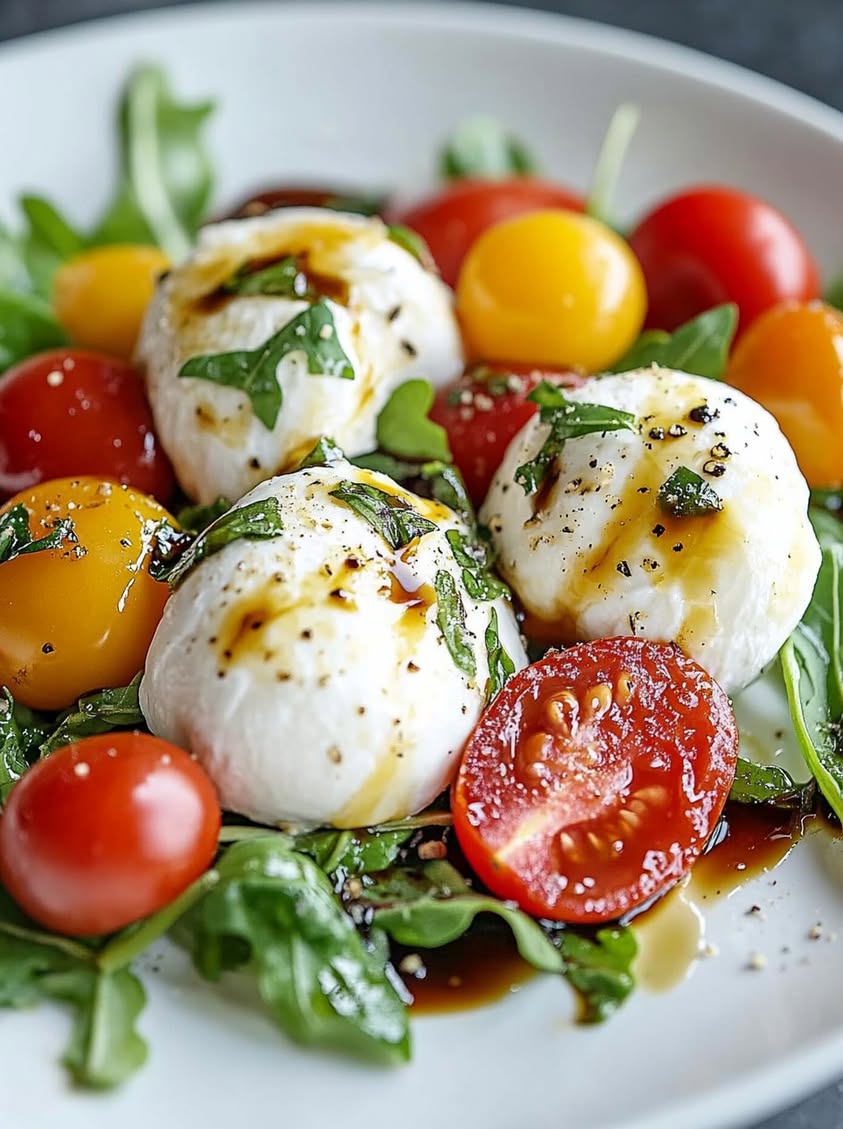
Creamy Burrata Salad with Arugula, Tomatoes, and Balsamic Glaze: An Elegant, Effortless Appetizer
Imagine a dish that looks like it came from a high-end restaurant but takes mere minutes to assemble in your own kitchen. This Creamy Burrata Salad with Arugula, Tomatoes, and Balsamic Glaze is exactly that kind of culinary magic. It’s a celebration of simplicity where a few premium ingredients come together to create something spectacularly greater than the sum of its parts. The star, of course, is the luscious burrata cheese, a delicate pouch of mozzarella filled with stracciatella and cream that promises a luxurious, creamy burst with every bite.
This recipe is perfect for anyone seeking an impressive yet effortless appetizer, light lunch, or elegant side dish. The peppery bite of fresh arugula provides a vibrant green base, while sweet, juicy cherry tomatoes add pops of color and acidity. Finally, a drizzle of rich, syrupy balsamic glaze ties everything together with its sweet-tart complexity. Ultimately, this dish is about minimal effort for maximum reward, delivering a sophisticated flavor profile that will delight your guests and your palate.
Furthermore, this Creamy Burrata Salad with Arugula, Tomatoes, and Balsamic Glaze is incredibly versatile. You can serve it as a stunning starter for a dinner party, a light main course on a warm day, or a beautiful side alongside grilled proteins. Its visual appeal is undeniable, making it a favorite for social media and special occasions alike. Let’s explore how to master this simple yet stunning dish.
Quick Recipe Highlights
- Flavor Profile: This salad masterfully balances rich, creamy, peppery, and sweet-tart notes. The luxurious fat of the burrata cheese is perfectly cut by the spicy arugula and the bright acidity of the tomatoes, while the balsamic glaze adds a deep, caramelized sweetness that harmonizes all the elements.
- Texture: You experience a wonderful contrast of textures: the crisp, leafy bite of fresh arugula, the juicy pop of whole or halved cherry tomatoes, and the unforgettable, soft, almost liquid creaminess of the burrata cheese as it spills onto the plate.
- Aroma: The aroma is fresh and inviting, dominated by the grassy, slightly nutty scent of high-quality extra virgin olive oil and the sweet, tangy fragrance of aged balsamic glaze. Fresh basil adds a final, herbal top note that completes the sensory experience.
- Visual Appeal: This dish is a feast for the eyes with its striking color contrast: deep green arugula, vibrant red tomatoes, snowy-white burrata, and the dark, glossy drizzle of balsamic glaze. It’s rustic yet elegant, promising a gourmet experience.
- Skill Level Needed: Absolutely beginner-friendly. This recipe requires no cooking, only assembly. The key skill is sourcing good ingredients and having a gentle hand when placing the burrata to preserve its beautiful shape.
- Special Equipment: No special equipment is required. You only need a sharp knife for slicing tomatoes, a serving platter or individual plates, and a spoon for drizzling the oil and glaze.
Recipe Overview
- Difficulty Level: We rate this recipe as “Easy” because it involves zero cooking techniques. The entire process is about washing, arranging, and drizzling. Success hinges entirely on ingredient quality and thoughtful presentation, not culinary skill. Anyone, from a novice to an experienced cook, can execute it flawlessly.
- Category: This dish fits beautifully into multiple categories: Appetizer, Salad, Side Dish, and even a Light Main Course. It’s particularly popular as a starter for Italian-inspired meals or a refreshing lunch option during warmer months.
- Cuisine: The recipe is firmly rooted in modern Italian cuisine, celebrating the country’s philosophy of using few, high-quality ingredients. Burrata hails from Puglia, while the combination of tomatoes, basil, and olive oil is a classic Mediterranean trifecta. The balsamic glaze adds a touch of sophistication from the Modena region.
- Cost: The cost is moderate and depends heavily on the burrata. Arugula, cherry tomatoes, and basic olive oil are affordable. The investment comes from the burrata ball and a good-quality aged balsamic glaze or reduction. However, considering the impressive result, it offers excellent value for entertaining.
- Season: This salad shines brightest in late spring through summer when arugula is tender and cherry tomatoes are at their peak sweetness. Nevertheless, thanks to year-round greenhouse availability, you can make a delicious version any time you crave a taste of freshness.
- Occasion: It’s ideal for romantic dinners, dinner parties, bridal or baby showers, holiday appetizer spreads (especially Christmas or Easter), or simply as a treat-yourself weekend lunch. It’s a guaranteed crowd-pleaser that looks far more complicated than it is.
Why You’ll Love This Recipe
First and foremost, the taste and texture combination is utterly irresistible. The moment your fork breaks through the delicate outer shell of the burrata, the rich, creamy interior floods the plate, coating the peppery arugula and sweet tomatoes. Each bite is a perfect harmony of fat, acid, spice, and sweetness. The balsamic glaze isn’t just a garnish; it’s a crucial flavor component that adds depth and ties the salad together. You’ll love the restaurant-quality experience it delivers right at your dining table.
Moreover, the convenience factor is unbeatable. With no cooking required, you can assemble this stunning dish in about ten minutes. This makes it a lifesaver for last-minute guests or when you want to contribute something impressive to a potluck without spending hours in the kitchen. The simplicity also means there are very few dishes to wash. Essentially, you get maximum impact for minimal effort, which is every home cook’s dream.
From a nutritional perspective, this salad offers a good balance. Arugula is a nutrient-dense leafy green packed with vitamins A, C, and K, as well as calcium and antioxidants. Cherry tomatoes are an excellent source of lycopene and vitamin C. Meanwhile, the olive oil provides heart-healthy monounsaturated fats. While burrata is indulgent, a little goes a long way in terms of flavor and satisfaction, making it a balanced treat.
For social and entertaining value, this Creamy Burrata Salad with Arugula, Tomatoes, and Balsamic Glaze is a superstar. Its dramatic presentation always elicits “oohs” and “aahs.” It encourages sharing and conversation as people tear into the communal burrata ball. Serving it family-style on a large platter creates an inviting, generous atmosphere. It signals to your guests that you’ve gone the extra mile, even though your secret is safe with us.
Finally, while it feels luxurious, it can be cost-effective. You can adjust the ingredients based on your budget—using a more affordable olive oil for dressing the greens and saving the expensive bottle for finishing, or buying cherry tomatoes in season. The entire recipe revolves around one splurge ingredient (the burrata), while the rest are pantry and fridge staples. This accessibility means you can enjoy a taste of luxury without a prohibitive price tag.
Historical Background and Cultural Significance
The story of this dish begins with its star ingredient: burrata. Burrata, meaning “buttered” in Italian, was invented in the 1920s on the Bianchini farm in the Puglia region as a way to use up the ritagli (clippings) of mozzarella. The cheesemakers had the ingenious idea to create a pouch of fresh mozzarella and fill it with these soft scraps mixed with cream, creating stracciatella. This resourceful technique transformed leftovers into a luxurious new product. For decades, burrata remained a local secret of Puglia, cherished for its short shelf life and exquisite, ephemeral texture.
Culturally, burrata represents the heart of Italian cucina povera—the “poor kitchen” philosophy that celebrates ingenuity and elevates simple, fresh ingredients. Its rise to international fame is a relatively recent phenomenon, exploding in popularity in the early 2000s as global food trends embraced artisanal cheeses and fresh, clean flavors. Today, burrata is a symbol of modern Italian gourmet cooking, often featured in high-end restaurants and food media as the ultimate expression of creamy indulgence.
The evolution of this specific recipe is a testament to modern salad trends. While Italians have long enjoyed simple salads of greens with mozzarella and tomato, the specific combination with burrata, peppery arugula (rucola), and a reduced balsamic glaze is a contemporary creation. It reflects a desire for bold flavor contrasts and visually striking, shareable plates. The balsamic glaze itself is a modern convenience, a thickened version of traditional Aceto Balsamico Tradizionale, making the complex sweetness of aged balsamic accessible for quick home drizzling.
Regional variations of this concept abound. In Puglia, you might find burrata served simply on bruschetta or with local olive oil and wild greens. In Capri, it’s paired with slices of heirloom tomatoes and basil as a take on Insalata Caprese. The version with arugula and balsamic glaze has become a global standard, appreciated for its perfect balance. Some adaptations include adding prosciutto, grilled peaches, figs, or a sprinkle of toasted pine nuts or pistachios for crunch, showing the recipe’s wonderful adaptability.
Ingredient Deep Dive
Let’s start with Burrata Cheese. This fresh cheese is the undisputed king of this salad. Originating from Puglia, it consists of a delicate mozzarella shell filled with stracciatella (shreds of mozzarella) and fresh cream. Nutritionally, it’s rich in protein and calcium but also high in fat, making it an indulgent component. When selecting burrata, look for it packed in water or whey and check for a very fresh sell-by date. It should feel soft and supple. Store it in its liquid in the refrigerator and consume it within 1-2 days of purchase for the best texture. If you cannot find burrata, a high-quality fresh mozzarella ball (bufala or fior di latte) is the best substitute, though you’ll miss the creamy center.
Next, Arugula (also called Rocket or Rucola). This leafy green brings the essential peppery punch that cuts through the richness of the cheese. Arugula has a long history in Mediterranean cuisine and is prized for its distinct, spicy flavor. It’s a nutritional powerhouse, loaded with vitamins A, C, K, and folate, as well as cancer-fighting compounds like glucosinolates. Select bunches with bright green, perky leaves without yellowing or wilting. Store it loosely wrapped in a paper towel inside a plastic bag in your fridge’s crisper. For a milder flavor, you can substitute baby spinach or mixed greens, but you’ll lose the characteristic spice that makes this salad so dynamic.
Now, Cherry Tomatoes. These little gems provide juicy sweetness and vibrant color. Tomatoes, native to the Americas, became a cornerstone of Italian cooking after their introduction in the 16th century. They are famous for being rich in lycopene, an antioxidant linked to reduced risk of heart disease and cancer. Choose tomatoes that are firm, deeply colored, and fragrant, ideally still on the vine for maximum flavor. Store them at room temperature until ripe, then refrigerate if necessary. Off-season, grape tomatoes are often a sweeter, more reliable choice. You can also substitute with sun-dried tomatoes (oil-packed) for an intense, chewy contrast, or use heirloom tomato slices in season.
Finally, Extra Virgin Olive Oil and Balsamic Glaze. High-quality extra virgin olive oil (EVOO) is non-negotiable. It provides fruity, peppery notes and carries the flavors. Look for cold-pressed oil in a dark bottle. The balsamic glaze is a reduced, syrupy version of balsamic vinegar, offering a sweet-tart complexity without being watery. True Traditional Balsamic Vinegar from Modena is aged for years and is incredibly expensive; the glaze is a wonderful, accessible alternative. You can find it pre-made or make your own by simmering balsamic vinegar until it reduces by half and thickens. For a substitute, a very aged, thick balsamic vinegar can work, or you can use a honey mustard vinaigrette for a different sweet-tangy profile.
Common Mistakes to Avoid
- Using Warm or Room Temperature Burrata Straight from the Fridge: Serving burrata ice-cold numbs its flavor and hardens its creamy texture. Always let it sit at room temperature for 20-30 minutes before serving. This allows the fats to soften and the flavors to bloom, giving you that luxurious, spreadable consistency.
- Overhandling the Burrata: Burrata is delicate. Avoid squeezing or poking it excessively when removing it from its packaging. Gently pat it dry with a paper towel to remove excess moisture, then place it whole on the salad. Let your guests break into it for that dramatic, creamy reveal.
- Drowning the Salad in Dressing: The beauty of this dish is in the simplicity of its components. You only need a light drizzle of good olive oil over the arugula and tomatoes before seasoning. The burrata and balsamic glaze add their own richness and moisture. An overdressed salad will become soggy and weigh down the delicate greens.
- Neglecting to Season Each Layer: Seasoning is crucial. Lightly salt and pepper the arugula and tomatoes after tossing them with a bit of oil. Then, add a final flake of sea salt (like Maldon) and a crack of black pepper over the whole plated dish, especially on the burrata and tomatoes, to enhance all the natural flavors.
- Using Watery, Low-Quality Balsamic Vinegar: A thin, acidic balsamic vinegar will pool at the bottom of the plate and taste harsh. You need the thick, syrupy consistency of a balsamic glaze or reduction so it drapes over the ingredients and provides concentrated sweetness. This is not the place for your basic salad vinegar.
- Skipping the Fresh Basil: While optional, fresh basil leaves or a chiffonade add an essential aromatic, herbal note that complements the tomatoes and cheese perfectly. Dried basil cannot replicate this. If you don’t have basil, fresh oregano or mint can offer a interesting twist.
- Using Wilted or Old Arugula: The peppery crunch of fresh arugula is a key textural element. Limp, yellowing arugula will taste bitter and look unappetizing. Always inspect your greens and give them a good rinse and spin in a salad spinner to ensure they are crisp and dry before assembling.
- Cutting the Cherry Tomatoes Too Far in Advance: If you halve or quarter your tomatoes, do it right before serving. Pre-cutting them causes all their flavorful juices to leak out onto the plate prematurely, potentially making the arugula soggy. For best results, cut them just as you’re assembling.
- Plating on a Cold Plate: A simple trick that elevates any dish is using room-temperature serving ware. A cold platter will chill the burrata and other ingredients too quickly, muting their flavors. Take your serving plate out of the cupboard, not the fridge.
- Forgetting the Final Flourish: The presentation is part of the experience. After drizzling the balsamic glaze, take a moment to make it look intentional. Use a spoon to create artistic swirls or dots. That final touch makes the dish look professionally crafted.
Essential Techniques
Arranging for Visual Impact: This technique is about composition, not cooking. Start by creating a loose bed of arugula, allowing some height and texture rather than pressing it flat. Scatter the tomatoes intentionally, letting some nestle in the greens and others rest on top. Place the whole burrata ball slightly off-center as a focal point. Finally, drizzle the olive oil and balsamic glaze in sweeping motions, not just in one spot. The goal is to create a plate that looks abundant, fresh, and inviting, guiding the eye across all the beautiful components.
Seasoning in Layers: Proper seasoning is what separates a good salad from a great one. The technique involves adding salt and pepper at different stages. First, season the arugula lightly after tossing it with a whisper of oil. Next, season the tomatoes. Finally, add a final, visible flourish of flaky sea salt and cracked black pepper over the entire plated dish, especially on the white burrata and red tomatoes. This builds depth of flavor and ensures every element is properly seasoned, not just the greens underneath.
Working with Fresh Burrata: The key technique here is gentle handling. Open the package over a sink or bowl to catch the liquid. Gently lift the cheese out, supporting it from below. Place it on a paper towel to absorb excess moisture, but don’t rub or press. Transfer it to the center of your salad using a flat spatula or your hands, placing it delicately to avoid puncturing the pouch. The goal is to present it intact, letting its creamy interior be a surprise for the first bite.
Creating or Using Balsamic Glaze: If making your own glaze, the technique is slow reduction. Simmer balsamic vinegar in a small saucepan over low heat. Watch it carefully, as it can burn quickly once it reduces. It’s ready when it coats the back of a spoon and has reduced in volume by about half. It will thicken further as it cools. If using store-bought, the technique is in the drizzle. Pour it into a small squeeze bottle or use the back of a spoon to create controlled, decorative lines or dots over the salad for a professional finish.
Pro Tips for Perfect Creamy Burrata Salad
Temperature is Everything: Take the burrata out of the fridge at least 20 minutes before serving. Additionally, use room-temperature plates. This simple step ensures the cheese is soft, spreadable, and full-flavored, not cold and firm.
Dry Your Greens Thoroughly: After washing the arugula, use a salad spinner. Any residual water will dilute the olive oil and dressing, preventing it from clinging to the leaves and leading to a soggy salad.
Invest in One Splurge: If you’re on a budget, it’s better to buy a fantastic burrata and a decent olive oil than to buy mediocre burrata and an expensive oil. The cheese is the star, so prioritize its quality.
Add Texture with Garnishes: For an extra dimension, sprinkle on toasted pine nuts, chopped walnuts, or pistachios right before serving. The crunch provides a wonderful contrast to the creamy cheese and soft tomatoes.
Use Different Tomato Varieties: Mix red cherry tomatoes with yellow sun gold or orange cherry tomatoes. This not only adds visual appeal but also a subtle variety in sweetness and acidity.
Finish with a Flavored Salt: Instead of regular sea salt, finish the salad with a lemon zest salt, truffle salt, or smoked salt. This adds a final, sophisticated layer of flavor that will impress your guests.
Drizzle Oil Before Glaze: Always drizzle the extra virgin olive oil first, then the balsamic glaze. The oil helps the glaze adhere to the ingredients better, and you can control the patterns more easily.
Serve Immediately: This salad does not wait. Assemble it just before you bring it to the table. The arugula wilts quickly under the weight of the cheese and dressing, so timing is key for the perfect crisp texture.
Variations and Adaptations
Regional Variations: In Southern Italy, you might find burrata served with roasted peppers and capers. For a Northern Italian twist, add shaved fennel and segments of blood orange. A French-inspired version could include sliced radishes and a Dijon vinaigrette instead of balsamic. Exploring these regional takes can transport your taste buds.
Seasonal Adaptations: In summer, add grilled corn kernels or sliced peaches. For fall, incorporate roasted squash or figs and a sprinkle of pomegranate seeds. Winter calls for roasted root vegetables like beets alongside the burrata. Spring is perfect with fresh peas and asparagus tips. Let the season guide your additions.
Dietary Modifications: For a vegan version, use a high-quality vegan mozzarella ball or a thick cashew cream dollop. To make it keto or low-carb, increase the arugula and cheese portions and reduce the number of tomatoes slightly. For a paleo adaptation, omit the cheese and use avocado for creaminess, ensuring your balsamic glaze is sugar-free.
Flavor Variations: Infuse your olive oil with garlic or herbs before drizzling. Add a pinch of chili flakes for heat. Incorporate briny elements like olives or capers. Swap the balsamic glaze for a pomegranate molasses for a fruitier tartness. A squeeze of fresh lemon juice over the top can also brighten the entire dish.
Texture Modifications: Introduce crunch with homemade croutons, crispy prosciutto chips, or seeds. For a smoother element, add a smear of basil pesto on the plate underneath the burrata. You can also confit the cherry tomatoes for a jammy, intense texture that contrasts beautifully with the fresh cheese.
Presentation Alternatives: Serve individual portions on small plates for a formal dinner. For a casual gathering, present it on a large wooden board with crusty bread for scooping. You can also deconstruct it into skewers with mozzarella balls, tomato, and basil, served with a balsamic dipping glaze.
Serving and Presentation Guide
Plating Techniques: Choose a large, flat platter or individual wide, shallow bowls. Build height by fluffing the arugula into a loose nest. Place the burrata off-center as a visual anchor. Scatter tomatoes around and partially on the greens for a natural, abundant look. Remember, negative space on the plate is your friend; it makes the ingredients pop.
Garnishing Ideas: Beyond fresh basil, consider microgreens, edible flowers, or a light dusting of finely grated lemon zest. A final drizzle of a vibrant green herb oil (like basil or parsley) alongside the balsamic creates a beautiful two-tone effect. Freshly cracked black pepper is both a seasoning and a visual garnish.
Traditional Accompaniments: In Italy, this salad is often served as part of an antipasti spread alongside cured meats like prosciutto, marinated vegetables, and olives. It’s also classic to have a basket of grilled or toasted crusty bread (bruschetta) on the side to scoop up the glorious mix of creamy cheese, tomato juices, and glaze.
Modern Serving Suggestions: For a light meal, top the salad with grilled shrimp or chicken. Serve it alongside a chilled soup like gazpacho in summer. For brunch, pair it with a frittata. You can also use it as a luxurious topping for a gourmet pizza after the bake, replacing the standard mozzarella.
Temperature Considerations: All components should be cool but not ice-cold. The plate should be room temperature. This ensures the olive oil remains fluid and the cheese is soft. Avoid placing the assembled salad under hot lights or in direct sun, as the arugula will wilt rapidly.
Portion Control Tips: One 8-ounce ball of burrata is perfect for sharing among 4 people as an appetizer or side. For a main course salad for two, use one whole ball. If serving a crowd, you can scale up by using multiple smaller burrata balls (bocconcini size) scattered across a larger platter for easy serving.
Wine and Beverage Pairing
Wine Pairings: The creamy fat of the burrata and the acidity of the tomatoes and balsamic call for wines with good acidity and fruit. A classic Italian pairing is a crisp, dry Prosecco or Franciacorta—the bubbles cut through the richness beautifully. A light-bodied, high-acid white like Pinot Grigio, Vermentino, or Sauvignon Blanc also works wonderfully. For red wine lovers, a chilled, low-tannin red like a Valpolicella or a Beaujolais Nouveau complements without overpowering.
Non-Alcoholic Alternatives: Sparkling water with a twist of lemon or a cucumber infusion is always refreshing. For something more special, try a tart cherry or pomegranate spritzer. A high-quality grape juice or a non-alcoholic sparkling wine can mimic the celebratory feel of the real thing without the alcohol.
Coffee/Tea Pairings: While not a typical pairing for a salad, if serving this for a brunch or lunch, follow it with a bright, citrusy coffee (like a Kenyan or Ethiopian blend) or a floral herbal tea such as chamomile or peppermint. These clean, palate-cleansing beverages provide a nice finish.
Temperature Considerations: Whites and sparklings should be well-chilled (45-50°F). Light reds should be slightly chilled, around 55°F. Non-alcoholic spritzers should be ice-cold. Serving beverages at the correct temperature ensures they refresh the palate between bites of the rich cheese.
Serving Suggestions: Offer a choice of both a white and a sparkling option to guests. Serve wine in appropriate glassware to enhance the experience—flutes for sparkling, white wine glasses for still whites. For non-alcoholic options, use elegant tumblers or highball glasses with plenty of ice and garnish.
Storage and Shelf Life
Storage Methods: This salad is best enjoyed immediately. If you must store leftovers, remove the uneaten burrata (if any remains) and store it separately in its original liquid or water in an airtight container. Store the tomato and arugula mixture in a separate container. The balsamic glaze will make the arugula soggy, so it’s not ideal to store it dressed.
Temperature Requirements: All components must be refrigerated at or below 40°F (4°C). The burrata is highly perishable and should never be left at room temperature for more than 2 hours. Keep everything in the coldest part of your refrigerator, not in the door.
Container Recommendations: Use glass or BPA-free plastic containers with tight-fitting lids. For the burrata, a small container where it can be fully submerged in water is best to prevent it from drying out and forming a skin.
Signs of Spoilage: For burrata, discard if it develops a sour or off smell, an overly yellow color, or if the texture becomes grainy or slimy. Arugula and tomatoes should be discarded if they become slimy, mushy, or develop mold.
Reheating Instructions: This is a cold dish and should not be reheated. The magic is in the fresh, cool textures. If the burrata has been refrigerated, let it come to room temperature again before attempting to use any leftovers in a new preparation.
Freezing Guidelines: Do not freeze any component of this salad. Freezing will completely destroy the texture of the arugula, tomatoes, and especially the burrata, causing it to become watery and grainy upon thawing. This recipe is strictly fresh-only.
Make Ahead Strategies
Prep Timeline: You can prep components 2-3 hours in advance. Wash and thoroughly dry the arugula, then store it in a salad spinner or wrapped in paper towels in a bag in the fridge. Halve the cherry tomatoes and store them in a container. Prepare the balsamic glaze if making homemade. Take the burrata out of the fridge 30 minutes before final assembly.
Storage Between Steps: Keep all components separate until the moment of serving. This prevents the arugula from wilting and the tomatoes from making everything wet. Have your serving platter ready and your olive oil and glaze bottles handy for a quick, seamless assembly.
Quality Impact Assessment: Pre-cutting tomatoes may cause some juice loss, but it’s acceptable for a 2-3 hour window. Pre-washing greens is essential and improves quality if dried well. The burrata must remain whole and untouched until serving to preserve its signature texture.
Assembly Tips: When ready to serve, arrange the arugula on the platter. Scatter the pre-cut tomatoes. Place the room-temperature burrata. Drizzle with oil, season, then add the balsamic glaze and fresh herbs. This streamlined process takes less than 5 minutes when everything is prepped.
Reheating Guidelines: Not applicable. The goal of make-ahead is to have everything cold and ready, not to reheat. The only “reheating” is allowing the cheese to lose its chill.
Fresh Element Additions: Any fresh herbs (basil, mint) should be torn or chopped at the last second to prevent browning. Any toasted nuts or seeds should be added right before serving to maintain their crunch. Final seasoning with flaky salt should also be a last-step action.
Scaling Instructions
Halving the Recipe: For two people, use a 4-ounce burrata ball, 2 large handfuls of arugula, and about 1 cup of cherry tomatoes. Adjust oil, glaze, and seasoning proportionally. A smaller serving platter or two individual plates work best. The assembly time remains the same, making it a perfect intimate dinner starter.
Doubling or Tripling: For a party of 8-12, use multiple burrata balls (2-3 large ones) and place them strategically on a very large platter or board. Increase arugula and tomatoes proportionally. Consider drizzling oil and glaze over different sections of the large platter to ensure even coverage. You may need to work in batches if your platter isn’t big enough.
Equipment Adjustments: Scaling up requires a larger serving surface. A large wooden board or a couple of big platters may be necessary. Ensure you have enough serving utensils. For very large batches, you might mix the arugula and tomatoes with a light dressing in a big bowl first, then transfer to the platter and top with cheese.
Timing Modifications: Prep time increases linearly with scale—more tomatoes to cut, more arugula to wash. However, assembly time doesn’t increase much; it just takes a moment longer to arrange ingredients on a larger canvas. Still, aim to assemble the final platter no more than 10 minutes before serving.
Storage Considerations: When scaling up, you cannot store the assembled salad. You must store all components separately until the last minute. Have all your prepped ingredients in separate containers in the fridge, and perform the assembly as a final step before your event begins.
Nutritional Deep Dive
Macro Breakdown: A serving of this Creamy Burrata Salad with Arugula, Tomatoes, and Balsamic Glaze provides a balance of macronutrients. The burrata is the primary source of fat (mostly saturated) and protein. The olive oil adds healthy monounsaturated fats. The arugula and tomatoes contribute minimal carbohydrates and fiber. This dish is not low-calorie due to the cheese and oil, but it is nutrient-dense and satisfying, making a small portion go a long way.
Micronutrient Analysis: This salad is rich in several key micronutrients. Arugula delivers a massive dose of Vitamin K (important for blood clotting and bone health), Vitamin A (for vision and immunity), and folate. Tomatoes are famous for their lycopene content and Vitamin C. The olive oil provides Vitamin E, a potent antioxidant. Together, they offer a powerful array of vitamins, minerals, and phytonutrients.
Health Benefits: The combination of ingredients supports heart health (monounsaturated fats from olive oil, lycopene from tomatoes), bone health (calcium and Vitamin K from arugula and cheese), and offers anti-inflammatory and antioxidant protection. The fiber from the vegetables supports digestive health. It’s a dish that delights the senses while contributing beneficial compounds to your diet.
Dietary Considerations: This recipe is naturally gluten-free. It is vegetarian but not vegan due to the dairy cheese. It is high in saturated fat due to the burrata, so those monitoring cholesterol intake should enjoy it in moderation. It is low in carbohydrates, making it suitable for low-carb and keto diets if tomato quantity is moderated.
Portion Analysis: One serving as an appetizer or side is about a quarter of an 8-ounce burrata ball, a large handful of arugula, and a half-cup of tomatoes. This portion provides indulgence without excess. As a main course, a half ball of burrata per person is appropriate, increasing the protein and fat content to make it more meal-worthy.
Weight Management Tips: To lighten the dish for weight management, you can reduce the amount of burrata slightly and increase the volume of arugula and tomatoes. Use a measured teaspoon of olive oil for drizzling rather than a free pour. The balsamic glaze is relatively low in volume and calories, so it adds big flavor for a small caloric cost.
Dietary Adaptations
Gluten-free: This recipe is naturally gluten-free as written. Simply ensure that any store-bought bals{“success”:true,”message”:”Recipe created successfully”,”post_id”:8396,”tasty_recipe_id”:8396,”shortcode”:” Print
Creamy Burrata on Peppery Arugula with Cherry Tomatoes and Balsamic Glaze
Description
A simple yet elegant salad featuring creamy burrata cheese atop fresh arugula, sweet cherry tomatoes, and a drizzle of balsamic glaze.
Ingredients
For the Crust:
- 8 oz burrata cheese
- 5 oz fresh arugula
- 1 cup cherry tomatoes, halved
- 2 tbsp extra virgin olive oil
- 1 tbsp balsamic glaze
- Salt to taste
- Freshly ground black pepper to taste
Instructions
1. Prepare the Crust:
- Arrange the arugula on a serving platter or individual plates.
- Place the burrata cheese in the center of the arugula and surround it with the halved cherry tomatoes.
- Drizzle the olive oil and balsamic glaze over the salad.
- Season with salt and freshly ground black pepper to taste.
- Serve immediately, allowing the creamy burrata to mix with the peppery arugula and sweet tomatoes.
Notes
You can customize the seasonings to taste.

I’m Billy, a classically trained culinary school graduate from The Culinary Institute of America with over 12 years in the restaurant industry and over 19 years of cooking experience.