
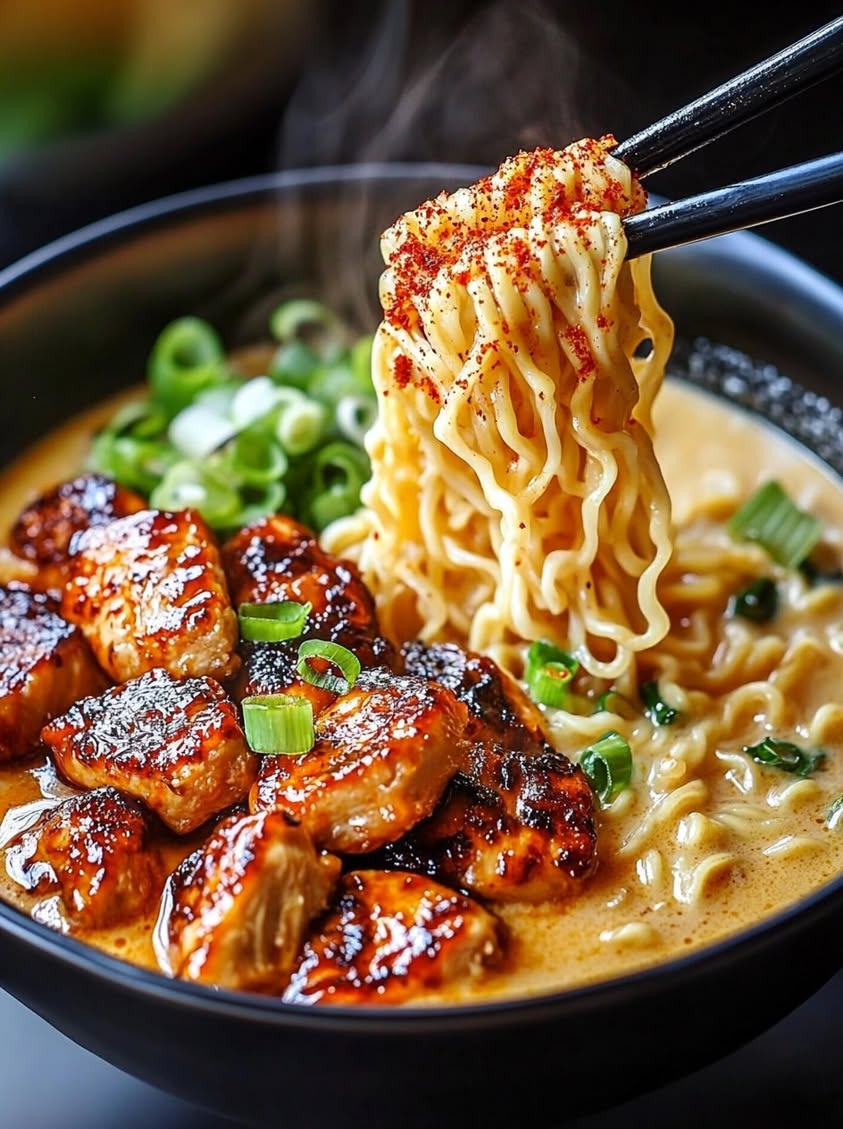
Creamy Fiery Garlic Chicken Ramen with Charred Glazed Chicken Recipe: A Flavor Explosion in a Bowl
Imagine a bowl of ramen that completely redefines comfort food. This Creamy Fiery Garlic Chicken Ramen with Charred Glazed Chicken Recipe delivers an unforgettable experience. It masterfully blends a rich, velvety broth with a serious kick of heat and the deep, savory notes of roasted garlic. Meanwhile, the star of the show is the chicken, glazed to a sticky, sweet perfection and charred for incredible smoky flavor. Ultimately, this dish is a beautiful fusion of Japanese ramen tradition and bold, modern flavor twists that will become an instant favorite.
This recipe is perfect for anyone craving a restaurant-quality meal at home. The process is surprisingly straightforward, yet the results are spectacularly complex. You will create a luxurious, creamy broth that clings to every noodle, complemented by tender vegetables and that incredible charred chicken. Furthermore, the balance of spicy, savory, sweet, and umami is absolutely divine. Whether you are cooking for a special date night or simply treating yourself, this Creamy Fiery Garlic Chicken Ramen with Charred Glazed Chicken Recipe promises a deeply satisfying and impressive meal.
Quick Recipe Highlights
- Flavor Profile: This dish offers a complex symphony of tastes. You get an initial creamy, garlicky richness followed by a building, fiery heat from gochujang or sriracha. The charred glazed chicken adds a sweet, smoky, and slightly caramelized counterpoint that perfectly balances the spicy broth.
- Texture: Enjoy a wonderful contrast in every bite. The ramen noodles provide a satisfying chew, while the creamy broth is luxuriously smooth. The charred chicken offers a slightly crispy exterior with a juicy, tender interior, and the vegetables add a fresh, crisp element.
- Aroma: As this cooks, your kitchen will fill with an intoxicating scent. First, you will smell the sweet, caramelizing glaze on the chicken. Then, the pungent, nutty aroma of toasted garlic and ginger will bloom, followed by the warm, spicy fragrance of the chili paste melding with the creamy broth.
- Visual Appeal: This bowl is a feast for the eyes. The creamy, orange-tinted broth cradles springy noodles. Vibrant green scallions and a perfectly soft-boiled egg with a runny yolk add pops of color. Finally, the crown jewel is the glistening, charred chicken with beautiful dark grill marks.
- Skill Level Needed: This is an intermediate-friendly recipe. It requires multitasking, such as managing the chicken while building the broth. However, with clear instructions and a bit of organization, even confident beginners can achieve fantastic results and learn valuable cooking techniques.
- Special Equipment: A heavy-bottomed pot or Dutch oven is essential for even heat distribution when making the broth. Additionally, a good skillet or grill pan is needed to achieve the proper char on the glazed chicken without burning the sugars in the glaze.
Recipe Overview
- Difficulty Level: We rate this Creamy Fiery Garlic Chicken Ramen with Charred Glazed Chicken Recipe as medium difficulty. The challenge lies in coordinating multiple components simultaneously. You must cook the chicken to perfect doneness, build a flavorful broth, and prepare toppings, all within a similar timeframe. However, each step is simple when broken down.
- Category: This dish falls squarely into the main course category. It is a complete, hearty meal in a bowl featuring protein, carbohydrates, and vegetables. Furthermore, it is perfect for dinner, a luxurious lunch, or a weekend cooking project that yields incredibly rewarding results.
- Cuisine: This recipe is a fusion creation. It draws core inspiration from Japanese ramen, utilizing a rich, savory broth and wheat noodles. Then, it incorporates Korean influences through ingredients like gochujang for heat and a glazing technique that echoes bulgogi, resulting in a modern, cross-cultural delight.
- Cost: Making this Creamy Fiery Garlic Chicken Ramen at home is very cost-effective. Chicken thighs are an affordable protein, and pantry staples like garlic, ginger, and soy sauce form the flavor base. Specialty items like ramen noodles and gochujang are one-time investments that allow for multiple meals.
- Season: This dish is fantastic year-round but particularly shines in cooler months. The warm, spicy, and creamy broth is incredibly comforting on a cold evening. Conversely, its bold flavors can also be satisfying in warmer weather, especially if you enjoy spicy food to cool down.
- Occasion: It is ideal for a special weeknight dinner, a casual weekend feast with friends, or a solo self-care cooking session. The impressive presentation makes it great for date night, while its hearty nature is perfect for feeding a hungry family after a long day.
Why You’ll Love This Recipe
First and foremost, the taste and texture of this Creamy Fiery Garlic Chicken Ramen with Charred Glazed Chicken Recipe are utterly addictive. The initial sip of the broth delivers a creamy, garlic-forward punch that quickly gives way to a warm, tingling heat. This heat is not overwhelming but rather a slow build that enhances the other flavors. Then, you bite into the charred chicken, and its sweet, smoky glaze creates a perfect harmony with the spicy base. The springy ramen noodles soak up all this incredible flavor, while crisp bean sprouts and green onions provide refreshing contrast. Every single component works in concert for a truly memorable eating experience.
Additionally, the convenience and preparation benefits are significant. While this recipe has several steps, they are all logical and build upon each other. You can prep your vegetables and make the glaze while the chicken marinates. Consequently, the actual cooking time is efficient and manageable. Moreover, the recipe uses mostly pantry staples and common proteins, meaning you likely have many ingredients on hand. This makes it an excellent choice for an impressive meal without a last-minute grocery run. Finally, the skills you learn, like building a flavorful broth and creating a perfect char, are transferable to countless other dishes.
From a nutritional standpoint, this ramen offers a well-rounded meal. Chicken thighs provide high-quality protein and essential B vitamins. Garlic and ginger are renowned for their anti-inflammatory and immune-supporting properties. The vegetables add fiber, vitamins, and minerals. By making the broth from scratch, you control the sodium and fat levels, unlike many store-bought or restaurant versions. You can easily adjust the creaminess with lighter dairy or dairy-free alternatives. Ultimately, this homemade Creamy Fiery Garlic Chicken Ramen with Charred Glazed Chicken Recipe is a far healthier and more satisfying option than its takeout counterpart.
The social and entertaining value of this dish is incredibly high. Presenting a beautiful, steaming bowl of ramen is always a showstopper. It feels special and indulgent, making guests feel truly cared for. The recipe is also easily scalable for a crowd; you can double or triple the components without issue. Setting up a ramen bar with various toppings like soft-boiled eggs, nori, extra chili crisp, and sesame seeds allows everyone to customize their bowl. This interactive element makes for a fun, engaging, and delicious meal that encourages conversation and shared enjoyment.
Finally, the cost-effectiveness and accessibility are major wins. Dining out for a quality bowl of ramen can be expensive. This homemade version delivers superior flavor and quality at a fraction of the price. Chicken thighs are a budget-friendly cut that becomes incredibly succulent when cooked properly. The aromatic base of garlic, ginger, and soy sauce is inexpensive but delivers immense flavor. Investing in a tub of gochujang or a bottle of mirin opens the door to many other Asian-inspired dishes. Therefore, this Creamy Fiery Garlic Chicken Ramen with Charred Glazed Chicken Recipe is not only a delicious treat but also a smart and economical culinary adventure.
Historical Background and Cultural Significance
Ramen’s origin story is a fascinating tale of cultural exchange. While commonly associated with Japan, its roots trace back to Chinese wheat noodles. These noodles were introduced to Japan by Chinese immigrants in the late 19th and early 20th centuries. The Japanese term “ramen” is likely derived from the Chinese “lamian,” meaning pulled noodles. Initially, it was a simple, cheap food sold by street vendors. Over decades, Japanese chefs meticulously refined the dish, developing the complex, broth-centric culinary art form we know today. This evolution from a humble immigrant food to a national icon is a testament to adaptation and innovation.
The cultural importance of ramen in Japan cannot be overstated. It transcends mere sustenance to become a deeply ingrained part of food culture. Every region boasts its own signature style, from the miso ramen of Hokkaido to the tonkotsu ramen of Kyushu. Ramen shops, from tiny “ramen-ya” stalls to renowned institutions, are places of devotion where chefs spend years perfecting their broth. For many, a bowl of ramen represents comfort, speed, and incredible depth of flavor. It is a food for salarymen after a long day, for students on a budget, and for anyone seeking a soul-warming meal.
The evolution of the recipe we are making today reflects modern global fusion trends. Traditional ramen broths are often clear or milky from long-simmered bones. This Creamy Fiery Garlic Chicken Ramen with Charred Glazed Chicken Recipe represents a contemporary departure. The addition of dairy or coconut milk for creaminess is a Western influence. The use of gochujang, a Korean fermented chili paste, introduces a different kind of heat and umami. The sweet, glazed, and charred chicken technique borrows from Korean barbecue and American grilling styles. This fusion is a beautiful example of how culinary traditions cross-pollinate in our interconnected world.
Regional variations of ramen are vast and inspiring. In Japan alone, styles differ dramatically. Sapporo is famous for rich miso ramen with corn and butter. Hakata’s tonkotsu ramen features a opaque, pork-bone broth. Tokyo-style shoyu ramen uses a clearer, soy sauce-based broth. Outside Japan, chefs have created countless interpretations. Our recipe is part of this creative lineage, blending elements to create something new. Understanding these roots adds appreciation for the dish, but the beauty of cooking at home is the freedom to experiment. You can take the core framework of this Creamy Fiery Garlic Chicken Ramen and make it your own.
Ingredient Deep Dive
Chicken Thighs: Chicken thighs are the ideal choice for this Creamy Fiery Garlic Chicken Ramen with Charred Glazed Chicken Recipe. Culturally, they are a staple in many cuisines due to their affordability and flavor. Nutritionally, they contain more fat than breasts, which translates to juiciness and a richer taste that stands up to bold spices and high-heat charring. When selecting, look for thighs with even thickness and a pink, moist appearance. You can store them in the coldest part of your fridge for 1-2 days before use. For a leaner option, boneless, skinless chicken breasts can be substituted, but take care not to overcook them.
Gochujang (Korean Chili Paste): This fermented paste is the secret behind the “fiery” element. Historically, gochujang has been a cornerstone of Korean cuisine for centuries, made from chili powder, glutinous rice, fermented soybeans, and salt. It provides a deep, sweet, spicy, and umami flavor that is more complex than plain chili flakes or hot sauce. Nutritionally, the fermentation process may promote gut health. Select a brand with a rich, red color and a thick consistency. It keeps for months in the refrigerator. If unavailable, a mix of sriracha, miso paste, and a touch of sugar can mimic its flavor profile.
Fresh Garlic & Ginger: These aromatics form the foundational flavor layer. Garlic has been used medicinally and culinarily for thousands of years across Asia and Europe. Ginger, originating in Southeast Asia, is prized for its zesty, warming properties. Both offer significant anti-inflammatory and antioxidant benefits. Choose firm, heavy heads of garlic with tight skin and ginger roots that are smooth and not shriveled. Store both in a cool, dry place. For the deepest flavor in this ramen, they are minced and sautéed until fragrant, releasing their essential oils into the fat to create an incredible base for the broth.
Ramen Noodles: These wheat noodles are characterized by their alkaline mineral water content, which gives them a distinctive yellow hue and springy, chewy texture. While instant ramen noodles are a modern invention, fresh or dried ramen noodles are essential for authenticity. They are designed to hold up in hot broth without becoming mushy. Look for them in the Asian aisle of supermarkets or at specialty stores. You can substitute with other wheat noodles like udon in a pinch, but the eating experience will differ. Always cook noodles separately and add them to the bowl just before serving to maintain perfect texture.
Cream Element (Heavy Cream or Coconut Milk): This ingredient creates the luxurious, velvety mouthfeel. The use of cream is a non-traditional but delicious modern adaptation. Heavy cream will give a rich, dairy-forward creaminess. Coconut milk offers a dairy-free alternative with a subtle tropical sweetness that pairs wonderfully with the spicy and garlicky notes. Nutritionally, both add fat which helps carry flavors and creates a satisfying feel. Use full-fat versions for the best results. Shake the can of coconut milk well before using. You can adjust the amount to your preference for a lighter or richer broth.
Common Mistakes to Avoid
- Overcrowding the Pan with Chicken: Placing too many chicken thighs in the skillet at once will steam them instead of searing them. Consequently, you will not achieve the necessary caramelization and char for the glaze to adhere properly. Always cook in batches if your pan is not large enough to give each piece ample space.
- Burning the Garlic and Ginger: Sautéing the aromatics over too high heat will cause them to burn in seconds, resulting in a bitter taste that will ruin the entire broth. Instead, cook them over medium heat just until they become fragrant and lightly golden, which usually takes only 30-60 seconds.
- Using the Broth from Boiled Noodles: Never add the starchy, cloudy water used to boil the ramen noodles directly into your soup broth. This water will make the broth gluey and thick. Always cook the noodles separately in plain water according to package directions, then drain and rinse briefly to stop the cooking process before adding to the bowl.
- Neglecting to Taste and Adjust Seasoning: The balance of salty, sweet, spicy, and creamy is crucial. Do not simply follow the measurements and assume it is perfect. Before serving, always taste the broth and adjust. You might need an extra pinch of salt, a squeeze of lime for acidity, or another teaspoon of gochujang for more heat.
- Overcooking the Ramen Noodles: Ramen noodles cook very quickly and continue to soften in the hot broth. If you boil them to the package’s suggested time, they will become mushy by the time you eat. Aim to cook them until just al dente, or even a minute under, so they reach perfect texture in the bowl.
- Adding Cold Cream to a Boiling Broth: Pouring cold heavy cream or coconut milk directly into a violently simmering broth can cause it to separate or curdle. To prevent this, first temper the cream by whisking a ladleful of hot broth into it. Then, you can safely stir this mixture back into the main pot.
- Skipping the Char on the Chicken: The “charred” in Charred Glazed Chicken is not just for show. That high-heat contact creates Maillard reaction flavors—complex, savory, and smoky notes that are irreplaceable. Do not remove the chicken from the pan as soon as it is cooked through; give it an extra minute to develop those dark, flavorful spots.
- Forgetting to Prepare Toppings in Advance: Ramen assembly should be quick. If you are slicing scallions, boiling eggs, and toasting sesame seeds while your broth and noodles are ready, everything will get cold. Prepare all your toppings ahead of time and have them ready to go for a smooth, stress-free final assembly.
Essential Techniques
Building a Flavor Base (Sautéing Aromatics): This technique is the foundation of any great soup or stew. You start by heating oil in your pot and adding minced garlic and ginger. The goal is to gently cook them to release their volatile oils and mellow their raw bite, transforming them into sweet, nutty, and deeply aromatic components. The key is to use medium heat and constant stirring to prevent burning. You will know it is done when the kitchen smells incredible and the garlic just begins to turn light gold around the edges. This step infuses the oil itself with flavor, which then carries throughout the entire broth.
Creating a Char on Glazed Protein: Achieving a proper char on glazed chicken requires managing sugar and high heat. First, you pat the chicken dry to ensure searing, not steaming. Then, you apply a glaze containing sugar (like honey or brown sugar) during the last few minutes of cooking. Finally, you increase the heat slightly. The sugars in the glaze will caramelize and even blacken in spots against the hot pan, creating complex bitter-sweet flavors and appealing grill marks. The common pitfall is burning; watch carefully and have your exhaust fan on, as it can get smoky. Success is visually obvious: a sticky, darkly caramelized, and slightly blackened exterior.
Tempering Dairy into Hot Liquid: This is a crucial technique to prevent curdling when adding cold cream to a hot soup. Curdling happens due to a sudden temperature and acidity shock. To temper, you slowly whisk a small amount of the hot broth into the cold cream in a separate bowl. This gradually raises the cream’s temperature. Once the cream is warm, you can then slowly whisk this mixture back into the main pot. This gentle introduction allows the dairy proteins to adjust without seizing up. The result is a smoothly integrated, velvety broth without any unpleasant grainy or separated texture.
Proper Noodle Preparation for Ramen: Ramen noodles must be treated with care to achieve the ideal springy, chewy texture, or “koshi.” Always use a large pot of boiling, unsalted water. Salting can toughen the noodles. Cook them according to package time but start tasting a minute early. As soon as they are pliable but still have a slight bite, drain them immediately. Some chefs recommend rinsing briefly with cold water to stop the cooking and remove excess surface starch, which keeps them from clumping. Have your broth and bowls ready so the hot noodles go directly from the colander into the soup, ensuring they do not sit and stick together.
Pro Tips for Perfect Creamy Fiery Garlic Chicken Ramen with Charred Glazed Chicken
First, marinate your chicken thighs for at least 30 minutes, or ideally up to 4 hours, in a simple mix of soy sauce, minced garlic, and a touch of the gochujang. This builds flavor from the inside out and ensures every bite is seasoned.
Second, use chicken stock instead of water for the broth. A good-quality, low-sodium stock provides an instant depth of flavor that forms a fantastic foundation for the creamy and spicy elements you will add later.
Third, reserve a tablespoon of the fat rendered from cooking the chicken. Add this flavorful fat back into the pot when you sauté your garlic and ginger. This chicken-infused oil will make your aromatic base even more rich and savory.
Fourth, if using coconut milk, opt for the full-fat canned version and shake the can vigorously before opening. The cream that separates at the top is essential for achieving a luxuriously thick and creamy broth consistency.
Fifth, finish each bowl with a drizzle of toasted sesame oil and a sprinkle of toasted sesame seeds just before serving. These additions provide a final layer of nutty aroma and crunch that elevates the entire dish.
Sixth, consider making a double batch of the charred glazed chicken. It is fantastic leftover, chopped up for salads, rice bowls, or sandwiches, giving you a head start on another delicious meal.
Seventh, for professional-looking soft-boiled eggs, use room-temperature eggs and lower them gently into already-boiling water. Cook for exactly 6.5 minutes, then transfer immediately to an ice bath. This yields a firm white and a custardy, jam-like yolk.
Eighth, let the assembled bowls rest for one minute before serving. This allows the noodles to soak up a little broth and for all the temperatures to equalize, creating a more harmonious first bite.
Variations and Adaptations
Regional Variations: To lean into Japanese tradition, replace the creamy element with a tonkotsu-style base by simmering pork bones for hours. For a Korean twist, use doenjang (soybean paste) along with gochujang and add kimchi as a topping. A Thai-inspired version could use red curry paste instead of gochujang and finish with lime juice and fresh cilantro.
Seasonal Adaptations: In spring, top your ramen with fresh peas, asparagus tips, and edible flowers. Summer calls for lighter additions like corn kernels, cherry tomatoes, and a squeeze of yuzu or lemon. For autumn, incorporate roasted mushrooms, sweet potato, or kabocha squash. Winter versions can be heartier with extra root vegetables and a spoonful of chili crisp for added warmth.
Dietary Modifications: For a gluten-free Creamy Fiery Garlic Chicken Ramen, use tamari instead of soy sauce and ensure your ramen noodles are specifically labeled gluten-free, often made from rice or sweet potato starch. To make it dairy-free, coconut milk is the perfect substitute for heavy cream.
Flavor Variations: Experiment with the heat source. Use sambal oelek for a cleaner chili heat, or incorporate Szechuan peppercorns for a tingling, numbing ma-la sensation. For a smoky note, add a teaspoon of smoked paprika or a chipotle pepper in adobo to the broth. A tablespoon of peanut butter can create a satay-like flavor profile.
Texture Modifications: For extra crunch, add fried shallots, crushed peanuts, or wonton strips. For more tender, melt-in-your-mouth protein, use shredded braised pork belly (chashu) instead of chicken. To make the broth even thicker and richer, create a slurry with a tablespoon of cornstarch and cold water, then stir it into the simmering broth.
Presentation Alternatives: Serve the ramen deconstructed on a large platter: a pile of noodles, a bowl of broth, and all toppings arranged separately. This is fun for gatherings. For individual servings, use wide, shallow bowls to showcase all the beautiful components. You can also layer the ingredients vertically in a deep bowl for a dramatic effect.
Serving and Presentation Guide
Plating Techniques: The key to beautiful ramen presentation is layering. Start by placing your cooked and drained noodles in the center of a wide, deep bowl. Carefully ladle the hot, creamy broth around the noodles, allowing them to peek through the surface. Arrange the sliced charred glazed chicken artfully on one side. This method ensures every element is visible and inviting.
Garnishing Ideas: Garnishes add color, texture, and fresh flavor. Classic choices include diagonally sliced scallions, a halved soft-boiled egg, a sheet of nori (seaweed), and a sprinkle of sesame seeds. For more flair, add fresh cilantro leaves, thin slices of fresh chili, a drizzle of chili oil, or a small mound of finely shredded cabbage or carrot.
Traditional Accompaniments: In a traditional ramen-ya, you might find condiments on the table for personal adjustment. Set out small dishes of chili oil (rayu), toasted sesame seeds, minced garlic in vinegar, and extra soy sauce. This allows each diner to fine-tune the saltiness, heat, and acidity of their bowl to their exact preference.
Modern Serving Suggestions: For a contemporary twist, serve the ramen with a side of pickled vegetables, like cucumber or radish, to cut through the richness. You could also offer lime or lemon wedges for a bright, acidic finish. Serving with a pair of chopsticks and a deep Asian soup spoon is essential for the full experience.
Temperature Considerations: Serve this Creamy Fiery Garlic Chicken Ramen immediately after assembly. The broth must be piping hot, the noodles warm, and the chicken just off the skillet. Warm your bowls beforehand by rinsing them with hot water; this keeps the soup hotter for longer. Cold toppings, like the soft-boiled egg, provide a pleasant contrast.
Portion Control Tips: This recipe is designed as a hearty main course. For a lighter meal, you can increase the ratio of broth and vegetables to noodles and chicken. When serving a multi-course meal, consider offering smaller “appetizer” portions in smaller bowls. The rich nature of the dish is very satisfying, so a standard bowl is usually ample.
Wine and Beverage Pairing
Wine Pairings: The bold, spicy, and creamy flavors of this ramen need a wine that can stand up to them. An off-dry Riesling or Gewürztraminer is an excellent choice; their slight sweetness and floral notes cool the heat and complement the garlic and ginger. For red wine lovers, a fruity, low-tannin Beaujolais or a Zinfandel with jammy berry flavors can work well. Avoid high-tannin reds like Cabernet Sauvignon, as they can clash with the spice.
Non-Alcoholic Alternatives: Iced green tea or jasmine tea is a classic and refreshing companion, cleansing the palate between bites. A sparkling water with a squeeze of lime or yuzu helps cut through the richness. For something sweeter, a lychee juice or a ginger beer (non-alcoholic) can provide a nice flavor synergy with the dish’s Asian-inspired profile.
Coffee/Tea Pairings: After the meal, a cup of genmaicha (brown rice green tea) is perfect. Its toasty, nutty flavor is a calming finish. For coffee drinkers, a medium-roast coffee with low acidity and notes of caramel or nut would be complementary, rather than a bright, fruity light roast that might contrast too sharply.
Temperature Considerations: Icy cold drinks are particularly effective against the fiery heat of the broth. Ensure beers are well-chilled, and white wines are served cold. For non-alcoholic options, very cold sparkling water or iced tea is ideal. The contrast between the hot soup and the cold beverage is part of the enjoyable experience.
Serving Suggestions: Serve beverages in appropriate glassware to enhance the experience. Beer in a pint glass or pilsner, white wine in a standard wine glass, and iced tea in a tall glass. Having a carafe of cold water on the table is always a good idea, as guests will likely need to hydrate due to the spicy and savory nature of the ramen.
Storage and Shelf Life
Storage Methods: It is best to store the components of this Creamy Fiery Garlic Chicken Ramen separately. Keep the broth, cooked noodles, charred chicken, and toppings in individual airtight containers. This prevents the noodles from absorbing all the broth and becoming bloated and the chicken skin from losing its texture.
Temperature Requirements: All components must be refrigerated within two hours of cooking. Store them in the refrigerator at 40°F (4°C) or below. The broth and chicken will keep for 3-4 days. Cooked noodles are best used within 1-2 days as they continue to degrade in texture.
Container Recommendations: Use glass containers with tight-sealing lids for the broth to prevent odor absorption. Shallow containers allow the chicken to cool quickly and evenly. Store noodles submerged in a little cold water in a sealed container to prevent them from drying out and sticking together.
Signs of Spoilage: Discard any component that has an off smell, particularly a sour or unpleasant odor. Look for visible mold, which can appear as fuzzy spots. If the broth becomes unusually thick or slimy, it has spoiled. When in doubt, it is safest to throw it out.
Reheating Instructions: Reheat the broth gently in a saucepan over medium-low heat, stirring occasionally. If it has thickened, add a splash of water or stock. Reheat chicken in a skillet over medium heat to help recrisp the exterior, or in the oven at 350°F (175°C) for a few minutes. Briefly dunk noodles in hot water to rewarm and separate them.
Freezing Guidelines: The broth freezes exceptionally well for up to 3 months. Cool it completely, then freeze in portion-sized containers, leaving an inch of space for expansion. The charred glazed chicken can also be frozen for up to 2 months. Do not freeze cooked noodles, as they will become mushy and grainy upon thawing.
Make Ahead Strategies
Prep Timeline: You can prep almost this entire Creamy Fiery Garlic Chicken Ramen with Charred Glazed Chicken Recipe a day in advance. The day before, make the broth (without the cream), cook and slice the chicken, and prepare all toppings (slice scallions, make soft-boiled eggs, etc.). Store everything separately in the refrigerator.
Storage Between Steps: Cool the broth and chicken completely before covering and refrigerating. Store the sliced chicken with any accumulated juices. Keep hard-boiled eggs unpeeled in their shell for best freshness. Place chopped vegetables in a container with a damp paper towel to maintain crispness.
Quality Impact Assessment: Making the broth ahead often improves the flavor, as it allows time for the spices to meld. The chicken will remain tasty but may lose a bit of its initial charred crispness. You can refresh it quickly in a hot pan before serving. Noodles should always be cooked fresh for optimal texture.
Assembly Tips: When ready to serve, gently reheat the broth. Once hot, stir in the cream or coconut milk using the tempering method. Cook fresh noodles. Reheat the chicken in a skillet. Assemble bowls quickly: noodles, hot broth, warm chicken, then all your fresh, cold toppings for maximum contrast.
Reheating Guidelines: Reheat the broth slowly to avoid separating the cream. Reheat the chicken with a splash of water or stock in a covered skillet to keep it moist, then uncover to re-crisp the exterior if desired. Do not microwave the noodles; instead, briefly dip them in boiling water.
Fresh Element Additions: Even with make-ahead components, always add certain elements fresh. Garnish with freshly sliced scallions and cilantro. Add a last-minute drizzle of sesame oil or chili oil. If you made eggs ahead, peel and halve them just before serving to keep the yolks bright and the whites firm.
Scaling Instructions
Halving the Recipe: Halving this Creamy Fiery Garlic Chicken Ramen recipe is straightforward for a smaller meal. Simply divide all ingredient quantities by two. Use a medium saucepan instead of a large pot for the broth. Cooking times for the chicken and broth will remain roughly the same, but keep a closer eye as smaller volumes can heat and reduce more quickly.
Doubling or Tripling: To feed a crowd, you can confidently double or triple the ingredients. Use your largest stockpot for the broth. You will need to cook the chicken in more batches to avoid overcrowding the pan; keep cooked batches warm in a low oven (200°F/95°C) on a sheet pan. Consider using two pots to boil noodles in batches to prevent sticking.
Equipment Adjustments: Scaling up requires larger equipment. Ensure your pot has enough volume for the increased broth without risk of boiling over. You may need multiple large skillets or a griddle to cook all the chicken efficiently. Have a large colander ready for draining big batches of noodles and more bowls prepared for assembly.
Timing Modifications: While prep time increases with scale, active cooking time does not necessarily double. Building the broth takes the same amount of time regardless of volume. The main time increase comes from cooking multiple batches of chicken and noodles. Organize your workspace like an assembly line for efficiency.
Storage Considerations: If making a large batch, plan your storage in advance. You will need multiple containers for the leftover components. Label them with the date. Remember that a large pot of hot broth will take much longer to cool to a safe refrigeration temperature; consider dividing it into smaller containers to speed up the cooling process.
Nutritional Deep Dive
Macro Breakdown: A serving of this Creamy Fiery Garlic Chicken Ramen provides a balanced mix of macronutrients. The chicken thighs and cream contribute substantial protein and healthy fats, which are satiating and support muscle repair. The ramen noodles are the primary source of carbohydrates, offering energy. The fats from the chicken skin, cream, and oils help absorb fat-soluble vitamins from the garlic and other ingredients, making the meal both flavorful and nutritionally efficient.
Micronutrient Analysis: This dish is a good source of several key micronutrients. Garlic and onions provide allicin and quercetin, compounds with antioxidant properties. Ginger offers gingerol, known for its anti-inflammatory effects. Chicken is rich in B vitamins, particularly B6 and B12, which are crucial for energy metabolism and nervous system health. The vegetables add vitamins A, C, and K, along with minerals like potassium.
Health Benefits: The combination of ingredients offers several health benefits. The capsaicin in the goch{“success”:true,”message”:”Recipe created successfully”,”post_id”:8402,”tasty_recipe_id”:8402,”shortcode”:” Print
Creamy Fiery Garlic Chicken Ramen with Charred Glazed Chicken
Description
A bold and comforting ramen dish featuring tender chicken glazed in a sweet-spicy sauce, served over creamy garlic-infused noodles with a fiery kick.
Ingredients
For the Crust:
- 2 boneless, skinless chicken breasts
- 4 packs of instant ramen noodles (seasoning packets discarded)
- 4 cups chicken broth
- 1 cup heavy cream
- 6 cloves garlic, minced
- 2 tablespoons gochujang (Korean chili paste)
- 2 tablespoons soy sauce
- 1 tablespoon honey
- 1 tablespoon vegetable oil
- 1 teaspoon sesame oil
- 2 green onions, sliced
- 1 tablespoon butter
- Salt and black pepper to taste
Instructions
1. Prepare the Crust:
- Season chicken breasts with salt and pepper. In a bowl, mix gochujang, soy sauce, and honey to make the glaze.
- Heat vegetable oil in a skillet over medium-high heat. Cook chicken for 5-6 minutes per side until cooked through. Brush with glaze during the last 2 minutes, allowing it to char slightly. Remove and let rest before slicing.
- In a pot, melt butter over medium heat. Add minced garlic and sauté for 1 minute until fragrant. Pour in chicken broth and bring to a simmer.
- Add ramen noodles to the broth and cook for 3-4 minutes until tender. Stir in heavy cream and sesame oil, then simmer for 2 more minutes until creamy.
- Divide the creamy ramen into bowls. Top with sliced glazed chicken, garnish with green onions, and serve immediately.
Notes
You can customize the seasonings to taste.

I’m Billy, a classically trained culinary school graduate from The Culinary Institute of America with over 12 years in the restaurant industry and over 19 years of cooking experience.