
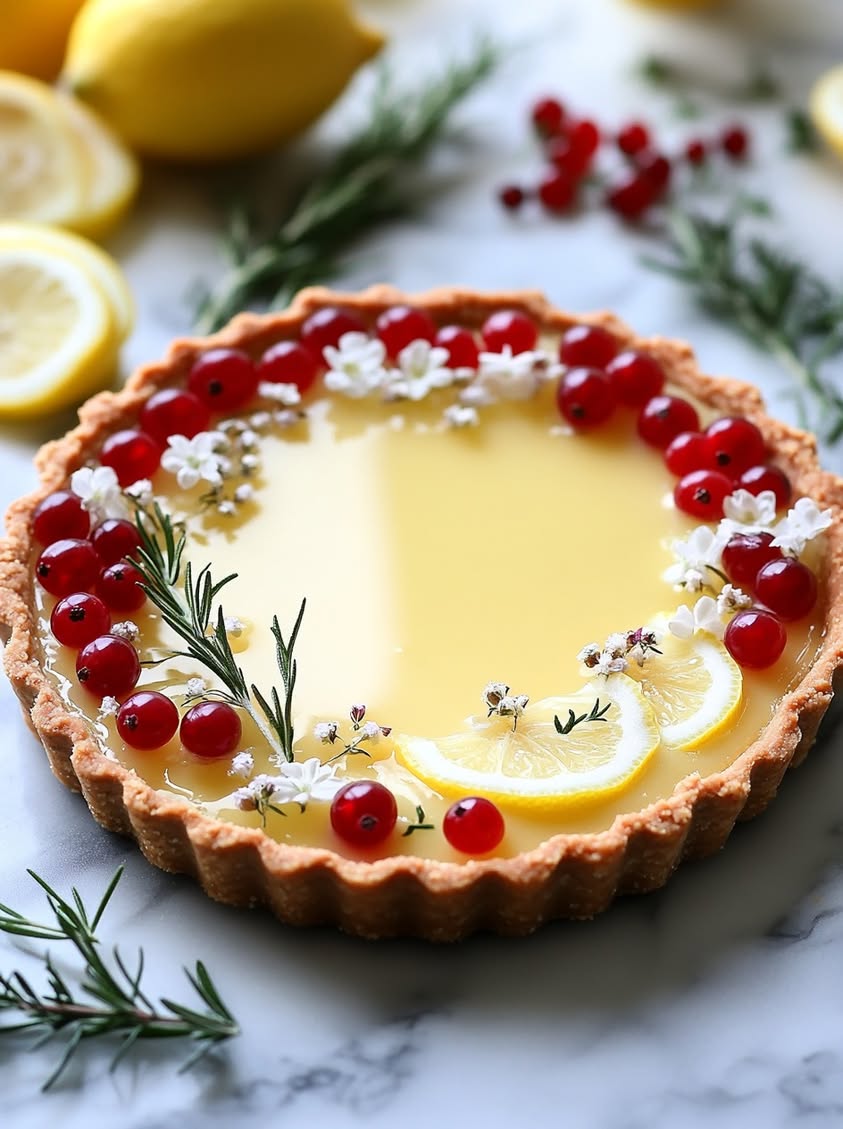
Elegant No-Bake Lemon Tart with Biscoff Crust and Red Currants: A Zesty Summer Showstopper
Imagine a dessert that perfectly captures the essence of a sunny afternoon. This Elegant No-Bake Lemon Tart with Biscoff Crust and Red Currants delivers exactly that experience. It combines a spiced, buttery cookie base with a luxuriously smooth and tangy lemon filling. The result is a dessert that feels both sophisticated and refreshingly simple to make.
Furthermore, this tart is a true celebration of texture and contrast. You get the satisfying crunch of the Biscoff crust against the velvety creaminess of the lemon curd. Meanwhile, the tart pop of fresh red currants and the sweet snap of white chocolate create a symphony of flavors in every bite. Ultimately, it is a visually stunning centerpiece that requires no oven time, making it ideal for warm weather entertaining.
This recipe is a testament to the magic of no-bake desserts. It proves you can create something extraordinarily beautiful and delicious without turning on the oven. The process is straightforward, the ingredients shine, and the final product is guaranteed to impress. Whether for a dinner party or a quiet treat, this tart is a guaranteed crowd-pleaser.
Quick Recipe Highlights
- Flavor Profile: This tart features a vibrant, sunny lemon curd that is perfectly balanced between sweet and tart. The spiced, caramelized notes of the Biscoff crust provide a warm foundation. Finally, the garnish of fresh red currants adds a bright, juicy acidity, while the white chocolate offers a creamy, sweet finish.
- Texture: The texture journey begins with a firm, crumbly crust made from crushed Biscoff cookies. Next, the filling is set to a smooth, dense, and creamy consistency that slices cleanly. The fresh red currants provide a delightful burst, and the white chocolate garnish adds a delicate, snappy contrast.
- Aroma: As you prepare this Elegant No-Bake Lemon Tart with Biscoff Crust and Red Currants, your kitchen will fill with the zesty, uplifting scent of fresh lemons. This citrus aroma beautifully mingles with the warm, cinnamon-spiced fragrance of the Biscoff cookies. The overall scent is incredibly inviting and fresh.
- Visual Appeal: This dessert is a masterpiece of color and composition. The deep amber crust contrasts elegantly with the vibrant yellow filling. Subsequently, the ruby-red currants and snowy white chocolate create a stunning, jewel-like finish that looks professionally crafted.
- Skill Level Needed: This is an accessible recipe for bakers of all levels, especially beginners. The techniques involve simple mixing, pressing, and whipping. Importantly, there is no baking involved, which eliminates common pitfalls like over-browning or sinking centers.
- Special Equipment: You will need a 9-inch tart pan with a removable bottom for the classic shape and easy release. A food processor or zip-top bag and rolling pin will efficiently crush the cookies. Additionally, a fine-mesh sieve is helpful for straining the lemon curd to ensure ultimate smoothness.
Recipe Overview
- Difficulty Level: We classify this Elegant No-Bake Lemon Tart with Biscoff Crust and Red Currants as easy. The steps are sequential and forgiving. There is no temperamental pastry dough or finicky baking time to monitor. Consequently, even a first-time baker can achieve fantastic results with careful attention to the chilling times.
- Category: This recipe falls squarely into the dessert category, specifically as a chilled tart or pie. It is perfect for concluding a meal. Moreover, it can also be served as part of an afternoon tea spread or a celebratory brunch dessert table.
- Cuisine: While tarts have strong French origins, this version is a modern, fusion-style dessert. It combines the European tradition of a lemon tart with the globally popular Biscoff cookie from Belgium. The use of fresh currants and white chocolate further cements its place in contemporary, ingredient-driven cuisine.
- Cost: The cost is moderate, largely depending on the price of fresh lemons and red currants, which can vary by season. Biscoff cookies and cream cheese are typically affordable pantry and fridge staples. Overall, it is far less expensive than a similar tart from a high-end bakery, offering tremendous value.
- Season: This tart is quintessential for spring and summer when you want a refreshing, cool dessert. It is also excellent when fresh, tart berries like red currants are at their peak. However, its bright flavor can provide a cheerful counterpoint to heavier winter meals as well.
- Occasion: This dessert is versatile enough for both casual and formal events. It is ideal for garden parties, bridal showers, Mother’s Day, or holiday gatherings. Ultimately, its elegant appearance makes it suitable for any occasion where you want to serve a show-stopping sweet.
Why You’ll Love This Recipe
First and foremost, the taste and texture of this Elegant No-Bake Lemon Tart with Biscoff Crust and Red Currants are simply unforgettable. The filling is intensely lemony, creamy, and rich, yet it feels light on the palate. The Biscoff crust adds a dimension of warm spice that you simply do not get from a traditional graham cracker base. Every element complements the others, creating a complex and satisfying dessert experience that is both refreshing and indulgent.
Secondly, the convenience factor is a major win. Since there is no baking required, you avoid heating up your kitchen, which is a blessing in the summer. The active preparation time is relatively short, and most of the recipe time is hands-off chilling. This makes it an excellent make-ahead dessert, reducing stress on the day you plan to serve it. You can focus on other parts of your meal while the tart sets perfectly in the refrigerator.
Additionally, while this is a dessert, it offers some nutritional advantages from its key components. Lemons are an excellent source of vitamin C and antioxidants. Using a nut-free crust like Biscoff makes it accessible to those with nut allergies. You also control the amount of sugar in the filling, allowing for a slightly less sweet version if desired. The red currants contribute additional vitamins and a pop of natural color without artificial dyes.
From a social perspective, this tart has immense entertaining value. Its stunning appearance immediately signals to guests that you have put thought and care into the meal. It is a conversation starter and often becomes the highlight of the dining experience. Because it serves eight, it is perfect for sharing, fostering a sense of community and celebration as everyone enjoys a slice together.
Finally, this Elegant No-Bake Lemon Tart with Biscoff Crust and Red Currants is cost-effective and accessible. The ingredient list is not overly long or filled with obscure items. Most components are readily available at standard grocery stores. Compared to the cost of a similar dessert at a restaurant or patisserie, making it at home saves a significant amount of money. This allows you to create a luxurious treat without the luxury price tag.
Historical Background and Cultural Significance
The concept of the lemon tart, or tarte au citron, has deep roots in European pastry, particularly in France and England. Historical records suggest that citrus-based curds and custards became popular in England in the 19th century, often served with tea. The French later refined the concept into the smooth, set tart we recognize today, valuing its bright, clean flavor as a palate-cleansing end to a rich meal. This dessert became a staple in patisseries, symbolizing elegance and technical skill.
Culturally, lemon desserts often represent freshness, vitality, and sunshine. They are associated with Mediterranean climates and leisurely, al fresco dining. The tart’s ability to balance intense sweetness with sharp acidity mirrors a desired balance in life and cuisine. In many cultures, offering a homemade tart is a gesture of hospitality and care, a way to show love through food. This particular version modernizes the tradition with globally inspired ingredients.
The evolution of this recipe is a story of global ingredient fusion. The classic French tart traditionally uses a pâte sucrée (sweet pastry) crust. Our version swaps that for a crust made from Biscoff cookies, also known as Speculoos. These spiced cookies originated in Belgium and the Netherlands, often associated with St. Nicholas’ Day. Their incorporation into a no-bake crust is a relatively recent, innovative twist that reflects modern baking’s playful, accessible nature.
Regional variations of lemon tart are endless. In Italy, you might find a similar crostata di limone with a polenta crust. In the American South, lemon icebox pie uses a similar no-bake technique but with a condensed milk base. The addition of red currants and white chocolate in our recipe nods to Northern European traditions where these berries are cherished. This Elegant No-Bake Lemon Tart with Biscoff Crust and Red Currants is therefore a delicious product of culinary cross-pollination.
Ingredient Deep Dive
Biscoff Cookies (Speculoos): These iconic Belgian cookies are made with brown sugar, cinnamon, nutmeg, and other warm spices. Historically, Speculoos were baked for St. Nicholas’ Day celebrations. Their caramelized, slightly malty flavor and crisp texture make them an exceptional no-bake crust ingredient. They contain no nuts, making the crust allergy-friendly. For the best crust, use the original crunchy cookies, not the spread. If you cannot find Biscoff, ginger snaps or graham crackers make good substitutes, though the spice profile will differ.
Fresh Lemons: The star of the filling, fresh lemons are non-negotiable for the brightest flavor. You will need both zest and juice. The zest contains potent citrus oils that deliver an intense aroma, while the juice provides the necessary acidity to set the filling and balance the sweetness. Always choose lemons that are heavy for their size with smooth, vibrant yellow skin, as they tend to be juicier. Roll them firmly on the counter before juicing to maximize yield. Avoid bottled lemon juice, as it lacks the fresh, vibrant character essential for this Elegant No-Bake Lemon Tart with Biscoff Crust and Red Currants.
Cream Cheese: This ingredient provides the structure, richness, and tangy backbone for the no-bake filling. Use full-fat, brick-style cream cheese for the best stability and flavor. Ensure it is fully softened to room temperature before mixing to prevent a lumpy filling. The cream cheese’s fat content helps the tart set firmly when chilled. For a lighter variation, some recipes use mascarpone, but cream cheese offers a more pronounced tang that complements the lemon beautifully.
Heavy Whipping Cream: Whipped to soft peaks and folded into the filling, heavy cream introduces air and lightness. It prevents the tart from being overly dense and gives it a mousse-like quality. The fat content in heavy cream (at least 36%) is crucial for proper whipping; lower-fat alternatives will not hold air as well. Ensure both the cream and your mixing bowl are very cold for the fastest, most stable whip.
Red Currants: These small, glossy berries are the jewel-like garnish. They offer a stunning visual contrast and a burst of tart, clean flavor that cuts through the richness. Red currants are high in vitamin C, fiber, and antioxidants. Look for plump, brightly colored berries still attached to their stems. If fresh currants are unavailable, raspberries, pomegranate arils, or even fresh cranberries (slightly sweetened) can be used for a similar tart pop and red color.
White Chocolate: Used here as a garnish, white chocolate adds a touch of sweetness and a beautiful visual element. When melted and drizzled, it hardens into delicate, snappy threads. Quality matters; choose a baking bar with cocoa butter listed as the primary fat, not cheaper coatings made with vegetable oils. The vanilla notes in good white chocolate pair wonderfully with both lemon and the spices in the Biscoff crust.
Common Mistakes to Avoid
- Not Softening the Cream Cheese Enough: Using cold cream cheese straight from the fridge will result in a lumpy, difficult-to-mix filling. Always plan ahead and let the brick sit at room temperature for at least an hour. You should be able to press your finger into it easily.
- Over-Processing the Crust: If you pulse the Biscoff cookies in the food processor for too long, they can turn into an overly fine dust that packs too densely. Pulse just until you have a mix of fine crumbs and a few small pieces for the best texture.
- Skimping on Chilling Time: Patience is key. The crust needs time to set before adding the filling, and the assembled tart needs a full 4 hours (or preferably overnight) to firm up completely. Cutting into it too early will lead to a messy slice.
- Using Bottled Lemon Juice: This is the most common flavor mistake. Bottled juice lacks the bright, fresh acidity and complex oils of fresh lemons. It can impart a flat, sometimes metallic taste that will undermine your entire Elegant No-Bake Lemon Tart with Biscoff Crust and Red Currants.
- Whipping the Cream Too Far: You want soft, billowy peaks that fold gently into the filling. If you whip the cream to stiff peaks, it becomes difficult to incorporate smoothly and can make the final texture grainy or deflated.
- Not Straining the Lemon Curd: Skipping the straining step may leave tiny bits of cooked egg or pieces of zest in your filling. Straining ensures a flawlessly smooth, professional-quality texture that is essential for the tart’s elegance.
- Adding Hot Lemon Curd to the Cream Cheese: The lemon curd must be cooled to room temperature before combining. Adding it warm will melt the cream cheese and deflate the whipped cream, resulting in a runny filling that may not set.
- Forgetting to Grease the Tart Pan: Even with a removable bottom, a light coating of butter or non-stick spray on the pan’s sides helps ensure the crust releases cleanly without crumbling.
Essential Techniques
Making a No-Bake Crust: The technique involves combining fine crumbs with melted butter to create a moldable “dough.” The key is achieving the right consistency; the mixture should hold together when pinched. Press it firmly and evenly into the pan, using the bottom of a measuring cup to compact it. This creates a stable base that slices cleanly. A common pitfall is adding too much butter, which makes the crust greasy and hard. Conversely, too little butter causes a crumbly crust that falls apart.
Creating a Smooth Lemon Filling: This process hinges on proper temperature management and thorough mixing. Start with perfectly room-temperature cream cheese, beating it until completely smooth and lump-free. Then, incorporate the cooled lemon curd gradually, scraping the bowl often. Finally, fold in the whipped cream gently but decisively to maintain air. The visual cue for success is a homogeneous, pale yellow mixture with no streaks of white cream cheese or whipped cream.
Folding Ingredients: Folding is a gentle mixing method used to combine a light, airy ingredient (like whipped cream) with a heavier mixture without deflating it. Use a large rubber spatula and cut down through the center, sweep across the bottom, and fold over the top. Rotate the bowl as you go. The goal is to incorporate everything evenly while preserving as much volume as possible. Stop as soon as no white streaks remain.
Melting White Chocolate for Drizzling: White chocolate is heat-sensitive and can seize easily. Melt it slowly using a double boiler or in short bursts in the microwave at 50% power, stirring frequently. It should be just warm enough to be fluid. For drizzling, transfer it to a small zip-top bag, snip a tiny corner, and use a quick, fluid motion over the chilled tart. Let it set completely before serving.
Pro Tips for Perfect Elegant No-Bake Lemon Tart
First, zest your lemons directly into the bowl with the cream cheese. The natural oils in the zest will infuse the cream cheese with incredible fragrance as you beat them together.
Second, chill your mixing bowl and beaters in the freezer for 15 minutes before whipping the cream. A cold environment helps the cream whip faster and become more stable.
Third, when pressing the crust, pay special attention to the corner where the side meets the bottom. Use your fingers to create a sharp, firm edge for a professional look.
Fourth, for the cleanest slices, dip a sharp knife in hot water and wipe it dry between each cut. This melts through the white chocolate and cleanly separates the creamy filling.
Fifth, if your red currants are very tart, you can toss them in a teaspoon of superfine sugar about 10 minutes before garnishing. This creates a light syrup that makes them glisten.
Sixth, consider adding a teaspoon of vanilla extract or the seeds from a vanilla bean to the cream cheese mixture. This adds a subtle depth that complements both the lemon and the Biscoff spices beautifully.
Seventh, for an extra layer of flavor, brush the baked and cooled crust with a very thin layer of melted white chocolate before adding the filling. This creates a moisture barrier that keeps the crust extra crisp.
Eighth, let the finished tart sit at room temperature for 10-15 minutes before serving. This slight warming softens the filling just enough to make it creamy and easy to eat, rather than rock-hard from the fridge.
Variations and Adaptations
Regional Variations: To lean into the Belgian theme, substitute the red currants with fresh, sweet cherries. For a Mediterranean twist, use a crust made from crushed amaretti cookies and garnish with toasted pine nuts and a drizzle of honey. A British-inspired version might include a layer of lemon curd under the cream cheese filling and be topped with a simple meringue that is lightly toasted with a kitchen torch.
Seasonal Adaptations: In autumn, replace the red currants with sugared cranberries and add a pinch of ground ginger to the crust. For a winter holiday version, garnish with candied citrus peel and a dusting of edible gold. In spring, use a mix of edible flowers and fresh blueberries. Summer opens up possibilities with peaches, raspberries, or blackberries.
Dietary Modifications: For a gluten-free tart, use certified gluten-free ginger snaps or shortbread cookies for the crust. To make it dairy-free, use a plant-based cream cheese and coconut cream (the thick part from a can of full-fat coconut milk) whipped in place of heavy cream. Ensure your white chocolate is dairy-free or omit it.
Flavor Variations: Infuse the heavy cream with fresh basil or thyme before whipping it for an herbal note. Add the zest of one lime along with the lemon for a citrus blend. For a tropical feel, fold 1/2 cup of toasted coconut into the crust and garnish with toasted macadamia nuts.
Texture Modifications: For a crunchier texture, add 1/4 cup of finely chopped toasted pecans or almonds to the Biscoff crust. For a smoother, denser filling akin to a New York-style cheesecake, omit the whipped cream and use an additional 4 ounces of cream cheese.
Presentation Alternatives: Instead of one large tart, press the crust into individual 4-inch tartlet pans or even into the cups of a muffin tin lined with parchment squares. You can also forgo the pan entirely and create deconstructed parfaits by layering crust crumbs, filling, and berries in glasses.
Serving and Presentation Guide
Plating Techniques: Serve each slice on a plain white or pastel-colored plate to let the vibrant colors of the tart shine. Use a thin, offset spatula to gently lift each slice from the pan and transfer it to the plate. Wipe any smudges from the plate rim for a clean presentation. For a restaurant-style look, you can add a small quenelle of lightly sweetened whipped cream or a dollop of crème fraîche on the side.
Garnishing Ideas: Beyond the red currants and white chocolate, consider a light dusting of powdered sugar or matcha powder just before serving. Fresh mint or lemon verbena leaves add a touch of green. Candied lemon zest curls make an elegant and flavorful garnish. A sprinkle of crushed Biscoff cookie crumbs around the plate adds texture and reinforces the crust flavor.
Traditional Accompaniments: A classic pairing is a simple pour of heavy cream or a side of clotted cream. A small glass of dessert wine, like a Moscato d’Asti or a late-harvest Riesling, complements the tart’s acidity. In the British tradition, a pot of Earl Grey tea is the perfect beverage alongside a slice.
Modern Serving Suggestions: For a contemporary dessert course, serve a smaller slice alongside a scoop of ginger or vanilla bean sorbet. Create a “dessert board” with slices of this tart, some cheese, nuts, and fresh fruit for a communal grazing experience. Alternatively, crumble leftover crust over the top of each plated slice for added crunch.
Temperature Considerations: This tart is best served cold, but not ice-cold. As mentioned, a brief 10-15 minute rest outside the refrigerator before slicing and serving allows the flavors to bloom and the texture to become optimally creamy. The garnishes, however, should be applied just before serving to ensure the berries are fresh and the white chocolate is snappy.
Portion Control Tips: A 9-inch tart typically yields 8 generous slices. For a larger crowd or as part of a multi-dessert buffet, you can cut it into 12-16 smaller, dainty slices. Using a sharp, thin-bladed knife and the hot-water method ensures you get clean cuts even with smaller portions.
Wine and Beverage Pairing
Wine Pairings: The high acidity and citrus notes in this Elegant No-Bake Lemon Tart with Biscoff Crust and Red Currants call for wines with matching brightness. A German Riesling (Kabinett or Spätlese) with its natural sweetness and stone fruit notes is a sublime match. Alternatively, a French Sauternes or a late-harvest Chenin Blanc offers honeyed richness that contrasts beautifully with the tartness. For a sparkling option, a dry Prosecco or a demi-sec Champagne cleanses the palate beautifully.
Non-Alcoholic Alternatives: Sparkling water with a twist of lemon or a few muddled berries is a refreshing, simple choice. For something more special, try a homemade lavender lemonade or an iced hibiscus tea, both of which offer floral notes that complement the dessert. A ginger beer or a high-quality craft ginger ale can also pair wonderfully, as the spice echoes the Biscoff crust.
Coffee and Tea Pairings: A light-roast coffee with citrusy or floral notes (like an Ethiopian Yirgacheffe) can highlight the lemon in the tart. For tea, Earl Grey is a classic partner—its bergamot oil is a natural friend to citrus. A chamomile or mint tea provides a soothing, clean finish that doesn’t compete with the dessert’s flavors.
Temperature Considerations: Serve white and sparkling wines well-chilled, between 45-50°F. Non-alcoholic sparkling drinks should also be served cold. Coffee and tea can be served either hot or iced, depending on the weather and your preference. Iced versions are particularly refreshing for a summer gathering.
Serving Suggestions: Offer a choice of pairings to cater to different guest preferences. You can set up a small beverage station with a carafe of iced tea, a bottle of sparkling wine in a chiller, and a pot of hot coffee. Provide clear glassware for the visual appeal of the beverages, allowing guests to see the colors and bubbles.
Storage and Shelf Life
Storage Methods: This tart must be stored in the refrigerator at all times. Cover it loosely with plastic wrap or, better yet, place a large inverted bowl over the top of the tart pan to protect it from absorbing other fridge odors without the wrap sticking to the garnishes. For longer storage, you can place the whole tart (still in its pan) inside a large airtight container.
Temperature Requirements: Consistent refrigeration at 40°F or below is crucial for food safety due to the dairy content. Never leave the tart at room temperature for more than two hours. If serving outdoors on a warm day, keep it on a bed of ice or return it to the fridge between servings.
Container Recommendations: The best container is the tart pan itself with a tight-fitting lid designed for that size. If you don’t have a lid, use the inverted bowl method mentioned above. For leftover slices, transfer them to an airtight container with a piece of parchment paper between layers to prevent sticking.
Signs of Spoilage: Discard the tart if you notice any off smells, such as a sour or cheesy aroma beyond the natural tang. Visible mold, an excessively watery filling (beyond slight condensation), or a slimy texture on the surface are all clear indicators that the tart is no longer safe to eat.
Reheating Instructions: This tart is not meant to be reheated. Serving it chilled is part of its appeal. If a slice has become too hard, let it sit at room temperature for a few minutes to soften slightly.
Freezing Guidelines: You can freeze this tart for up to one month, though the texture of the filling may become slightly grainier upon thawing. Freeze the undecorated tart whole, wrapped tightly in several layers of plastic wrap and then aluminum foil. Thaw overnight in the refrigerator. Add fresh garnishes like red currants and white chocolate drizzle after thawing, just before serving.
Make Ahead Strategies
Prep Timeline: This tart is an ideal make-ahead dessert. You can prepare the crust and press it into the pan up to 2 days in advance; cover and store at room temperature. The lemon curd can be made and cooled 3 days ahead and kept refrigerated. The entire tart can be assembled (minus the final berry and chocolate garnish) and chilled for up to 24 hours before serving.
Storage Between Steps: Store the prepared crust at room temperature, tightly covered with plastic wrap. Keep the cooled lemon curd in an airtight container in the fridge. The cream cheese filling should only be mixed and the tart assembled when you are ready for the final chill, as the whipped cream can lose volume and separate if left too long.
Quality Impact Assessment: Making components ahead often improves flavor, as it allows the lemon zest to fully infuse the curd. The crust also firms up perfectly. The only component that does not hold well pre-mixed is the whipped cream within the filling, so final assembly is best done the day before or the morning of serving.
Assembly Tips: When ready to assemble, let the chilled lemon curd come to room temperature for about 30 minutes so it mixes smoothly. Whip the cream fresh and fold it in. Pour the filling into the pre-made crust, smooth the top, and chill. This staggered approach makes the process feel quick and easy on the day you need the dessert.
Fresh Element Additions: Always add the fresh red currants and the white chocolate drizzle within a few hours of serving. This ensures the berries are plump and vibrant, and the chocolate retains its snap. If added too far in advance, the berries can weep moisture onto the filling, and the chocolate can soften.
Scaling Instructions
Halving the Recipe: To make a smaller tart, simply halve all ingredients. Use a 6-inch or 7-inch tart pan with a removable bottom. The prep times remain similar, but the chilling time may be reduced by about an hour since the smaller volume will set faster. This is perfect for a couple or a small family.
Doubling or Tripling: Doubling the recipe works well for making two 9-inch tarts. Tripling is possible but requires a very large mixing bowl for the filling and careful attention to ensure the lemon curd and cream cheese are fully incorporated. The chilling time will remain roughly the same, as the depth of the filling in each individual tart does not change.
Equipment Adjustments: When scaling up, ensure you have enough tart pans. You may also need a larger stand mixer bowl or to mix the filling in batches. A large food processor is helpful for crushing multiple packages of cookies at once for the crust.
Timing Modifications: Active prep time will increase linearly when making multiple tarts. However, the passive chilling time does not need to be extended for each additional tart, as they chill simultaneously. Plan for the same 4+ hour chill for a full set, regardless of quantity.
Storage Considerations: Multiple tarts will take up significant refrigerator space. Plan your fridge layout in advance to ensure they can sit flat and undisturbed while setting. If space is limited, you can assemble and chill them in stages.
Nutritional Deep Dive
Macro Breakdown: A typical slice of this tart provides a balance of carbohydrates, fats, and a small amount of protein. The primary sources of carbohydrates are the sugars in the cookies, powdered sugar, and white chocolate. Fats come from the butter, cream cheese, and heavy cream, contributing to the rich mouthfeel and satiety. The protein content is modest, mainly from the cream cheese and eggs in the curd.
Micronutrient Analysis: This dessert offers notable micronutrients, particularly from the lemons and red currants. Lemons are an excellent source of vitamin C and contain small amounts of potassium and vitamin B6. Red currants are also rich in vitamin C, antioxidants like anthocyanins (which give them their red color), and dietary fiber, especially if the seeds are consumed.
Health Benefits: While a dessert, the citrus components provide immune-supporting vitamin C and antioxidants that help combat oxidative stress. The dairy ingredients offer calcium and vitamin A. Enjoying such a dessert mindfully as part of a balanced diet can contribute to psychological well-being and the joy of eating, which is an important aspect of overall health.
Dietary Considerations: This recipe contains gluten (Biscoff cookies), dairy (butter, cream cheese, cream), and eggs. It is not suitable for those with allergies or intolerances to these ingredients without modification. The sugar content is significant, so those monitoring blood sugar should be mindful of portion size.
Portion Analysis: One-eighth of a 9-inch tart is a substantial and satisfying dessert portion. For those seeking a smaller treat, cutting the tart into 12 slices reduces the calories and sugar per serving while still providing a taste of all the delightful flavors and textures.
Weight Management Tips: If you are watching your calorie intake, enjoy a smaller slice and savor it slowly. Balance it with lighter meals throughout the day. Remember that the fat and protein in the filling can promote satiety, potentially helping you feel satisfied with one portion. Avoid going back for seconds by plating your slice and putting the rest away.
Dietary Adaptations
Gluten-Free: Replace the Biscoff cookies with an equal weight of certified gluten-free ginger snaps, shortbread cookies, or even gluten-free graham crackers. Ensure all other ingredients, like powdered sugar, are certified gluten-free, as some brands may contain anti-caking agents derived from wheat.
Dairy-Free: Use a plant-based butter substitute for the crust. For the filling, use a high-quality, firm vegan cream cheese and whip the solid cream from two cans of full-fat coconut milk (chilled overnight) in place of heavy cream. Choose a dairy-free white chocolate bar for the garnish.
Vegan: Follow the dairy-free guidelines above. For the lemon curd, you will need a vegan alternative. A common substitute is a cornstarch-thickened lemon pudding made with plant-based milk and butter. Agar-agar can also be used as a setting agent. Ensure the cookies used for the crust are vegan (many Biscoff cookies are accidentally vegan, but always check the label).
Low-Carb/Keto: This recipe is challenging to adapt for strict keto due to the cookies and sugar. A possible version would use a crust made from almond flour, melted butter, and a keto-friendly sweetener. The filling would require a sugar-free lemon curd made with a sweetener like erythritol and a keto-friendly thickener, along with full-fat dairy products.
Refined Sugar-Free: Use a crust made from nuts, dates, and coconut oil. For the filling, make a lemon curd sweetened with maple syrup, honey, or coconut sugar, though note this will change the color. Sweeten the whipped cream with a touch of the same liquid sweetener. Omit the white chocolate drizzle or use a sugar-free version.
Troubleshooting Guide
Filling is Too Runny/Won’t Set: This usually happens if the lemon curd was too warm when mixed in, if the cream was under-whipped, or if the tart didn’t chill long enough. Solution: Ensure the curd is completely cool. Whip the cream to soft peaks that hold their shape. Always chill for the full 4 hours, preferably overnight. If it’s still soft, the filling may have been overmixed and deflated; it will still taste great but may need to be served with a spoon.
Crust is Too Crumbly/Falls Apart:{“success”:true,”message”:”Recipe created successfully”,”post_id”:8405,”tasty_recipe_id”:8405,”shortcode”:” Print
Elegant No-Bake Lemon Tart with Biscoff Crust, Red Currants, and White Chocolate
Description
A stunning, refreshing dessert with a spiced Biscoff cookie crust, zesty lemon filling, and garnished with tart red currants and white chocolate shavings—no oven required.
Ingredients
For the Crust:
- 200g Biscoff cookies, crushed
- 80g unsalted butter, melted
- 1 can (14 oz) sweetened condensed milk
- 1/2 cup fresh lemon juice (about 3–4 lemons)
- 2 tsp lemon zest
- 1 cup heavy whipping cream, chilled
- 1/2 cup red currants, for garnish
- 50g white chocolate, shaved or grated
- Pinch of salt
Instructions
1. Prepare the Crust:
- Combine crushed Biscoff cookies, melted butter, and a pinch of salt in a bowl. Press firmly into a 9-inch tart pan with a removable bottom. Chill in the refrigerator for 30 minutes to set.
- In a large bowl, whisk together sweetened condensed milk, fresh lemon juice, and lemon zest until smooth and thickened.
- In a separate bowl, whip the chilled heavy cream until stiff peaks form. Gently fold the whipped cream into the lemon mixture until fully combined.
- Pour the lemon filling into the chilled crust and spread evenly. Refrigerate for at least 4 hours, or until set.
- Before serving, garnish with fresh red currants and white chocolate shavings. Slice and serve chilled.
Notes
You can customize the seasonings to taste.

I’m Billy, a classically trained culinary school graduate from The Culinary Institute of America with over 12 years in the restaurant industry and over 19 years of cooking experience.