
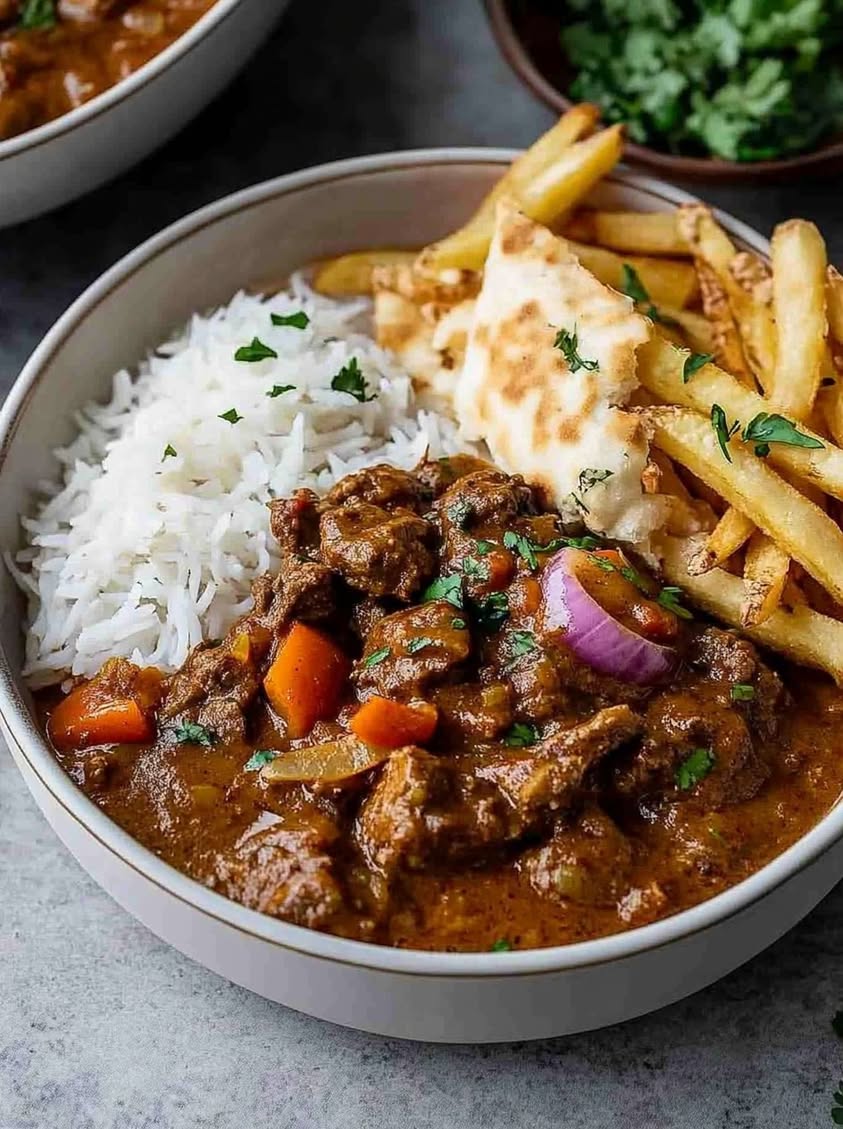
Rustic Slow-Braised Beef Curry with Golden Fries, Garlic Naan, and Caramelized Onions: A Cozy Feast for the Soul
Imagine the most comforting meal you can think of. Now, picture it elevated with layers of deep, complex flavor and textures that sing in harmony. This Rustic Slow-Braised Beef Curry with Golden Fries, Garlic Naan, and Caramelized Onions is exactly that kind of transformative dish. It is a labor of love that rewards your patience with a soul-warming experience. The rich, tender beef falls apart at the touch of a fork, while the golden fries add a delightful crunch. Meanwhile, the soft garlic naan soaks up every last drop of the incredible sauce.
This recipe is not just about feeding your body. It is about creating a moment of pure culinary joy. The process of slowly braising the beef fills your home with an intoxicating aroma that builds anticipation. Consequently, by the time you sit down to eat, you have already been on a sensory journey. The final plate is a masterpiece of contrasts. You get the unctuous, spiced curry against the crisp potatoes and the sweet, soft onions. Ultimately, this meal is perfect for a special weekend dinner or for impressing guests with your cooking prowess.
Furthermore, this Rustic Slow-Braised Beef Curry is incredibly versatile. You can adjust the spice level to your liking or swap in different vegetables based on the season. The foundational technique of braising, however, remains the same, guaranteeing delicious results every single time. Let’s dive into this ultimate comfort food adventure and create a meal that will become a cherished favorite in your home cooking repertoire.
Quick Recipe Highlights
- Flavor Profile: This Rustic Slow-Braised Beef Curry delivers a robust and deeply savory taste. It features warm, toasty spices like cumin and coriander balanced with the tang of tomatoes and the subtle heat of chili. The caramelized onions add a crucial layer of sweet, umami-rich complexity that ties the whole dish together beautifully.
- Texture: The texture journey is a key part of the experience. You get melt-in-your-mouth beef that has braised for hours in its own juices. Contrast that with the crispy, golden exterior and fluffy interior of the fries. Finally, the soft, chewy garlic naan provides the perfect vehicle for scooping and savoring.
- Aroma: As the curry braises, it releases an irresistible fragrance. First, you will smell the toasted whole spices, followed by the savory scent of browning beef and onions. Later, the garlic and ginger paste adds a pungent, warming note that makes the entire kitchen smell like a professional eatery.
- Visual Appeal: This dish is a feast for the eyes before it even reaches your palate. The deep, reddish-brown curry is studded with tender beef pieces. It is served alongside a mound of golden-yellow fries, topped with a tangle of dark, sweet caramelized onions. A sprinkle of fresh green cilantro provides the perfect finishing pop of color.
- Skill Level Needed: This recipe is accessible to intermediate home cooks. It requires patience and attention to detail more than advanced technical skill. Key tasks include proper browning of meat, managing the caramelization of onions, and coordinating multiple components. If you can follow steps and manage your time, you can absolutely master this rustic beef curry feast.
- Special Equipment: A heavy-bottomed Dutch oven or large pot with a tight-fitting lid is essential for even, slow braising. You will also need a good chef’s knife, a sturdy cutting board, and a baking sheet for the fries. A blender or food processor is helpful for making a smooth garlic-ginger paste, but a fine grater also works perfectly.
Recipe Overview
- Difficulty Level: We rate this Rustic Slow-Braised Beef Curry as a medium-difficulty recipe. The individual techniques are straightforward, but success depends on executing them in sequence. You must brown the beef properly to develop flavor, then patiently caramelize the onions to unlock their sweetness. Managing the braising time and finishing the fries and naan simultaneously requires a bit of kitchen orchestration. However, clear instructions make the process manageable and highly rewarding.
- Category: This dish squarely fits into the category of hearty main courses and comfort food dinners. It is a complete, satisfying meal that stands on its own. Additionally, it is perfect for weekend cooking projects, family gatherings, and special occasion feasts. The combination of protein, starch, and bread makes it a fulfilling one-plate wonder.
- Cuisine: This recipe draws inspiration from South Asian and British pub food traditions, creating a delicious fusion. The slow-braised beef curry technique has roots in various global cuisines that value tenderizing tougher cuts of meat. The addition of golden fries and bread for dipping speaks to universal comfort food desires. Ultimately, it is a globally-inspired, homestyle creation designed for maximum enjoyment.
- Cost: This is a cost-effective meal for the impressive yield it provides. Chuck roast or a similar braising cut is typically an affordable beef option. Potatoes, onions, and basic spices are pantry staples. The naan can be store-bought or homemade. Overall, you can feed six people a restaurant-quality meal for a fraction of the cost of dining out.
- Season: This Rustic Slow-Braised Beef Curry is truly a dish for all seasons, but it shines in cooler weather. It is ideal for autumn and winter when you crave warming, hearty meals. The long, slow cook time is more appealing when you want to stay indoors. Conversely, it also works for summer if you use a slow cooker to avoid heating the kitchen.
- Occasion: This meal is perfect for a relaxed weekend dinner with family or a casual yet impressive gathering with friends. It is also an excellent choice for meal prepping, as the curry flavor improves over a couple of days. While it requires time, much of it is hands-off braising, allowing you to socialize with guests.
Why You’ll Love This Recipe
First and foremost, the taste and texture of this Rustic Slow-Braised Beef Curry are utterly unforgettable. The beef transforms during the long, slow cook into something incredibly tender and flavorful. Each bite carries the deep, layered spices and the rich sauce it simmered in. Meanwhile, the crispy fries introduce a satisfying crunch, and the soft naan offers a soothing, doughy contrast. The sweet caramelized onions cut through the richness, creating a perfectly balanced flavor profile in every single forkful. This combination is designed to delight your senses and leave you completely satisfied.
From a convenience standpoint, this recipe offers significant benefits despite its cooking time. A large portion of the work is passive braising time. Therefore, you can prepare other components, clean up, or simply relax while the oven does its magic. Additionally, the entire meal is made from scratch with whole ingredients, giving you full control over flavor and quality. You avoid the excessive sodium and preservatives often found in pre-made sauces or frozen meals. Consequently, you gain a tremendous sense of accomplishment from creating such a complex dish from basic components.
Nutritionally, this Rustic Slow-Braised Beef Curry provides a well-rounded meal. Beef is an excellent source of high-quality protein, iron, and B vitamins, which are essential for energy. The tomatoes and onions contribute vitamins C and K, along with antioxidants. Using potatoes with their skin on for the fries adds fiber. When enjoyed in a balanced portion, this meal fuels your body with sustained energy and valuable nutrients from real, recognizable foods.
For social and entertaining value, this dish is a true showstopper. Serving a homemade Rustic Slow-Braised Beef Curry with all the accompaniments demonstrates care and skill. It encourages a communal, interactive dining experience where everyone can tear naan and scoop up curry. The impressive presentation and incredible aroma are guaranteed to elicit compliments. It turns a simple dinner into a memorable event that friends and family will talk about long after the meal is over.
Finally, this recipe is remarkably cost-effective and accessible. It utilizes an affordable cut of beef that becomes luxurious through the braising process. Potatoes and onions are inexpensive staples available year-round. The spice list might seem long, but these are investments that last for many future meals. Compared to ordering similar dishes for delivery or dining at a restaurant, cooking this at home saves a substantial amount of money. Ultimately, you get a gourmet-level feast on a sensible home cooking budget.
Historical Background and Cultural Significance
The technique of slow-braising tough cuts of meat in a flavorful liquid is a culinary practice as old as cooking itself. Almost every culture has a version, from French daube to Hungarian goulash. This Rustic Slow-Braised Beef Curry borrows principles from these global traditions. The use of a spice blend to create a curry base is particularly influenced by the culinary traditions of South Asia. There, “curry” is not a single dish but a vast category of spiced stews and sauces. Our recipe simplifies a complex tradition into an approachable, fusion-style comfort food.
Culturally, dishes like this signify resourcefulness and the transformation of humble ingredients. Before modern butchery, tougher cuts from working animals were the most available and affordable. Slow cooking with moisture and time turned these cuts into tender, delicious meals. This practice represents a cornerstone of home cooking across the world. Adding potatoes and bread for dipping speaks to a universal desire for hearty, filling meals that stretch a protein source to feed a family. This combination celebrates sustenance and satisfaction.
The evolution of this specific recipe reflects modern fusion cuisine. The classic pairing of meat and potatoes gets a global twist with the introduction of curry spices. The inclusion of naan, a leavened flatbread from South Asia, as the dipping vehicle, completes the cross-cultural experience. This evolution shows how home cooks today freely borrow and blend techniques and flavors from different culinary heritages. The goal is no longer strict authenticity but ultimate deliciousness and personal enjoyment.
Regional variations of such a dish are endless. In different parts of the world, the spice profile would change dramatically. A Moroccan tagine might use preserved lemon and olives. A Japanese curry would incorporate a roux and sweeter spices. The type of starch would also vary, from rice to polenta to dumplings. This recipe invites you to explore those variations. You could swap the fries for roasted potatoes or the naan for crusty bread. The core principle of slow-braised meat in a rich sauce remains a timeless and adaptable foundation.
Ingredient Deep Dive
Beef Chuck Roast is the star of this Rustic Slow-Braised Beef Curry. This cut comes from the shoulder of the cow, a well-exercised muscle full of connective tissue and fat. During the long, slow braise, that collagen breaks down into gelatin, resulting in incredibly tender, flavorful meat. It is a budget-friendly cut that rewards patience. Look for a roast with good marbling for the best flavor and texture. You can store it in the coldest part of your refrigerator for 2-3 days before use, or freeze it for longer storage. For a substitution, beef brisket or short ribs would work beautifully, though cooking times may vary slightly.
Whole Spices like cumin seeds, coriander seeds, and black peppercorns are fundamental. Toasting whole spices in oil at the beginning of the recipe unlocks their essential oils, creating a deeper, more aromatic base than pre-ground powders can provide. This technique is common in many global cuisines and is key to an authentic, layered flavor. Store your whole spices in a cool, dark place in airtight containers to preserve their potency. If you must substitute with ground spices, add them later in the cooking process to prevent burning, and use about half the amount since ground spices are more concentrated.
Onions play a dual role, providing both the aromatic base for the curry and the sweet topping. When cooked slowly, the natural sugars in onions caramelize, creating a deep, sweet, umami-rich flavor that forms the backbone of the sauce. For caramelizing, yellow or white onions are perfect due to their high sugar content. Select firm onions with dry, papery skins. Store them in a cool, dry, well-ventilated place away from potatoes. There is no true substitute for the flavor of slowly caramelized onions, making them a non-negotiable element for this rustic beef curry.
Potatoes for the golden fries should be starchy varieties like Russet or Idaho. Their low moisture and high starch content yield a fluffy interior and a crisp exterior when fried or baked. Leaving the skin on adds texture, nutrients, and a rustic appearance. Choose firm potatoes without sprouts or green tinges. Store them in a cool, dark place, but not in the refrigerator, as cold temperatures can convert their starch to sugar. For a different twist, you could use sweet potatoes or parsnips, though the cooking time and final texture will differ from traditional golden fries.
Garlic Naan acts as the perfect edible utensil for this meal. Naan is a leavened flatbread traditionally cooked in a tandoor oven. The garlic butter brushed on top adds a final layer of savory aroma and flavor that complements the spiced curry. While homemade naan is rewarding, high-quality store-bought naan is an excellent time-saver. Look for naan in the bakery or international aisle of your grocery store. To store, keep it in its original packaging or an airtight bag. You can quickly refresh it in a warm oven or on a dry skillet before serving. Pita bread or roti can serve as acceptable substitutes in a pinch.
Common Mistakes to Avoid
- Not Browning the Beef Properly: Simply gray-ing the meat in the pot is not enough. You must sear it in batches over medium-high heat until a deep brown crust forms. This Maillard reaction creates foundational flavor compounds that will enrich the entire curry. Crowding the pan steams the meat instead of searing it, so be patient and work in batches.
- Rushing the Onion Caramelization: Cooking the onions over too high a heat will burn them before they sweeten. True caramelization is a slow, gentle process that can take 30-45 minutes. Stir them frequently over medium-low heat until they turn a deep, golden brown. This step is crucial for building the sweet, savory base of your rustic beef curry sauce.
- Using Pre-Ground Spices Exclusively: While convenient, pre-ground spices lose their potency quickly. For the brightest flavor, toast whole cumin and coriander seeds and grind them fresh. If you must use ground, add them after the onions are softened to prevent them from burning and turning bitter in the hot oil.
- Adding Acid Too Early: Ingredients like tomatoes or yogurt add a pleasant tang but can prevent the meat from tenderizing if added at the beginning of braising. The acid can toughen the muscle fibers. Always add acidic components after the meat has already become fork-tender, usually in the last 30 minutes of cooking.
- Overcrowding the Pan When Making Fries: Whether baking or frying, giving the potato pieces plenty of space is non-negotiable. If they are touching, they will steam and become soggy instead of crisp. Use two baking sheets if necessary to ensure each fry has room to breathe and develop that perfect golden exterior.
- Skipping the Resting Time for the Beef: After braising, the meat is incredibly tender and hot. Letting the curry rest, covered, for 15-20 minutes before serving allows the juices to redistribute throughout the meat. If you shred or serve it immediately, those precious juices will run out onto the plate, leaving the beef drier.
- Using a Thin-Bottomed Pot: Braising requires consistent, gentle heat. A thin pot will cause the bottom to scorch easily, ruining your curry. A heavy Dutch oven or cast-iron pot with a tight lid distributes heat evenly and retains it perfectly, ensuring your beef cooks gently and consistently.
- Not Seasoning in Layers: Seasoning only at the end results in a bland curry with a salty surface. Season the beef before browning, taste and adjust the sauce after the initial simmer, and do a final seasoning check before serving. Building layers of salt and seasoning throughout the cooking process creates a deeply flavorful dish.
Essential Techniques
The Maillard Reaction, achieved by properly browning the beef, is the most important technique for flavor development. This chemical reaction between amino acids and reducing sugars creates hundreds of new flavor compounds. To master it, ensure your beef pieces are patted very dry before they hit the hot oil. Do not crowd the pan, as this lowers the temperature and causes steaming. Wait until you see a deep brown crust form before turning the pieces. The visual cue for success is a fond, or browned bits, sticking to the bottom of the pot. These bits will deglaze with liquid later, infusing the entire sauce with rich, savory depth.
Slow Caramelization of onions is what builds the sweet, umami foundation of the sauce. This process breaks down the onions’ cell structure, allowing their natural sugars to concentrate and brown. Use medium-low heat and a pinch of salt, which draws out moisture. Stir frequently to prevent burning, especially as they get darker. This can take 30-45 minutes. Do not rush it with higher heat, as you will simply burn them. Success is achieved when the onions are a uniform deep golden-brown, have reduced significantly in volume, and taste intensely sweet without any sharp, raw onion flavor.
Braising is the combined cooking method that transforms tough beef into tender perfection. It involves an initial sear (dry heat) followed by simmering in liquid (moist heat) in a covered pot. The key is to use just enough liquid to come partway up the meat, not submerge it completely. This allows the portion above the liquid to cook with steam, preventing it from becoming boiled and stringy. The pot must have a tight-fitting lid to retain moisture and heat. The visual cue for doneness is when the beef offers no resistance when pierced with a fork and can be easily shredded.
Creating Crispy Golden Fries involves removing moisture and achieving high heat. For oven fries, soaking the cut potatoes in cold water removes surface starch, leading to a crispier result. Drying them thoroughly before tossing with oil is critical, as water creates steam. Spreading them in a single layer with space between each piece ensures they roast instead of steam. The fries are ready when they are golden brown and crisp on the outside, and a fork easily pierces the fluffy interior. For extra crispness, a quick blanch in oil before baking can be a pro step.
Pro Tips for Perfect Rustic Slow-Braised Beef Curry
Cut your beef chuck roast into uniform, large chunks, about 2 inches. Smaller pieces will overcook and become dry during the long braise, while larger, even pieces ensure every bite is succulent.
Make your garlic-ginger paste fresh. Blend equal parts peeled garlic and ginger with a splash of water or oil until smooth. This paste fries evenly in the oil and distributes its pungent, aromatic flavor throughout the curry base much better than minced pieces.
Deglaze your pot thoroughly after browning the beef and onions. Use a splash of water, broth, or even the liquid from canned tomatoes. Scrape up all the flavorful browned bits (fond) from the bottom; this is pure flavor that will dissolve into your sauce.
Braise in the oven instead of on the stovetop. Oven heat surrounds the pot with consistent, gentle heat, reducing the risk of hot spots that can cause burning. It also frees up your stovetop for preparing the fries and naan.
Let the finished curry rest before serving. Turn off the heat and let the pot sit, covered, for 15-20 minutes. This allows the meat fibers to relax and reabsorb juices, ensuring every bite is moist and tender.
Refresh store-bought naan properly. Warm it in a dry skillet over medium heat for a minute on each side, or wrap it in foil and warm in a 350°F oven for 5-7 minutes. Brush with garlic butter right before serving for the best flavor and texture.
Double the caramelized onions. They are so delicious and versatile. Make a big batch and use the extra on burgers, sandwiches, or as a topping for grilled meats later in the week.
Use an instant-read thermometer to check beef doneness for braising. While fork-tenderness is the ultimate test, the beef is typically perfect when it reaches an internal temperature of 200-205°F, as this is when connective tissues have fully broken down.
Variations and Adaptations
For regional variations, you can easily steer this rustic beef curry toward different global flavors. Add coconut milk and lemongrass for a Thai-inspired version. Incorporate smoked paprika and chorizo for a Spanish twist. For a richer, creamier texture, stir in a splash of heavy cream or coconut cream at the end of cooking. The basic braising method remains your canvas for global spice exploration.
Seasonal adaptations are simple and effective. In spring, add fresh peas or asparagus tips in the last 5 minutes of cooking. Summer calls for adding diced zucchini or eggplant halfway through the braise. In autumn, stir in cubes of roasted butternut squash or pumpkin. These additions bring color, nutrition, and a taste of the season to your comforting curry.
Dietary modifications are straightforward. For a gluten-free meal, ensure your spice blends are certified GF and serve with gluten-free flatbread or rice instead of naan. To make it dairy-free, use oil or vegan butter for the garlic naan topping. For a lower-carb option, serve the curry over cauliflower rice and substitute the fries with roasted radishes or turnips.
Flavor variations can cater to different palates. For a milder curry, reduce or omit the chili and add a teaspoon of sweet paprika. For extra heat, include a diced fresh chili pepper with the onions or add a pinch of cayenne to the spice mix. A tablespoon of fish sauce or Worcestershire sauce added at the end can introduce a powerful umami boost.
Texture modifications can change the eating experience. Instead of shredding the beef, keep it in chunks for a more substantial bite. Puree a portion of the finished sauce with an immersion blender for a thicker, smoother gravy. For a chunkier vegetable presence, add large pieces of carrot and celery at the beginning of the braise.
Presentation alternatives can elevate the dish for special occasions. Serve the curry in a hollowed-out bread bowl for a dramatic centerpiece. Plate individual servings in shallow bowls with the fries standing upright in a mound. For a family-style feast, present the curry in the Dutch oven at the table, with the fries and naan in separate baskets for everyone to share.
Serving and Presentation Guide
Plating this Rustic Slow-Braised Beef Curry is part of the fun. For individual servings, place a generous scoop of the curry in the center of a wide, shallow bowl. Artfully lean a few golden fries against the mound of curry. Drape a piece of garlic naan over the side of the bowl or place it on a separate small plate. Top the curry with a generous tangle of caramelized onions and a fresh sprinkle of chopped cilantro or parsley. This arrangement showcases all components beautifully and makes for an Instagram-worthy meal.
Garnishing adds the final touch of freshness and color. Beyond cilantro, consider a dollop of cool, plain yogurt or raita to contrast the rich curry. A few thin slices of fresh red chili add color and a hint of heat. A light drizzle of high-quality olive oil or a squeeze of fresh lime juice just before serving can brighten the entire dish. Toasted sesame seeds or crushed peanuts add a nice textural contrast and visual appeal.
Traditional accompaniments would focus on rice and simpler breads. However, our fusion approach embraces the fries and naan. For a more traditional route, you could serve the curry with steamed basmati rice or jeera rice and simple roti or chapati. A side salad of sliced cucumbers, tomatoes, and red onion with a lemon vinaigrette provides a crisp, refreshing counterpoint to the rich, warm curry.
Modern serving suggestions might include setting up a “curry bar” for a casual party. Keep the curry warm in a slow cooker. Provide bowls of various toppings: the caramelized onions, fresh herbs, diced cucumber, yogurt, lime wedges, and extra chili flakes. Let guests build their own bowls with fries or naan on the side. This interactive style makes the meal engaging and allows everyone to customize their perfect bite.
Temperature considerations are vital for the best experience. The curry and caramelized onions should be served piping hot. The fries are best served immediately after cooking, while they are still crisp. The garlic naan should be warm and soft. To coordinate, time your fry cooking and naan warming for the last 10-15 minutes of the curry’s resting time. This ensures everything arrives at the table at its ideal temperature and texture.
Portion control tips are helpful since this is a rich meal. A good rule of thumb is about 6-8 ounces of beef per person, plus a handful of fries and one piece of naan. The curry is very filling, so start with modest portions; people can always have seconds. Serving with a light, green salad on the side helps balance the plate and adds volume without heaviness, making the meal feel more complete and balanced.
Wine and Beverage Pairing
Wine pairings for this robust Rustic Slow-Braised Beef Curry need to stand up to its bold flavors. A medium-bodied red wine with low tannins and good acidity is ideal. A Spanish Garnacha or a French Syrah from the Rhône Valley works wonderfully, as their berry notes and peppery undertones complement the warm spices. For white wine lovers, a full-bodied, oaked Chardonnay can handle the richness, or an off-dry Riesling whose sweetness contrasts the spice and cuts through the fat. The key is to choose a wine that won’t be overwhelmed by the dish’s intensity.
Non-alcoholic alternatives are just as important. A sweet and tangy mango lassi (a yogurt-based drink) is a classic and perfect pairing, as the yogurt cools the palate. Sparkling water with a squeeze of lime and a pinch of salt is refreshing and cleansing. For a more substantial option, a lightly sweetened iced ginger or mint tea complements the spices in the curry beautifully. These drinks provide a refreshing counterpoint to the hearty, spiced meal.
While not traditional, coffee or tea pairings after the meal can be delightful. A strong, black coffee like an espresso can help cut through the richness and aid digestion. A cup of spiced chai tea echoes the warm flavors of the curry and provides a comforting, warm finish to the dining experience. Avoid pairing with delicate green or white teas, as their subtle flavors will be lost after the bold curry.
Temperature considerations for beverages are straightforward. Red wines should be served slightly below room temperature, around 60-65°F. White wines and non-alcoholic drinks like lassi or iced tea should be well-chilled. Having a pitcher of cold water on the table is essential, as it helps guests cleanse their palates and stay hydrated, especially if the curry has a bit of heat.
Serving suggestions for beverages involve planning. If serving wine, open the bottle about 30 minutes before serving to allow it to breathe. For non-alcoholic options like lassi, prepare it ahead and keep it chilled. Place drinks on the table before serving the food so guests can pour their preferred pairing as they begin their meal. This thoughtful touch enhances the overall dining experience.
Storage and Shelf Life
Storage methods for this Rustic Slow-Braised Beef Curry are simple but important. Allow the curry to cool completely to room temperature before storing; never put a hot pot directly into the refrigerator. Transfer the curry to airtight containers, leaving about an inch of space at the top. Store the caramelized onions, fries, and naan in separate containers. This prevents the fries from becoming soggy and allows you to reheat each component properly.
Temperature requirements are standard for cooked foods. The curry must be refrigerated at 40°F or below within two hours of cooking. In the refrigerator, the curry will keep for 3-4 days. The caramelized onions will last for up to a week. Cooked fries are best eaten immediately but can be refrigerated for 1-2 days. Naan should be kept at room temperature in its bag or an airtight container for a few days.
Container recommendations focus on functionality. Glass containers with tight-sealing lids are excellent for the curry and onions, as they don’t absorb stains or odors. For the fries, store them in a paper towel-lined container to absorb any residual moisture. If you need to stack naan, place parchment paper between pieces to prevent them from sticking together. Labeling containers with the date is always a good practice.
Signs of spoilage are easy to spot. For the curry, look for an off smell, a sour taste, or visible mold. If the sauce has separated unusually or developed bubbles, it may be fermenting. Always err on the side of caution and discard if you are unsure. The golden rule is: when in doubt, throw it out. Do not taste-test food you suspect may have spoiled.
Reheating instructions are crucial for restoring quality. Reheat the curry gently in a saucepan over low heat, stirring occasionally. Add a splash of water or broth if the sauce has thickened too much. You can also reheat it in the microwave, covered, stirring every minute. Re-crisp fries in a 400°F oven or air fryer for a few minutes. Warm naan in a skillet or toaster oven. Avoid microwaving the fries or naan, as it will make them soft and chewy.
Freezing guidelines are excellent for long-term storage. The curry freezes exceptionally well for up to 3 months. Freeze it in portion-sized airtight containers or heavy-duty freezer bags, leaving space for expansion. Thaw overnight in the refrigerator before reheating. Note that the texture of the potatoes in the fries will suffer if frozen and reheated, so it’s best to make fresh fries when serving thawed curry. Caramelized onions freeze beautifully and can be used straight from the freezer for cooking.
Make Ahead Strategies
A prep timeline makes this Rustic Slow-Braised Beef Curry perfect for entertaining. You can braise the entire curry 1-2 days in advance. In fact, the flavors deepen and improve overnight. The day of your event, you simply need to gently reheat the curry, prepare the fresh fries, and warm the naan. Caramelized onions can be made up to 3 days ahead and stored in the fridge. This strategy turns a complex meal into a manageable, stress-free dinner party centerpiece.
Storage between steps is straightforward. After braising, let the curry cool completely in its pot, then cover and refrigerate. Do not shred the beef while storing; keep it in chunks to retain moisture. Store the cooking liquid with the meat. For the caramelized onions, cool them and store in a sealed container in the fridge. You can even cut the potatoes for the fries and keep them submerged in water in the fridge overnight to save time.
Quality impact assessment of make-ahead steps is positive. The curry’s flavor profile benefits immensely from a rest in the refrigerator, as the spices meld and mature. The texture of the beef remains excellent when reheated gently. The only components that must be made fresh are the fries, as they lose their crispness upon storage. The naan is best warmed just before serving. This approach maximizes flavor while minimizing last-minute work.
Assembly tips for a make-ahead meal are simple. Reheat the curry on the stovetop over low heat until simmering. If it seems dry, add a bit of water or broth. While it reheats, cook your fries. In the last few minutes, warm the naan and reheat the caramelized onions in a small pan or the microwave. Have your garnishes chopped and ready. This streamlined process allows you to bring a hot, fresh-tasting meal to the table with ease.
Reheating guidelines for the pre-made curry are key. Always reheat slowly and gently to prevent the meat from becoming tough or the sauce from breaking. A saucepan over low heat is best. Stir occasionally and add liquid as needed. If using the oven, cover the dish with foil and reheat at 300°F until hot throughout. Avoid boiling the curry vigorously during reheating, as this can toughen the already-tender beef.
Fresh element additions are the final touch. Even with a make-ahead curry, always add a fresh component just before serving. This could be the freshly chopped cilantro, a dollop of cool yogurt, a squeeze of lime juice, or the just-cooked fries. These elements provide brightness, contrast, and a sense of immediacy that makes the meal feel freshly prepared, not leftover.
Scaling Instructions
Halving the recipe is simple for smaller households. Use a 2-pound chuck roast and halve all other ingredients proportionally. Use a smaller Dutch oven or pot to ensure the liquid level is appropriate for the amount of meat. The braising time may be slightly reduced, perhaps by 30-45 minutes, so start checking for tenderness around the 2-hour mark. The fries and naan can be scaled down easily by simply preparing less. This is a great way to enjoy the meal without excessive leftovers.
Doubling or tripling the recipe is perfect for a crowd. Use a very large Dutch oven or divide the beef between two pots. Brown the beef in more batches to avoid overcrowding. You may need to increase the initial onion caramelization time slightly due to the larger volume. The braising time will remain roughly the same, as it depends on the thickness of the meat chunks, not the quantity. For the fries, you will definitely need to use multiple baking sheets and cook in batches to ensure they get crisp.
Equipment adjustments are necessary when scaling. For a double batch, ensure your oven rack is in the center position to accommodate a larger, heavier pot. You may need a second heavy pot if you don’t have one large enough. For tripling, consider using a large roasting pan covered tightly with foil for braising in the oven. Have multiple baking sheets ready for the fries, and rotate them in the oven for even cooking. A large warming drawer or a low oven (200°F) is helpful for keeping batches of fries warm.
Timing modifications are minimal but important. While active prep time increases with scale, the passive braising time in the oven does not. However, allow extra time for browning the increased amount of beef and caramelizing the larger quantity of onions. Coordinate your fry cooking in batches so the last batch is coming out of the oven as you are{“success”:true,”message”:”Recipe created successfully”,”post_id”:8411,”tasty_recipe_id”:8411,”shortcode”:” Print
Rustic Slow-Braised Beef Curry with Golden Fries, Garlic Naan, and Caramelized Onions
Description
A hearty, comforting dish featuring tender beef braised in a rich curry sauce, served with crispy golden fries, warm garlic naan, and sweet caramelized onions.
Ingredients
For the Crust:
- 2 lbs beef chuck, cut into chunks
- 2 large onions, thinly sliced
- 4 cloves garlic, minced
- 1 tbsp ginger, grated
- 2 tbsp curry powder
- 1 tsp turmeric
- 1 can (14 oz) diced tomatoes
- 1 cup beef broth
- 4 large potatoes, cut into fries
- 4 pieces garlic naan
- 2 tbsp vegetable oil
- Salt and pepper to taste
- Fresh cilantro for garnish
Instructions
1. Prepare the Crust:
- Season beef with salt and pepper. In a large pot, heat oil and brown beef on all sides, then remove and set aside.
- In the same pot, add half the onions and cook until caramelized, about 15 minutes. Add garlic and ginger, cook for 1 minute.
- Stir in curry powder and turmeric, then add tomatoes and beef broth. Return beef to pot, bring to a simmer, cover, and braise on low heat for 2 hours until tender.
- Meanwhile, toss potato fries with oil, salt, and pepper. Bake at 425°F for 25-30 minutes until golden and crispy.
- Warm garlic naan in oven or skillet according to package instructions.
- Serve beef curry over fries, topped with caramelized onions and garnished with cilantro, with naan on the side.
Notes
You can customize the seasonings to taste.

I’m Billy, a classically trained culinary school graduate from The Culinary Institute of America with over 12 years in the restaurant industry and over 19 years of cooking experience.