
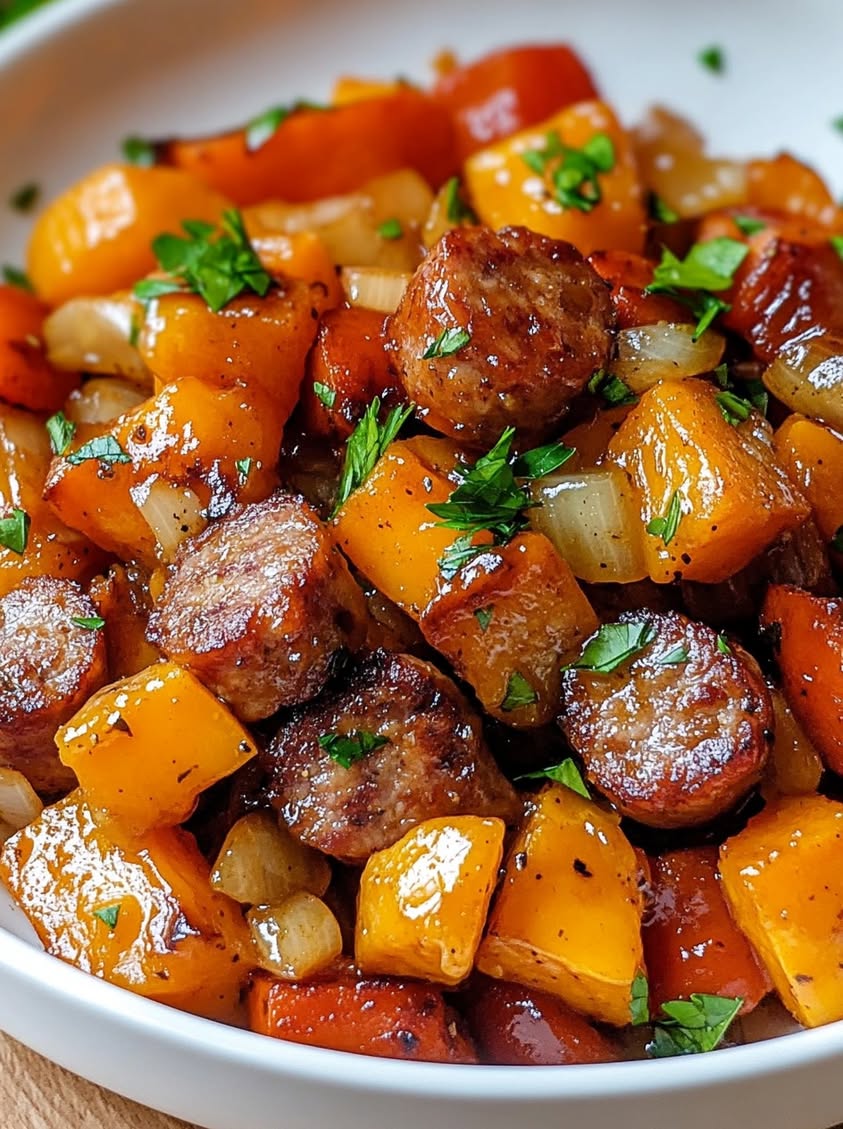
Sticky Honey Garlic Italian Sausage Skillet with Caramelized Sweet Potatoes: A One-Pan Weeknight Wonder
Imagine a dinner that fills your kitchen with the irresistible scent of sizzling sausage, sweet caramelizing vegetables, and a sticky, savory-sweet glaze. This Sticky Honey Garlic Italian Sausage Skillet with Caramelized Sweet Potatoes delivers exactly that experience, all in one simple pan. Furthermore, it transforms humble ingredients into a restaurant-worthy meal with minimal effort and maximum flavor payoff. Consequently, it is the perfect answer for busy weeknights when you crave something deeply satisfying yet surprisingly simple to prepare.
The magic of this recipe lies in its beautiful balance. Firstly, robust Italian sausage provides a savory, herby foundation. Meanwhile, sweet potatoes caramelize into tender, golden-brown cubes, offering a natural sweetness. Finally, a glossy sauce of honey, garlic, and soy sauce ties everything together with a perfect blend of sticky, sweet, and umami notes. Ultimately, each forkful is a delightful contrast of textures and flavors, making it a guaranteed crowd-pleaser for both family dinners and casual entertaining.
Best of all, this entire meal comes together in about forty minutes using mostly pantry staples. You will love how the single skillet method means less cleanup and more time to enjoy the delicious results. This Sticky Honey Garlic Italian Sausage Skillet is not just a recipe; it is a reliable strategy for a fantastic, fuss-free dinner that everyone will request again and again.
Quick Recipe Highlights
- Flavor Profile: This dish masterfully balances savory, sweet, and umami. The fennel and herbs in the Italian sausage meet the natural sugar of the caramelized sweet potatoes. Meanwhile, the sticky honey garlic sauce adds a glossy, deeply flavorful finish that coats every ingredient perfectly.
- Texture: You get a wonderful variety of textures in every bite. Expect juicy, crumbled sausage, tender yet firm sweet potato cubes with crispy edges, and a luxuriously thick, sticky sauce that clings beautifully to everything in the skillet.
- Aroma: As it cooks, the skillet releases an intoxicating fragrance. Specifically, you will smell the savory notes of browning sausage and garlic mingling with the sweet, almost caramel-like scent of roasting sweet potatoes and honey.
- Visual Appeal: The finished dish is a feast for the eyes with vibrant orange sweet potatoes, golden-brown sausage, and flecks of green onion or parsley. The glossy, amber-colored sauce makes the entire skillet look incredibly appetizing and professionally prepared.
- Skill Level Needed: This is a beginner-friendly recipe. The techniques involve simple chopping, browning, and simmering. If you can safely use a skillet on the stovetop, you can absolutely master this one-pan wonder with excellent results.
- Special Equipment: You only need one large, oven-safe skillet (like cast iron or stainless steel) to make the entire recipe. A sharp knife and cutting board for prepping the vegetables are the only other essential tools.
Recipe Overview
- Difficulty Level: We rate this recipe as easy because it uses straightforward cooking methods like browning and simmering. The steps are sequential and logical, with no advanced techniques required. Additionally, the one-pan approach simplifies the process significantly, minimizing both complexity and cleanup for the home cook.
- Category: This dish fits perfectly into the categories of quick dinners, one-pan meals, and family-friendly mains. It is substantial enough to stand alone but also pairs wonderfully with simple sides like a green salad or crusty bread for soaking up the delicious sauce.
- Cuisine: While inspired by the flavors of Italian sausage and an Asian-inspired sticky glaze, this recipe is a modern fusion creation. It borrows elements from different culinary traditions to create something uniquely delicious and convenient for contemporary home cooking.
- Cost: This is a very budget-friendly meal. Italian sausage and sweet potatoes are typically affordable proteins and vegetables. The sauce ingredients—honey, garlic, soy sauce—are common pantry items, keeping the overall cost per serving quite low for such a flavorful and satisfying dish.
- Season: This skillet meal is fantastic year-round. It feels hearty and comforting in the fall and winter, especially with sweet potatoes in season. Conversely, its quick cooking time and bright flavors also make it suitable for spring and summer evenings when you want minimal oven use.
- Occasion: It is ideal for busy weeknight dinners, casual weekend meals, or even informal gatherings. The recipe scales easily, and its universally appealing flavors make it a safe bet for feeding a variety of tastes without requiring special occasion effort.
Why You’ll Love This Recipe
First and foremost, the taste and texture combination is utterly irresistible. The savory, fennel-spiced sausage pairs magically with the sweet, caramelized potatoes. Then, the sticky honey garlic sauce wraps everything in a glossy, umami-rich coating that makes each bite complex and deeply satisfying. You will find yourself going back for just one more spoonful of that incredible sauce, guaranteed.
From a convenience standpoint, this recipe is a true weeknight hero. Everything cooks in a single skillet, which means you have minimal dishes to wash afterward. The prep is simple—mostly just cubing sweet potatoes and mincing garlic. Furthermore, the active cooking time is under thirty minutes, resulting in a complete, impressive meal on the table in about forty minutes total. It is efficiency without sacrificing an ounce of flavor.
Nutritionally, this skillet meal offers a good balance. Sweet potatoes are packed with beta-carotene, fiber, and vitamins. Italian sausage provides protein to keep you full. By controlling the sauce ingredients yourself, you can adjust the sodium and sweetness to your preference, making it a healthier alternative to takeout or pre-made sauces that are often loaded with hidden sugars and preservatives.
For social and entertaining value, this dish is a winner. It is easy to double for a crowd and looks abundant and inviting served right from the skillet at the table. The familiar yet elevated flavors appeal to both adults and children, making it a stress-free option for feeding guests. It sparks conversation and always earns compliments, yet it allows you to spend time with your company instead of being stuck in the kitchen.
Finally, its cost-effectiveness and accessibility are major benefits. The ingredients are easy to find at any standard grocery store and are not expensive. You likely have many of the sauce components in your pantry already. This Sticky Honey Garlic Italian Sausage Skillet delivers restaurant-quality taste on a tight budget, proving that eating well does not require fancy ingredients or complicated techniques.
Historical Background and Cultural Significance
The story of this recipe is less about ancient tradition and more about the modern evolution of home cooking. It embodies the contemporary trend of fusion cuisine, where cooks confidently blend flavors from different parts of the world. The Italian sausage represents European charcuterie traditions, while the sticky honey garlic glaze draws inspiration from Asian culinary techniques for creating glossy, sweet-savory sauces. This combination reflects our global pantry and the creative freedom of today’s home chefs.
Culturally, the dish speaks to the universal appeal of the one-pan meal. Across cultures, there are traditions of cooking meat and vegetables together in a single vessel—from Spanish paella to Hungarian goulash. This skillet meal fits right into that practical, communal style of eating. It prioritizes simplicity, efficiency, and bringing people together over a shared, comforting dish, values that resonate in kitchens around the world.
The recipe has evolved from the basic concept of sausage and peppers, a classic Italian-American combination. By swapping bell peppers for nutrient-dense sweet potatoes and introducing an Asian-inspired glaze, it updates a familiar idea for modern palates seeking bolder, more complex flavor profiles. This evolution is driven by the availability of global ingredients and a desire for meals that are both quick and exciting.
Regional variations of this concept are endless. In the American South, you might find a similar dish with andouille sausage and a maple glaze. In a Korean-inspired version, gochujang might replace some of the honey for a spicy kick. The basic formula—protein, hearty vegetable, sticky sauce—is a versatile template. Consequently, it encourages cooks to adapt based on local ingredients and personal taste, continuing its delicious evolution in home kitchens everywhere.
Ingredient Deep Dive
Italian Sausage: Italian sausage, particularly the sweet or mild variety, is the flavor anchor of this dish. Historically, Italian sausages were made as a way to preserve meat and utilize less desirable cuts, seasoned heavily with fennel, garlic, and pepper. Nutritionally, it provides a significant amount of protein and fat, which carries flavor and creates a satisfying richness. For the best results, choose sausage with natural casings and a good visible marbling of fat. You can substitute with hot Italian sausage for a spicy kick, or use chicken or turkey Italian sausage for a leaner option. Store fresh sausage in the coldest part of your refrigerator and use within one to two days, or freeze for longer storage.
Sweet Potatoes: Sweet potatoes are a New World crop, cultivated for thousands of years in Central and South America. They are nutritional powerhouses, exceptionally high in beta-carotene (which converts to Vitamin A), Vitamin C, manganese, and fiber. Their natural sugars caramelize beautifully when roasted, adding depth without refined sugar. Select firm sweet potatoes with smooth, unblemished skin. Store them in a cool, dark, well-ventilated place—not the refrigerator, as cold temperatures can alter their texture and flavor. For substitutions, you can use regular potatoes, butternut squash, or even carrots, though the cooking time and final sweetness will vary.
The Sticky Honey Garlic Sauce: This sauce is a fusion powerhouse. Honey, one of humanity’s oldest sweeteners, provides floral notes and viscosity. Garlic adds its pungent, aromatic kick, while soy sauce contributes salty umami depth. Together, they create a complex glaze that is greater than the sum of its parts. For a richer flavor, use a robust honey like wildflower or buckwheat. You can substitute pure maple syrup for the honey for a different flavor profile. To make it gluten-free, use tamari or coconut aminos instead of standard soy sauce. Always mince your garlic fresh for the brightest flavor, and consider adding a teaspoon of grated ginger for an extra layer of warmth.
Common Mistakes to Avoid
- Overcrowding the Skillet: Adding all the sweet potatoes at once will steam them instead of browning them. Cook them in a single layer, possibly in two batches, to ensure they get those desirable caramelized edges. This step is crucial for developing flavor.
- Using Raw Garlic in the Sauce Too Early: If you add minced garlic to a very hot, dry skillet, it will burn in seconds and become bitter. Always add garlic to the pan after you have deglazed it with liquid or when there is some fat present to gently cook it.
- Not Browning the Sausage Properly: Do not just gray the sausage; take the time to get it a deep, crispy brown. Those browned bits (fond) on the bottom of the pan are packed with flavor and will dissolve into your sauce, making it incredibly rich.
- Neglecting to Deglaze the Pan: After browning the sausage and potatoes, there will be delicious browned bits stuck to the skillet. Pouring your sauce ingredients (especially the soy sauce) into the hot pan and scraping vigorously dissolves this fond, which is essential for the sauce’s depth.
- Simmering the Sauce Too Long or Too Hard: Once you combine everything, a gentle simmer is all you need to thicken the sauce and let the flavors meld. A rapid boil can reduce the sauce too quickly, making it overly thick and salty before the potatoes are fully tender.
- Cutting the Sweet Potatoes Too Large or Unevenly: Large chunks will take much longer to cook through. Aim for ¾-inch cubes for the perfect balance of a tender interior and a caramelized exterior. Uniform pieces ensure even cooking.
- Using Pre-Minced Jarred Garlic: While convenient, jarred garlic often has a muted, sometimes acidic flavor compared to fresh. For the best, brightest garlic taste in your sticky honey garlic sauce, take the minute to mince a few fresh cloves.
- Skipping the Garnish: Fresh chopped parsley or green onions add a necessary pop of color, a fresh flavor contrast, and a slight crunch. They lift the rich, sticky dish and make it look finished and professional.
Essential Techniques
Browning (The Maillard Reaction): Browning the sausage and sweet potatoes is not just for color; it is for foundational flavor. This chemical reaction, called the Maillard reaction, creates hundreds of new flavor compounds when proteins and sugars are exposed to high heat. To master it, ensure your skillet is properly preheated and do not overcrowd the pan. Pat the sweet potato cubes dry before adding them to the pan. The visual cue for success is a golden-brown crust on the sausage and crispy, caramelized edges on the potatoes, not a gray, steamed appearance.
Deglazing: Deglazing is the simple act of adding liquid to a hot pan to loosen the flavorful browned bits stuck to the bottom. This technique is vital for building a complex sauce and for easy cleanup. After removing the sausage and potatoes, your pan will have this “fond.” Pour your sauce liquids (soy sauce, honey, water) into the hot pan. Immediately use a wooden spoon or spatula to scrape vigorously across the entire bottom surface. You will see the fond dissolve and color the liquid, instantly creating a rich, savory base for your sticky glaze.
Reducing a Sauce: Reducing means simmering a sauce to evaporate water, which concentrates the flavors and thickens the consistency. For this recipe, you combine the deglazing liquid with the other sauce ingredients and simmer gently. The water evaporates, leaving the thicker honey and soy behind to coat the ingredients. The pitfall is boiling too hard, which can cause the honey to burn or the sauce to become too salty. The visual cue for success is a sauce that coats the back of a spoon and leaves a clear trail when you run your finger through it.
Pro Tips for Perfect Sticky Honey Garlic Italian Sausage Skillet
Firstly, choose an oven-safe skillet like cast iron or stainless steel. This allows you to start on the stovetop for browning and deglazing, then transfer the whole skillet to the oven if you need extra time to cook the potatoes through without burning the sauce.
For deeper flavor, consider using a combination of honey and a tablespoon of pure maple syrup. The maple adds a warm, woody complexity that pairs wonderfully with the sausage and sweet potatoes.
Let the cooked sausage drain on a paper towel for a moment before adding it back to the skillet. This removes excess grease, preventing your final dish from being overly oily and ensuring your sticky sauce clings properly.
If your sweet potatoes are taking too long to soften, add a couple tablespoons of water or broth to the skillet and cover it with a lid for 5-7 minutes. The steam will gently finish cooking them without washing away your beautiful glaze.
For a glossy, restaurant-quality finish, add a final pat of butter to the sauce just before serving. Stir it in off the heat until it melts and emulsifies, creating a silky, rich coating on everything in the pan.
Always taste and adjust the final seasoning. Depending on your sausage and soy sauce, you may need a tiny pinch of salt, a crack of black pepper, or even a small squeeze of fresh lemon juice to brighten all the flavors just before serving.
Variations and Adaptations
For regional twists, try using spicy Andouille sausage and a splash of apple cider vinegar in the sauce for a Southern-inspired version. Alternatively, swap the sweet potatoes for chunks of apple and onion for a German-style skillet. A Korean adaptation might use gochujang (Korean chili paste) mixed into the honey garlic sauce for a sweet and spicy finish.
Seasonal adaptations are simple. In spring, use asparagus spears cut into pieces alongside the sweet potatoes. For summer, add halved cherry tomatoes in the last five minutes of cooking. In fall, incorporate diced apples or cubes of hearty squash like kabocha or butternut.
Dietary modifications are straightforward. For gluten-free, use tamari or coconut aminos. For paleo or Whole30, use coconut aminos and omit the honey (or use a compliant substitute like date paste). To make it dairy-free, ensure your sausage has no dairy additives and skip the optional butter finish.
Flavor variations can keep this recipe exciting. Add a teaspoon of smoked paprika to the sauce for depth, a tablespoon of whole grain mustard for tang, or a pinch of red pepper flakes for heat. Fresh herbs like thyme or rosemary can be added with the garlic for an aromatic lift.
For texture modifications, include other vegetables like crisp-tender broccoli florets or sliced bell peppers. For extra crunch, sprinkle with toasted pecans or walnuts just before serving. You can also use pre-cooked sausage links sliced into coins for a different bite.
Presentation alternatives include serving the skillet over a bed of creamy polenta, cauliflower rice, or quinoa to soak up the sauce. For individual servings, portion it into bowls and top with a dollop of cool sour cream or Greek yogurt to contrast the rich, sticky flavors.
Serving and Presentation Guide
For plating, serve this dish family-style directly from the skillet placed on a trivet at the table. This creates a casual, inviting atmosphere and showcases the beautiful, glossy contents. Alternatively, portion it onto warm plates or shallow bowls for a more composed presentation.
Garnishing is key for visual appeal and a fresh flavor contrast. A generous sprinkle of freshly chopped flat-leaf parsley or sliced green onions adds vibrant color. For extra flair, add a light drizzle of high-quality olive oil or a sprinkle of sesame seeds over the top just before serving.
Traditional accompaniments are simple to let the skillet shine. A crusty loaf of bread or warm dinner rolls are perfect for mopping up every last bit of the sticky honey garlic sauce. A simple green salad with a bright vinaigrette provides a refreshing counterpoint to the rich, savory-sweet main dish.
Modern serving suggestions include pairing it with cauliflower mash for a low-carb option or serving it over a bed of farro or barley for added whole grains. For a complete meal-prep lunch, divide it into containers with a side of steamed green beans or broccoli.
Temperature considerations are important. This dish is best served piping hot, straight from the skillet. Ensure your serving plates are warm to keep the food hot longer. The sticky sauce will thicken slightly as it cools, so prompt serving ensures the ideal saucy consistency.
For portion control, a good rule of thumb is one medium sweet potato and one link of sausage per person. The recipe scales easily, so you can adjust based on appetites. Remember, it is a rich dish, so moderate portions are often satisfying, especially when paired with a side salad or vegetable.
Wine and Beverage Pairing
Wine pairings should balance the sweet, savory, and rich elements. A dry Riesling or Gewürztraminer works beautifully, as their slight sweetness and acidity cut through the richness and complement the honey glaze. For red wine lovers, a fruity, low-tannin Zinfandel or a Grenache can stand up to the sausage’s spice without overpowering the sweet potatoes.
Non-alcoholic alternatives are just as important. Sparkling water with a squeeze of lemon or lime cleanses the palate. For something sweeter, an iced ginger tea or apple cider (sparkling or still) mirrors the autumnal flavors in the dish. A tart cherry juice spritzer also provides a nice contrast.
While not a traditional pairing for this dish, if serving for brunch or lunch, a medium-roast coffee can be delightful. The coffee’s bitterness and roasted notes can contrast the sweetness of the potatoes and honey. A black tea like Earl Grey, with its citrusy bergamot notes, can also provide a pleasant, aromatic finish to the meal.
Temperature considerations are standard: serve white wines well-chilled (45-50°F) and light reds slightly cool (55-60°F). Non-alcoholic beverages should be served cold to refresh the palate between bites of the warm, sticky skillet.
Serving suggestions include offering a variety of beverages to suit different preferences. Place a pitcher of infused water or iced tea on the table alongside wine options. Always ensure water is readily available, as the savory and slightly sweet nature of the dish will make guests thirsty.
Storage and Shelf Life
For storage, allow the skillet to cool completely to room temperature, which should take no more than an hour. Then, transfer the leftovers to an airtight container. You can store the entire dish together, as the flavors will continue to meld. Do not leave it at room temperature for more than two hours to prevent bacterial growth.
Refrigerate the airtight container promptly. The ideal storage temperature is below 40°F. Properly stored, this Sticky Honey Garlic Italian Sausage Skillet will keep well in the refrigerator for 3 to 4 days. The sweet potatoes may soften slightly but will remain flavorful.
For container recommendations, glass containers with locking lids are excellent as they do not absorb odors or stains from the sauce. Alternatively, use BPA-free plastic containers designed for food storage. Ensure the container is the right size to minimize excess air, which can dry out the food.
Signs of spoilage include an off or sour smell, visible mold (often fuzzy spots in white, green, or blue), or a significant change in texture where the ingredients become unpleasantly mushy or slimy. If in doubt, it is safest to discard the leftovers.
Reheating instructions are simple for best results. Reheat portions in a covered skillet over medium-low heat with a splash of water or broth to loosen the sauce. You can also use a microwave, heating in 60-second intervals and stirring in between to ensure even warming. Reheat only until steaming hot throughout.
Freezing is possible but not ideal for the potatoes, as they can become grainy and watery upon thawing. If you must freeze, store in a freezer-safe container for up to 2 months. Thaw overnight in the refrigerator and reheat gently on the stovetop, adding a little liquid to refresh the sauce consistency.
Make Ahead Strategies
You can prep components ahead of time to speed up dinner. The sweet potatoes can be peeled and cubed 1-2 days in advance; store them submerged in cold water in the refrigerator to prevent browning. Drain and pat them very dry before cooking. The garlic can be minced a day ahead and stored in a small covered container in the fridge.
For storage between steps, keep prepped ingredients in separate containers. The raw sausage can be removed from its casings and kept in a bowl covered with plastic wrap. The sauce ingredients can be mixed together in a measuring cup or jar and stored in the refrigerator. This “mise en place” makes assembly incredibly fast.
Assessing quality impact, pre-cutting the sweet potatoes may lead to minimal nutrient loss but is negligible for flavor. Pre-mixing the sauce allows the flavors to marry, which can actually improve the final taste. The key is to ensure all components are well-drained and dry before you begin the browning step to ensure proper caramelization.
For assembly, when ready to cook, simply pull your prepped ingredients from the fridge. Follow the recipe steps as written, starting with browning the sausage. Having everything measured and ready turns the active cooking time into a seamless, restaurant-style process that takes just minutes.
Reheating guidelines for a fully made-ahead dish are the same as for leftovers. Gently reheat in a covered skillet with a splash of liquid. Avoid boiling vigorously to prevent the sauce from breaking or becoming too thick.
For fresh element additions, always add any delicate garnishes like fresh parsley or green onions after reheating, just before serving. This ensures they retain their vibrant color and fresh flavor, giving the make-ahead dish a just-cooked appearance and taste.
Scaling Instructions
Halving the recipe is simple for smaller households. Use a medium skillet instead of a large one. Precisely halve all ingredient quantities. The cook times may be slightly shorter, so rely on visual cues—browning on the potatoes and thickening of the sauce—rather than strict timers. Storage considerations remain the same, though you will have fewer leftovers.
Doubling or tripling the recipe for a crowd requires some adjustments. Do not attempt to cook all the sweet potatoes at once; brown them in multiple batches to avoid steaming. You may need to use two large skillets or cook in a very large Dutch oven. Increase the simmering time slightly to ensure the larger volume of sauce reduces properly and the sweet potatoes cook through.
Equipment adjustments are crucial when scaling. For a double batch, a 12-inch skillet may still work if you brown in batches. For tripling, a large Dutch oven or even a roasting pan used on the stovetop (if it has a thick bottom) might be necessary. Ensure you have a spatula or spoon large enough to stir the increased volume effectively.
Timing modifications are mostly for prep. Chopping double or triple the sweet potatoes will take longer. However, the actual browning time per batch remains the same. Factor in extra time for cooking in batches. The sauce simmering time may increase by a few minutes to reach the desired sticky consistency due to greater volume.
Storage considerations for larger batches are important. You will have more leftovers, so ensure you have enough appropriately sized airtight containers. Cool the large batch completely before dividing into smaller containers for refrigeration; this promotes faster, safer cooling and makes reheating individual portions easier.
Nutritional Deep Dive
A typical serving provides a balance of macronutrients. The Italian sausage is a significant source of protein and fats, which aid in satiety. The sweet potatoes contribute complex carbohydrates and fiber, offering sustained energy. The honey in the sauce adds simple sugars, so the overall carbohydrate count includes both complex and simple sources. The fat content comes primarily from the sausage, which is used to cook the vegetables, adding flavor and helping absorb fat-soluble vitamins from the sweet potatoes.
The micronutrient profile is impressive, largely due to the sweet potatoes. They are exceptionally high in Vitamin A (as beta-carotene), which supports vision and immune function. They also provide a good amount of Vitamin C, manganese, and potassium. The garlic contributes antioxidants and compounds like allicin, which has been studied for various health benefits. Using a leaner sausage can improve the overall fat quality of the dish.
Health benefits include support for eye health, immune function, and providing sustained energy. The fiber from the sweet potatoes promotes digestive health and helps moderate blood sugar response. The protein supports muscle maintenance and keeps you feeling full longer. Using minimal added oils and controlling the sauce ingredients allows you to manage sodium and added sugar intake compared to restaurant versions.
For dietary considerations, this dish is naturally gluten-free if you use tamari. It can be dairy-free if you skip the optional butter finish. It is not suitable for vegetarians or vegans as-is, but the framework can be adapted. Those on low-carb or keto diets would need to significantly modify the recipe, primarily by replacing the sweet potatoes and honey.
Portion analysis shows that one serving (approximately one-quarter of the recipe) is quite satisfying due to the combination of protein, fat, and fiber. It is a calorie-dense meal, so pairing it with a large, non-starchy vegetable side like a salad can create a more volumized plate without drastically increasing calories.
For weight management, focus on portion control and the quality of ingredients. Choose a leaner Italian sausage (chicken or turkey) to reduce saturated fat. You can slightly reduce the amount of honey in the sauce or use a sugar-free substitute. Loading half your plate with a green vegetable alongside a controlled portion of this skillet can help create a balanced, satisfying meal that supports weight goals.
Dietary Adaptations
Gluten-Free: This adaptation is very simple. Ensure your Italian sausage is certified gluten-free, as some brands use fillers containing gluten. Crucially, replace the soy sauce with tamari (which is traditionally gluten-free) or coconut aminos. Double-check all other packaged ingredients for hidden gluten, and you have a delicious gluten-free skillet meal.
Dairy-Free: The base recipe is naturally dairy-free if you use standard Italian sausage without cheese additives (check labels). Simply omit the optional butter finish at the end. For a similar rich finish, you can stir in a teaspoon of olive oil or a dollop of dairy-free yogurt alternative after cooking.
Vegan: To create a vegan version, replace the Italian sausage with a plant-based sausage crumble or seasoned lentils. Use maple syrup or agave instead of honey. Replace the soy sauce with tamari or coconut aminos to keep it plant-based. Sauté the sweet potatoes in oil and proceed with the recipe. The result is a hearty, plant-powered skillet with all the sticky, sweet, and savory notes.
Low-Carb/Keto: Replace the sweet potatoes with low-carb vegetables like cauliflower florets, diced radishes, or turnips. They will not caramelize the same way but will absorb the sauce flavors. Substitute the honey with a keto-friendly sweetener like monk fruit or erythritol that measures like sugar. Use a sugar-free syrup if the recipe needs more liquid. Choose a sausage with no added sugars.
Paleo/Whole30: Use a compliant Italian sausage with no sugar or non-paleo additives. Replace the soy sauce with coconut aminos. For Whole30, omit the honey entirely (the sweet potatoes provide enough sweetness) or use a compliant substitute like date paste. Cook with avocado oil or ghee. This creates a flavorful, compliant one-pan meal perfect for these dietary frameworks.
Low-FODMAP: Use a garlic-infused oil instead of minced garlic to impart flavor without the high-FODMAP garlic fructans. Replace the honey with maple syrup, which is low-FODMAP in moderate servings (about 2 tbsp per serving). Ensure the sausage does not contain high-FODMAP ingredients like garlic or onion powder; you may need to seek out a specific brand or use plain ground meat with your own FODMAP-friendly spices.
Troubleshooting Guide
Issue: Sweet Potatoes Are Not Tender Inside. Solution: This usually means they were cut too large or the heat was too high, searing the outside before the inside cooked. Add a few tablespoons of water or broth to the skillet, cover it with a lid, and reduce the heat to medium-low. Let them steam for 5-10 minutes until fork-tender, then remove the lid to allow any excess liquid to evaporate and the glaze to thicken again.
Issue: Sauce is Too Thin and Watery. Solution: Continue simmering the skillet uncovered over medium heat. The liquid needs more time to evaporate. If the potatoes are already cooked, you can remove them and the sausage with a slotted spoon, then reduce the sauce alone until it thickens to a syrupy consistency. Pour it back over the ingredients to coat.
Issue: Sauce is Too Thick or Sticky/Burning. Solution: The sauce has reduced too much. Immediately remove the skillet from the heat. Stir in a tablespoon or two of water, broth, or even apple cider vinegar to loosen it. Return to low heat and stir until it reaches a pourable, glaze-like consistency.
Issue: Sausage is Greasy. Solution: You may have used a very high-fat sausage. After browning and crumbling, drain the cooked sausage on a plate lined with paper towels before adding it back to the skillet with the sauce. You can also carefully tilt the skillet and spoon out excess grease after browning the sausage, leaving just a tablespoon or two for cooking the potatoes.
Issue: Dish Tastes Too Sweet or Too Salty. Solution: For over-sweetness, balance it with acidity. A squeeze of fresh lemon juice or a splash of apple cider vinegar stirred in at the end can work wonders. For over-saltiness (usually from the soy sauce), add a bit more honey to balance, or stir in a quarter cup of unsalted broth or water to dilute, then simmer briefly to re-thicken.
Issue: Ingredients Sticking Severely to the Pan. Solution: This indicates the skillet was not properly preheated or was too dry. For next time, ensure your pan is hot before adding oil and food. If it’s sticking during cooking, don’t force it. Let it cook a bit longer; properly caramelized food will often release on its own. Deglazing with the sauce liquid will also lift any fond.
Recipe Success Stories
Community feedback on this Sticky Honey Garlic Italian Sausage Skillet has been overwhelmingly positive. Many home cooks report it becoming a weekly rotation staple due to its simplicity and crowd-pleasing nature. A common theme is how it successfully wins over picky eaters, with children and adults alike asking for seconds. Several readers have mentioned it’s their go-to recipe for potlucks because it travels well in the skillet and is always one of the first dishes to disappear.
Variation successes are frequently shared. One reader substituted chicken apple sausage and added sliced apples with fantastic autumnal results. Another used a spicy jalapeño chicken sausage and added a dollop of sour cream on top for a Tex-Mex twist. These adaptations show the recipe’s fantastic flexibility, encouraging cooks to make it their own based on what they have available or what flavors they love.
Reader suggestions have also improved the recipe. One savvy cook recommended par-cooking the sweet potato cubes in the microwave for a few minutes before adding them to the skillet, guaranteeing a tender interior when you’re really short on time. Another suggested adding a teaspoon of cornstarch slurry to the sauce if you prefer an extra-thick, glossy coating. These tips from the community enrich the cooking experience for everyone.
{“success”:true,”message”:”Recipe created successfully”,”post_id”:8417,”tasty_recipe_id”:8417,”shortcode”:” Print
Sticky Honey Garlic Italian Sausage Skillet with Caramelized Sweet Potatoes
Description
A savory and sweet one-pan meal featuring Italian sausage and sweet potatoes glazed in a sticky honey garlic sauce, perfect for a quick and flavorful dinner.
Ingredients
For the Crust:
- 1 lb Italian sausage links, casings removed
- 2 medium sweet potatoes, peeled and diced into 1-inch cubes
- 1/4 cup honey
- 4 cloves garlic, minced
- 2 tbsp soy sauce
- 1 tbsp olive oil
- 1/2 tsp red pepper flakes (optional)
- Salt and black pepper to taste
- Fresh parsley, chopped for garnish
Instructions
1. Prepare the Crust:
- Heat olive oil in a large skillet over medium-high heat. Add the Italian sausage, breaking it into chunks, and cook until browned, about 5-7 minutes. Remove sausage and set aside.
- In the same skillet, add the diced sweet potatoes. Cook for 10-12 minutes, stirring occasionally, until tender and caramelized.
- While sweet potatoes cook, whisk together honey, minced garlic, soy sauce, and red pepper flakes in a small bowl.
- Return the cooked sausage to the skillet with the sweet potatoes. Pour the honey garlic sauce over the mixture and stir to coat. Cook for 3-5 minutes until the sauce thickens and becomes sticky.
- Season with salt and black pepper to taste. Garnish with fresh parsley before serving.
Notes
You can customize the seasonings to taste.

I’m Billy, a classically trained culinary school graduate from The Culinary Institute of America with over 12 years in the restaurant industry and over 19 years of cooking experience.