
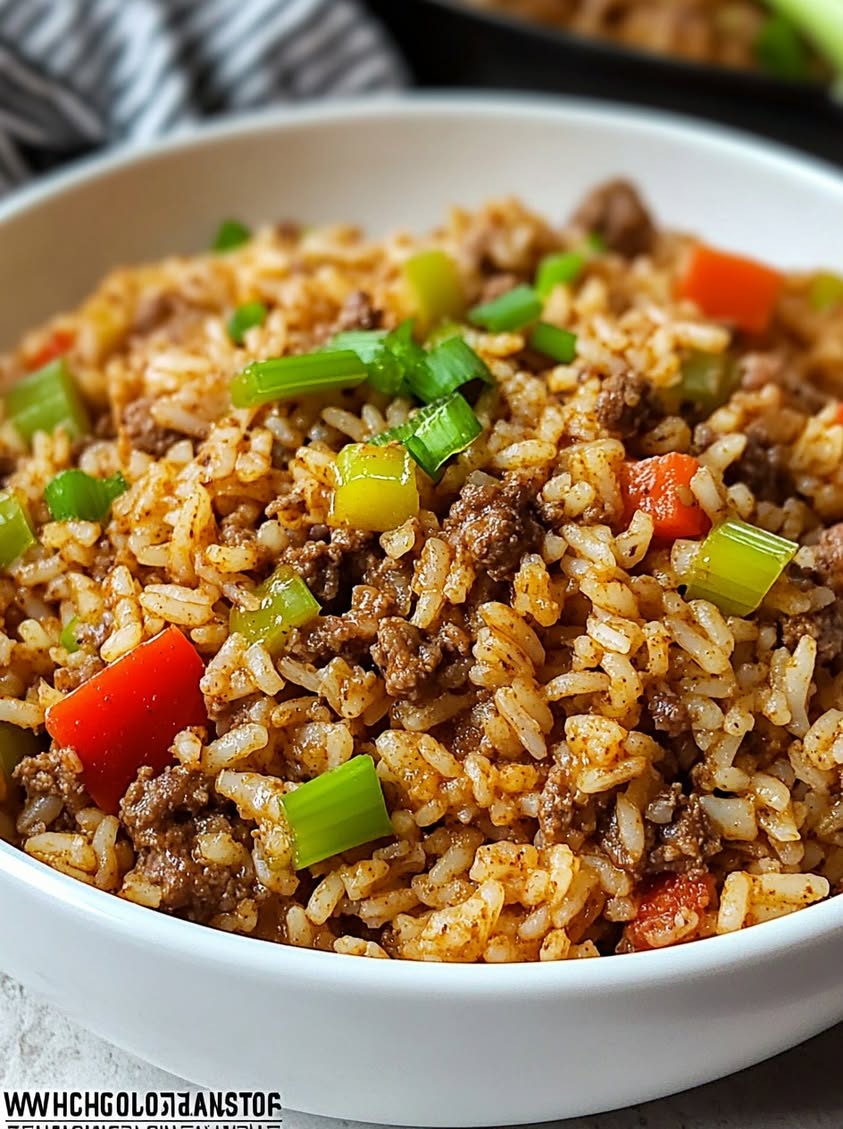
Southern-Style Dirty Rice: A Savory Cajun Beef and Herb Recipe
Welcome to a journey of bold flavors and comforting textures. This Southern-Style Dirty Rice recipe brings the soul of Louisiana right to your kitchen. This classic dish earns its “dirty” name not from grime, but from the beautiful, rich color the ground beef and aromatic vegetables create when cooked down with Cajun spices. Moreover, it is a celebration of resourcefulness and flavor, transforming simple ingredients into a deeply satisfying meal. Ultimately, you will create a one-pot wonder that is perfect for busy weeknights, festive gatherings, or whenever you crave authentic Southern comfort food.
The magic of this Southern-Style Dirty Rice lies in its layers of flavor. First, savory ground beef forms a hearty base. Next, the holy trinity of onions, bell peppers, and celery builds a fragrant foundation. Then, a robust blend of Cajun spices adds warmth and complexity. Finally, fresh herbs and fluffy rice bring everything together into a cohesive, mouthwatering dish. Consequently, each bite delivers a symphony of savory, spicy, and herbal notes. This recipe is more than just food; it is an experience that will transport your taste buds straight to the bayou.
Furthermore, this dish is incredibly versatile and forgiving. You can easily adjust the spice level to suit your family’s preferences. Additionally, it reheats beautifully, often tasting even better the next day. Whether you serve it as a main course or a hearty side, this Southern-Style Dirty Rice promises to become a staple in your culinary repertoire. So, gather your ingredients and get ready to cook a piece of Southern tradition.
Quick Recipe Highlights
- Flavor Profile: This Southern-Style Dirty Rice delivers a powerful savory punch from the beef, balanced by the holy trinity of vegetables. The Cajun spice blend provides a warm, earthy heat that is not overwhelmingly spicy. Finally, fresh herbs like parsley add a bright, clean finish that cuts through the richness perfectly.
- Texture: The texture is a delightful contrast between the tender, fluffy grains of rice and the small, savory crumbles of ground beef. The diced vegetables soften during cooking but retain a slight bite, adding another layer of interest. Overall, the dish is moist and cohesive without being mushy or greasy.
- Aroma: As it cooks, your kitchen will fill with the unmistakable, mouthwatering scent of sautéed onions, garlic, and bell peppers. The toasty aroma of Cajun spices like paprika and thyme then joins in, creating a complex and inviting fragrance. Ultimately, the fresh herbs added at the end provide a final aromatic lift.
- Visual Appeal: This dish presents a beautiful mosaic of colors. The rice takes on a “dirty” brown hue from the meat drippings and spices. Meanwhile, specks of green celery, red bell pepper, and vibrant green parsley create visual pops throughout, making it as pleasing to the eye as it is to the palate.
- Skill Level Needed: This is an accessible recipe for cooks of all levels. It primarily involves chopping, sautéing, and simmering. Therefore, even beginner home cooks can achieve fantastic results by following the simple steps. The process is straightforward and forgiving.
- Special Equipment: You need only basic kitchen tools. A sharp knife and cutting board are essential for prepping vegetables. Additionally, a large, heavy-bottomed skillet or Dutch oven with a tight-fitting lid is crucial for even cooking and perfect rice.
Recipe Overview
- Difficulty Level: We rate this Southern-Style Dirty Rice as “Easy” because it uses fundamental cooking techniques. The steps are sequential and simple, involving chopping, browning meat, and simmering rice. Consequently, there is no advanced skill required, making it a perfect recipe for building confidence in the kitchen.
- Category: This versatile dish comfortably fits into multiple categories. It serves beautifully as a hearty main course for a casual family dinner. Alternatively, it makes a standout side dish for barbecues, potlucks, or holiday meals alongside fried chicken or grilled sausages.
- Cuisine: This recipe is firmly rooted in Cajun and Creole cuisine from Louisiana. It embodies the region’s spirit of making deeply flavorful food from accessible ingredients. The use of the “holy trinity” and Cajun seasoning is a direct homage to this vibrant culinary tradition.
- Cost: This is a very budget-friendly meal. Ground beef, rice, and common vegetables form the bulk of the cost. Spices and herbs are pantry staples that offer high flavor return on a small investment. Overall, you can feed a family of six for a fraction of the cost of takeout.
- Season: While delicious year-round, this Southern-Style Dirty Rice feels particularly fitting in cooler months. Its warm, hearty, and comforting nature is ideal for fall and winter. That said, it is also a fantastic addition to summer picnics and backyard gatherings.
- Occasion: This dish is incredibly versatile for any occasion. It is simple enough for a Tuesday night dinner yet special enough for a game-day spread or a Mardi Gras celebration. Its crowd-pleasing nature makes it a reliable choice for feeding a group.
Why You’ll Love This Recipe
First and foremost, you will adore the incredible taste and texture of this Southern-Style Dirty Rice. Each forkful delivers a satisfying harmony of savory beef, aromatic vegetables, and warm spices. The rice absorbs all the delicious pan juices, becoming incredibly flavorful. Meanwhile, the fresh herbs provide a necessary brightness that elevates the entire dish. This combination creates a comfort food experience that is both familiar and excitingly bold. Your family will likely ask for seconds every single time you make it.
Furthermore, the convenience of this recipe is a major win. It is essentially a one-pot meal, meaning minimal cleanup after dinner. The prep work is simple and mostly involves chopping a few vegetables. Once everything is in the pot, the dish simmers unattended, freeing you up to set the table or relax. This makes Southern-Style Dirty Rice a perfect solution for hectic weeknights when you want a homemade meal without spending hours in the kitchen.
From a nutritional perspective, this dish offers several advantages. It provides a good balance of protein from the beef and carbohydrates from the rice for sustained energy. By loading it with onions, bell peppers, and celery, you incorporate multiple servings of vegetables. You can easily use lean ground beef to reduce fat content without sacrificing flavor. Therefore, you can feel good about serving a meal that is as wholesome as it is delicious.
Additionally, this Southern-Style Dirty Rice possesses tremendous social and entertaining value. It yields a large quantity, making it ideal for potlucks, parties, or family reunions. The flavors are universally appealing and it travels well in a covered dish. Serving this at a gathering often sparks conversations about Cajun food and family traditions. It is a recipe that brings people together around the table.
Finally, the cost-effectiveness and accessibility of this dish cannot be overstated. The ingredients are inexpensive and available at any standard grocery store. You likely have many of the spices already in your pantry. This recipe demonstrates how to create a restaurant-quality, flavor-packed meal on a tight budget. It is a fantastic way to stretch a pound of ground beef into a feast for six people.
Historical Background and Cultural Significance
The origin story of dirty rice is deeply intertwined with the resourceful spirit of Acadian, or Cajun, settlers in Louisiana. These communities, known for wasting nothing, created the dish as a way to utilize inexpensive organ meats like chicken livers and gizzards. These finely chopped meats would brown and color the rice, giving it its characteristic “dirty” appearance. Consequently, what began as a practical, frugal meal evolved into a beloved cultural icon. The recipe was a testament to making something extraordinarily flavorful from humble, overlooked ingredients.
This Southern-Style Dirty Rice holds significant cultural importance as a staple of Cajun and Creole cuisine. It represents a culinary tradition born from adaptation and survival. The dish is a fixture at family gatherings, community events, and celebrations throughout South Louisiana. Moreover, it embodies the “holy trinity” cooking base that is fundamental to the region’s food identity. Preparing and sharing dirty rice is a way of passing down heritage and preserving a unique way of life.
Over time, the recipe has naturally evolved. While traditional versions still feature liver, many modern home cooks, especially outside Louisiana, have adapted it to use more readily available ground beef, pork, or sausage. This adaptation has made the dish more accessible to a wider audience while maintaining its soul. The core principles of the holy trinity, Cajun seasoning, and long-grain rice remain unchanged. Thus, the evolution shows how classic recipes can adapt without losing their essential character.
Regional variations of dirty rice abound, adding to its rich tapestry. In some areas, you might find it with more heat from cayenne or hot sausage. Others may include tomatoes or a splash of broth for extra moisture. The type of meat used is the most common variable. Regardless of the specific adaptation, the goal is always the same: to create a deeply savory, satisfying rice dish that feeds a crowd. Exploring these variations is part of the fun of cooking Southern food.
Ingredient Deep Dive
Let us start with the holy trinity: onion, green bell pepper, and celery. This aromatic base is the cornerstone of Cajun and Creole cooking, mirroring the French mirepoix. Historically, these vegetables were readily available in the Louisiana region. Nutritionally, they provide vitamins, fiber, and antioxidants. For the best flavor, choose firm, fresh vegetables. Dice them uniformly to ensure even cooking. You can store them in the crisper drawer of your refrigerator. If needed, you can substitute a pre-chopped mirepoix mix from the freezer section.
Ground beef is the hearty protein in this adaptation. It provides rich, savory flavor and a satisfying texture. Opt for an 80/20 blend for the best balance of flavor and moisture; the fat renders and helps cook the vegetables. Leaner blends work but may require a touch of oil. From a nutritional standpoint, beef is an excellent source of protein, iron, and B vitamins. Always brown the beef well to develop deep flavor. For storage, keep it refrigerated and use by the sell-by date or freeze for longer storage.
Long-grain white rice, such as Jasmine or Basmati, is essential for the proper texture. The long grains stay separate and fluffy, not sticky, when cooked. Rice acts as the canvas that soaks up all the glorious flavors from the meat and spices. It is a great source of energy-providing carbohydrates. Rinse your rice under cold water before using to remove excess starch. Store uncooked rice in a cool, dry pantry. There is no direct substitute for the texture, though cauliflower rice can be used for a low-carb version.
Cajun seasoning is the flavor engine of this Southern-Style Dirty Rice. A good blend typically includes paprika, garlic powder, onion powder, oregano, thyme, cayenne, and black pepper. It delivers warmth, earthiness, and a subtle kick. You can use a store-bought blend or make your own for complete control over the heat level. Spices not only add flavor but also contain beneficial antioxidants. Store your seasoning blend in a cool, dark place to preserve potency. As a substitute, you can use a Creole seasoning, which often includes salt and herbs like basil.
Fresh parsley and green onions provide the crucial finishing touch. They add a pop of color and a fresh, herbal brightness that cuts through the dish’s richness. Parsley is rich in vitamins K, C, and A. Green onions offer a mild onion flavor. Always add these fresh herbs at the end of cooking to preserve their vibrant color and delicate flavor. Store them in the refrigerator, often with stems in water. If unavailable, you can use a tablespoon of dried parsley, though the fresh element is superior.
Common Mistakes to Avoid
- Do not skip rinsing the rice. Unrinsed rice has excess surface starch that can cause the final dish to become gummy and sticky. Rinsing until the water runs clear ensures separate, fluffy grains.
- Avoid overcrowding the pan when browning the beef. If you add too much meat at once, it will steam instead of sear. Cook in batches if necessary to get a proper, flavorful brown crust on the meat.
- Neglecting to sauté the holy trinity vegetables sufficiently is a common error. You must cook them until they are soft and fragrant. This step builds the foundational flavor layer for the entire Southern-Style Dirty Rice.
- Using the wrong type of rice will lead to poor results. Short-grain or sushi rice becomes too sticky. Always choose a long-grain variety like Jasmine or Basmati for the best texture.
- Adding the fresh herbs too early is a mistake. Delicate herbs like parsley will wilt and lose their vibrant color and flavor if cooked for too long. Stir them in right at the end, just before serving.
- Forgetting to taste and adjust seasoning at the end can leave your dish bland. Cajun seasoning blends vary in saltiness. Always taste your finished dirty rice and add salt, pepper, or more spice as needed.
- Peeking at the rice while it simmers is tempting but problematic. Lifting the lid releases precious steam and can disrupt the cooking process, leading to unevenly cooked rice. Trust the timer.
- Using old, stale spices will result in a flat-tasting dish. Spices lose potency over time. If your Cajun seasoning has been in the pantry for years, it is time for a fresh jar or a new homemade batch.
Essential Techniques
The first essential technique is properly browning the ground beef. This is not just cooking it until it turns gray; it is about developing a deep, savory fond on the bottom of the pot. Use medium-high heat and avoid stirring too often. Let the meat sit and caramelize. This Maillard reaction creates complex flavors that form the backbone of your Southern-Style Dirty Rice. The visual cue for success is crispy, browned bits of meat and a flavorful crust on the pot.
Next, mastering the sauté of the holy trinity is crucial. Cook the diced onions, bell peppers, and celery in the rendered beef fat until they are very soft and translucent. This process, called sweating, releases their natural sugars and builds a sweet, aromatic base. The pitfall is rushing this step; undercooked vegetables will be crunchy and lack depth. Success is evident when the vegetables are fragrant, reduced in volume, and have taken on a slightly golden hue.
Finally, the absorption method for cooking the rice is key. After toasting the rice with the other ingredients, you add a precise amount of liquid and simmer it covered on low heat. The rice absorbs the flavorful liquid, becoming tender. The common pitfall is lifting the lid, which releases steam and lowers the temperature. The visual cue for success is when the rice has absorbed all the liquid, the grains are tender, and small steam holes appear on the surface.
Pro Tips for Perfect Southern-Style Dirty Rice
For an extra layer of flavor, consider using half ground beef and half ground pork or a spicy andouille sausage removed from its casing. The combination adds complexity. Toast your Cajun seasoning in the pan for about 30 seconds after adding it to the vegetables. This quick bloom releases the oils in the spices, making their flavor more potent and aromatic. If you have time, let the cooked dish rest, covered and off the heat, for 5-10 minutes before fluffing. This allows the moisture to redistribute evenly, preventing a soggy bottom layer.
Always use a broth instead of water for cooking the rice. Chicken or beef broth infuses the grains with savory flavor from the inside out. For a truly traditional touch, you can finely chop a small amount of chicken liver and cook it with the ground beef. It adds an unmistakable depth. If your rice is done but seems a bit wet, simply leave the lid off and let it sit on the warm burner for a few minutes to evaporate the excess moisture. Finally, garnish with not just parsley, but also thinly sliced green onions and a dash of hot sauce on the side for those who want more heat.
Variations and Adaptations
For regional variations, try a Creole version by adding a can of diced tomatoes with their juices. In some parts of Texas, you might find it made with venison or wild game. For a seasonal adaptation in summer, add fresh corn kernels or diced summer squash. In fall, incorporate diced okra or a pinch of smoked paprika for warmth. For a spicier kick, use hot Italian sausage or add extra cayenne pepper to the seasoning blend.
Dietary modifications are straightforward. For a gluten-free version, ensure your Cajun seasoning blend contains no fillers. To make it dairy-free, simply avoid any garnishes like cheese; the recipe is naturally dairy-free. For a vegan Southern-Style Dirty Rice, replace the ground beef with a plant-based crumble or cooked lentils. Use vegetable broth and increase the spices slightly to compensate for the missing meat flavor. A low-carb or keto version can use cauliflower rice; add it at the very end and just heat through.
Consider texture modifications by adding chopped water chestnuts for crunch or using a mix of white and wild rice for a chewier texture. For presentation alternatives, serve the dirty rice in hollowed-out bell peppers and bake them, or pack it into a small bowl and invert it onto a plate for a elegant molded presentation. You can also use it as a hearty stuffing for poultry or large mushrooms.
Serving and Presentation Guide
For plating, use a wide, shallow bowl to showcase the dish. A simple scoop looks homey, but you can use an ice cream scoop for neat, rounded portions. Garnish generously with the fresh parsley and green onions for a burst of color. A lemon wedge on the side adds a bright, acidic option for diners. Traditional accompaniments include red beans, collard greens, or a simple green salad with a tangy vinaigrette. Cornbread is practically mandatory for sopping up any remaining bits.
Modern serving suggestions include using the Southern-Style Dirty Rice as a base for a bowl meal. Top it with a fried egg, some sautéed shrimp, or blackened chicken strips. For a party, serve it in a large, rustic dish with serving spoons. Consider temperature carefully; this dish is best served hot. However, it is also delicious at room temperature as part of a picnic spread. For portion control, a standard serving is about one to one and a half cups per person as a main dish.
Wine and Beverage Pairing
Wine pairings should complement the savory, spicy notes. A medium-bodied Zinfandel with its jammy fruit and peppery finish stands up beautifully to the Cajun spices. Alternatively, a cold, crisp beer is a classic choice. A lager, pilsner, or even a malty amber ale cleanses the palate between bites. For a non-alcoholic alternative, iced sweet tea is the quintessential Southern partner. Its sweetness balances the heat perfectly.
Also consider sparkling water with a squeeze of lime for a refreshing, palate-cleansing option. If serving with coffee, a dark roast with low acidity pairs well with the earthy spices. Serve beverages chilled or at the appropriate temperature to contrast the warm, hearty nature of the dish. Ultimately, the goal is to choose a drink that refreshes the palate and enhances the dining experience without overpowering the food.
Storage and Shelf Life
Store leftover Southern-Style Dirty Rice in an airtight container in the refrigerator. It will keep well for 3 to 4 days. For best results, let it cool completely before covering and refrigerating. You can also freeze it for up to 3 months. Portion it into freezer-safe bags or containers for easy reheating. Thaw overnight in the refrigerator before reheating.
Signs of spoilage include an off smell, a slimy texture on the rice, or visible mold. When reheating, add a splash of broth or water to the pan to prevent drying out. Reheat gently on the stove over medium-low heat, stirring frequently, until piping hot throughout. You can also reheat individual portions in the microwave, covered, stirring halfway through. Always ensure the internal temperature reaches 165°F for food safety.
Make Ahead Strategies
You can significantly prep this dish in advance. Chop all the vegetables and store them together in a container in the fridge for up to two days. Measure out your spices and rice. You can even brown the ground beef, cool it, and refrigerate it separately. When ready to cook, simply start from the vegetable sauté step, adding the pre-cooked beef to warm through. This cuts active cooking time in half.
For full make-ahead, cook the entire Southern-Style Dirty Rice recipe. Cool it completely and refrigerate. The flavors often meld and improve overnight. When ready to serve, reheat it gently on the stovetop with a little added broth. Always add the fresh herbs after reheating to maintain their color and vitality. This strategy is perfect for stress-free entertaining or meal prep for the week.
Scaling Instructions
Halving the recipe is simple for smaller households. Use a medium skillet and reduce all ingredients by half. The cook time may be slightly shorter, so check for doneness a few minutes early. Doubling or tripling is excellent for a crowd. Use a very large Dutch oven or divide between two pots. You may need to brown the meat in more batches to avoid steaming. The simmering time for the rice may increase by 5-10 minutes.
When scaling up, ensure your pot has enough surface area for even cooking. Stir gently but thoroughly when combining all ingredients to distribute the seasoning. For large batches, consider keeping some warm in a slow cooker on the “warm” setting. Storage considerations remain the same; just ensure you have enough airtight containers for any leftovers.
Nutritional Deep Dive
A serving of this Southern-Style Dirty Rice provides a balance of macronutrients. The ground beef offers high-quality protein for muscle maintenance. The rice supplies complex carbohydrates for energy. The vegetables contribute fiber, vitamins, and minerals. Using lean beef and moderating added salt can make this a healthier choice. The dish contains iron from the beef and B vitamins from the grains and meat.
From a dietary consideration standpoint, this recipe is naturally dairy-free. It can be adapted to be gluten-free by checking seasoning labels. For portion analysis, a one-cup serving as a side is reasonable. For weight management, focus on the portion size and pair it with a large side of non-starchy vegetables like a green salad. The protein and fiber content can help promote satiety.
Dietary Adaptations
For a gluten-free version, confirm your Cajun seasoning and broth are certified gluten-free. The recipe is naturally dairy-free. For a vegan adaptation, use plant-based ground “beef,” vegetable broth, and a vegan Worcestershire sauce if included. Increase the smoked paprika to add depth lost from the meat.
A low-carb or keto version replaces rice with cauliflower rice. Add the riced cauliflower at the very end of cooking and just heat through to avoid mushiness. For a Paleo version, use cauliflower rice and ensure all seasonings are compliant. For a Low-FODMAP version, use only the green tops of green onions, omit garlic from the seasoning, and use a garlic-infused oil for sautéing.
Troubleshooting Guide
If your rice is crunchy, it likely needed more liquid or more time. Add a few tablespoons of hot broth, cover, and cook on low for another 5-10 minutes. If it is mushy, you may have used too much liquid or the wrong rice type. Unfortunately, you cannot fix this, but it will still taste good. For bland flavor, stir in more Cajun seasoning, salt, or a splash of hot sauce at the end. You can also add a teaspoon of acid, like lemon juice or vinegar, to brighten it.
If the dish is too greasy, you may have used beef with too high a fat content. Try spooning off excess fat after browning the meat next time. For now, blot the top with paper towels. If you burn the bottom, avoid scraping it into the rest of the food. Carefully transfer the unburnt top portion to a new pot. If your herbs look wilted, you added them too early. Simply garnish with a fresh handful just before serving to revive the appearance.
Recipe Success Stories
Our community loves this Southern-Style Dirty Rice recipe. Many readers report it becoming a weekly rotation meal. One home cook shared that she added diced andouille sausage and said it was a hit at her Mardi Gras party. Another reader successfully made it vegan for her daughter and said the flavor was still incredible. Several people have noted that their kids, who are usually picky, gobbled it up.
Adaptation stories include using turkey instead of beef for a lighter version and adding frozen peas for extra color and veggies. Reader suggestions often include serving it with a dollop of cool sour cream or Greek yogurt. For photography tips, natural light is best. Garnish heavily with green herbs, and consider a rustic wooden bowl or a colorful plate to make the dish pop in photos.
Frequently Asked Questions
What makes the rice “dirty”? The rice gets its “dirty” color from the browned ground beef and the spices cooking together. Traditionally, it came from finely chopped chicken livers and gizzards browning in the pot, giving the rice a speckled, brown appearance.
Can I use brown rice instead of white rice? Yes, but it requires adjustment. Brown rice needs more liquid and a longer cooking time. Follow the package instructions for liquid ratios and simmer time, adding it to the recipe after browning the meat and vegetables.
Is dirty rice the same as jambalaya? No, they are distinct dishes. Jambalaya is a wetter rice dish often with larger pieces of meat and seafood, cooked with more liquid. Dirty rice is drier, with finely minced meat mixed thoroughly into the rice.
How can I make it spicier? To increase the heat, add extra cayenne pepper to the Cajun seasoning, use a hot variety of sausage, or serve it with a hot sauce like Crystal or Tabasco on the side for individual customization.
Can I cook this in a rice cooker? You can partially. Sauté the meat and vegetables in a skillet first to develop flavor. Then transfer that mixture along with the rinsed rice and correct amount of broth to your rice cooker and cook on the standard cycle.
What’s the best way to reheat leftovers? The stovetop is best. Add leftovers to a skillet with a small splash of broth or water. Cover and heat over medium-low, stirring occasionally, until hot. The microwave also works; cover and stir halfway through.
Can I freeze dirty rice? Absolutely. Cool it completely, then portion into freezer-safe bags or containers. It freezes well for up to 3 months. Thaw in the refrigerator overnight before reheating.
What can I substitute for green bell pepper? You can use red, yellow, or orange bell peppers for a sweeter flavor. If you dislike bell peppers, you can increase the amount of celery and onion, or use a diced poblano pepper for a milder taste.
Is this recipe authentic? This recipe is an adaptation of the classic, using more accessible ground beef instead of organ meats. It captures the essential flavors and spirit of authentic Southern-Style Dirty Rice while being practical for modern home kitchens.
My rice is sticky. What went wrong? Sticky rice is usually caused by not rinsing the rice before use, stirring it too much during cooking, or using a short-grain variety. Next time, rinse well, use long-grain rice, and avoid stirring once the broth is added.
Additional Resources
For related recipes, explore our classic Red Beans and Rice or a simple Shrimp Étouffée. These dishes share the same Cajun-Creole flavor foundation. If you want to master the holy trinity technique, our guide to Cajun cooking basics is a great place to start. For more ingredient information, check out our deep dives on different types of rice and how to build your own spice blends.
Equipment recommendations include a good quality Dutch oven for even heat distribution. A sharp chef’s knife will make prepping the vegetables a breeze. For seasonal variations, look for our summer recipe that incorporates fresh corn and tomatoes, or our fall version with smoked sausage and okra. Cooking is a journey, and this Southern-Style Dirty Rice is a delicious destination.
{“success”:true,”message”:”Recipe created successfully”,”post_id”:8432,”tasty_recipe_id”:8432,”shortcode”:” Print
Southern-Style Dirty Rice with Savory Beef, Cajun Spices, and Fresh Herbs
Description
A hearty, flavorful rice dish packed with ground beef, aromatic vegetables, and bold Cajun seasonings, finished with fresh herbs for a classic Southern comfort meal.
Ingredients
For the Crust:
- 1 lb ground beef
- 1 cup long-grain white rice, uncooked
- 2 cups chicken broth
- 1 medium onion, finely chopped
- 1 green bell pepper, finely chopped
- 2 celery stalks, finely chopped
- 3 cloves garlic, minced
- 2 tbsp Cajun seasoning
- 1 tsp smoked paprika
- 1/2 tsp dried thyme
- 2 tbsp fresh parsley, chopped
- 2 tbsp green onions, sliced
- 2 tbsp vegetable oil
- Salt and black pepper to taste
Instructions
1. Prepare the Crust:
- Heat vegetable oil in a large skillet or Dutch oven over medium-high heat. Add ground beef and cook until browned, breaking it up with a spoon, about 5-7 minutes. Drain excess fat if needed.
- Add onion, bell pepper, celery, and garlic to the skillet. Cook, stirring occasionally, until vegetables are softened, about 5 minutes.
- Stir in Cajun seasoning, smoked paprika, dried thyme, salt, and black pepper. Cook for 1 minute until fragrant.
- Add rice and chicken broth, stirring to combine. Bring to a boil, then reduce heat to low, cover, and simmer for 20-25 minutes until rice is tender and liquid is absorbed.
- Remove from heat, fluff rice with a fork, and stir in fresh parsley and green onions. Let sit covered for 5 minutes before serving.
Notes
You can customize the seasonings to taste.

I’m Billy, a classically trained culinary school graduate from The Culinary Institute of America with over 12 years in the restaurant industry and over 19 years of cooking experience.