
Wholesome Mediterranean Lentils with Roasted Vegetables and Creamy Tahini: A Vibrant, Plant-Powered Feast
Imagine a bowl filled with the vibrant colors and earthy flavors of the Mediterranean sun. This recipe for Wholesome Mediterranean Lentils with Roasted Vegetables and Creamy Tahini brings that exact warmth and nourishment to your table. Fundamentally, it is a celebration of simple, whole ingredients transformed through roasting and simmering into a deeply satisfying meal. The result is a dish that feels both rustic and elegant, perfect for a cozy family dinner or a healthy lunch prep that you will actually look forward to eating.
Furthermore, the magic of this dish lies in its beautiful contrasts. You get the caramelized sweetness of roasted bell peppers and zucchini paired with the hearty, savory depth of perfectly cooked lentils. Then, a luscious, lemony tahini sauce is drizzled over the top, adding a creamy, nutty richness that ties every element together. Each bite offers a symphony of textures and flavors, from the tender vegetables to the firm lentils and the silky sauce. Ultimately, this is more than just a recipe; it is a template for a healthy, flavorful lifestyle.
Additionally, this Wholesome Mediterranean Lentils with Roasted Vegetables and Creamy Tahini is incredibly versatile. You can easily adapt it based on the season or what you have in your pantry. For instance, swap the vegetables for cauliflower or sweet potato in the winter. Meanwhile, the lentils provide a fantastic plant-based protein base that keeps you full and energized. This dish truly embodies the principles of Mediterranean cooking, which prioritizes fresh produce, legumes, and healthy fats for a meal that is as good for your body as it is for your soul.
Quick Recipe Highlights
- Flavor Profile: This dish delivers a robust, earthy base from the lentils, beautifully balanced by the sweet, caramelized notes of the roasted vegetables. The creamy tahini sauce introduces a bright, lemony tang and a subtle nuttiness, creating a complex and utterly satisfying flavor experience.
- Texture: You will enjoy a wonderful interplay of textures. The roasted vegetables are tender with slightly crisp edges, the lentils are perfectly firm yet soft, and the tahini sauce provides a luxurious, velvety finish that coats every component.
- Aroma: As it cooks, your kitchen will fill with the irresistible scent of roasting vegetables mingled with warm, toasty cumin and the fresh, herbal notes of parsley. The final drizzle of lemon juice in the tahini adds a final burst of citrus fragrance.
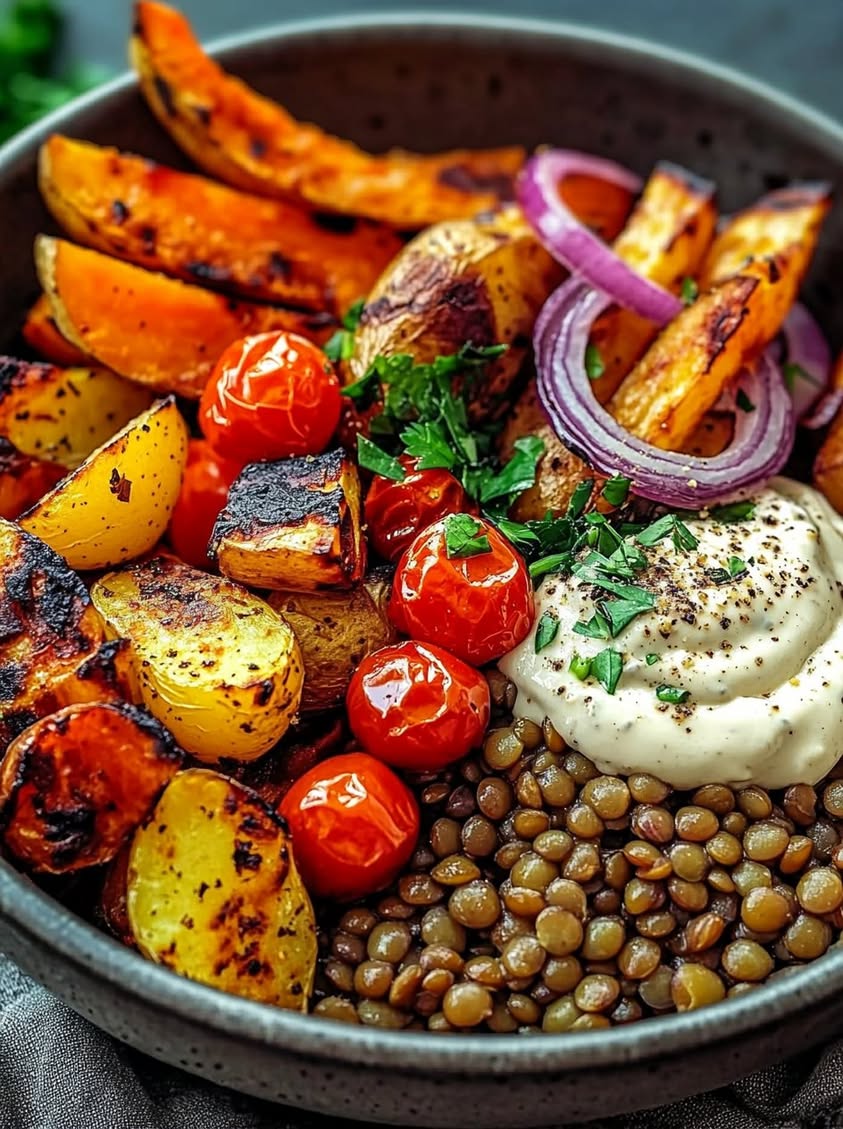
- Visual Appeal: This bowl is a feast for the eyes with its vibrant color palette. Think deep green zucchini, bright red bell peppers, golden-brown roasted edges, and the rich, creamy white tahini sauce artfully drizzled over the top, often garnished with fresh green herbs.
- Skill Level Needed: This is a beginner-friendly recipe. The techniques involved, such as chopping vegetables and whisking a simple sauce, are straightforward. The oven does most of the work for the vegetables, and cooking lentils is a simple simmering process.
- Special Equipment: You only need basic kitchen tools: a good baking sheet for roasting, a medium saucepan for the lentils, and a small bowl for whisking the tahini sauce. Parchment paper is helpful for easy cleanup but not essential.
Recipe Overview
- Difficulty Level: We rate this recipe as easy because it breaks down into simple, manageable tasks. Chopping vegetables, tossing them with oil, and roasting is a hands-off process. Cooking lentils requires minimal attention. Meanwhile, the sauce comes together in minutes with a whisk. There are no advanced techniques or precise timings that could easily go wrong, making it perfect for novice cooks.
- Category: This dish fits beautifully into several categories. It is a stellar main course for a plant-based meal, a fantastic side dish to grilled fish or chicken, and an excellent component for meal prep. It is also ideal for healthy lunches, potlucks, and casual entertaining.
- Cuisine: This recipe is firmly rooted in the broad, sun-drenched traditions of Mediterranean cuisine. It draws inspiration from Levantine cooking with its use of tahini and lentils, while the technique of roasting vegetables is common throughout the region. It is a modern, wholesome interpretation of classic flavors.
- Cost: This is an extremely budget-friendly meal. Lentils are an inexpensive source of protein. Seasonal vegetables like zucchini and bell peppers are affordable, and a jar of tahini, while an initial investment, lasts for many recipes. Overall, you can expect to feed four people for a fraction of the cost of a restaurant meal.
- Season: This recipe shines year-round but is particularly wonderful in late summer and early fall when zucchini and bell peppers are at their peak sweetness and abundance. However, its adaptability with root vegetables makes it a comforting winter option as well.
- Occasion: It is perfect for a busy weeknight dinner due to its simplicity. Conversely, it is also elegant enough for a casual dinner party or a healthy holiday side. It is an excellent choice for Meatless Monday or any day you want a nourishing, feel-good meal.
Why You’ll Love This Recipe
First and foremost, the taste and texture are utterly irresistible. The combination of savory, spiced lentils with sweet, charred vegetables is a classic for good reason. Then, the creamy tahini sauce cuts through with its bright acidity, lifting the entire dish. Every forkful delivers a harmonious balance that is deeply comforting yet exciting. You will find yourself savoring each component, from the pop of a lentil to the melt-in-your-mouth vegetable.
Moreover, the convenience factor is a huge win. Once the vegetables are in the oven and the lentils are simmering, your active work is mostly done. This hands-off time allows you to prepare the sauce, set the table, or simply relax. Consequently, it is an ideal recipe for those evenings when you want a wholesome, home-cooked meal without spending hours at the stove. The process is straightforward and forgiving.
From a nutritional standpoint, this dish is a powerhouse. Lentils are packed with plant-based protein and fiber, promoting satiety and digestive health. The array of vegetables provides a wide spectrum of vitamins, minerals, and antioxidants. Tahini, made from sesame seeds, adds healthy fats, calcium, and iron. Together, they create a complete, balanced meal that fuels your body beautifully. It is the definition of eating well without feeling deprived.
Furthermore, this Wholesome Mediterranean Lentils with Roasted Vegetables and Creamy Tahini has fantastic social and entertaining value. It is a visually stunning dish that impresses guests with its vibrant colors and artful presentation. It is naturally vegan and gluten-free, making it inclusive for diverse dietary needs at a gathering. You can easily double the recipe for a crowd, and it tastes wonderful at room temperature, perfect for a buffet or potluck setting.
Finally, its cost-effectiveness and accessibility are unmatched. The ingredients are pantry staples and common produce items. You do not need any expensive or hard-to-find components. This recipe demonstrates how to create a restaurant-quality, nutritious meal on a modest budget. It is a testament to the idea that eating well does not have to be complicated or expensive, but simply a matter of combining good ingredients with care.
Historical Background and Cultural Significance
The story of this dish is woven from several ancient culinary threads. Lentils are one of humanity’s oldest cultivated crops, with evidence of their consumption dating back over 8,000 years in the Near East. They were a staple for ancient civilizations across the Mediterranean basin, including the Egyptians, Greeks, and Romans, prized for their nutritional value and storage stability. Similarly, tahini, a paste of ground sesame seeds, has roots in ancient Assyrian and Persian cuisines. The technique of roasting vegetables over fire or in simple ovens is as old as cooking itself in the region.
Culturally, this combination represents the heart of Eastern Mediterranean and Levantine home cooking. Dishes of lentils or beans served with a tahini-based sauce appear across countries like Lebanon, Syria, Palestine, and Israel. For example, “Mujadara,” a dish of lentils and rice topped with caramelized onions, is a beloved comfort food. The addition of roasted vegetables is a more modern, health-conscious twist that aligns with contemporary interpretations of the Mediterranean diet, which celebrates an abundance of vegetables, legumes, and healthy fats.
The evolution of this specific recipe is a story of adaptation and fusion. Traditional lentil dishes were often simpler, focusing on the legume itself with basic seasonings. The modern emphasis on colorful, roasted vegetable medleys reflects both greater global access to diverse produce and a culinary trend towards vegetable-centric plates. The creamy tahini sauce acts as a unifying bridge, a classic condiment that has traveled from its ancient origins to become a global pantry staple, now featured in everything from dressings to desserts.
Regional variations of this concept are plentiful. In some areas, the lentils might be cooked with Swiss chard or spinach. The spice profile could shift from cumin to za’atar or paprika. The vegetables might include eggplant, cauliflower, or potatoes depending on the season and locale. The tahini sauce might be enriched with garlic, thinned with yogurt, or spiked with chili. This recipe, therefore, is not a fixed entity but a flexible template that honors its rich history while inviting personal creativity.
Ingredient Deep Dive
Let us start with the lentils. Brown or green lentils are ideal here because they hold their shape well during cooking, providing a pleasing texture. Historically, lentils were considered food for the common people but also appear in religious texts, symbolizing sustenance. Nutritionally, they are a superstar: rich in protein, fiber, iron, and folate. When selecting them, look for uniform size and avoid any packages with debris. Store dried lentils in an airtight container in a cool, dark pantry for up to a year. You cannot substitute red lentils here as they turn to mush, but French Puy lentils would be an excellent, slightly firmer alternative.
Next, consider the tahini. This sesame seed paste is a cornerstone of Middle Eastern cuisine. High-quality tahini makes all the difference; look for one made from 100% hulled sesame seeds with a smooth, pourable consistency and a pleasant, not bitter, taste. It is a fantastic source of healthy fats, calcium, and copper. Store opened tahini jars in the refrigerator to prevent the oils from going rancid. The natural separation of oil is normal; simply stir well before using. For a nut-free alternative, sunflower seed butter can work in a pinch, though the flavor profile will change.
The vegetable trio of zucchini, bell pepper, and red onion forms the roasted component. Zucchini, a summer squash, adds a mild, slightly sweet flavor and tender texture. Bell peppers, especially red ones, contribute a vibrant color and sweet, almost fruity note when roasted. Red onion caramelizes beautifully, offering a deep, savory sweetness. Together, they provide vitamins A, C, and K, along with antioxidants. Choose vegetables that are firm, heavy for their size, and free of soft spots. This mix is highly adaptable; eggplant, cauliflower, or sweet potato are all wonderful substitutes depending on the season.
The supporting cast of olive oil, garlic, lemon, and cumin is crucial. Use a good quality extra-virgin olive oil for its fruity flavor. Fresh garlic and lemon juice provide the essential aromatic punch and acidity that brighten the dish. Ground cumin adds its warm, earthy, slightly smoky note that complements the lentils perfectly. Fresh parsley, used as a garnish, adds a final burst of color and a clean, fresh flavor. Always taste your cumin to ensure it is fresh and fragrant, as stale spices can taste dull and dusty.
Common Mistakes to Avoid
- Overcooking the Lentils: This results in mushy, broken lentils that lose their texture. Follow the package instructions but start checking for doneness a few minutes early. They should be tender but still hold their shape.
- Crowding the Baking Sheet: If you pile the vegetables on top of each other, they will steam instead of roast. Use a large enough sheet or two to ensure they are in a single layer. This is crucial for achieving caramelization.
- Using Old or Low-Quality Tahini: Tahini can go rancid or become bitter. Always taste it before using. A good tahini should taste nutty and smooth, not harsh or sour.
- Not Whisking the Tahini Sauce Properly: Adding water to tahini too quickly can cause it to seize and become thick and lumpy. Start by whisking the tahini with lemon juice and garlic into a thick paste, then slowly drizzle in water while whisking constantly to achieve a smooth, creamy consistency.
- Underseasoning the Vegetables Before Roasting: Season the vegetables generously with salt and pepper before they go in the oven. This draws out moisture and builds flavor from the inside out. Do not rely solely on salting at the end.
- Skipping the Resting Time for the Lentils: Letting the cooked lentils sit off the heat for a few minutes allows them to absorb any remaining liquid and firm up slightly, improving their final texture.
- Adding Garlic to the Roasting Pan Too Early: If minced garlic is roasted for the full time, it will burn and become bitter. If you want roasted garlic flavor, add whole cloves, or simply add raw minced garlic to the warm lentils after cooking.
- Forgetting to Adjust Oven Racks: For even roasting, position your oven rack in the center. If using two sheets, rotate them top to bottom halfway through cooking to ensure even browning.
Essential Techniques
Perfectly Roasting Vegetables is the first key technique. The goal is caramelization, where natural sugars brown and concentrate, creating deep flavor. To achieve this, cut vegetables into uniform sizes for even cooking. Toss them thoroughly with enough oil to coat lightly but not pool. Most importantly, spread them in a single layer with space between each piece. Crowding causes steaming. Roast at a high heat (around 425°F) and resist the urge to stir too often; letting them sit allows for those delicious browned edges. Visual cues for success are tender interiors and golden-brown, slightly crisp exteriors.
Cooking Lentils to the Ideal Texture is another fundamental skill. Unlike pasta, you do not want to boil lentils vigorously. Instead, bring them to a simmer in seasoned water or broth, then reduce the heat to maintain a gentle bubble. Cover the pot partially to allow some steam to escape. Start checking for doneness 5 minutes before the package’s suggested time. They are done when tender but not falling apart. Drain any excess liquid and let them rest. The common pitfall is overcooking, which turns them mushy and unattractive.
Emulsifying the Tahini Sauce is the final crucial technique. Tahini sauce is a simple emulsion. Begin by whisking the tahini paste with acidic liquid (lemon juice) and any aromatics (garlic). This initial mixture will become very thick and almost paste-like. Do not panic. Then, slowly add water while whisking constantly. The sauce will thin, lighten in color, and become creamy and smooth. If you add water too fast, it may separate or become grainy. The visual cue for success is a smooth, pourable, creamy sauce that coats the back of a spoon.
Pro Tips for Perfect Wholesome Mediterranean Lentils with Roasted Vegetables and Creamy Tahini
First, roast your vegetables on parchment paper or a silicone mat. This prevents sticking without needing excessive oil and makes cleanup an absolute breeze. Second, add a splash of dry white wine or vegetable broth to the lentils as they finish cooking for an extra layer of flavor. Third, toast your cumin in a dry pan for 30 seconds before using it. This simple step awakens its essential oils and dramatically enhances its aroma and taste.
Fourth, make your tahini sauce ahead of time. Letting it sit for an hour or more in the fridge allows the garlic flavor to mellow and permeate the sauce beautifully. Fifth, if your tahini sauce is too thick after refrigerating, simply whisk in a teaspoon of warm water at a time to bring it back to a drizzling consistency. Sixth, reserve a few pieces of the prettiest roasted vegetables and a sprinkle of fresh herbs to garnish the top of the assembled bowls for a professional, finished look.
Seventh, for a heartier meal, serve the lentils and vegetables over a bed of quinoa, farro, or whole-wheat couscous. Eighth, do not discard any leftover tahini sauce. It is fantastic as a salad dressing, a dip for raw vegetables, or a sauce for grilled chicken or fish throughout the week.
Variations and Adaptations
For regional variations, explore different spice blends. Swap cumin for za’atar for a herbal, tangy twist, or add a pinch of smoked paprika for a Spanish-inspired flavor. In Greece, you might find a similar dish finished with a generous crumbling of feta cheese. For seasonal adaptations, embrace winter by using cubed butternut squash, parsnips, and Brussels sprouts. In spring, asparagus and baby carrots would be lovely. The base recipe is wonderfully flexible.
Dietary modifications are straightforward. The dish is naturally vegan and gluten-free. For a nut-free version, replace the tahini sauce with a lemon-herb vinaigrette or a yogurt-based sauce. To add more protein, top each bowl with a soft-boiled egg or crumbled falafel. For flavor variations, add olives, sun-dried tomatoes, or artichoke hearts to the roasted vegetable mix. A sprinkle of sumac or chili flakes on top adds a final punch.
Consider texture modifications by adding crunch. Top the finished bowls with toasted pine nuts, slivered almonds, or crispy chickpeas. For a creamier lentil base, stir in a spoonful of the tahini sauce directly into the warm lentils. Presentation alternatives include serving the components in separate bowls for a build-your-own bowl experience, or layering them in a large, shallow serving platter for a family-style feast.
Serving and Presentation Guide
Plating techniques matter for visual appeal. Start by spreading a base of warm lentils in a shallow bowl. Then, artfully arrange the roasted vegetables on top, grouping them by color for impact. Drizzle the creamy tahini sauce generously over everything, using a spoon or a squeeze bottle for control. Finally, garnish with a generous handful of fresh chopped parsley or cilantro, and perhaps a lemon wedge on the side.
For garnishing, think about color and texture. Beyond parsley, try microgreens, pomegranate seeds in the winter, or a light dusting of paprika. Toasted sesame seeds or a swirl of high-quality olive oil also add a professional touch. Traditional accompaniments might include warm pita bread or flatbread for scooping, a side of olives, and a simple tomato-cucumber salad.
Modern serving suggestions include packing the components separately for a stunning desk lunch. Alternatively, serve it as part of a mezze spread with hummus, baba ganoush, and stuffed grape leaves. Temperature considerations are flexible; this dish is excellent warm, at room temperature, or even cold from the fridge. For portion control, a standard serving is about one cup of the lentil-vegetable mix with two tablespoons of sauce, making it easy to scale for individual needs.
Wine and Beverage Pairing
Wine pairings should complement the earthy, savory notes without overpowering the dish. A crisp, unoaked white wine like a Greek Assyrtiko, a Spanish Albariño, or a Sauvignon Blanc works beautifully. Their bright acidity cuts through the richness of the tahini and mirrors the lemon juice. For red wine lovers, a light-bodied, low-tannin red like a Beaujolais or a Pinot Noir can be lovely, especially if the vegetables are well-caramelized.
Non-alcoholic alternatives are abundant. A sparkling lemonade or limeade echoes the citrus notes. Iced herbal tea, such as mint or lemon verbena, is refreshing. For a more authentic touch, try a glass of Ayran, a savory yogurt drink popular in the Eastern Mediterranean. Simply whisk together plain yogurt, water, a pinch of salt, and optional fresh mint.
If serving for a cozy dinner, a hot beverage like mint tea is a classic and perfect way to end the meal. The key to all pairings is to consider the temperature. Chilled beverages contrast nicely with the warm food, while a warm tea can be comforting. Ultimately, let the occasion and your personal preference guide you, as the dish is versatile enough to pair with many different drinks.
Storage and Shelf Life
Storage methods are simple but important for maintaining quality. Store the cooled lentils, roasted vegetables, and tahini sauce in separate airtight containers in the refrigerator. This prevents the vegetables from becoming soggy. The lentils and vegetables will keep well for up to 4 days. The tahini sauce may thicken but will last for up to a week.
Container recommendations include glass containers, which do not absorb odors. For signs of spoilage, look for an off smell, significant discoloration, or visible mold. If any component develops a sour or unpleasant odor, discard it. Reheating instructions are best for the lentils and vegetables only. Reheat them gently in a microwave or in a skillet over medium heat with a splash of water to prevent drying out. The tahini sauce is best served cold or at room temperature.
Freezing guidelines apply primarily to the cooked lentils. They freeze exceptionally well for up to 3 months. Thaw overnight in the refrigerator before reheating. The roasted vegetables can be frozen, but their texture will become softer upon thawing, better suited for soups or stews. The tahini sauce does not freeze well as it can separate and become grainy.
Make Ahead Strategies
A strategic prep timeline makes weeknights effortless. You can chop all vegetables the night before and store them in a container in the fridge. The tahini sauce can be made 2-3 days in advance; its flavor often improves. You can even cook the lentils 1-2 days ahead. Store each component separately as described.
Assessing quality impact, the lentils hold up perfectly. The vegetables may lose a bit of their crisp edge but will still be delicious. The sauce may thicken. For assembly, simply reheat the lentils and vegetables gently while you let the sauce come to room temperature. To refresh the vegetables, you can give them a quick flash under the broiler to re-crisp the edges.
Fresh element additions are key when making ahead. Always add fresh herbs like parsley as a garnish just before serving to preserve their bright color and flavor. A final squeeze of fresh lemon juice over the assembled bowls can also wake up all the pre-made components beautifully.
Scaling Instructions
Halving the recipe is straightforward for one or two people. Simply divide all ingredient quantities by two. Use a smaller baking sheet for the vegetables. Cooking times may be slightly reduced, so keep a close eye on the oven. The tahini sauce can still be made in the full batch and used throughout the week on other dishes.
Doubling or tripling for a crowd is easy. Use multiple baking sheets and rotate them in the oven as described. For the lentils, use a larger pot to ensure they have enough room to simmer evenly. You may need to increase the simmering time by a few minutes for larger batches. Equipment adjustments are minimal; just ensure you have enough sheet pans and a large enough pot.
Timing modifications are minor. While the vegetable roasting time remains the same regardless of batch size (as long as they are in a single layer), the time to bring a large pot of lentils to a simmer may increase slightly. Storage considerations become more important for large batches; ensure you have enough containers to store components separately to maintain the best texture.
Nutritional Deep Dive
A macro breakdown of this dish reveals a balanced profile. The lentils provide a substantial amount of plant-based protein and complex carbohydrates in the form of fiber. The vegetables add more fiber and micronutrients with minimal calories. The olive oil and tahini contribute healthy monounsaturated and polyunsaturated fats, which are essential for nutrient absorption and satiety. This balance supports steady energy levels.
The micronutrient analysis is impressive. Lentils are rich in iron, folate, and manganese. The vegetables, especially red bell peppers, are loaded with vitamins A and C. Tahini is an excellent source of calcium, copper, and magnesium. Together, they cover a wide spectrum of essential vitamins and minerals. Health benefits include supporting heart health due to the fiber and healthy fats, promoting digestive health, and providing anti-inflammatory antioxidants.
Dietary considerations are well-met: the dish is naturally vegan, gluten-free, and dairy-free. For portion analysis, a serving provides a satisfying meal that is volumetrically large but calorically moderate, making it excellent for weight management. The high fiber and protein content promote feelings of fullness, which can help prevent overeating. It is a perfect example of nutrient-dense eating.
Dietary Adaptations
For gluten-free needs, this recipe is naturally compliant. Just ensure any packaged spices or broth used are certified gluten-free. For dairy-free, it is already perfect. The creamy element comes from tahini, a seed butter. For vegan diets, this is an ideal main course as written.
Low-carb or keto adaptations require significant changes. You would need to omit the lentils entirely, as they are carbohydrate-dense, and increase the proportion of above-ground vegetables like zucchini and bell peppers. The tahini sauce can still be used in moderation. For a Paleo version, lentils are not typically included, so substitute with a different protein like grilled chicken or salmon served with the roasted vegetables and sauce.
For a Low-FODMAP diet, modifications are needed. Use garlic-infused olive oil instead of fresh garlic to impart flavor without the fructans. Limit the portion of lentils to a 1/2 cup serving per person, as they contain GOS. Omit the onion or use only the green tops of scallions. Always consult a Monash University FODMAP guide for the most current serving size information.
Troubleshooting Guide
If you encounter texture issues like mushy lentils, you likely overcooked them. Next time, reduce the cooking time and check earlier. For soggy vegetables, you probably crowded the pan. Ensure they are in a single layer with space. If the tahini sauce is too thick and lumpy, you added water too fast. Scoop it into a new bowl and very slowly whisk in warm water, a teaspoon at a time, until it smooths out.
For flavor balance problems, if the dish tastes bland, it likely needs more salt. Season in layers: salt the vegetables before roasting, salt the lentil cooking water, and taste the final dish before serving. If the tahini sauce is bitter, your tahini paste may be old or low-quality. Try a different brand next time, or balance the bitterness with a touch more lemon juice or a pinch of sugar.
Temperature problems are easy to fix. If the lentils and vegetables are cold when assembling, reheat them gently separately. Do not microwave the tahini sauce; let it come to room temperature. For equipment challenges like not having a large enough baking sheet, roast the vegetables in batches. It will take longer but yield the same result. The key is patience and not compromising on the single-layer rule.
Recipe Success Stories
Community feedback on this Wholesome Mediterranean Lentils with Roasted Vegetables and Creamy Tahini has been overwhelmingly positive. Many readers report it becoming a weekly staple in their meal rotation. One common success story involves families where even picky eaters enjoy the dish, especially when they can customize their own bowls with extra sauce or favorite vegetables.
Variation successes are frequently shared. A reader from Colorado added roasted sweet potato and kale with great results. Another found that adding a teaspoon of maple syrup to the tahini sauce created a delightful sweet-savory balance that her children loved. These adaptations show the recipe’s wonderful flexibility and inspire others to get creative.
Photography tips from readers often highlight natural light. Shooting the bowl near a window to catch the sheen on the tahini sauce and the vibrant colors of the vegetables makes for a stunning photo. Overhead shots work beautifully to show all the components. Many have found that garnishing with extra herbs and a sprinkle of sesame seeds just before taking the picture adds that perfect final touch.
Frequently Asked Questions
Can I use canned lentils? Yes, you can for convenience. Rinse and drain two 15-ounce cans of brown or green lentils. Since they are already cooked, simply warm them gently in a pan with a splash of broth or water and the cumin. The texture will be slightly softer than lentils cooked from dry.
My tahini sauce is too thin. How can I thicken it? If your sauce is too runny, you likely added too much water. Whisk in an additional tablespoon of tahini paste to thicken it back up. Alternatively, let it sit in the refrigerator for 30 minutes; it will often thicken as it chills.
Can I make this recipe oil-free? For the vegetables, you can roast them on parchment paper with a light spray of water or vegetable broth, but they will not caramelize as much and may stick. For the sauce, replace the olive oil with more water or lemon juice. The final result will be different but still tasty.
What can I use instead of cumin? Smoked paprika, coriander, or za’atar are all excellent substitutes. Each will give the dish a different regional flair. Start with half the amount and adjust to taste, as some spices are more potent than cumin.
How do I know when the lentils are done cooking? Taste them! They should be tender and easy to bite through but still hold their shape. They should not be crunchy in the center or mushy. A good visual cue is that most will have split slightly at the seams but not disintegrated.
Is this dish good for meal prep? Absolutely. It is one of the best meal prep recipes. Store the components separately and assemble bowls throughout the week. The flavors often meld and improve after a day or two in the fridge.
Can I freeze the assembled bowls? We do not recommend freezing the fully assembled dish with the tahini sauce, as the sauce may separate. However, you can freeze portions of the lentil and vegetable mix successfully for up to 3 months. Add fresh sauce when you reheat and serve.
My vegetables are not browning. What went wrong? This usually means your oven temperature is too low, the pan is overcrowded, or you are stirring them too often. Ensure your oven is fully preheated, spread the vegetables out, and let them roast undisturbed for at least 15-20 minutes before checking.
What type of tahini brand do you recommend? Look for brands with minimal ingredients—just sesame seeds. Soom Foods, Al Wadi, and Kevala are widely praised for their smooth texture and non-bitter taste. The tahini should be pourable and easy to stir when you open the jar.
Can I add other vegetables? Definitely. Eggplant, cauliflower, broccoli, cherry tomatoes, and carrots all roast beautifully. Just adjust cutting sizes so everything cooks evenly, and be mindful that denser vegetables may need a few extra minutes in the oven.
Additional Resources
For related recipes, explore other pillars of Mediterranean cooking. Try your hand at a classic homemade hummus, a vibrant fattoush salad, or baked falafel. These dishes all share similar flavor profiles and ingredients, making them perfect companions for a larger feast or for expanding your culinary repertoire.
Technique guides can elevate your cooking further. Look for detailed tutorials on how to properly cook other grains like bulgur or freekeh. Mastering the art of making your own za’atar spice blend or preserving lemons can also add authentic touches to many Mediterranean-inspired dishes.
For ingredient information, consider diving deeper into the world of legumes. Learn about the differences between French Puy, black beluga, and red lentils. Understanding olive oil grades and how to choose a good bottle will improve all your cooking. These resources help you become a more informed and confident cook in the kitchen.
{“success”:true,”message”:”Recipe created successfully”,”post_id”:8456,”tasty_recipe_id”:8456,”shortcode”:” Print
Wholesome Mediterranean Lentils with Roasted Vegetables & Creamy Tahini
Description
A hearty, plant-based dish featuring tender lentils, vibrant roasted vegetables, and a smooth tahini drizzle, inspired by Mediterranean flavors.
Ingredients
For the Crust:
- 1 cup dried green or brown lentils, rinsed
- 2 medium carrots, peeled and chopped
- 1 red bell pepper, sliced
- 1 zucchini, chopped
- 1 red onion, sliced
- 3 tablespoons olive oil
- 1 teaspoon smoked paprika
- 1 teaspoon ground cumin
- Salt and black pepper to taste
- 1/4 cup tahini
- 2 tablespoons lemon juice
- 2 tablespoons water
- 1 clove garlic, minced
- Fresh parsley for garnish
Instructions
1. Prepare the Crust:
- Preheat oven to 400°F (200°C). Toss carrots, bell pepper, zucchini, and red onion with 2 tablespoons olive oil, smoked paprika, cumin, salt, and pepper. Spread on a baking sheet and roast for 25-30 minutes until tender and slightly charred.
- While vegetables roast, cook lentils in a pot with 3 cups water. Bring to a boil, reduce heat, and simmer for 20-25 minutes until tender. Drain and season with salt.
- In a small bowl, whisk tahini, lemon juice, water, minced garlic, and remaining 1 tablespoon olive oil until smooth. Adjust consistency with more water if needed.
- Combine cooked lentils and roasted vegetables in a serving dish. Drizzle with tahini sauce and garnish with fresh parsley. Serve warm.
Notes
You can customize the seasonings to taste.

I’m Billy, a classically trained culinary school graduate from The Culinary Institute of America with over 12 years in the restaurant industry and over 19 years of cooking experience.