
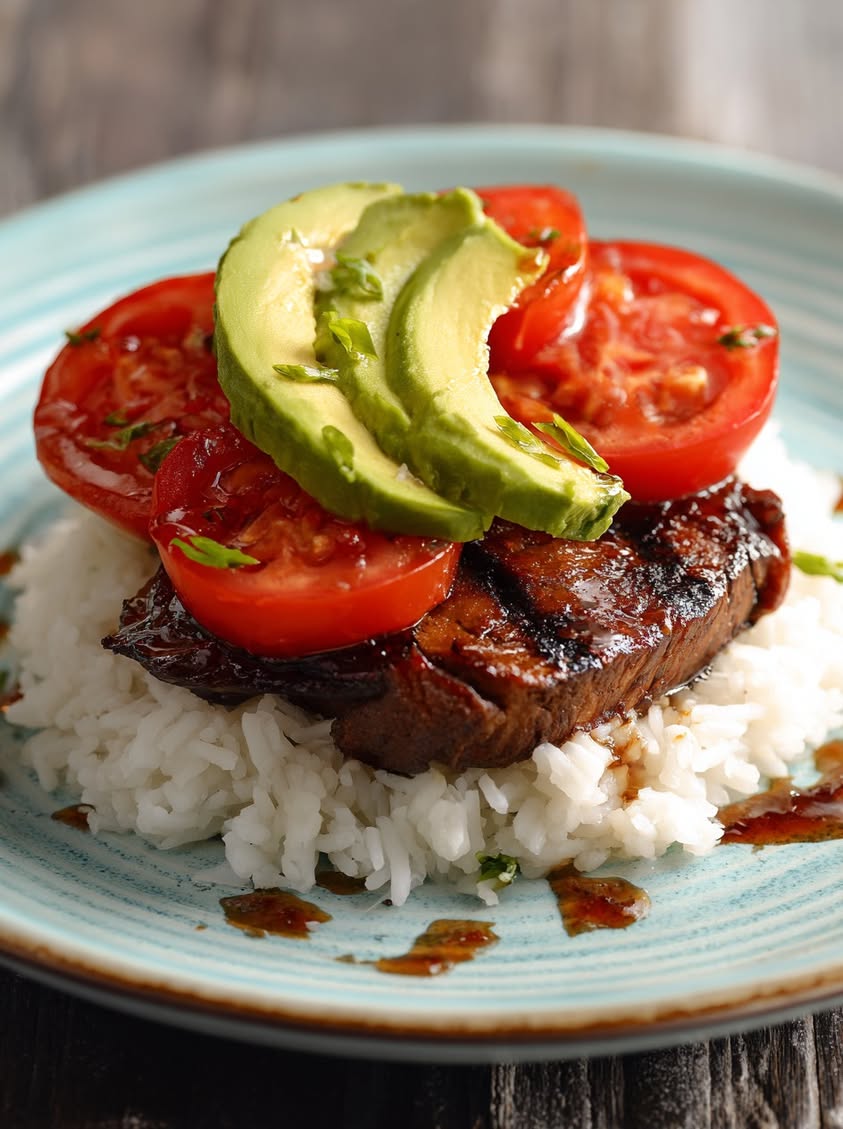
Char-Grilled Plant-Based Steak with Avocado and Tomato over Jasmine Rice: A Flavor-Packed Vegan Feast
Imagine a meal that delivers the smoky satisfaction of a backyard barbecue while being entirely plant-based and nourishing. This Char-Grilled Plant-Based Steak with Avocado and Tomato over Jasmine Rice is precisely that kind of culinary magic. It transforms simple, wholesome ingredients into a restaurant-worthy plate that will impress vegans and meat-eaters alike. The recipe centers on a savory plant-based steak, perfectly charred to develop a delicious crust, then topped with cool, creamy avocado and juicy fresh tomato. Finally, it all rests on a bed of fluffy, aromatic jasmine rice that soaks up every delicious flavor.
This dish is a celebration of contrasts and textures. You get the hearty, umami-rich bite of the grilled steak alternative, the luxurious creaminess of ripe avocado, and the bright, acidic pop of fresh tomato. Meanwhile, the jasmine rice provides a comforting, neutral base that ties everything together beautifully. Whether you are looking for a satisfying weeknight dinner or a stunning dish to serve guests, this Char-Grilled Plant-Based Steak with Avocado and Tomato over Jasmine Rice delivers on every level. It is proof that plant-based eating can be incredibly robust, flavorful, and deeply satisfying.
Quick Recipe Highlights
- Flavor Profile: This dish boasts a complex symphony of tastes. The char-grilled plant-based steak offers a deep, smoky umami flavor, often enhanced by marinades or seasonings. The creamy avocado adds a rich, buttery note that balances the acidity from the fresh tomato. Finally, the subtle floral fragrance of steamed jasmine rice provides a delicate backdrop that complements the bold toppings.
- Texture: Texture is key here. You experience a satisfying chew from the perfectly grilled plant-based steak, contrasted with the melt-in-your-mouth creaminess of the avocado. The tomato adds a juicy burst, and the individual grains of jasmine rice offer a light, fluffy mouthfeel that brings harmony to the entire bite.
- Aroma: As the plant-based steak sizzles on the grill, it releases enticing smoky, savory aromas. The steaming jasmine rice contributes a gentle, sweet floral scent. When plated, the fresh, green aroma of the avocado and the bright scent of tomato complete the olfactory experience, making the dish incredibly appetizing.
- Visual Appeal: This plate is a feast for the eyes. The dark, attractive grill marks on the steak contrast stunningly with the vibrant green of the avocado and the red of the tomato. The white bed of jasmine rice makes the colors pop, creating a restaurant-quality presentation that is as beautiful as it is delicious.
- Skill Level Needed: This is an accessible recipe for most home cooks. The primary skill involves managing the grill or grill pan to achieve a good char without burning. Other tasks, like cooking rice and slicing fresh produce, are straightforward. With a little attention to timing, anyone can master this impressive meal.
- Special Equipment: A grill, grill pan, or heavy cast-iron skillet is essential for achieving the characteristic charred marks and flavor. A rice cooker or saucepan with a tight-fitting lid is needed for perfect jasmine rice. A sharp knife for slicing the avocado and tomato is also recommended for clean, attractive cuts.
Recipe Overview
- Difficulty Level: We rate this recipe as easy because it involves fundamental cooking techniques without complex steps. The plant-based steak typically requires only seasoning and grilling. Cooking jasmine rice is a basic skill, and preparing the avocado and tomato involves simple slicing. The challenge, if any, lies in coordinating the components to finish at the same time, which is manageable with a little planning.
- Category: This dish fits perfectly into the main course category for lunch or dinner. It is a complete, balanced meal featuring protein from the plant-based steak, healthy fats from the avocado, carbohydrates from the rice, and vitamins from the fresh tomato. It is substantial enough to stand alone but could also be part of a larger spread.
- Cuisine: While the components are globally inspired, the overall assembly leans into a modern, California-style or health-conscious cuisine. It takes the American concept of a “steak dinner” and reimagines it through a plant-based, fresh, and vibrant lens. The use of avocado and tomato adds a touch of coastal or tropical influence, making it feel contemporary and fresh.
- Cost: This meal is moderately priced. The cost largely depends on the brand of plant-based steak you choose, as these can vary. Avocados, tomatoes, and jasmine rice are generally affordable, especially when in season. Overall, it is often more cost-effective than a meal centered on animal protein, especially when considering the high-quality ingredients.
- Season: This Char-Grilled Plant-Based Steak with Avocado and Tomato over Jasmine Rice is fantastic year-round but truly shines in late spring and summer. This is when tomatoes are at their peak sweetness and avocados are plentiful. Furthermore, the grilling element makes it ideal for warm weather cooking and dining al fresco.
- Occasion: It is versatile for many occasions. It is quick enough for a casual weeknight family dinner yet elegant enough for a weekend dinner party with friends. The beautiful presentation makes it suitable for a date night at home, and its plant-based nature makes it inclusive for gatherings with diverse dietary preferences.
Why You’ll Love This Recipe
First and foremost, the taste and texture experience is phenomenal. This Char-Grilled Plant-Based Steak with Avocado and Tomato over Jasmine Rice delivers a satisfying umami punch that rivals traditional meat dishes. The contrast between the hot, savory steak and the cool, creamy avocado is simply divine. Each forkful is a journey through smoky, rich, fresh, and fluffy textures that keep your palate engaged from start to finish. Ultimately, it is a deeply flavorful meal that proves plant-based food is anything but boring.
From a convenience standpoint, this recipe is a weeknight hero. With a total time of around 40 minutes, it comes together quickly for such an impressive result. Many components can be prepared simultaneously; you can steam the rice while the grill heats up and slice the fresh toppings while the plant-based steak cooks. Moreover, it uses minimal dishes, especially if you use a grill pan on the stovetop. This efficiency makes it easy to get a gourmet-quality dinner on the table without spending hours in the kitchen.
Nutritionally, this dish is a powerhouse. The plant-based steak provides a solid source of protein, often with added fiber and iron. Avocado contributes heart-healthy monounsaturated fats and potassium. Fresh tomato is rich in vitamin C, potassium, and the antioxidant lycopene. Jasmine rice offers easily digestible energy. Together, they create a balanced meal that supports sustained energy, muscle repair, and overall wellness, aligning perfectly with a health-conscious lifestyle.
For social and entertaining value, this recipe is a true gem. It is inherently inclusive, catering to vegan, vegetarian, and flexitarian guests without feeling like a “special” diet food. The dramatic presentation with bold grill marks and vibrant colors is sure to draw compliments. Serving this Char-Grilled Plant-Based Steak with Avocado and Tomato over Jasmine Rice shows thoughtfulness and culinary skill, making your guests feel special. It is a conversation starter that can pleasantly surprise those skeptical of plant-based cuisine.
Finally, it is cost-effective and accessible. While premium plant-based meats exist, many affordable and delicious options are now available in most grocery stores. The other ingredients—rice, avocado, tomato—are pantry and produce staples. This accessibility means you can enjoy a luxurious-tasting meal without a luxurious price tag. Furthermore, you control the sodium and seasoning levels, making it a healthier choice than many pre-made or restaurant meals.
Historical Background and Cultural Significance
The concept of a “steak dinner” is deeply rooted in Western, particularly American, culinary tradition, symbolizing celebration, prosperity, and hearty sustenance. This recipe cleverly deconstructs and reimagines that iconic meal for the modern, plant-forward era. The movement toward plant-based meat alternatives gained significant momentum in the late 2010s, driven by concerns over health, environment, and animal welfare. This Char-Grilled Plant-Based Steak with Avocado and Tomato over Jasmine Rice sits at the intersection of this innovation and the timeless desire for a satisfying, center-of-the-plate protein experience.
Culturally, the dish reflects a growing global fusion. Jasmine rice hails from Southeast Asia, avocado from Central America, and the tomato from the Americas, later becoming a staple in European and global cuisines. The “steak” itself is a product of global food science. Combining these elements on one plate represents a contemporary, borderless approach to eating where flavor and nutrition trump strict culinary tradition. It signifies a shift toward conscious consumption without sacrificing the rituals and comforts of familiar meals.
The evolution of this specific recipe parallels the rapid improvement of plant-based meat alternatives. Early versions might have used simpler options like portobello mushrooms or seitan. Today, with advanced products that mimic the texture and cooking behavior of beef, the recipe achieves a new level of authenticity and appeal. The addition of avocado and tomato is a natural progression, adding freshness and nutritional balance that complements the hearty base. This evolution mirrors the broader trend in plant-based cooking: moving from imitation to celebration, creating dishes that stand on their own merits.
Regional variations of this concept are endless. In a Mexican-inspired twist, one might add cilantro, lime, and black beans. An Asian-inspired version could feature a teriyaki glaze on the steak and a side of stir-fried vegetables. The Mediterranean variation might include a drizzle of tahini sauce and a side of Greek salad. This adaptability is a testament to the recipe’s solid foundation. The core formula—a hearty plant-based protein, a creamy element, a fresh acidic component, and a starch—provides a versatile template for culinary creativity across cultures.
Ingredient Deep Dive
Plant-Based Steak: Modern plant-based steaks are marvels of food technology, often made from a blend of soy, pea, wheat, or potato protein, with beet juice or other natural compounds providing a “bleeding” red color. Culturally, they represent a significant shift toward sustainable protein sources. Nutritionally, they are typically high in protein and iron while being free of cholesterol. When selecting, look for products with a short, recognizable ingredient list. For storage, keep them frozen until ready to use. Thaw in the refrigerator before cooking for best texture. If unavailable, a thick portobello mushroom cap, marinated tempeh, or extra-firm tofu pressed and sliced make excellent whole-food substitutions.
Avocado: Native to south-central Mexico, the avocado has been cultivated for thousands of years and is now a global superfood. It is culturally significant in cuisines from Mexico to California. Nutritionally, it is packed with monounsaturated fats (the “good” kind), fiber, potassium, and vitamins C, E, and K. Select an avocado that yields slightly to gentle pressure at the stem end. To speed ripening, place it in a paper bag with a banana. Store ripe avocados in the refrigerator to slow further ripening. To prevent browning, leave the pit in unused portions and squeeze lime or lemon juice on the exposed flesh. For a substitution, a thick, plain vegan yogurt or a white bean puree could provide creaminess, though the flavor will differ.
Fresh Tomato: Tomatoes originated in western South America and underwent a journey to Europe before becoming a kitchen staple worldwide. They are a cornerstone of Mediterranean, Italian, and many other cuisines. They are an excellent source of vitamin C, potassium, and the antioxidant lycopene, which is enhanced by cooking. Choose tomatoes that are heavy for their size, fragrant, and have vibrant, taut skin. Avoid refrigerating them, as cold temperatures degrade their texture and flavor. Store at room temperature out of direct sunlight. For a substitution, roasted red peppers or a fresh mango salsa could offer a different but complementary sweet and acidic note.
Jasmine Rice: This aromatic long-grain rice is named after the sweet-smelling jasmine flower and is primarily cultivated in Thailand. It is a staple in Southeast Asian cuisine, prized for its delicate fragrance and slightly sticky texture when cooked. It provides carbohydrates for energy and is naturally gluten-free. Rinse jasmine rice thoroughly in cold water until the water runs clear to remove excess starch and prevent gumminess. The standard water-to-rice ratio is 1.5:1. Store uncooked rice in an airtight container in a cool, dry place. Cooked rice should be refrigerated and consumed within a few days. Substitutions include basmati rice, quinoa, or cauliflower rice for a lower-carb option.
Common Mistakes to Avoid
- Not Preheating the Grill or Pan: A common error is placing the plant-based steak on a cool surface. Consequently, you will not get those beautiful, flavorful grill marks, and the steak may steam instead of sear. Always ensure your grill, grill pan, or skillet is screaming hot before adding the protein. This step is crucial for texture and flavor development.
- Overcooking the Plant-Based Steak: Many plant-based meat alternatives cook faster than animal meat and can become dry or tough if overcooked. Follow the package instructions carefully, and use a timer. Generally, you only need a few minutes per side to achieve a perfect sear and a warm, juicy interior.
- Forgetting to Rinse the Jasmine Rice: Skipping the rinse leads to excessively sticky or gummy rice because the surface starch remains. Always rinse jasmine rice under cold water until the water runs mostly clear. This simple step ensures your rice grains stay separate and fluffy, providing the ideal base for your toppings.
- Using Rock-Hard or Overly Mushy Avocado: Texture is key. An unripe avocado will be hard and flavorless, while an overripe one will be brown and mushy. Plan ahead and purchase avocados a few days before you need them. A perfectly ripe avocado yields slightly to gentle pressure and has a creamy, pale green interior.
- Slicing the Avocado Too Early: Avocado begins to oxidize and turn brown quickly after cutting. To maintain its vibrant green color, slice your avocado just before you are ready to assemble and serve the plates. A quick squeeze of lime or lemon juice over the slices can also help delay browning.
- Underseasoning the Components: Plant-based cooking often requires bold seasoning. Do not be shy with salt and pepper on the steak before grilling. Consider seasoning the avocado with a pinch of salt and pepper as well. Even the jasmine rice benefits from a pinch of salt in the cooking water or a light fluffing with a fork after cooking.
- Crowding the Grill Pan: If using a stovetop grill pan, avoid placing too many steak pieces at once. Overcrowding causes the pan’s temperature to drop dramatically, leading to steaming instead of searing. Cook in batches if necessary to ensure each piece gets direct, high heat for that perfect char.
- Letting the Cooked Steak Sit Without Resting: Just like animal meat, plant-based steaks benefit from a brief rest after cooking. Allow them to sit for 2-3 minutes on a cutting board before slicing. This allows the internal juices to redistribute, ensuring a moist and tender bite throughout.
Essential Techniques
Achieving the Perfect Char: This technique is vital for developing the deep, smoky flavor and appealing visual marks associated with grilling. First, ensure your cooking surface is preheated over medium-high to high heat for several minutes. Lightly oil the plant-based steak, not the pan, to prevent excessive smoke. Place the steak on the hot surface and do not move it for the recommended time, usually 3-4 minutes. This patience allows the Maillard reaction—a chemical process between amino acids and sugars—to occur, creating complex flavors and a crisp crust. The common pitfall is moving or flipping the steak too early, which tears the developing crust. Look for visible grill marks and easy release from the surface as your visual cue to flip.
Cooking Fluffy Jasmine Rice: Perfect rice is the foundation of the dish. The key technique is the absorption method with precise water ratios. After thoroughly rinsing the rice, combine it with cold water in a saucepan using a 1.5:1 water-to-rice ratio. Bring it to a boil, then immediately reduce the heat to the lowest possible setting and cover with a tight-fitting lid. Let it simmer undisturbed for 15-18 minutes. Do not lift the lid, as this releases essential steam. After cooking, remove it from the heat and let it sit, covered, for 5-10 minutes. Finally, fluff it gently with a fork. The mistake is peeking or stirring during cooking, which makes the rice gummy. Perfect rice is tender, separate, and aromatic.
Slicing Avocado for Presentation: How you slice the avocado impacts both aesthetics and eating experience. First, cut the avocado in half lengthwise around the pit. Twist to separate. Safely remove the pit by tapping it with the heel of your knife and twisting. To create even slices or cubes, make lengthwise and crosswise cuts into the flesh while still in the skin, being careful not to pierce the skin. Then, use a spoon to scoop out the neatly diced pieces. For fan-like slices, simply slice the avocado half while in the skin and fan it out with a spoon. The goal is clean, attractive pieces that add to the visual appeal of the final plate.
Pro Tips for Perfect Char-Grilled Plant-Based Steak
First, pat your plant-based steak completely dry with a paper towel before seasoning and grilling. Any surface moisture will create steam, hindering the formation of a good sear. Secondly, brush the steak lightly with a high-smoke-point oil like avocado or grapeseed oil instead of pouring oil into the pan. This method gives you control and minimizes smoke in your kitchen.
Let your plant-based steak come to room temperature for about 10 minutes before cooking if it was refrigerated. A cold center means the outside may char before the inside is warmed through. Meanwhile, do not press down on the steak with your spatula while it cooks. This squeezes out moisture and can make the texture dry.
Use a meat thermometer if you are unsure. Many plant-based steaks are ready when they reach an internal temperature of 165°F (74°C). After grilling, always let the steak rest on a cutting board for a few minutes. This allows the internal heat to distribute evenly, ensuring every bite is perfectly juicy.
Season generously. Plant-based proteins can handle and often need more seasoning than animal meat. Do not forget a pinch of salt and pepper on the avocado and tomato as well; it elevates their natural flavors. Finally, warm your serving plates. A hot plate keeps the entire meal at an ideal temperature for longer, especially since the fresh toppings are cool.
Variations and Adaptations
For regional variations, take this dish on a global tour. A Mexican-inspired version could feature a chipotle-lime marinade for the steak, a spoonful of pico de gallo, and a side of black beans mixed into the rice. An Asian fusion twist might use a teriyaki or hoisin glaze brushed on the steak during the last minute of cooking, with sliced scallions and sesame seeds as garnish. A Mediterranean bowl could replace the avocado with a dollop of lemon-tahini sauce and add kalamata olives and cucumber.
Seasonal adaptations keep the recipe exciting year-round. In summer, use heirloom tomatoes in a variety of colors and add fresh sweet corn. For fall, top the steak with a warm, spiced pumpkin seed pesto instead of plain avocado. In winter, consider serving the components over a bed of roasted root vegetables or creamy polenta instead of jasmine rice. Spring invites the addition of fresh peas or asparagus tips.
Dietary modifications are straightforward. For a gluten-free version, ensure your plant-based steak and any sauces used are certified gluten-free. To make it soy-free, select a plant-based steak made from pea protein or lentils. For a whole-food, plant-based (WFPB) approach, skip processed steak alternatives and use a thick, marinated slice of grilled eggplant or a large portobello mushroom cap as the centerpiece.
Flavor variations can come from your marinade or sauce. Marinate the steak in a mixture of soy sauce, maple syrup, garlic, and smoked paprika before grilling. Alternatively, after grilling, drizzle the steak with a bold sauce like chimichurri, vegan garlic aioli, or a spicy sriracha mayo. You can also mix finely chopped herbs like cilantro or parsley into the jasmine rice after cooking for an extra layer of flavor.
Serving and Presentation Guide
Plating is where this dish truly shines. Start with a shallow, wide bowl or a large dinner plate. Place a generous scoop of fluffy jasmine rice slightly off-center. Slice the rested plant-based steak against the grain into ½-inch thick strips and fan them over one portion of the rice. This showcases the beautiful interior and grill marks. Arrange the sliced avocado artfully next to the steak, either in a fan or neat piles.
For garnishing, fresh herbs are your best friend. A scattering of chopped cilantro, parsley, or thinly sliced green onion adds a pop of color and freshness. A final drizzle of high-quality extra virgin olive oil or a squeeze of lime juice over the entire plate adds gloss and brightness. You can also add a sprinkle of red pepper flakes for heat or toasted sesame seeds for crunch.
Consider traditional accompaniments like a simple side salad with a light vinaigrette to cut through the richness. Grilled vegetables such as zucchini, asparagus, or bell peppers make a perfect complement. For a more substantial meal, serve with a bowl of miso soup or a small cup of black bean soup on the side.
Temperature considerations are important. Serve the dish immediately after assembly. The contrast between the hot rice and steak and the cool avocado and tomato is intentional and delightful. If you must delay serving, keep the hot components warm in a low oven and add the fresh toppings at the very last second to prevent wilting or browning.
Wine and Beverage Pairing
Selecting the right wine can elevate this meal. A medium-bodied red wine with low tannins, such as a Pinot Noir or a Grenache, pairs beautifully. These wines have enough fruitiness to complement the smoky steak but are not so heavy that they overwhelm the fresh avocado and tomato. Alternatively, a rich, oaky Chardonnay can stand up to the creamy avocado and charred flavors, especially if the steak has a savory marinade.
For non-alcoholic alternatives, consider sophisticated options that mirror the complexity of wine. A tart cherry juice or pomegranate juice spritzer with a splash of soda water offers a fruity, acidic counterpoint. Iced hibiscus tea (agua de jamaica) provides a beautiful ruby color and tangy flavor that pairs wonderfully with the dish. A high-quality, non-alcoholic beer, particularly a lager or pale ale, can also mimic the refreshing quality of a traditional beer pairing.
If you prefer coffee or tea, opt for lighter roasts and brews that will not dominate the palate. A smooth, medium-roast coffee or a green tea with subtle grassy notes can be a pleasant finish to the meal. Serve these beverages after the main course rather than during, as their strong flavors might clash with the delicate balance of the dish itself.
Storage and Shelf Life
Store all components separately for best results. Place leftover grilled plant-based steak in an airtight container in the refrigerator for up to 3 days. Cooked jasmine rice should be cooled quickly, transferred to a container, and refrigerated within 2 hours of cooking; it will keep for 3-4 days. Always refrigerate leftovers promptly at or below 40°F (4°C) to prevent bacterial growth.
Avocado does not store well once sliced. If you must store it, leave the pit in, press plastic wrap directly onto the exposed surface to limit air contact, and refrigerate for no more than 24 hours. It will still brown slightly. Sliced tomato can be stored in the fridge for a day, but note that refrigeration can make it mealy.
Signs of spoilage include an off or sour smell, visible mold, or a slimy texture on any component. Discard rice if it becomes dry, hard, or develops an unusual odor. When reheating, gently warm the steak in a skillet over medium heat or in the microwave at reduced power to avoid toughness. Reheat rice with a sprinkle of water, covered, in the microwave or steamer to restore moisture. The fresh avocado and tomato are best added new when serving leftovers.
Make Ahead Strategies
You can significantly streamline dinner by prepping components ahead. The day before, cook your jasmine rice. Let it cool completely, then store it in an airtight container in the refrigerator. You can also make any marinades or sauces in advance. Slice tomatoes and store them in a container in the fridge, though they are best sliced the day of.
The plant-based steak itself is best cooked fresh. However, you can take it from the freezer to the refrigerator the night before to thaw. You can also measure out your seasonings and have your grilling tools ready. This “mise en place” approach turns active cooking time into a simple assembly of pre-planned steps.
When ready to serve, reheat the rice gently with a bit of water in a covered saucepan or the microwave. While the rice warms, grill your steak and slice your avocado. This staggered approach ensures everything comes together hot and fresh. The quality impact is minimal if the rice is properly stored and reheated, and the steak is always cooked fresh for optimal texture.
Scaling Instructions
Halving the recipe for one person is simple. Use half of each ingredient. Cooking times for the steak and rice will remain roughly the same, but keep a closer eye as smaller quantities can cook slightly faster. Use a smaller saucepan for the rice to maintain the proper water-to-rice ratio environment.
Doubling or tripling for a crowd requires some adjustments. You may need to cook the plant-based steak in batches to avoid overcrowding the grill or pan, which is crucial for getting a proper sear. Keep cooked batches warm on a baking sheet in a 200°F (95°C) oven. For the rice, it is better to cook multiple separate batches in different pots than to try one giant batch, which can cook unevenly. A large rice cooker is excellent for scaling rice perfectly.
Consider your equipment. Ensure you have a large enough grill surface or multiple pans if cooking for many. Have plenty of serving platters ready. Timing modifications are key; start the rice first as it holds well, then focus on batch-cooking the steak. Finally, remember that scaling up fresh ingredients like avocado and tomato is easy—just have more on hand for last-minute slicing and assembly.
Nutritional Deep Dive
This meal offers a balanced macronutrient profile. The plant-based steak provides a significant amount of protein, essential for muscle repair and satiety. Avocado contributes healthy monounsaturated fats, which support heart health and help absorb fat-soluble vitamins from the tomato. Jasmine rice is a source of complex carbohydrates, offering sustained energy. Together, they create a meal that is satisfying without being overly heavy.
Micronutrient analysis reveals a wealth of vitamins and minerals. Avocado is rich in potassium (even more than a banana), vitamin K, and folate. Tomatoes provide vitamin C, vitamin K, potassium, and the antioxidant lycopene. Many plant-based steaks are fortified with iron and vitamin B12, nutrients that can be challenging to obtain on a vegan diet. Jasmine rice provides small amounts of B vitamins and magnesium.
From a health perspective, this dish supports weight management through its balance of protein, fiber, and healthy fats, which promote fullness. The ingredients are anti-inflammatory and support cardiovascular health. For those monitoring sodium, you can control the amount by seasoning yourself rather than using pre-marinated products. Portion control is intuitive; one steak, half an avocado, a medium tomato, and a cup of cooked rice per person is a well-proportioned meal.
Dietary Adaptations
Gluten-Free: This adaptation is simple. First, verify that your chosen plant-based steak is certified gluten-free, as some use wheat gluten as a binder. All other core ingredients—avocado, tomato, jasmine rice—are naturally gluten-free. Double-check any sauces or seasonings you add for hidden gluten ingredients like soy sauce (use tamari instead).
Dairy-Free & Vegan: The recipe as written is inherently dairy-free and vegan, assuming the plant-based steak contains no animal-derived ingredients like dairy-based binders or egg. Always check the product label to confirm it is vegan-certified. This makes it an excellent choice for those avoiding animal products for health, ethical, or environmental reasons.
Low-Carb & Keto: Replace the jasmine rice with a base of cauliflower rice. Sauté it in a pan until tender to mimic the texture. Ensure your plant-based steak is low in net carbs (check the label, as some contain fillers). The avocado and tomato are keto-friendly in moderation. Focus on the steak and avocado as the primary components of the meal.
Low-FODMAP: For those sensitive to FODMAPs, use a green-tipped (firm) banana instead of avocado, as ripe avocado is high in polyols. Limit the tomato to one or two slices, as larger amounts can be problematic. Ensure the plant-based steak does not contain onion or garlic powder; season with garlic-infused oil (where the fructans are removed) and other safe herbs like chives.
Troubleshooting Guide
Steak is Dry or Tough: This usually means it was overcooked. Plant-based meats have a narrower window of doneness. Next time, reduce the cooking time by a minute per side. You can also try brushing it with a little oil after cooking or serving it with an extra sauce or drizzle to add moisture back. Ensure you are not pressing it during cooking.
Rice is Mushy or Gummy: The culprit is likely too much water or not rinsing the rice before cooking. For your next batch, rinse the rice thoroughly until the water runs clear. Precisely measure the water using the 1.5:1 ratio. Also, avoid lifting the lid during the simmering process, as this releases steam critical for proper cooking.
Lack of Flavor: Underseasoning is a common issue in plant-based cooking. Remember to season every component. Salt and pepper the steak before grilling. Add a pinch of salt to the avocado and tomato. Consider cooking the rice with a vegetable bouillon cube or a pinch of salt in the water. A finishing sauce or fresh herb garnish can also add a major flavor boost.
Avocado Browned Before Serving: To prevent this, cut and add the avocado at the very last second. If you must prep it slightly ahead, keep the pit in the unused half, squeeze lime or lemon juice over the exposed flesh, and press plastic wrap directly onto the surface before refrigerating. The acid acts as an antioxidant, slowing the browning process.
Recipe Success Stories
Community feedback on this recipe has been overwhelmingly positive. Many home cooks report that it has become a “gateway” meal for family members skeptical of plant-based eating. One reader shared that her husband, a dedicated meat-lover, requested it twice in one week, amazed by the satisfying texture and flavor. Another common success story involves using the recipe as a template, with cooks substituting their favorite store-bought or homemade plant-based patties with great results.
Adaptation stories highlight the recipe’s versatility. A reader following a low-carb diet successfully used cauliflower rice and added extra avocado. Another, cooking for a gluten-free guest, found a perfect certified gluten-free plant-based steak and reported the meal was a hit. Several have made it for potlucks, doubling the recipe and receiving numerous requests for the recipe, proving its crowd-pleasing potential.
Photography tips from successful makers emphasize natural light. They suggest plating the dish on a neutral-colored plate to make the colors of the avocado, tomato, and grill marks pop. A top-down or slight angle shot captures all the components beautifully. Many note that a quick drizzle of olive oil or a sprinkle of herbs right before the photo adds a professional, finished look that makes the dish irresistible.
Frequently Asked Questions
Q: Can I use a different type of rice?
A: Absolutely. Basmati rice works wonderfully and has a similar fragrant quality. For a whole grain option, brown jasmine rice or quinoa are excellent, nutrient-dense choices, though they will require longer cooking times. Even cauliflower rice is a great low-carb alternative.
Q: My plant-based steak is sticking to the grill pan. What did I do wrong?
A: Sticking usually means the pan was not hot enough or the steak was moved too soon. Ensure your pan is fully preheated over medium-high heat for several minutes. Also, make sure the steak surface is dry and lightly oiled. Let it cook undisturbed until it naturally releases from the surface.
Q: How can I tell if an avocado is ripe?
A: Gently press the stem end (where it was attached to the tree). If it yields slightly to gentle pressure, it is ripe. If it feels mushy, it is overripe. If it is rock hard, it needs a few days at room temperature to ripen. You can also remove the small stem nub; if it’s green underneath, it’s good.
Q: Can I make this recipe oil-free?
A: Yes. For the steak, use a high-quality non-stick grill pan or grill mat and cook it without added oil. The avocado provides plenty of healthy fat in the final dish. You may need to be extra vigilant to prevent sticking and ensure your pan is perfectly preheated.
Q: What’s the best way to reheat leftovers?
A: Reheat the steak and rice separately. Gently warm the{“success”:true,”message”:”Recipe created successfully”,”post_id”:8459,”tasty_recipe_id”:8459,”shortcode”:” Print
Char-Grilled Plant-Based Steak with Creamy Avocado, Fresh Tomato, and Steamed Jasmine Rice
Description
A vibrant and satisfying plant-based meal featuring a savory char-grilled steak alternative, topped with creamy avocado and fresh tomato, served over fluffy steamed jasmine rice.
Ingredients
For the Crust:
- 2 plant-based steak patties or strips (e.g., seitan or soy-based)
- 1 cup jasmine rice
- 2 cups water
- 1 ripe avocado, sliced
- 1 large tomato, diced
- 2 tbsp olive oil
- 1 tsp smoked paprika
- 1/2 tsp garlic powder
- Salt and black pepper to taste
- Fresh cilantro or parsley for garnish
Instructions
1. Prepare the Crust:
- Rinse the jasmine rice under cold water. In a saucepan, combine rice and water, bring to a boil, then reduce heat to low, cover, and simmer for 15-18 minutes until tender. Fluff with a fork and set aside.
- Preheat a grill or grill pan over medium-high heat. Brush the plant-based steaks with olive oil and season with smoked paprika, garlic powder, salt, and black pepper.
- Grill the steaks for 4-5 minutes per side until charred and heated through. Remove from heat and let rest for 2 minutes.
- While the steaks cook, slice the avocado and dice the tomato. Arrange the steamed rice on plates, top with the grilled steak, and garnish with avocado, tomato, and fresh herbs.
Notes
You can customize the seasonings to taste.

I’m Billy, a classically trained culinary school graduate from The Culinary Institute of America with over 12 years in the restaurant industry and over 19 years of cooking experience.