
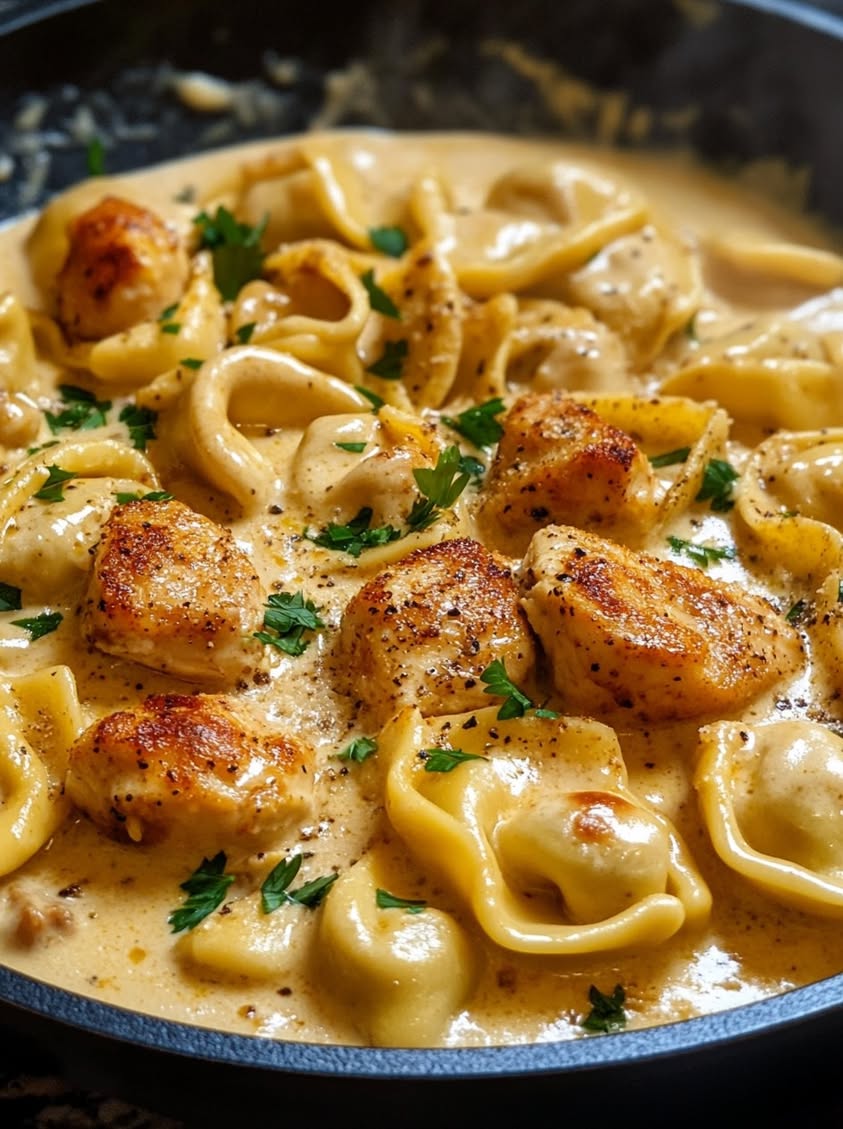
Velvety Cajun-Spiced Chicken Tortellini in Parmesan Cream Sauce: A Restaurant-Quality Dinner in 30 Minutes
Imagine a dish that delivers the cozy comfort of a creamy pasta with the bold, exciting kick of Cajun seasoning. This Velvety Cajun-Spiced Chicken Tortellini in Parmesan Cream Sauce does exactly that. Furthermore, it transforms simple ingredients into a spectacular meal that feels gourmet without requiring hours in the kitchen. The tender cheese-filled tortellini and juicy chicken mingle in a luxuriously smooth sauce, creating a perfect bite every single time.
This recipe is a true weeknight hero. It comes together in about thirty minutes, making it ideal for busy evenings when you crave something special. The process is straightforward, involving searing flavorful chicken, building a simple cream sauce, and tossing it all together. Consequently, you get a vibrant, restaurant-worthy plate of food with minimal effort and maximum flavor payoff. The aroma alone, a blend of garlic, herbs, and warm spices, will have everyone gathered in the kitchen.
Ultimately, this Creamy Cajun Chicken Tortellini with Parmesan Garlic Sauce strikes a beautiful balance. It is rich and indulgent yet brightly seasoned and utterly satisfying. Each component plays a role: the tortellini provides pockets of melty cheese, the chicken adds hearty protein, and the sauce brings everything together in a velvety embrace. It is a crowd-pleasing dish guaranteed to become a regular in your dinner rotation.
Quick Recipe Highlights
- Flavor Profile: This dish features a masterful blend of bold, smoky Cajun spices balanced by the rich, savory depth of Parmesan cheese and sweet cream. The garlic and onion provide an aromatic base, while the black pepper adds a subtle heat that lingers pleasantly.
- Texture: You will experience a delightful contrast between the al dente, cheese-filled tortellini and the tender, juicy bites of chicken. Meanwhile, the sauce itself is luxuriously smooth and velvety, coating every element perfectly without being overly thick or heavy.
- Aroma: As it cooks, the kitchen fills with the irresistible scent of toasting spices, sizzling garlic, and simmering cream. This aromatic promise is a key part of the experience, building anticipation for the delicious meal to come.
- Visual Appeal: The final plate is a feast for the eyes with vibrant colors from the paprika-based Cajun seasoning on the golden chicken, the pale cream sauce, and the fresh green garnish. It looks as impressive as it tastes.
- Skill Level Needed: This is an accessible recipe for cooks of most levels. It requires basic skills like searing meat and making a simple pan sauce. Therefore, even beginners can achieve fantastic results by following the clear steps.
- Special Equipment: You only need standard kitchen tools: a large skillet or sauté pan, a pot for boiling tortellini, basic utensils, and a measuring set. No fancy equipment is required to make this Creamy Cajun Chicken Tortellini with Parmesan Garlic Sauce.
Recipe Overview
- Difficulty Level: We rate this recipe as “Easy” because it uses common techniques like pan-searing and sauce reduction. The steps are sequential and logical, and there is no advanced knife work or complex timing. With careful attention to not overcooking the chicken or sauce, success is nearly guaranteed.
- Category: This dish fits perfectly as a main course for dinner. It is substantial enough to stand alone but also pairs beautifully with a simple side salad or garlic bread. Additionally, it works well for casual weekend lunches or meal prep.
- Cuisine: This is a fantastic fusion dish that marries the hearty, cheese-filled pasta tradition of Italian cuisine with the bold, spice-forward profile of Southern Cajun cooking. The result is a uniquely American comfort food creation that is both familiar and exciting.
- Cost: This is a moderately priced meal that delivers high perceived value. Using store-bought tortellini saves time, and chicken breast is an affordable protein. The cream, cheese, and spices are pantry staples for many, making the overall cost per serving very reasonable for a restaurant-quality dish.
- Season: This Creamy Cajun Chicken Tortellini with Parmesan Garlic Sauce is truly a year-round favorite. It provides warmth and comfort in the colder months, yet the bright spices feel lively and appropriate for spring and summer evenings, especially when served with a crisp salad.
- Occasion: It is ideal for busy weeknight family dinners, casual date nights at home, or even for feeding a small group of friends. The recipe scales easily, and the impressive presentation makes it feel special without requiring holiday-level effort.
Why You’ll Love This Recipe
First and foremost, the taste and texture are utterly irresistible. Each forkful delivers a symphony of flavors: the initial hit of creamy, cheesy Parmesan, followed by the warm, complex layers of Cajun spice. The plump tortellini bursts with more cheese, and the seared chicken adds a savory, meaty counterpoint. This combination is deeply satisfying and keeps you coming back for another bite. The sauce is the true star, clinging to every nook and cranny of the pasta and chicken for maximum flavor in every single mouthful.
From a practical standpoint, the convenience is a major win. This entire Creamy Cajun Chicken Tortellini with Parmesan Garlic Sauce comes together in one pan for the sauce and chicken, plus one pot for the pasta. That means minimal cleanup, which is a huge benefit on any night of the week. Moreover, the active cooking time is short, and the process is mostly hands-off simmering. You can easily multitask, perhaps preparing a side salad or setting the table, while the sauce reduces to velvety perfection.
Nutritionally, this dish offers a good balance of macronutrients. The chicken breast provides lean protein to help keep you full, while the tortellini and sauce contribute carbohydrates and fats for energy. You can control the sodium by using a low-sodium broth or adjusting the Cajun seasoning. For a healthier twist, consider using whole-wheat or protein-packed tortellini and substituting half the heavy cream with whole milk, though the sauce will be slightly less rich.
This recipe also holds tremendous social and entertaining value. It is visually impressive and feels indulgent, making guests feel truly cared for. Because the components are simple, you can focus on your company instead of being stuck with complicated last-minute tasks. You can even do much of the prep ahead of time. Serving this Creamy Cajun Chicken Tortellini with Parmesan Garlic Sauce at a casual gathering almost guarantees compliments and recipe requests.
Finally, it is cost-effective and accessible. You likely have many of the spices and dry goods already in your pantry. Chicken breast, tortellini, cream, and Parmesan are readily available at any grocery store without a specialty trip. Compared to ordering similar pasta dishes at a restaurant, making this at home saves a significant amount of money while allowing you to control the quality of every single ingredient.
Historical Background and Cultural Significance
The story of this dish is a modern tale of culinary fusion. Tortellini, of course, hails from the Emilia-Romagna region of Italy, with legends dating its stuffed pasta shape back centuries. Traditionally served in broth (in brodo) or with a simple sauce, it is a hallmark of Italian comfort food. Cajun seasoning, conversely, finds its roots in the Acadian diaspora in Louisiana. It is a rustic, practical blend of spices that were readily available—paprika, garlic powder, onion powder, oregano, thyme, and cayenne—used to add big flavor to proteins and stews.
Combining these two distinct traditions speaks to the evolving nature of American home cooking. As global ingredients became commonplace in supermarkets, home cooks began experimenting, blending techniques and flavors from different cultures to create new family favorites. This Creamy Cajun Chicken Tortellini with Parmesan Garlic Sauce is a product of that experimentation. It takes the Italian-American love for rich, creamy pasta sauces and marries it with the bold, assertive flavors that have made Cajun cuisine famous nationwide.
The evolution of the recipe follows the trend of “elevated weeknight dinners.” With the rise of food media and cooking shows, home cooks seek restaurant-quality results on a busy schedule. Using pre-made cheese tortellini is a huge time-saver that doesn’t sacrifice the feeling of a special meal. The technique of building a pan sauce from the fond (the browned bits left after searing chicken) is a classic French method, showing how this recipe is a true melting pot of culinary techniques designed for efficiency and flavor.
Regional variations of this concept are endless. In the South, you might find it made with andouille sausage instead of chicken. In coastal areas, shrimp is a popular and delicious substitute. Some versions incorporate the “holy trinity” of Cajun cooking (onion, celery, bell pepper) sautéed into the sauce base. Others might use a lighter Alfredo-style sauce or add sun-dried tomatoes for a sweet contrast. This adaptability is a testament to the solid foundation of the recipe—it invites personalization based on local tastes and available ingredients.
Ingredient Deep Dive
Boneless, Skinless Chicken Breast: This lean protein is the perfect canvas for the bold Cajun seasoning. Its mild flavor allows the spices to shine, and it cooks quickly, aligning with the recipe’s 30-minute timeline. For the juiciest results, pound the breasts to an even thickness before cooking; this ensures they sear evenly without drying out. You can also substitute chicken thighs for a richer, more forgiving cut. Always pat the chicken dry thoroughly before seasoning to promote a beautiful, flavorful crust instead of steaming.
Cheese Tortellini: These little rings of pasta dough stuffed with cheese (typically ricotta, Parmesan, and mozzarella) are a convenience powerhouse. They cook in just a few minutes and add pockets of creamy, melted cheese to the dish. You can find them fresh in the refrigerated section or dried in the pasta aisle. For the best texture, cook them al dente as they will continue to soften slightly in the warm sauce. Feel free to experiment with different fillings like spinach and cheese or mushroom.
Heavy Cream: This is the foundation of the luxurious, velvety sauce. Its high fat content prevents curdling when heated and allows it to reduce into a thick, coating consistency. For a slightly lighter version, you can use half-and-half, but the sauce will be thinner and less rich. Do not substitute with milk, as it is likely to separate. The cream mellows the sharpness of the Parmesan and carries the flavors of the garlic and spices beautifully throughout the dish.
Freshly Grated Parmesan Cheese: This ingredient is non-negotiable for the best flavor and texture. Pre-grated cheese contains anti-caking agents that can make your sauce grainy and prevent it from melting smoothly. Grating a block of Parmigiano-Reggiano or a good-quality Parmesan yourself ensures it incorporates seamlessly into the hot cream, creating a smooth, deeply savory sauce. The nutty, salty flavor of real Parmesan is irreplaceable in this Creamy Cajun Chicken Tortellini with Parmesan Garlic Sauce.
Cajun Seasoning: This spice blend is the soul of the dish. A good blend includes paprika (for color and sweetness), garlic powder, onion powder, oregano, thyme, black pepper, and cayenne (for heat). You can use a store-bought mix or make your own to control the salt and heat level. Toasting the seasoning on the chicken unlocks its full aromatic potential. Always taste your blend first; if it is very salty, adjust how much additional salt you add to the recipe.
Common Mistakes to Avoid
- Using Pre-Grated Parmesan Cheese: This is the most common pitfall. The cellulose in pre-grated cheese prevents it from melting smoothly, leading to a gritty, clumpy sauce instead of a velvety one. Always take the extra minute to grate your cheese from a block.
- Overcooking the Chicken: Chicken breast cooks quickly and can become dry and tough if left in the pan too long. Use a meat thermometer and remove it from the pan at 160°F; it will carry over to 165°F as it rests. Slicing it against the grain after resting also ensures tenderness.
- Adding Cheese to a Boiling Sauce: If the cream sauce is at a rolling boil when you add the Parmesan, the high heat can cause the fats and proteins to separate, creating a greasy, broken sauce. Always remove the pan from the heat or turn it to very low before stirring in the cheese.
- Underseasoning the Sauce: Cream-based sauces need ample seasoning to avoid tasting bland. Remember to season in layers: salt the chicken, season the sauce base, and always do a final taste and adjust before serving. The pasta water will also add salt.
- Neglecting the Pasta Water: That starchy, salty water is liquid gold for finishing pasta sauces. It helps the sauce cling to the tortellini and adjusts consistency perfectly. Always reserve at least half a cup before draining your pasta.
- Crowding the Pan When Searing Chicken: If you add too many chicken pieces at once, they will steam instead of sear. You will miss out on the flavorful brown crust (fond) that forms the base of your sauce. Cook in batches if necessary to ensure proper browning.
- Using a Bland Cajun Seasoning: Not all store-bought blends are created equal. Some are mostly salt with little spice flavor. Taste your seasoning beforehand. If it lacks depth, boost it with extra smoked paprika, garlic powder, or a pinch of cayenne.
- Overcooking the Tortellini: Follow the package directions for al dente cook time, and remember they will cook a bit more when tossed in the hot sauce. Mushy tortellini can ruin the texture of the entire dish.
Essential Techniques
Pan Searing for Flavorful Fond: Searing the Cajun-spiced chicken over medium-high heat is not just about cooking the protein; it is about building flavor for the entire sauce. The Maillard reaction creates a dark, crispy crust on the chicken and leaves behind browned bits (fond) stuck to the pan. This fond is packed with savory, concentrated flavor. When you deglaze the pan with broth and cream, you dissolve those bits into the liquid, creating a sauce with incredible depth that you simply cannot achieve otherwise.
Building a Cream Pan Sauce: This technique transforms simple pan drippings into a luxurious sauce. After removing the chicken, you sauté garlic in the residual fat to perfume the oil. Then, you add the broth and cream, using a wooden spoon to scrape up all the fond. Simmering the mixture allows it to reduce and thicken slightly, concentrating the flavors. The key is gentle heat to prevent the cream from separating. Finally, you finish it by stirring in Parmesan off the heat for a smooth, velvety texture.
Finishing Pasta in the Sauce: This is the professional chef’s secret for perfectly sauced pasta. Instead of just pouring sauce over drained pasta in a bowl, you combine the cooked tortellini directly in the skillet with the simmering sauce. You also add a splash of the reserved starchy pasta water. The starch acts as an emulsifier, helping the sauce cling to every curve of the tortellini. As you toss everything together over low heat for a minute, the pasta absorbs the sauce’s flavor, resulting in a cohesive, restaurant-quality dish.
Pro Tips for Perfect Velvety Cajun-Spiced Chicken Tortellini
First, for the juiciest chicken, brine the breasts in a simple saltwater solution for 30 minutes before cooking. This helps them retain moisture during the high-heat sear. If you are short on time, at least pat them extremely dry with paper towels before applying the Cajun rub.
Second, make your own Cajun seasoning blend. Combine two parts paprika with one part each of garlic powder, onion powder, dried oregano, and dried thyme. Add black pepper and cayenne to your preferred heat level. This guarantees a fresh, vibrant spice flavor without anti-caking agents.
Third, do not skip resting the chicken. After searing, let it rest on a cutting board for at least 5 minutes before slicing. This allows the juices to redistribute throughout the meat, ensuring every slice is moist and tender, not dry.
Fourth, grate your Parmesan cheese finely. A microplane is the ideal tool for this, as it creates a light, fluffy pile of cheese that will melt instantly and seamlessly into the warm cream sauce without any grainy texture.
Fifth, undercook your tortellini by about one minute according to the package directions. They will finish cooking when you toss them in the hot sauce, preventing them from becoming mushy and overdone in the final dish.
Sixth, if your sauce seems too thick after adding the cheese, thin it out with more reserved pasta water, one tablespoon at a time. Conversely, if it is too thin, let it simmer for another minute or two to reduce further before adding the pasta.
Seventh, for an extra flavor boost, add a teaspoon of lemon zest or a squeeze of fresh lemon juice to the finished sauce. The bright acidity cuts through the richness and makes all the other flavors pop even more.
Eighth, garnish thoughtfully. Fresh chopped parsley adds color and a herbal note. For a bit of texture and a nutty flavor, a sprinkle of toasted pine nuts or breadcrumbs on top is a fantastic addition.
Variations and Adaptations
Regional Variations: For a true Louisiana twist, substitute the chicken breast with sliced andouille sausage. Its smoky, spicy flavor integrates perfectly. In coastal areas, peeled and deveined large shrimp are a classic swap; add them in the last few minutes of cooking until just pink and opaque. You could also incorporate the “holy trinity” by sautéing a diced bell pepper, onion, and celery stalk with the garlic.
Seasonal Adaptations: In spring, add a handful of fresh peas or asparagus tips to the sauce during the last two minutes of cooking. For summer, stir in halved cherry tomatoes and fresh basil off the heat. In autumn, roasted butternut squash cubes or sautéed mushrooms add wonderful earthy depth. Winter calls for heartier greens like chopped kale or spinach wilted into the sauce.
Dietary Modifications: For a gluten-free version, use certified gluten-free cheese tortellini. To make it dairy-free, use a rich, unsweetened plant-based cream (like cashew or oat cream) and a vegan Parmesan alternative. Be aware that the sauce may not thicken identically. For a lower-carb option, serve the chicken and sauce over zucchini noodles or spaghetti squash instead of tortellini.
Flavor Variations: Add a tablespoon of tomato paste when cooking the garlic for a rosé-style sauce. For a smoky note, use smoked paprika in your Cajun blend. Sun-dried tomatoes (oil-packed and chopped) introduce a sweet-tart contrast. A splash of dry white wine deglazed before adding the cream adds wonderful complexity.
Texture Modifications: For a chunkier sauce, add sautéed sliced mushrooms or artichoke hearts. To make it extra luxurious, stir in a tablespoon of cold butter at the very end, off the heat, for an even glossier finish. For a lighter texture, use half heavy cream and half whole milk, though the sauce will be thinner.
Presentation Alternatives: Serve the dish family-style in a large, shallow bowl for a rustic feel. For individual plating, use a pair of tongs to create a nest of tortellini, arrange the sliced chicken on top, and spoon the sauce over everything. Garnish with a fresh herb sprig for a professional touch.
Serving and Presentation Guide
Plating this dish beautifully enhances the dining experience. For individual servings, use a warm, shallow pasta bowl. First, create a bed of the saucy tortellini using tongs or a large fork. Then, artfully fan the sliced Cajun chicken over the top. Finally, spoon a little extra sauce over the chicken and around the plate. This layered approach ensures every component is visible and appetizing.
Garnishing is the final, crucial step. A generous sprinkle of freshly chopped flat-leaf parsley or thinly sliced green onions adds a vital pop of green color and fresh flavor. For texture and a nutty note, a light dusting of extra grated Parmesan or a few toasted pine nuts works wonderfully. A final crack of black pepper over the top signals care and attention to detail.
Traditional accompaniments are simple to let the main dish shine. A crisp, green salad with a sharp vinaigrette cuts through the richness perfectly. Warm, crusty garlic bread or a soft baguette is essential for sopping up every last drop of the delicious Creamy Cajun Chicken Tortellini with Parmesan Garlic Sauce. For a vegetable side, roasted broccoli or green beans provide a healthy, flavorful balance.
Modern serving suggestions might include serving it in a skillet at the table for a rustic, family-style meal. You could also offer small bowls of extra Cajun seasoning, red pepper flakes, or grated Parmesan for guests to customize their plate. For a lighter meal, the dish can stand alone, especially if you have added vegetables like spinach directly to the sauce.
Temperature is key. Serve the dish immediately after assembling while the sauce is still hot and fluid and the tortellini are perfectly tender. Warm your serving bowls beforehand by rinsing them with hot water and drying them; this prevents the sauce from cooling and congealing too quickly on the plate.
Portion control is easy with this hearty dish. One recipe serves four average appetites generously. If serving with multiple substantial sides, you might find it stretches to five or six. For larger appetites or if this is the only course, the four-serving yield is accurate. Remember, it is rich, so a little goes a long way in terms of satisfaction.
Wine and Beverage Pairing
Wine pairings for this dish should balance richness and spice. An off-dry white wine like a German Riesling or a Gewürztraminer is excellent; their slight sweetness and floral notes complement the Cajun spices and cool the palate. A full-bodied Chardonnay with a bit of oak can also stand up to the creamy sauce. For red wine lovers, choose a low-tannin, fruity option like a Zinfandel or a Beaujolais. The jammy fruit flavors pair nicely with the smoky paprika, and the low tannins won’t clash with the cream.
Non-alcoholic alternatives are just as important. Sparkling water with a wedge of lemon or lime cleanses the palate between bites. For a more crafted option, an herbal iced tea (like mint or hibiscus) provides a refreshing contrast. A lemonade, perhaps with a hint of ginger, offers sweetness and acidity that cuts through the dish’s richness beautifully.
While not a traditional coffee dish, a post-meal espresso can be a lovely finish. The strong, bitter coffee contrasts with the lingering creamy, spicy notes. A cup of herbal peppermint tea is also a classic digestif that feels light and cleansing after a rich meal like this Creamy Cajun Chicken Tortellini.
Temperature considerations are straightforward: white wines should be chilled but not ice-cold, around 45-50°F, to allow their flavors to emerge. Red wines should be served slightly cool, at about 55-60°F. Non-alcoholic beverages are best served very cold to provide a refreshing counterpoint to the warm, spicy pasta.
Serving suggestions include offering both a white and a red wine option if you are entertaining, as preferences vary. Always pour water for everyone. If serving iced tea or lemonade, consider a pitcher on the table so guests can help themselves. The goal is to have a beverage that enhances the meal without overpowering its complex flavors.
Storage and Shelf Life
Proper storage is essential for maintaining quality. Allow any leftovers to cool completely before transferring them to an airtight container. Store the Creamy Cajun Chicken Tortellini with Parmesan Garlic Sauce in the refrigerator; it will keep for up to 3 days. Note that the tortellini will continue to absorb the sauce over time, so it may become drier. The sauce may also thicken significantly when cold.
Reheating requires care to prevent the sauce from breaking or the chicken from becoming rubbery. The best method is on the stovetop over low heat. Add a small splash of milk, cream, or broth to the skillet to help loosen the sauce as it warms. Stir gently and frequently until just heated through. You can also use a microwave at 50% power, stirring every 30 seconds, but the stovetop yields superior results.
Freezing is possible but not ideal for the best texture. Cream-based sauces can sometimes separate or become grainy upon thawing. The tortellini may also become mushy. If you must freeze, do so in a single layer in a sealed container for up to one month. Thaw overnight in the refrigerator before reheating very gently on the stovetop, adding fresh liquid to reconstitute the sauce.
Signs of spoilage include an off or sour smell, visible mold, or a significant change in texture. If the sauce has separated irreparably or the chicken has a slimy film, it is best to discard the leftovers. Always use your best judgment and when in doubt, throw it out.
Make Ahead Strategies
You can efficiently break this recipe into stages for a stress-free dinner. The day before, prepare the chicken: slice the breasts, coat them in the Cajun seasoning, and store them covered in the refrigerator. You can also grate the Parmesan cheese and measure out all your dry ingredients. This “mise en place” approach cuts your active prep time down to just minutes when you are ready to cook.
For same-day prep, you can cook the chicken earlier and make the sauce base. Sear the chicken and let it rest, then slice it. Prepare the sauce up to the point before adding the Parmesan cheese and tortellini. Store the sliced chicken and the unfinished sauce separately in the fridge. When ready to serve, gently reheat the sauce, finish it with cheese, cook the tortellini fresh, and combine everything. This ensures the pasta has the perfect texture.
Understand that some quality is impacted by make-ahead steps. Pre-cooked chicken reheated in the sauce can become slightly drier, though the creamy sauce helps mitigate this. A fully assembled and reheated dish will have much softer tortellini. For the absolute best results, we recommend prepping components but doing the final assembly—cooking the pasta and combining it with the finished sauce and chicken—just before serving.
If you must fully assemble ahead, undercook the tortellini by two minutes. Combine everything, let it cool, and refrigerate. To reheat, add it to a skillet with a few tablespoons of broth or cream over low heat, covered, stirring gently until hot. The pasta will finish cooking in the liquid. The texture will be softer but still enjoyable.
Scaling Instructions
Halving the recipe for two people is straightforward. Simply divide all ingredient quantities by two. Use a medium skillet instead of a large one. The cook times will remain roughly the same, though the sauce may reduce a bit faster due to the smaller volume, so watch it closely. This is a perfect option for a cozy date night dinner.
Doubling or tripling for a crowd requires some adjustments. Use the largest skillet or Dutch oven you have, or cook the chicken in batches to avoid steaming. You may need to increase the sauce reduction time slightly. When boiling the tortellini, do so in batches to prevent overcrowding the pot, which leads to uneven cooking. Consider keeping the sauce, chicken, and cooked pasta separate until just before serving to prevent the pasta from absorbing all the sauce and becoming mushy.
Equipment adjustments are key for scaling up. A wide, heavy-bottomed pot is better than a deep pot for reducing the sauce efficiently when doubling. Ensure you have a colander large enough to drain a big batch of tortellini. For very large groups, it may be easier to prepare the components in separate pots and combine them in a large serving bowl.
Timing modifications are minimal when scaling. The chicken searing time per batch remains constant. The sauce will take longer to come to a simmer and reduce when you increase the volume. Start the sauce earlier if you are cooking a large batch. Always cook the tortellini last, just before serving, for the best texture regardless of scale.
Nutritional Deep Dive
A single serving of this Creamy Cajun Chicken Tortellini with Parmesan Garlic Sauce provides a balanced mix of macronutrients. It is a good source of protein from the chicken and cheese, which supports muscle maintenance and satiety. The carbohydrates come primarily from the tortellini, offering energy. The fats from the cream, cheese, and olive oil contribute to the rich mouthfeel and help absorb fat-soluble vitamins. This is a hearty, energy-dense meal ideal for an active day.
Micronutrient analysis reveals contributions from several key vitamins and minerals. The chicken provides B vitamins, particularly niacin and B6, which are crucial for metabolism. Parmesan cheese is an excellent source of calcium and phosphorus for bone health. The spices, especially paprika, contain antioxidants like carotenoids. Using whole ingredients minimizes processed additives.
Health benefits include the satisfaction factor, which can prevent over-snacking later. The protein and fat content help stabilize blood sugar levels after the meal. The dish is also versatile for incorporating vegetables, as suggested in the variations, which can significantly boost fiber and vitamin content. Using a controlled amount of a homemade spice blend allows you to manage sodium intake compared to restaurant versions.
For those monitoring their diet, consider this a moderate portion of a richer dish. Pair it with a large side salad filled with non-starchy vegetables to increase volume and fiber without adding many calories. You can also use the variations to lighten it, such as using half-and-half or adding more chicken and fewer tortellini to increase the protein-to-carb ratio.
Dietary Adaptations
Gluten-Free: Use certified gluten-free cheese tortellini, which are available in many grocery stores. Ensure your Cajun seasoning blend is gluten-free, as some may contain wheat-based anti-caking agents. All other ingredients are naturally gluten-free.
Dairy-Free: Substitute the heavy cream with a rich, unsweetened plant-based cream like cashew or coconut cream (full-fat, from a can). Use a high-quality vegan Parmesan cheese alternative. The flavor profile will be different but can still be delicious. Be aware that coconut cream will impart a slight coconut flavor.
Vegan: Follow the dairy-free adaptations and replace the chicken with a plant-based protein. Sliced, seasoned seitan, thick slices of pan-seared tofu, or store-bought vegan chicken strips work well. Sauté them until browned and proceed with the recipe. Use vegetable broth instead of chicken broth.
Low-Carb/Keto: Omit the tortellini entirely. Serve the Cajun chicken and Parmesan cream sauce over steamed cauliflower rice, zucchini noodles (zoodles), or shirataki noodles. Double-check that your Cajun seasoning contains no sugar, which is sometimes added to commercial blends.
Paleo: Similar to keto, omit the tortellini and dairy. Use a coconut cream-based sauce and nutritional yeast instead of Parmesan. Ensure your Cajun seasoning is compliant. Serve over spiralized vegetables or alongside a baked sweet potato.
Low-FODMAP: This requires several changes. Use garlic-infused oil instead of fresh garlic. Ensure the Cajun seasoning contains no garlic or onion powder (make your own). Use lactose-free cream and a hard, aged cheese like Parmesan, which is typically low in lactose. Omit the onion entirely. Serve with a low-FODMAP pasta alternative if desired.
Troubleshooting Guide
Sauce is Too Thin: If your sauce hasn’t thickened enough, let it simmer uncovered for a few more minutes to reduce and concentrate. You can also create a quick slurry by mixing a teaspoon of cornstarch with a tablespoon of cold water and stirring it into the simmering sauce. It will thicken within a minute. Avoid boiling after adding cheese, as this can cause separation.
Sauce is Too Thick or Gummy: This often happens if the sauce reduces too much or if the pasta absorbs all the liquid. The fix is simple: gradually stir in reserved pasta water, broth, or a little warm milk or cream until you reach the desired consistency. Add liquid a tablespoon at a time, stirring well between additions.
Sauce Breaks or Separates: If your sauce looks greasy or curdled, it may have gotten too hot, especially after adding the cheese. Immediately remove it from the heat. Try whisking in a splash of cold cream or a tablespoon of pasta water vigorously. Sometimes you can bring it back together. If not, it will still taste fine, though the texture will be less velvety.
Chicken is Dry: Unfortunately, you cannot undo overcooked chicken, but you can mask it. Slice it very thinly against the grain and ensure it is well-coated in the creamy sauce. The sauce will help provide moisture and improve{“success”:true,”message”:”Recipe created successfully”,”post_id”:8462,”tasty_recipe_id”:8462,”shortcode”:” Print
Velvety Cajun-Spiced Chicken Tortellini in Parmesan Cream Sauce
Description
A rich and creamy pasta dish featuring tender chicken and cheese-filled tortellini tossed in a spicy Cajun-seasoned Parmesan cream sauce.
Ingredients
For the Crust:
- 1 lb boneless, skinless chicken breasts, cubed
- 1 package (20 oz) cheese tortellini
- 2 tbsp Cajun seasoning
- 2 tbsp olive oil
- 1 small onion, finely chopped
- 3 cloves garlic, minced
- 1 cup heavy cream
- 1 cup chicken broth
- 1 cup grated Parmesan cheese
- 1/2 cup sun-dried tomatoes, chopped
- Salt and black pepper to taste
- Fresh parsley, chopped for garnish
Instructions
1. Prepare the Crust:
- Cook the tortellini according to package instructions, drain, and set aside.
- Season the chicken cubes with Cajun seasoning. Heat olive oil in a large skillet over medium-high heat and cook chicken until browned and cooked through, about 6-8 minutes. Remove and set aside.
- In the same skillet, add onion and garlic, sauté until softened, about 3-4 minutes.
- Pour in chicken broth and heavy cream, bring to a simmer. Stir in Parmesan cheese until melted and sauce thickens slightly.
- Add cooked tortellini, chicken, and sun-dried tomatoes to the sauce. Stir to combine and heat through. Season with salt and pepper.
- Garnish with fresh parsley and serve immediately.
Notes
You can customize the seasonings to taste.

I’m Billy, a classically trained culinary school graduate from The Culinary Institute of America with over 12 years in the restaurant industry and over 19 years of cooking experience.