
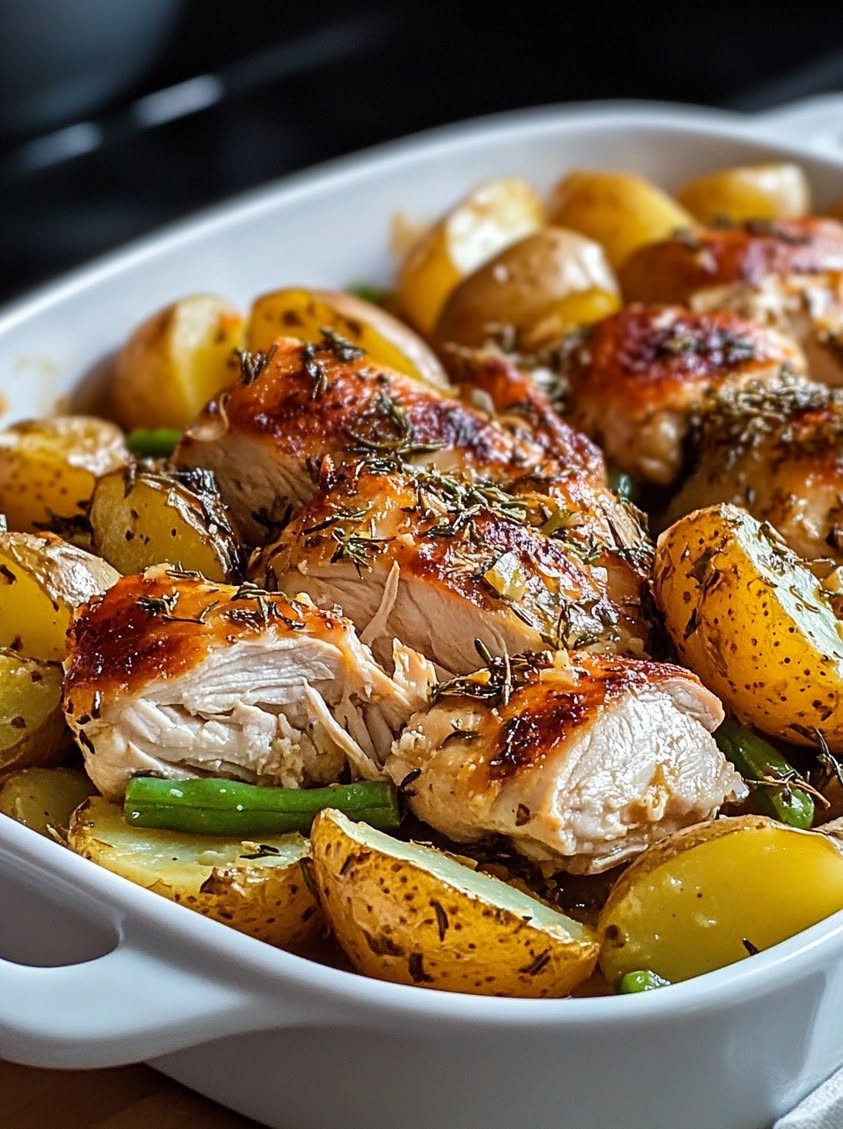
Golden Butter-Herb Chicken & Roasted Potato Casserole with Garden Greens: A Complete One-Pan Feast
Imagine a dinner that fills your kitchen with the irresistible aroma of roasting herbs and garlic, promises minimal cleanup, and delivers a complete, satisfying meal from a single dish. This Golden Butter-Herb Chicken & Roasted Potato Casserole with Garden Greens is exactly that kind of magic. Furthermore, it transforms simple, wholesome ingredients into a symphony of textures and flavors that will have everyone asking for seconds. Ultimately, this recipe is your secret weapon for busy weeknights or relaxed weekend gatherings.
The beauty of this Golden Butter Herb Chicken and Potato Casserole with Fresh Greens lies in its elegant simplicity. Juicy chicken thighs roast alongside crispy potatoes, all bathed in a fragrant, golden butter-herb sauce. Meanwhile, fresh garden greens wilt gently in the same pan, soaking up all those delicious juices. Consequently, you get tender protein, hearty starch, and vibrant vegetables in every single bite. This dish is a testament to how a few quality ingredients, when combined thoughtfully, can create something truly special and deeply comforting.
Moreover, this recipe is incredibly adaptable. You can use your favorite herb blend or whatever greens look best at the market. Whether you are cooking for your family or impressing guests, this one-pan wonder delivers consistent, restaurant-quality results with home-cooked heart. Let’s dive into how you can master this complete Golden Butter-Herb Chicken & Roasted Potato Casserole with Garden Greens.
Quick Recipe Highlights
- Flavor Profile: This dish features savory, buttery notes from the chicken fat and herb-infused butter, perfectly balanced by the earthy potatoes and the slight, fresh bitterness of the garden greens. The garlic and herbs create a classic, aromatic foundation that is both rich and bright.
- Texture: You will experience a wonderful contrast: crispy, golden-brown chicken skin and roasted potato edges against the succulent, tender meat and the soft, wilted greens. Each component contributes a unique mouthfeel that makes the dish exciting from start to finish.
- Aroma: As it bakes, the casserole releases a heavenly scent of roasting garlic, melted butter, and fragrant herbs like rosemary and thyme. This aroma is the hallmark of comforting, home-cooked food and will make your entire home smell incredible.
- Visual Appeal: The presentation is rustic and inviting. The chicken and potatoes turn a beautiful golden-brown, while the garden greens add a pop of vibrant green color. Served directly from the pan, it looks abundant, hearty, and perfectly cooked.
- Skill Level Needed: This is a beginner-friendly recipe. It requires basic knife skills for chopping and the ability to manage oven temperature. There are no complicated techniques, making it an excellent choice for novice cooks looking to create an impressive meal.
- Special Equipment: You only need a large, oven-safe skillet or a sturdy roasting pan. A good chef’s knife and cutting board are essential for prepping the vegetables and herbs. No other special tools are required.
Recipe Overview
- Difficulty Level: We rate this recipe as “Easy” because it follows a straightforward, sequential process with minimal hands-on time. After the initial prep, the oven does most of the work. The techniques involved—seasoning, roasting, and wilting—are fundamental cooking skills accessible to anyone.
- Category: This dish perfectly fits into several categories: a hearty main course, a complete one-pan meal, and a fantastic weeknight dinner solution. It also works beautifully for casual weekend entertaining or as a comforting family supper.
- Cuisine: While not tied to one specific tradition, the recipe draws inspiration from rustic American and European farmhouse cooking. The use of butter, fresh herbs, and roasted meats and vegetables is a classic combination found in many culinary traditions that value whole, seasonal ingredients.
- Cost: This is a cost-effective meal. Chicken thighs are an affordable cut, and potatoes are a budget-friendly staple. The fresh herbs and greens are the only items that might vary in price, but you can often grow your own or buy in small quantities. Overall, it delivers high value for a relatively low cost per serving.
- Season: This Golden Butter Herb Chicken and Potato Casserole with Fresh Greens is truly a year-round dish. However, it shines in the fall and winter when hearty, roasted meals are most craved. In spring and summer, you can adapt it with lighter greens and herbs for a seasonal twist.
- Occasion: It is ideal for busy weeknights due to its simple prep and cleanup. Simultaneously, it is impressive enough for a casual dinner party or a comforting Sunday family dinner. Its all-in-one nature makes it a stress-free choice for any occasion.
Why You’ll Love This Recipe
First and foremost, the taste and texture combination is utterly irresistible. The chicken skin becomes crackling-crisp, sealing in incredibly juicy meat. Meanwhile, the potatoes roast in the rendered chicken fat and herb butter, achieving a crispy exterior and a fluffy interior. Finally, the garden greens wilt just enough to become tender while retaining a slight bite and soaking up the savory pan juices. Every forkful delivers a perfect balance of rich, savory, and fresh flavors that is deeply satisfying.
Furthermore, the convenience factor is a major win. This entire meal cooks in one pan, which means less time washing dishes and more time enjoying your evening. The prep is quick and simple: chop some potatoes and herbs, season the chicken, and let the oven work its magic. Consequently, you can have a wholesome, home-cooked dinner on the table in about an hour with minimal active effort. It is the ultimate solution for defeating weeknight dinner fatigue.
Additionally, this recipe offers notable nutritional advantages. Chicken thighs provide high-quality protein and essential nutrients like iron and zinc. Potatoes are a great source of vitamin C, potassium, and fiber, especially when you leave the skin on. The garden greens, whether kale, spinach, or chard, add a powerhouse of vitamins A, C, and K, along with antioxidants. Cooking everything together also means the nutrients from the greens mingle with the pan juices, ensuring you consume all the flavorful, vitamin-rich goodness.
From a social perspective, this casserole has tremendous entertaining value. It presents beautifully right in the pan, emitting a fantastic aroma that welcomes guests. Serving family-style encourages sharing and conversation. Because it is so reliably delicious and easy to scale up, you can confidently make it for a crowd without being stuck in the kitchen all night. It is a meal that feels special and generous without requiring chef-level skills.
Finally, the cost-effectiveness and accessibility of the ingredients make this a staple-worthy recipe. You likely have many of the core items—like butter, garlic, and basic spices—already in your pantry. Chicken thighs and potatoes are consistently affordable protein and starch options. The fresh herbs and greens are easy to find at any grocery store, farmer’s market, or even your own garden. This Golden Butter Herb Chicken and Potato Casserole with Fresh Greens proves that eating well does not have to be complicated or expensive.
Historical Background and Cultural Significance
The concept of combining meat, potatoes, and greens in a single pot or pan is ancient and nearly universal. Essentially, it represents a practical approach to nourishment found in countless culinary traditions worldwide. From English roast dinners with vegetables to French poulet rôti with potatoes, the idea of roasting protein alongside hardy vegetables is a cornerstone of home cooking. This particular recipe is a modern, streamlined interpretation of that timeless tradition, focusing on ease and maximizing flavor with minimal fuss.
Culturally, the casserole format holds a special place in American and European home cooking. Historically, casseroles were a method to stretch expensive ingredients, feed large families, and utilize simple, available produce. The “one-pan meal” ethos speaks to a desire for efficiency and comfort. This dish, with its focus on fresh herbs and garden greens, also reflects a contemporary shift towards incorporating more vegetables and bright flavors into these classic, hearty formats.
The evolution of this recipe is interesting. While traditional roasted chicken dishes often involved separate preparation of components, the modern trend leans toward one-pan or sheet-pan meals for convenience. The addition of quick-wilting greens at the end is a relatively recent innovation that adds nutrition, color, and freshness without requiring a separate side dish. This evolution makes the old-world technique of roasting perfectly suited for today’s fast-paced lifestyles.
Regional variations of this concept are endless. In the American South, you might find a similar dish with smoked paprika and collard greens. In Italy, it could feature rosemary, lemon, and escarole. The version presented here uses a classic butter-herb profile that is versatile and widely appealing. The beauty of the formula is its adaptability; you can easily incorporate local herbs, seasonal greens, and preferred spices to make it your own, connecting it to your personal culinary landscape.
Ingredient Deep Dive
Chicken Thighs (bone-in, skin-on): This cut is the star for good reason. Culturally, dark meat chicken has been prized in many cuisines for its richer flavor and forgiving texture. Nutritionally, thighs contain more iron and zinc than breast meat and remain juicy during the longer roasting time. For selection, look for thighs with plump, pale skin and a fresh smell. Store them in the coldest part of your fridge and use within 1-2 days. For a substitution, chicken legs (drumsticks and thighs together) work perfectly. You can use boneless, skinless thighs, but you will sacrifice some crispness and flavor.
Yukon Gold Potatoes: These potatoes are ideal for roasting. They have a naturally buttery flavor and a creamy texture that holds its shape. Historically, potatoes were introduced to Europe from the Americas and became a staple due to their hardiness and nutrition. They are a great source of vitamin C, potassium, and fiber, especially with the skin on. Choose firm potatoes without sprouts or green tinges. Store them in a cool, dark, well-ventilated place—not the refrigerator. Russet or red potatoes can be substituted, though the texture will vary slightly.
Fresh Herbs (Rosemary & Thyme): These woody herbs are central to European culinary traditions and are synonymous with roasting. Rosemary, symbolizing remembrance, and thyme, associated with courage, have been used for centuries both medicinally and in cooking. They are rich in antioxidants and add immense aroma without calories. Select bunches with vibrant color and firm leaves, avoiding any that look dry or wilted. Store them loosely wrapped in a damp paper towel in the refrigerator. Dried herbs can substitute in a pinch—use one-third the amount—but fresh is highly recommended for the best flavor in this Golden Butter Herb Chicken and Potato Casserole with Fresh Greens.
Unsalted Butter: Butter is a foundational cooking fat that adds richness and helps conduct heat. Using unsalted butter allows you to control the sodium level in the dish. It also carries the flavors of the garlic and herbs beautifully. From a nutritional standpoint, butter provides fat-soluble vitamins like A and E. Choose a high-quality butter for the best taste. Store it tightly wrapped in the refrigerator. For a dairy-free version, a high-heat stable oil like avocado oil or a plant-based butter substitute can work, though the flavor profile will change.
Garden Greens (Kale, Spinach, or Chard): The term “garden greens” refers to leafy, quick-cooking vegetables. These greens are nutritional powerhouses, loaded with vitamins, minerals, and fiber. Historically, they were foraged or grown in kitchen gardens. Kale has seen a resurgence in popularity, while spinach and chard have long been staples. Select bunches with crisp, deeply colored leaves. Store them unwashed in a plastic bag in the refrigerator’s crisper drawer. You can use virtually any hearty green here—mustard greens, escarole, or even broccoli rabe would be delicious adaptations.
Common Mistakes to Avoid
- Crowding the Pan: If you pack the chicken and potatoes too tightly, they will steam instead of roast. This results in pale, soggy skin and soft potatoes. Always ensure there is a little space between pieces for hot air to circulate and create that essential crispy texture.
- Using Cold Chicken: Placing ice-cold chicken directly into the hot pan can cause the skin to stick and tear. Additionally, it lowers the pan temperature. Let the seasoned chicken sit at room temperature for 15-20 minutes before cooking for more even roasting and better browning.
- Not Preheating the Pan: Starting with a cold skillet is a common error. A preheated pan ensures the chicken skin immediately begins to sizzle and render fat, which is crucial for achieving a crisp, golden sear before the dish goes into the oven.
- Underseasoning: Potatoes and chicken both need generous seasoning. Do not be shy with salt and pepper, especially on the potatoes, as they absorb a lot. Season every layer—the chicken, the potatoes, and even the greens—for a fully flavored dish.
- Overcooking the Greens: Adding the garden greens too early will cause them to become mushy and lose their vibrant color and nutritional value. They only need the last 5-10 minutes in the oven to wilt perfectly in the residual heat and juices.
- Neglecting to Rest the Chicken: Slicing into the chicken immediately after pulling it from the oven causes the precious juices to run out onto the cutting board. Let the casserole rest for 5-10 minutes before serving. This allows the juices to redistribute, ensuring every bite is moist.
- Using a Non-Oven-Safe Pan: This mistake can be dangerous. Ensure your skillet or pan has a metal handle and is explicitly rated for oven use. Glass lids or plastic handles can melt or shatter under high heat.
- Skipping the Fresh Herbs: While dried herbs are convenient, they lack the bright, aromatic punch of fresh rosemary and thyme. This Golden Butter Herb Chicken and Potato Casserole with Fresh Greens relies on that fresh flavor for its signature taste, so try not to substitute if possible.
Essential Techniques
Pan Searing Before Roasting: This technique is crucial for developing flavor and texture. Starting the chicken in a hot, oven-safe skillet on the stovetop renders the fat under the skin and creates a beautiful, golden-brown crust through the Maillard reaction. This step adds a deep, savory flavor and ensures the skin is crispy, not rubbery. To master it, pat the chicken skin very dry, heat your pan with a little oil until it shimmers, then place the chicken skin-side down. Do not move it for a good 5-7 minutes until it releases easily and is browned. The common pitfall is impatience—moving the chicken too soon will tear the skin.
Roasting to Perfection: Roasting uses dry, circulating heat to cook food evenly and caramelize its surface. For this casserole, it gently cooks the chicken through while crisping the potatoes. The key is oven temperature—a steady 400°F (200°C) is high enough to brown but not so high that the herbs burn. Position your rack in the center for even heat. The visual cue for success is golden-brown chicken skin and potatoes that are tender when pierced with a fork. A meat thermometer inserted into the thickest part of the chicken should read 165°F (74°C).
Wilting Greens: Wilting is a gentle cooking method that softens sturdy greens while preserving their color and nutrients. In this recipe, you use the residual heat of the pan and a quick toss. The technique is simple: add the chopped greens to the hot pan after removing it from the oven. Then toss them with the buttery pan juices until they just begin to soften and turn bright green. The mistake to avoid is leaving them in too long, which makes them soggy and dull. They should be tender but still have a bit of structure.
Pro Tips for Perfect Golden Butter-Herb Chicken & Roasted Potato Casserole
First, pat the chicken thighs thoroughly dry with paper towels before seasoning. Any surface moisture will create steam and prevent the skin from achieving that ideal, crackling crispness. This simple step is the single biggest factor for perfect skin.
Second, cut your potatoes into uniform, bite-sized pieces. Consistent size ensures they all cook at the same rate, so you will not end up with some pieces overcooked and others underdone. Aim for 1-inch cubes for the best texture.
Third, do not discard the herb stems. Instead, toss a few whole rosemary and thyme stems into the pan with the potatoes. They will infuse the oil and potatoes with incredible fragrance as they roast, and you can easily remove them before serving.
Fourth, baste the chicken once or twice during roasting. Use a spoon to collect the melted butter and herb juices from the bottom of the pan and drizzle it over the chicken and potatoes. This adds flavor, promotes even browning, and keeps everything succulent.
Fifth, let your butter-herb mixture cool slightly before brushing it on. If the butter is piping hot, it can wash the seasoning off the chicken. Letting it cool for a minute helps it cling to the skin and form a delicious glaze.
Sixth, if your greens are particularly hearty like mature kale, consider adding them a few minutes earlier. For tender spinach, wait until the very end. Adjusting this timing based on your green ensures the perfect wilt every time.
Seventh, use a meat thermometer to guarantee perfectly cooked chicken. Visual cues are helpful, but a thermometer takes the guesswork out. Insert it into the thickest part of a thigh, avoiding the bone, and pull the casserole when it reads 165°F.
Eighth, finish the dish with a final flourish. After wilting the greens, sprinkle the entire casserole with a little flaky sea salt and a squeeze of fresh lemon juice just before serving. This brightens all the flavors and adds a professional touch.
Variations and Adaptations
For regional variations, consider a Mediterranean twist with lemon slices, olives, and oregano. Alternatively, try a smoky Spanish version with paprika and chorizo. An Asian-inspired adaptation could use ginger, soy sauce, and sesame oil in the butter glaze, with bok choy as the green. The basic formula is wonderfully flexible to global flavors.
Seasonal adaptations are easy. In spring, use new potatoes and asparagus tips alongside the greens. For summer, try cherry tomatoes and zucchini with basil. In autumn, incorporate sweet potatoes and sage. Winter calls for the heartiest greens like kale and collards, as in the base recipe. This keeps your Golden Butter Herb Chicken and Potato Casserole with Fresh Greens exciting all year.
Dietary modifications are straightforward. For a gluten-free meal, ensure your seasonings are certified GF—this recipe is naturally gluten-free. To make it dairy-free, replace butter with extra virgin olive oil or a plant-based butter. For a lower-carb option, reduce the potato quantity and add more low-starch vegetables like cauliflower florets or radishes.
Flavor variations can personalize the dish. Add heat with red pepper flakes or a diced jalapeño to the butter. Incorporate umami with a tablespoon of tomato paste or miso stirred into the melted butter. For a richer sauce, deglaze the pan with a splash of white wine or chicken broth after searing, then let it reduce before adding the butter and herbs.
Texture modifications can cater to preferences. For extra-crispy potatoes, parboil them for 5 minutes before roasting to rough up the edges. If you prefer ultra-tender chicken, cover the pan with foil for the first 20 minutes of roasting, then uncover to crisp the skin. For crunchier greens, serve them raw in a salad on the side instead of wilting them.
Presentation alternatives offer a fresh look. Instead of a rustic pan serve, plate individually: slice the chicken, fan it over a bed of potatoes, and arrange the greens neatly alongside. For a family-style centerpiece, transfer everything to a large, warm platter and garnish generously with fresh herb sprigs and lemon wedges.
Serving and Presentation Guide
Plating this casserole is part of its charm. For a casual, inviting presentation, bring the entire oven-safe skillet or roasting pan directly to the table. This family-style serving encourages sharing and showcases the beautiful, golden-brown results of your work. Place the pan on a trivet to protect your table surface. Provide a large serving spoon and fork for easy dishing.
Garnishing adds the final touch of freshness and color. Scatter a handful of freshly chopped parsley, chives, or the reserved thyme leaves over the top just before serving. A light grating of lemon zest adds brightness. A final drizzle of high-quality extra virgin olive oil or a sprinkle of flaky sea salt can also elevate the visual appeal and flavor.
Traditional accompaniments are simple. A crusty loaf of bread is perfect for sopping up the delicious buttery juices left in the pan. A light, acidic side salad with a vinaigrette dressing helps cut through the richness of the dish. For a heartier meal, consider serving with buttered egg noodles or creamy polenta underneath.
Modern serving suggestions might include a dollop of herb-infused Greek yogurt or sour cream on the side. A quick relish of chopped tomatoes, cucumbers, and red onion with lemon juice adds a fresh, crunchy contrast. For a restaurant-style touch, spoon the pan juices over each plated portion at the table.
Temperature considerations are key. Serve this casserole hot, straight from the oven after its brief resting period. Ensure your serving plates are warm to keep the food at an ideal temperature longer. If the greens cool too much, they can become less appealing, so timing your service is important.
Portion control is intuitive with this one-pan setup. Typically, plan for one chicken thigh and a generous scoop of potatoes and greens per person. Because everything is cooked together, the portions are naturally balanced. For larger appetites or if scaling the recipe, simply add more thighs and potatoes, ensuring you do not overcrowd the pan.
Wine and Beverage Pairing
Wine pairings for this rich, savory dish should complement the herbal notes and cut through the butter. A crisp, unoaked Chardonnay works beautifully, as its acidity balances the fat and its apple/pear notes harmonize with the roasted elements. Alternatively, a medium-bodied Pinot Noir is an excellent red choice; its bright red fruit flavors and earthy undertones mirror the herbs and roasted chicken without overpowering the meal.
For non-alcoholic alternatives, consider sparkling water with a twist of lemon or lime to cleanse the palate. A tart cherry juice or pomegranate spritzer (mixed with soda water) provides a fruity, acidic counterpoint. Herbal iced tea, like rosemary or mint, can echo the herbal themes in the casserole in a refreshing way.
While not a classic pairing, coffee or tea can work after the meal. A medium-roast coffee with low acidity would be a comforting finish. For tea, a smoky Lapsang Souchong could complement the roasted flavors, or a light herbal tea like chamomile would be a soothing end to the evening.
Temperature is crucial for beverages. White wines and non-alcoholic spritzers should be served well-chilled. Red wines like Pinot Noir are best at a cool room temperature, around 55-60°F. Iced drinks should be cold but not diluted; use large ice cubes to prevent watering them down too quickly.
Serving suggestions include offering both a white and a red wine option if you are entertaining, as this dish bridges both nicely. Always pour water as well to keep guests hydrated. Present beverages in appropriate glassware to enhance the tasting experience, making the entire meal feel more considered and complete.
Storage and Shelf Life
Proper storage is essential for maintaining quality and safety. First, allow any leftovers to cool to room temperature, but do not leave them out for more than two hours. Then, transfer the chicken, potatoes, and greens to a shallow, airtight container. Storing them in a single layer if possible helps prevent the potatoes from becoming soggy. You can refrigerate leftovers for up to 3-4 days.
Temperature requirements are strict. The refrigerator must be at 40°F (4°C) or below. Avoid storing the hot pan directly in the fridge, as it can raise the internal temperature and risk spoiling other foods. Always use a proper food storage container once the food has cooled sufficiently.
Container recommendations include glass or BPA-free plastic containers with tight-fitting lids. You can also use a plate covered tightly with plastic wrap, though this is less ideal for preventing dryness. For the best reheating results, store components together so the potatoes can reabsorb some of the flavorful juices.
Signs of spoilage are important to recognize. Discard leftovers if you notice an off or sour smell, a slimy texture on the chicken or potatoes, or if the greens have become unpleasantly mushy and discolored. When in doubt, it is always safer to throw it out.
Reheating instructions are key to reviving the meal. For best results, reheat in the oven at 350°F (175°C) until warmed through. This helps re-crisp the skin and potatoes. You can also use an air fryer for a few minutes. The microwave is a quick option but will soften the crispy textures. Add a splash of broth or water when microwaving to prevent dryness.
Freezing is possible but with caveats. The chicken and potatoes can be frozen for up to 2 months, though the potato texture may become mealy upon thawing. The greens will not freeze well and become watery. To freeze, place cooled portions in freezer-safe bags, remove as much air as possible, and label with the date. Thaw in the refrigerator overnight before reheating.
Make Ahead Strategies
A smart prep timeline can make weeknight cooking a breeze. The day before, you can chop the potatoes and store them submerged in cold water in the refrigerator to prevent browning. You can also make the herb-butter mixture and refrigerate it. Pat the chicken dry, season it with salt and pepper, and leave it uncovered on a plate in the fridge. This dry-brining step will actually result in more flavorful and crispy skin.
Storage between steps is simple. Keep the prepped potatoes in their water bath. Store the herb butter in a small covered container. The seasoned chicken should remain on its plate, uncovered, on a refrigerator shelf. Bringing the chicken out 20 minutes before cooking helps it roast more evenly.
Assessing quality impact is important. Pre-chopping potatoes in water maintains freshness. The herb butter’s flavors will meld and intensify overnight, which is a benefit. Dry-brining the chicken significantly improves texture and taste. None of these make-ahead steps detract from the final dish; in fact, they enhance it.
Assembly tips for the cooking day are straightforward. Drain and thoroughly dry the potatoes. Take the herb butter out to soften slightly. Follow the recipe as written, searing the chicken, tossing the potatoes in the fat, and brushing everything with the prepared butter mixture. The process becomes much faster with the prep work already done.
Reheating guidelines for a fully made-ahead casserole are similar to leftovers. If you cooked the entire casserole ahead, let it cool, cover, and refrigerate. Reheat in a 325°F (160°C) oven, covered with foil, until hot throughout (about 20-25 minutes), then uncover for a few minutes to re-crisp the skin if desired.
Fresh element additions are the final touch. If you made the entire dish ahead, consider adding a handful of fresh, raw greens just before serving for a burst of color and texture. Similarly, a fresh sprinkle of chopped herbs or a squeeze of lemon juice after reheating will wake up all the flavors beautifully.
Scaling Instructions
Halving the recipe is simple for smaller households. Use 2 chicken thighs, 1 pound of potatoes, and halve all other ingredients. Use a medium oven-safe skillet to ensure the pan is not too large, which could cause the butter and juices to burn. The cook time may reduce by 5-10 minutes, so check for doneness a bit earlier.
Doubling or tripling for a crowd requires more planning. Use a very large roasting pan or two separate large skillets. Do not overcrowd; the pieces should still have space. You may need to sear the chicken in batches before combining everything in the roasting pan for the oven. Cooking time may increase by 10-15 minutes. Rotate the pans in the oven halfway through for even cooking.
Equipment adjustments are necessary when scaling. For a double batch, a large, rimmed baking sheet (half-sheet pan) can work, but you may need to transfer the seared chicken and potatoes onto it. Ensure your oven can accommodate the larger pan. Having a good pair of kitchen tongs and a large spoon is essential for handling the greater volume of food safely.
Timing modifications are minimal but important. When doubling, the searing step will take longer if done in batches. Factor this extra stovetop time into your total prep. The oven time may be slightly longer, but rely on visual cues and a meat thermometer rather than the clock alone. The greens may need an extra minute or two to wilt if the pan is very full.
Storage considerations change with scale. Leftovers from a large batch will be plentiful. Plan to have enough airtight containers on hand. Consider dividing leftovers into meal-sized portions before refrigerating for easy reheating later. If freezing, portion control is even more important to avoid waste.
Nutritional Deep Dive
This Golden Butter Herb Chicken and Potato Casserole with Fresh Greens provides a balanced macro profile. A typical serving offers a substantial amount of protein from the chicken, essential for muscle repair and satiety. The potatoes contribute complex carbohydrates for sustained energy, while the butter and chicken fat provide healthy fats necessary for nutrient absorption and flavor. The greens add minimal calories but significant volume and fiber.
The micronutrient analysis is impressive. Chicken thighs are rich in B vitamins, particularly B12 and niacin, which support energy metabolism. Potatoes are an excellent source of potassium and vitamin C. The garden greens deliver a powerhouse of vitamins A, C, K, and folate, along with minerals like iron and calcium. Cooking the greens in the pan juices may also help your body absorb their fat-soluble vitamins.
Overall health benefits include supporting immune function (from vitamins A and C), bone health (from vitamin K and calcium), and heart health (from potassium). The fiber from the potatoes and greens aids digestion and promotes a feeling of fullness. Using bone-in, skin-on chicken also provides collagen, which is beneficial for joint and skin health.
Dietary considerations are flexible. This meal is naturally gluten-free. For those monitoring sodium, you can control the amount of added salt. The dish contains dairy (butter), but this can be substituted. It is not suitable for a vegetarian or vegan diet without significant modification, but it fits well into omnivorous, paleo (with oil substitution), and whole-food-focused eating patterns.
Portion analysis shows that one chicken thigh with a generous serving of potatoes and greens makes a complete and satisfying meal. The combination of protein, fiber, and healthy fats helps regulate blood sugar and prevents overeating later. It is a nutrient-dense plate that covers multiple food groups efficiently.
For weight management, this is a satisfying choice that can fit into a balanced plan. To reduce calories slightly, you can use a bit less butter or remove the chicken skin after cooking (though you will lose flavor and crispness). The high protein and fiber content promote satiety, helping you feel full longer on a reasonable portion size.
Dietary Adaptations
Gluten-Free: This recipe is naturally gluten-free as written. Simply ensure that any pre-made seasoning blends or broth you might use are certified gluten-free. There are no hidden sources of gluten in the core ingredients of chicken, potatoes, butter, herbs, and greens.
Dairy-Free: Replace the unsalted butter with an equal amount of extra virgin olive oil, avocado oil, or a high-quality plant-based butter stick. The flavor will be different but still delicious. Choose an oil with a high smoke point for the searing step to avoid burning.
Vegan: This requires a complete overhaul. Substitute chicken with large, meaty king oyster mushrooms or a firm tofu block, pressed and sliced. Use oil or vegan butter. Replace potatoes with cauliflower or sweet potatoes if desired. Use vegetable broth for deglazing. The cooking technique would remain similar: sear the main protein substitute, roast with potatoes/vegetables, and wilt greens at the end.
Low-Carb/Keto: Significantly reduce or omit the potatoes. Increase the chicken quantity and add low-carb vegetables like cauliflower florets, halved Brussels sprouts, or broccoli. Ensure any used broth is sugar-free. The butter and herbs are perfectly keto-friendly. The greens are also low in net carbs, making them an excellent addition.
Paleo: Use ghee or avocado oil instead of butter to make it dairy-free. Ensure all ingredients are whole, unprocessed foods. The recipe is otherwise very paleo-friendly, focusing on protein, healthy fats, and vegetables. Sweet potatoes can be a good potato substitute for a stricter paleo approach.
Low-FODMAP: This adaptation requires care. Use only the green tops of scallions instead of garlic. Infuse the oil with garlic flavor by heating a whole, peeled garlic clove in it, then removing the clove before cooking. Use a FODMAP-friendly green like kale or spinach in moderation. Ensure the butter is lactose-free if sensitive.
Troubleshooting Guide
Chicken Skin is Not Crispy: This usually means the skin was not dry enough before cooking, the pan was overcrowded, or the oven temperature was too low. Solution: Next time, pat the skin relentlessly dry. Ensure pieces have space. If it is still soft at the end of cooking, you can briefly broil the casserole for 2-3 minutes, watching closely to avoid burning.
Potatoes Are Undercooked: If the chicken is done but the potatoes are still hard, the pieces were likely cut too large. Solution: Carefully remove the{“success”:true,”message”:”Recipe created successfully”,”post_id”:8483,”tasty_recipe_id”:8483,”shortcode”:” Print
Golden Butter-Herb Chicken & Roasted Potato Casserole with Garden Greens
Description
A comforting one-pan meal featuring tender chicken and crispy potatoes roasted in a savory butter-herb sauce, served over fresh garden greens for a balanced dinner.
Ingredients
For the Crust:
- 4 boneless, skinless chicken breasts
- 1.5 lbs Yukon Gold potatoes, cubed
- 4 tbsp unsalted butter, melted
- 2 tbsp olive oil
- 3 cloves garlic, minced
- 1 tbsp fresh rosemary, chopped
- 1 tbsp fresh thyme, chopped
- 1 tsp paprika
- Salt and black pepper to taste
- 4 cups mixed garden greens (e.g., arugula, spinach, lettuce)
- Lemon wedges for serving
Instructions
1. Prepare the Crust:
- Preheat oven to 400°F (200°C). In a large bowl, toss potatoes with olive oil, half the garlic, rosemary, thyme, paprika, salt, and pepper.
- Spread potatoes in a single layer on a baking sheet. Roast for 15 minutes until starting to soften.
- While potatoes roast, mix melted butter with remaining garlic, herbs, salt, and pepper. Brush chicken breasts with the butter-herb mixture.
- Remove baking sheet from oven, push potatoes to one side, and add chicken breasts. Drizzle any remaining butter-herb sauce over everything.
- Return to oven and roast for 20-25 minutes, until chicken is cooked through and potatoes are golden and crispy.
- Serve chicken and potatoes over a bed of fresh garden greens, with lemon wedges on the side for squeezing.
Notes
You can customize the seasonings to taste.

I’m Billy, a classically trained culinary school graduate from The Culinary Institute of America with over 12 years in the restaurant industry and over 19 years of cooking experience.